It is officially Summer, and Mother Nature is bringing us the heat this week. We are excited for the plants to get some warm weather and rain.
With the heat and rain coming, our crew was extra busy last week trying to get as much field work done as we could. The big project for the week was getting mulch on all of our onions and tomatoes.
Each year we grow two types of crops: cash crops and cover crops. Cash crops are all the vegetables that end up in your share boxes. Aka: anything that we grow intending to sell. Cover crops are things like rye grass, clover, or buckwheat. We don’t intend to make money off of these. They are planted to cover the soil to prevent erosion, smother weeds, help with both harmful and helpful pests, and to put beneficial nutrients back into the soil.
The cover crop we use the most is cereal rye. This is a really great cover crop because it’s deep roots work to loosen compacted soil, it grows quickly which helps to smother weeds, it’s great for sequestering nitrogen, and it makes amazing straw.
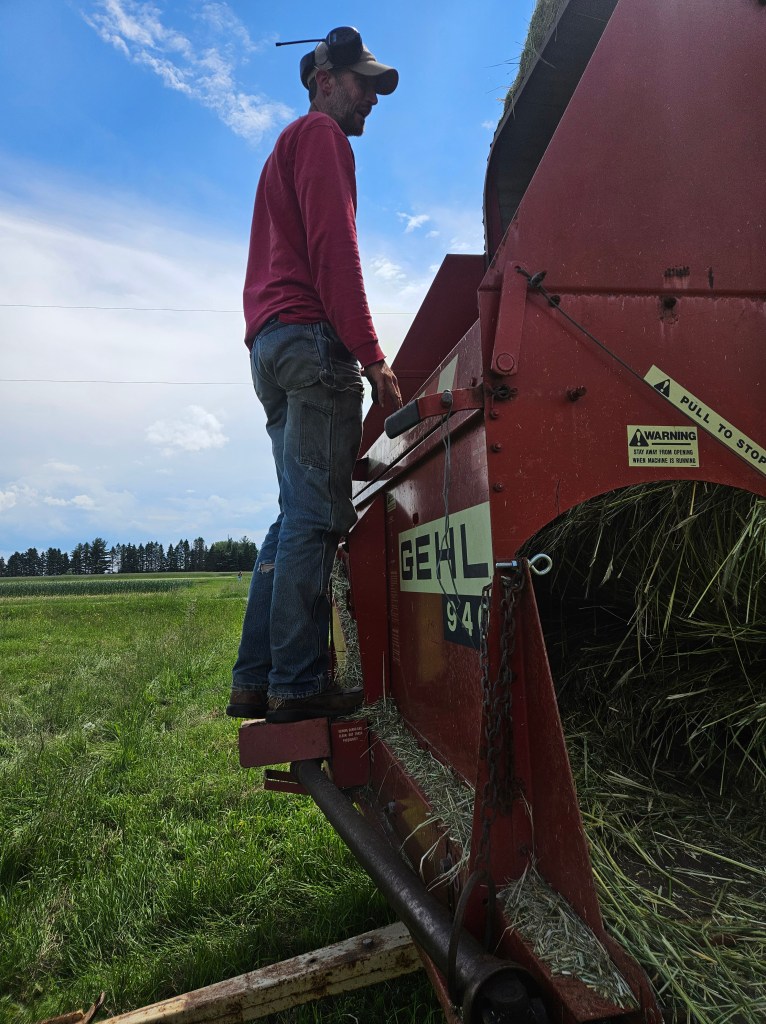
Each Spring/Summer, once the rye has matured but hasn’t set seed, we chop it up and use it as mulch. It’s a lengthy process that requires specific timing, but it saves a lot of time later in the season. We put down mulch between all of our onion beds, and around all of our tomatoes. This not only helps to cover bare soil so weeds don’t grow, but it also helps to retain moisture in the soil. Over the years, we’ve streamlined the process so it goes much faster. However, from chopping to spreading to completion, still takes about 2-3 days.
Once all the onions and tomatoes are mulched, any leftover rye gets baled. These bales will be stored in the barn to be used this fall when we cover our garlic for winter, and next spring to mulch our greenhouse tomatoes.
Now that mulching is done, we can give our outdoor tomatoes a whole lot of love. Soon the crew will begin putting up the caterpillar tunnel to cover some of our tomatoes. They’ll also start adding support strings as a way of trellising the tomatoes.
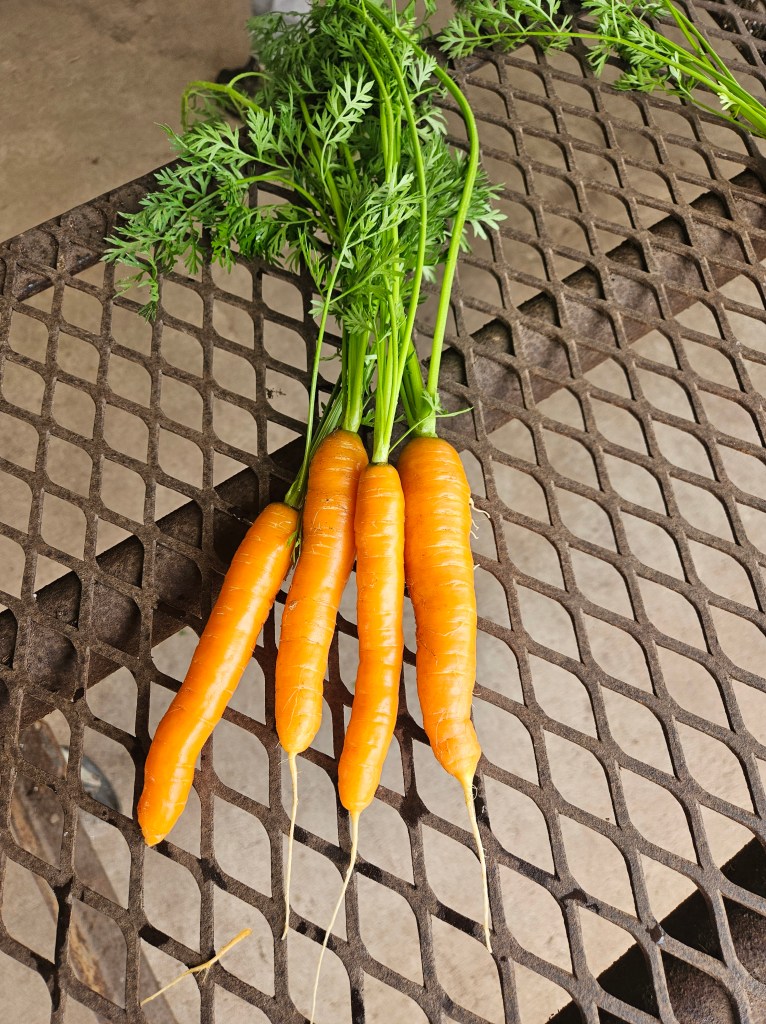
In your box this week:
Carrots – Radishes – Lettuce – Broccoli – Green Onions – Pac Choy
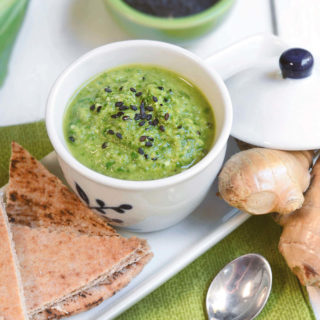
If you aren’t a fan of bok choy (also called Pac Choy), or are new to the vegetable, try out this Bok Choy pesto. I made it last week and enjoyed it on shrimp tacos, on top of a tofu bowl, and as a dip with crackers. Bonus: this recipe is also great if you swap out the bok choy for spinach, so save this for later. **The recipe calls for 4 small bok choy which would be equivalent to the one regular sized bok choy in your box**

This recipe for broccoli and cheese galette requires a bit of a time commitment, but I think it’s worth it! The crust is flaky. The center is cheesy and gooey. The broccoli is still crisp and tender. It’s perfect for a rainy night curled up on the couch. If you want to try a faster version of this, you can use store bought pie crust which will considerably cut down on the time. Just note that a store bought crust is usually only 9 inches, and this recipe is assuming your crust is 14 inches.
For the farm crew,
Jennifer

