Happy 4th week…in more ways than one. We’ve reached week 4 of our Summer CSA just in time for the Fourth of July.
Last week was spent wrapping up projects, and checking things off our to-do list. Two weeks ago, we started mulching the onions, and removing row cover from our brassicas. Last week we had just enough dry days to complete both of these big projects. We also got another round of lettuce, broccoli, cauliflower, kale, zucchini, and green beans planted.
Our greenhouses are quickly being emptied of cold weather loving crops such as spinach, greens mix, and lettuce. Just as quickly, they’re being filled back up with warm weather crops such as cucumbers, basil, and pole beans.
Catherine sneaking in another round of green bean planting before the rain starts again
With all the colder than normal days we’ve had recently, quite a few of our Summer crops seem to be growing very slowly this year. The melon vines are still tiny. The tomato plants have some fruit, but none of it has thought about turning red yet. Our pepper plants are still small, but appear to be thinking about producing their first flowers. Hopefully the warm week ahead will get everything growing like crazy.
After lots of days of rain, the weeds are going like crazy and we are looking at a big week of hoeing and weeding to keep the crops from being smothered, especially the plants that were being kept warm under the row cover. Don’t worry, we’ll have the farm looking its very best by the end of the week.
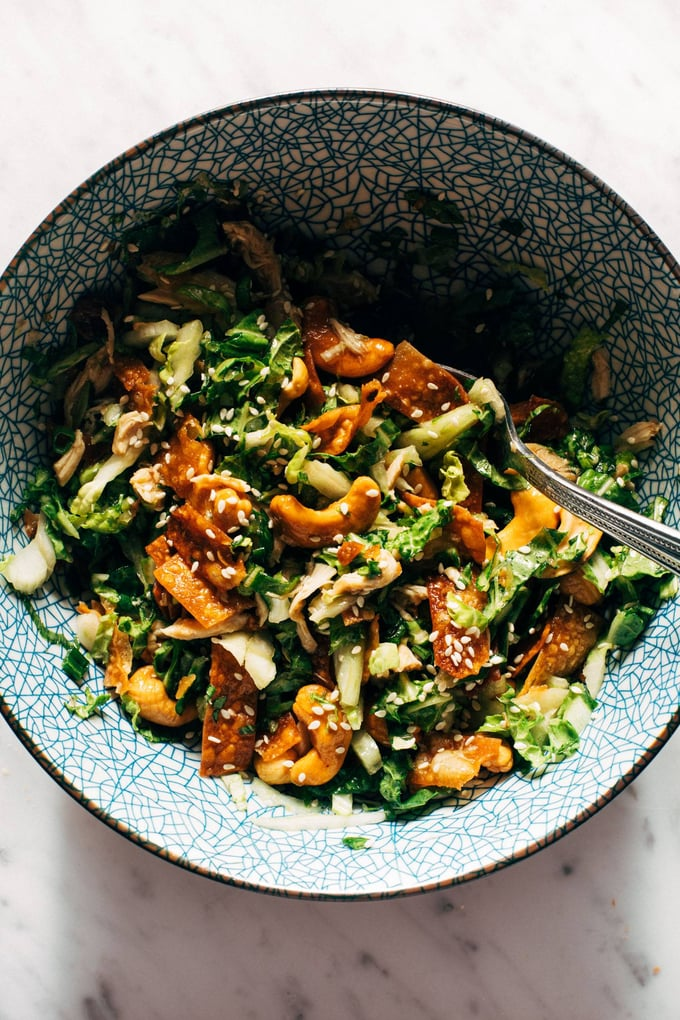
This Napa Chicken Salad recipe is the perfect way to use your napa cabbage. It’s light, flavorful, and so easy to put together. It would be great for lunches, a light dinner on a hot day, or a wonderful addition to a summer BBQ. If you want to get really adventurous with what’s in your box this week, try making this recipe with half napa cabbage and half pac choi.
Broccoli is a staple vegetable in our household, but every once in a while I need a recipe that shakes it up and gets me more excited about broccoli again. For me, that’s this recipe for Vegan Crispy BBQ Broccoli Tacos. Does it sound like the craziest combination possible? Absolutely! Is it also somehow amazingly delicious? YES!!! This week is the perfect week to try these tacos out. Use your napa cabbage or pac choi in place of the cabbage in the recipe. Try adding sliced, raw carrots and green onions for a fresh and crunchy addition.
Happy Summer! Summer solstice usually marks the time on the farm where our daily to-do list becomes longer than the amount of daylight. Our crew was hard at work this week trying their best to accomplish as much as they could.
The beginning of the week was spent weeding and hoeing our way through the farm. The crops love when it rains…but so do the weeds which means we have to report for weed removal as soon as we can. This is also a great opportunity to check in on some of our more low maintenance crops such as onions, peas, chard, and leeks. The occasional visit to weed is the only time the crew really sees these crops between the time they’re planted, and the time they’re harvested. We don’t have to keep a close eye on them for pests or common diseases. Janaki on the other hand is always keeping a close eye on them for irrigation needs, less common diseases, and any abnormalities that might arise.
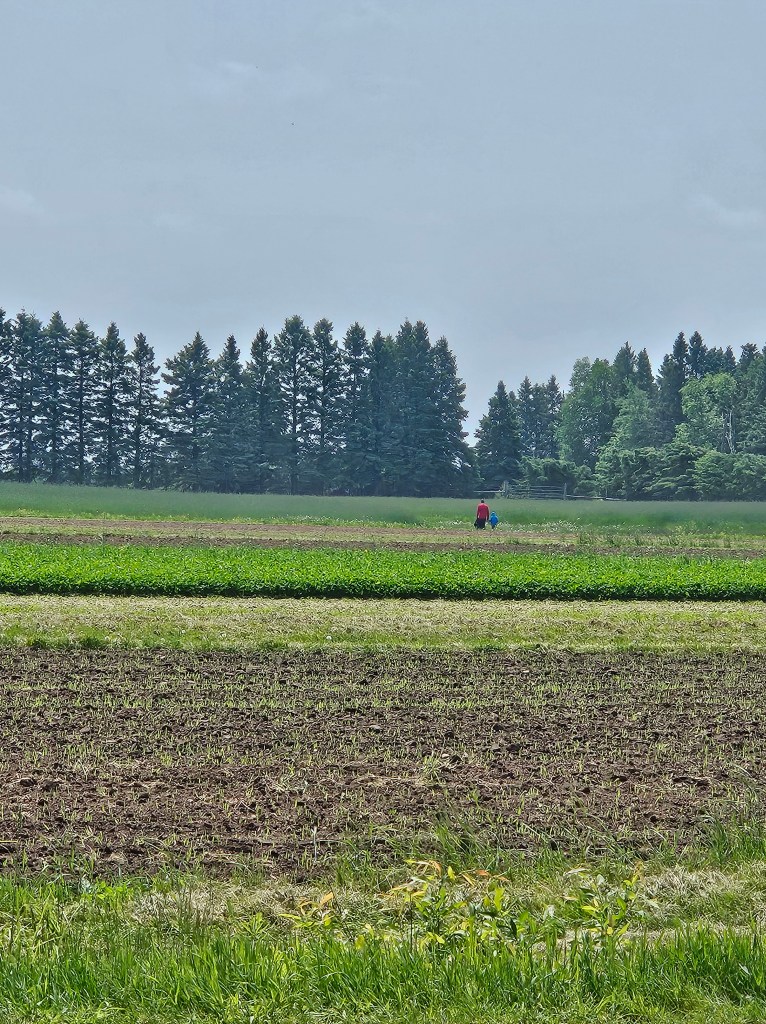
Janaki and Ellis taking a stroll to check on the crops
Wednesday was a big day on the farm. Thanks to a grant we received, the farm purchased a new rinse conveyor. Cue the oohs and aahs because this is a big deal for the farm! The rinse conveyor will serve as a multi purpose machine for both box washing and vegetable washing. Until now, every green top root vegetable (turnips, radishes, greenhouse beets, etc.) has been delicately cleaned by hand. This has added an extra layer of love to the vegetables in your share, but we can’t deny that this is also incredibly time consuming. We used to spray off each vegetable with a garden hose, attempting to use enough pressure to remove the dirt, but not enough pressure to damage the greens. Now do that over and over again for all 249 shares. We were ready for this change!
The new rinse conveyor is just what the name entails, it’s a giant conveyor belt that rinses things. Boxes or vegetables are placed on the conveyor belt. They then enter the machine where water shoots up from the bottom, while sprayer arms on the top of the machine simultaneously spin and shoot water down, cleaning the boxes or vegetables from all angles. There are multiple sprayer arms, so the items get cleaned and rinsed a few times as they ride the conveyor belt.
A few of the cool features that lead to the farm purchasing this machine: It allows us to adjust the conveyor speed, we can change the water pressure depending on the item we are trying to clean, the sprayer arms are adjustable allowing for us to use the machine with our largest delivery totes, and it has a sanitizer hook up for an all in one process. This means that we can adjust the settings to be delicate enough to not damage the greens on your turnips, but we can increase the speeds and pressure to clean all the corners of the CSA boxes, all in one machine. No need for multiple machines or tanks taking up space in our packing shed.
Janaki giving the crew a tutorial on the new rinse conveyor
On Wednesday, the crew got a tutorial on how the machine works, and got to test it out to clean the CSA boxes before Thursday’s delivery. Don’t worry Monday members, your boxes were also cleaned, just using a different system. The new rinse conveyor allows us to continuously load box after box onto the conveyor belt. It then enters the machine where high pressure streams of water hit the box from all angles ensuring a squeaky clean box pops out the other end. When we washed boxes using our old system, it would take about 40 minutes to clean them all. On Wednesday, it took 7 minutes. 7!!!!! That means more time for our crew to complete other tasks on the farm, and so much less water being used. Just another way the farm is striving to be the most efficient and sustainable it can be.
The rest of the week was spent getting everything secured before the storms on Friday night, and preparing for the heat wave over the weekend. This meant getting the caterpillar tunnel plastic on and secured, stabilizing greenhouse cucumbers, removing lower leaves on greenhouse tomatoes to promote airflow, and removing row cover from the brassicas so as not to cook the vegetables under the fabric. It was a busy but exciting week. This week is going to be spent spreading mulch. I can’t wait to tell you all about it!
This week we are sending lots of vegetables with the greens still attached. If you didn’t know, we keep them on not just for looks, but because they’re all edible and have very unique flavors. If you don’t know how to cook with them, or if you are just looking for some new ideas that aren’t a pesto, check out this recipe collection by Food 52. They break it down into recipes for beet greens, carrot greens, radish greens, and turnip greens, so keep scrolling until you find a recipe that piques your interest.
The lovely Lynn, who has been a long term Food Farm member, put together a very helpful video on how to wash and store your vegetables when you get them. I just received this and wanted to pass it along right away to all of you. Lynn showcases some different vegetables than you are getting this week, but it is incredibly helpful to give you some basic ideas. Lynn also talks about storing some vegetables you will be getting in the next few weeks and throughout the season, so be sure to bookmark this for future reference. If you’ve already seen it, or feel like you already know what to do, take a look at it just for the cute appearance of Maeve!
Silly me, I thought it was safe to finally pack up the long underwear and winter hats! Clearly it was too soon because last week I was in the basement digging them back out. Thankfully it was a busy week to help keep us moving and warm.
If you were around last summer, you know that we were lucky enough to recieve a grant that helped us purchase a caterpillar tunnel. We usually plant half of our tomatoes in a greenhouse, and half of our tomatoes outside in the field. We used the tunnel last year for an experiment to see how tomatoes would perform and taste if planted in outside fields, while being provided the environmental protections of a tunnel. It was an interesting experiment that provided us with surprising and delicious results. Like all good experiments, doing it once doesn’t provide sufficient evidence, so were trying it again this year. Our wonderful crew worked together a few weeks ago to take the tunnel down from last year’s field. Last week, we worked together again to put it up in its new home for the year.
Putting the caterpillar tunnel back together in its new home
You might be wondering, why do all that work to move it? On the farm, we are strong believers in crop rotation. This means we don’t plant the same crop, in the same spot, two years in a row. Crop rotation is important because it allows for improved soil health, and better management of pests and diseases. Crop rotation is a simple way for us to minimize our pesticide and fertilizer usage. As an organic farm, we always do our best to find natural ways to help our plants.
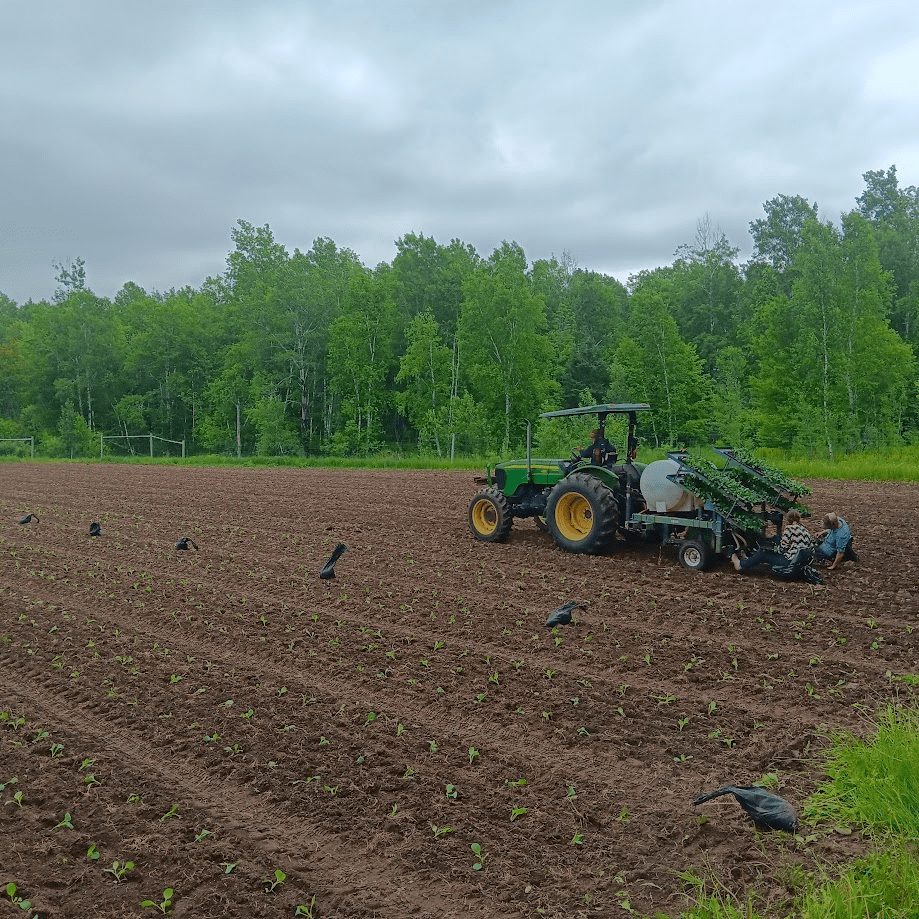
Thankfully this was the second time most of us have put the tunnel together, so it didn’t take nearly as long as it did last year. This left us with enough time to get our biggest brassica planting in the ground. Our 4th planting each year is by far the largest of our 7 brassica plantings. This one is over 12,000 plants! It includes 7 varieties of cabbage, our brussels sprouts, and 4 varieties of broccoli. The greenhouse now looks very empty without hundreds of trays of plants in it. That must mean it’s time for us to do another seeding to fill it all back up.
Jennifer and Michelle planting brassicas
This week looks like our rain gear is going to be put to the test. The vegetables will be so happy!
If you aren’t a turnip lover because they’re too spicy, try roasting them with butter and honey (or maple syrup).I recommend quartering them, tossing in butter and honey, and roasting at 425° for about 15 minutes. I don’t have exact measurements because when it comes to butter and honey, I think it’s best to measure with your heart! This also works well on radishes if you are still searching for ways to use those up from last week.
Another great way to use up some veggies from this week (and any leftovers from last week) is with this Spring Salad With Pickled Vegetables. It’s light, bright, and fully customizable. Try using a different mix of greens, or pickling different vegetables for endless possibilities.
If you’re looking for a new way to use up some lettuce, give this Romaine Salsa Verde a try. Use this to top your favorite grilled protein such as steak, chicken, or shrimp. For a lighter option, use it as a spread on your next sandwich, or a dipping sauce for a black bean and sweet potato quesadilla.
New, new, new…that seems to be the theme on the farm this year. Today marks the official start of a new season! The crew can’t wait to spend the next 18 weeks putting their sweat, joy, and sore muscles into harvesting incredible vegetables for all of you. We are so excited for our new members to join us, and so grateful to long term members for choosing to spend another summer with the farm.
The crew planting the first round of potatoes
Speaking of our amazing crew, we welcomed back lots of familiar faces from last season, and added a few new ones to the mix. Joining the crew this year are Audrey and Lily. They’ve only been with us for a short time so far, but both of them have jumped in head first and are proving to be valuable additions to the crew. Twice a week we also welcome Elliot to the farm. Elliot is a student at UMD completing their summer internship with us. Part of the internship is helping take any extra produce from the farm, and bringing it to the Duluth Center for Women and Children. They use local produce to put together meal kit boxes for families as a way to ensure people have access to healthy foods, and help them gain confidence in cooking with local produce. We are so excited to add these three to our crew!
This year we are trying new varieties of a few veggies on the farm. Some things, such as our normal zucchini variety, have been discontinued, so we are trying two new varieties to see which one will be the new type we grow moving forward. Other things, such as lettuce, we are trying new varieties to see if we can find one that is not only beautiful and delicious, but can also fight off some common diseases that lettuce can get. We decided to go really crazy this year and grow something entirely new to us, baby bok choy! It’s everything you love about regular bok choy, just in a smaller size. We can’t wait for you to try it! We’re also trying out green garlic for the first time. This is garlic that we planted in the spring, so it didn’t go through cold snaps that separate it into cloves like normal garlic. Green Garlic is especially great because you can eat the whole thing like you would with a green onion. You can use it in recipes like you would with normal garlic.
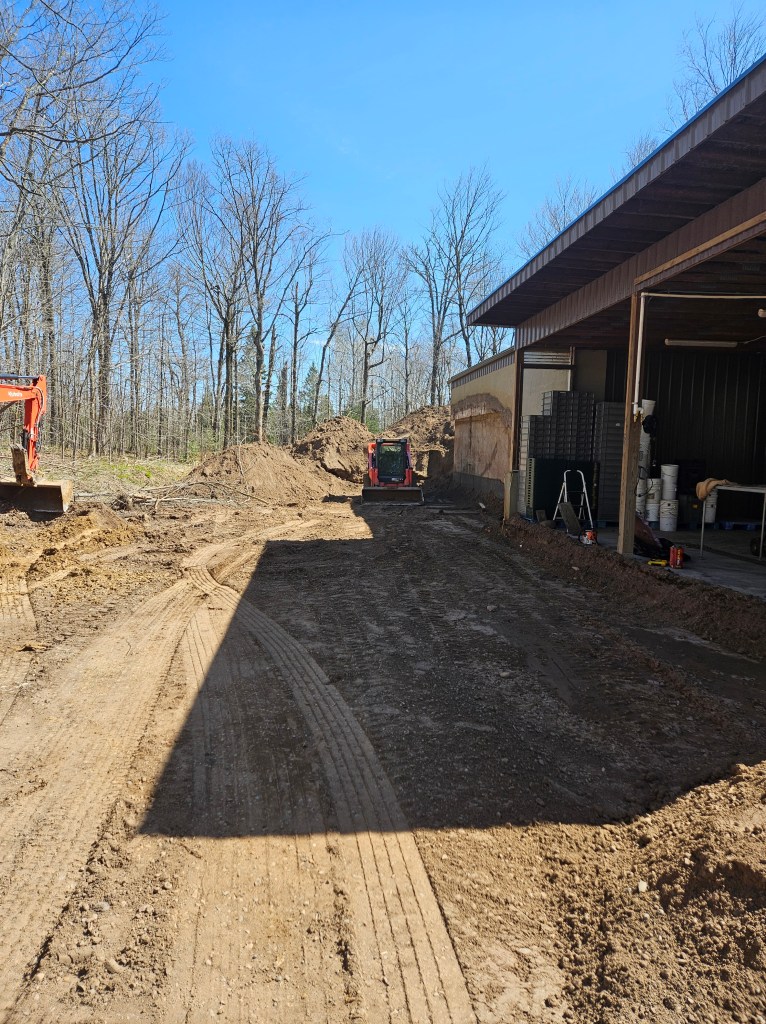
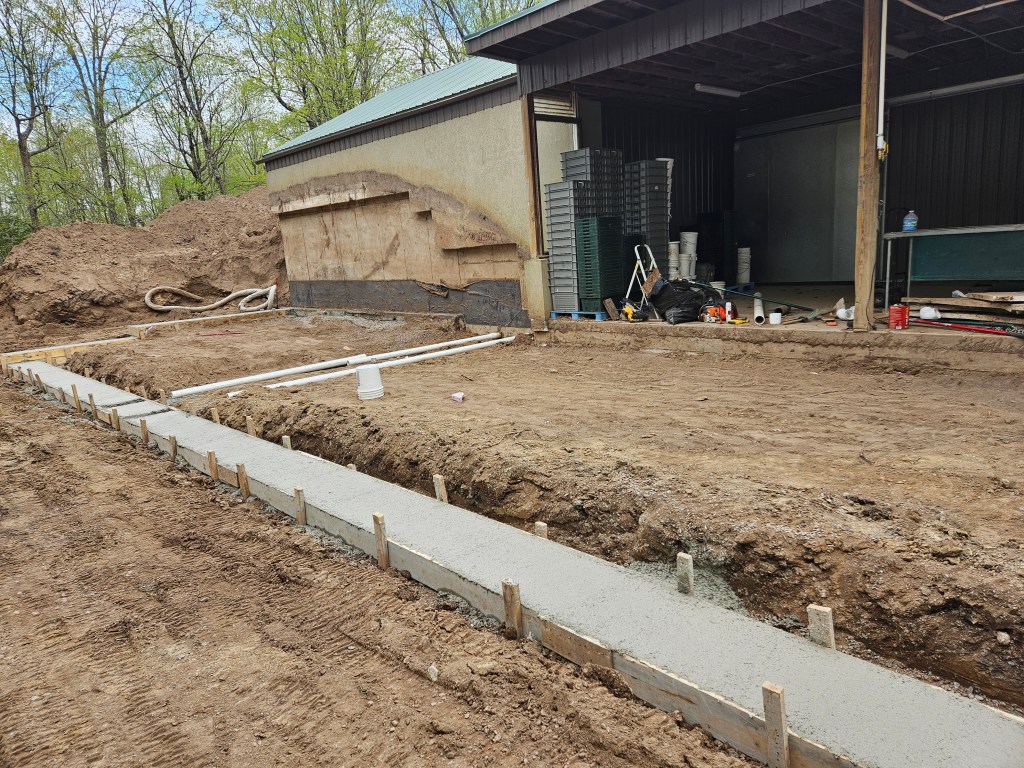
The biggest new thing on the farm is our building expansion. Farmer Janaki wanted to share what’s been happening:
“The root cellar expansion project has seen a lot of progress since my last update–there’s been a lot of dirtwork done, we just got the concrete finished last week, and the SIP panels are in production with a target delivery date of June 25th. That means we will have a lot to work around for the first 2 months of the season, but we’re looking forward to the project being underway!
In other news, the USDA grant funding has been re-approved, thankfully! As a result of the delays, costs are significantly higher than budgeted for, so we’re really grateful for the generous donations from members, thank you!!!”
Construction crew broke ground on the new expansionFootings are poured and drainage is laid outThe slab is poured!
Rhubarb is most commonly used in desserts, but it’s also great in savory dishes. If you’re looking for a way to use up some rhubarb in a new way, this rhubarb and apricot barbecued chicken recipe from Taste of Home is a delicious combination of sweet, tart, and spicy.
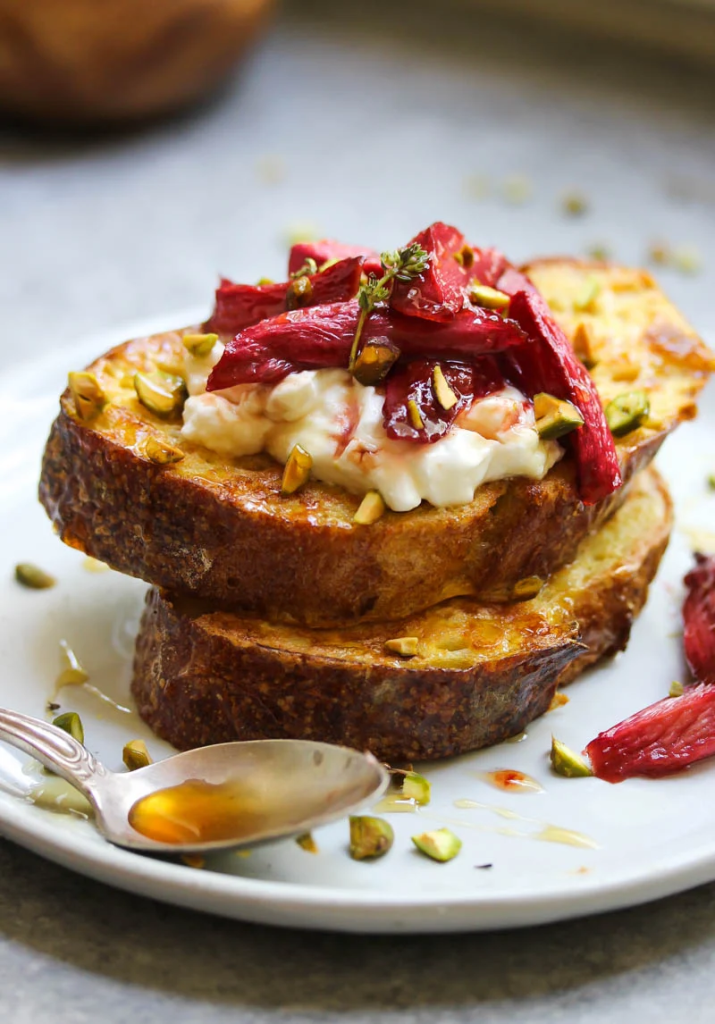
If you are someone who loves the way sugar and rhubarb mix, might I suggest this delicious Vanilla Roasted Rhubarb French Toast recipe. Step one of the recipe is how to roast the rhubarb, so you can make this delicious combo again and again. Instead of French toast, add the topping to waffles, pancakes, mix it into muffins, the possibilities are almost endless.
Bok Choy and Pac Choi are the same vegetables, just with different spellings. This pasta recipe is a great way to use up this vegetable if you want a quick, easy, and delicious dinner, but don’t feel like doing much cooking.









 Food Farm