Summer CSA Week 8, 2025

Another beautiful day on the farm

Last week was filled with lots of carrot weeding. In the Spring, we start with two plantings of carrots in our greenhouse. These are the carrots you all have been enjoying thus far. We also plant 4 plantings outside. Each one is a little bit larger. 

Right before the carrot seeds pop up from the ground, we go over the beds with a flame weeder. This is a tractor attachment that burns all of the weeds so the carrots don’t have any competition while they’re germinating. This is a crucial part of the weed control process. It eliminates a large number of weeds at the beginning of the carrots life when they’re the most fragile. After the carrots have popped up from the ground, we can’t flame weed anymore otherwise we would kill all the carrots. This is where the crew comes in.

We crawl along each row of carrots removing all of the weeds by hand, and disrupting the soil around the plants so hopefully no more weeds germinate. With our first outdoor planting, this goes pretty quick. It’s a short field with less rows, and it’s usually not too hot out. The fourth planting however, is quite the beast. This is our Fall planting of carrots, and the one the crew is currently working on weeding. These are the carrots that will be stored for the winter. In order to have carrots to send through the end of Winter CSA in April, we have to plant A LOT. 

Each carrot must be lovingly weeded and cared for. This means the crew will crawl around weeding about 10 miles worth of carrots, and that’s just the Fall planting. They’ve been doing it in the rain, in the heat, and in the early morning when the coffee is still kicking in. These carrots, like most things around the farm, are truly a labor of love.

This week we will finish weeding carrots, trellis our pepper plants, and start transitioning the greenhouse from a potting space into a drying shed in preparation for garlic harvest soon.

In your box this week:

Cabbage – Carrots – Chard – Cucumbers – Lettuce

Green Onions – Snap Peas – TomatoesBroccoli Dill

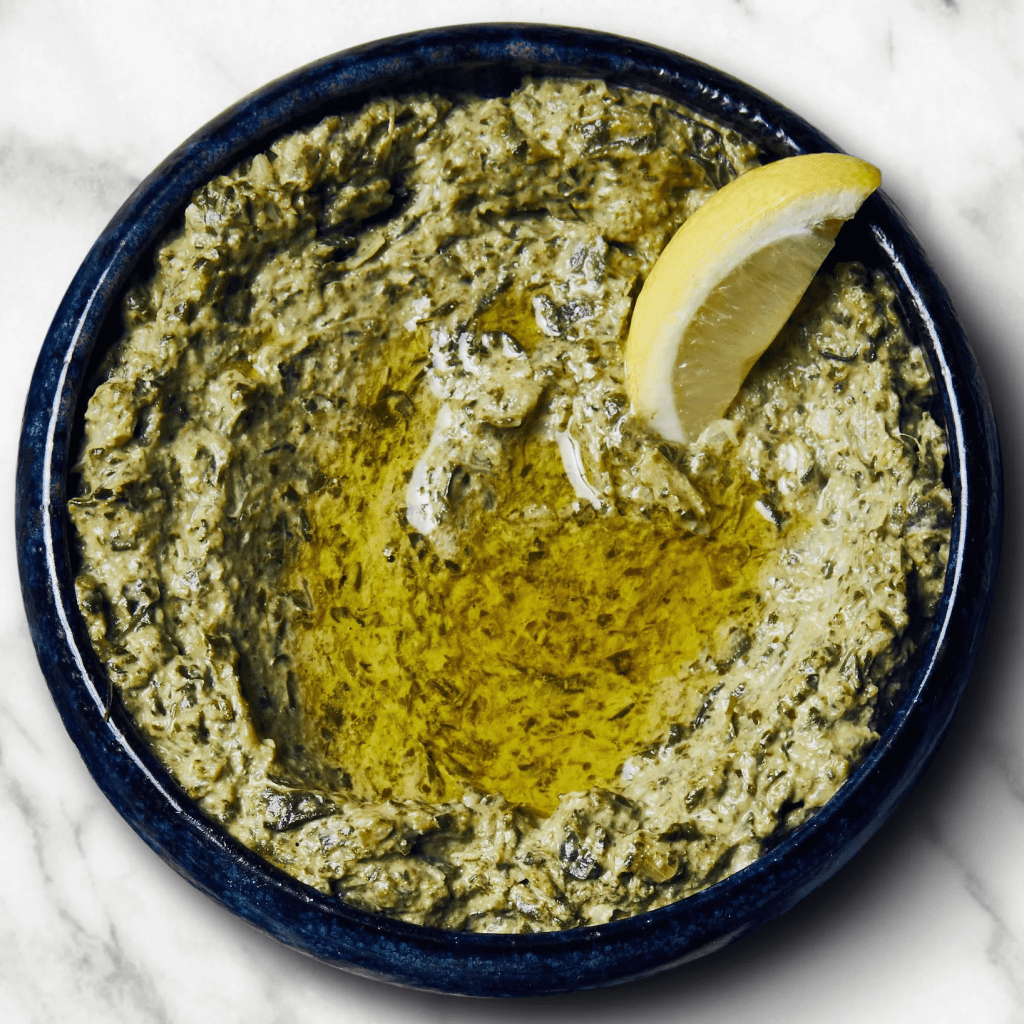
Swiss chard can be used just like other dark leafy greens such as spinach, kale, or even beet greens. When I want to change things up, I like to make this Swiss Chard- Tahini dip. It’s bright and fresh. Perfect as a spread on sandwiches, or as a dip for all those delicious summer veggies.

If you’ve been feeling like it’s too hot to cook, but you’re sick of the same salads over and over, check out this Curry Green Salad. It has minimal ingredients, but so much flavor. The recipe calls for romaine, but the lettuce in your box this week would also be perfect for this. Try adding chicken, shrimp, or grilled tofu to this to make it even more filling.

For the farm crew,

Jennifer
Summer CSA Week 7, 2025

What a wild week it has been! When you’re farming, experience is a huge advantage. Throughout the years, you see a lot of things and learn a lot as well. However, experience can only get you so far. You also have to be curious and willing to learn.

The last few weeks we have been finding lots of funky things happening around the farm. Nature is so cool! Whenever we find something abnormal, we have to act fast. It’s important to do research right away to figure out if the abnormality is something that we can live with, or if it’s due to an insect or disease that we need to get rid of immediately before it spreads and creates a much larger issue. Thankfully most of the abnormalities we’ve been finding have been do to genetics or environmental factors. You know, all the stuff we want to control, but don’t yet have the superpowers to do so.

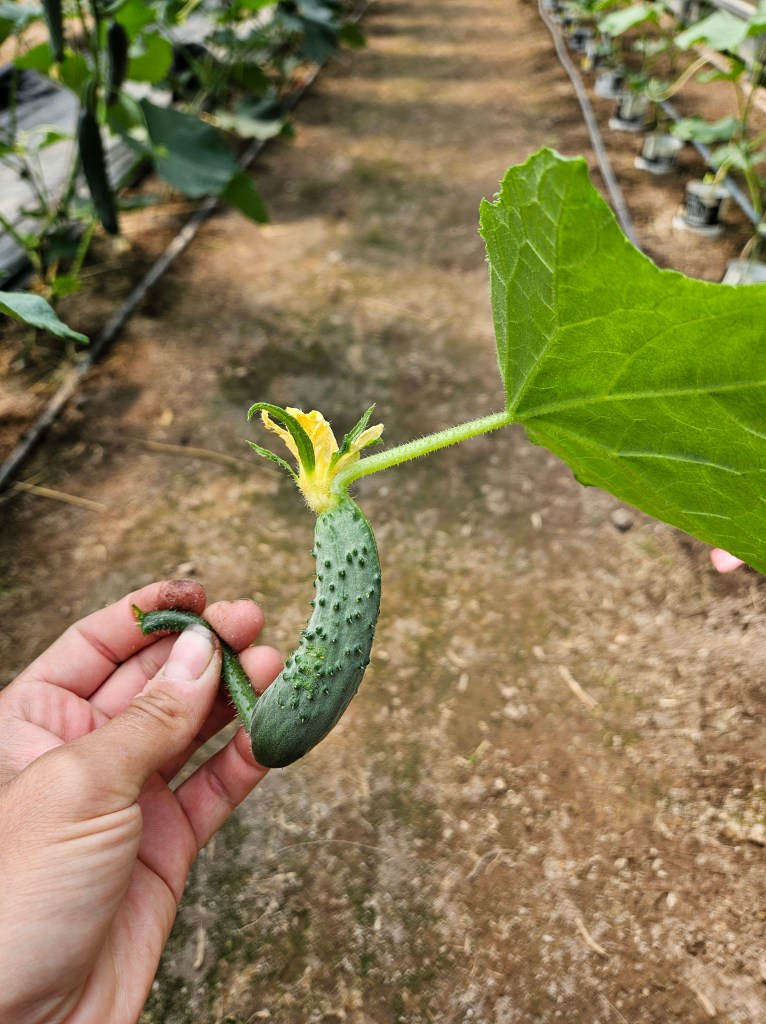
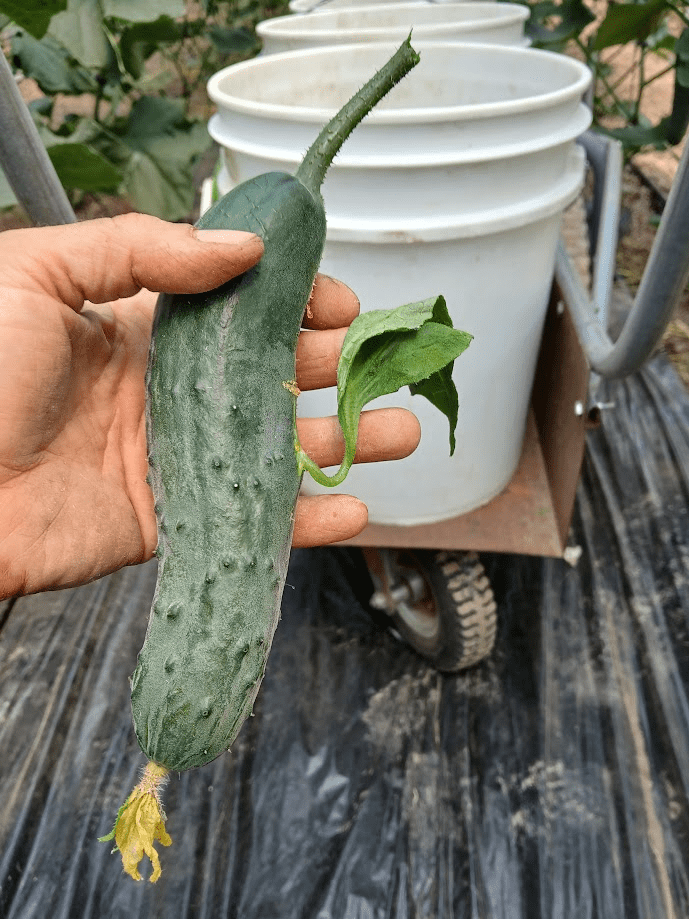
Our greenhouse cucumbers have been the source of most abnormalities. We’ve been finding fruit that has leaves growing out of it, tendrils that are trying to grow new plants, and baby fruit that is growing new branches out of the flowers. It looks crazy, but from the research we’ve done, it appears to be harmless. Google and our University extension expert, both tell us that this can happen when the plant goes through sudden temperature fluctuations. Over the last few weeks, we’ve had a few times where we go from 80° and sunny to 60° and cloudy in less than 24 hours. That large temperature change causes a lot of stress to the plants just like it does to humans. Vegetables tend to like consistency. Temps that stay the same, and watering that happens regularly and in the same amount each time. Unfortunately, we can’t control the weather (boy do we wish we could), so we just laugh about our freaky finds and keep harvesting away.

The other abnormality we noticed was that two of our onions have variegated tops. Normally onion tops are solid green, but two of the plants have green and yellow striped tops. This is due to a genetic disease called chimera. This is when the plants genetics cause it to produce chlorophyll incorrectly. Another weird thing that is completely harmless, yet something else that is entirely out of our control.

 This finding caused a little more panic than the cucumbers. Usually, yellowing on a plant points almost immediately to a disease or virus. We plant hundreds of onions, and rely on them to get us all the way to the end of Winter shares in April. One disease or virus could be catastrophic for us. Thankfully it seems like we’ll be okay, but we’ll still be keeping a close eye on the onions just to be sure.

Fortunately (or unfortunately) for all of you, none of these crazy vegetables will make their way into your boxes this summer. These stay at the farm so they can be fully inspected, and sometimes sampled, to see if further knowledge about the issues can be gained. The upshot of this story is that here at the Food Farm we aren’t perfect, but we promise to never stop learning and growing. I hope you all find ways this week to stay a little wild and weird just like the vegetables!

In your share this week:

Basil – Sugar Snap Peas – Carrots – Cauliflower – Cucumbers

Tomatoes – Garlic Scapes – Lettuce – Green Onions

Quinoa or grain salads are one of my favorite ways to eat veggies in the summer. They’re great fresh, but also delicious as leftovers once all the flavors have had even longer to marinate together. This Roasted Cauliflower Quinoa Salad is a great way to use up lots of veggies in this weeks share. This recipe calls for frozen peas, but if you wanted to use the sugar snap peas from your box, that would also be delicious. No need to shell them, just chop them up into bite size pieces, and continue on with the recipe as it’s written.

When basil season comes around, most people think of pesto. I immediately think of this Basil Raspberry Tea. With raspberries starting to ripen, this is such a fun and delicious drink to have on hand. It’s so refreshing after a hot day, and it’s easy to make ahead for those Summer get togethers, or just as a fun way to toast to the weekend. The recipe has both a cocktail and mocktail version so there’s something for everyone.

Summer CSA Week 6, 2025

We are directly in the middle of July, yet last week, quite a few conversations were being had about harvest season. 

The conversations mostly started because more pallet boxes, and our new harvesting conveyor arrived. The crew is excited to put both of these to use…but not for a while. We’re all enjoying the warmth and sunshine before the snow and cold inevitably arrive. 

Harvest conversations are a high priority at this time of year because Fall weather is so unpredictable around here. The math has been done over the years to figure out that most plants need to be mature by September 15th in order to have a bountiful fall harvest. The plants will still do a little growing after this date, but it will be minimal and much slower than any growth it would do between now and September. After mid-September, the sun loses a lot of its strength, and daylight starts to decrease quickly. The risk of snow and frost also increases as each day passes. 

This means, from here on out, we can only grow crops that are 60 days to maturity or less. The planting window for a lot of the crops we grow has officially closed. We are hoping to still seed some radishes, lettuce, and maybe radicchio but planting season is pretty much complete.

It’s also important at this time of year to consider if a crop can tolerate frost or not. Zucchini and summer squash tend to have 60 days or less to maturity, but those plants don’t survive very long in temps consistently below 50°, whereas radishes and lettuce do best when grown in cooler weather and can handle a light frost. If the weather is too hot, radishes have a tendency to skip growing the radish root that we eat, and go straight to growing flowers and seed pods. If they do happen to grow a radish, the root can go from decent sized to massive and woody very quickly. Not ideal! Lettuce stays sweeter and more tender in cooler weather. At the peak of summer, lettuce can sometimes become bitter from the heat. 

Thanks to our greenhouses, we can sometimes grow vegetables with a longer maturity. These vegetables take quite a bit of planning. At the end of June, we seeded celery. The intent is to plant it this week in one of our greenhouses, and keep it there until our first Winter CSA boxes go out in November. Celery usually takes about 100 to reach maturity. In the field, the celery wouldn’t size up in time, and the cold weather of October could damage the plant, even though it can survive light frosts. The extra heat and protection from the greenhouse will allow us to keep the celery fresh and beautiful until November.

Feels crazy to talk about frost and the end of the season when we are just beginning to harvest cucumbers, and all of our tomatoes are still green. Thus is farming!

In your box this week:

Cucumbers – Napa Cabbage – Garlic Scapes – Beets – Broccoli – Carrots

Greens Mix – Lettuce – Green Onions

Our lovely volunteer Patricia shared this recipe with me. It’s so good I had to share it with all of you. It’s a Broccoli salad recipe from Love & Lemons. This salad is sweet, smoky, crunch, and a little tangy. It’s perfect for this hot weather that we’re having. It would be great to accompany a main meal, as a light lunch, or top it with some grilled chicken or shrimp to make it a more filling meal.

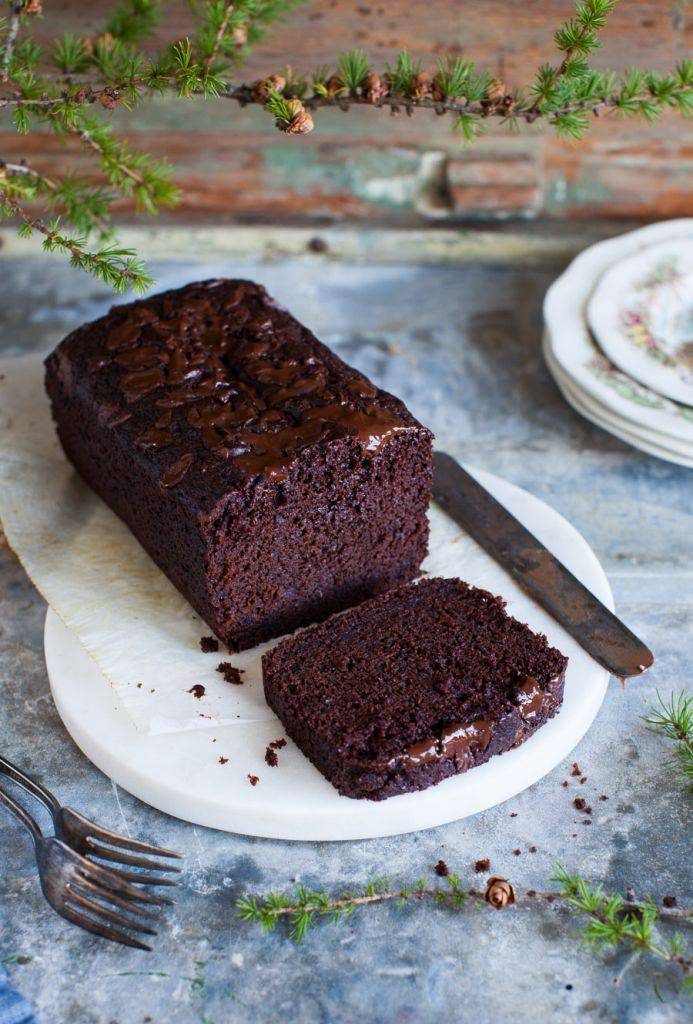
I love beets, but every year I get tired of making the same recipes over and over again. Whenever I hit the beet slump, I pull out this recipe for a delicious chocolate cake. The beets and dark chocolate help to make this cake not overly sweet. The chocolate hides the beet color and most of the flavor, so even people who aren’t fans of beets will never know they’re hiding in there.

For the farm crew,

Jennifer

Summer CSA Week 5, 2025

Last week we focused on beautifying the farm. Around here, that means weeding, weeding, and more weeding. The rain recently was nice for the crops, but it also triggered a lot of weed growth. Plants appear happier and healthier after a thunderstorm because lightening acts as a natural fertilizer. The heat from lightening breaks down atmospheric nitrogen, which then mixes with the oxygen in the air to form nitrates. The nitrates are then dissolved in the rain water, and arrive to your plants and soil in the form of rain drops. This amount of nitrogen from a thunderstorm is so small compared to the amount plants need to be happy and healthy, but it’s more nitrogen than plants receive from a standard watering. We’ll call that a win! 

It’s important we get rid of the weeds as soon as possible. Not only are they unsightly, they also steal moisture and important nutrients from the crop, and they’re much easier to kill when they are small. 

Thankfully our crew worked extra hard through the heat, and got all the plants back in tip top shape. All the fields have been hoed, the greenhouses have been weeded and pruned, and some fields even got flame weeded. 

The crew taking a well deserved ice coffee break

The other exciting thing that happened last week was (drum roll please)…. our pack shed addition got walls and a roof! We are so excited to start seeing this expansion really take shape. You can now see where the new cooler will be, and all the extra space the crew will have. On retail and CSA boxing days, the crew is frequently bumping into each other due to tight corners. Soon we will have so much room to spread out. 

Our hope is to use the new cooler to store our cucumbers and zucchini in the summer once they’ve been harvested. These two vegetables are very sensitive to the ethylene gas that other fruits and veggies give off, especially the melons. Having their own space will help to maintain the quality of the vegetables, while offering more space in our main coolers for other vegetables to be stored. We can’t wait to keep sharing construction progress with all of you!

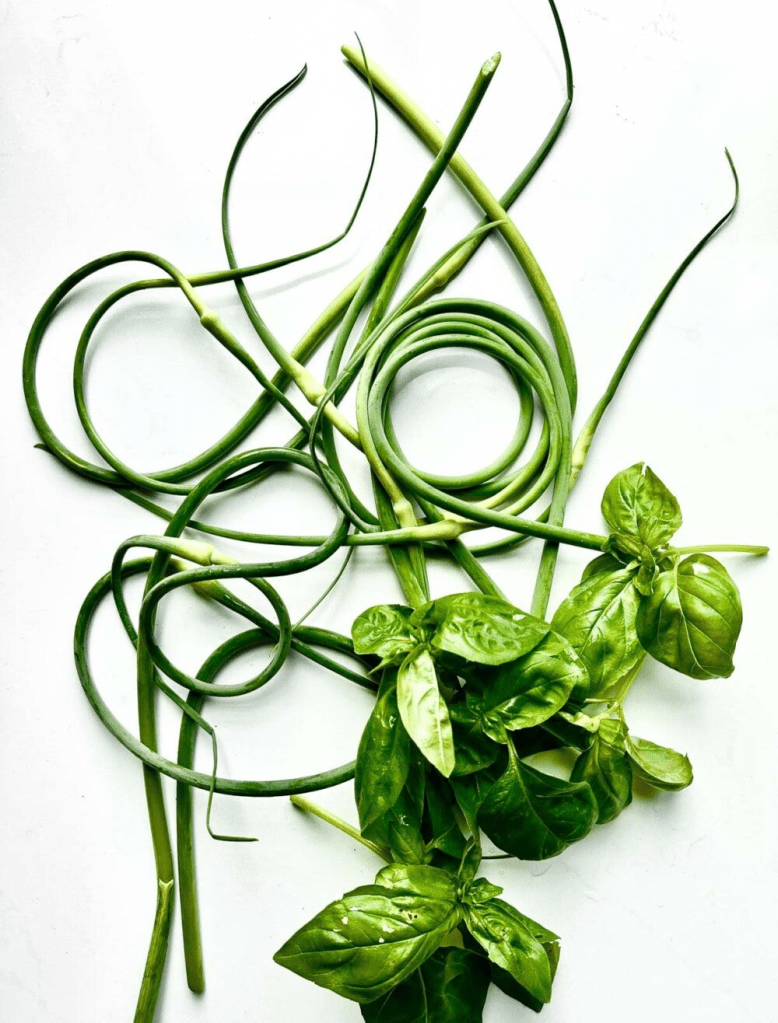
This week, we are reintroducing an exciting veggie, the garlic scape. Garlic scapes grow from the center of the garlic bulb. If you’ve ever opened a bulb of garlic and noticed the hard stem that’s directly in the center of it, that’s where the garlic scape came from. It’s this funny looking little curl that pops up, and would eventually create a flower. If we want our garlic to keep growing big, beautiful bulbs, we have to remove the scape. If it gets left on the plant, the garlic will put a lot of its energy into trying to grow a big flower rather than a big bulb of garlic like we want. These scapes may seem intimidating at first, but I promise you they are delicious. You can chop them up and use them in place of any recipe that calls for garlic. The scapes have slightly milder flavor, so a good ratio would be 3 scapes for every one clove of garlic. I’ve attached some fun recipes down below, so happy scape season and happy cooking!

In you share this week:

Garlic Scapes – Broccoli – Carrots – Kale – Lettuce – Green Onions – Parsley

I love this recipe collection from Heartbeet Kitchen. People usually hear about making pesto with scapes. It’s a delicious idea, but sometimes you want to try something new. This collection lists 11 wonderful recipes (including a pesto) for you to test out the scapes. #11 even includes a parsley butter. Check that one out if you aren’t sure how to use up all the parsley in your box this week.

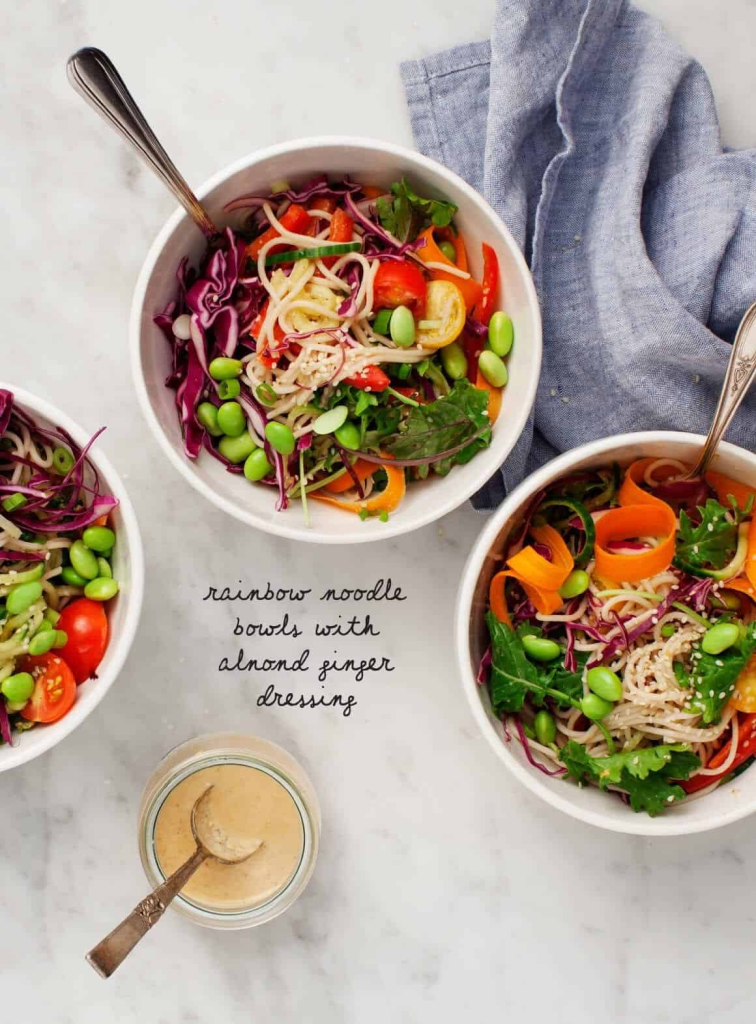
These rainbow bowls from Love & Lemons are a beautiful way to use this weeks produce. The kale, carrots, and green onions would be wonderful in this bowl. If you still have pac choi or napa cabbage leftover from last week, both of those would be great additions to this. This is an easy recipe to keep throughout the season as it will work well with a lot of vegetables we will be sending you.

For the farm crew,

Jennifer