Fear and Loathing and the Variegated Cutworm

My mom mentioned in the weekly email this week that I discovered that caterpillars had eaten about 500 broccoli plants on Saturday night and that I was going to post some more info about it. Here’s what she wrote:

On Saturday night we discovered that one of the caterpillar pests we mentioned last week has eaten about 500 broccoli plants from our latest planting. These worms have been a problem this spring in the greenhouse, but not outside under row cover. Our neighbors have had problems in their pac choi outside, so we’ve been keeping an eye on each planting. However, the last planting we set out was split between two fields, and those 500 plants happen to be in a field we don’t walk by very much and they’re under row cover. The one field has been looking great so we were shocked to discover the infestation in the other and confused at the difference. It turns out that we used different cover crops in the two fields, and the caterpillars preferred the one that had been planted with sweetclover rather than rye and vetch. For now, we’re investigating what strategies work to control the little buggers.

So the name of the pest is the Variegated Cutworm. You may have read about it in the Duluth News Tribune near the end of May–while we’ve had other varieties of cutworm up here for a long time, this variety cannot typically overwinter here and hasn’t made it this far north before. We first noticed them in the greenhouse, eating spinach and carrot seedlings just as they emerged. They are generally nocturnal so we had a difficult time observing them at first, but now they have thoroughly infested three of our 6 greenhouses. We’ve never experienced a pest with as wide a range in appetites as this. Their favorites thus far seem to be spinach, broccoli, greens mix, beet greens, turnip greens, and any type of small seedling. They have also eaten off the stems of 6″ tall tomato plants, small cucumber plants, rhubarb leaves, and they are really attacking the hostas and mint that we have planted around the house. Their latest victim is green onions–they like to eat the tops off and crawl inside the hollow leaves and eat their way back out again. In my research, it also sounds like they will eat potato plants, which are mildly poisonous and tomatoes; we haven’t had any damage yet, but we should be seeing some begin to ripen in the next two weeks and that’s when we’ll really get nervous. That is an amazing variety of plants that play host to these caterpillars, and it has us worried that they will continue to be a significant problem this year, especially as plants become more stressed due to excess moisture.

As far as controlling them, our hope is that on outdoor crops the birds will help with control. The broccoli that were eaten were under row cover in order to protect them from the root maggot fly, but that protected caterpillars from bird predation. Root maggots aren’t as much of an issue after late June, so the last three plantings of broccoli won’t have to be under row cover. There are a few naturally-derived substances that are organically approved for insect control. DiPel, a variant of bT that’s targeted to caterpillars, hasn’t been very effective on cutworms when we’ve tried it in the greenhouse. Two other products are both expensive and affect a broader range of bugs, so we’re not very excited about using them. We are in the process of experimenting with Neem Oil, which is extracted from the seed of the Neem tree, an evergreen tree in India. It has been used traditionally for medicinal uses, as well as a pesticide and repellant for insects. While it doesn’t kill them outright, it appears to repel caterpillars and disrupt their reproductive cycle. None of these are very good solutions, but hopefully they will be enough to reduce the caterpillars’ destructiveness and get us through the year. I, for one, am hoping for a normal Minnesota winter so that they can’t overwinter here and are driven back to warmer climates where they have more natural enemies. Another long-term solution is tilling under cover crops a week or two earlier so the caterpillars don’t have a food source and die before the regular crop is planted.

As organic farmers, the goal is not to simply replace a chemical-based pesticide with one that’s less harmful, it’s really a change in mindset. What we try to do when a new pest, disease, or weed shows up is try to understand the organism and use that knowledge to disrupt its habits and lifecycle in order to minimize the damage. At times we still use products such as DiPel to reduce populations of Imported Cabbage Worm, for example, but when we do it’s in the context of a system that is organized around the goal of strengthening crops and beneficial organisms, and looks at the long-term health of these as the key rather than sacrificing these to the short-term goal of pest eradication.

Image

This photo was taken on June 10th, 3 days after planting the broccoli (under the rowcover).

Image

A closer view of the most beautiful sweetclover cover crop we’ve ever grown. This should have provided much of the fertility needed to grow the broccoli, breaking up the subsoil with its deep taproot, and feeding billions of beneficial soil bacteria. Unfortunately, it also appears to have attracted hundreds of cutworm moths whose larvae soon hatched and destroyed the broccoli.

Image

Those little sticks used to be vibrant transplants!
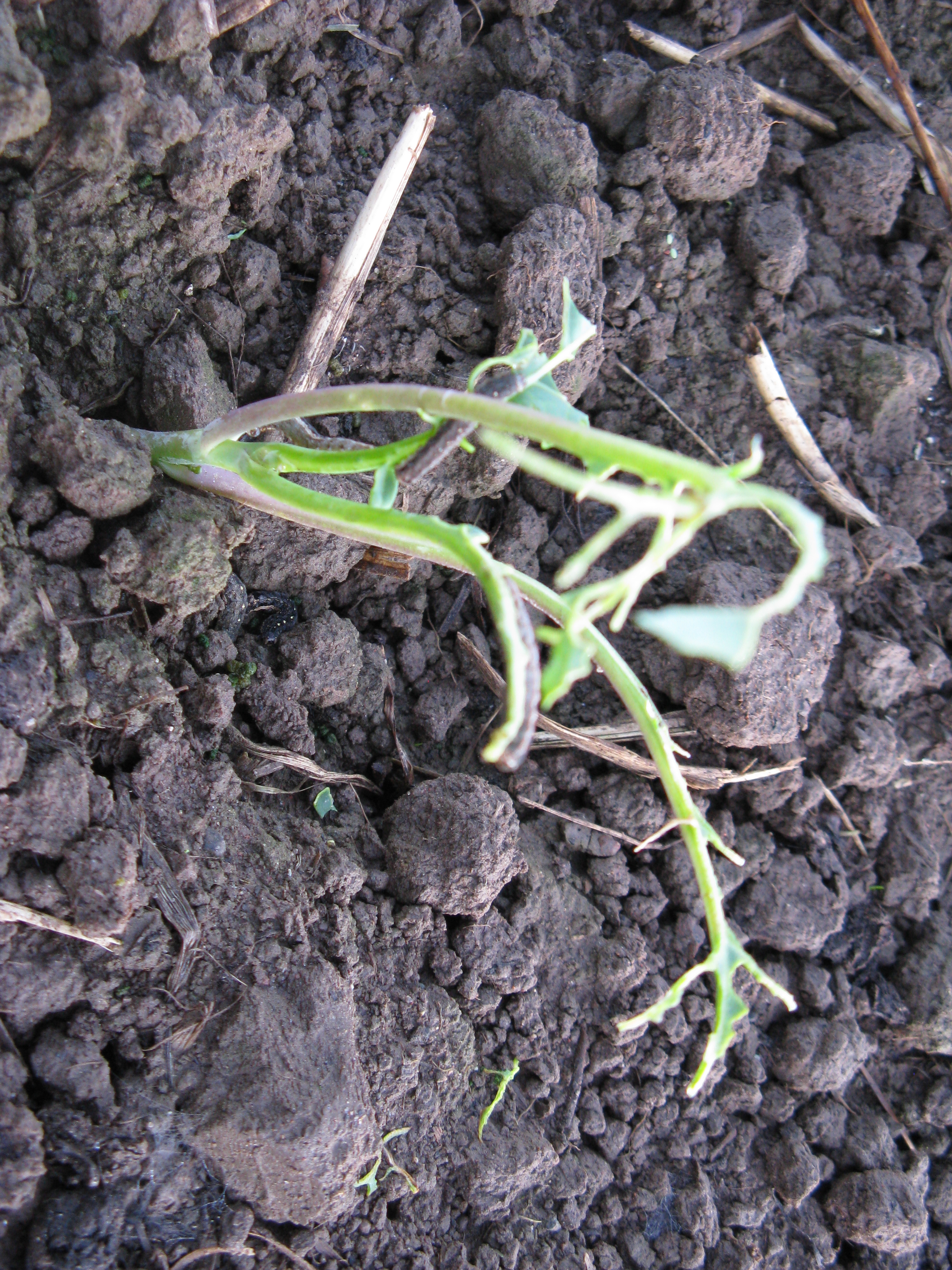
Image

If you look closely, there are 5 caterpillars on this poor little plant. The average was about 4 per plant.
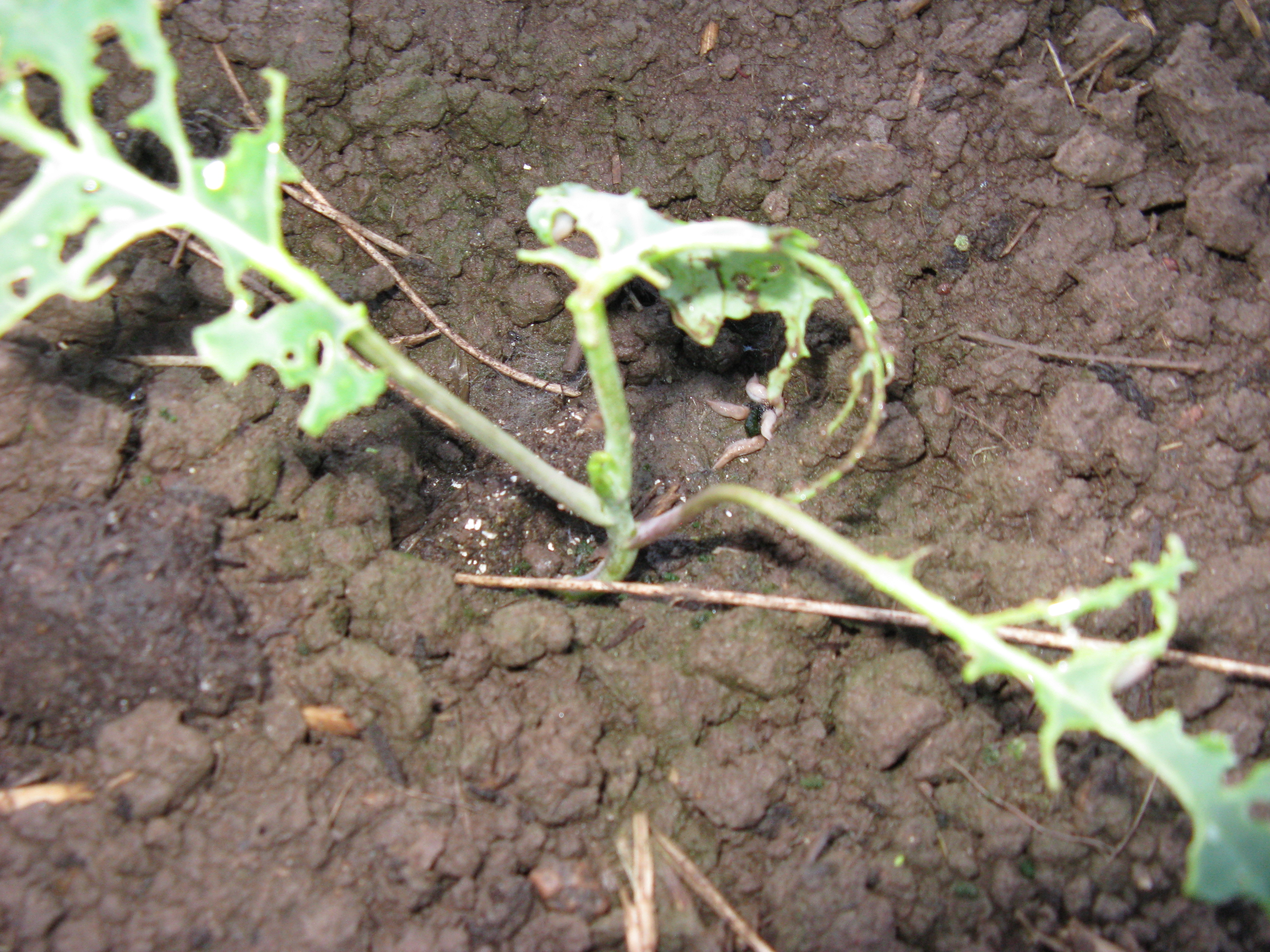
Image

The caterpillars seem to have left a little bit of leaf matter on this plant, so the slugs have joined the party to finish it off!
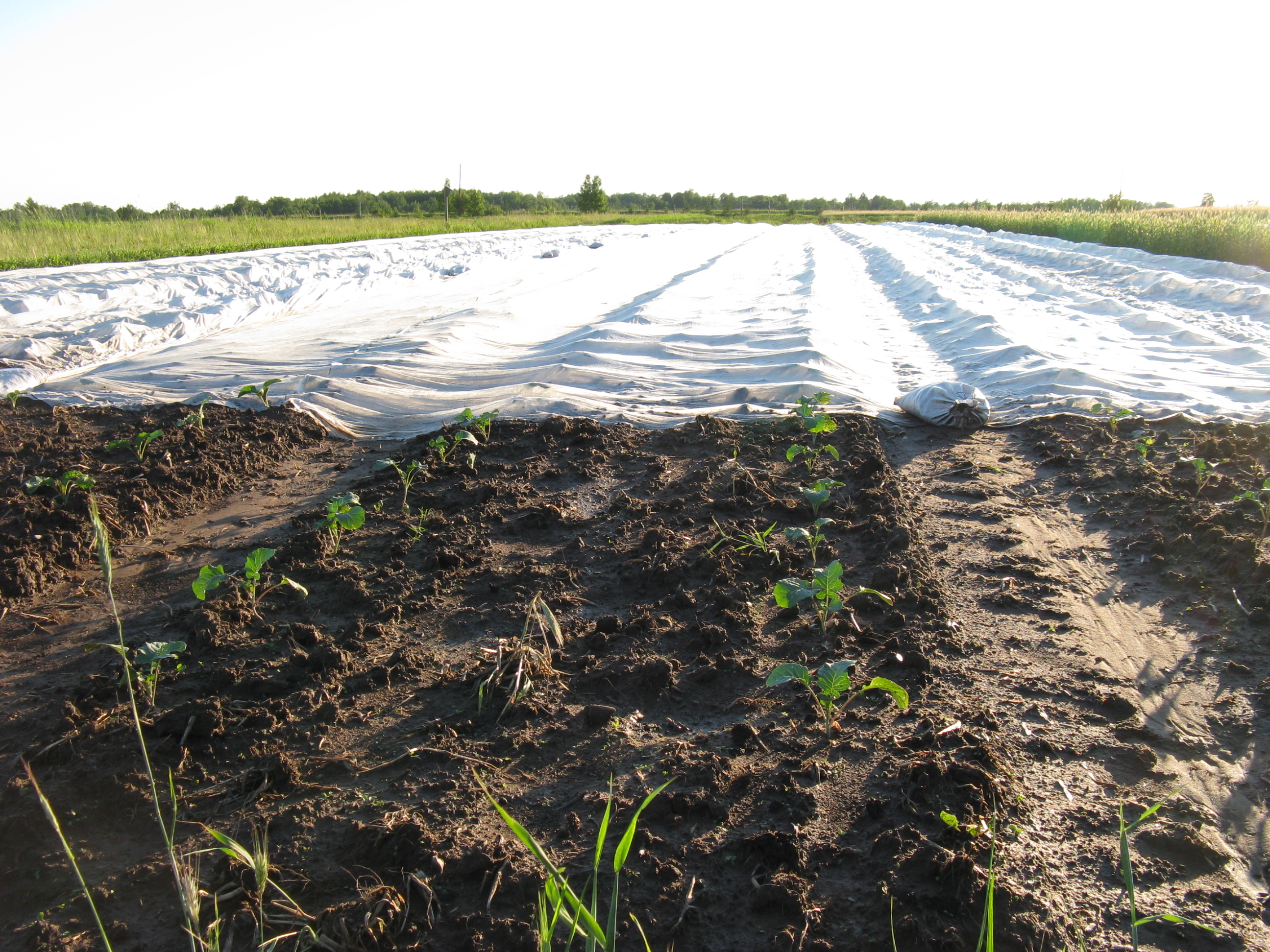
Image

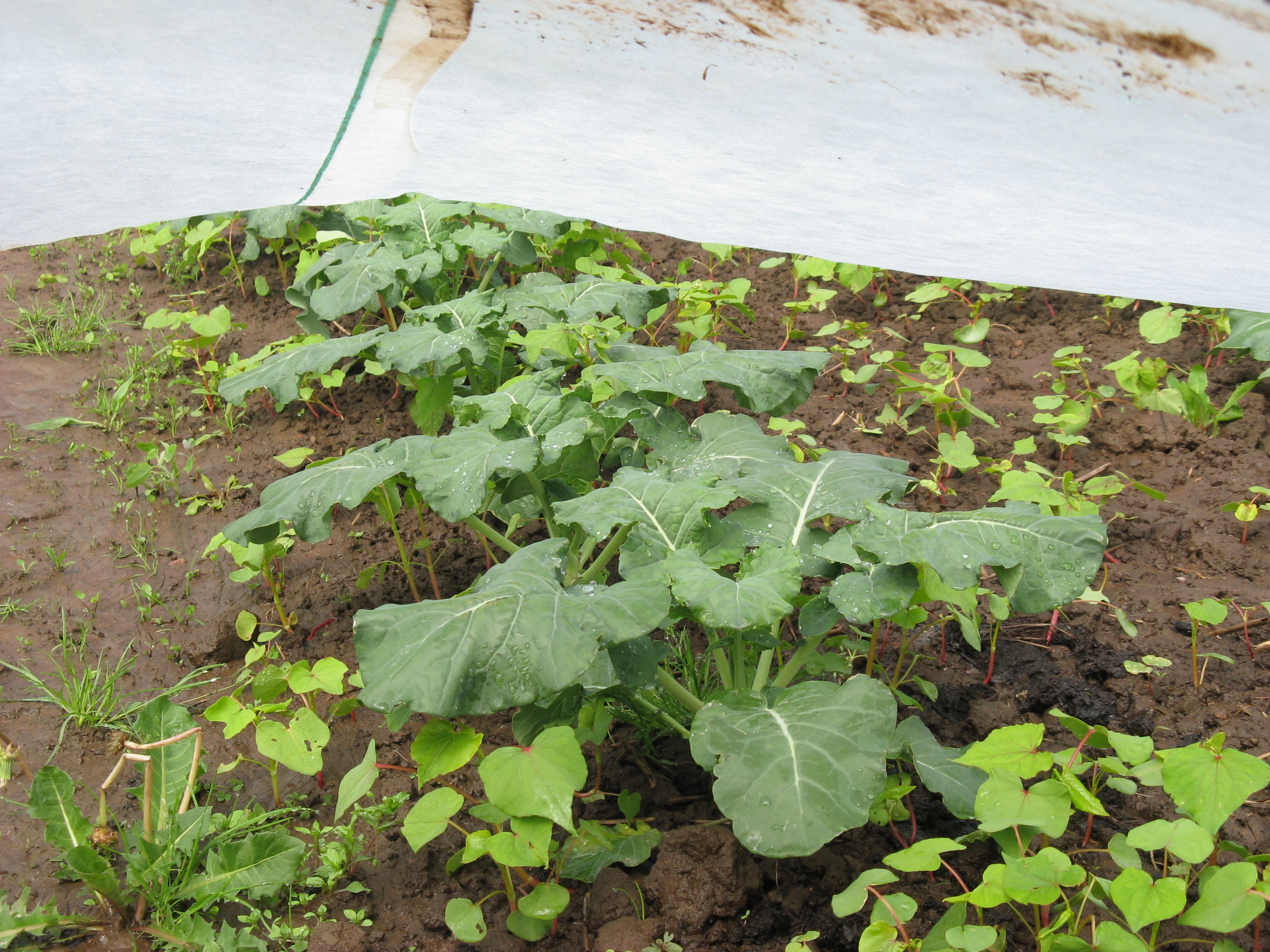
These are the broccoli plants in the other field that has not been affected by the cutworms yet. They look great! (Please note, these pics were all taken before the 9.1″ of rain we got Tuesday night and Wednesday morning. I’ll have another depressing post about that later.)


Week 2 Summer Shares

Hello Food Farmers,                                                                              18 June 2012

Thanks to everyone who helped make the first delivery of the season go so smoothly!  In addition to the farm staff we had harvest and delivery help from Joe and Anjay Lindgren and Rollie and Tracy Bockbrader, the seven pickup site hosts had their spaces all prepared, and most of the shares found their way to the proper sites and families.

We are also grateful for the patience shown by those whose shares were not at the expected site due to our mix-up!

The early potatoes are doing well. Tomatoes both in the high tunnel and outside are looking really good.  The onions, leeks, and garlic are vigorous.  The chickens are out on pasture and doing well, happy for lots of bugs and green grass. We’re really hoping we don’t get soaked in the next few days because most things are pretty happy!

On Saturday night we discovered that one of the caterpillar pests we mentioned last week has eaten about 500 broccoli plants from our latest planting. These worms have been a problem this spring in the greenhouse, but not outside under row cover. Our neighbors have had problems in their pac choi outside, so we’ve been keeping an eye on each planting. However, the last planting we set out was split between two fields, and those 500 plants happen to be in a field we don’t walk by very much and they’re under row cover. The one field has been looking great so we were shocked to discover the infestation in the other and confused at the difference. It turns out that we used different cover crops in the two fields, and the caterpillars preferred the one that had been planted with sweetclover rather than rye and vetch. For now, we’re investigating what strategies work to control the little buggers, and Janaki will be posting some photos on the blog.

Today’s share: Broccoli, Cucumber, Baby Lettuce Mix, Pac Choi* (also called bok choy), Spinach, Turnips, Radishes

STIR-FRIED PAC CHOI with GINGER and GARLIC                      from: foodnetwork.com

1 Tablespoon olive oil                                                                        2 – 3 cloves garlic, minced

1 – 2 Tablespoons fresh ginger, minced                                          1 head chopped fresh pac choi (up to 8 cups)

2 Tablespoons good soy sauce                                                         Salt and pepper to taste

Heat oil in a large skillet over medium heat.  Add garlic and ginger and cook 1 minute. Add pac choi and soy sauce, cook 3 – 5 minutes, until greens are just wilted and stalks are crisp-tender. Remove from heat, season with salt and pepper, and serve.

This is a great side-dish along with rice or Asian noodles. Leftover meats sliced thin may be added

SPINACH MANICOTTI

Prep Time: 15 minutes                       Cook Time: 1 hour 10 minutes                         Servings: 7

1 15 ounce container nonfat ricotta cheese                         1 Tablespoon Italian seasoning

2 cups shredded mozzarella cheese, divided                             1 teaspoon garlic powder

1 bunch fresh Spinach, washed, stemmed and chopped             1 teaspoon onion powder

½ cup sour cream or cottage cheese                                               2 cups tomato juice

1 (15 ounce) can crushed tomatoes                                                 1 cup chunky salsa

14 uncooked manicotti shells                                                     ¼ cup dry bread crumbs

In a large bowl, combine the ricotta, 1-1/2 cups mozzarella cheese, spinach, sour cream, bread crumbs, and seasonings. Combine the tomato juice, salsa and crushed tomatoes; spread 1 cup sauce in an ungreased 13 x 9 inch baking dish. Stuff uncooked manicotti with spinach mixture; arrange over sauce. Pour remaining sauce over manicotti.

Cover and bake at 350 degrees for 55 minutes. Uncover, sprinkle with remaining mozzarella cheese. Bake 15 minutes longer or until noodles are tender.

SOY CUCUMBERS

1 tablespoon honey                                                            1 tablespoon good soy sauce

¼ cup rice wine vinegar                                                      1 teaspoon sesame oil

¼ teaspoon salt                                                                    Coarsely ground black pepper

1 unpeeled cucumber, thinly sliced

Place all ingredients in a bowl. Mix well and let stand 15 minutes. Drain before serving. These make a nice condiment served with salmon, salmon patties, etc.

First Summer Share Delivery!

Hello Food Farmers,                                                                   11 June 2012   

We want to welcome back all of our returning members and our new Food Farmers. We are sending 165 shares to over 250 households this season.  In spite of our best efforts, there may be some errors we didn’t catch. Please let us know if you have any problems. It’s your first share pick-up day for this season, so here is a reminder of what you need to do!

Sometime between 4:00pm and 7:00pm you arrive at your pick-up site to find a stack of reusable plastic boxes.  Before you take your box, you check the site for messages or a paper copy of Notes from Food Farm (unless you have signed up for the email version!) On one of the boxes, you find a sticker with your name on it.  That’s your box of veggies!

Opening your box is the best part.  The first few deliveries will contain lots of greens (this is northern Minnesota, after all).  The quantity and variety pick up rapidly as the season progresses. In fact, later in the summer the challenge is often, “How do I use all of this?”  Successful use of your share requires a different approach to meal planning than the conventional way. Instead of making a menu and then getting ingredients, try waiting to see what’s in your box and then planning accordingly.  There will always be at least one recipe featuring produce of that week in the Notes from the Farm.  You could also Google a vegetable and search for recipes and nutritional information from the drop down menu. Also, the Food Farm Cookbook is available for $10 and is a great resource.

It is very important that your share box be returned – clean – each week!

Some folks have trouble remembering to return their boxes each week. You may bring bags to transport your share back home, leaving your box at the site. Please clean any veggie bits and moisture out of the box before leaving. Or, you might try emptying, rinsing and drying your box as soon as you get your share home and putting the box right into the trunk of your car so you don’t have to remember it when you leave to pick up next week’s share.  A box that sits for a week or more with moisture and veggie bits is not pleasant for us to deal with!

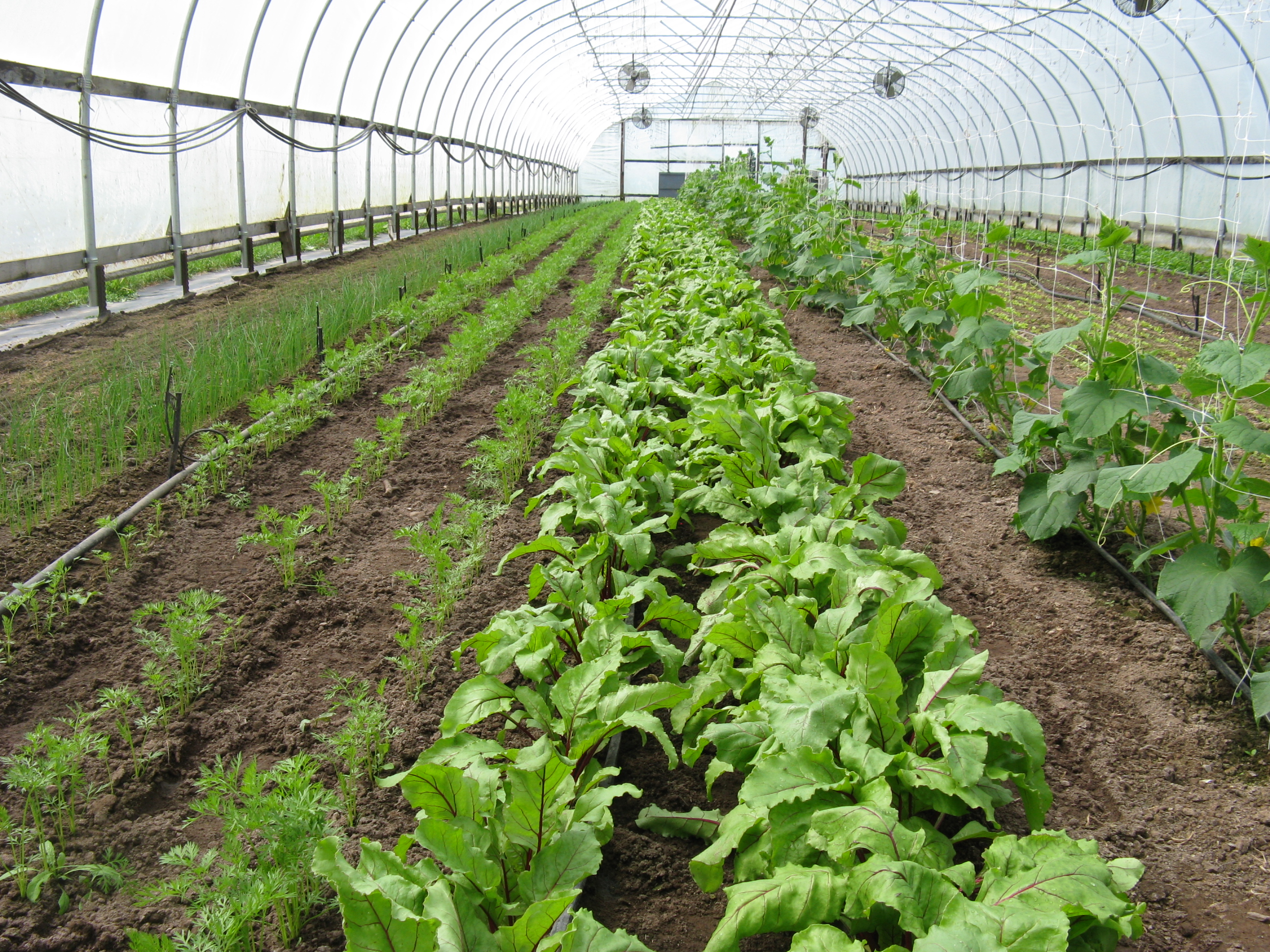
As you look at your box of veggies today try to guess what vegetable you are receiving 9 weeks earlier than last year.  If you guessed CUCUMBER you are right.  This spring we planted cukes in the ground in a greenhouse on April 13th.  The luscious beets, baby lettuce mix and spinach are grown in the greenhouse, as well.

The bad news is we probably won’t be able to send any SNAP PEAS this year. The 8 inches of rain we received between May 22 and May 30 washed out the seed of three successive plantings.  More than $125 worth of seed and all our hopes for one of your favorite summer treats, down the drain.  Also, the first and third plantings of the brassica family – broccoli, cabbage, cauliflower – are heavily retarded in growth due to the same drenching. The plants that have survived are stunted and will produce very small heads. Fortunately we have six successive brassica plantings, and the others are looking more promising.  Another quirk we are noticing this season is a proliferation of moths in varieties we rarely see.  They are producing numerous caterpillars which are munching the leaves of plants even in our greenhouses, so you will notice some holes in the spinach especially.

FOR EGG SHARES ONLY!  REMINDER!    Eggs will be delivered to your summer share pickup site TODAY, and each week for the summer share season.  The eggs will be available only during normal summer share pickup time – 4pm to 7pm.  There will be a cooler at each site containing the number of dozens needed for Egg Shareholders only. PLEASE CHECK OFF YOUR NAME WHEN YOU REMOVE YOUR DOZEN FROM THE COOLER! Empty cartons may be left when you return your veggie share box each week, please stack them neatly and return only one-dozen-size, clean, serviceable, cardboard egg cartons.

Today’s share: Green-topped Beets, Cucumber, Baby Lettuce Mix, Pac Choi, Rhubarb, Spinach

CELESTIAL SOUP with SPINACH                   Easy to make and very delicious!

4 green onions, minced              ¾ t. salt                        1 t. peanut or sesame oil                        2 T. soy sauce

6 cups chicken, vegetable broth, or water            3 cups (or more!) spinach or other greens

Mince scallions, chop spinach, place everything in a deep bowl. Bring liquid to a boil, pour over chopped veggies. Cover and let stand for a few minutes & serve.   You may add splash of lemon juice to each serving.             Makes 6 servings


Beet Raita with Dill, Lime, & Honey                                   from Jackie Falk

¾ cup plain yogurt                                             2 T. chopped fresh dill

1 ½  t. honey                                                     1 ½ t. fresh lime juice

½ pound beets, washed & grated

Whisk together the yogurt, dill, honey, & lime juice in a bowl. Add the beet and mix thoroughly. Chill & serve cold.  Raitas are usually served with spicy dishes to cool the palate. Makes 1 cup.

Rain rain go away!

Hello Food Farmers!

Just a quick note and a few updates. Your spring Hot Compost newsletter went in the mail on Friday and should be showing up in your mailboxes shortly. It has all sorts of information about the coming year as well as your summer share pickup site and instructions. I’m also emailing a pdf copy to everyone, although it doesn’t contain your pickup site assignment.

There were two websites mentioned in the article about increasing healthy food access. Here is the link to Harvest for the Hungry (and I’ve attached some more information about the program to this email).

https://www.emergencyfoodshelf.org/OurFamilyOfPrograms/HarvestForTheHungry/OverviewAndAccomplishments.aspx

Here’s the link to the Good Food Network: http://www.goodfoodnetwork.org/

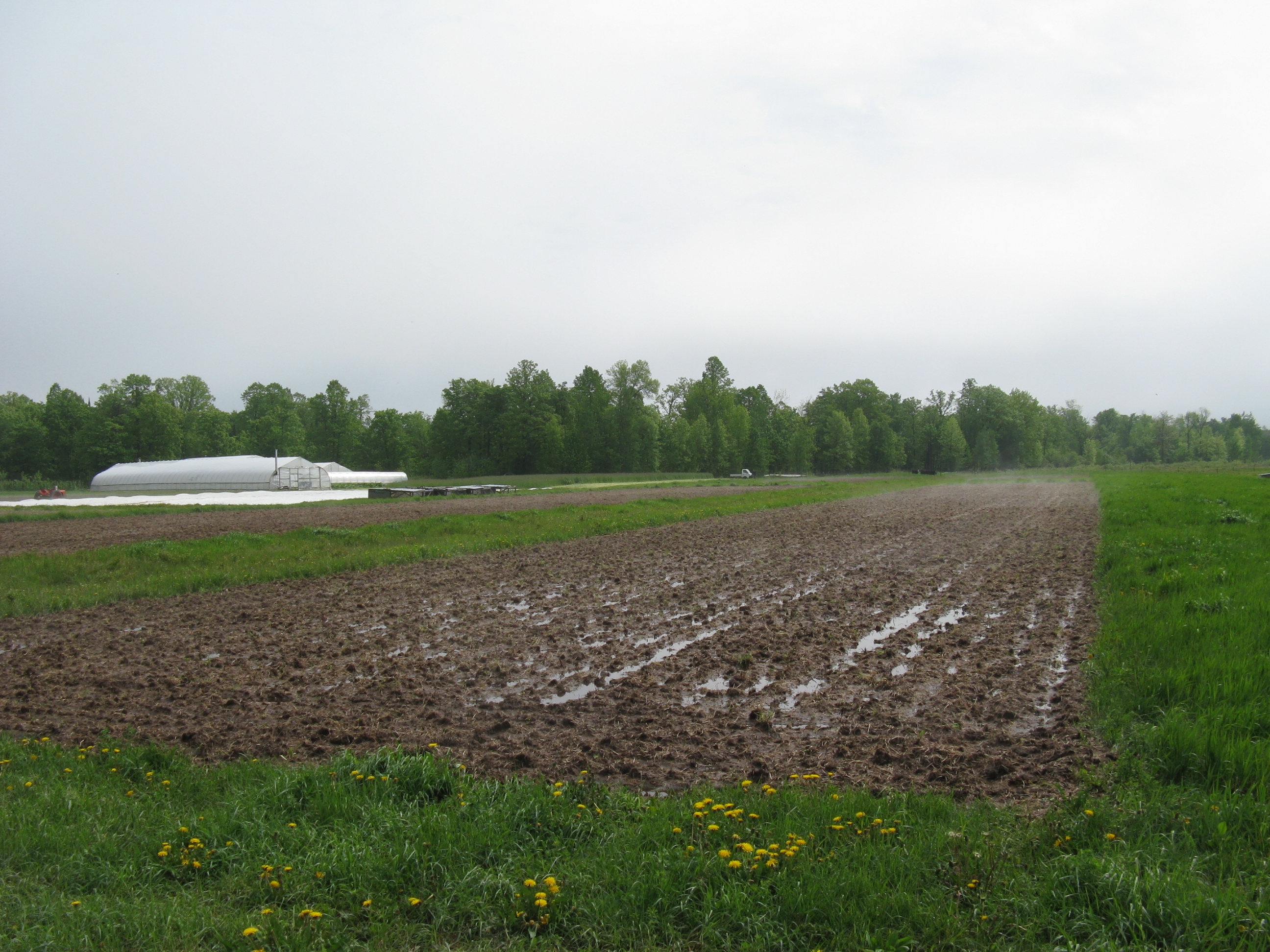
Finally, you may have noticed we’ve had a ton of rain recently and I’m sure you’re wondering how that’s impacting the farm. We’ve received nearly 8 inches of rain in the last 9 days, and because our land is pretty flat there is standing water in many fields.

We’re especially concerned with the peas, spinach, and early kale and it looks like those crops may not make it through. The first planting (2 beds) of carrots are probably not worth saving, but amazingly the rest of that field looks OK (8 beds). Even though the seeds were just germinating, it looks like only a small percentage of the seed was washed out and if we have nice weather in the next few weeks they should pull through. The fields with early potatoes, onions and broccoli are all quite wet but they will probably survive as long as we get some heat and wind to dry things out in the next few days. We are fortunate that many of the transplants are still in the greenhouse waiting to go out once the fear of frost is gone, so they are looking very good still. However, the fields that we’re supposed to plant into will take nearly 2 weeks to dry out at this point, so we’re a little concerned the plants will be stressed by the time we can get them into the field.

Many of the veggies in our early share boxes are planted in the greenhouse, and most of those things look good, including an early planting of cucumbers that might be ready for the first delivery! We’re excited for a good year of veggies, even though things don’t look very nice right now.


I took the photos this morning before we got another 1/2″ of rain, but after Ben’s cows arrived!

Think sun!

For the farm crew,

Janaki


Food Farm in the news!

Hello everyone, just a quick post to let you know about a couple of fun things the farm has been a part of lately. We were in an article in the Duluth News Tribune about the growing CSA movement in the northland back in March. In early April we were the subject of a podcast done by the Land Stewardship Project on farm transitions between generations. Finally, we were just featured in a story about local food in health care and educational institutions in the News Tribune today. The links are below if you’d like to check us out . You can download the podcast from LSP’s website, or subscribe on iTunes by searching for Ear to the Ground.

The spring is going well so far at the farm, hopefully we’ll post some pictures soon!

http://www.duluthnewstribune.com/event/article/id/226760/
http://www.landstewardshipproject.org/podcast.html?s=A+pioneering+csa
http://www.duluthnewstribune.com/event/article/id/229454/