Summer CSA Week 12

Thanks to everyone who spent their Saturday with us. We loved getting to meet so many of you, and having the opportunity to show all of you this beautiful space we love!

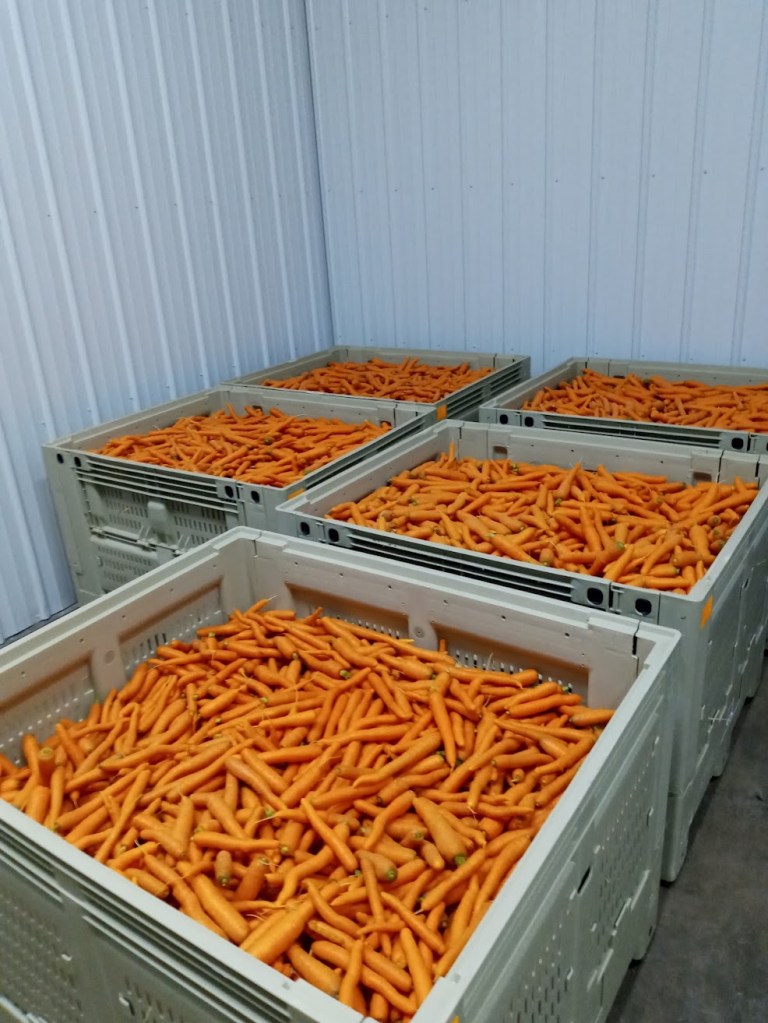
Last week was BUSY here on the farm! We spent the beginning of the week getting the rest of the first two plantings of carrots out of the field and washed. We now have about 7,200 pounds of carrots in our root cellar waiting to be put in your weekly share boxes, and eventually hitting grocery store shelves and restaurant plates.

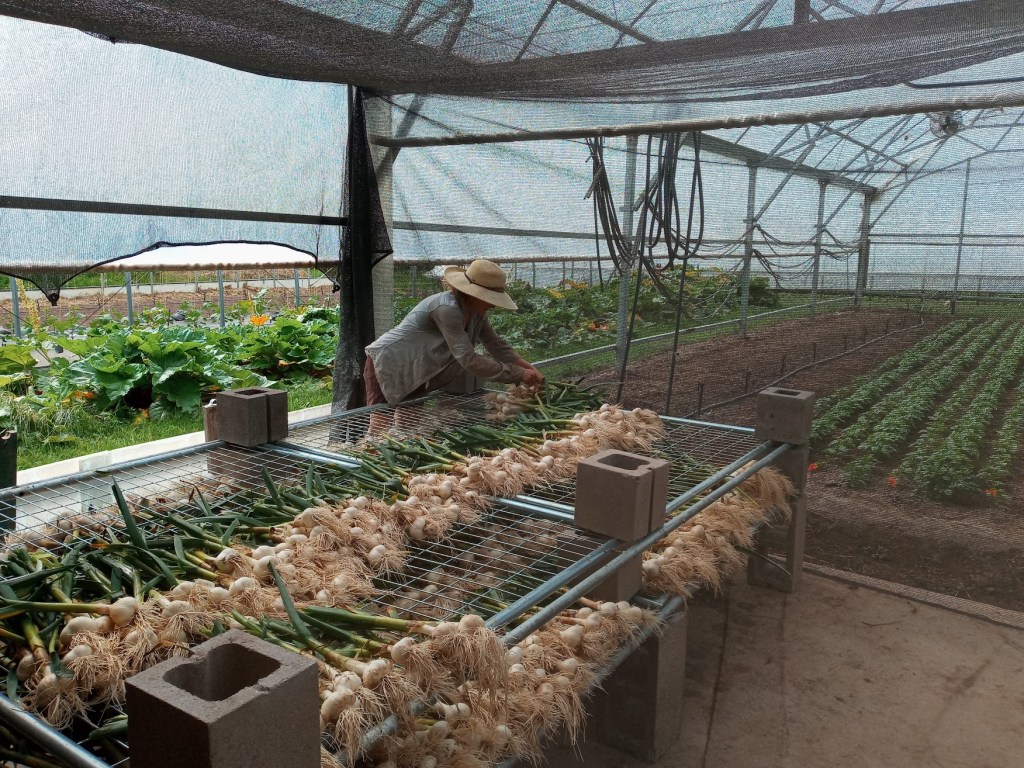
Now that the first two plantings of carrots are out of the field and washed, we were able to turn our attention to other crops. We spent time pulling all of the onions, and laying them on the plastic mulch to begun the drying process. We leave the onions here for a week or two to let the sun and wind naturally start drying them out. After the onions have begun to dry and form their protective outer shells, we cut off the stem, move them to drying racks in the greenhouse and place them in front of fans to fully dry for winter storage. We usually dry the garlic and have plenty of time to put all the garlic away and clean up the greenhouse before it’s time for the onions to dry. However, if you haven’t caught it yet, this year has been a wild and unpredictable year on the farm. We had to pull the onions a little early this year because some of them had started to bolt. Bolting is when a plant prematurely puts on flowers.

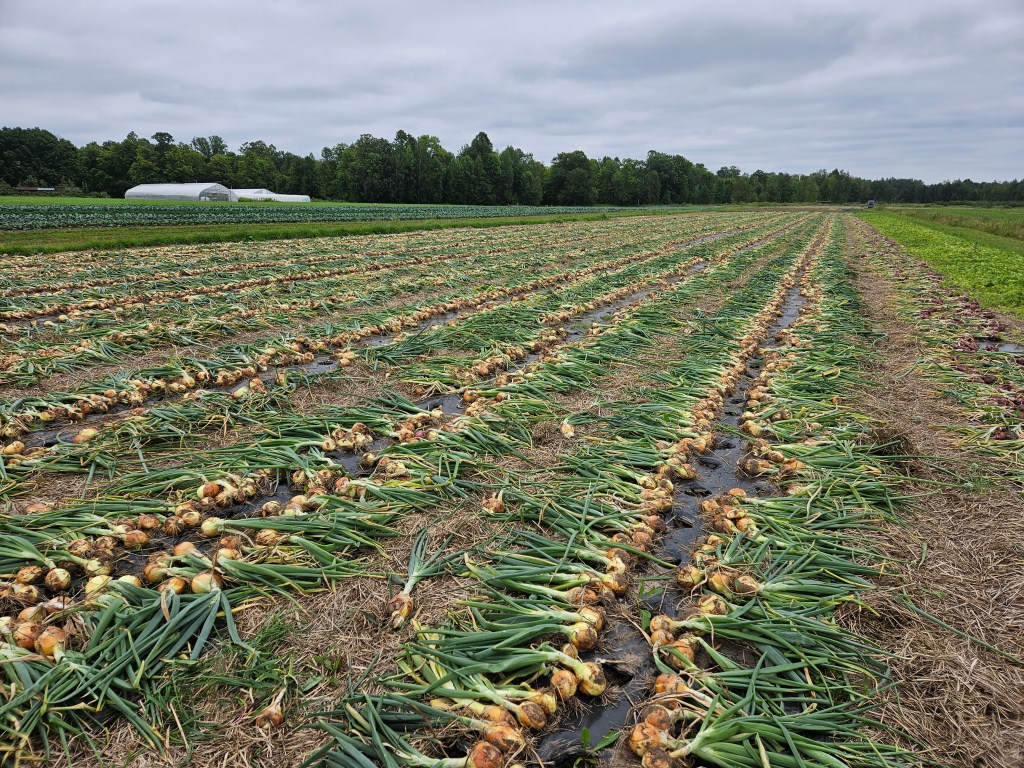
Onions are considered a biennial plant. This means in the first year, we plant the onions from seed and they will create the onion bulbs we all know and love. If we left them in the ground over winter, the next summer the onions would put on a flower and eventually that flower would create seeds (the same ones we plant to create this cycle). Every once in a while, the changes in the environment can confuse the onion into thinking it’s in its second year of growing and needs to put on a flower. Some of these environmental factors are too hot, too cold, too much water, or too little water. My research led me to learn that specifically when temps dip below 45°, the plant thinks it has entered “winter”, then when it warms back up, the plant thinks it has entered summer in year two leading it to put on flowers. Our best guess is that those few overnights in the end of June/early July that got down to low 40s, tricked the onions into believing they were in winter.

When the onions start to bolt, it’s important to get them out of the ground sooner rather than later because the big, thick stems, has the possibility to prevent the onions from properly drying. We rely on the dried onions in the winter for our Winter CSA boxes, and for selling to local restaurants. This means this year we will be drying garlic and onions at the same time. The greenhouse space isn’t big enough to handle both at once (hence why we usually dry one then the other), so we’ve had to get creative clearing out some other spaces to house the onions for a while.

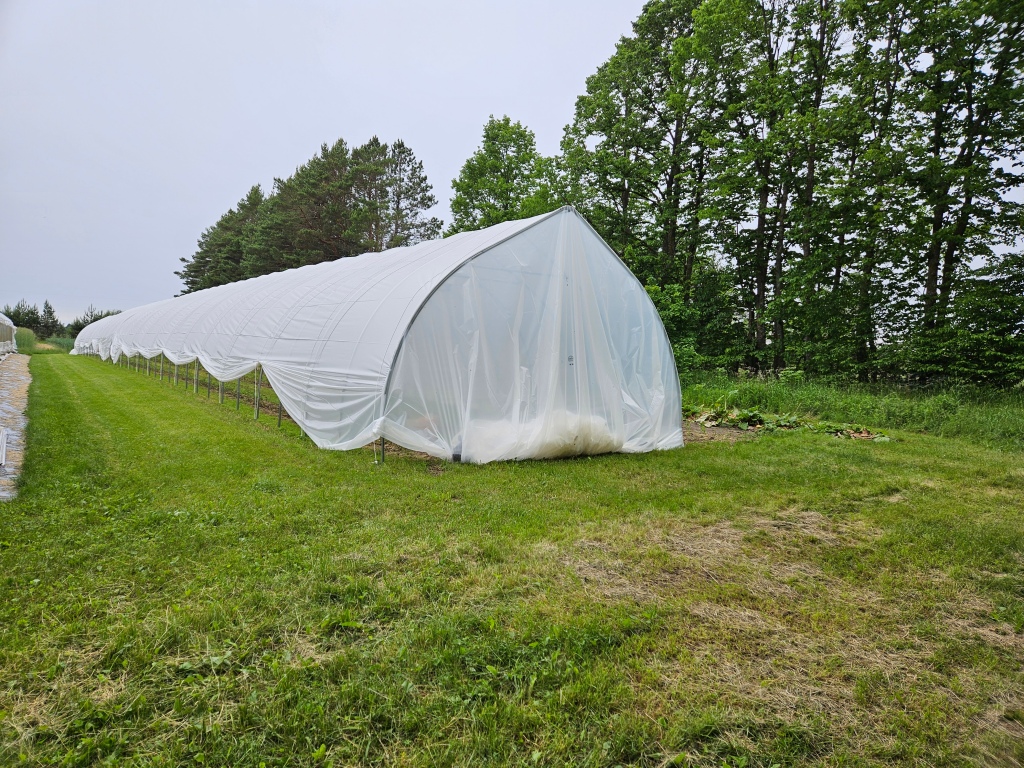
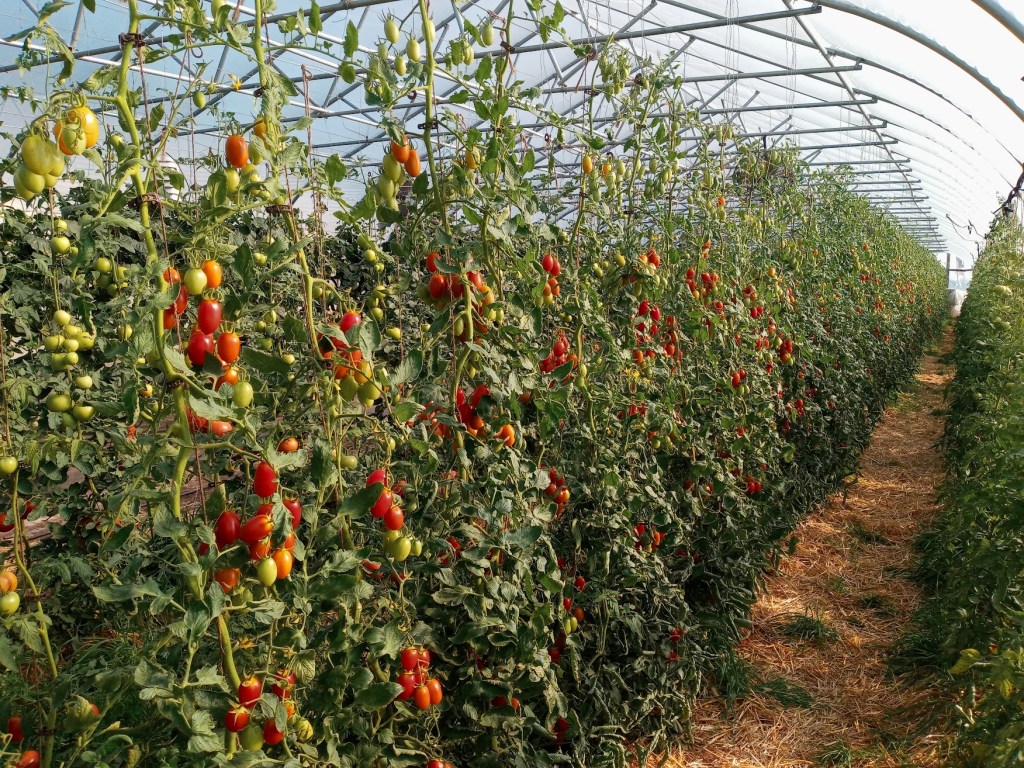
We also picked the first tomatoes from our caterpillar tunnel. We’ve learned a lot from having this new tunnel, but the taste of the tomatoes is the most important part. Beautiful looking plants don’t mean as much to us if the fruit it produces doesn’t taste good. We are doing a taste test of the tomatoes this week. We plan to compare the regular greenhouse tomatoes to the caterpillar tunnel tomatoes to see if one tastes better than the other, or if they are equally delicious. We plan to give you all a thorough update next week on both the tunnel itself and the taste of the tomatoes, so stay tuned!

In your share this week:

Thyme – Onions – Kale – Basil – Green Beans – Carrots – Tomatoes

Zucchini – Cucumber – Cilantro – Green Peppers – Hot Peppers – New Potatoes

Lemon Thyme Shortbread cookies

Ingredients

  • 3/4 cup unsalted butter, softened 
  • 1 1/2 cups powdered sugar, divided
  • 2 Tbsp. lemon zest, plus more for garnish
  • 1 1/2 tsp. chopped fresh thyme, plus more for garnish
  • 1/2 tsp. vanilla bean paste or extract
  • 1 1/2 cups all-purpose flour, plus more for work surface and cutters
  • 1/2 tsp. kosher salt
  • 2 Tbsp. fresh lemon juice (from 1 lemon)

Directions

  1. Beat butter and 1/2 cup of the powdered sugar in a stand mixer fitted with a paddle attachment on medium speed until smooth, about 1 minute. Beat in lemon zest, thyme, and vanilla until combined, about 30 seconds.
  2. Whisk together flour and salt in a medium bowl until combined. With mixer on low speed, gradually add flour mixture to butter mixture, beating just until dough comes together, about 1 minute, stopping to scrape down sides of bowl as needed. Shape dough into a 6-inch disk, and wrap in plastic wrap. Let chill until firm, at least 1 hour or up to 24 hours.
  3. Preheat oven to 350°F. Line a large rimmed baking sheet with parchment paper. Roll out dough on a lightly floured work surface to 1/4-inch thickness. Cut desired shapes using lightly floured 2-inch cookie cutters. Chill, reroll, and cut dough scraps as needed. Transfer shapes to prepared baking sheet, spacing 1 inch apart. Freeze until firm, about 10 minutes.
  4. Bake in preheated oven until the edges are set, 14 to 16 minutes. Let cool on baking sheet for 5 minutes. Transfer cookies to a wire rack; let cool completely, about 30 minutes.
  5. In a medium bowl, whisk together lemon juice and remaining 1 cup powdered sugar until smooth. Dip, drizzle, or spread glaze over cooled cookies as desired. Sprinkle additional lemon zest and thyme over cookies. Let stand until glaze is set, about 30 minutes.

African Peanut Soup

  • 2 tbsp olive oil
  • 1 medium onion, chopped (1 cup)
  • 1 tbsp ginger, minced
  • 1 jalapeño, seeds and ribs removed, diced
  • 4 garlic cloves, minced (1 tbsp)
  • 1/2 tsp pepper
  • 2 tsp cumin
  • 2 tbsp tomato paste
  • 14 oz crushed tomatoes
  • 4 cups chicken stock
  • 1 sweet potato, peeled and diced
  • 1 (14 oz) can chickpeas, drained
  • 1 cup creamy natural peanut butter
  • 4 cups kale, roughly chopped
  • 1.5 lbs skinless, boneless chicken breast, cooked, shredded
  • 1 tsp salt (to taste)
  • peanuts, crushed
  • cilantro, chopped (optional) for garnish
  1. In a large pot heat olive oil over medium heat. Add onions and sauté until softened, about 3-4 minutes.
  2. Add in ginger, jalapeno and garlic and stir until fragrant about 1 min. Add the pepper, cumin and tomato paste and cook for another 2 minutes, stirring, until paste darkens.
  3. Add the crushed tomatoes, stock, sweet potatoes, chickpeas and peanut butter. Bring to a boil and stir until fully combined. Turn the heat down to low and simmer for 15 minutes, until sweet potatoes are tender.
  4. Add in kale and shredded chicken and cook for another 5 minutes. Taste the soup before adding salt. Depending on how salty your stock and/or peanut butter was, it may not need anymore salt. If you use low sodium stock and salt-free peanut butter, it will need a full teaspoon salt, maybe more. Adjust to your own liking.
  5. Serve warm topped with cilantro and crushed peanuts. Enjoy!

For the farm crew,

Jennifer

Summer CSA Week 10

First things first, let’s get the business out of the way. It ‘s now August which means Coffee on the Farm is right around the corner. Please join us on Saturday, August 24th from 10am-12pm to have some delicious coffee, tour the farm, meet other CSA members, and taste some veggies straight out of the ground. This event is open to CSA members and those who are farm-curious. Bring your friends, family, neighbors, or anyone else you know who likes coffee and veggies!

Now for the fun! Last week, Janaki enjoyed some much deserved time off with his family. Thankfully he has an awesome crew who keeps things going while he’s away. This annual vacation marks 2 important timelines on the farm: garlic harvest and what I like to call “crop transition”. This is the beautiful time of year where we say our official goodbye to early season crops, and welcome the vegetable abundance that comes with the warmer weather crops.

We finished up harvesting all of the garlic, and it is set to spend the next few weeks drying away with the first group of garlic that we harvested 2 weeks ago. This marks the first empty field of the year. an exciting, but bittersweet moment.

We spent the rest of the week giving our attention to the crop transition that comes with veggie abundance. This meant saying goodbye to spring and early season crops like snap peas, napa cabbage, and Pak Choi. This meant getting any of these vegetables that might be remaining, out of the field, and taking down the pea fencing so we can put it into storage until next year.
Now we can start paying more attention to our warm weather crops such as outdoor cucumbers, tomatoes, zucchini, and peppers. It’s their time to shine, and thanks to that heat wave we got, the plants are thriving!

Last week marked the first of our peppers going out. It was great to get some peppers off the plants so smaller fruit has more space to grow. You’ll get to enjoy green peppers for a while, and as the season progresses, so will the plants resulting in delicious red peppers. Did you know that a green pepper is a pepper at its first point of maturity? Most bell peppers start out green, and as they mature they turn red, yellow or orange depending on the variety. The Jalapenos are also loving the weather lately, and we are excited to introduce these to you all this week. Be warned: these beauties pack some serious heat, so a little goes a long way.

Our zucchini got kind of a rough start this year, but looks like they’re finally coming around. When we first planted them, they immediately got attacked by squash and cucumber beetles. This left the plants weak and struggling. We put a clay spray on the plants to make them less tasty for the bugs, and it worked. The plants started growing and began producing fruit and flowers. The zucchini flowers need to be pollinated in order for fruit to grow. Ours weren’t pollinated consistently for the first few weeks, which results in strange and deformed fruit. These still taste okay, but they are unsightly and only last a day or two before they get wiggly or start to rot so we don’t send them to shares. We suspect the issue is that we planted the zucchini right next to a bed of melons, and the bees seem more interested in melon flowers rather than the zucchini flowers. This means fewer zucchini in your share, but hopefully lots of delicious and juicy melons later this month.

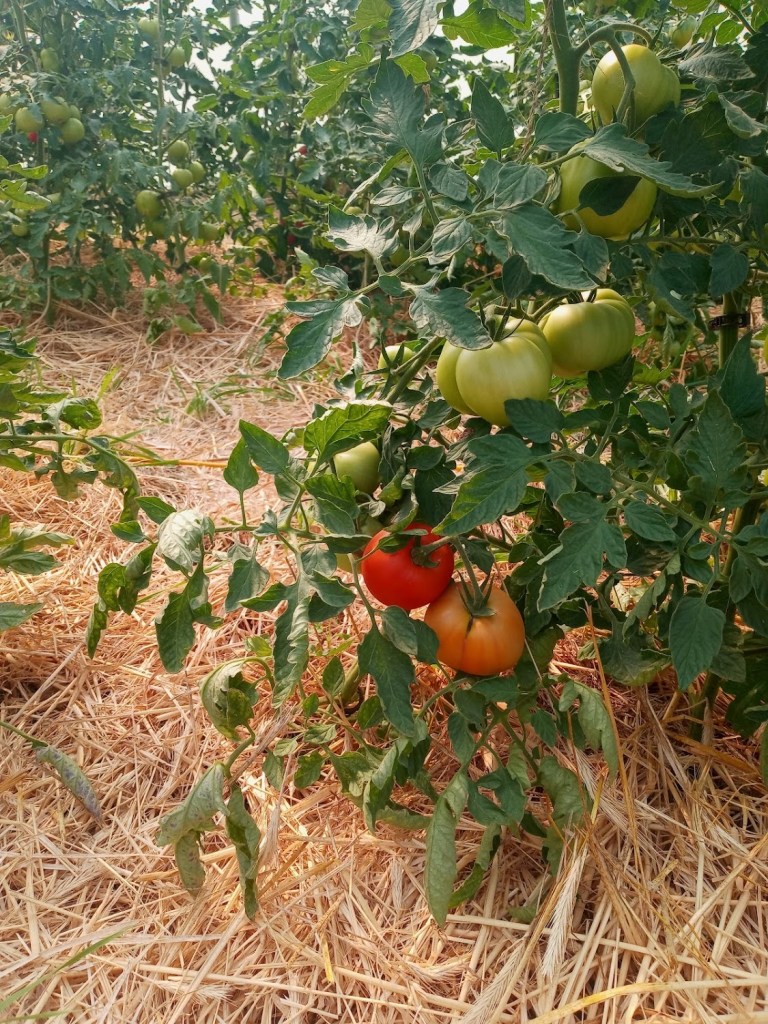
The outdoor tomatoes are starting to ripen, and the greenhouse tomatoes continue to get bigger and ripen at rapid speed. If you get overwhelmed by tomatoes, a great option is to freeze them and use them later for sauces, stews, salsa, or many other things. If you freeze the tomatoes with the skin on, once they’ve defrosted, the skin slides right off. No boiling necessary. This is my favorite trick to be able to enjoy the delicious taste of fresh tomatoes in the middle of winter when we’re all thinking of warmer times.

Another new introduction to your share this week is potatoes. You already got to try two of our other pre-storage crops with the green garlic and the onions. Potatoes are the next addition to this collection. We call them “new potatoes”. This means that they are young and not fully developed. They have a thin skin, and delicious flavor. We love sharing these with you as soon as possible. However, this means they aren’t fully mature. You’ll likely notice that their skin is really thin and flaky. This is because they haven’t been in the ground long enough to create the sturdy outer skin we are all used to. On the plus side, this means no peeling needed. On the downside, this means they won’t store as long, and they should be kept in the fridge. The outer skin protects the potatoes and allows them to be stored longer. Without the shell, the potatoes will turn brown and spoil quite quickly if left out at room temp for too long.

In your share this week:

Beets – Beans – Cucumbers – New Potatoes Zucchini – Baby Carrots

Broccoli – Greens Mix – Cilantro – Cucumbers – Hot Peppers – Onions – Green PeppersOregano – Tomatoes

Broccoli Pasta Salad

Ingredients

  • 3 cups small broccoli florets
  • 1 cup cut green beans
  • 2 cups uncooked gluten free fusilli pasta
  • 1 small zucchini, thinly sliced and cut into half moons (or spiralized)
  • 1 cup sliced cherry tomatoes
  • 4 oil-packed sun-dried tomatoes, chopped
  • 8 fresh basil leaves, thinly sliced
  • ¼ cup pine nuts
  • sea salt and freshly ground black pepper
  • Lemon Tahini dressing: (can be made ahead)
  • 3 tablespoons extra-virgin olive oil
  • 3 tablespoons tahini
  • 3 tablespoons fresh lemon juice, more for squeezing at the end
  • 2 tablespoon white wine vinegar
  • 1 garlic clove, minced
  • ½ teaspoon Dijon mustard
  • ½ teaspoon maple syrup
  • ½ teaspoon sea salt
  • 3 tablespoons water
  • Instructions:
  • In a small bowl, whisk together the olive oil, tahini, lemon juice, vinegar, garlic, mustard, maple syrup, salt and water. Set aside.
  • Prepare a large pot of salted boiling water and a large bowl of ice water. Drop the broccoli and green beans into the boiling water and blanch for 1-2 minutes, until tender but still bright green. Remove and immediately immerse in the ice water to stop the cooking processing. Keep in the ice water long enough to cool completely, about 15 seconds. Then, drain and and place on a kitchen towel to dry.
  • In a large pot of salted boiling water, prepare the pasta according to the instructions on the package, cooking until al dente. Drain and rinse with cold water.
  • In a large bowl, combine the broccoli, green beans, zucchini, tomatoes, basil and the pasta. Drizzle with the dressing and toss. Season to taste with salt, pepper, and squeezes of lemon, if desired. Sprinkle with the pine nuts and chill for 15 minutes. Can be stored in the refrigerator for up to 2 days.

Veggie Fajitas

SIMPLE PICO

  • 2 tomatoes, diced small
  • 1 garlic clove, minced
  • 1 jalapeño, minced
  • 1 lime, juiced
  • 1 small onion, diced small
  • 1/2 tsp. kosher salt
  • 1/4 tsp. black pepper
  • 3 Tbsp. fresh cilantro, chopped

FAJITAS

  • 2 Tbsp. salted butter, divided
  • 2 Tbsp. olive oil, divided
  • 6 oz. white button mushrooms, halved
  • 1 small red onion, sliced
  • 1 Tbsp. steak seasoning
  • 1 bell pepper, sliced into strips
  • 1 poblano pepper, sliced into strips
  • 1 small yellow squash, halved lengthwise and cut into half-moons
  • 1 small zucchini, halved lengthwise and cut into half-moons
  • 2 limes, juiced
  • 1 Tbsp. honey

Directions

For the simple pico: Combine the tomato, garlic, jalapeño, lime juice, onion, salt, pepper, and cilantro in a medium bowl.

For the fajitas: Heat 1 tablespoon of the butter and 1 tablespoon of the oil in a large heavy-bottom skillet over medium-high heat. Add the mushrooms and onions in a single layer. Let cook undisturbed for 2 to 3 minutes, allowing the vegetables to char. Season with half of the steak seasoning, and stir. Remove to a plate and set aside.

Add the remaining 1 tablespoon butter and 1 tablespoon olive oil to the skillet and heat over medium-high heat. Add the bell pepper, poblano, yellow squash, and zucchini in a single layer. Let cook undisturbed for 2 to 3 minutes, allowing the vegetables to char. Season with the remaining steak seasoning, then stir in the reserved mushrooms and onions. Let cook until the vegetables are tender but still have some bite, about 2 minutes more. Stir in the lime juice and honey, and remove from the heat.

Serve the fajitas with the simple pico, tortillas, cheddar jack, crema, lime wedges, and hot sauce.

Summer CSA Week 2

It’s the second week of Summer CSA season, and the crew is getting back into the harvesting rhythm. 

Last week was a big week for us on the farm. We needed to play catch up on some plantings. It was a daunting task, but our crew worked extra hard to get it all done, with time to spare. 

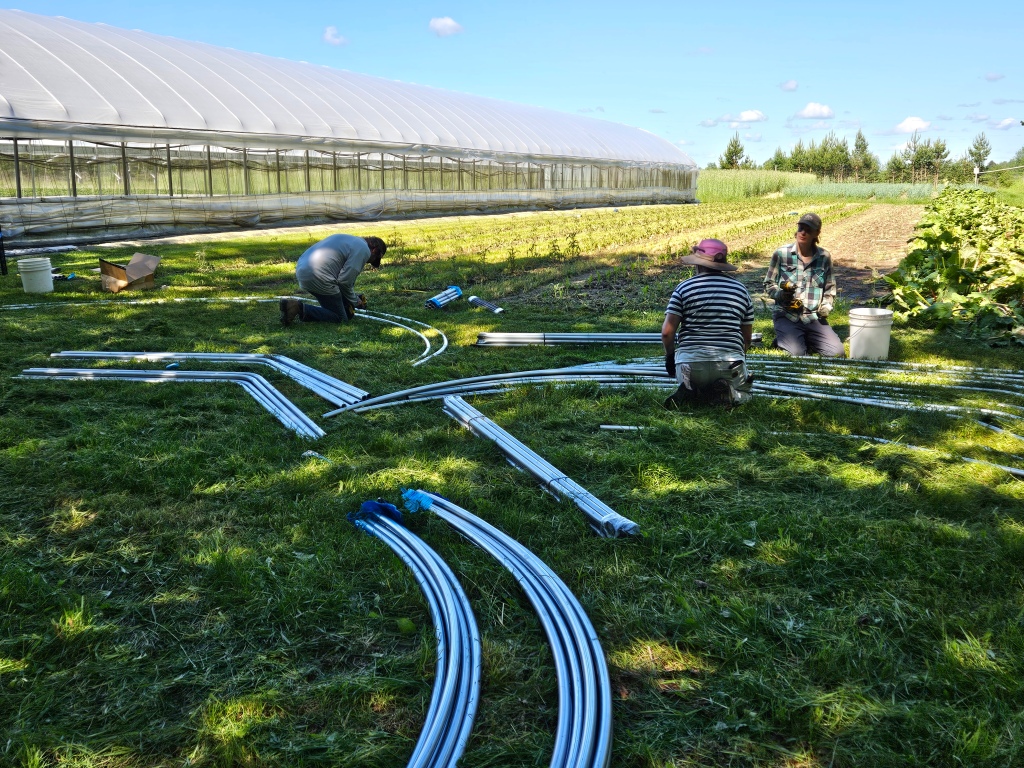
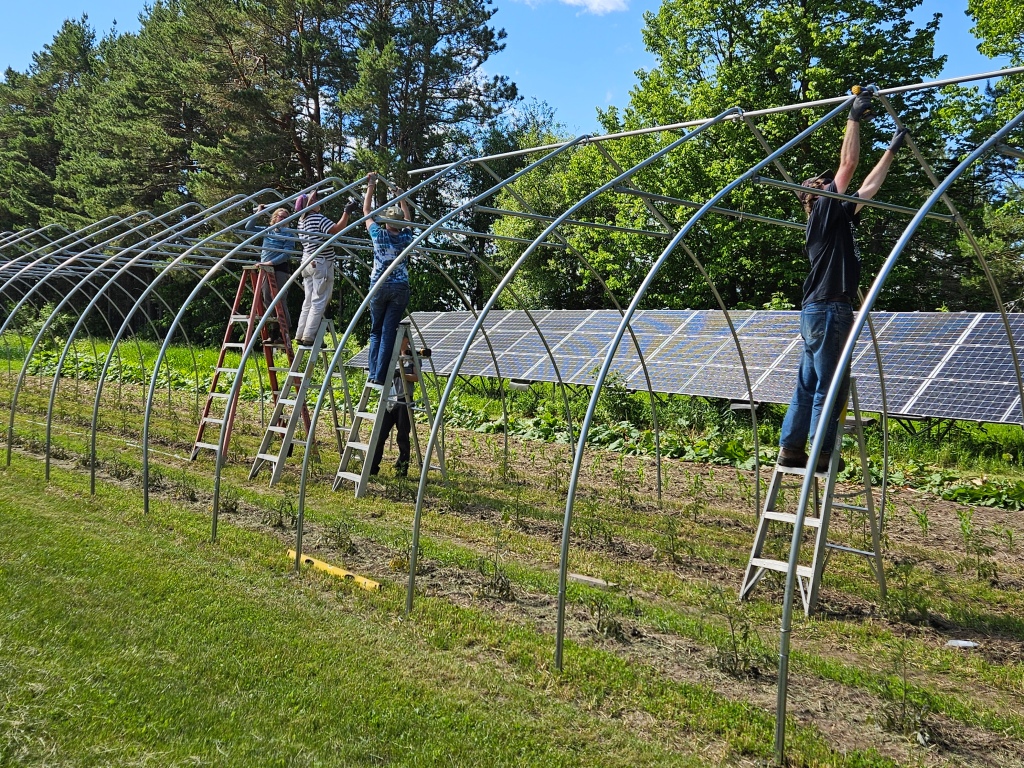
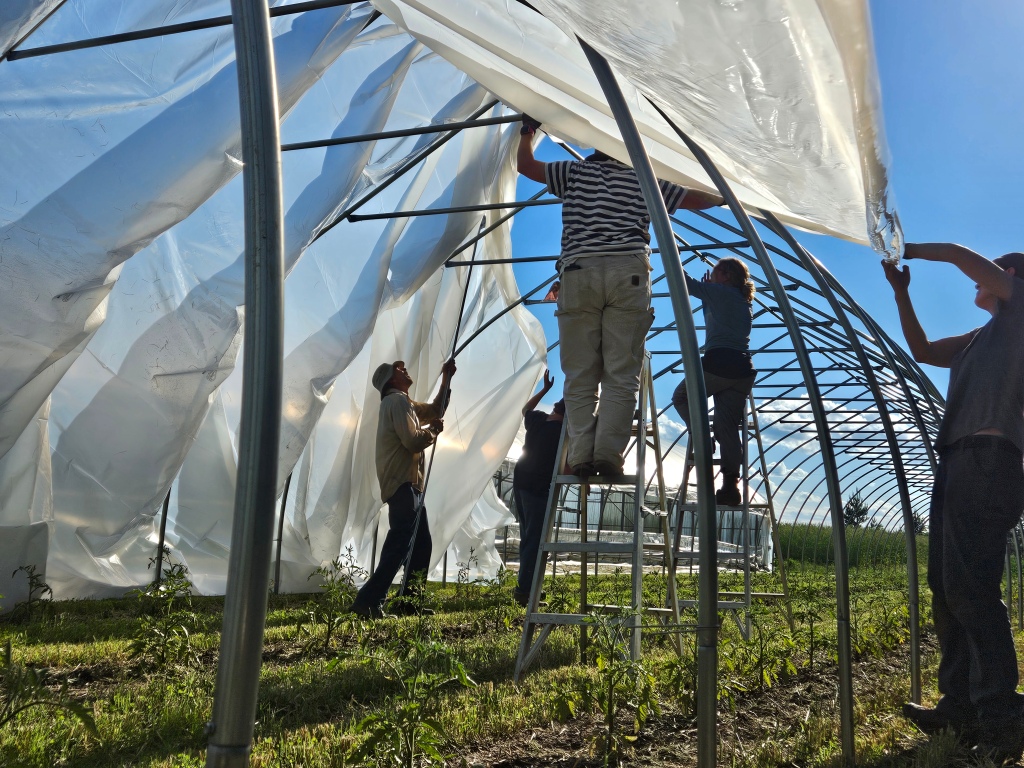
Thanks to dryer days, and all hands on deck, we had time to accomplish a few additional things last week as well. The most noteworthy was the caterpillar tunnel the crew put together on Friday.

This tunnel is part of an experiment we are trying on the farm with some of our outdoor tomatoes. The main variety of slicing tomatoes you will be receiving in your box this season is called Geronimo. These tomatoes are know for being prolific producers, resistant to some common diseases, and for producing uniform fruit. The downside that they do best in a greenhouse and often crack before they’re ready to be harvested when subjected to the elements. We have several permanent greenhouses that house our earliest planting of tomatoes, but the tomatoes are more flavorful when grown in field soil rather than soil that’s been permanently protected. Our hope with the caterpillar tunnel is that it will give us the best of both worlds. Since they can be moved easily each year, we get the delicious flavor from the outdoor soil, but we get the protection of a greenhouse. 

As any of our science-loving members know, a good experiment always has a control group. We have standard greenhouse tomatoes, and we have standard outdoor tomatoes serving as our control groups. We can use these control group tomatoes to compare against our experimental tomatoes, to see if the quality and flavor are the same or different. 

I am very excited for this experiment. Mostly because I love tomatoes, but also because it’s refreshing to know that after many decades, and 2 generations, Farmer Janaki is still learning. Often we look at farms of this size and think they must know it all, and do everything perfectly. Nope! Janaki and the farm crew are learning and trying new things every day just like all of you. I believe that every experiment is worth it because even if it doesn’t go as planned, you always learn something from the process, and I think learning is half the fun of trying something new. 

You’ll still have to wait a little while for any tomatoes, but this week in your share you can expect to see: 

Turnips – Broccoli – Lettuce – Rhubarb – Greens mixRadish


We’ve been giving you lots of lettuce lately, if you are stumped on fun ways to enjoy it, one of my favorite ways is to grill it before putting it on a sandwich or chopping it up to add to a salad. Grilling the lettuce will add a smoky flavor, and takes out some of the bitterness. This works best with Romaine lettuce because it’s a little firmer. With the Butter Crunch, or softer lettuce, I like to use the leaves as lettuce wraps. It’s a nice way to lighten any dish that you would usually use bread or a tortilla with. On a hot summer day, a lighter dinner is just what I crave after a long day on the farm.

Another fun way to use lettuce is as a dip for bread, veggies, or whatever you can think of. I like this Peruvian Aji-style sauce.

Ingredients

  • 1 head lettuce, stem-end trimmed and discarded
  • ½ bunch fresh cilantro, stems removed
  • 5 green onions
  • ¼ cup mayonnaise or olive oil
  • 2 jalapeno peppers, seeded
  • 1 clove garlic
  • salt and ground black pepper to taste

Directions

  1. Place lettuce, cilantro, green onions, mayonnaise (or oil), jalapeño peppers, garlic, salt, and black pepper into a blender; blend until smooth, about 2 minutes.

Honey-Glazed Radishes and Turnips

Ingredients

  • 2 Tbsp. margarine or butter
  • 1 large shallot, sliced
  • 1 1/2 lb. radishes, halved
  • 1 1/2 lb. small turnips, halved or quartered
  • 1/3 c. water
  • 1/4 c. lower-sodium chicken broth
  • 1 Tbsp. honey
  • Kosher salt and freshly ground pepper
  • 2 Tbsp. thinly sliced mint leaves
  • 1 Tbsp. finely chopped chives

Directions

  1. Step 1In 12-inch skillet, melt margarine or butter on medium-high. Add shallot and cook 2 minutes or until golden and tender, stirring occasionally. Add radishes and turnips; stir until well coated. Stir in water, broth, honey, 1/4 teaspoon salt, and 1/4 teaspoon freshly ground black pepper. Heat to boiling. Reduce heat to medium-low; cover and cook 15 minutes.
  2. Step 2Uncover and cook 7 to 10 minutes longer or until vegetables are glazed and most of liquid has evaporated, stirring occasionally. Remove from heat and stir in mint and chives. Transfer to serving platter and garnish with mint leaves

For the farm crew, 

Jennifer 

Summer CSA Week 13, 2023

This past week, while harvesting carrots, we found bees… or rather, they found me. Maybe it was the lavender soap I had used that morning, maybe it was my sweet disposition, but whatever it was the bees seemed to swarm to it. Each time the carrot harvester made a lap around the edge of the field with the bee boxes I would pick up a stinger or two. I had just about had enough when Janaki hooked me up with a nice bee keepers hat. After which, I was able to complete the harvest much more comfortably than it had begun.

While I was communing with the bees, most of the other crew members gathered around the barrel washer to sort, clean & taste the carrots as they came from the field. The colder nights we had last week really seemed to help bring out their sweetness, and it was great to get them out of the ground before the heat sapped their flavor!

It’s starting to be that time of year when some of the summer crops start to slow down. The outside cucumbers have wrapped up, while the zucchini are hanging on for just a little longer. We were hoping to hoard some melons for the weeks to come, but decided to send what we have for fear of them going bad before they make it to the shares.

We have an exciting new addition this week, however, in the Carmen pepper. Carmen is a unique sweet pepper variety known for its distinctive shape. Unlike the traditional bell pepper shape that most people associate with sweet peppers, Carmen peppers have a more elongated and tapered form, which lead some folks to mistakenly believe they’re hot (there are also green Jalapenos in the share today, and they are hot!) Carmen peppers exhibit their sweetest flavor when they ripen to a vibrant red, but they are also very sweet when they’ve just begun to turn color. Other sweet peppers (like the bell) tend to be more bright and grassy, rather than sweet, in their green state.


In your share this week:

Beans – Beets – Carrots – Cilantro – Cucumbers – Kale – Melons – Onions

Hot PeppersSweet Red Peppers – Potatoes – Tomatoes – Zucchini


When Catherine sent the “best guess” email for the share this week, my mind initially jumped to vegetable enchiladas. This would be a great bounty to prepare something like that, but after melting in the heat all day yesterday, I decided that hot enchiladas was not the move. In an effort to keep the oven off this week, I decided to share a recipe for gazpacho along with a zesty salad dressing that would pair nicely with the kale this week.


Gazpacho, from cookie & kate

2 ½ pounds ripe red tomatoes (about 4 large or 9 small)
1 small sweet yellow onion (½ pound), peeled and cut into rough 1″ chunks
1 small cucumber (½ pound), peeled and seeded
1 medium sweet red pepper, cored and seeded
¼ cup fresh basil leaves, plus extra for garnish
1 large garlic clove, peeled
¼ cup extra-virgin olive oil
2 tablespoons sherry vinegar or red wine vinegar
¾ teaspoon fine sea salt
Freshly ground black pepper

  1. To prepare your veggies, place your blender bowl, a medium serving bowl, and a small bowl on the counter. Core the tomatoes and cut them into rough 1″ chunks. Reserve about ¼ cup of the juicy tomato seeds and place them in your small bowl (we’ll use them as a garnish later). Add half of the tomato chunks to the blender, and the other half to your serving bowl. Add all of the onion chunks to the blender.
  2. Cut off about one-fourth of the cucumber. Finely chop that piece and place it in the small bowl. Slice the rest of the cucumber into rough 1″ chunks, and divide them between the blender and the serving bowl. Cut off about one-fourth of the bell pepper, finely chop that piece, and add it to the small bowl. Slice the rest of the bell pepper into rough 1″ chunks and divide them between the blender and the serving bowl.
  3. To the blender, add the basil, garlic, olive oil, vinegar, salt and about 10 twists of black pepper. Securely fasten the lid and blend, starting on low and increasing to high speed, until the mixture is completely smooth, about 2 minutes.
  4. Pour the contents of the serving bowl (the remaining chunks of tomato, cucumber and bell pepper) into the blender. Fasten the lid and blend for just 10 to 20 seconds, until the ingredients are broken up into small pieces. Stop there, or blend a little longer if you prefer smaller pieces.
  5. Add a small pinch of salt to the small bowl of garnishes, stir, and store it in the fridge. Chill the soup for at least 2 hours, or up to 24 hours.
  6. Before serving, taste, and add additional salt (I sometimes add another ¼ teaspoon) and/or black pepper if necessary. To serve, divide the soup into small bowls or cups, and top with the reserved cucumber and bell pepper. Top with a few tiny or torn basil leaves and a light sprinkle of pepper. Leftover servings keep well, covered and refrigerated, for 3 to 4 days.

Jalapeño Honey Mustard Dressing, from kroll’s korner

1/3 cup olive oil
1/4 cup honey
1/4 cup dijon mustard
2 tablespoons lime juice
1/2 teaspoon lime zest
1/2 jalapeño, diced
2 teaspoons thyme, chopped
Salt & pepper, to taste

  1. In a medium sized bowl, whisk all ingredients together until well combined. Or you can combine all ingredients in a mason jar and give it a nice shake until combined so you don’t have to dirty a bowl! Taste and adjust ingredients as desired. Store in a mason jar or airtight container in the fridge for 1-2 weeks. Makes ~1 cup.

For the farm crew,

Charlie

Summer CSA Week 12, 2023

It was so nice to see Food Farm folks this Saturday–we enjoyed speaking with so many of you and show off our hard work!

As some of you may have noticed, the root cellar is gradually filling up with a colorful abundance of carrots, beets, cabbage and potatoes. The farmers have been diligently packing up more and more of these vibrant vegetables, destined for grocery store shelves and eager CSA members.

Moreover, last week marked the collapse of our onion tops. This may sound slightly catastrophic, but don’t worry – it’s a good thing! The leaves fall over simply because the plant has matured and is no longer developing. It’s also how we know they are ready for harvest. In the photo (see left), you can see Teri & Aaron gently lifting them from the ground before laying them out to dry. Careful handling is essential during harvest to avoid bruising, which makes the bulbs susceptible to storage rot. Following the uprooting, these onions will begin their curing process in the fields for a week or so before having their tops removed and transferred to a well-ventilated indoor storage space.


In your share this week:

Basil – Beans – Broccoli – Cauliflower – Carrots – Celery – Cucumber – Melons

Sweet Onions – Bell Peppers – Potatoes – Tomatoes – Zucchini


The recipes this week have a lot of room to make them your own. Either one would be good with just about any item in the share (excluding the melons). So feel free to follow them as directed or create your own pizza & curry experiments…


Zucchini Crust Pizza, from The Cozy Cook

2 cups shredded zucchini
1/4 teaspoon salt
3 large eggs, beaten
1/2 cup all purpose flour (almond flour, coconut flour, and whole wheat flour may also be used)
1/3 cup shredded parmesan

  1. Preheat oven to 350°.
  2. Spread the shredded zucchini out on a lightly greased baking sheet and sprinkle lightly with salt. Bake for 15 minutes. Remove and transfer the zucchini to paper towels or a cheesecloth.
  3. Increase oven temperature to 450°.
  4. Squeeze out as much additional moisture from the zucchini as possible. Add the zucchini to a large bowl along with the whisked eggs.
  5. Sprinkle the flour in gradually, stirring to incorporate. Continue to add flour until desired consistency is obtained. (I use the entire ½ cup for all-purpose flour.)
  6. Spread out onto a lightly greased 12-inch pizza pan, leaving 1-inch or so around the edges.
  7. Top with shredded Parmesan cheese and bake for 18 minutes, until it begins to brown slightly. Remove from oven.
  8. Reduce heat to 400°.
  9. If possible, let the crust cool for extra crispy results.
  10. Top with desired pizza toppings. Bake for ~10 minutes, until the cheese is melted and bubbly.

Summer Vegetable Curry, Inspired by Half Baked Harvest

Basil Coconut Ginger-Lime Rice:

1 (14 ounce) can coconut milk
1 cup jasmine or basmati rice
1 tablespoon fresh ginger grated
1 lime juiced + zest

  1. Add the coconut milk to a medium size pot. Bring to a low boil and then add the rice, salt, and ginger. Stir to combine and then place the lid on the pot and turn the heat down to the lowest setting possible. Allow the rice to cook ten minutes on low and then turn the heat off completely and let the rice sit on the stove, covered for another 20 minutes (don’t take any peeks inside!). After 20 minutes remove the lid and add the lime juice + zest.

Curry:

4 tablespoons extra virgin olive oil
1 pound boneless, skinless chicken, diced
2 bell peppers, chopped
1 zucchini, chopped
2 cups green beans, chopped
1 cup broccoli, diced
1 cup cauliflower, diced
1 cup carrots, diced
1 tablespoon fresh ginger, grated
2 cloves garlic, grated or minced
2-3 tablespoon thai red curry paste
1 (14 ounce) can coconut milk
1 tablespoon fish sauce
1/2 cup fresh basil, chopped
1 mango, diced
1 jalapeño, seeded + diced
fresh naan and goat cheese, for serving

  1. Heat a little olive oil in a large skillet over high heat. Add the chicken and cook until browned and cooked through, about 5-10 minutes.
  2. Add another drizzle of olive oil to the skillet. Add the peppers, zucchini, beans, broccoli, cauliflower, carrots, ginger and garlic. Cook the veggies 5 minutes or until they just begin to soften.
  3. Add the coconut milk, curry paste, and fish sauce. Stir to combine, bring the mixture to a boil, cook 5 minutes or until the sauce thickens slightly. Remove from the heat and stir in the basil.
  4. In a small bowl toss together the mango and jalapeño.
  5. Serve the curry over the rice. Add a spoonful of the mangos and a sprinkle of goat cheese. Eat with Naan!

For the farm crew,

Charlie

Summer CSA Week 8, 2023

Garlic season has arrived! Last Wednesday was all hands on deck as the crew shuttled wagon load after wagon load of freshly harvested German Extra Hardy to washing stations. Once washed the garlic was gently laid out on wire racks (see below). Although it is edible right from the ground, you won’t be seeing it in the shares for at least a couple weeks. To stay fresh in the pantry for any extended period of time, it must go through the curing process – essentially just letting it dry out. As the garlic dries, the skin shrinks and turns papery, forming a protective barrier against moisture and mold.

As we wait for the garlic to be ready, we can take a little time to enjoy another new addition to this weeks box… Potatoes! Not just any old potatoes, but new potatoes. New potatoes are essentially young potatoes that are harvested before they reach full maturity. They are the same varieties as their larger counterparts but are picked early in the growing season, typically about three to four months after planting. Because they are harvested at this young stage, new potatoes are sweeter and more delicate in flavor than mature potatoes. Their skin is thin, tender, and often flaky, which makes them particularly appealing for potato salad. This week i’ve included one of my favorite recipes for just that.


In your share this week:

Cabbage – Carrots – Cilantro – Dill – Cucumbers – Lettuce – Green Onions – Snap Peas

Jalapeño Peppers – New Red Potatoes – Tomatoes – Zucchini


Herby Potato Salad, from Half Baked Harvest

Yield: 6 servings

2 pounds new potatoes
3 cloves garlic
kosher salt
1/2 cup raw cashews, soaked in hot water for 30 minutes, then drained
1 tablespoon dijon mustard
1/3 cup olive oil
1 cup fresh basil, chopped
1/4 fresh dill, chopped
2 chives, chopped
flakey sea salt and black pepper
1 pinch crushed red pepper flakes
juice of 1 lemon

1. Place the potatoes, garlic and a tablespoon of salt in a large pot and fill with water. Bring to a boil over high heat and then reduce the to heat to medium, simmer 10-15 minutes or until the potatoes are just fork tender. Drain. Place the potatoes back in the hot pot. Remove the garlic cloves. Cover the pot and let the potatoes steam for another 20 minutes.

2. Meanwhile, combine the cooked garlic, drained cashews, mustard, and olive oil in a food processor. Pulse until smooth and creamy, adding water if needed to thin slightly. 

3. Cut the potatoes in half and add to a large serving bowl. Add the cashew sauce, basil, dill, chives, lemon juice, and a pinch each of salt, pepper, and crushed red pepper flakes. Toss well to combine. Taste and adjust salt and pepper to your liking. Serve warm or cover and place in the fridge. Can be served at room temp or cold.


Cilantro Lime Slaw, from Gimme Some Oven

Yield: 4-6 servings

1 cup plain Greek yogurt
1/2 cup tightly-packed fresh cilantro
1/4 cup freshly-squeezed lime juice
1/2 teaspoon ground cumin
1/2 teaspoon fine sea salt
1/4 teaspoon freshly-cracked black pepper
3 green onions (just the green parts)
2 garlic cloves
1 jalapeño or serrano pepper, stemmed and cored
14 ounces cabbage, thinly sliced

1. Combine the Greek yogurt, cilantro, lime juice, cumin, salt, black pepper, green onions, garlic and jalapeño in a blender or food processor*.  Pulse briefly a few times until the mixtures is combined.

2. Place the cabbage in a large mixing bowl. Drizzle the sauce on top of the cole slaw, then toss until the mixture is evenly combined.  Season with extra pepper and/or lime juice if needed.

3. Serve immediately, or cover and refrigerate for up to 24 hours.


For the farm crew,

Charlie

Summer CSA Week 7, 2023

In our region, July is known for claiming the title of the hottest month of the year. Last week you wouldn’t have guessed it as the crew enjoyed slightly cooler temps. We won’t be so lucky this week, however, with the forecast pushing 90° for the next few days. Such high temps may be hard on the farm crew, but many of the vegetable varieties are going to love it!

This weeks box brings a few new additions in cilantro, dill and even a couple of salad tomatoes 🙂

Dill is an especially exciting one for me. While it is often associated with dill pickles and potato salad, its culinary significance spans centuries across Europe and Asia, enriching a wide array of cuisines. Due to its distinct and potent flavor, even a small quantity of dill can make a significant impact, making it an excellent choice as a garnish. The delicate, feathery texture of dill leaves adds a touch of beauty, while a mere sprig can infuse a dish with a noticeable and delightful aroma. Moreover, dill finds its place in salads and serves as a crucial component, along with buttermilk, in bestowing homemade ranch dressing with its unique and flavorful character.

When considering planting dill, it’s worth noting that this annual herb, related to celery, possesses a natural tendency to self-replant and propagate extensively, adding to its appeal as a versatile and abundant addition to your garden space.


In your share this week:

Beets – Broccoli – Carrots – Chard – Cilantro – Cucumbers

Dill – Lettuce – Tomatoes – Green Onions – Snap Peas – Zucchini


Dilly Ranch Dressing, from Feasting at Home

Yield: 1 1/4 Cup

1/3 cup mayo
1/3 cup buttermilk
1/3 cup sour cream
1-2 garlic cloves, finely minced
1/2 cup fresh dill
2 tablespoons tarragon
1 tablespoon parsley, chopped
1/2 teaspoon salt, more to taste
1 teaspoon pepper
1 tablespoon lemon juice, more to taste
1 teaspoon apple cider vinegar

  1. Whisk the mayo, buttermilk, and sour cream in a medium bowl until smooth.
  2. Stir in the remaining ingredients: garlic, herbs, salt, pepper, lemon juice, and vinegar.
  3. Taste- you want this slightly salty and tangy- so adjust salt and lemon juice to bump up the flavor.
  4. Place in a sealed jar and chill. You want this cold!

Cucumber Salsa, from Lemon Tree Dwelling

The farm peppers will be in your shares soon enough, but for now store bought will have to do for this recipe…

Yield: 8 servings

1 large English cucumber, about 2 1/2 cups chopped
1/4 cup red onion, chopped
1/3 cup yellow bell pepper, chopped
1/3 cup green bell pepper, chopped
2 tomatoes, chopped
1 jalapeño, minced
1/4 cup cilantro, minced
2 cloves garlic, minced
juice of 1/2 lemon
juice of 1/2 lime
1 teaspoon salt

  1. Chop the cucumbers, peppers, tomatoes, and onions into small pieces, about 1/4 inch. Add them to a medium mixing bowl.
  2. Mince the jalapeño (remove seeds for less heat as desired), cilantro, and fresh garlic. Add it to the chopped veggies in the bowl. 
  3. Squeeze in the fresh citrus juices and add the salt.
  4. Stir well; enjoy immediately or refrigerate until ready to use.

Carrot, Date and Feta Salad; from Food Network

Yield: 4 servings

3 medium carrots
2 tablespoons roughly chopped fresh cilantro
1 1/2 tablespoons extra-virgin olive oil
2 teaspoons honey
Kosher salt
Juice of 1 lime
1/4 cup crumbled feta cheese
2 tablespoons chopped toasted almonds
2 tablespoons finely chopped dates

  1. Thinly slice the carrots into ribbons using a vegetable peeler or mandolin, including any remaining “stubs” of carrot. Soak in ice water until the ribbons firm up and curl, about 15 minutes. Drain and pat dry. 
  2. Whisk together the cilantro, olive oil, honey, 1/2 teaspoon salt and the lime juice in a medium bowl. Add the carrots along with the feta cheese, almonds and dates, and toss until evenly combined. Serve immediately, or let the salad marinate a bit before serving. 

When I first started working at the farm, a little over a year ago, I thought that all of the job would be directly dealing with plants or dirt. I quickly learned, however, that there are many tasks we do that don’t necessarily pop into your mind when you think farming. A lot of the equipment we use here is quite old. The thing about old stuff is that it tends to break. It would be really nice to just replace something when it breaks, but new stuff is rather expensive. We will usually opt for the fix it yourself mentality – something Janaki and Dave are rather good at.

Above you can see Dave hard at work as he repairs our flail mower.

For the farm crew,

Charlie