This is the last Summer Share of the season! Please remember to bring any empty boxes back to your pickup site by next Thursday, the 19th. Winter Shares begin on November 13th.
As the chill of autumn sets in, we find ourselves on the threshold of our last CSA distribution of the summer season. As with most endings, it’s a bittersweet feeling.
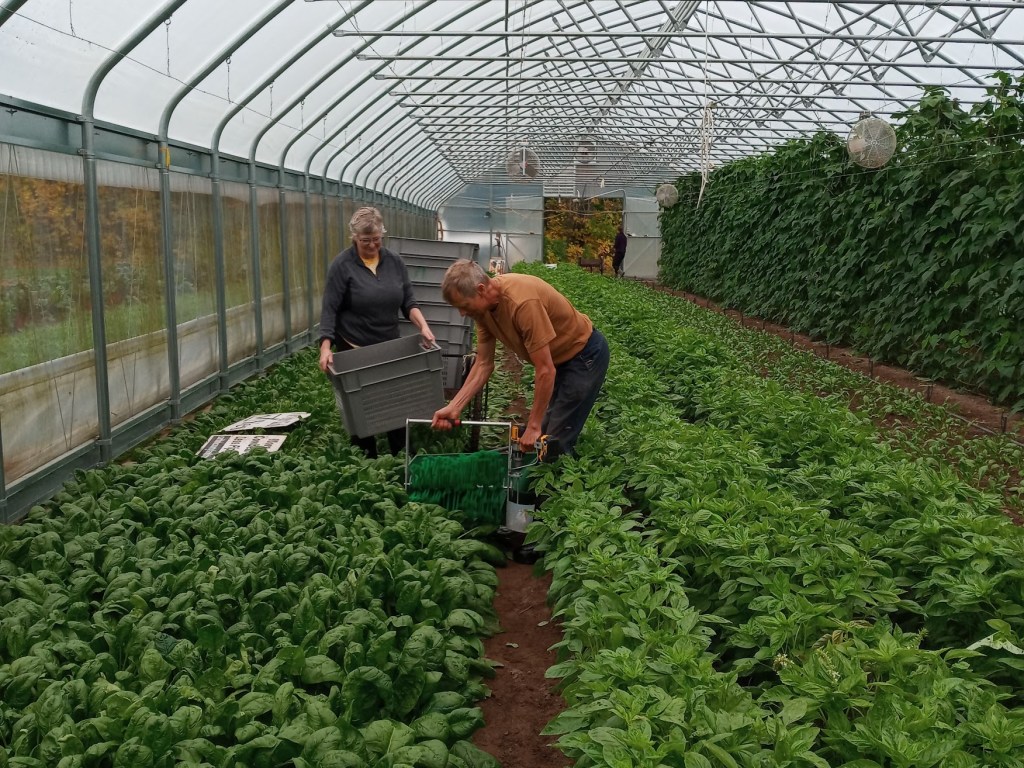
The CSA boxes are one of our most straightforward connections to the community. The weekly bounties we harvest, wash, package, and deliver give us an opportunity to share the farm with all of you – something we miss during the longer stretches of the winter.
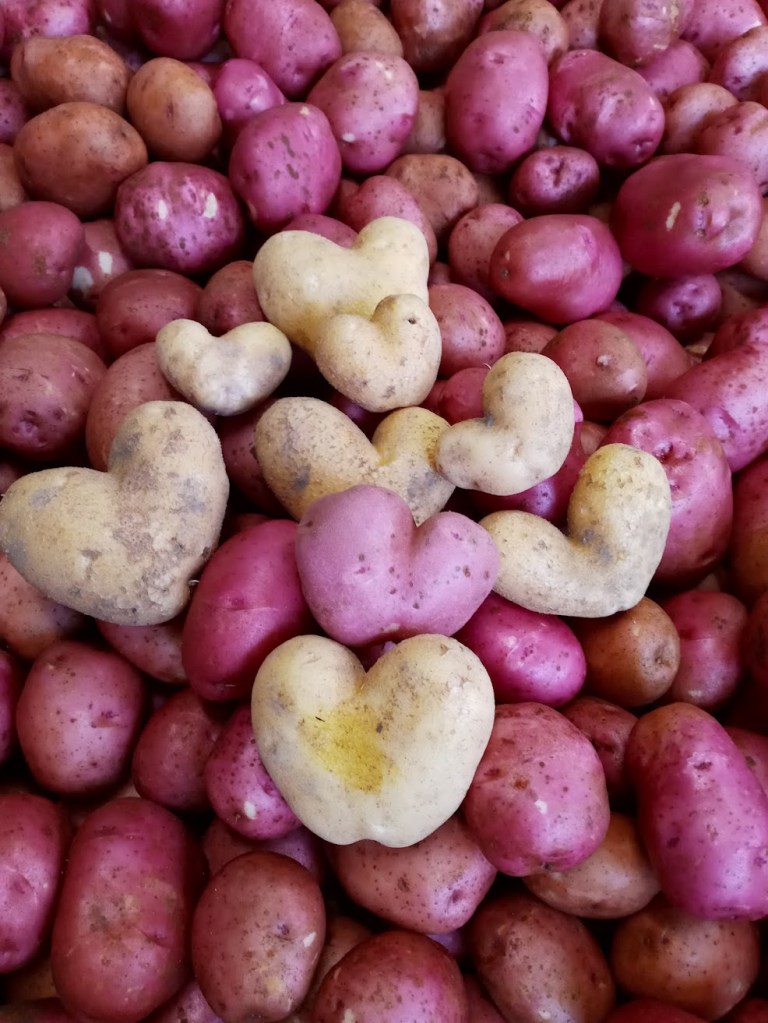
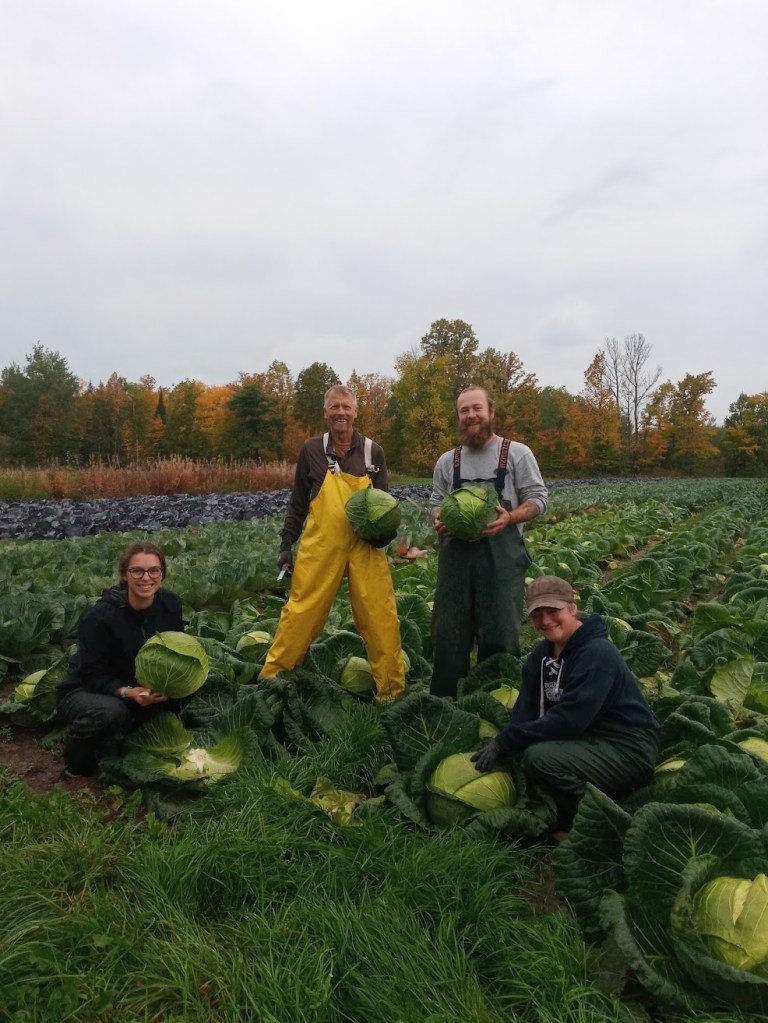
This time of year also signals the ramping up of end-of-season chores! There’s lots to do on the farm to get ready for winter. A big part of our business is caring for and delivering storage crops throughout the non-growing months. The short break between summer and winter CSA gives us just enough time to pull the cabbage, beets, potatoes, daikon radish, rutabaga, parsnips, & carrots from the fields before they freeze!
A big thanks is also in order to all of the volunteers who helped us in countless ways throughout the season. With so much work still to go, I don’t want to start reflecting too early, but I think it is safe to say “Thank you so so much Patricia, Sandy, Betsy, Rollie, Deb, Diane, Pat & any other names I may be forgetting while typing this.” Your work is really appreciated!
In your share this week:
Beets – Brussel Sprouts – Green Cabbage – Carrots – Garlic – Lacinato Kale – Onions
Parsley – Red Peppers – Potatoes – Rutabaga – Winter Squash
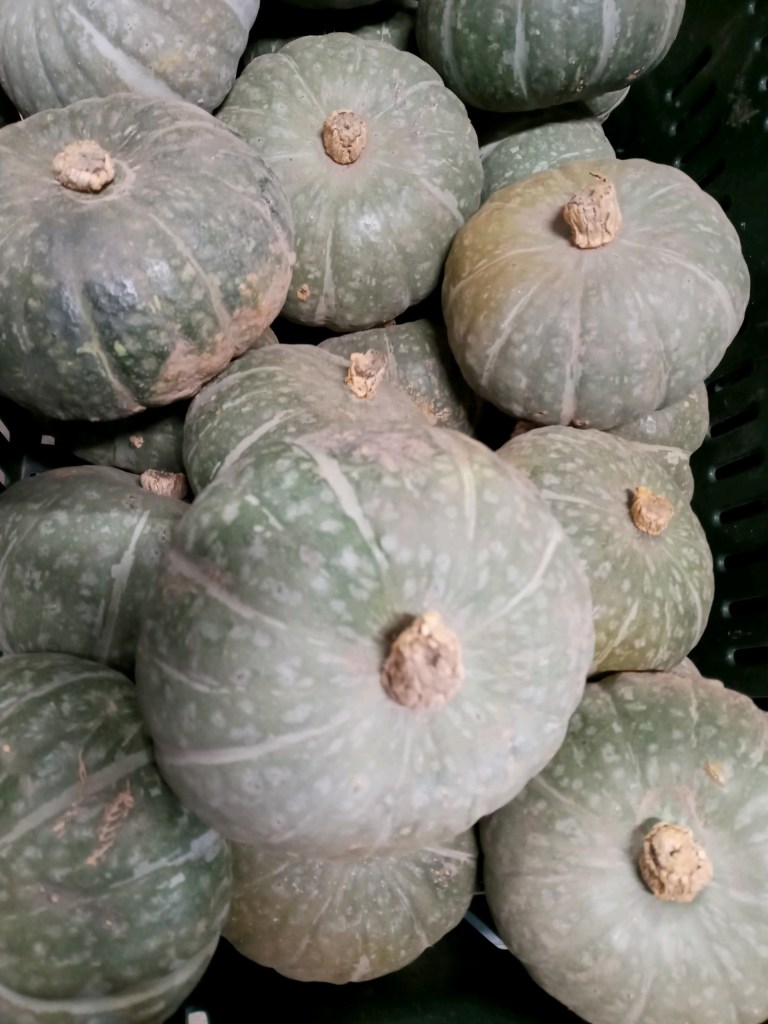
Now you’ve had some winter squash in your share this year, but this week will be your first time seeing green kabocha. You can think of it as a cross between a pumpkin and sweet potato. Its flesh has a sweet, earthy flavor that is denser and drier than the other varieties you’ve tasted this year. This makes it an excellent candidate for soups, stews & curries. It is quite dry right now, but should gain moisture as it cures over the next couple of weeks.
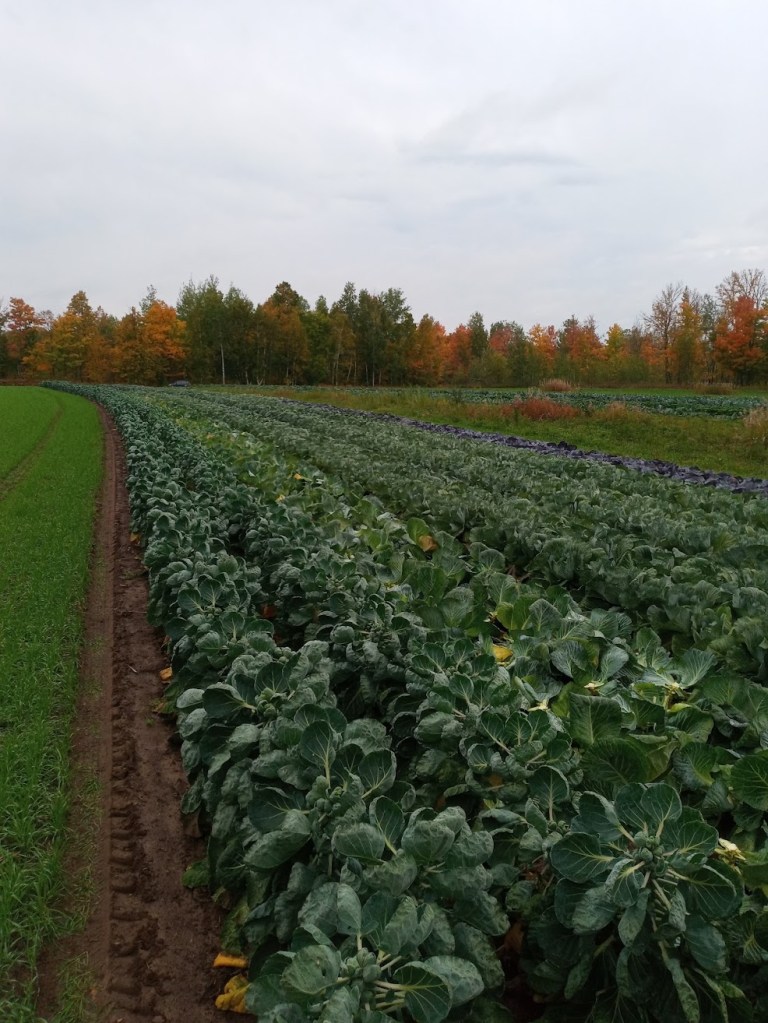
Also joining the lineup are tender brussel sprouts, small but mighty in flavor, and rutabagas!
Usually I am a strong endorser of leaving the skin on vegetables when eating. I do this in part for flavor, in part for valuable nutrients and fiber, but mostly out of laziness. Peeling can feel like an unnecessary chore… the worst kind. This year’s rutabaga is not quite as nice and smooth as usual, due in part to stress from our hot dry summer, and may benefit from being peeled.
Roasted Kabocha Squash Soup, from Simply Recipes
Yield: 4-6 Servings
1/2 large kabocha squash, seeded (about 3 to 4 pounds for the 1/2 squash)
2 1/2 tablespoons extra virgin olive oil, divided
Salt
2 cups chopped or sliced onions
2 ribs celery, sliced
3 cloves garlic (about 1 tablespoon)
1 (2-inch) piece fresh ginger, peeled and grated
1/2 teaspoon ground cumin
1 teaspoon ground coriander
4 cups chicken stock
2 teaspoons kosher salt
1/4 teaspoon black pepper
Lime juice, for serving
Chopped fresh cilantro, optional for serving
- Set the oven to 400°F.
- Roast The Squash: Use a heavy chef’s knife or cleaver (it helps if you have a rubber mallet as well) to cut the kabocha squash half into a few large pieces. (Kabocha squash is thick and meaty and can be a challenge to cut. So take care! Make sure the squash is stable on your cutting board before you start to cut it. You can create a flat side by shaving off a bit of the outside in one spot.)
Scoop out the seeds (you can toast them like pumpkin seeds!) and stringy insides. Place the squash pieces on a foil, baking parchment, or Silpat-lined roasting pan. Rub 1 tablespoon olive oil over all sides, and sprinkle with salt.
Put the squash pieces skin side up on the pan. Roast for 45 to 60 minutes until completely cooked through. The pieces should be soft and caramelized at the edges. Remove from oven and let sit. - Sauté the onions, celery, garlic, ginger, and spices: While the squash is cooling, heat the remaining 1 1/2 tablespoons of olive oil on medium-high heat in a large (4- to 6-quart) thick-bottomed pan. Add the onions and celery. Lower the heat to medium and cook until softened, 8 to 10 minutes.
Add the garlic, ginger, cumin, and coriander and cook 2 minutes more. - Add the squash, stock, salt, and pepper, then simmer: Once the squash is cool enough to handle, remove and discard the skin. Place the roasted kabocha squash flesh into the pot with the onions and celery mixture. Add the stock, salt, and pepper. Increase the heat to high to bring the soup to a simmer. Then, lower the heat to low. Partially cover and cook 8 to 10 minutes.
- Purée the soup: Remove from the heat. Use an immersion blender (or work in batches with a standing blender, only filling the blender bowl 1/3 of the way each time) to purée the soup.
Add more salt to taste. Sprinkle with lime juice and chopped cilantro to serve.
Maple-Roasted Brussel Sprouts and Rutabaga with Hazelnuts, from Martha Stewart
Yield: 5 Servings
½ cup pure maple syrup
2 ½ tablespoons extra-virgin olive oil
1 tablespoon fresh lemon juice
Coarse salt and freshly ground black pepper
2 pounds rutabaga, skin removed and cut into 1 ½-inch pieces (5 cups)
¾ pound brussels sprouts, trimmed and halved lengthwise
1 ounce toasted hazelnuts, chopped (⅓ cup)
- Preheat oven to 400 degrees. Whisk together maple syrup, oil, lemon juice, and 1/4 teaspoon salt in a large bowl. Add rutabaga, and toss.
- Transfer rutabaga and all but 2 tablespoons glaze to a rimmed baking sheet (leave remaining glaze in bowl). Spread rutabaga in a single layer, sprinkle with 1/4 teaspoon salt, and roast for 35 minutes, tossing halfway through and making sure rutabaga is spread toward the edges of pan.
- Raise oven temperature to 450 degrees. Toss brussels sprouts with remaining glaze in bowl and 1/4 teaspoon salt. Remove sheet from oven, and add sprouts. Toss, and spread in a single layer. Roast vegetables, tossing every 5 minutes, until glaze is very thick and vegetables are deep golden brown, about 20 minutes. Season with pepper and sprinkle with hazelnuts.
For the farm crew,
Charlie
 Food Farm