Farmers in the City!

The farmers are all dressed up and making a trip to town! The public is invited to an informal gathering hosted by the Food Farm in the atrium at the Zeitgeist Arts building on Tuesday, February 25th from 5-7pm in Duluth, MN. Drop in for a few appetizers, say hi to the Food Farm crew, meet other members, welcome new shareholders or sign up for the 2014 season and become a member yourself. The Food Farm has officially opened its season – don’t miss this opportunity to sign up for vegetable shares.

This is a great event for those interested in learning more about CSA (community supported agriculture), the role Food Farm has in our local food movement, a way to meet people involved in sustainable agriculture, how to become a member or volunteer of the Food Farm community, or as an easy way to renew your membership. Please come down and say hello; we’d love to see you, even if it is just for a few minutes. Parking after 5pm is free in the lot behind the Sheraton.

At Food Farm our passion is producing high quality food for our CSA members, a sustainable livelihood for our farmers, and sustaining the productive capacity of our land. This is possible by cooperating with the natural and human communities to which we belong, and unleashing the creative power of human imagination. All our vegetables are certified organically grown. We offer Summer, Winter, Poultry and Egg shares and deliver to many locations in Duluth, Superior, Cloquet, Esko and Wrenshall. Come enjoy the fun, good food and great company!

Driving directions

Howdy folks,

We just discovered that Google maps no longer gives accurate directions to the farm. Yikes! To get here for the shindig this afternoon, use Bing.com maps, or see directions below:

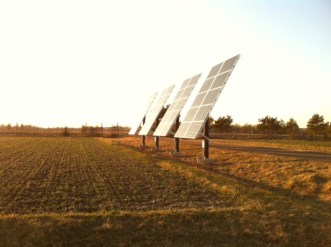
From Duluth: exit I-35 at Grand Avenue/Hwy 23. Take Hwy 23 through West Duluth, Gary, and Fond du Lac. Continue on 23 over the St. Louis River in Fond du Lac for another 5 miles. Turn right on County Road 4. Drive 2.5 miles to the stop sign on County Road 1.  Turn left on Co Rd 1, we are about 1 mile south on the left hand side of the road. Look for the deer fence, solar panels, and veggies!

From Cloquet / alternate Duluth route: From the Scanlon/Carlton/Hwy 45 exit from I-35, go south on Hwy 45 to the stop sign in Carlton. Continue straight, you will now be on County Road 1. Follow 1 through Wrenshall. The farm is just over 2 miles south of Wrenshall on the left hand side of the road.

Good news, Farm updates

Hey Food Farmers,IMG_4559

I have some great news to pass along today! HealthShare, a local health coverage program, now includes CSA membership in their Wellness Rewards program. This program provides discounted coverage when people participate in health-related activities, such as going to the gym and now participating in a CSA program. If you have coverage through HealthShare, please contact them about this program, or go to http://lssfa.org/wellness for more information. This exciting initiative was begun by your farmers, the Institute for a Sustainable Future, the local CSA Guild, HealthShare, and the Lake Superior Sustainable Farming Association.

We’d like to expand this program to involve insurance companies such as Blue Cross and Medica in providing rebates for CSA membership.  The Madison, WI, area has had a program like this in place for a number of years. It’s been very successful—they have 4 insurance companies involved—and saves members up to $200 per year! If we can demonstrate interest in CSAs by the members of these insurance programs, we might be able to expand what we have developed.

To that end we have developed a very quick survey of interest. If you would like your insurance provider to include CSA as an additional wellness option, please click on http://www.isfusa.org/csawellnessinitiatives.html and fill in the survey.  Please feel free to share this survey with friends and colleagues. A number of studies have shown that CSA membership increases the variety and quantity of vegetables consumed, so it makes sense for farmers, eaters, and insurance companies alike!

The Lake Superior Sustainable Farming Association is holding its annual Farmers Take the Stage event tomorrow night (Friday) from 7-9 pm at Amazing Grace bakery and café in Canal Park. Your own farmer John has been practicing all week for his performance, and he’ll be joined by many performers ranging from talented to enthusiastic! More information is at http://www.lssfa.org/Events.html.

In other farm news, despite the chilly temperatures this week the greenhouse was 80 degrees yesterday, the onions and leeks have germinated and the first IMG_4563planting of tomatoes are in the large pots already. We’ll be experimenting with grafting tomatoes this year. Much like with fruit trees, grafting can combine a strong and disease resistant root stock with a top that produces many flavorful tomatoes. It’s a relatively new trend and it adds many layers of complexity to the greenhouse operation, but we’re excited about the possibilities. We also have all of our summer labor lined up—two new interns, Lee and Wes, will be joining us in addition to Jeanne who will be back for a second year. It’s been a busy winter, and Jane, John, Dave and I are excited to get the growing season under way!

For the farm crew,  IMG_4567

Janaki

Farmers come to the city!

Hey Food Farmers,

I have a few important items to pass along today. First, we’ll be holding an informal get-together for members in the atrium at the Zeitgiest Arts building on Tuesday, February 26th from 5-7pm. We used to have yearly meetings in Duluth when we were first getting started. It’s been ages since we’ve held a gathering “in town,” and we figured restarting that tradition would be a great way to kick off our 20th season.

There’s no big agenda for the evening, just a chance to have a few appetizers, say hi to the farm crew (we clean up pretty nice), meet your fellow members and welcome this year’s new shareholders. If you have friends who are interested in becoming members bring them down to the event so they can meet us and get signed up. Annie assures me that she’ll find some embarrassing photos of me from the early years of the Food Farm (mullet warning!) and maybe John will even entertain us with a chicken song or two. Please come down and say hello; we’d love to see you, even if it’s just for a few minutes.

Another event to put on your calendars is the Good Food Summit, March 8th and 9th at UMD. This will be  a great place to celebrate, network and learn about all the great things evolving here in the Lake Superior bioregion around the issues of sustainability and healthy food. For more information or to register go to www.goodfoodnetwork.org.

Many folks assume that winter is a time for rest and relaxation out here on the farm, and while there are fewer people around your farmers have been plenty active. Our planting schedule is nearly set, the seeds have mostly arrived, and we’re researching and planning all kinds of things, from crop rotations to transplant production to packing shed layout. It’s an exciting time as we look forward to the first onions going into seed flats in 2 ½ weeks even as we’re just digging out from the first significant snow storm of the year. Whether it’s the deep cold of a few weeks ago to the deep snow of Sunday, we are happy to see the signs of true winter that seemed to pass us by last year. The snow is a sign that the irrigation pond will be full in spring and the cold gives us hope that the cutworms and other pests that were unusually abundant last summer will not return. Other than that, the dog gets lazier by the day (and dangerously close to the wood stove), and your farmers dream of the new life that is set to spring from the earth in a few short weeks.

For the farm crew,

Janaki

P.S. If you haven’t already, make sure to get your signup sheet in before the event on the 26th. We’ll be opening things up to new shareholders and we expect the new shares we’re offering to go quickly. As always, if you think you’ll have difficulty getting your payments in on time please send your renewal and deposit in anyway, but call us to set up a payment plan. We set the payment schedule based on the cash-flow needs of the farm, but don’t want that schedule to preclude anyone from signing up again.

Winter Greetings!

Janaki, Jeanne, Patricia, John and Sandy (with Harlis and Dobby)

Winter Veggie Packing Crew

Hello Food Farmers,

Well, here we are nearing the end of another year, our 19th as a CSA. We wrapped up a great fall harvest season in mid-November. Our tasks the past several weeks have been to clean out and organize buildings, put equipment away, check the antifreeze and disconnect tractor batteries, drain water lines, move the laying hens to their winter quarters and generally prepare the physical farm operations for winter. Even as we have done this, we’re also moving into planning season. The Core Group has gotten together to take a look at survey results and discuss how the summer season went. John, Dave and I met to assess some of the new things we tried and start thinking about ideas for next year. We were pleased with the response to the Noreaster green bean experiment and greenhouse cuke production, and hope to be able to dedicate greenhouse space to these items next year as well. We thought we were done building greenhouses for a while, but it seems like every time we build one we immediately fill it up with new crops. The greenhouses are what really saved the CSA boxes this early summer since they weren’t affected by the flooding the way outdoor crops were.

John unloading boxes at the pickup site

Despite the chaos and unpredictability of this growing season, we delivered over 126,000 lb. of vegetables this year! We’re incredibly thankful for the financial stability of being a CSA in a year like this. All in all, the year has turned out quite well financially for the farm, but there were a few months in early summer when that certainly did not seem likely. Having the stable support of our members allowed us not to panic or cut corners, but instead keep our thinking long-term, put our heads down and forge ahead. The work load and stress were extraordinary this year, but it’s gratifying to now look back and see that it was worthwhile.

Janaki, Adam, Dave, Jeanne and Patricia

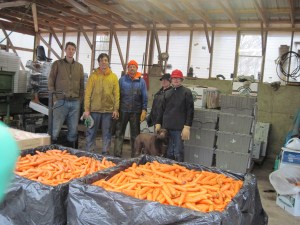
Carrot Harvesting Crew

Once again, we had tremendous volunteer help this season, if you happen to run into any of the folks listed in my previous post, please give them a pat on the back for helping to get your veggies out of the ground and into kitchens all over the area. Special recognition needs to go to Sandy Dugan and Patricia Clure. They worked countless hours this year, especially during peak harvest season in October and November, doing some of the most physical labor on the farm as we harvested, washed, and sorted over 60,000 lb. of produce for winter storage. It’s not too early to be thinking about next summer—if you’re interested in helping out for a morning, afternoon, or even a few days a week just let us know. We’ll also be looking for another intern for next year, so if you know of someone interested in working out here full-time next season please give us a call. Jeanne Jewell is going to be back for a second year, but she can’t do it all herself!

Catching the last raysI’d also like to give a quick update on a few items we reported on in our spring newsletter. First, the solar panels are now fully operational! We installed a 10kW system that we expect to produce about 75% of our total usage. Operating the farm on renewable energy has been an important long-term goal of ours for years, and we’re incredibly excited to make such a significant step in that direction.

Second, the new initiatives we’ve been participating in to expand the reach of local foods have been making progress this season. The farm will have sent more than 6,000 lb. of carrots to UMD and Essentia Health by the end of the year through the Food Hub pilot project for institutional purchasing. We’ve also sent more than 2,000 lb. of produce the Damiano Soup Kitchen through the Harvest for the Hungry program and 1,400 lb. to the College of St. Scholastica for the Thanksgiving buffet at the DECC. We’ll be meeting with the institutions again in a few weeks to begin planning for next year, and will hopefully be able to expand what they are able to offer next year.

As recognition grows that food produced in our area is just better—economically, socially, environmentally and tastefully!—we’re doing our best to increase supply by expanding our own operation and by supporting new farmers. No question about it, 2012 was a tough year to be a farmer, but we continue to be excited about what we do and are ever appreciative of you who support the production of healthy local food.

DSC_2078For the farm crew,

Janaki


Thank You Volunteers!

We had many wonderful volunteers and a great farm crew again this year. Sincere apologies to anyone I may have forgotten.

Thank you for making it all happen!

Volunteers

Alisa DeRider, Angela Piket, Brian Barber and Peggy Brown, Carmel DeMaioribus, Claire Middlemist, CSS Dignitas classes, Dave and Pam Benson, Deanne Roquet,           Doug Paulson and Deborah Adele, Frannie Weber, Geiger Yount, Jamie Harvie and Nan Sudak, Jodie Cope, Joe Lindgren, Karen and Royal Alworth, Laura Davis, Louise and Morris Levy, Marla Peterson, Pam Nelson and Mike Racette, Pam Schwartau, Patricia Clure, Paul Steklenski, Robert and Lorraine Turner, Rollie, Tracy, Hannah and Jonah Bockbrader, Russ and Karen Smith, Sandy, Betsy and Annie Dugan, Tom Eling

Farm Crew

Adam Kemp, Ann Peterson, Dave Hanlon, Jeanne Jewell, John, Jane and Janaki Fisher-Merritt, Ruth Ofstedal, Teri Sackmeister and Ben Fisher-Merritt


Dave’s Back at the Red Mug

Dave Red Mug

As you know, Dave Hanlon has worked out here at the farm for 20 years taking on roles as varied as greenhouse master, green bean impresario, and welding wizard. What you may not know is that he also makes amazing bread. Last winter he started baking for the Red Mug Bake Shop just over the bridge in Superior, and he’s back again this year. His bread will be ready by Thursday afternoon each week. It’s worth the trip over the bridge to check it out!


Winter Share Storage Tips

Potatoes are best stored in a cool (40-45°), dark place.  Darkness will prevent greening and coolness will prevent sprouting.

Onions like cool temps (35-40°) and low humidity.

Winter squash like to be stored at about 50-60° and need good air circulation and 50-70% humidity.

Potatoes, onions, and squash will store well for a couple of weeks even in conditions that are less than ideal—under your kitchen sink, for example.

Carrots, beets, cabbage, parsnips and rutabagas: These store best in a plastic bag, or other closed container, as close to 33°F as possible. Cold temps prevent sprouting; closed container maintains high humidity and prevents rubber carrot syndrome.DSC_2097

Help!

Engineering/Design/HVAC experts needed!

We’ve been at capacity on the root cellar for a few years now and as a result have needed to turn away winter share members and wholesale customers for storage veggies. We are seriously considering building a new root cellar in the next year or two, so if you’d be willing to help us as we design the new building we would be love to hear from you.


Flooding Update

7.8″ and it wasn’t done yet!


Hello Food Farmers,

I’d like to start off by saying that we are so grateful that our members are willing to share the risk of growing food with us—we can only hope that this crazy season will turn around and give the plants we all enjoy a chance to flourish. All of the emails and words of support really help keep our spirits up—we know that we face a year of increased workload as we try to make the best of a bad situation, so thanks for hanging in there with us. We’ve had a few days to assess the condition of the crops, so here’s our perspective on the impact of the flooding at this point. (Those of you who received shares on Thursday already got some of this info, so it may be repetitive.)

Here’s what we wrote in the newsletter for last Monday’s Summer Share delivery:

 The early potatoes are doing well. Tomatoes both in the high tunnel and outside are looking really good.  The onions, leeks, and garlic are vigorous.  The chickens are out on pasture and doing well, happy for lots of bugs and green grass. We’re really hoping we don’t get soaked in the next few days because most things are pretty happy!

Needless to say, we did get soaked—the farm rain gauge showed 7.8” of rain overnight on Tuesday, and we got another 1.3” mid-morning deluge on Wednesday to put us over 9” for the day, and a total of 12.1” in an 11 day period. Taking a look around first thing Wednesday morning was awe-inspiring, as we saw water moving like we’ve never seen. We constructed a dam to form our irrigation pond in 2000, and since then the 10” overflow pipe has always been sufficient to handle any excess water. In fact, the pond generally fills only with snowmelt as most rain soaks into the ground before it reaches the pond. With this amount of rain on already saturated soil, water was shooting out of the pipe like a fire hose and rushing over the spillway, which has never had water in it in 12 years. None of the culverts on our farm roads could keep up with the flow and water was running over the roadways.

There are a number of ways that your farm weathered the storm very well: most of the veggies are grown on level ground, so we only had major soil loss from erosion in a few fields, but we did lose a moderate amount of soil from the fields with no cover crops. We did have portions of some crops wash out due to the sheer amount of water moving across the fields, especially small-seeded crops such as carrots and parsnips. We are also very fortunate that water doesn’t run off of anyone else’s land onto the veggie fields; this limited the amount of water moving across the land (and the resulting erosion) and means we don’t have to be concerned about contaminated water coming in contact with the veggies.

The bad news is that since our land is so level, it takes a long time for our soil to dry out. This means that while immediate physical damage from the water isn’t severe in most cases, we expect to have significant crop losses as plants suffer from sitting in saturated soil for a long period of time. We expect that some things will recover and others won’t, but we can’t predict how it will all turn out. For now, we’re just hoping for heat, sun and wind to dry out the fields as quickly as possible to limit the damage. We just got another half inch of rain yesterday, but the sun is shining as I write this, so hopefully this week will be good to us.

As if the flood wasn’t enough, we are seeing unprecedented insect numbers this year. It started with aphids in the greenhouse this spring and in a few outdoor crops, to an infestation of a new pest that I wrote an earlier blog post about—the Variegated Cutworm—that is threatening many crops both outdoors and in the greenhouses. On Friday we just discovered potato beetles and their larvae. This is nearly a month earlier than we’ve had them in the 10 years since we began a new crop rotation system to control them.

The other unfortunate byproduct of the wetness is that it delays mechanical weed control (tractors and mud don’t mix) in the crops and makes for a lot more hand weeding. We know there’s a lot of cleanup to be done all over, but if you have any extra time to volunteer in the coming weeks, please give us a call. Again, thanks for your support and we look forward to sunnier days ahead.

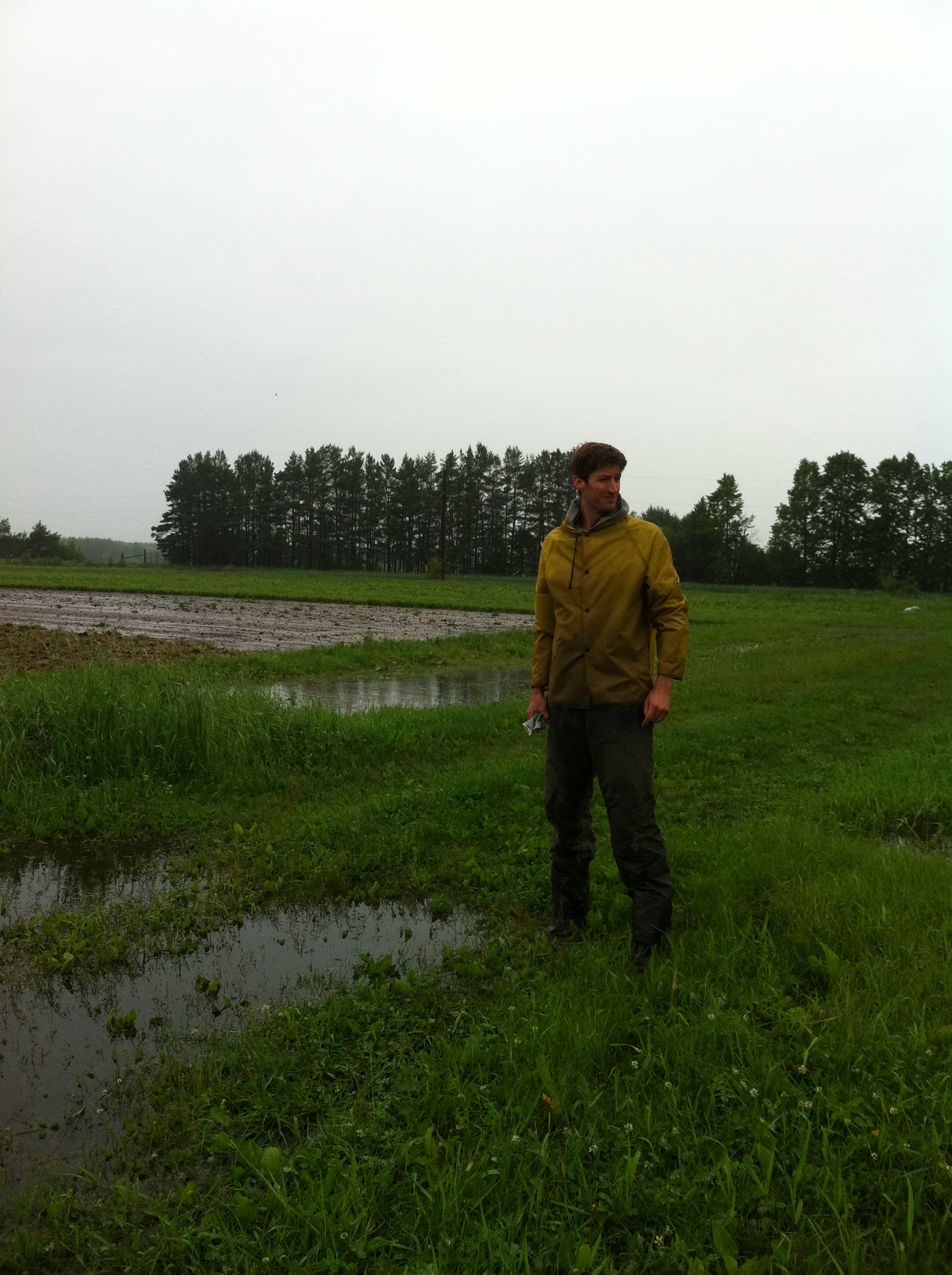
Surveying the fields Wednesday morning.

Surveying the fields Wednesday morning.

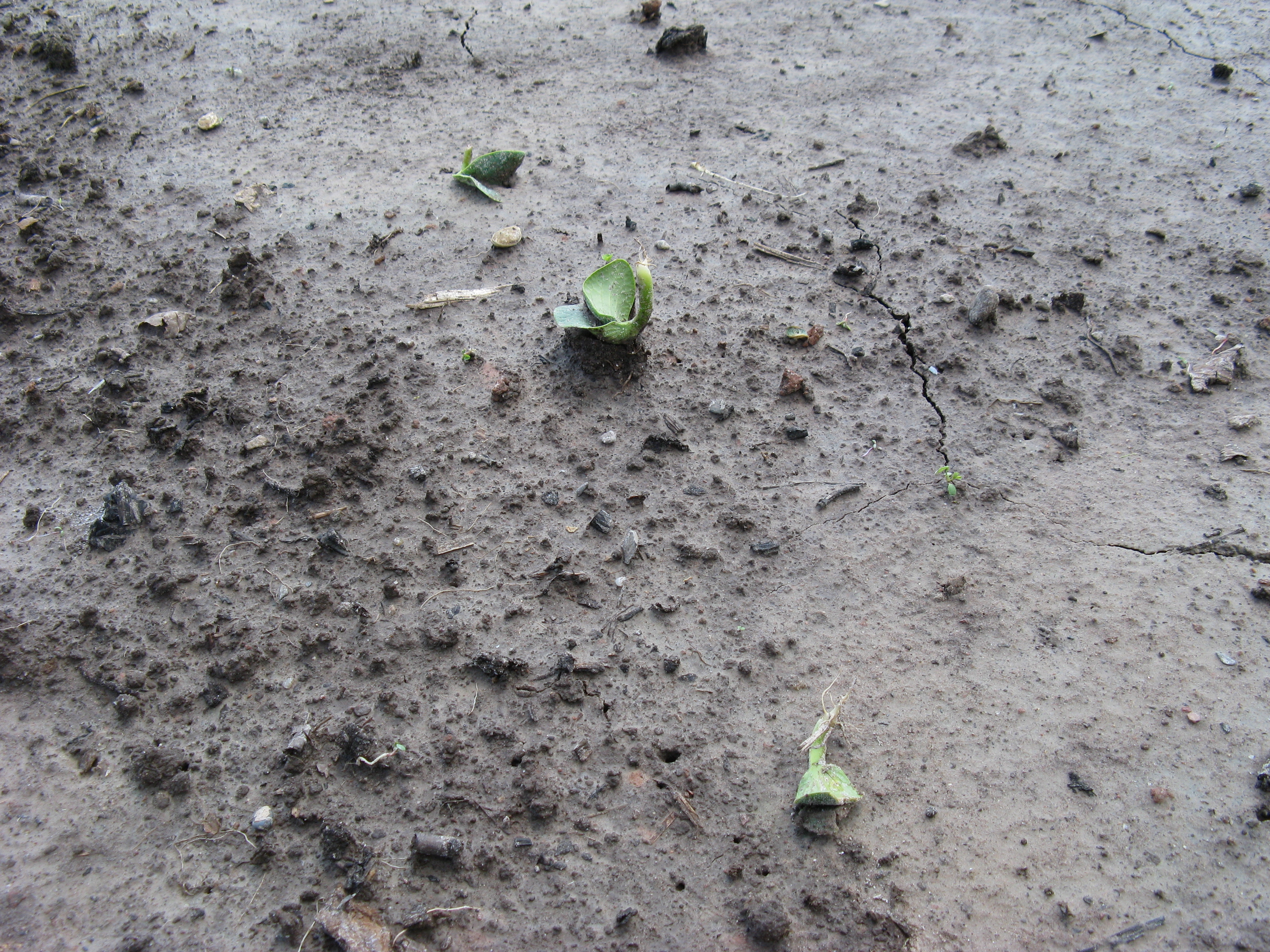
Carrot seedling with 3/4″ of soil washed from the roots

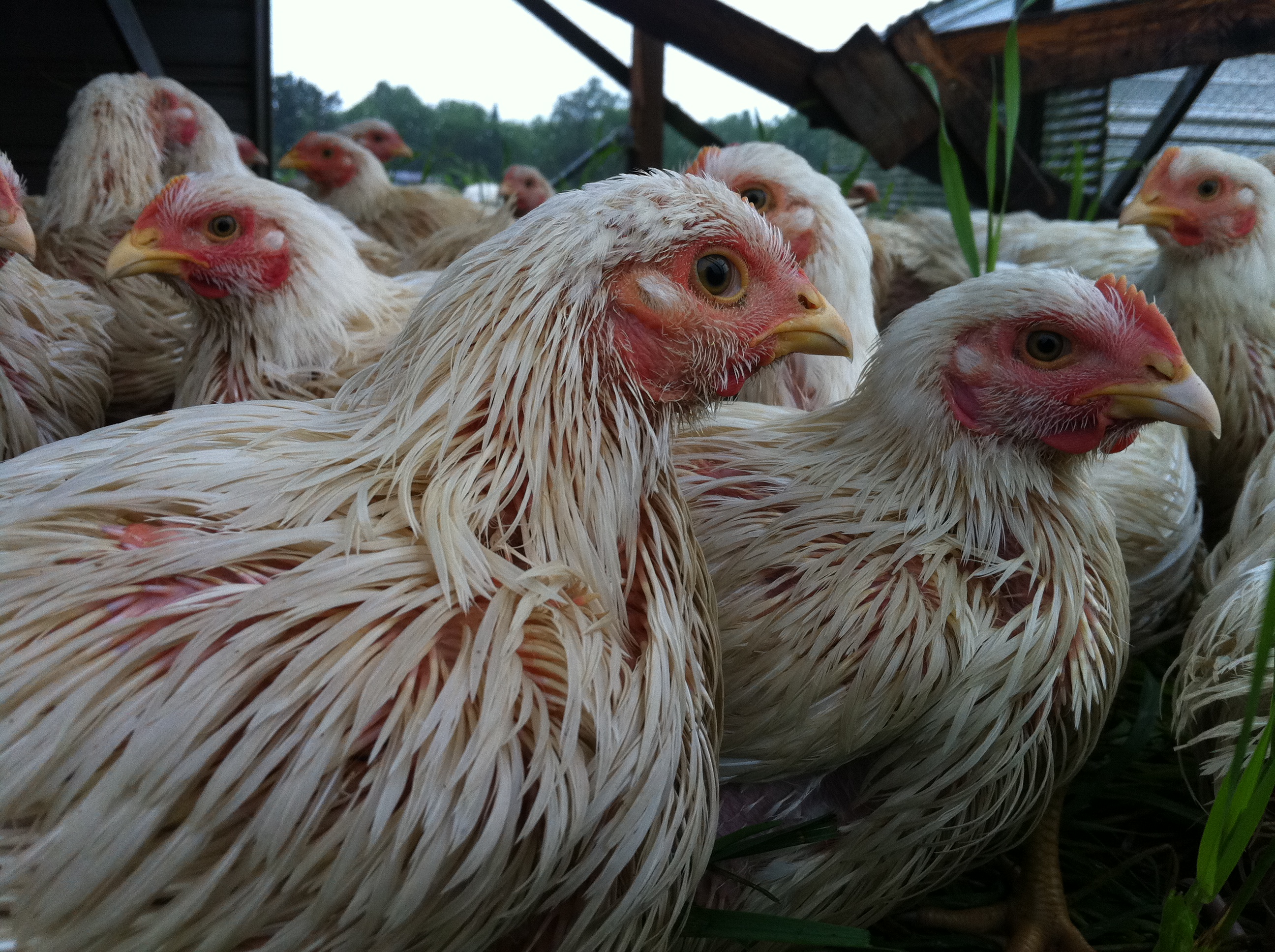
Chickens were wet but safe and are all doing fine
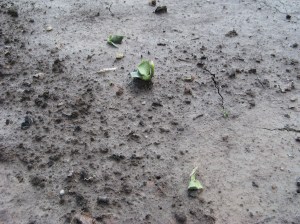
This squash plant looks fine, until you notice that the roots are sticking up in the air!
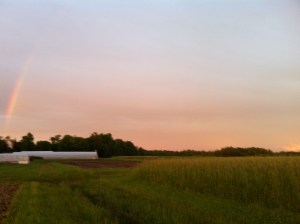
A beautiful ending to a bad day.