Food Farm

your favorite local veggies

Food Farm

Summer CSA Week 14

There are little things I forget about how the season goes this time of year. I enjoy the changes of season, and I am happy that autumn is coming. And even though I’ve had a fair number of seasons now, there are still things I forget and am glad to be reminded of, like looking back at old photos from happy times, or smelling something that matches a memory perfectly.

Three weeks ago, I don’t know that I could have remembered if asters bloom purple to begin with and then fade to white, or start white and get darker as they age. Now, I remember, and I see: most of them start off purple. It seems like it wasn’t so very long ago the sun came in to wake me up and now I roll over in bed until I see a hint of a glow in the east. I’ll get up before her, but I like to see that she’ll join me before too long. I forgot that happened so soon, and it is taking adjusting to.

On my drives to and from the farm I’ve been reminded that this is the time of year that deer start to turn from their red summer coats to their grey-brown winter coat. There are some of each color roaming in the fields in Wrenshall, trying to put on more weight.

It is the season of plenty. This past weekend the Food Farm had a booth at the Lake img_20180906_171636466Superior Sustainable Farming Harvest Fest down at Bay Front. Harvesting and preparing to go was added work for the crew the Friday before, and they did a great job. It was all worth it to hear the compliments about how the food looked, and to see people get excited about well grown, local food.

It was fun to meet a few members at the Harvest Fest. Out of the scores of people that get our summer share I know only a handful of you -and any face I can put with a name is a treat.

That’s what I like about doing the Harvest Fest- it colors in a fuller picture of what the work of farming is all about. Hearing what people are planning for dinner, or talking to them about what the purple peppers are like or letting them know to wait a while before eating their winter squash (yes, it’s coming!) makes the work feel whole somehow.

It’s dawning on me that in some way, except for what I snack on throughout the day (which is a lot) or take home for myself (also a lot) it’s as if I forget I’m working with food. Real food – so real I almost want to capitalize it. All the energy we (mostly the soil and sun) spend to make this food- you get that energy. You take it and turn it into other work like organizing, caring for children or parents or yourself, hiking, preserving, crafting … anything you do. That’s why we do the work on the farm, and I’m glad to have a reason to be reminded of it.

For the farm crew,

Karin

20180817_151033.jpg


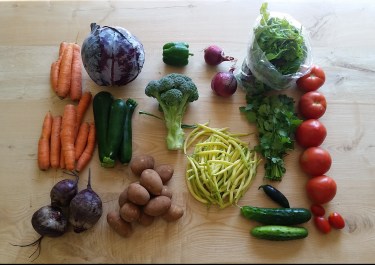
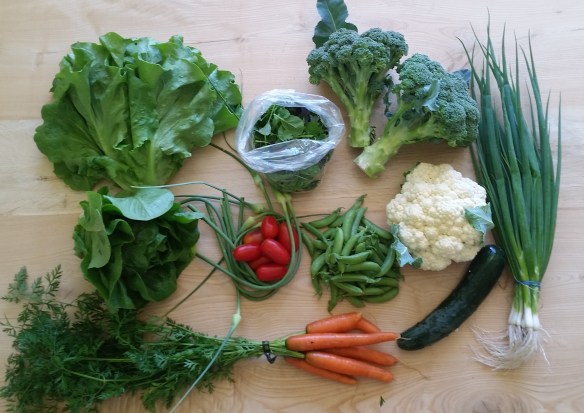
In your share this week:

  • Yellow Beans20180910_134854
  • Beets
  • Broccoli
  • Red cabbage
  • Carrots
  • Cilantro
  • Cucumbers
  • Greens mix
  • Red onions
  • Green pepers
  • Jalapenos
  • Russet potatoes
  • Tomatoes
  • Zucchini

Roasted Root Vegetables

Directions

  1. Preheat an oven to 400 degrees F (200 degrees C).
  2. Place the beet, carrot, onion, potatoes, garlic, and garbanzo beans into a 9×13 inch baking dish. Drizzle with the olive oil, then season with thyme, salt, and pepper. Mix well.
  3. Bake, uncovered, in the preheated oven for 30 minutes, stirring once midway through baking. Remove the baking dish from the oven, and stir in the wine. Return to the oven, and bake until the wine has mostly evaporated and the vegetables are tender, about 15 minutes more. Stir in the beet greens, allowing them to wilt from the heat of the vegetables. Season to taste with salt and pepper before serving.

Carrot Cake Pancakes

Pancakes
1 cup all-purpose flour
1 teaspoon baking powder
1/2 teaspoon baking soda
1/2 teaspoon table salt
1/2 teaspoon ground cinnamon
1/2 teaspoon freshly grated nutmeg (I used a smidge less)
1/8 teaspoon ground ginger
2 tablespoons chopped walnuts (optional, I skipped them)
2 tablespoons golden raisins (optional, ditto)
1 large egg
2 tablespoons packed brown sugar
1 cup buttermilk
1 teaspoon pure vanilla extract
2 cups finely grated carrots (from about a 3/4 pound bundle whole carrots)
3 tablespoons butter, for griddle

Cream cheese topping
4 ounces cream cheese, at room temperature
1/4 cup powdered sugar
2 to 3 tablespoons milk
1/2 teaspoon pure vanilla extract
Dash of ground cinnamon

Place a rack in the upper third of your oven and preheat to 200°F. This will keep the pancakes warmed as they’re fried in batches.

To make the pancakes: In a large bowl, whisk together flour, baking powder, baking soda, salt, cinnamon, nutmeg, ginger and, if using, nuts and raisins. In a small bowl, whisk together the egg, brown sugar, buttermilk and vanilla. Stir in carrots. Stir carrot mixture into dry ingredients, stirring until just Incorporated. Let rest for five minutes while you make the cream cheese topping.

To make the cream cheese topping: In a small bowl, beat the cream cheese until fluffy and lump-free. Whisk in powdered sugar, two tablespoons milk, vanilla and cinnamon. If you’d like the mixture thinner, add the remaining tablespoon of milk (I did not).

Over medium heat, melt 1 tablespoon butter in a cast-iron skillet or griddle pan. Spoon 2 tablespoons batter into the hot pan per pancake (to me, this seemed like too little but after experimenting with larger pancakes, I advise you to listen to Joy; It’s a wiggly batter and much easier to and cook in small puddles), flipping once, until pancakes are golden on both sides, about 2 minutes per side. Transfer finished pancakes to a serving dish or tray in the oven, to keep warm while you repeat the process with the remaining batter, adding more butter as needed.

Serve warm with cream cheese topping.

Summer CSA Week 13

Before I could start writing the newsletter this week, I had to put my kitchen into some semblance of order. I had canned a few beans (and, funny how canning a few makes just as much of a mess as canning a lot of them. Lesson learned.) That was Saturday evening and then I rushed off to many weekend activities – leaving my counter and table full of pots and cutting boards. I have a fairly small kitchen, and it doesn’t take much for there to hardly be room for the cook. Now it’s cleanish, and there’s room to put my laptop down on the table. More importantly, there’s room for my thoughts to roam about without tipping over the dishes in the drying rack.

This past weekend I went down to the Cities to burn my shoulders, catch some live music on a stick and get deep-fried cheese curds for breakfast. I was at the State Fair, of course. One of the highlights for me were the dahlias on display in the Horticulture building. Both of the plant/flower rooms were full of them this year -and it was extraordinary. I couldn’t stop exclaiming out loud at how wonderful they were. There were small ones like little pom-poms and others the size of dinner plates. There were totally spherical ones and ones that looked like pinwheels in a Dr. Seuss book. They are so beautiful -and also so organized in their appearance that they make me think of outer-space, or math or the spiral part at the top of cauliflower.

This time of year the way we harvest starts to change. I suppose I’ve said that in past newsletters. I’m reminding myself more than you all. With the changing harvest, and more and more produce coming down into the root cellar, staying organized is crucial. Even though this is my fourth season I still need reminding of where we put things so they stay out of the way (but not too out of the way), and it takes me adjusting how I think about wheeling pallet boxes into the cooler. The crew is catching on to our little tricks for how to keep things straight during harvest days and wholesale delivery days. We use certain bins for this or that, and certain stickers for other thises and thats. Getting and staying organized takes a certain amount of energy and work, but it is so very worth it. At the end of the day, the time we spend talking about how to do things better with our time or space is more than made up for by how the system can flow.

The fact that anything gets, or stays organized on this farm while I’m working here is because in the 30 years of farming that Jane, John, Dave and Janaki have done (and countless other crew members and volunteers) they have all set systems in place that work well for us. We make little changes from season to season, and big changes (like adding a root cellar, and then expanding it) – and we all get a say in what we think makes sense.


In your share this week:

  • Yellow beans
  • Kale
  • Carrots
  • Cauliflower
  • Cilantro
  • Cucumbers
  • Garlic
  • Green mix
  • Sweet onion
  • Green bell peppers
  • Hot peppers
  • Red Potatoes
  • Daikon radish
  • Juliet tomatoes
  • Zucchini

Cucumber and daikon radish relish

INGREDIENTS

  • 2 cucumbers, peeled, halved, cut crosswise into 1/4-inch-thick slices
  • 2 teaspoons sea salt
  • 8 ounces daikon (Japanese white radish), peeled, cut into 2x 1/4-inch sticks
  • 2/3 cup unseasoned rice vinegar
  • 2/3 cup sugar
  • 1 tablespoon minced fresh ginger
  • 1/8 teaspoon cayenne pepper

RECIPE PREPARATION

  • Toss cucumbers with sea salt in colander. Place colander over bowl and let stand 15 minutes. Rinse cucumbers. Drain and pat dry with paper towels.

  • Place radish sticks in medium bowl. Cover with water. Soak 15 minutes. Drain and pat dry with paper towels.

  • Stir vinegar and next 3 ingredients in large bowl to blend. Add cucumbers and radish; toss to coat. Cover and chill at least 30 minutes and up to 2 hours.


Indian-spiced cauliflower soup

    • 2 tablespoons olive or peanut oil
    • 1/2 teaspoon whole cumin seeds
    • 1/4 teaspoon whole fennel seeds
    • 1 medium onion, peeled and chopped
    • 1 medium potato (about 6 ounces), peeled and chopped
    • 2 teaspoons peeled and chopped fresh ginger
    • 2 cloves garlic, peeled and chopped
    • 1 fresh hot green chili, chopped (more or less to taste)
    • 2 teaspoons ground coriander
    • 1 teaspoon ground cumin
    • 1/4 teaspoon ground turmeric
    • 1/4 teaspoon red chili powder or cayenne (to taste)
    • About 3 1/2 cups cauliflower florets (from about 1/2 a large 2.75-pound head)
    • 2 medium tomatoes, peeled and chopped or 1 1/2 cups canned chopped tomatoes
    • 1 1/2 teaspoons salt, or to taste (we wanted more)
TO FINISH (ALL OPTIONAL)
  • A couple spoonfuls heavy cream or dollops of yogurt
  • 1/2 cup cooked basmati or other long-grain white rice
  • Handful of fresh cilantro, chopped
  • Freshly ground black pepper
  • Lime wedges
  • Toasted pita or naan wedges

Refrigerator Dilly Beans

2 cups of green beans
1 cup vinegar
1 cup water
2 ½ tablespoons of sugar
2 cloves of garlic OR 3 tablespoons of minced garlic scapes
1 ½ teaspoons of kosher salt
½ of a medium onion, sliced thinly
2 sprigs of fresh dill
½ teaspoon of whole black peppercorns
¼ to 1 teaspoon of red pepper flakes (depending on how hot you want them) – you
can also add a whole dried chili if you have one.


You don’t need any canning supplies for this project. You don’t even need special
jars. I reused a jar from store-bought sauerkraut for mine. Use whatever you have
on hand, as long as it’s glass and has a lid. 


Make your brine. This is the longest part of this process (and it only takes a few minutes!) so do this first. Add your water, vinegar, salt, sugar, and garlic (which you’ve minced) to a saucepan and bring it to a boil. Once it is boiling, turn it off and set it aside to cool down to room temperature.

Trim the beans. You want them all to fit in your jar with about an inch at the top
so the brine covers them completely. You can trim both ends, or just the stem end. I think the pointy blossom end of beans are pretty, so I leave them. It’s up to you.

Blanch the beans. Bring a saucepan of water to a full boil, then dump the beans in
and boil them for thirty seconds. Drain them, and quickly add them to a bowl of
iced water to shock them and stop the cooking process. You want your beans to be
brightly colored and still crisp.

Drain the beans and set them aside. Add your onions, dill, red pepper flakes,
and peppercorns to your jars.

Now add your beans to the jars. They look prettiest standing upright, but don’t
worry about being perfect. The easiest way is to lay the jar on its side, or hold it
horizontally, and place the beans inside.


Go ahead and pour your brine in once it has reached room temperature. Fill
the jar to 1/2 inch below the top of the jar, and put the lid on. Place the jar of dilly
beans in the fridge, and let them sit for at least two days before eating them.


They’ll keep for up to six months in the fridge, but I’ll bet you foldable money that
you won’t have them around nearly that long!

Summer CSA Week 12

I haven’t always liked tomatoes, I used to flat out dislike them. When I was a kid, of course I liked pizza and spaghetti sauce and salsa, but watching my dad eat sliced tomatoes with salt and pepper baffled me. I think part of my dislike was the texture, part of it was the taste. Growing up we had store bought tomatoes -and maybe it’s a cliché at this point, but the difference between a store bought tomato and one ripe off the vine is amazing.

I didn’t start liking tomatoes so much (I do like them, so so much) until I started working on farms. I quickly became the kind of person who would eat them like apples when I had a free hand or a free minute in the field. Perhaps, this whole time, I had been eating apples like tomatoes?

These late summer days I enjoy seeing the monarchs float around the farm looking for any milk weed that’s still blooming. I say I enjoy seeing them, and I do, but sometimes I also have this sense that someday I might look at my last monarch and not know it. It matches my wonderings of how old I will be when honey is so expensive that only the wealthiest can buy it and all the bee’s wax will be in museum vaults. So I try to appreciate each butterfly and spoonful of honey. I shouldn’t have that appreciation just because I could outlive them but it adds gravitas to every day things.

img_20180825_110239874I feel lucky to live in an city with so many streams and trees running through it. It is nice to feel that wherever you are in town, it is not to far to a place that feels like a forest of sorts. It is like night and day from old pictures (mid/late 1800’s) of Duluth. It is out-right heartbreaking to see the barren hillside  – totally cleared for timber to build a growing country.

Maybe night and day isn’t quite the right level of contrast when taking into account how the forests in the area used to be. I can’t even imagine what it would be like to stand in the middle of virgin forest where my house is now. Groves of aspen, birch and maples are beautiful, and I love cedar and rock lined streams. But something is missing. The area used to have a different flavor and who is alive who remembers anyone who remembers how it was?

I love the time I get to spend outside, both at the farm and out in the rest of the world. I feel lucky to have so much space available to me as public land- and I love seeing other animals, human and non-human, enjoying and living in it all. But I feel remorse in a nagging and vague sort of way for the state of the forests and butterflies. I feel like I miss something I never even had. And it’s not as if I don’t love our planet, I do, but it is like a store bought tomato that keeps getting more and more store-bought-ish every time we pass it down to the next generation. And some day, who will remember to even try to imagine what it used to taste like?

For the crew,

Karin

P.S. We recommend taking your tomatoes out of the bag right away (always). It was particularly humid this morning as we were bagging them up.

And regarding your green beans and cilantro – we were happy for rain yesterday, but it sure made things dirty! I would consider using your beans and cilantro earlier rather than later. Don’t wash the beans before storing them – and maybe open the bag a bit so they can keep drying for a few hours in the fridge.


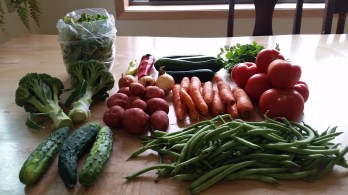
In your share this week:

  • Green beans 20180827_131115
  • Broccoli
  • Carrots
  • Cauliflower
  • Cilantro
  • Cucumbers
  • Greens mix
  • Sweet onions
  • Sweet Red peppers (long and pointy, not hot)
  • Jalapeno peppers (Small, green, and hot)
  • Red new potatoes
  • Tomatoes
  • Zucchini


How to Freeze Tomatoes

  1. Drop tomatoes into boiling water for 60-90 seconds and, using a slotted spoon, transfer immediately into a bowl of ice water to cool. Skin will slip easily from the flesh.
  2. Remove stems and core tomatoes. Tomatoes may be left whole, but preparing them in a way that maximizes storage space is recommended. I cut mine into quarters or large cubes. Work over a shallow dish to retain juices.
  3. After allowing to cool to room temperature, transfer into storage bags. Using a ladle or measuring cup, fill pint or quart sized zipper-bags.
  4. Seal bags. Make sure to push as much air as possible when sealing to avoid freezer burn.
  5. Try to store flat. The shape in which they freeze is the shape you’re stuck with until it’s time to thaw.
Frozen tomatoes will retain flavor for 12 to 18 months.

Turmeric Roasted Cauliflower

  • 1 head cauliflower
  • 2-3 medium garlic cloves
  • 2 tablespoons extra-virgin olive oil
  • 1 teaspoon cumin
  • 1 teaspoon paprika
  • 1/2 teaspoon turmeric
  • 1/4 teaspoon red pepper flakes
  • 1 teaspoon kosher salt
  • 1/2 teaspoon ground black pepper

DIRECTIONS:

  1. Preheat oven to 450 degrees F.
  2. Chop the cauliflower into florets. Peel and mince the garlic.
  3. In a large bowl, mix the cauliflower and garlic with the olive oil, cumin, paprika, turmeric, red pepper flakes, salt, and black pepper.
  4. Line a large baking sheet with parchment paper or a silicone mat, then place the cauliflower in a single layer on the baking sheet. Roast for 25-35 minutes or until the cauliflower is tender and browned, stirring once. Serve immediately.

Summer CSA Week 11

I have been delighted with the cooler evening temperatures these past several mornings. It has been good sleeping weather. Goldenrod and mountain-ash berries are offering us a sample of colors to come. At the end of the week we’ll change the angle of the solar panels on the farm to meet the sun at its lower arc across the fields.

Stepping into a drug store reminds me that other people are buying college-ruled notebooks, erasable pens and sets of binder inserts. I’ve thought about making a “winter is coming” list, even for my fairly low-maintenance city life. The only thing I can think of off the top of my head is to vacuum the beach and farm out of my car. I really do need to do that.

But what am I saying!? It’s August and there is broccoli to pick as far as the eye can see, sun flowers blooming and Kate, our one student crew member, is still full time for the week. We’ll be picking green beans today for the first time too. I think green beans are my favorite thing to harvest. It slows me down (I’m still pretty fast) and gets me to look and feel more than I do for some other harvesting.

20180817_150958As a kid I grew up on frozen or canned green beans. I never liked them, but the frozen ones were by far preferable to canned. I don’t remember now if it was a pole-bean or a pea pod, but I distinctly remember having my first fresh whichever-it-was from my great Aunt Barb and Uncle Burt’s garden. It was a game changer. A few years later my mom’s friend was watching my sister and I for an overnight and they had a garden with beans too. After having put away a handful or more, the boy in the family informed me I wasn’t supposed to pick them yet. I felt a little sheepish, but he was way, way younger than I (a year), so what did he know?
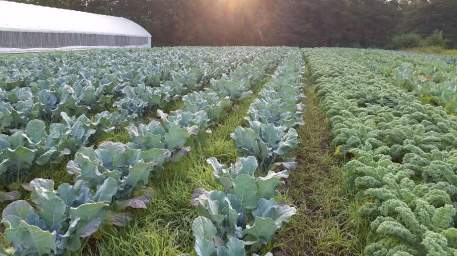
The first farm I worked on grew two beds of pole beans, trellised side by side. They grew super tall, probably 8 feet. I loved picking in between the rows: being in a leguminous tunnel full of wasps, bees and beans. The hum of life and occasional snack out of my basket made it my favorite daily ritual.

On the Food Farm I love the conversations I end up having while picking green beans. It tends to be an all hands on deck project, even Janaki comes out and harvests with us, so it has a nice feel to me. And, I think it makes them taste better. Hopefully you think so too.

For the farm crew,

Karin


August 26 you get a 2 for the price of 1 farm party! (read – FREE!)

We’ll have an open house at the farm as well as an opening celebration for a new exhibition in the Free Range Film Barn. Both are Sunday, August 26 from 2 to 5pm. Both events are kid friendly (and adult friendly as well). The art exhibition in the barn features the work of Cecilia Ramon and Kathy McTavish. There will be sundial workshops and an art walk led by Cecilia Ramon that follows the thermalhaline ocean current. The Farm party is a mile away at the Food Farm and will include tours and kids activities.
Looking forward to seeing as many of you there as we can get!
Free Range Film Barn: 909 County Road 4, Wrenshall, MN 55797
Food Farm: 2612 County Road 1, Wrenshall, MN 55797

In your share this week:

  • Green beans20180820_134346
  • Broccoli
  • Cucumbers
  • Lettuce mix
  • Yellow onions
  • Carmen (sweet) red peppers
  • Hot wax peppers
  • Red-gold potatoes
  • Tomatoes
  • Zucchini

Pesto Potato Salad with Green Beans

2 pounds small  red-skinned potatoes, quartered20180817_154254
1/2 pound green beans, cut into one-inch segments
1 garlic clove, peeled
1 bunches of basil (about one ounce each)
1/4 cup olive oil
3 tablespoons (or more to taste) mild vinegar, such as champagne, white wine or a white balsamic
1/4 cup chopped green onions (scallions)
1/4 cup pine nuts, toasted
Parmesan cheese to taste
Salt and freshly ground black pepper

Cook potatoes in large pot of boiling salted water until just tender, about 10 minutes. Add beans; cook four minutes longer. Drain well and let cool, then transfer potatoes and beans to a large bowl.

Meanwhile, discard the stems from the basil and wash and dry the leaves. Puree them in a food processor with garlic, drizzling in enough olive oil that it gets saucy. Season the pesto with salt and pepper. [Alternately, you can swap this step with one cup of prepared pesto, but seriously, I think you’ll be missing out.]

Toss the beans and potatoes with pesto. Stir in vinegar, green onions, pine nuts and season with salt, pepper and/or additional vinegar to taste. Finally, shave some wide flecks of Parmesan over the salad with a vegetable peeler.

Serve immediately, or make this up to two hours in advance. It can be stored at room temperature.


Fresh Tomato Sauce

4 pounds tomatoes
1/4 cup olive oil
Small onion
2 to 3 small cloves of garlic
1/2 medium carrot
1/2 stalk of celery
1/2 teaspoon salt plus more to taste
Slivers of fresh basil, to finish

Peel your tomatoes: Bring a pot of water to boil. Blanche the tomatoes in the boiling water for 10 to 30 seconds, then either rinse under cold water or shock in an ice water bath. Peeling the tomatoes should now be a cinch. If one gives you trouble, toss it back in the boiling water for another 10 seconds until the skin loosens up. Discard the skins (or get crafty with them).

Finish preparing your tomatoes: If using plum tomatoes, halve each lengthwise. If using beefsteak or another round variety, quarter them. Squeeze the seeds out over a strainer over a bowl and reserve the juices. (You can discard the seeds, or get crafty with them.) Either coarsely chop you tomatoes on a cutting board or use a potato masher to do so in your pot, as you cook them in a bit.

Prepare your vegetables: I finely chop my onion, and mince my carrot, celery and garlic.

Cook your sauce: Heat your olive oil in a large pot over meduim. Cook your onions, carrots, celery and garlic, if you’re using them, until they just start to take on a little color, about 10 minutes. I really like to concentrate their flavor as much as possible. Add your tomatoes and bring to a simmer, lowering the heat to medium-low to keep it at a gentle simmer. If you haven’t chopped them yet, use a potato masher to break them up as you cook them. Simmer your sauce, stirring occasionally. At 30 minutes, you’ll have a fine pot of tomato sauce, but at 45 minutes, you might just find tomato sauce nirvana: more caramelized flavors, more harmonized texture.

If your sauce seems to be getting thicker than you want it to be, add back the reserved tomato juice as need. If your sauce is too lumpy for your taste, use an immersion blender to break it down to your desired texture. (“Blasphemy!” some will say, but they’re not in the kitchen with you. So there.) Season with 1/2 teaspoon salt and more to taste. I like somewhere between 1/2 and 1 teaspoon for 4 pounds of tomatoes. Scatter fresh basil over the pot before serving. Taste once more. Swear you’ll never buy jarred sauce again.

Summer CSA Week 10

This past weekend I bought measuring cups. I had been sliding by without them by strategically picking roommates that already owned them. But now, it’s been on my list for a bit and I figured I’d take the leap. My family lovingly made fun of me – “oh, are they for decoration and you’ll take them down once a year to dust?” They are making a fair point. I notoriously rarely measure. I only measure when I’m baking an unfamiliar recipe and even then, I’m only sort of measuring. To me recipes are more like guidelines, or suggestions, or inspirations. Or just pretty pictures. Things to be glanced at and kept in mind while throwing ingredients into a bowl.

My system isn’t fool proof -it’s mine after all. Sometimes my cookies are spread out and weird, or my pies aren’t quite sweet enough. Ah -the trials of trying to be decadent.

Cooking lunches on the farm, or dinners for myself, is my favorite kind of cooking. 20180813_071147Cooking is more forgiving and changeable than baking. I add things as I go and change my mind in the midst of prep. I like baking, but I’m commitment shy, and cooking fits that perfectly.

I feel lucky to have access to fields of produce – and this time of year it is full of options. Your share this week is almost its own recipe. There isn’t anything in there that couldn’t go together somehow -if not in the same dish, on the same plate. I learned to love cooking with whatever produce was around when I first started working on farms. I cooked a lot of what I’ve come to call “summer medley”, and I still do. Herbs, onions, zucchini and tomatoes all in a pan -what more could a girl ask for? Simple and tasty- and there is no shortage of any of those things this time of year.

In a society that values having access to all the choices, all the time, I am glad that you all have chosen to creatively acquiesce to the ingredients at hand this time of year from our farm. There is a certain peace in letting the season help you choose what is for dinner.

For the farm crew,

Karin

P.S. Farm Day is coming up Sunday, August 26th, from 2-5 pm . Come out to say hello! Also come out for farm tours, hayrides, kids activities and farm fresh snacks!


In your share this week:

  • Onions20180813_135857-e1534188076827.jpg
  • Carrots
  • New potatoes
  • Head lettuce
  • Greens mix
  • Basil
  • Green pepers
  • Hot Wax pepers
  • Tomatoes
  • Zucchini
  • Kale

Steamed Herb Potatoes

  • 1 1/2 pounds small new potatoes
  • 2 tablespoons unsalted butter
  • 1 tablespoon chopped fresh herbs (such as parsley, basil, or tarragon)
  • kosher salt and black pepper

Steam the potatoes in 1 inch of water until tender, 12 to 15 minutes; drain. Toss with the butter, herbs, ¾ teaspoon salt, and ¼ teaspoon pepper.


Carrot soup with tahini and crisped chickpeas

Soup
2 tablespoons (30 ml) olive oil
2 pounds (905 grams) carrots, peeled, diced or thinly sliced
1 large onion, finely chopped
4 regular or 6 small garlic cloves, peeled and smashed
1/4 teaspoon ground coriander
1/2 teaspoon ground cumin
1/2 teaspoon table salt, plus more if needed
Pinch of Aleppo pepper or red pepper flakes
4 cups (945 ml) vegetable broth

Crisped chickpeas
1 3/4 cups cooked chickpeas, or 1 15-ounce (425-gram) can, drained, patted dry on paper towels
1 generous tablespoon (15 ml or so) olive oil
1/2 teaspoon coarse salt
1/4 teaspoon ground cumin

Lemon-tahini dollop
3 tablespoons (25 grams) tahini paste
2 tablespoons (30 ml) lemon juice
Pinch or two of salt
2 tablespoons (30 ml) water

Pita wedges, garnish
A few large pitas, cut into 8 wedges
Olive oil, to brush pitas
Za’atar (a Middle Eastern herb blend) or sesame seeds and sea salt to sprinkle
2 tablespoons flat-leaf parsley, coarsely chopped

Heat two tablespoons olive oil in heavy large pot over medium heat. Add carrots, onion, garlic, coriander, cumin, salt and pepper flakes and sauté until they begin to brown, about 15 minutes.

Meanwhile, heat your oven to 425 degrees F. Toss chickpeas with one tablespoon olive oil, salt and cumin until they’re all coated. Spread them on a baking sheet or pan and roast them in the oven until they’re browned and crisp. This can take anywhere from 10 to 20 minutes, depending on the size and firmness of your chickpeas. Toss them occasionally to make sure they’re toasting evenly.

Once vegetables have begun to brown, add broth, using it to scrape up any bits stuck to the bottom of the pot. Cover pot with lid and simmer until carrots are tender, stirring occasionally, about 30 minutes.

Meanwhile, in a small dish, whisk together tahini, lemon juice, salt and water until smooth with a yogurt-like consistency. If more liquid is needed to thin it, you can add more lemon juice or water, a spoonful at a time, until you get your desired consistency.

Spread pita wedges on a second baking sheet and brush lightly with olive oil. Sprinkle with za’atar or a combination of sea salt and sesame seeds and toast in oven with chickpeas until brown at edges, about 5 minutes.

Puree soup in a blender or with an immersion blender until smooth. Ladle into bowls. Dollop each with lemon-tahini, sprinkle with crisped chickpeas and garnish with chopped parsley. Serve with pita wedges. Forget January, you’d eat this anytime. Right?

Summer CSA Week 9

The trees are a dark and sleepy sort of green, the crickets start their conversations before the sun goes down. Annie’s Tiger lilies are blooming out the kitchen window. Lambsquarter and pigweed reach up through the cover-crop in the race to the sun and tiny grasses try to hide behind carrots in their row hoping the crew won’t see them as they crawl along weeding immaculately. On work days, I want a cold meal and hot coffee. It is August on the farm.

This month tends to be a busy month for people. Obligations and summertime desires 20180806_123441come crashing together in a scramble for attention in the last fleeting days. Summer feels like the 1812 Overture by Tchaikovsky: gentle late-May days, storms, sultry evenings, hammocks, carrot weeding and the whirlwind finale. Of course, this isn’t what it was written for – but if the song fits, wear it.
Harvesting the first of the carrots and potatoes from the field is a treat and it also marks a seasonal shift for us here on the farm. The crescendo of harvest doesn’t happen for another several weeks, but the tune of the finale starts now. We’ll finish up the last of the weeding in these next couple of weeks and then move to harvesting all of the time.

After four seasons on this farm I am still amazed at how much food gets harvested in a short amount of time –and it starts with these first buckets from the field.

For the gearing-up farm crew,

Karin

P.S. Dave would like people to know that the cucumbers you are getting are from our outside plants. Yay! A lot of work goes into getting things like carrots and cucumbers growing in the greenhouses- and it allows us to push the season earlier. But we get excited when things come from the fields this time of year.


In your share this week:

  • Broccoli
  • Carrots
  • Cilantro
  • Cucumbers
  • Dill
  • Green onions
  • Peas
  • Hot wax peppers
  • New red-gold potatoes
  • Tomatoes
  • Zucchini

Carrot Greens Chimichurri

  • 1 cup finely chopped carrot greens (preferably organic)
  • 2 teaspoons dried oregano
  • ¼ teaspoon cumin
  • 1 teaspoon ground sweet paprika
  • ½ teaspoon crushed red pepper flakes
  • 1 garlic clove, minced
  • 1 teaspoon salt
  • a few grinds of pepper
  • ¼ cup white wine vinegar
  • ¼ cup olive oil (a good fruity one)
  1. Wash and dry your carrot greens well.
  2. Roast carrots in a 450 degree oven for 10-15 minutes (or until tender but not mushy).
  3. Finely chop your carrot greens and mix them with all of the dried spices and minced garlic. Stir in the vinegar and olive oil. Taste and adjust seasonings. (tip: taste it with a carrot or a piece of bread rather than by the spoonful)
  4. Serve with roasted carrots (or other veggies), toasted bread, or over grilled fish or meat.


New Potatoes

20180806_122142

New scale and new potatoes!

I cannot bring myself to put a recipe in for the new potatoes. They are so wonderful when they’re young and fresh. The skins are thin and delicate, and they’re the best kind of potato you’ll eat all year. New potatoes are called new because they’re harvested while the plant is still green. Storage potatoes are harvested once the plants have died, and the potato skins and flesh have hardened a bit.

Since they’re so tasty and so fleeting, I would just steam them (10-12 minutes) and smash them with butter or olive oil and whatever herbs you have sitting around. Keep it simple!

Summer CSA Week 8

These past few days have found me washing raspberry stains off my fridge handle and sand out of my hair. And eating copious amounts of snap peas.

Aspects of high-summer send my mind racing back to childhood like chasing a ball down a hill before it gets to the street. I am struck by whatever memory pops up out of the variety of sensations this time of year. Like raspberries and sand. Or the feeling of walking past a creek: the coolness and the smell of wet rocks and moss inviting one to get closer. Maybe to get in it, if mom says it’s okay.

One of my favorite smells is of rain on warm soil. It’s the country version of my other favorite: rain on sidewalks (which is what I grew up with). The smell is so distinct, and so wonderful. It smells like rejoicing.

Janaki has been spending his free time (ha- that isn’t a thing he has) irrigating the fields

img_20180729_115908619

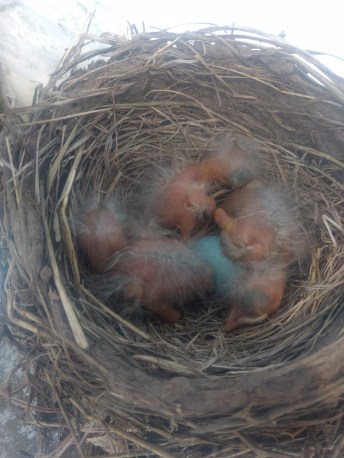
Freshly Hatched Baby Robins!

these past couple of weeks. Between newly seeded cover crops and full grown broccoli (and everything in between) everyone out in the dirt is thirsty. We’re lucky we have the infrastructure to water everything- but it’s not the same as a good long rain.

Day after day of lovely weather has upsides for sure. It’s weed killing weather, and I have no idea where my good rain jacket is. It is just a matter of time until the rain comes – and though it might rain on a parade or picnic later this week, I hope that when it comes you’ll rejoice like the soil and the farmers.

For the thirsty farm crew,

Karin


  • Basil20180730_133830
  • Beets
  • Chard
  • Cilantro
  • Cucumbers
  • Green Onions
  • Parsley
  • Green Peppers
  • Snap peas
  • Tomatoes
  • Zucchini

Swiss Chard Pancakes

2 cups (475 ml) whole milk
2 1/2 cups (325 grams) all-purpose flour
3 large eggs
1 teaspoon coarse salt
Freshly ground black pepper
1 small onion, coarsely chopped
3 green onions, snipped
1 shallot, coarsely chopped
2 garlic cloves, split, germ removed, and coarsely chopped
Leaves from 10 parsley sprigs
5 large or 10 small Swiss chard leaves, center ribs removed, roughly chopped
About 1/2 cup (120 ml) grapeseed, peanut, vegetable, or olive oil

To serve: Plain, thick yogurt mixed with a little lemon zest, lemon juice and salt, to taste

If you’d like to keep your finished pancakes warm while you cook them: Heat oven to 250 degrees F and line a baking sheet with foil.

Make the batter: Put everything except the Swiss chard and oil in a blender or food processor and whirl until the batter is smooth. Scrape down sides. Add chard leaves and pulse machine until they’re chopped to your desired consistency.

Cook the pancakes: Heat a large skillet over medium-high heat and pour in a good puddle (1/4-inch deep) of oil. Once oil is hot enough that a droplet of batter hisses and sputters, spoon about 3 tablespoons batter in per pancake. It will spread quickly. Cook until browned underneath and (the edges will scallop, adorably), then flip, cooking on the other side until browned again. Transfer to a paper towel-lined plate, and then, if you’d like to keep them warm, to the foil-lined tray in the oven.

Repeat with remaining batter. Serve with lemony yogurt or another sauce of your choice.

Do ahead: Unused batter keeps in fridge for 3 days. Finished pancakes keep in fridge for a couple days, and will freeze much longer. Separate pancakes with pieces of waxed or parchment paper so they don’t glue together.


Summer CSA Week 7

This weekend I made a broccoli salad for a family pot luck. Before I chopped the broccoli into a thousand pieces, I showed my grandma. I told her why I knew (thought) it was ready to pick, and what the variety (Imperial) looks like in the field next to other broccoli. She got a kick out of it –or she humored me. Either way, she wasn’t going to get that kind of information in that morning’s paper. I know she would rather I go back to school, but she’s happy enough to learn about what I’m doing. The broccoli salad was a hit, and I was bragging just a little bit about the fact that I had helped to grow it.

It has taken me time to get there. Years. To brag in the simple, and not let that weird extended-family pressure (to do more, be more, have more) change how I talk about my life or vocation. As a still fairly young person, I clearly remember the stressful feeling of img_20180715_084528095some conversations before graduating high-school, and after, and again after a two year degree. Well-meaning and loving people just wanted to know what I was up to; I know that now. At the time, however, it painted how I talked about what I choose to do with my life. Do you know that feeling? –where you try to make what you’re doing sound as snazzy as it possibly can but really it’s just 90% simple day-in-day-out stuff. Like trying to print double-sided tri-fold programs, counting broccoli, sitting in meetings, or listening to children’s music all afternoon. No one’s job is a fairy tale. And if it is, they work in Disney World and that’s it’s own sort of thing.

Adding anything into one’s life or taking anything out of it that isn’t a part of our culture’s value system takes work. It takes deciding on a new culture and new values. Like choosing to repair things instead of buying the latest and greatest, or to participate in a CSA.

Parts of our society are so bent on the next new thing or some strange sense of the American Dream that we end up allowing the best things to seem like burdens. Like preparing food or growing food. There’s a notion of “why would you do that if you could be doing X?” I’m doing it because it’s not a burden. It’s an honor. I am happy to work on the farm and I’m happy to wash a little dirt off my refrigerator shelves once in a while. And I’m proud to tell my family that I do so.

For the farm crew,

Karin

P.S. Dave wanted to let members know that this will be the last of the head lettuce for a while until cooler temperatures set in. A few cut worms have been found as we have harvested. Wash this lettuce more carefully than you normally would.

P.P.S. Dave also wants people to be aware that the basil is young, fresh and delicious. It won’t keep long, so unless you use it soon, he recommends tossing it with some oil to keep in the fridge for a bit longer.


In your share this week:

  • Basil20180723_132713
  • Cabbage (red or green)
  • Carrots
  • Cucumbers
  • Kale
  • Lettuce
  • Green Onions
  • Snap Peas
  • Peppers
  • Tomatoes

Kale and Cucumber Salad with Ginger Dressing

Dressing

  • 8 ounces fresh ginger
  • 1 green or red Thai chile
  • 1 garlic clove
  • 3 tablespoons fish sauce
  • 3 tablespoons sugar
  • 3 tablespoons vegetable oil

Assembly

  • 1 bunch kale, ribs and stems removed, leaves torn into bite-size pieces
  • 1 English cucumber, very thinly sliced
  • 1 small red onion, thinly sliced (or try green onions)
  • 2 tablespoons fresh lime juice
  • 2 teaspoons sugar
  • Kosher salt
  • 1 bunch cilantro, coarsely chopped
  • ¼ cup store-bought fried onions

PREPARATION

Dressing

  • Heat broiler. Broil ginger in its skin, turning once, until very dark brown and beginning to scorch in places and a paring knife passes through the center with relative ease, 40–50 minutes (if skin is getting too dark before flesh is tender, turn down the heat or move to the oven). Let cool; slice (leave on the skin).

  • Pulse ginger, chile, garlic, fish sauce, sugar, oil, and 2 Tbsp. water in a food processor, adding additional water by tablespoonfuls if needed, until a smooth paste forms.

  • Do Ahead: Dressing can be made 3 days ahead. Cover and chill.

Assembly

  • Toss kale and ¼ cup dressing in a large bowl to coat; massage with your fingers until kale is slightly softened.

  • Toss cucumbers, onion, lime juice, and sugar in a medium bowl to combine; season generously with salt. Let sit 10 minutes to allow cucumbers and onion to soften slightly.

  • Add cucumber mixture to bowl with kale and toss to combine, adding additional dressing if desired. Serve topped with cilantro and fried onions.

Summer CSA Week 6

There is a growing list, never a shrinking one, of things do do on the farm. This time of year it all needs to be done right now. Or last week. This past Friday the crew finished close weeding the second planting of carrots. It is slow detailed work done crawling around on one’s hands and knees. The completion of weeding each carrot field is like a quarter, half, and three quarter chime to an hour when it’s finally done. Two down one to go.

There are a lot of things getting done on the farm and I don’t really know how. It is amazing what gets done. There is even more getting done than I know because half the time I don’t know what Janaki is doing on the tractor and more than half the time, veggies pop out of the ground and I realize Dave snuck seeds in at some point.

This past week on the farm my contribution to crossing things off the list has been 20180716_134923.jpgsuperseded by my adding things to it. Mostly adding broccoli. I’ve been spending a fair bit of time zig-zagging across beds of broccoli with my head down and my brow furrowed wondering if I really should be harvesting of all this. But yes, I really should. The first and second planting of broccoli (out of 8 plantings) both came on strong and at once. Luckily Janaki has a list of people he can call who might be interested in extra broccoli and John is good at sweet talking restaurants and grocery stores into ordering
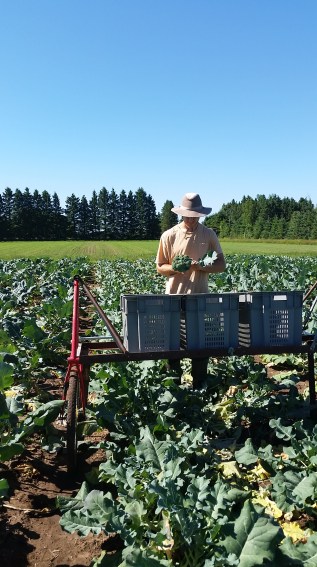
just a case more.

Having such a bounty to manage is a good thing. Too much broccoli? What a lucky problem for a farm to have.

The harvest is what really matters even if I find myself thinking of other things I could be getting done instead. Like starting to weed the third planting of carrots. But the work  we do is given meaning by the harvest, and by the produce ending up in your home. Otherwise what would this all be about?

For the farm crew,

Karin


Broccoli

Carrots

Cauliflower

Cucumbers

Garlic scapes

Greens mix

Lettuce

Green onions

Snap Peas

Juliet tomatoes


20180716_095554

Cauliflower Slaw

1/2 cup thinly sliced almonds
Juice of half a lemon (about 1 tablespoon), plus more to taste
1 tablespoon white wine vinegar
1/4 teaspoon fine sea salt or table salt, then more to taste
3 tablespoons (30 grams) dried currants
5 tablespoons olive oil, plus more for frying
2 tablespoons (about 25 grams) brined or salt-packed capers
oil for frying
1 head of cauliflower (about 1 1/4 pounds)
Freshly ground black pepper
3 scallions, thinly sliced (use green and white parts)
2 tablespoons chopped flat-leaf parsley (optional, mostly for color)

Heat oven to 350 degrees F. Spread almonds on a tray and toast them until they’re a deep golden color, tossing them once or twice to ensure even cooking. This will take 10 to 14 minutes. Set aside to cool.**

Meanwhile, place lemon juice, vinegar and 1/4 teaspoon salt in a small bowl. Add currants; set aside and let them soak while you prepare the other ingredients.

If using brined capers, drain and spread them on paper towels until most of their moisture has wicked out, about 5 minutes. If using salt-packed capers, soak them in water for 10 minutes to remove the saltiness, then drain, rinse and pat dry on paper towels. Pour a 1/2-inch of olive oil or another oil that you prefer to fry in in a small skillet or saucepan. Heat it over medium-high. When hot enough that a droplet of water added to the oil hisses, carefully add the capers and step back — they’re going to sputter a bit for the first 10 seconds. Once it’s safe to get closer, give them a stir. Depending on how dry they were, it can take 1 to 2 minutes for them to get lightly golden at the edges and then crisp. Remove with a slotted spoon. Drain on paper towels.

Trim cauliflower leaves and cut head into quarters. Cut cauliflower, stem and florets, into 1/4-inch slices. Add to a large bowl.

Scoop currants from vinegar mixture with a slotted spoon and add to bowl with cauliflower, along with almonds, capers, scallions and parsley. Slowly whisk 5 tablespoons olive oil into remaining vinegar mixture in a thin stream. Add several turns of freshly ground black pepper. Pour over cauliflower and other ingredients and turn gently to coat all pieces. Taste and adjust seasonings, adding more lemon juice, salt or pepper to taste. Dig in!

Israeli Salad

2 medium juliet tomatoes, cubed
1 1-pound English cucumber, cubed
1/2 medium red onion, cubed, or 4 scallions, finely sliced
3 tablespoons finely minced fresh, flat-leaf parsley
Juice of half a lemon
2 to 3 tablespoons olive oil
1 1/2 teaspoons sumac powder
Salt and pepper, to taste

You can either toss all of the vegetables in one large bowl, and pour over it the parsley, lemon juice, olive oil and sumac mixture you whisked separately in a small bowl, or if you’re in a hurry just toss everything all at once.

Other additions: 1/2 to 1 cup crumbled or cubed feta, 1 bell pepper, cut into cubes, 1 15-ounce can of chickpeas, rinsed and drained, 1/2 to 1 cup coarsely chopped olives, 1 to 2 tablespoons finely minced mint or dill or pita chips (see below). You could also whisk a couple tablespoons of tahini into the dressing for a thicker, sesame-coated flavor. Serve with pita chips, or just eat it plain!

20180716_134923.jpg

Summer CSA Week 5

We have been having some pretty hot days out at the farm. It makes me thankful for my forays into the root cellar. What a lovely reprieve: to be out of the sun and having one’s arms submerged in the dunk tank. I have to remind myself -the tank is for the vegetables not for the humans. They need it more than I do.

Some days after work, I go for a dip in the lake. The queen of dunk tanks. It is nice to go during a weekday evening when there aren’t so many people around. People tend to keep a respectful Duluth-y sort of distance from one another, which I appreciate. Plus, everyone on the beach looks pretty good from a city block or more away. Not exactly like Bay Watch, but somewhere in the ballpark. Of course, get closer and bodies are just bodies. Cuts and bruises, hard times, bearing children and bearing years – it’s all there to see if you get up close.

My first couple of years farming, a few people would say things like “It’s just, like, so cool how you are all out here doing this, ya know? It’s, like, so peaceful. I’d love to do what you do”. And I would say something positive and polite and half true in response. But in my head I’d think – you wanna come out and do this? That’s great, because I’m tired and I’ve been in the sun for 10 hours and I’d love to go into town and get a burger and see a brainless movie.

Of course, these people were well meaning and I did like what I was doing. It would just hit me how there were gaps in what people from outside the farm thought versus what it was actually like doing it day in day out.

That is how it goes –sometimes from a distance things look just great. Like farming is frolicking through fields with baskets of kale and flowers being followed by lambs and dragonflies. That sounds lovely. Janaki, I want lambs. The following me kind.20180709_130045

When you get closer though, you see the real deal. The cellulite, the endless close-weeding, the age spots, the character flaws, the washing of the same bins again and again. Life is less like a storybook when you get up close to it all.

It is the being up close that really matters though. People are a different kind of beautiful when you are close to them. And farming is tiring, and full of things that don’t involve frolicking. Like walking behind a planter getting coated in dust and trying to finish a greenhouse and wandering around looking for something you just had a minute ago. Even tasks like picking up your CSA share and putting it away week after week, freezing extra garlic scapes and looking for ways to eat more greens looks snazzy when in a photograph in someone else’s (perfect) kitchen. Up close, it is work, and it is worth it.

Thank you for being a part of it all with us –from the more romantic aspects of farming (that do happen in real life, alongside all the other parts) to the dirt in your sink. It remains beautiful to me up close, and I hope it does to you too.

For the farm crew,

Karin

P.S. Dave says that the greens mix would be good if they were braised. It’s not quite as tender as ours usually is, but still good.


Broccoli20180620_155835
Cauliflower
Carrots
Cucumber
Garlic scapes
Green onions
Lettuce
Napa cabbage

Sweet and Sour Roasted Napa Wedges

  • 2 tablespoons olive oil
  • 2 tablespoons cider vinegar
  • 1 tablespoon brown sugar
  • 1 teaspoon whole-grain Dijon mustard
  • 1 teaspoon grated garlic
  • 1/4 teaspoon salt
  • 1/2 teaspoon freshly ground black pepper
  • 1 head napa (Chinese) cabbage, cut lengthwise into quarters
  • Extra oil for brushing

Place a large roasting pan in oven. Preheat oven and pan to 450°.

Combine first 7 ingredients in a small bowl.

Brush cut sides of cabbage with  oil. Place cabbage, cut sides down, on preheated pan; bake 6 minutes. Turn cabbage onto other cut side; bake an additional 6 minutes. Remove pan from oven. Heat broiler to high. Brush cabbage evenly with oil mixture; broil 3 minutes or until browned and caramelized.


Broccoli Farro Salad

  • Salt
  • 1 cup semi-pearled farro
  • 1 pound broccoli (dice stems)
  • 4 tablespoons olive oil
  • 2 cloves garlic, minced (or scapes!)
  • Red pepper flakes, to taste
  • Finely grated zest, then juice, of 1 lemon
  • Freshly ground black pepper
  • 4 ounces  grated pecorino romano or Parmesan

Bring a medium/large pot of salted water to boil. Once boiling, add broccoli and boil for 2 to 2 1/2 minutes, until slightly softened but still crisp overall. Scoop out with slotted spoon or tongs, then drain.Add farro back to same pot (I’m totally okay with some errant leftover broccoli flecks and vitamins here, if you’re not, use another pot of salted water) and cook, simmering, for 25 to 30 minutes, until tender. (Since there are so many varieties of farro, however, if your package suggests otherwise, it’s best to defer to its cooking suggestion.) Drain and tip into a large mixing bowl; cool to lukewarm.

Pat drained broccoli dry on towels, trying to remove as much excess moisture as possible. Chop into small (roughly 1/2-inch) bits. In a large sauté pan, heat olive oil over medium-high heat until hot. Add garlic and pepper flakes, to taste, and cook for 1 minute, until garlic is faintly golden. Add chopped broccoli, lemon zest, and salt (I use a full teaspoon kosher salt here, but adjust the amount to your taste) and cook, stirring, for 3 to 4 more minutes, until broccoli is well-seasoned and slightly more tender.

Add broccoli and every bit of garlic and oil from the pan to the bowl of farro and stir to combine. Add lemon juice, black pepper and more salt to taste (but 1/2 teaspoon of each is what we used) and stir to combine. Stir in cheese.

Serve warm or at room temperature as-in, with an egg on top, burrata, and/or bread crumbs.