April Winter Share

April is here…Spring is sort of here…and just like that, the Winter CSA season is officially over!

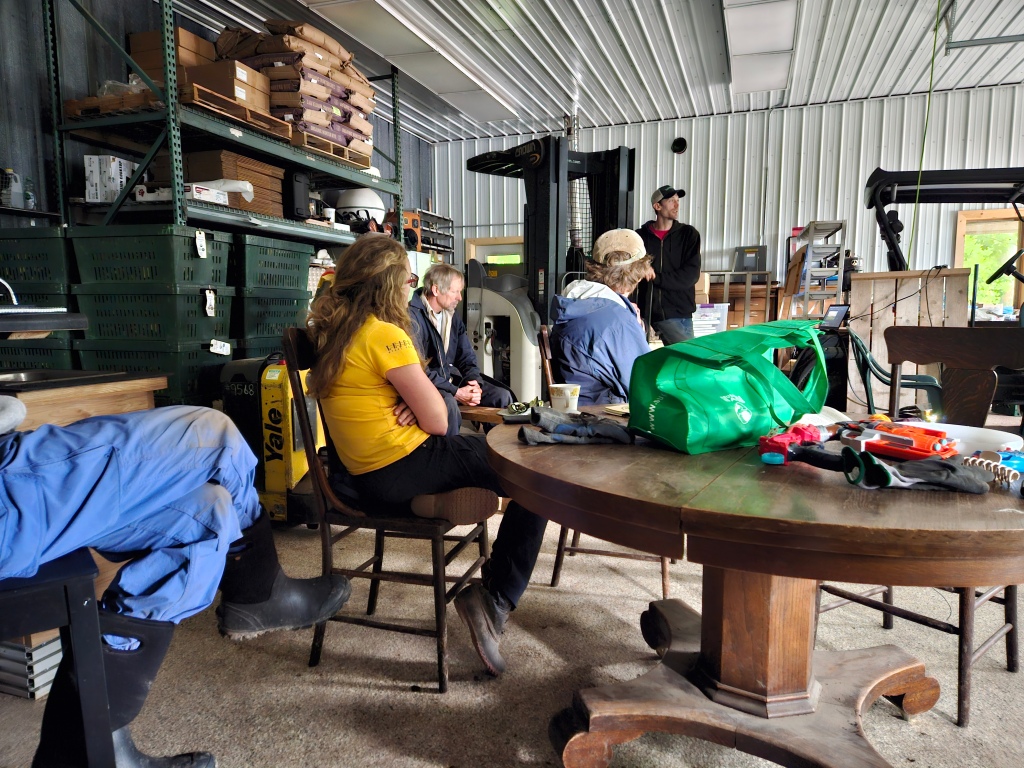
April is crunch time here on the farm. Janaki is finalizing our planting map so we know which crops are going in which fields. We are keeping a close eye on the extended forecast to know when it’s safe for us to begin planting out our cool weather crops such as broccoli, cauliflower, and cabbage. As of right now, it’s looking like these might get planted next week! Dave and Catherine have been busy in the greenhouse getting lots of seeds started. We have onions, brassicas, and greenhouse tomatoes all started and growing like crazy. Teri and I have been busy in the pack shed sending out the last remaining vegetables to our retail partners. We’ve also been organizing things, and putting away our winter items in preparation for Spring deep cleaning to start in the next few weeks.
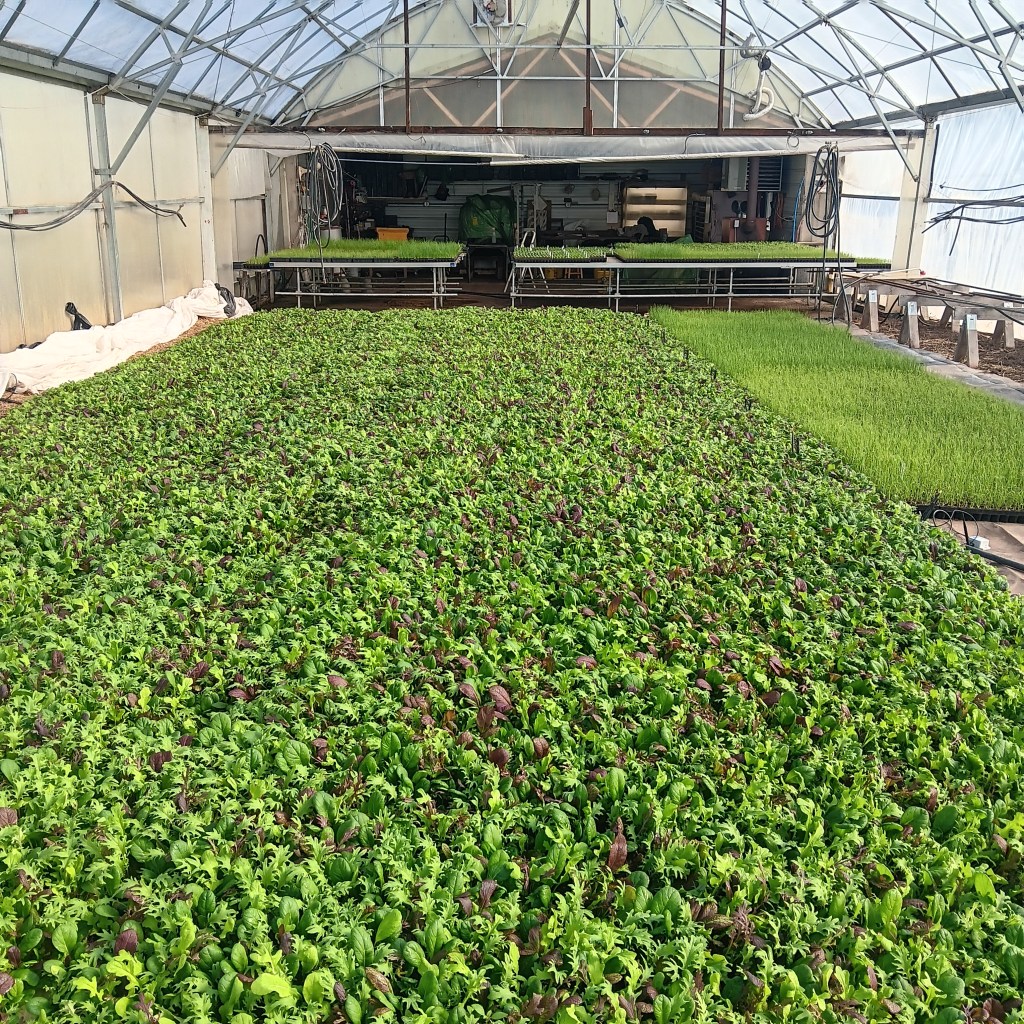
Greens mix ready to harvest

Conversations are happening about when the new chicks will be arriving, we’re testing out new methods to hopefully streamline some of our pack shed processes, and we’re discussing and planning for farm improvements. Things never stop around here!

The next few weeks will be especially busy. We’ll start welcoming back crew members who spent their Winter off the farm, we’ll get to welcome a few new crew members, and the greenhouse will get even more full. We have plans to hopefully get brassicas in the ground next week, and onions by the end of the month. Green onions and carrots for early summer shares will get started in a high tunnel in the next few days. Another round of brassicas and outside tomatoes will get seeded today, and later successions really test the capacity of our germination chamber. Seed potatoes will be arriving the end of next week and will keep the crew busy for a few days as they cut and prep all of the potatoes for planting.

The busyness and excitement are felt all around the farm. We’re all ready to break out our Summer clothes, get our hands back in the dirt, and start soaking up some sunshine again. In order to enjoy all of these things, we must also say goodbye to slow mornings, enjoying our coffee while it’s hot, spending entire days in our pajamas, and saying, “We can deal with that later.” We also have to say goodbye to root vegetables and all the hard work that the 2024 crew put in to ensure we could have a bountiful and successful Winter CSA. I always imagine that this hello-but-goodbye-energy is why we try our best to get fresh greens mix in your last Winter CSA box. It’s the perfect way for us to say, “Thanks for enjoying all of our hard work from last year, now get ready for all the hard work and deliciousness of 2025.”

It’s important for us to always remember that we wouldn’t be able to do any of this without your support. Thank you for believing in us, and supporting us through the Winter. A huge thank you to all of our site hosts who kept the veggies safe and warm through the bitter cold. Thank you to all of our volunteers who bundled up every month to help lovingly pack each share. We’re sad to end the Winter CSA, but we hope to see all of you again next Winter…or in just a few weeks if you were lucky enough to snag a Summer Share before they sold out.
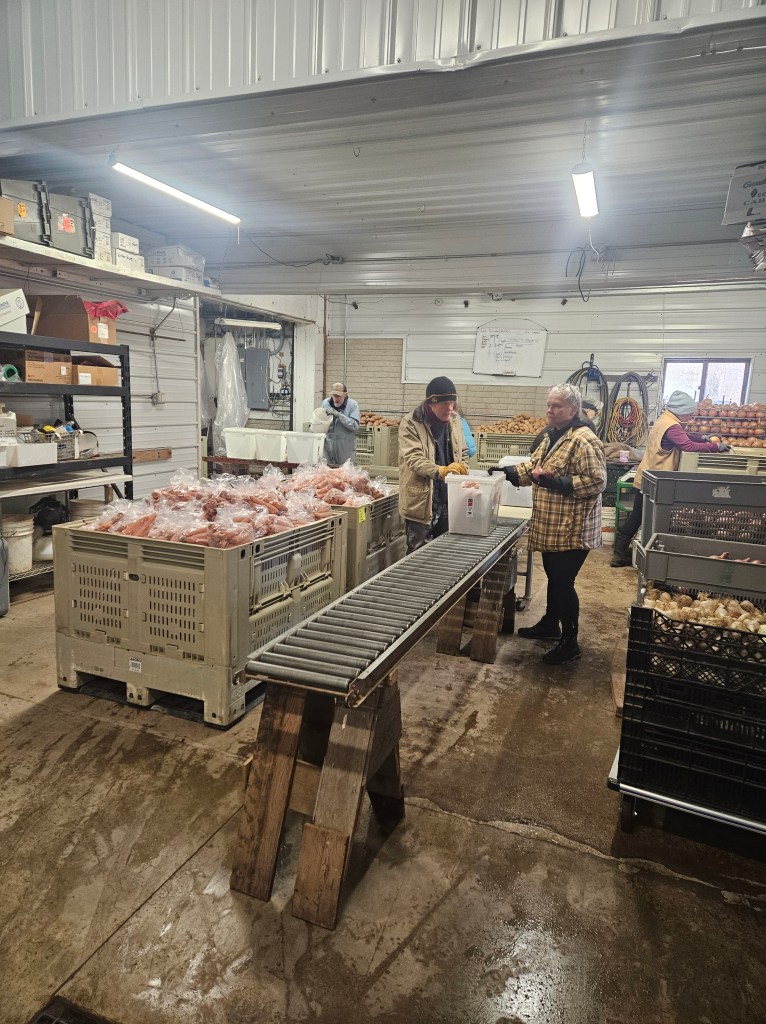
Our amazing packing crew boxing up the final Winter share

In your share this month:

Orange Carrots – Purple Carrots – Greens Mix – Rutabaga – Russet Potatoes

Yellow Potatoes – Baby Red Potatoes – Onions – Shallots – Garlic – Beets

This jalapeno popper potato salad from Happy Honey Kitchen Is a spicy take on a classic potato salad. It’s a great recipe for this month because you can use yellow potatoes, red potatoes, or both.

If you’re looking for a more adventurous way to eat your rutabaga this month, try out these tacos from Bon Appetit. The recipe tells you to top the tacos with a mix of kale and watercress. You could substitute some greens mix to further you use up things from your box this month.

If you aren’t ready for salads but need a creative way to use up your greens mix, try this quiche recipe. Your greens mix is delicious fresh or cooked up, so feel free to swap out the spinach or the chard, for greens mix.

For the farm crew,

Jennifer
Summer CSA Week 3

This week was filled with more rain. If any of you know Mother Nature personally, will you please let her know that we are good on rain, and could really use some sunshine. We would especially like to see some sun now that we’ve reached the official start of Summer! I’ve always been told that the Summer Solstice is the longest day of the year to allow us more time to find joy in the constant change that is happening around us.  

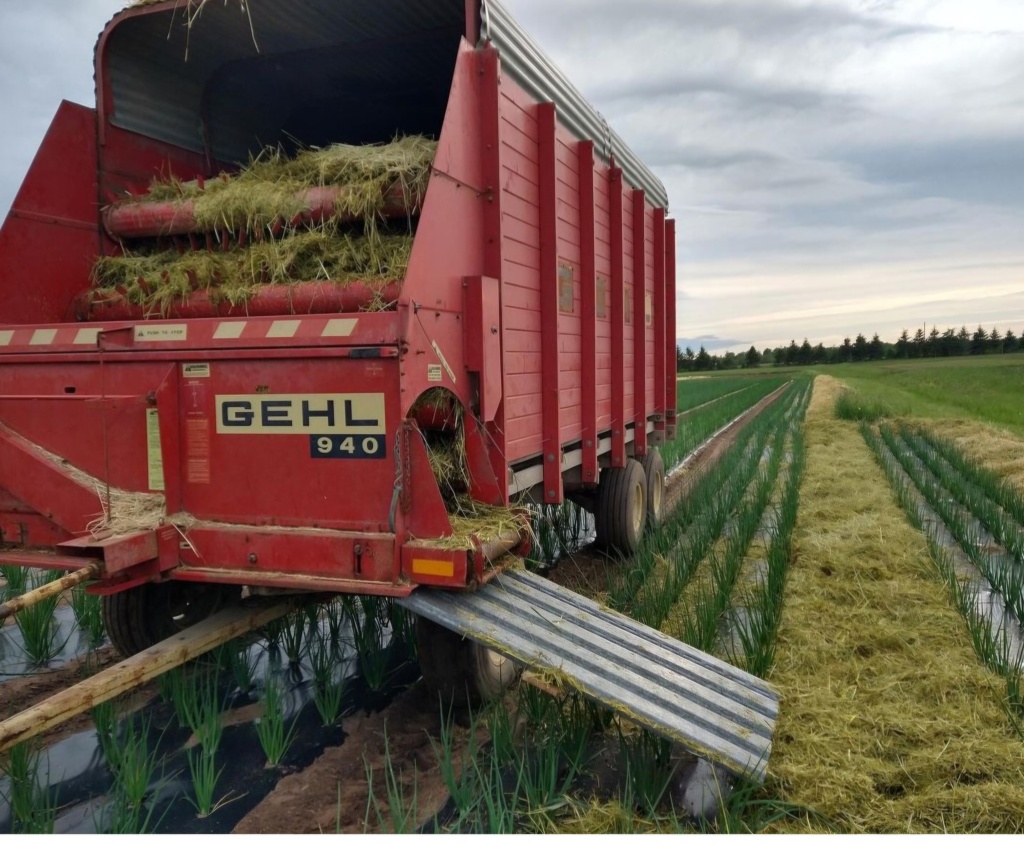
One of the big, and exciting changes that happened on the farm last week was the debut of the new chopper box (also known as a forage wagon). Thanks to all of your support, the farm was able to purchase a new to us, chopper box earlier this Spring. 

Every fall, after harvest, we plant a cover crop of rye. The rye goes dormant over the winter, and starts to grow again in the Spring. While it’s growing, it’s adding fertility to the soil, supporting soil life, suppressing weeds, and preventing soil erosion from happening (something we are really thankful for this year). Right before the rye goes to seed, we cut the rye, and it’s blown through a chute into the chopper box. An auger inside the box then pushes it out onto Janaki’s handmade ramp, and drops it in the aisleways between the onion beds. The crew then smooths it out to make sure it will be effective. This is what we spent most of last week doing. In the coming weeks, we will spread mulch around the outdoor tomatoes once they’ve dried off a bit. 

The rye mulch serves multiple purposes for different crops. For the onions, we mainly use it to suppress weeds. Less weeds means less use of the tractors for cultivation, and less labor needed to weed by hand in the places the tractor can’t access. It also creates earthworm habitat and food, leaving the field healthier than before the season. For the tomatoes, we use the mulch as a weed suppression, disease prevention, and as a way to retain moisture. Tomatoes appreciate a warm environment which leads to faster water evaporation. The mulch slows that evaporation which lessens the frequency at which we need to water, and prevents soil from splashing onto leaves.

To me, one of the coolest parts of the mulch is that we don’t remove it once the vegetables are harvested. We leave all of the mulch exactly where it is, and Farmer Janaki tills it into the soil before he plants another cover crop in that field. This adds organic matter which improves the health of the soil, and provides a habitat for organisms. Some of those organisms will prevent diseases, and help to control the levels of pests.  

The farm crew was able to learn all this information about cover crops during what we called “classroom time”, a few weeks ago. This was an unusual occurrence considering we are normally too busy with field work to all come together for an educational session, but when the fields are too wet to work, we finally have time to talk about the behind the scenes of farming. This is just another one of the many ways the farm crew is embracing the changes being thrown at us thanks to mother nature and her abundance of rain. Fingers (and toes and arms and legs) crossed this week stays a little drier, so our outdoor vegetables can get some much needed love and attention.

In your share this week:

Broccoli – Lettuce – Spinach – Green Onions – Pac Choi

If you’re looking for some non-salad ways to use up greens, Deb has a few more ideas for you!

Cannellini Beans and Wilted Greens 

2 cans cannellini beans

1 large bunch spinach, pac choi, or mixed greens (appx 1/2 lb)

1-2 cloves garlic

1/4 cup olive oil

1.5 tsp rosemary, chopped

Wash and prepare greens.  Drain beans and reserve liquid.  Finely chop garlic and sauté in olive oil with the rosemary for 1 minute.  Add the beans and 3/4 cup bean liquid and simmer for 5 minutes, until some of the beans have fallen apart.  Add the greens to the beans and stew until they are wilted and tender.  Add more liquid if needed.  Salt and pepper to taste.  

Serve as a side-dish with olive oil drizzled over the surface

Lentils with Greens and Ginger 

1 cup green lentils, rinsed

2 1/2 cups water

1-2 hot green chilies, finely sliced (optional!!)

1 tsp finely grated ginger

1/2 cup chopped cilantro

1-1/4 lbs spinach 

1 tsp salt

Black pepper to taste 

2 tbsp lemon juice

Cook lentils in water until soft.  Put oil in large sauté pan (large enough to hold spinach) over medium heat.  When hot, add chilis and ginger- stir and fry for 10 seconds.  Add cilantro and spinach.  Continuously stir and cook until spinach has wilted.  Add cooked lentils (with any remaining cooking water)and salt.  Stir to mix and bring to simmer.  Cover and cook gently for 10 minutes- add pepper and lemon juice.  Cook for 5 minutes. Serve with rice

For the farm crew,

Jennifer