
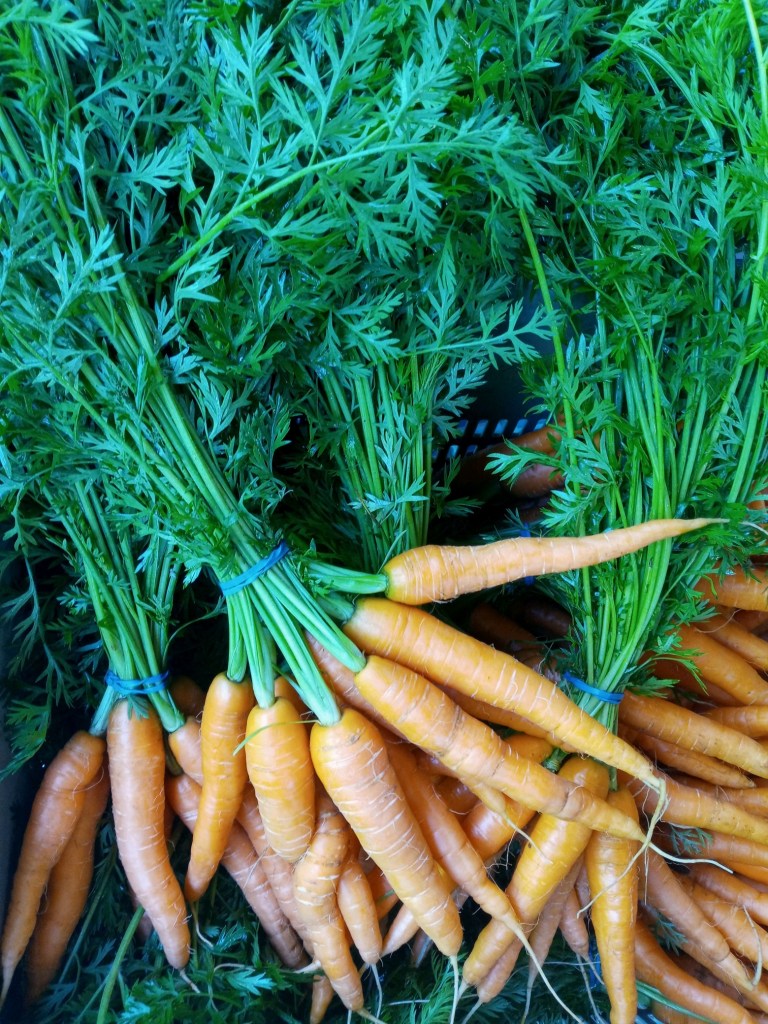
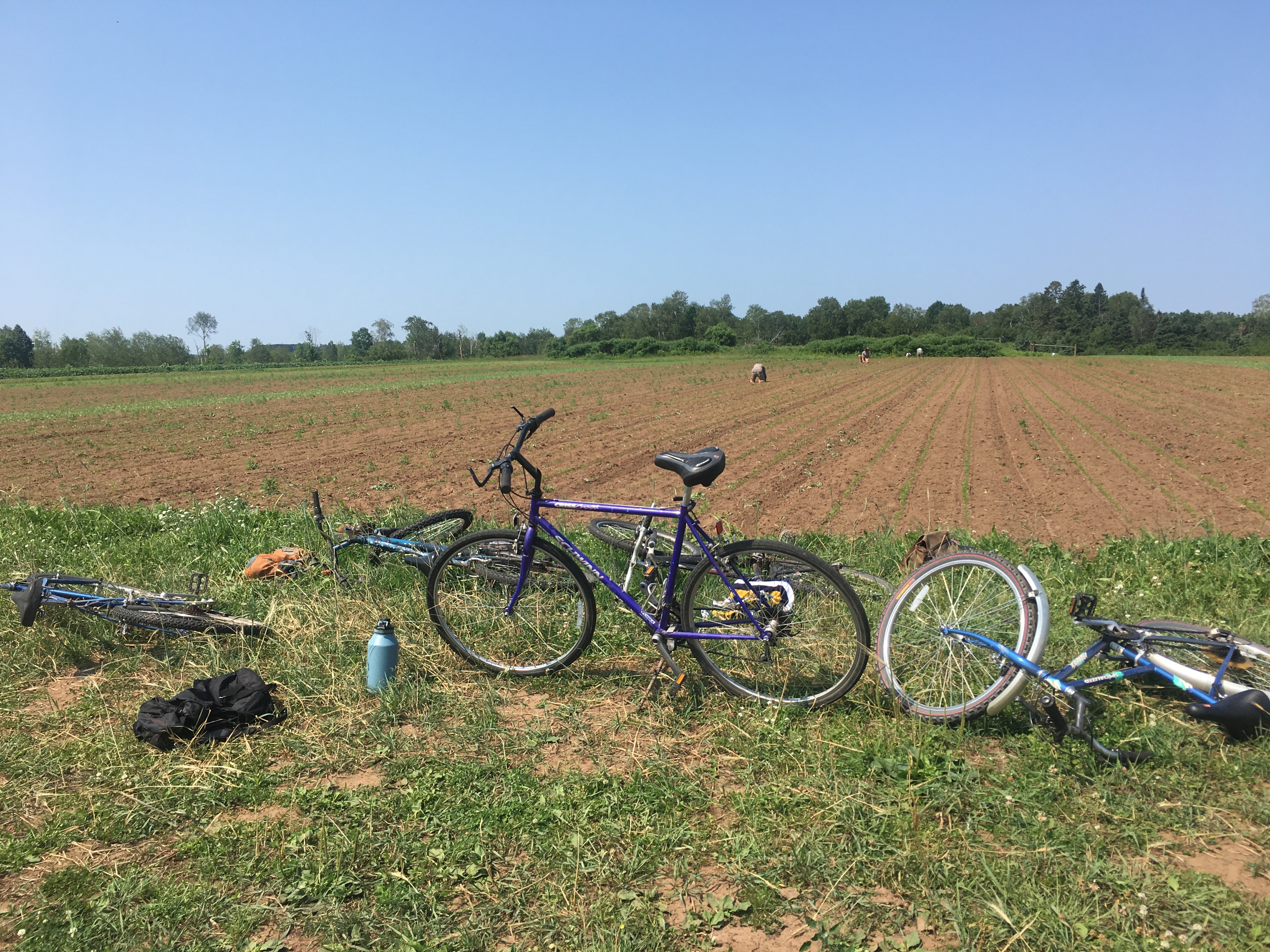
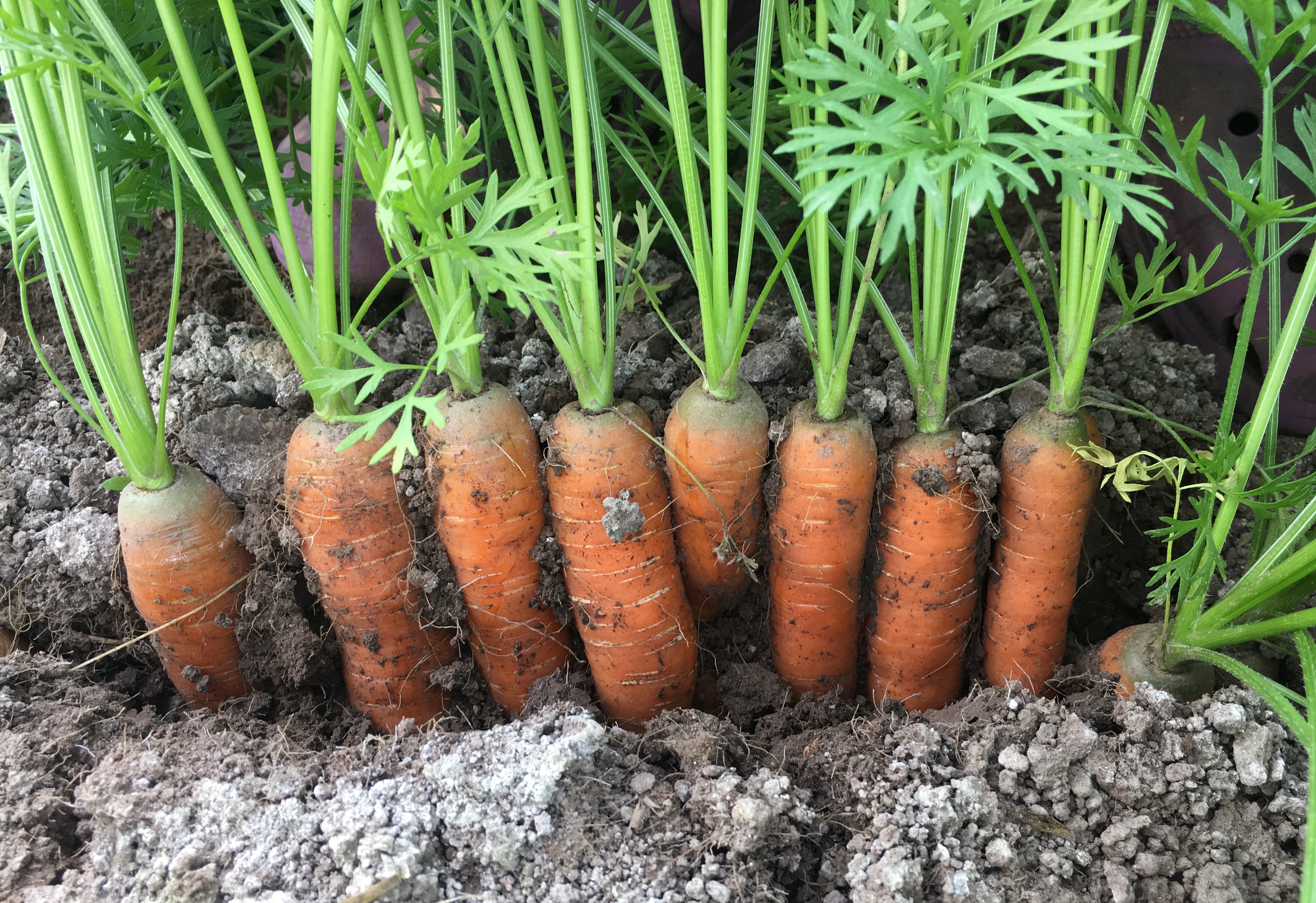
Last week the crew spent most of their time in the fields across the road. Most of our storage vegetables are across the road. These are the vegetables that we will keep in the root cellar to feed our Winter CSA members all winter, such as potatoes, carrots, beets, and winter squash. We’ve already given lots of love and attention to our potatoes in previous weeks, so it was time to focus on the carrots and beets.
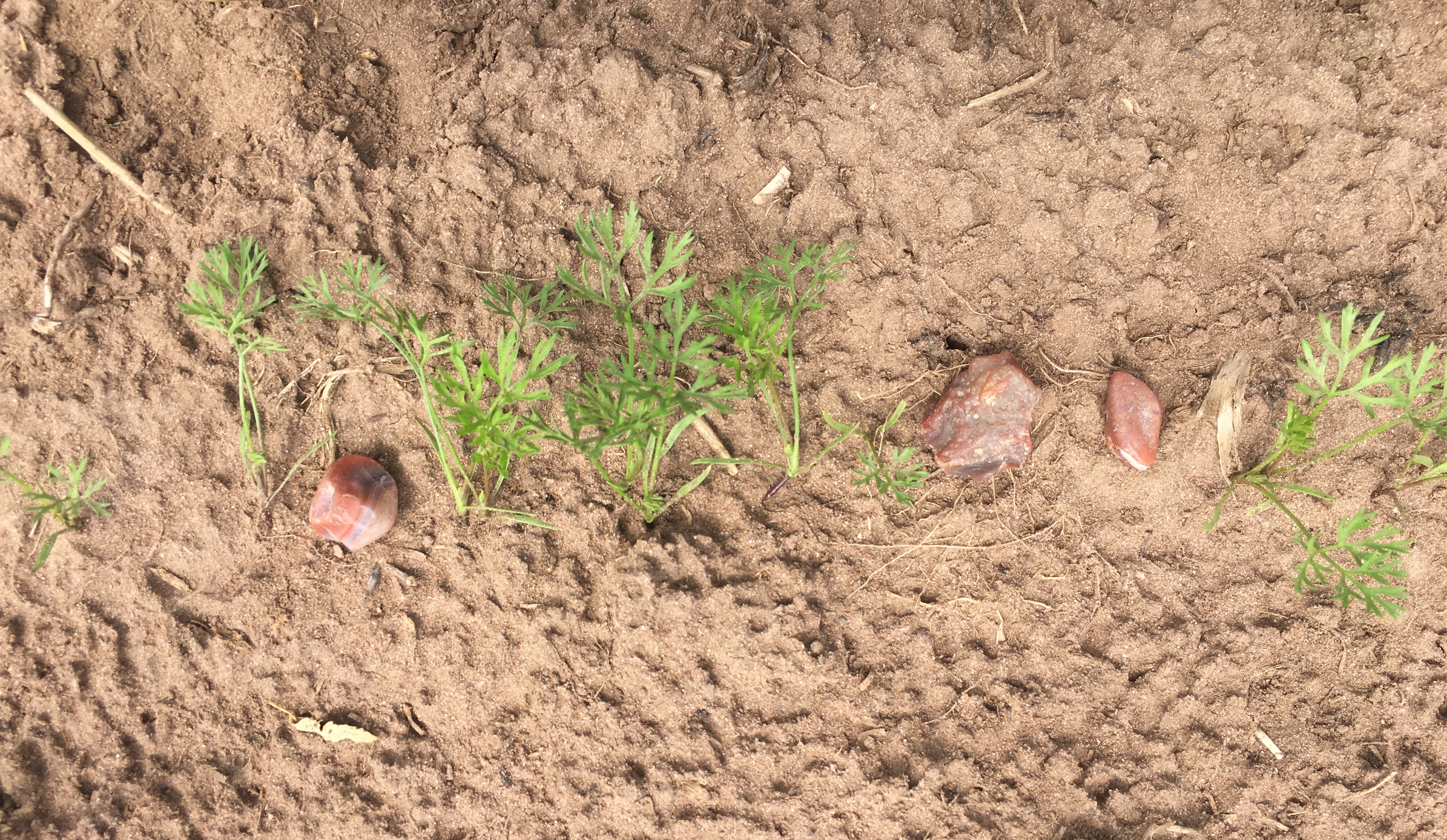
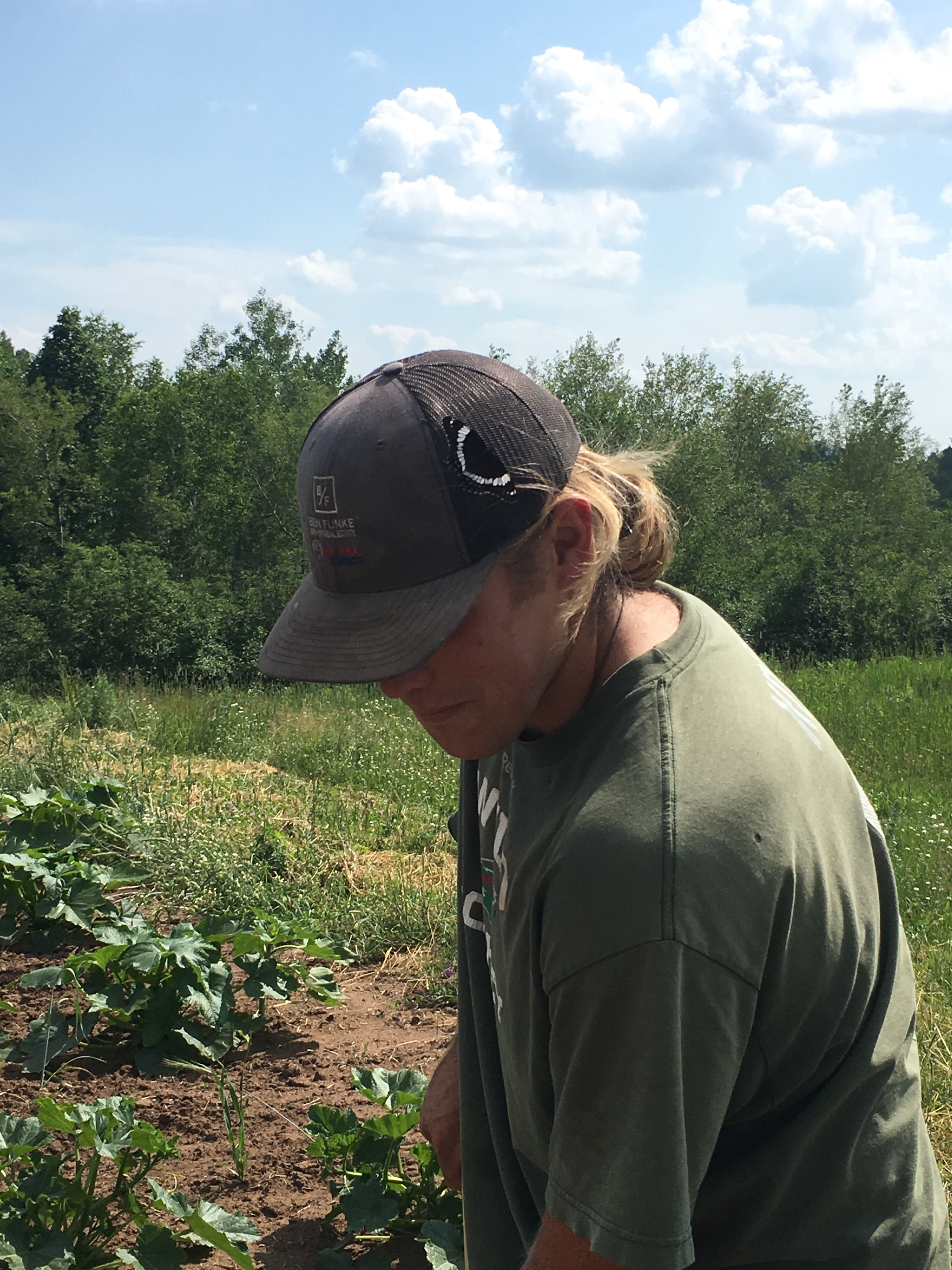
The crew spent last week doing what we call close weeding. This is actually the third type of weeding these plants will receive. The first type of weeding is called flame weeding. This is where Janaki puts on a tractor attachment that is about the same power as 9 handheld blowtorches. He drives the tractor over the beds right before the carrot seeds germinate to burn off all the tiny weeds that germinate more quickly. This is a fast way to get rid of all the weeds in the entire bed to give the carrots a jump start. At this stage, we have a pretty good idea where the plants will pop up, but it’s always best to be cautious. Once the seeds germinate and plants start popping up through the soil, either Janaki or crew member Catherine will do what’s called basket weeding. This is where the tractor gets an attachment that looks like a few rolling wire baskets. Catherine or Janaki will then drive the tractor down the beds getting as close to the plants as possible. This is beneficial because it breaks up all the soil which disrupts any weeds that might be about to germinate, while also pulling out any weeds in between the rows that have already germinated. The downside of the basket weeder is that it leaves an untilled area about an inch and a half on either side of the row. This is where the crew steps in and performs the close weeding. We’ve taken old butter knives and steak knives, and bent the blades at a 90° angle. The crew members use the knives to scratch the soil around and in-between the plants to remove any current weeds, and disrupt any weeds that were about to germinate. This is very effective, but also quite time consuming. It’s effective because every single plant in every single row gets love and attention. However, it’s very time consuming because we are crawling along, giving every plant, in every bed, on 300-500 foot fields, love and attention. The crew can work pretty fast, this task takes a while for a farm of our scale.
Cue the crew’s excitement (and immense gratitude) last Wednesday when some friends from the UMD Land Lab showed up to check out the farm, and spend the morning helping us weed all of the carrots. Almost doubling our usual farm crew allowed us to get through many beds in record time! We were able to close weed all of our storage beets and carrots last week.

We will close weed these crops two to three times depending on how quickly the plants grow, and what the weed pressure is. We start weeding when the carrots are about an inch tall, with the goal of making sure we can finish before weeds begin to out-compete the vegetables for sunlight and nutrients. Once the plants are 3-4 inches or tall, Janaki can use other tools like rubber finger weeders to kill small weeds that are in the row without killing the crop. The crew gets the few weeds that survive this cultivation by spot weeding the field by walking through before harvest. We really focus on good weed control at the farm because it makes for a nice consistent crop, and it makes our harvesting equipment work better.
Fun fact for all of you, it is estimated by the end of the week, the farm crew had crawled through and close weeded 56,760 row-feet of carrots and beets. That’s nearly 11 miles!
In your share this week:
Basil – Carrots – Lettuce – Cucumbers – Napa Cabbage
Onions – Snap Peas – Tomatoes – Cilantro – Zucchini
Swiss Chard Summer Roll
Wraps and Filling:
16 to 18 sheets of rice paper
One bunch of chard, leaves only, thinly sliced
One bunch of basil, torn into bite-sized pieces
Two avocados sliced
Two carrots cut into 2 inch match sticks
One cucumber cut into 2 inch match sticks
Dipping Sauce:
1/2 cup hoisin sauce
1/4 cup soy sauce
1.5 tbsp sugar
1.5 tbsp sesame oil
Finely sliced green onions
To make the dipping sauce, combine all sauce ingredients in a bowl. Whisk.
In a large bowl with warm water, dip the rice paper into the water for a few seconds until the whole sheet is moistened carefully lay the rice paper flat on your work surface and wait a minute for the sheet to become soft and pliable. Layer the chard, basil, avocado, carrots, and cucumbers on the bottom third of the rice paper. Fold the bottom edge over the filling and roll the paper away from you folding the sides in towards the middle about halfway up to roll. Repeat with the remaining rice papers and filling. Serve roles with dipping sauce. The rice papers will start to stiffen if left out for too long, so it’s best to wrap as you eat. This is a great dinner to make with kids!!!
Frittata with Napa Cabbage
8 large eggs
1/2 c creme fraiche
1 c finely chopped napa cabbage
1/2 c finely chopped red onion
4 green onions, thinly sliced
2 garlic cloves, minced
2 T chopped cilantro, plus more for garnish
1/2 t curry powder
1/4 t cayenne pepper
1/2 t fine sea salt
1/2 t fresh ground pepper
2 T butter
1/2 c crumbled feta
Position a rack in upper third of the oven and preheat the oven to 350.
In a large bowl, combine the eggs, creme fraiche, cabbage, both onions, garlic, cilantro and spices. Beat with a fork to incorporate.
Heat the butter in a 9-inch cast iron skillet over medium-high heat, tilting the pan to coat all surfaces thoroughly as the butter melts. When the butter starts to foam, pour in the egg mixture and cook undisturbed for 5 minutes. Top with the crumbled feta and transfer to the oven. Bake for 20 minutes, or until golden brown and pulling away from the sides of the pan. Garnish with cilantro leaves and serve warm.
For the farm crew,
Jennifer







 Food Farm