Summer CSA Week 15

Last week the crew was working hard to get more veggies out of the field. We have been slowly working to get onions out of the field and onto racks in covered areas to start drying for storage. We haven’t been in a rush to do this because last week and this week’s weather are the perfect chance for the onions to keep drying naturally in the sun. The warm, dry air helps to dry the onions and start creating the protective outer skin. Once we move the onions into sheltered areas, we point industrial fans on them 24/7 to ensure they dry properly. As a farm that always strives to be sustainable, using the sun and wind instead of all that electricity is huge for us.

Last week we also used the harvesters to dig up more potatoes and carrots. We got out red potatoes, russets, white potatoes, yellow potatoes, orange carrots, and the first of the purple carrots. This also marked an exciting time for the farm crew as it meant it was time to bring the forklift out of summer storage. We use our forklift in the root cellar to stack pallet boxes as a way to better conserve space, so we have enough room to fit all the veggies. In the Summer, we put the forklift in our shop to keep it away from the damaging humidity of the root cellar, and because veggies are being harvested only in the quantities we need, so nothing needs to be placed in the root cellar for extended storage. Now as we start to empty fields and get ready for fall harvest, the root cellar is filling up fast. Soon we will have pallet boxes of veggies stacked all the way to the ceiling.  

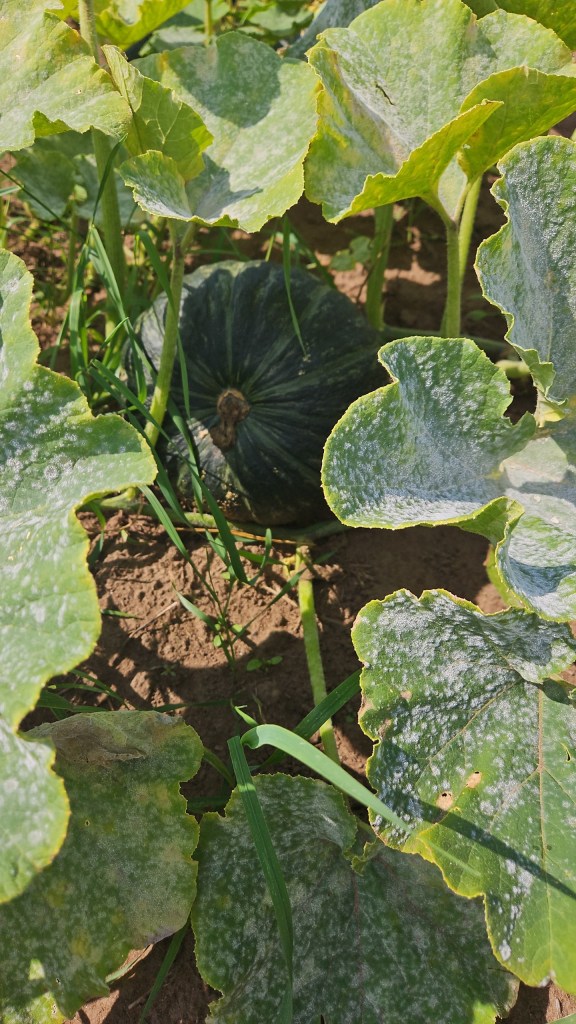
This week might still feel like Summer, but your box is starting to signal that Fall is coming. We are excited to introduce our Winter Squash! This crop was a little touch and go for a while. They didn’t appreciate the excess rainfall and cool early summer temperatures, but as things dried out the vines grew really large, and looking great. For a while, we were worried we might end up with 15 pound squashes. Our fears were soon squashed (there’s always time for food puns) as the vines developed powdery mildew. This is a common fungal disease that attacks many plants.  It appears as small, white-ish gray spores on the leaves of the plant. It starts out very small, so small it is sometimes hard to spot at first, but once the plant is infected, it can spread like crazy. Soon the small spots take over the whole plant, and begin to spread to neighboring plants. We mostly find this on our Winter Squash and our zucchini. Once the plant is infected, there is no way to cure it, you can only slow down the spread…for a while. The powdery mildew on the winter squash ended up spreading and killing all the foliage in the last couple of weeks, but the squash themselves appear to be absolutely the perfect size! 
Soon we will start the task of getting all the Squash out of the field. Once they are out, the majority of them need to cure first before they can be eaten. The curing process does two things for the squash 1) it hardens the outer skin which will allow it to last for multiple months in storage. 2) starches change to sugar and releases excess moisture which concentrates the flavor to make an even more delicious and sweet squash. Acorn squash is the earliest to mature of the varieties we grow, so it’s the first we send. In fact, if acorn squash is cured at high temperatures it can cause it to rot faster. This is why we are able to send this wonderful veggie to all of you now rather than making you wait for it. 

It is a very fun veggie to experiment with. Many people like to stuff it since the shape of it naturally looks like a bowl. Other people roast it for salads, puree it as an easy, veggie packed pasta sauce, or grate it up to add to muffins or other baked goods. My favorite way to make acorn squash ( or any winter squash for that matter) is to turn it into gnocchi. I’ve added my favorite recipe below if you’re feeling adventurous and want to give it a try.

In your share this week:

Northeaster Pole Beans – Basil – Beets – Broccoli – Red Cabbage – Carrots – Cucumber – Garlic – LettuceMelon – Onion – Hot Pepper – Sweet Pepper – Yellow Potatoes – Tomatoes – Zucchini

Acorn Squash Gnocchi with Basil Pesto

  • 1 medium sized acorn squash just shy of 1 lb.
  • 2 tablespoons olive oil
  • 1/2 cup all purpose flour plus 1 tablespoon for the rolling and cutting gnocchi
  • 1 tsp kosher salt
  • 1/4 tsp ground black pepper
  • 2 tablespoons prepared basil pesto 

Roast Squash for Gnocchi

  • Pre-heat oven to 400 degrees. Line a baking sheet with foil. Cut acorn squash in half, on the vertical, and scoop out seeds. Drizzle olive oil onto the flesh side and season with salt and pepper. Place on baking sheet, flesh side down, and roast about 30-40 minutes, until squash is fork tender. Allow to cool at least 10 minutes before scooping out flesh into a bowl.

Preparing Gnocchi Dough

  • To prep the dough, bring a large pot of water to a low boil, season with salt like you would to cook pasta. In the bowl of roasted squash, stir together with flour until smooth. The dough should feel about as pliable as pizza dough, meaning it should still hold together but doesn’t feel dry. If the dough is too wet, add a little more flour (about a tablespoon at a time) until you get to that desired consistency. This will help in the rollout of dough.
  • Roll and cut dough: Working in batches, scoop up a loose handful of dough and roll out onto a lightly floured work surface. Roll the dough into the shape of a log, about 3/4 inch wide. Using a sharp knife, slice into 1 inch pieces and place on parchment. Repeat with the remaining chunks of dough until all gnocchi is cut.

Cooking Gnocchi

  • Working in two or three batches (depending on number of gnocchi), add gnocchi to the large pot of boiling water and allow to cook 2-3 minutes until the gnocchi floats to the top. Using a spider strainer (or slotted spoon), remove gnocchi and allow to drain on a baking sheet lined with paper towels. Repeat until all gnocchi are cooked.
  • Toss gnocchi together with a couple of tablespoons of basil pesto, using a little gnocchi water to thin out sauce as needed and grate a generous amount of parmigiano-reggiano. Enjoy immediately.

Apple and Beet Muffins

Instructions

  • First, cook the beets
  • Preheat the oven to 350℉. Line a muffin pan (if not using a silicone one) and set aside.
  • Using a hand or box grater, shred the cooked beets and apples.
  • In a large mixing bowl, whisk together the unsweetened applesauce, beaten eggs, olive oil, maple syrup, and vanilla extract.
  • In a measuring cup or separate bowl, combine the whole wheat flour, baking powder, baking soda, cinnamon, and salt.
  • Add the dry to ingredients to the bowl with the wet ones. Stir to combine.
  • Fold the shredded beets and apples into the batter. Mix until evenly distributed.
  • Spoon the batter into the prepared muffin pan, filling each cavity about ¾ of the way.
  • Bake for 23 to 25 minutes until a toothpick inserted in the center of a muffin comes out clean.
  • Let the muffins cool for a few minutes, then enjoy!

For the farm crew,

Jennifer

Summer CSA Week 10

First things first, let’s get the business out of the way. It ‘s now August which means Coffee on the Farm is right around the corner. Please join us on Saturday, August 24th from 10am-12pm to have some delicious coffee, tour the farm, meet other CSA members, and taste some veggies straight out of the ground. This event is open to CSA members and those who are farm-curious. Bring your friends, family, neighbors, or anyone else you know who likes coffee and veggies!

Now for the fun! Last week, Janaki enjoyed some much deserved time off with his family. Thankfully he has an awesome crew who keeps things going while he’s away. This annual vacation marks 2 important timelines on the farm: garlic harvest and what I like to call “crop transition”. This is the beautiful time of year where we say our official goodbye to early season crops, and welcome the vegetable abundance that comes with the warmer weather crops.

We finished up harvesting all of the garlic, and it is set to spend the next few weeks drying away with the first group of garlic that we harvested 2 weeks ago. This marks the first empty field of the year. an exciting, but bittersweet moment.

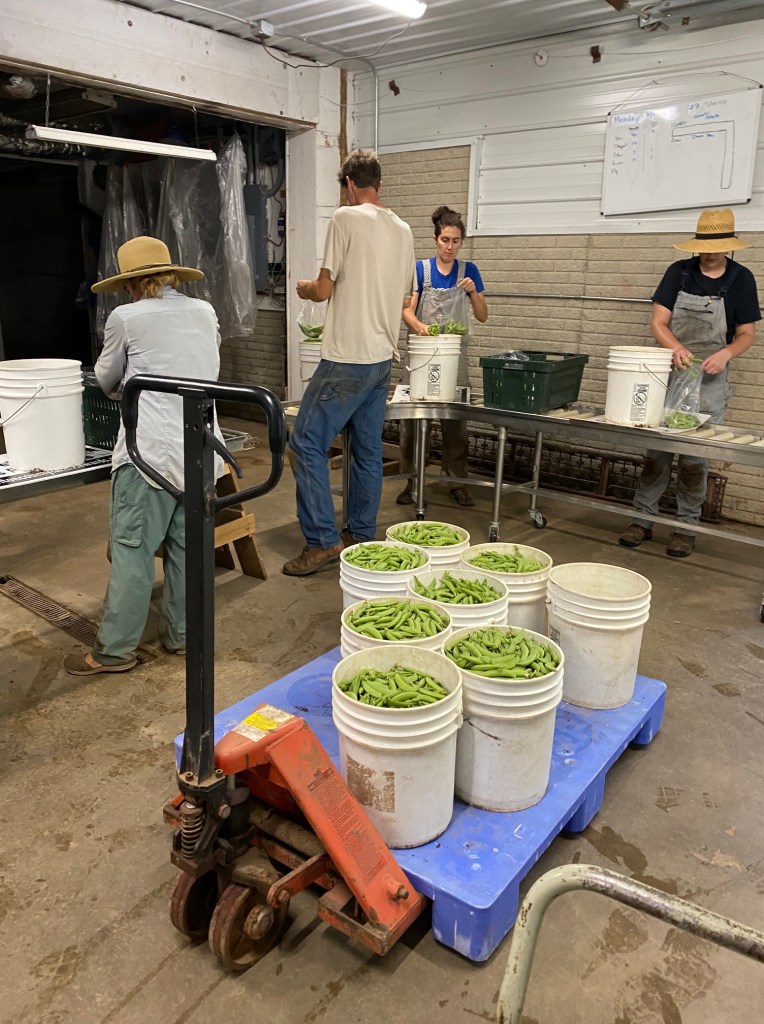
We spent the rest of the week giving our attention to the crop transition that comes with veggie abundance. This meant saying goodbye to spring and early season crops like snap peas, napa cabbage, and Pak Choi. This meant getting any of these vegetables that might be remaining, out of the field, and taking down the pea fencing so we can put it into storage until next year.
Now we can start paying more attention to our warm weather crops such as outdoor cucumbers, tomatoes, zucchini, and peppers. It’s their time to shine, and thanks to that heat wave we got, the plants are thriving!

Last week marked the first of our peppers going out. It was great to get some peppers off the plants so smaller fruit has more space to grow. You’ll get to enjoy green peppers for a while, and as the season progresses, so will the plants resulting in delicious red peppers. Did you know that a green pepper is a pepper at its first point of maturity? Most bell peppers start out green, and as they mature they turn red, yellow or orange depending on the variety. The Jalapenos are also loving the weather lately, and we are excited to introduce these to you all this week. Be warned: these beauties pack some serious heat, so a little goes a long way.

Our zucchini got kind of a rough start this year, but looks like they’re finally coming around. When we first planted them, they immediately got attacked by squash and cucumber beetles. This left the plants weak and struggling. We put a clay spray on the plants to make them less tasty for the bugs, and it worked. The plants started growing and began producing fruit and flowers. The zucchini flowers need to be pollinated in order for fruit to grow. Ours weren’t pollinated consistently for the first few weeks, which results in strange and deformed fruit. These still taste okay, but they are unsightly and only last a day or two before they get wiggly or start to rot so we don’t send them to shares. We suspect the issue is that we planted the zucchini right next to a bed of melons, and the bees seem more interested in melon flowers rather than the zucchini flowers. This means fewer zucchini in your share, but hopefully lots of delicious and juicy melons later this month.

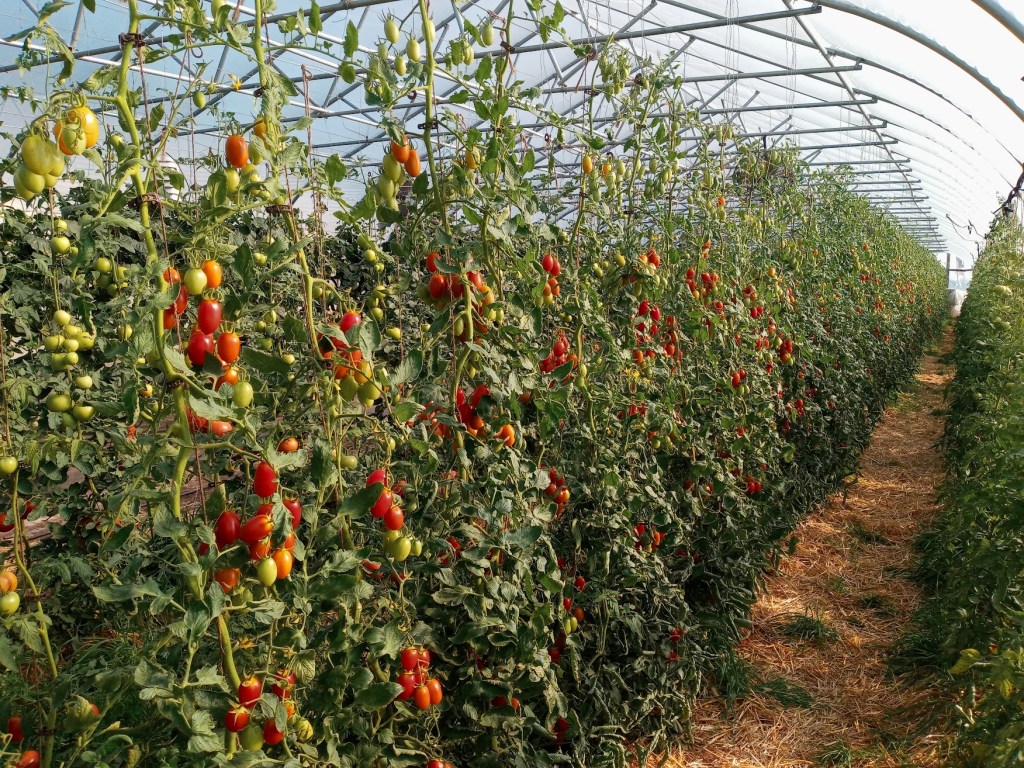
The outdoor tomatoes are starting to ripen, and the greenhouse tomatoes continue to get bigger and ripen at rapid speed. If you get overwhelmed by tomatoes, a great option is to freeze them and use them later for sauces, stews, salsa, or many other things. If you freeze the tomatoes with the skin on, once they’ve defrosted, the skin slides right off. No boiling necessary. This is my favorite trick to be able to enjoy the delicious taste of fresh tomatoes in the middle of winter when we’re all thinking of warmer times.

Another new introduction to your share this week is potatoes. You already got to try two of our other pre-storage crops with the green garlic and the onions. Potatoes are the next addition to this collection. We call them “new potatoes”. This means that they are young and not fully developed. They have a thin skin, and delicious flavor. We love sharing these with you as soon as possible. However, this means they aren’t fully mature. You’ll likely notice that their skin is really thin and flaky. This is because they haven’t been in the ground long enough to create the sturdy outer skin we are all used to. On the plus side, this means no peeling needed. On the downside, this means they won’t store as long, and they should be kept in the fridge. The outer skin protects the potatoes and allows them to be stored longer. Without the shell, the potatoes will turn brown and spoil quite quickly if left out at room temp for too long.

In your share this week:

Beets – Beans – Cucumbers – New Potatoes Zucchini – Baby Carrots

Broccoli – Greens Mix – Cilantro – Cucumbers – Hot Peppers – Onions – Green PeppersOregano – Tomatoes

Broccoli Pasta Salad

Ingredients

  • 3 cups small broccoli florets
  • 1 cup cut green beans
  • 2 cups uncooked gluten free fusilli pasta
  • 1 small zucchini, thinly sliced and cut into half moons (or spiralized)
  • 1 cup sliced cherry tomatoes
  • 4 oil-packed sun-dried tomatoes, chopped
  • 8 fresh basil leaves, thinly sliced
  • ¼ cup pine nuts
  • sea salt and freshly ground black pepper
  • Lemon Tahini dressing: (can be made ahead)
  • 3 tablespoons extra-virgin olive oil
  • 3 tablespoons tahini
  • 3 tablespoons fresh lemon juice, more for squeezing at the end
  • 2 tablespoon white wine vinegar
  • 1 garlic clove, minced
  • ½ teaspoon Dijon mustard
  • ½ teaspoon maple syrup
  • ½ teaspoon sea salt
  • 3 tablespoons water
  • Instructions:
  • In a small bowl, whisk together the olive oil, tahini, lemon juice, vinegar, garlic, mustard, maple syrup, salt and water. Set aside.
  • Prepare a large pot of salted boiling water and a large bowl of ice water. Drop the broccoli and green beans into the boiling water and blanch for 1-2 minutes, until tender but still bright green. Remove and immediately immerse in the ice water to stop the cooking processing. Keep in the ice water long enough to cool completely, about 15 seconds. Then, drain and and place on a kitchen towel to dry.
  • In a large pot of salted boiling water, prepare the pasta according to the instructions on the package, cooking until al dente. Drain and rinse with cold water.
  • In a large bowl, combine the broccoli, green beans, zucchini, tomatoes, basil and the pasta. Drizzle with the dressing and toss. Season to taste with salt, pepper, and squeezes of lemon, if desired. Sprinkle with the pine nuts and chill for 15 minutes. Can be stored in the refrigerator for up to 2 days.

Veggie Fajitas

SIMPLE PICO

  • 2 tomatoes, diced small
  • 1 garlic clove, minced
  • 1 jalapeño, minced
  • 1 lime, juiced
  • 1 small onion, diced small
  • 1/2 tsp. kosher salt
  • 1/4 tsp. black pepper
  • 3 Tbsp. fresh cilantro, chopped

FAJITAS

  • 2 Tbsp. salted butter, divided
  • 2 Tbsp. olive oil, divided
  • 6 oz. white button mushrooms, halved
  • 1 small red onion, sliced
  • 1 Tbsp. steak seasoning
  • 1 bell pepper, sliced into strips
  • 1 poblano pepper, sliced into strips
  • 1 small yellow squash, halved lengthwise and cut into half-moons
  • 1 small zucchini, halved lengthwise and cut into half-moons
  • 2 limes, juiced
  • 1 Tbsp. honey

Directions

For the simple pico: Combine the tomato, garlic, jalapeño, lime juice, onion, salt, pepper, and cilantro in a medium bowl.

For the fajitas: Heat 1 tablespoon of the butter and 1 tablespoon of the oil in a large heavy-bottom skillet over medium-high heat. Add the mushrooms and onions in a single layer. Let cook undisturbed for 2 to 3 minutes, allowing the vegetables to char. Season with half of the steak seasoning, and stir. Remove to a plate and set aside.

Add the remaining 1 tablespoon butter and 1 tablespoon olive oil to the skillet and heat over medium-high heat. Add the bell pepper, poblano, yellow squash, and zucchini in a single layer. Let cook undisturbed for 2 to 3 minutes, allowing the vegetables to char. Season with the remaining steak seasoning, then stir in the reserved mushrooms and onions. Let cook until the vegetables are tender but still have some bite, about 2 minutes more. Stir in the lime juice and honey, and remove from the heat.

Serve the fajitas with the simple pico, tortillas, cheddar jack, crema, lime wedges, and hot sauce.

Summer CSA Week 8

Last week the crew spent most of their time in the fields across the road. Most of our storage vegetables are across the road. These are the vegetables that we will keep in the root cellar to feed our Winter CSA members all winter, such as potatoes, carrots, beets, and winter squash. We’ve already given lots of love and attention to our potatoes in previous weeks, so it was time to focus on the carrots and beets.

The crew spent last week doing what we call close weeding. This is actually the third type of weeding these plants will receive. The first type of weeding is called flame weeding. This is where Janaki puts on a tractor attachment that is about the same power as 9 handheld blowtorches. He drives the tractor over the beds right before the carrot seeds germinate to burn off all the tiny weeds that germinate more quickly. This is a fast way to get rid of all the weeds in the entire bed to give the carrots a jump start. At this stage, we have a pretty good idea where the plants will pop up, but it’s always best to be cautious.  Once the seeds germinate and plants start popping up through the soil, either Janaki or crew member Catherine will do what’s called basket weeding. This is where the tractor gets an attachment that looks like a few rolling wire baskets. Catherine or Janaki will then drive the tractor down the beds getting as close to the plants as possible. This is beneficial because it breaks up all the soil which disrupts any weeds that might be about to germinate, while also pulling out any weeds in between the rows that have already germinated. The downside of the basket weeder is that it leaves an untilled area about an inch and a half on either side of the row. This is where the crew steps in and performs the close weeding. We’ve taken old butter knives and steak knives, and bent the blades at a 90° angle. The crew members use the knives to scratch the soil around and in-between the plants to remove any current weeds, and disrupt any weeds that were about to germinate. This is very effective, but also quite time consuming. It’s effective because every single plant in every single row gets love and attention. However, it’s very time consuming because we are crawling along, giving every plant, in every bed, on 300-500 foot fields, love and attention. The crew can work pretty fast, this task takes a while for a farm of our scale.

Cue the crew’s excitement (and immense gratitude) last Wednesday when some friends from the UMD Land Lab showed up to check out the farm, and spend the morning helping us weed all of the carrots. Almost doubling our usual farm crew allowed us to get through many beds in record time! We were able to close weed all of our storage beets and carrots last week.

We will close weed these crops two to three times depending on how quickly the plants grow, and what the weed pressure is. We start weeding when the carrots are about an inch tall, with the goal of making sure we can finish before weeds begin to out-compete the vegetables for sunlight and nutrients. Once the plants are 3-4 inches or tall, Janaki can use other tools like rubber finger weeders to kill small weeds that are in the row without killing the crop. The crew gets the few weeds that survive this cultivation by spot weeding the field by walking through before harvest. We really focus on good weed control at the farm because it makes for a nice consistent crop, and it makes our harvesting equipment work better.

 Fun fact for all of you, it is estimated by the end of the week, the farm crew had crawled through and close weeded 56,760 row-feet of carrots and beets. That’s nearly 11 miles! 

In your share this week:

Basil – Carrots – Lettuce – Cucumbers – Napa Cabbage 

Onions – Snap Peas – Tomatoes – Cilantro – Zucchini

Swiss Chard Summer Roll

Wraps and Filling:

16 to 18 sheets of rice paper

One bunch of chard, leaves only, thinly sliced 

One bunch of basil, torn into bite-sized pieces

Two avocados sliced

Two carrots cut into 2 inch match sticks

One cucumber cut into 2 inch match sticks

Dipping Sauce:

1/2 cup hoisin sauce

1/4 cup soy sauce

1.5 tbsp sugar

1.5 tbsp sesame oil

Finely sliced green onions

To make the dipping sauce, combine all sauce ingredients in a bowl.  Whisk.  

In a large bowl with warm water, dip the rice paper into the water for a few seconds until the whole sheet is moistened carefully lay the rice paper flat on your work surface and wait a minute for the sheet to become soft and pliable. Layer the chard, basil, avocado, carrots, and cucumbers on the bottom third of the rice paper.  Fold the bottom edge over the filling and roll the paper away from you folding the sides in towards the middle about halfway up to roll.  Repeat with the remaining rice papers and filling.   Serve roles with dipping sauce.  The rice papers will start to stiffen if left out for too long, so it’s best to wrap as you eat.  This is a great dinner to make with kids!!!

Frittata with Napa Cabbage

8 large eggs
1/2 c creme fraiche
1 c finely chopped napa cabbage
1/2 c finely chopped red onion
4 green onions, thinly sliced
2 garlic cloves, minced
2 T chopped cilantro, plus more for garnish
1/2 t curry powder
1/4 t cayenne pepper
1/2 t fine sea salt
1/2 t fresh ground pepper
2 T butter
1/2 c crumbled feta

Position a rack in upper third of the oven and preheat the oven to 350.

In a large bowl, combine the eggs, creme fraiche, cabbage, both onions, garlic, cilantro and spices. Beat with a fork to incorporate.

Heat the butter in a 9-inch cast iron skillet over medium-high heat, tilting the pan to coat all surfaces thoroughly as the butter melts. When the butter starts to foam, pour in the egg mixture and cook undisturbed for 5 minutes. Top with the crumbled feta and transfer to the oven. Bake for 20 minutes, or until golden brown and pulling away from the sides of the pan. Garnish with cilantro leaves and serve warm.

For the farm crew,

Jennifer
Summer CSA Week 15, 2023

I came across a recent headline of the Everest & Wausau Extra that read “In farming, you have to love it.” It is always dangerous skimming headlines these days, but this one stuck out to me. It stuck out not in the desperate attention grabbing fashion that so many articles seem to employ, but in more of an “ain’t that the truth” way. It certainly has been my experience throughout my limited time in this field of work (no pun intended). I feel lucky to have met so many people genuinely enthusiastic and passionate about their work. At the Food Farm specifically, but also across the farming community in general.

Last week, after some fun in the onion fields, the crew took a road trip across Co Rd 1 to visit Northern Harvest & Spirit Creek Farm. It was a great experience to be exposed to some different ways of doing things. Some of the vegetable varieties may have been different, but the passion & craft was apparent! We even got a V.I.P. tour of the newly built commercial kitchen built by Adam Kemp & Rick Dalen for use in their food production business – Spirit Creek Farm has around eight different products, from different kinds of sauerkraut, ginger carrots, and even Kim Chi!


In your share this week:

Basil – Northeaster Beans – Red Cabbage – Carrots – Cilantro – Cucumbers – Garlic

Greens Mix – Onions – Red Peppers – Hot Peppers – Yellow & Purple Potatoes

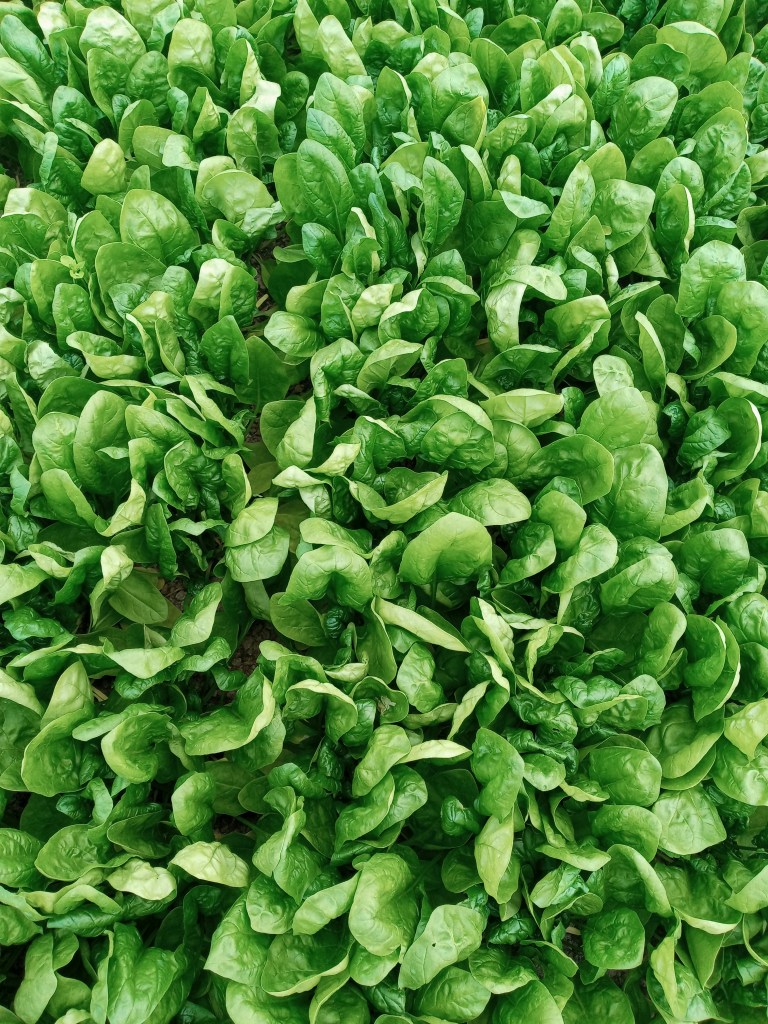
Spinach – Acorn Squash – Tomatoes


Preserving season is upon us! It’s an exciting, but sometimes overwhelming time of year. There are so many different methods and techniques. Everybody you ask seems to give you a different answer on how it ought to approached. After finally deciding how you want to go about it comes the next step of actually carving out the time to get it done. It is important to follow your tastes and discover what makes sense for you, but here at the farm it seems the general consensus is to opt for less work in the fall and more in the winter, when we all seem to have a little more time on our hands. Instead of canning tomato sauce, maybe just can the tomatoes whole and use them to make the sauce in the winter (onions, garlic & dried herbs store well on their own). Instead of trying to marinade and preserve a bunch of peppers, maybe just chop and throw them in the freezer (no blanching required!) The peppers in your share today would be a great candidate for this technique. As would the basil and garlic in the form of pesto!


Basic Pesto

2 cups fresh basil leaves (no stems)
2 tablespoons pine nuts (or walnuts)
2 large cloves garlic
1/2 cup extra-virgin olive oil
1/2 cup freshly grated Parmesan

  1. Combine basil leaves, pine nuts (or walnuts) and garlic in a food processor and process until very finely minced.
  2. With the machine running, slowly dribble in the oil and process until the mixture is smooth.
  3. Add the cheese and process very briefly, just long enough to combine. Store in refrigerator or freezer.

Roasted Acorn Squash

1 medium acorn squash
1 tablespoon extra-virgin olive oil
1/4 teaspoon salt

  1. Preheat the oven to 400 degrees Fahrenheit and line a large, rimmed baking sheet with parchment paper for easy clean-up.
  2. To prepare the squash, use a sharp chef’s knife to slice through it from the tip to the stem. I find it easiest to pierce the squash in the center along a depression line, then cut through the tip, and finish by slicing through the top portion just next to the stem. Use a large spoon to scoop out the seeds and stringy bits inside, and discard those pieces.
  3. Place the squash halves cut side up on the parchment-lined pan. Drizzle the olive oil over the squash, and sprinkle with the salt. Rub the oil into the cut sides of the squash, then turn them over so the cut sides are against the pan. 
  4. Bake until the squash flesh is very easily pierced through by a fork, about 30 to 45 minutes depending on the size of your squash. Add any desired toppings, and serve warm.

For the farm crew,

Charlie

Summer CSA Week 12, 2023

It was so nice to see Food Farm folks this Saturday–we enjoyed speaking with so many of you and show off our hard work!

As some of you may have noticed, the root cellar is gradually filling up with a colorful abundance of carrots, beets, cabbage and potatoes. The farmers have been diligently packing up more and more of these vibrant vegetables, destined for grocery store shelves and eager CSA members.

Moreover, last week marked the collapse of our onion tops. This may sound slightly catastrophic, but don’t worry – it’s a good thing! The leaves fall over simply because the plant has matured and is no longer developing. It’s also how we know they are ready for harvest. In the photo (see left), you can see Teri & Aaron gently lifting them from the ground before laying them out to dry. Careful handling is essential during harvest to avoid bruising, which makes the bulbs susceptible to storage rot. Following the uprooting, these onions will begin their curing process in the fields for a week or so before having their tops removed and transferred to a well-ventilated indoor storage space.


In your share this week:

Basil – Beans – Broccoli – Cauliflower – Carrots – Celery – Cucumber – Melons

Sweet Onions – Bell Peppers – Potatoes – Tomatoes – Zucchini


The recipes this week have a lot of room to make them your own. Either one would be good with just about any item in the share (excluding the melons). So feel free to follow them as directed or create your own pizza & curry experiments…


Zucchini Crust Pizza, from The Cozy Cook

2 cups shredded zucchini
1/4 teaspoon salt
3 large eggs, beaten
1/2 cup all purpose flour (almond flour, coconut flour, and whole wheat flour may also be used)
1/3 cup shredded parmesan

  1. Preheat oven to 350°.
  2. Spread the shredded zucchini out on a lightly greased baking sheet and sprinkle lightly with salt. Bake for 15 minutes. Remove and transfer the zucchini to paper towels or a cheesecloth.
  3. Increase oven temperature to 450°.
  4. Squeeze out as much additional moisture from the zucchini as possible. Add the zucchini to a large bowl along with the whisked eggs.
  5. Sprinkle the flour in gradually, stirring to incorporate. Continue to add flour until desired consistency is obtained. (I use the entire ½ cup for all-purpose flour.)
  6. Spread out onto a lightly greased 12-inch pizza pan, leaving 1-inch or so around the edges.
  7. Top with shredded Parmesan cheese and bake for 18 minutes, until it begins to brown slightly. Remove from oven.
  8. Reduce heat to 400°.
  9. If possible, let the crust cool for extra crispy results.
  10. Top with desired pizza toppings. Bake for ~10 minutes, until the cheese is melted and bubbly.

Summer Vegetable Curry, Inspired by Half Baked Harvest

Basil Coconut Ginger-Lime Rice:

1 (14 ounce) can coconut milk
1 cup jasmine or basmati rice
1 tablespoon fresh ginger grated
1 lime juiced + zest

  1. Add the coconut milk to a medium size pot. Bring to a low boil and then add the rice, salt, and ginger. Stir to combine and then place the lid on the pot and turn the heat down to the lowest setting possible. Allow the rice to cook ten minutes on low and then turn the heat off completely and let the rice sit on the stove, covered for another 20 minutes (don’t take any peeks inside!). After 20 minutes remove the lid and add the lime juice + zest.

Curry:

4 tablespoons extra virgin olive oil
1 pound boneless, skinless chicken, diced
2 bell peppers, chopped
1 zucchini, chopped
2 cups green beans, chopped
1 cup broccoli, diced
1 cup cauliflower, diced
1 cup carrots, diced
1 tablespoon fresh ginger, grated
2 cloves garlic, grated or minced
2-3 tablespoon thai red curry paste
1 (14 ounce) can coconut milk
1 tablespoon fish sauce
1/2 cup fresh basil, chopped
1 mango, diced
1 jalapeño, seeded + diced
fresh naan and goat cheese, for serving

  1. Heat a little olive oil in a large skillet over high heat. Add the chicken and cook until browned and cooked through, about 5-10 minutes.
  2. Add another drizzle of olive oil to the skillet. Add the peppers, zucchini, beans, broccoli, cauliflower, carrots, ginger and garlic. Cook the veggies 5 minutes or until they just begin to soften.
  3. Add the coconut milk, curry paste, and fish sauce. Stir to combine, bring the mixture to a boil, cook 5 minutes or until the sauce thickens slightly. Remove from the heat and stir in the basil.
  4. In a small bowl toss together the mango and jalapeño.
  5. Serve the curry over the rice. Add a spoonful of the mangos and a sprinkle of goat cheese. Eat with Naan!

For the farm crew,

Charlie

Summer CSA Week 11, 2023

It’s farm tour time–this Saturday from 10-noon, we’d love to see you!

It’s melon mayhem at the Food Farm! We recently set our new daily harvest record with a whopping 377 cantaloupe. That is more than 800 pounds of weight to pull from the field! We expect them to slow down soon, so enjoy it while it lasts.

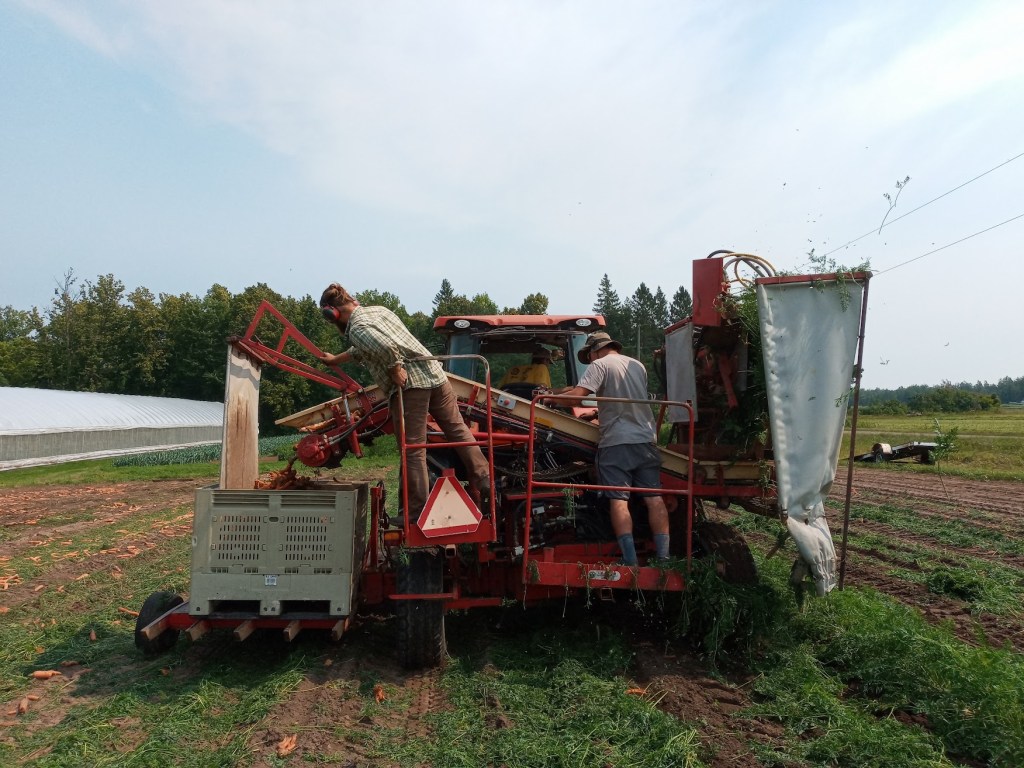
In other news that is orange, the crew christened a “new-to-us” carrot harvester. A lucky few climbed aboard as it took its maiden voyage through the fields, while the rest of the crew assembled at the washing stations. There were certainly some wrinkles to iron out, as there often is with any new piece of machinery, but by the end of the week the process seemed to be moving along rather quickly.


Beans – Broccoli – Carrots – Cilantro – Cucumbers – Dill – Greens Mix – Melons

Onion – Bell Peppers – Hot Peppers – Potatoes – Tomatoes – Zucchini


Usually the melons are best enjoyed straight up in all their glory. That way you can fully appreciate the depth of their flavor. This week though, because there are so many, I thought it would be nice to include a recipe with them in it. It does include basil, which we are not sending this week… I’m hoping some of you still have a few sprigs leftover from last weeks share, or can maybe snag some from a friendly neighbor’s garden.

P.S. The vinaigrette would also go great on the greens mix in today’s share 🙂

Melon Caprese Salad, from Half Baked Harvest

Honey Herb Vinaigrette:
1/4 cup extra virgin olive oil
2 tablespoons honey
Juice of 1 lemon
1 tablespoon white balsamic
1 cup fresh basil
1 tablespoon toasted pine nuts
1 pinch flaky sea salt

  1. To make the vinaigrette, combine all ingredients in a blender and blend until smooth.

3 balls fresh burrata cheese
4 cups melon balls
1/2 cup fresh basil leaves
2 tablespoons fresh mint
6 slices prosciutto

  1. Break the burrata in half and place each half in the bottom of a small bowl or glass (about 8 ounces). Over the burrata, layer the melon balls, basil, and mint. Top with a slice of prosciutto. 
  2. At this point the salad can be covered and placed in the fridge for up to 6 hours. 
  3. Before serving, drizzle over the vinaigrette.

Blistered Green Beans w/ Tomato-Almond Pesto, from Bon Appétit

1 1/4 cups diced tomatoes
1/8 cup unsalted, roasted almonds
1 garlic clove, grated
1 tablespoons olive oil
1 tablespoons Sherry vinegar or red wine vinegar
1/2 teaspoon paprika
Pinch of cayenne pepper
Kosher salt, freshly ground pepper
1 1/2 teaspoons vegetable oil
1 pounds green beans, trimmed

  1. Preheat oven to 450°F. Roast tomatoes on a rimmed baking sheet, turning once, until blistered and lightly charred, 15-20 minutes. Let cool slightly. Finely chop almonds in a food processor. Add garlic, olive oil, vinegar, paprika, cayenne, and half of tomatoes; pulse to a coarse pesto consistency. Season with salt and pepper.
  2. Heat 3/4 tsp. vegetable oil in a large skillet over medium-high. Add half of beans; cook, undisturbed, until beginning to blister, about 2 minutes. Toss and continue to cook, tossing occasionally, until tender, 7–9 minutes; season with salt and pepper. Spread beans out on a platter; let cool. Repeat with remaining vegetable oil and beans.
  3. Toss beans with pesto; season with salt and pepper if needed. Add remaining tomatoes and transfer to a platter.

Summer-Vegetable Casserole, from Food & Wine

Extra-virgin olive oil, for drizzling
1/2 pound potatoes, peeled and sliced 1/4 inch thick
Salt and freshly ground pepper
1 bell pepper, thinly sliced
1 small onion, thinly sliced
1 large garlic clove, minced
1 teaspoon thyme leaves
1/2 pound tomatoes, sliced 1/4 inch thick
1 medium zucchini, sliced on the diagonal 1/4 inch thick
3 tablespoons freshly grated Parmigiano-Reggiano cheese

  1. Preheat the oven to 350°. Coat a 9-inch baking dish with olive oil. Spread the potatoes in the dish in an even layer; drizzle with oil and season with salt and pepper. In a bowl, combine the bell pepper, onion, garlic and thyme and season with salt and pepper. Arrange two-thirds of the bell pepper mixture over the potatoes and drizzle with oil. Top with the tomatoes and the zucchini; drizzle with oil and season with salt and pepper. Cover with the remaining bell pepper mixture and sprinkle with the cheese.
  2. Cover the casserole with foil and bake for 40 minutes. Increase the oven temperature to 425°. Uncover the casserole and bake for about 20 minutes longer, until the vegetables are tender and glazed on top. Let stand for 10 minutes. Serve warm.

For the farm crew,

Charlie

Summer CSA Week 4, 2023

Greetings & Happy Fourth of July!

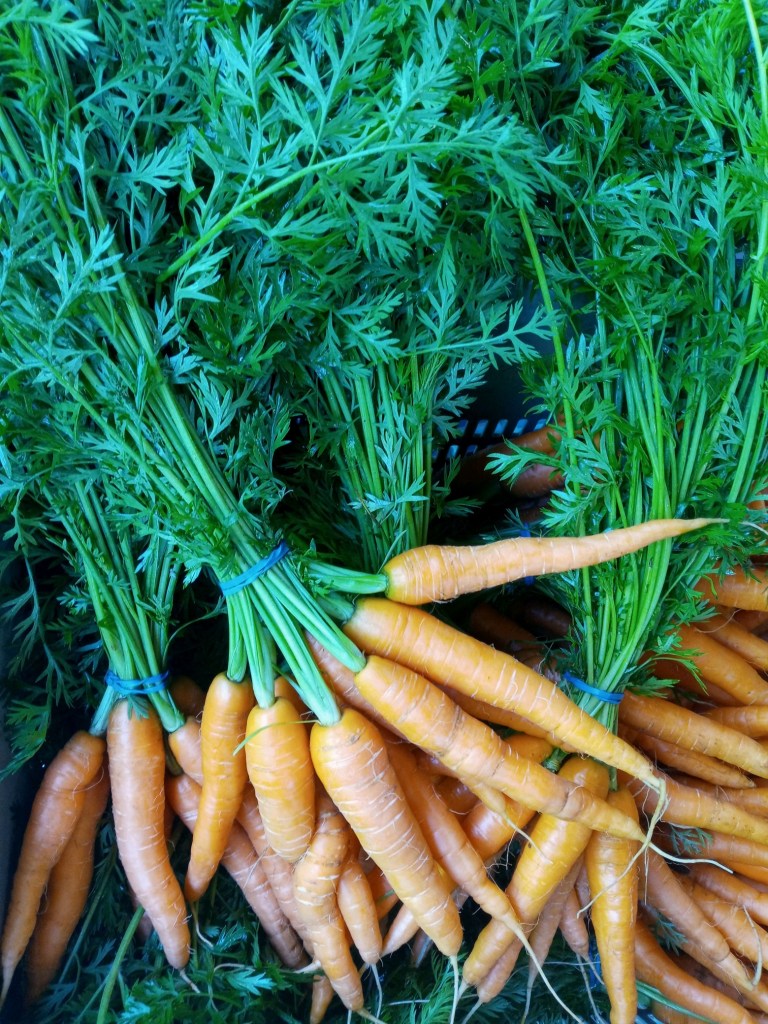
It’s a big week for us here at the farm as the first carrot harvest is underway. If there is one crop we are “known for” this could be it. Carrots have been a Fisher-Merritt staple since before the Food Farm was located in Wrenshall; back to when John and Jane were farming in Holyoke, MN. Thats over 48 years of experience and artistry!

These particular carrots are grown in our greenhouses and still feature their tops (which make a great addition to pesto). The variety is called “Ya Ya” and have been meticulously selected for their summer sweetness. Carrots always seem to taste better in the fall as they turn starches into sugars as a defense mechanism against the colder temperatures. It can be tough to find a variety with that desirable sweetness during the heat of the season, but these are always tender and sweet from the greenhouse.


In your share this week:

Cauliflower – Carrots – Chard – Cucumber – Garlic Scapes – Green Onions –

Napa Cabbage – TurnipsLettuce


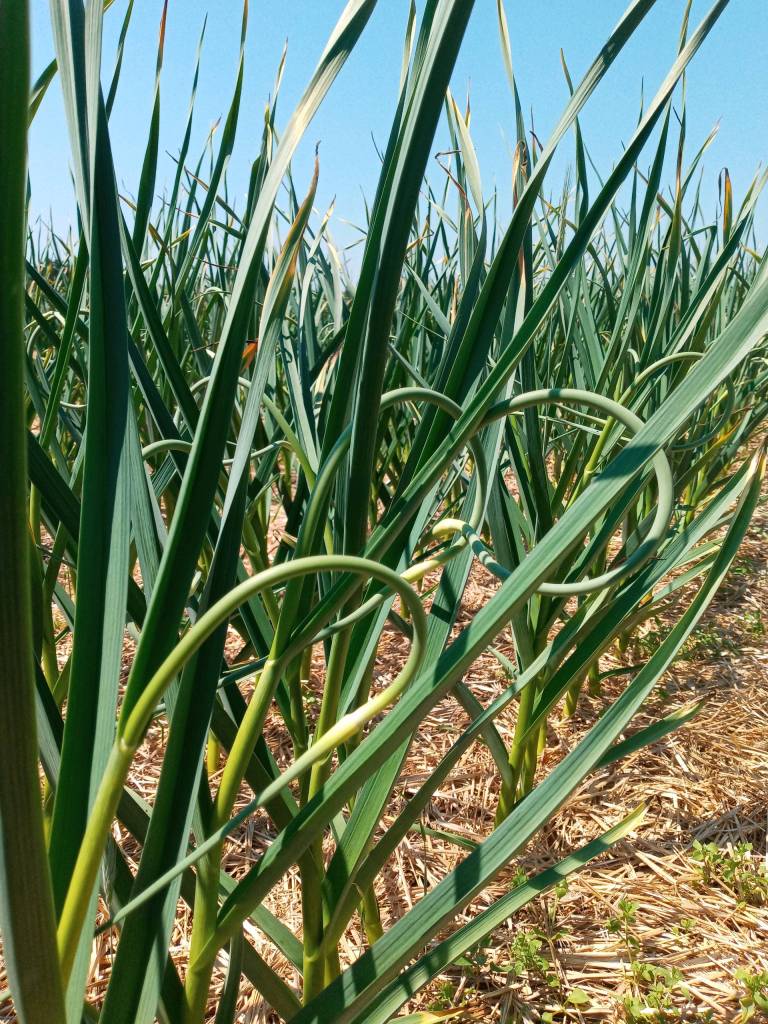
Another exciting addition to the boxes this week is garlic scapes. Garlic scapes emerge from the garlic top and start to curl and twist as they grow. It is important to harvest them before they straighten out and become woody, as this will ensure their optimal flavor and texture. Typically, garlic scapes are ready for harvest when they reach a length of 8 to 12 inches, although this may vary depending on the garlic variety. Harvesting garlic scapes at the right time not only allows you to enjoy their unique flavor but also encourages the garlic plant to direct its energy towards bulb development, resulting in plump and flavorful garlic cloves at harvest time.

Raw garlic scapes pack a robust and assertive garlic flavor, with hints of onion and a pungent, herbaceous quality, yet they offer a milder spice compared to raw garlic cloves. However, when cooked, these scapes transform into a delightful treat, revealing a sweeter profile akin to roasted garlic. In essence, their taste embodies a harmonious fusion of garlic and chives.

Garlic Scape Pesto, from NYT Cooking

yields ~ 1 Cup

  • 1 cup garlic scapes, roughly chopped (about 10 to 12 scapes)
  • 1/4 cup raw sunflower seeds
  • 1/2 cup extra virgin olive oil
  • 1/4 cup Parmesan cheese
  • 1/2 cup basil leaves
  • Juice of one lemon
  1. Place the garlic scapes in a food processor and pulse for 30 seconds.
  2. Add the sunflower seeds and pulse for 30 seconds. Scrape down the sides of the bowl.
  3. Add the olive oil and process on high for 15 seconds.
  4. Add the Parmesan cheese and pulse until the ingredients are combined.
  5. Add the basil and lemon juice, and process until reaching the desired consistency.
  6. Add salt to taste and serve immediately.

Napa Cabbage & Cucumber Slaw, from Bon Appétit

4 servings

  • 6 cups thinly shaved or slices cucumbers and/or Napa Cabbage
  • 1/4 red or white onion, very thinly sliced
  • 1/4 cup seasoned rice vinegar
  • 2 tablespoons extra-virgin olive oil
  1. Combine vegetables and onion in a medium bowl; season generously with salt. Let sit until they start to release their water, 8–10 minutes, then begin to massage, gently at first so they don’t break, then harder as they begin to expel their liquid, until softened to about the texture of coleslaw. Pour off all excess liquid and add vinegar and oil; toss to coat. Taste and season with more salt if needed.

Do Ahead: Slaw can be made 3 days ahead. Cover and chill.


As the summer scorches along, more and more people will be breaking out the grills. Here’s a friendly reminder that this doesn’t always mean brats and burgers! Veggies are also delicious when grilled – especially when paired with a yummy dip.

Veggie Dunkin’ Dip Ideas:

Hummus or Tzatziki


For the farm crew,

Charlie

Summer CSA Week 1, 2023

Howdy, fellow Food Farm enthusiasts and happy first day of the 2023 Summer CSA season! Thank you for choosing to be a part of our farm family and for valuing the hard work, dedication, and love that we pour into every crop, every animal, and every interaction. Your commitment to local, sustainable agriculture not only supports our farm but also strengthens the fabric of our community, fostering a healthier, more resilient, and connected way of life.


In your share this week:

Spinach – Green Onions – Lettuce – Greens Mix – Rhubarb – Radish – Oregano – Tatsoi


Tatsoi is a versatile green that will elevate your culinary adventures!

Stir-fry perfection: Tatsoi adds a burst of flavor to your veggie stir-fry. With its mild mustard taste reminiscent of baby Pac Choi or Chinese cabbage, tatsoi is a great addition. The best part? It cooks up in a jiffy! Simply toss in the vibrant greens during the final moments of cooking, allowing them to wilt just enough to retain their delightful texture and taste.

A salad sensation: Whether it’s at the microgreen stage, as tender baby leaves, or in its full-grown glory at three to four weeks, tatsoi shines in salad mixes. You may have already noticed its crisp and unique flavor mingled with the mustard greens, arugula, kale, & chard that comprise our usual greens mix blend.

Pesto with a kick: Looking for an adventurous twist on the classic pesto? Get ready to blend your taste buds into a frenzy by incorporating tender tatsoi leaves into a zesty vegan pesto. Just combine them with cashews, a pinch of salt, a drizzle of olive oil, and a sprinkle of nutritional yeast.

Sautéed Tatsoi Recipe, from Niki Nakayama

  • 1 bunch tatsoi
  • 2 teaspoons sesame oil
  • 1 garlic clove, finely chopped or grated
  • 1 teaspoon grated ginger
  • 1 teaspoon fish sauce
  1. Cut off the base of the tatsoi and discard (or save for future stock).
  2. Rinse the leaves, but do not dry them. The excess water will lightly steam the greens while they cook.
  3. Warm the sesame oil in a small frying pan over medium heat.
  4. When the pan is hot and the sesame oil is fragrant, add the garlic and ginger, and sauté until fragrant, about 30 seconds.
  5. Add the still-wet tatsoi and fish sauce, and stir to combine.
  6. Cook uncovered, stirring occasionally until tatsoi stems are tender and leaves are wilted, about 1–2 minutes.

Tatsoi & Basil Pesto, from April Blake

  • 2 cups tatsoi
  • 1 clove garlic
  • 1 cup basil
  • 1/4 cup walnuts
  • 1/4 cup grated parmesan
  • 1-2 tbsp olive oil
  • salt to taste
  1. Throw everything but the olive oil in a food processor.
  2. Turn it on and if you have the option to drizzle in the oil while the machine is running, add it slowly until the pesto is a spreadable consistency. If you don’t have the luxury of the feature, add one tablespoon of oil, blend, then add the rest as needed.
  3. Salt to taste or add a little more cheese.

Summer CSA Week 10, 2022

The crew preparing to harvest carrots with THE HARVESTER.

Last week was a big week for the Food Farm crew: we harvested our long awaited garlic! You’ll find more pictures and descriptions of that process below. We also brought out the carrot harvester, which is efficient but requires many hands to run smoothly. Boxes are filled with high summer bounty. New this week you’ll find green peppers and GARLIC! The garlic in the box this week is “green” or not yet cured. It should be left out on the counter with good ventilation so it does not mildew.

Would you like to come see the farm at peak season? You’re in luck! We are hosting a farm tour and pizza dinner on Saturday, August 27th! Come by the farm at 2612 County Road 1, Wrenshall from 4:00pm to 6:00. We’ll be serving pizza hot from our wood fired oven and giving farm tours. Free for all to attend, we’d love to see you!


In your share this week:

Basil – Beets – Cabbage – Carrots – Cucumber – Dill – Green Garlic – Green Pepper – Green Onion – New Potatoes – Parsley – Tomato – Zucchini


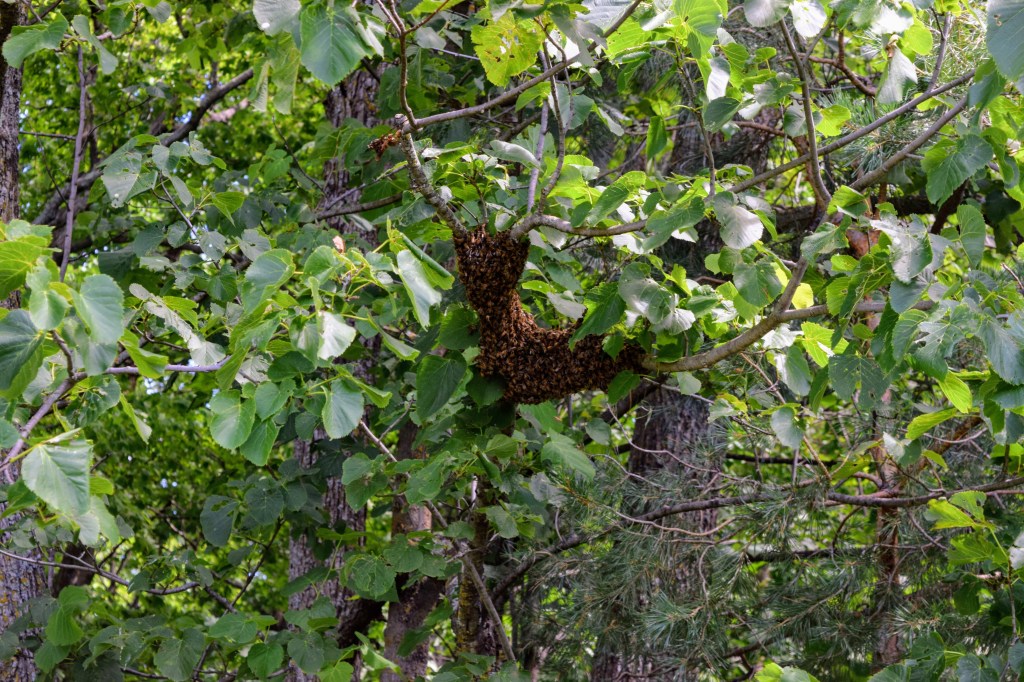
What am I looking at?

This is a swarm of honey bees seen near the farm hives recently. When a hive gets large enough it splits into two distinct colonies. During this process, part of the hive leaves as a swarm to find a new home. These swarms are often very docile because they are not guarding honey or a queen, but always be careful around bees, especially if there there is a chance you could be allergic.


Cucumber and Tomato Salad

From Claudia Roden’s Mediterranean

Ingredients

  • Cucumber (peeled, seeded and cut into pieces)
  • 2 large tomatoes, seeded and cut into pieces
  • green onion
  • 3 Tbsp olive oil
  • juice of 1/2 lemon
  • salt and black pepper to taste
  • small handful of fresh herbs (parsley, oregano, dill, cilantro) chopped

Instructions

  1. Put cucumbers, tomatoes, and onions into a bowl. In another bowl, whisk together the olive oil and lemon juice and season with salt and pepper to make a dressing. Just before serving, pour the dressing over the salad and mix well. Sprinkle with the herbs and add feta if you like.

Basic Pesto

We have garlic AND basil in the box this week. The only option is to make pesto 😉

Ingredients

  • 2 cups fresh basil leaves (no stems)
  • 2 tablespoons pine nuts or walnuts
  • 2 large cloves garlic
  • ½ cup extra-virgin olive oil
  • ½ cup freshly grated parmesan cheese

Instructions

  1. Combine basil leaves, pine nuts or walnuts and garlic in a food processor and process until very finely minced.
  2. With the machine running slowly dribble in the oil and process until the mixture is smooth.
  3. Add the cheese and process very briefly, just long enough to combine. Store in refrigerator or freezer.

From NYT Cooking


What is Harvesting Garlic Like?

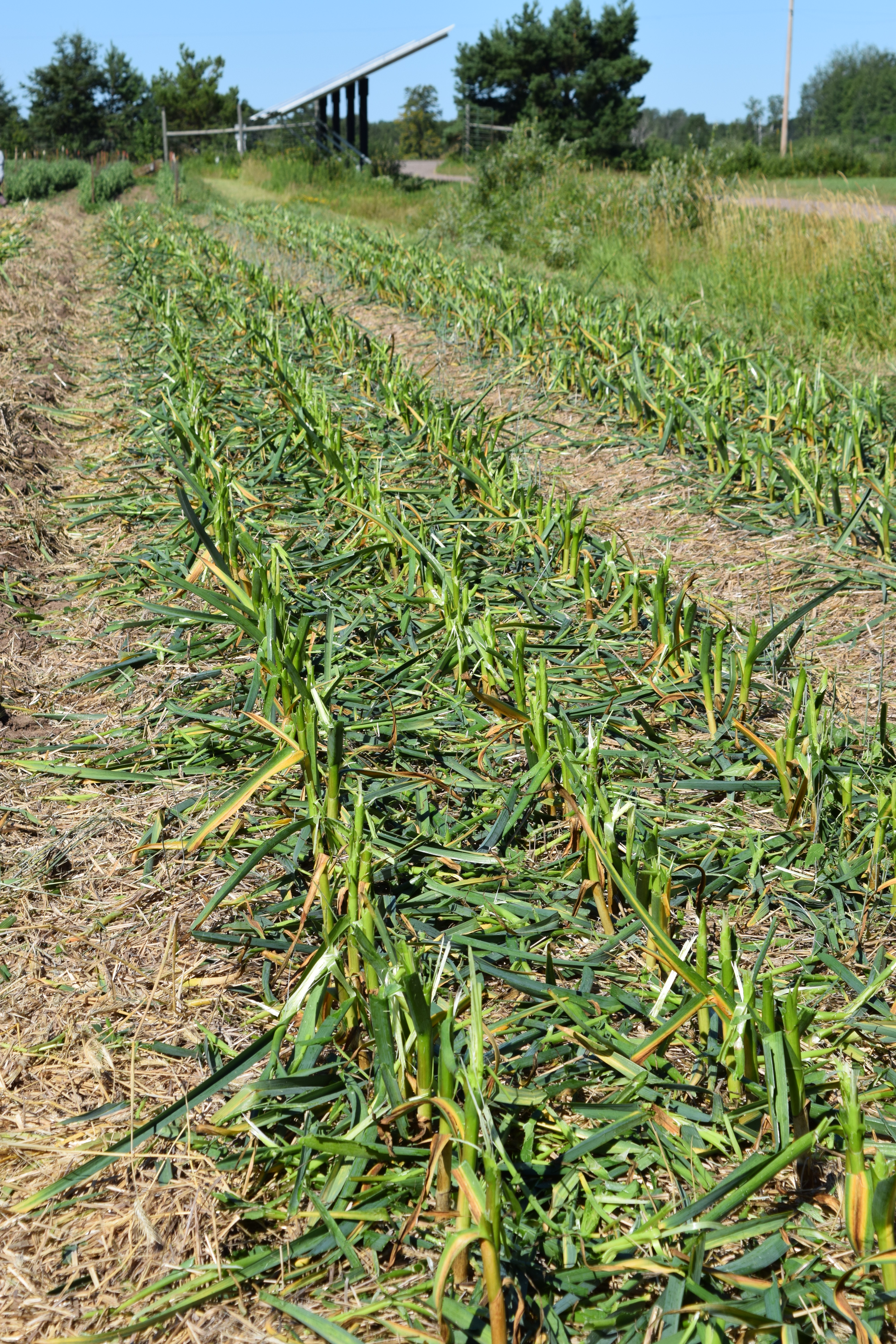
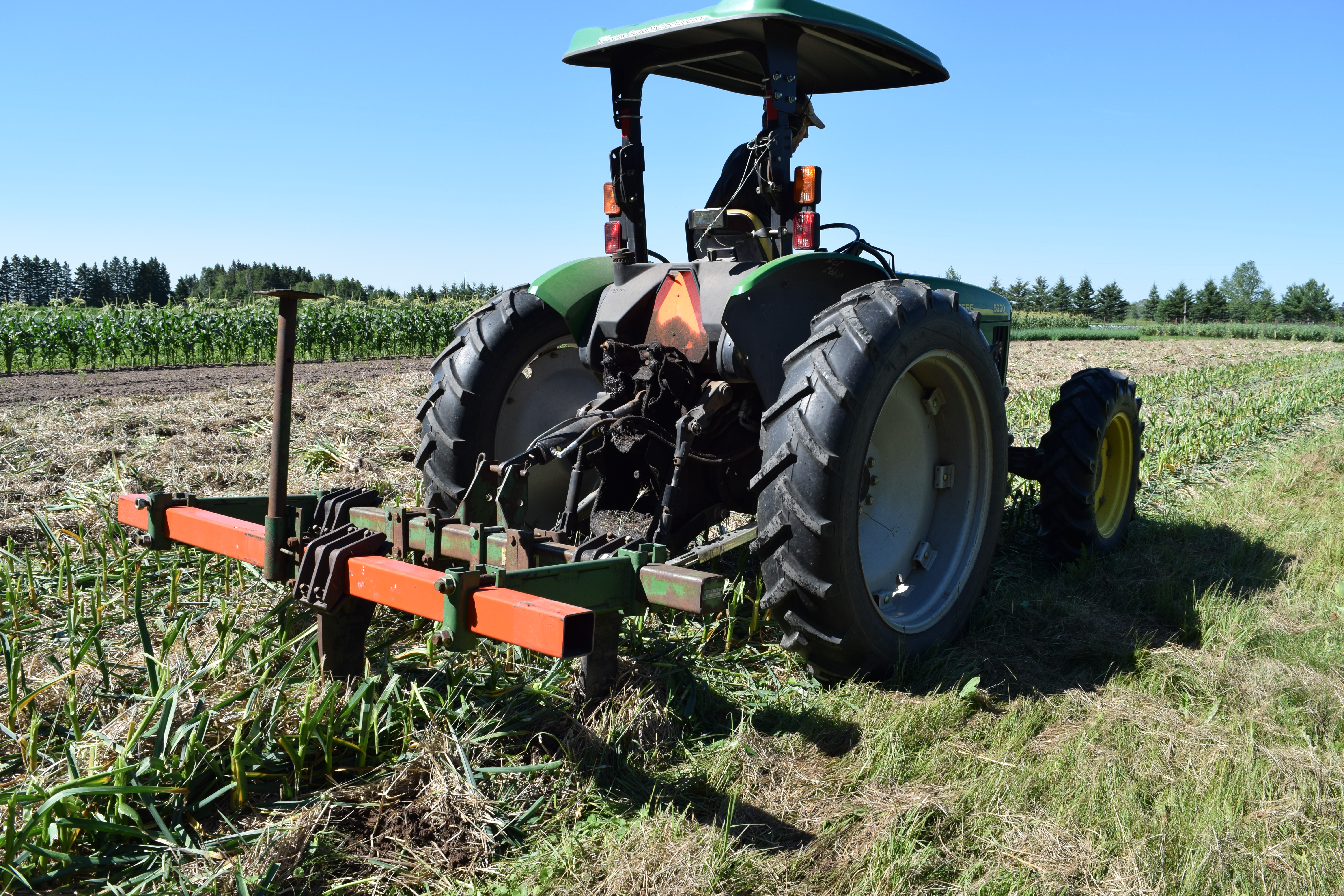
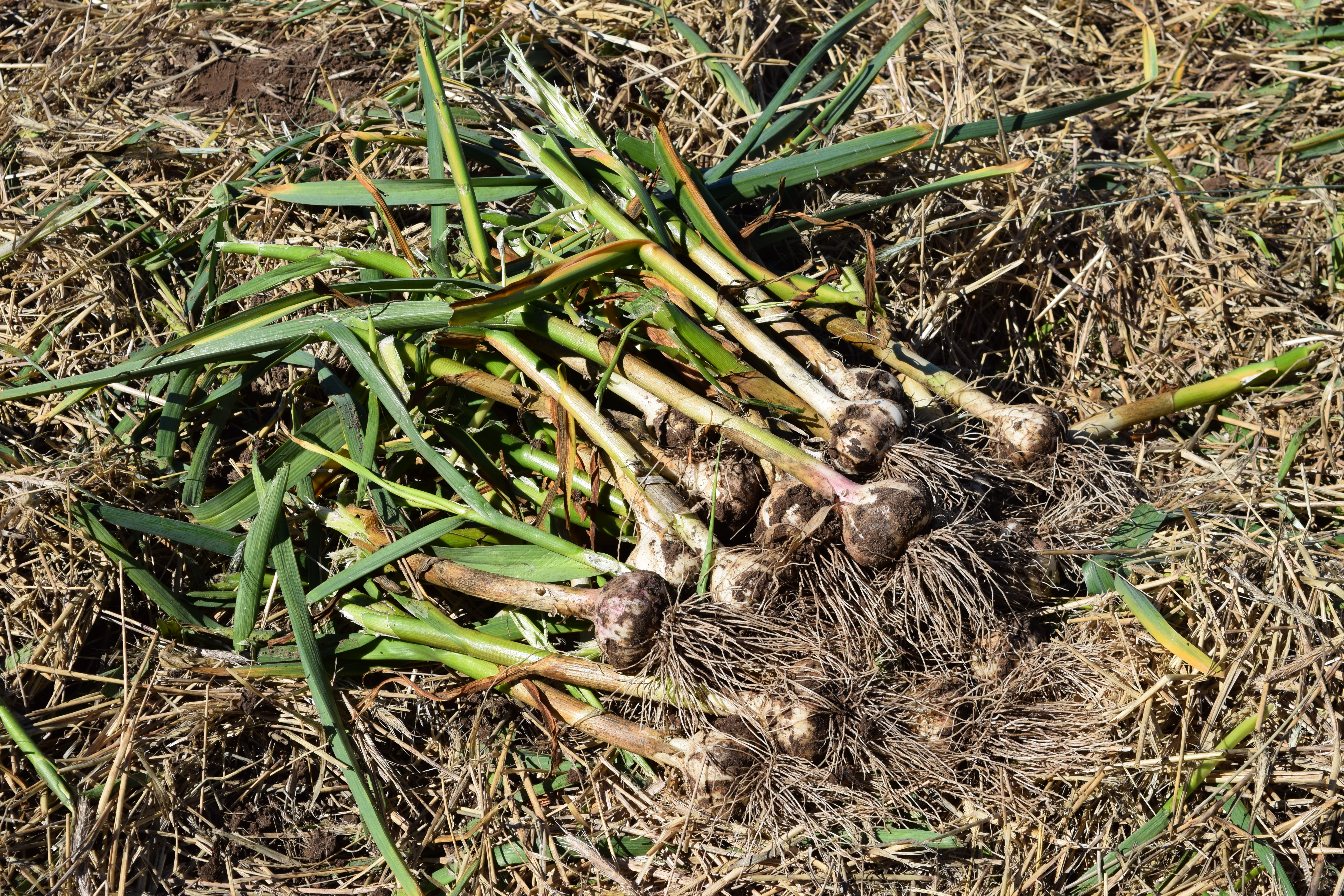
Step one: Janaki uses the tractor to mow and subsoil the garlic. The subsoiler has big hooks that dig down between the garlic rows, loosening the soil and lifting up bulbs.

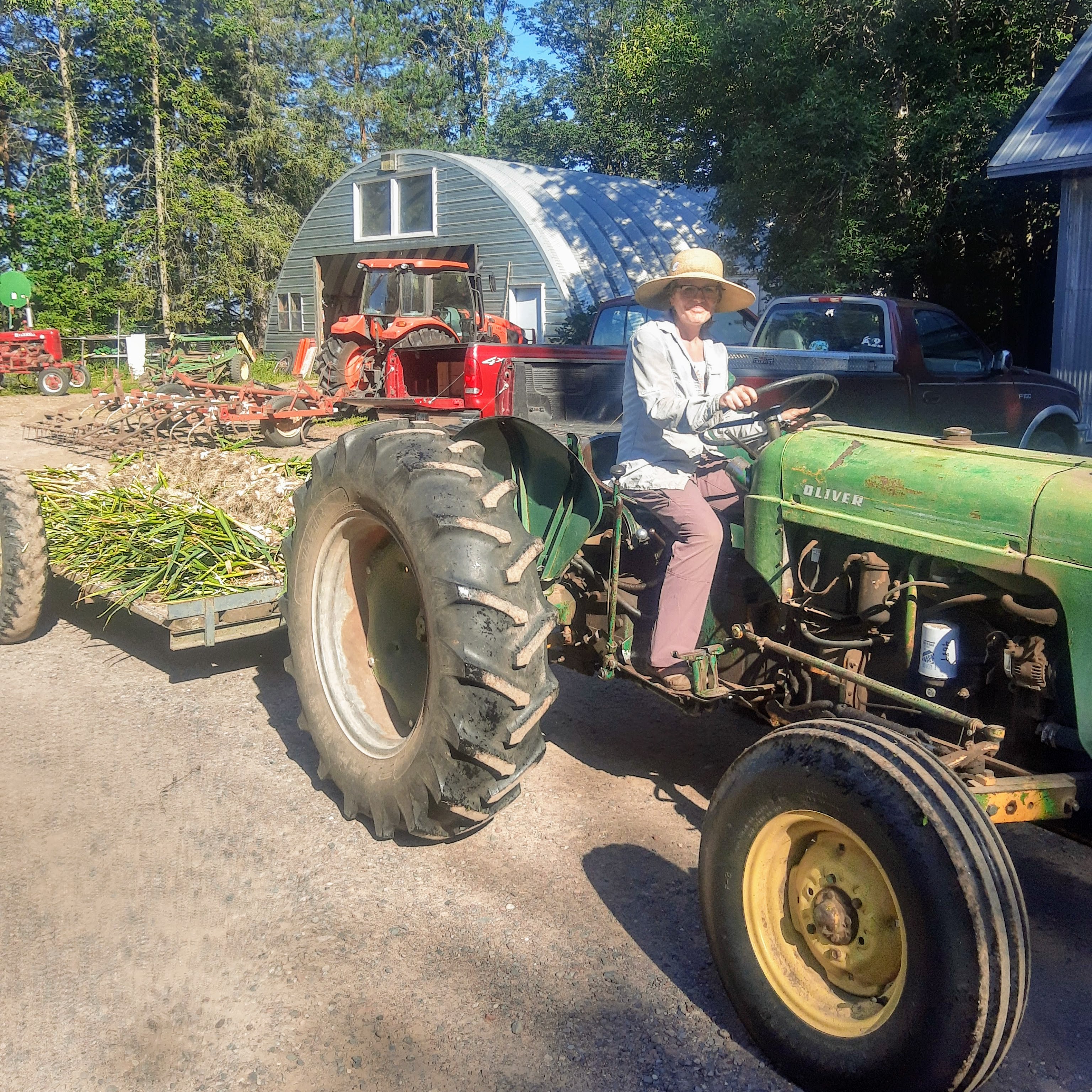
Step two: Bring in the farm crew! We pull the garlic and stack it up in piles. These piles are then loaded on a trailer and brought to the wash station.

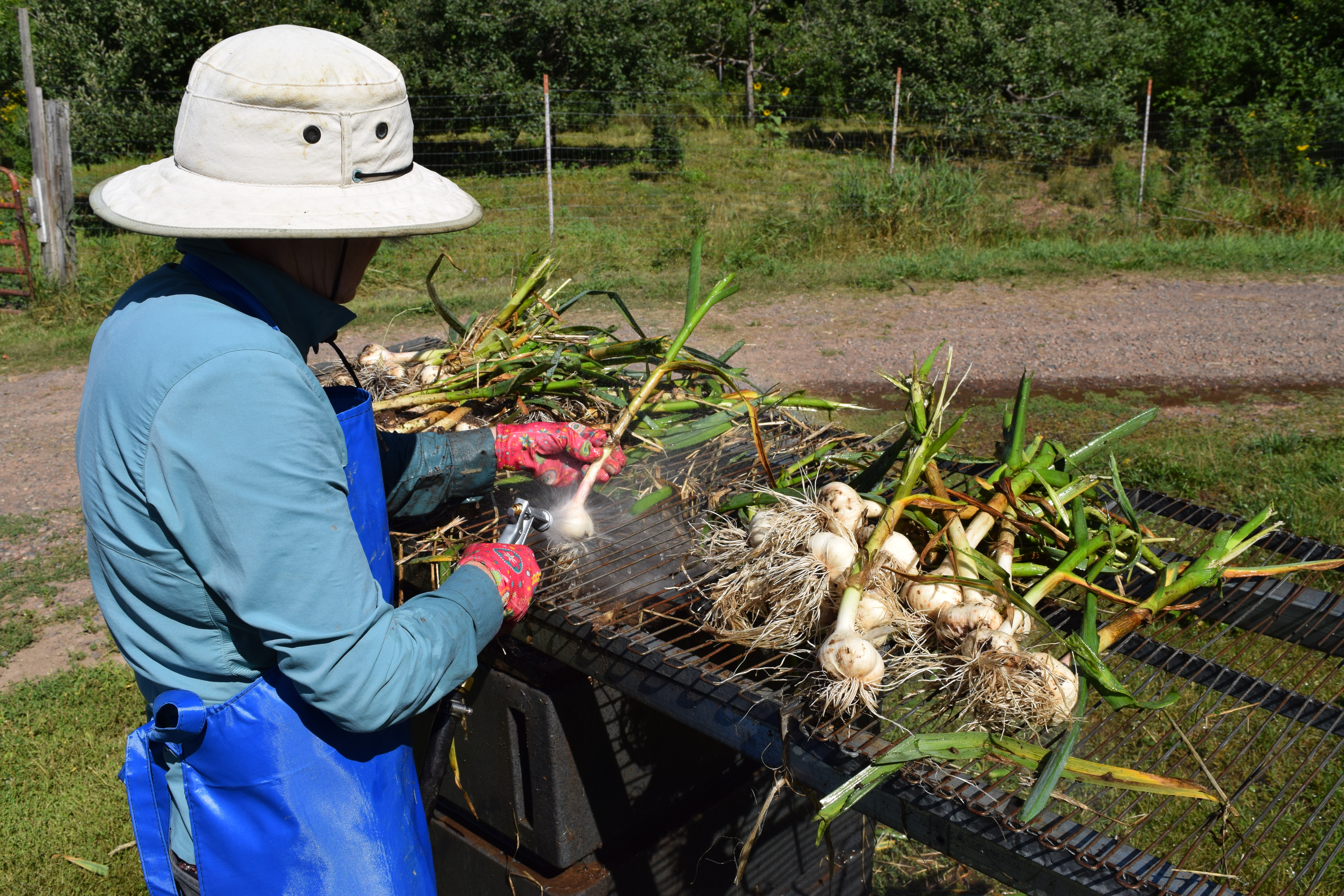
Step three: Scrub-a-dub. The garlic is washed, removing any dirt that’s still on the bulbs.

Step four: Stack and cure. In order for garlic to last into the winter it must “cure” or partially dry for a few weeks.

Garlic takes at least three weeks to cure. Then, if stored properly, garlic should last through the next spring!


For the farm crew,

Starr

Summer CSA Week 9, 2022

Emily, Ellis and Janaki packing Monday CSA boxes

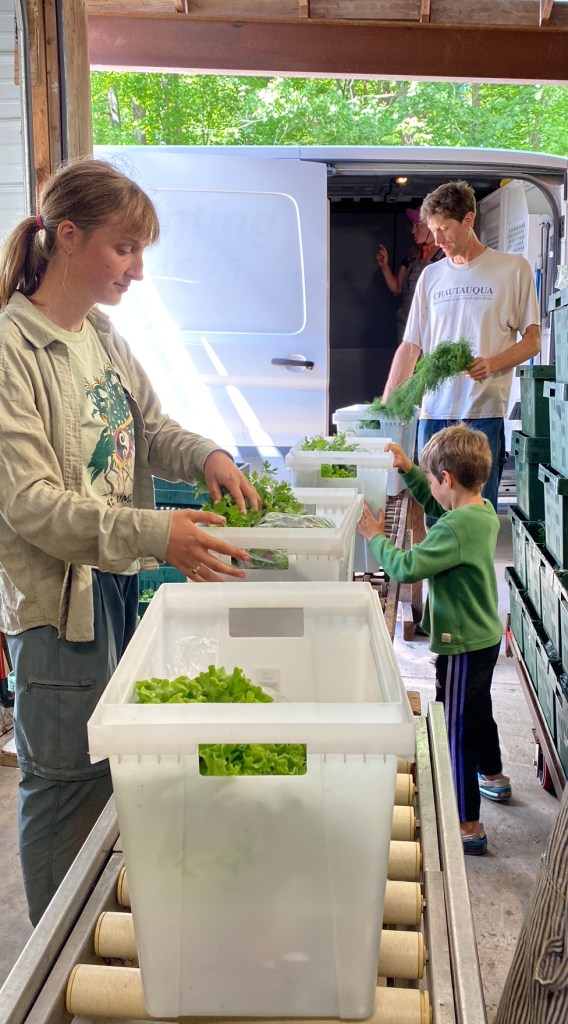
We have full and diverse box for you this week. We had all hands on deck to harvest everything in time for Monday deliveries! Annie and Ellis were even helping packing boxes. This week new in the box we have cilantro, dill, onion, hot pepper, and new potatoes. “New potatoes” are young tender potatoes.


In your share this week:

Carrots – Cilantro – Cucumber – Dill – Greens Mix – Lettuce – Onion – Snap Peas – Hot Pepper – New Potatoes – Tomato – Zucchini


Terri harvesting dill in the field.

Georgian Cilantro Sauce

This sweet, pungent sauce is a mainstay of Georgian national cuisine, often served with grilled meat, chicken or vegetables. It’s great way to use fresh summer herbs!

Ingredients

  • 2 ounces dried apricots
  • 1 cup boiling water
  • ⅓ cup shelled walnuts (1 ounce)
  • 2 to 4 garlic cloves (to taste), halved, green shoots removed
  • ¼ cup freshly squeezed lemon juice
  • ½ teaspoon salt (more to taste)
  • Freshly ground black pepper to taste
  • Pinch of cayenne
  • 2 cups cilantro leaves (2 good-size bunches), coarsely chopped
  • 1 ½ cups parsley leaves (1 1/2 bunches), coarsely chopped
  • ½ cup coarsely chopped mixed basil, tarragon, and dill
  • 5 tablespoons walnut oil (or more, to taste) (substitute with unrefined peanut oil, or olive oil)
  • ½ cup soaking water from the apricots, as needed

Instructions

  1. Place the dried apricots in a bowl and pour on the boiling water. Let sit for at least an hour, more if possible, even overnight. Drain over a measuring cup and retain 1/2 cup of the soaking water.
  2. Turn on a food processor fitted with the steel blade, and drop in the garlic. When it is chopped and adhering to the sides of the bowl, stop the machine and scrape down the bowl. Add the walnuts, and process with the garlic. Scrape down the sides of the bowl. Add the drained apricots, the lemon juice, salt, pepper and cayenne to the bowl, and process to a puree. Add the cilantro and other chopped herbs, and puree, stopping the machine to scrape down the sides several times. Combine the walnut oil and soaking water from the apricots, and with the machine running, gradually add it to the puree. Process until smooth. Transfer to a bowl, and let sit for one hour. Taste and adjust salt. Serve with beans, chicken, meat or fish, grilled or roasted vegetables, or grains.

From the New York Times.


Crushed New Potatoes

Ingredients

  • 1 pound (450 grams) baby potatoes
  • 2 tablespoons olive oil
  • 1 clove garlic crushed
  • 1 teaspoon parsley or basil
  • ½ teaspoon ground black pepper
  • ½ teaspoon salt

Instructions

  1. Boil slightly salted water, then throw your baby potatoes into the pot. Leave them to cook for 15-20 minutes or until they’re cooked through and soft.
  2. Grease your baking tray with olive oil, and get the potatoes out of the pot and onto the baking tray.
  3. Lightly crush the potatoes with a fork or a potato masher, but make sure not to over do it as you don’t want really flat pieces of potato all over your baking sheet.
  4. Using the excess olive oil on the baking tray, light brush the potatoes with the olive oil.
  5. Season with freshly ground black pepper, and sea salt.
  6. Sprinkle with either dried or fresh herbs and garlic.
  7. Bake in the oven for 10-15 more minutes at 200°C (392°F). The baking time depends on the size of your potatoes, so keep checking on them as they bake.
  8. Served Immediately. 

From Little Sunny Kitchen.


Janaki and the farm crew bagging up snap peas. Yes, he is indeed that talll!

For the farm crew,

Starr