
Happy New Year! We hope you all had a wonderful holiday season, and are enjoying all the fresh snow.
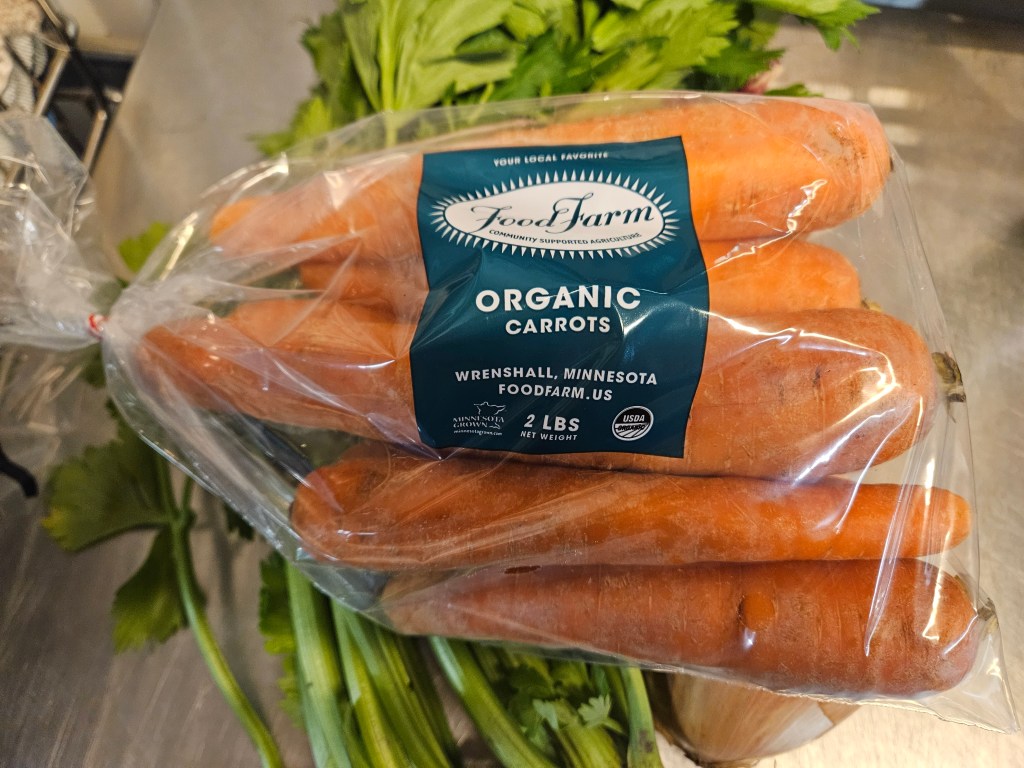
One of the big tasks over the holiday season at the farm is packing vegetables for our grocery store and restaurant partners. If you’ve recently visited one of the grocery stores in the area that stocks our produce, you may have noticed that our carrot bags have gotten an upgrade! We ran out of our old printed bags last spring and have been putting individual stickers on bags while we waited for the new batch of printed bags to arrive. The new bags are slightly wider to make them easier to pack, and we made the size of the label smaller so it’s easier to see the carrots, and we simplified the logo and color scheme to reduce printing costs. They also have ventilation holes throughout the bag so the carrots don’t get too wet inside. It was quite a process, with a lot of back and forth with printers, including a misprinted batch of 50,000 bags (yikes!), but the crew is excited to not have to do so much stickering.
Last month I mentioned we had started ordering seeds already. The next few months will be filled with more crop planning, research, and lots of learning. Last week, Janaki was talking with one of our seed reps to discuss a new variety of zucchini. A seed rep works for a supplier and their main goal is to sell seeds to farmers, but they also provide additional knowledge and support as well. Most large seed companies will also assign reps to only work in certain regions or states that way they can be extra knowledge about a farmer’s specific growing zone and conditions.
The variety of zucchini we have been growing for a while has been discontinued. This meant research to find a suitable replacement. Janaki mentioned to our Johnny’s Seed rep that we struggled with proper pollination last year. Our rep recommended a new variety that has better pollination rates especially early in the season when pollination rates are usually lowest. The rep then went one step further and also sent along information about how to enhance habitat for the specific pollinators that target zucchini.
We were worried that part of the poor pollination last year was due to the fact that all of the bees seemed to visit the melons we had planted in the same field, and skipped right over the zucchini. The information from our rep taught us that the honey bees visiting the melons are secondary pollinators of squash. The primary pollinators of Winter and Summer squash are squash bees, which are specifically attracted to squash. They live in tunnels at the base of the plants, they come out really early in the morning to collect pollen as soon as the flowers open, then they do the cutest thing of all, and take afternoon naps inside the flowers. The article gave us tons of info about the squash bees, how to protect them, and how to keep them coming back year after year. It is likely that the primary cause of poor pollination this season was the cool, wet start to the year, but hopefully the new seed variety and the information about squash bees, will improve our ability to cope with poor weather.
In your share this month:
Delicata Squash – Winter Sweet Squash – Rutabaga – Beets – Onions – Parsnips – Orange Carrots – Purple Carrots – Red Potatoes – Russet Potatoes
Honey Roasted Beets and Carrots
INGREDIENTS
4 medium carrots, diced
1 tbsp balsamic vinegar 1 tbsp olive oil
2 tbsp clear honey
4 pre-cooked beets, quartered
25g pumpkin seeds (optional)
handful fresh herbs, such as parsley or basil to serve
1 : Heat the oven to 180c/gas 4.In a bowl, toss together the carrots, vinegar, honey and olive oil. Spread on a baking tray, then roast for 30 minutes.
2 : Remove 5 minutes before the end of cooking time, add the beetroot to the tray and return to the oven. Once cooked, remove form the oven and leave to cool a little, then toss with the pumpkin seeds and herbs.
Rutabaga Fries
- 1 rutabaga cut into ½-inch fries
- 2 tablespoons olive oil
- 2 teaspoons paprika
- 1 teaspoon garlic powder
- ½ teaspoon salt plus more for serving
- ¼ teaspoon black pepper
Preheat the oven to 425°F and line a large baking sheet with parchment paper. Combine rutabaga fries with oil, paprika, garlic powder, salt and pepper on the prepared sheet pan, and toss until evenly coated. Arrange the rutabaga fries on the baking sheet in a single layer leaving space in between them. Bake for 30-35 minutes, flipping the rutabaga fries halfway through; until they are crisped on the outside and cooked through on the inside.
For the farm crew,
Jennifer








 Food Farm