Summer CSA Week 16

It feels like June was just a few days ago, and here we are in our 16th week of CSA shares! Maybe that’s because the weather the last few weeks have felt more like Summer than Fall. Sunday night’s chill was a nice reminder that it is indeed officially Fall, but we’re looking forward to another beautiful week to get things done.

For most people, this time of year means slowing down and getting cozy as the days shorten and the nights lengthen. For those of us lucky people in agriculture, we won’t be slowing down any time soon. The Fall equinox marks the start of the busiest time of year for us (and also the perfect time to sign up for a Winter Share)!

Over the next few weeks, we’ll say goodbye to our Summer crops such as melons, zucchini, and cucumbers. Those fields will soon go from green to brown, then back to green as we make our final harvests, till in the plants, and seed our cover crop. We will begin to say hello to more of our Fall and winter crops such as leeks, rutabaga, parsnips, and winter squash. This also means we will be spending lots of time cleaning and sanitizing storage space to put all of these crops for the winter. 

With the colder nights, this time also begins to signal a flavor change in the crops. The colder weather causes some crops to convert a portion of their starches into sugars. The addition of sugar causes the freezing point of the water inside the plant to be lowered. This now means the plant can withstand colder temperatures before it’s ruined. The plants most known for this are carrots, kale, and beets. This is one of the reasons why we have a spring/Summer planting and a fall planting of these veggies. The early planting becomes available at a time when we are all excited (and possibly a little desperate) to add some color back into our food after the long winter. The early plantings add more of an earthy flavor to dishes, while the later planting adds a little bit more sweetness. Getting to enjoy the flavor changes in the vegetables is one of the many beautiful things about farming.

Another exciting change happening on the farm is that our smaller hens have started laying eggs! For those of you with an egg share, you may have already noticed this last week when one or two smaller eggs showed up in your share. These are thanks to our little ladies who are just starting to lay. We got these hens back in early May. They’ve spent the last 4 months growing and exploring different areas of the farm. They start out in a fully enclosed shed to keep them warm, and protected from the elements. After about a month, we move them to a mobile chicken coop that we place over one of our fields we aren’t currently using. This allows them to start getting used to the wind and change in temperature while still being fully protected from the rain. It also introduces them to insects and vegetation. It’s beneficial for the farm because they are producing free fertilizer for us which adds nutrients back into the field. Once the hens get bigger and start showing signs of being adventurous (aka once they start trying to escape), we move them to a fenced off area with a larger mobile coop. This allows them to roam around in a larger area during the day, but still have a sheltered place to protect them from the rain and sun. The mobile coop also houses their egg boxes, food and water. It also is fully enclosed with a lockable door for protection at night. The Farm has a surprisingly high amount of coyotes, wolves, raccoons, and foxes close by, so keeping the chickens locked up at night is a must! 

In your shares this week:

Carrots – Cucumber – Northeaster Pole Beans – Leeks – Lettuce – Melons – Onions – Parsley – Red Peppers – Russet Potatoes – Winter Squash – Tomatoes – Zucchini

Winter Squash Crumb Cake

Streusel:

1/2 packed cup of light brown sugar

1/2 c flour

1 tsp pumpkin spice blend

1/4 cup unsalted butter cut into cubes

Cake:

1 cup light brown sugar

2 large eggs

2 cups pureed squash

1/4 unsalted butter, melted

1/4 cup neutral oil

1 Tbsp pumpkin spice blend

1/2 tsp salt

1 tsp baking powder

1/2 tsp baking soda

1 1/2 cups flour

1.  Heat oven to 350 degrees.  Grease 8″ square or 9″ round baking pan and line with parchment paper.

2.  Make the streusel:  in a small bowl, combine sugar, flour, spice and salt.  Add the butter then pinch the butter into the four mixture with your fingertips until the mix forms pebble-size crumbs.

3.  Make the cake:  in a large bowl, whisk the sugar and eggs until pale and foamy, about 1 minute.  Add the squash puree, melted butter, oil, pumpkin spice and salt.  Whisk until combined and smooth.  Whisk in the baking powder and baking soda then whisk in the flour. 

4.  Transfer the batter to the prepared pan, smooth the top and tap on the counter a few times to release any large air bubbles.  Sprinkle the streusel evenly over the top.

5.  Bake the cake until puffed and golden and a toothpick inserted into the center comes out clean (40-45 minutes).  Set the cake in the pan on a rack to cool.  After about 15 minutes remove the cake from the pan and set it on a rack to cool completely

Turkish- Style Braised Leeks

  • 3 large leeks, cleaned well and trimmed, whites and tender green parts sliced into ¼-inch rounds
  • 2 to 3 carrots, peeled and cut into ¼-inch rounds
  • 3 large garlic cloves, minced
  • Kosher salt and black pepper
  • 1 teaspoon cumin
  • 1 teaspoon Aleppo pepper
  • 2 tablespoons rice, I used Arborio rice, rinsed
  • Juice and zest of 1 large lemon
  • ½ cup chopped fresh parsley
  • Olive oil
  • In a medium saucepan heat ¼ cup extra virgin olive oil over medium-high heat until shimmering. Add the leeks, carrots, and garlic and season with kosher salt, black pepper, and the spices. Toss around and cook for about 5 to 7 minutes, stirring regularly as needed until the leeks and carrots soften just a bit.
  • Add 2 cups of water, the rice, and lemon juice. Bring the water to a boil, then lower the heat and let simmer for 15 to 20 minutes or until the rice is fully cooked and the vegetables are fully tender.
  • Let the leeks and carrots cool down to room temperature, then stir in the fresh parsley, lemon zest, and another good drizzle of extra virgin olive oil.

Tomato-Green Bean Salad with Chickpeas, Feta and Dill

salt and pepper

3/4 lb green beans (cut diagonally into 1in pieces)

2 Tbsp lemon juice

1 Tbsp red wine vinegar

1 garlic clove (or less), minced finely

3 Tbsp olive oil

2 cups tomatoes cut into bite sized pieces

2 cups cooked chickpeas (1 can), drained

1/2 cup crumbled feta

2-3 Tbsp roughly chopped dill

pinch of dried oregano

1.  bring medium saucepan of water to boil over high heat.  Add 1 tsp salt then green beans.  Cook until beans are tender-crisp (about 2 minutes).  Transfer to large bowl of cold water.  Drain in colander and blot dry.

2. Make dressing by combining lemon juice, vinegar, garlic, pinch of salt and some black pepper in a small bowl.  Whisk in the olive oil.

3.  In a large salad bowl, combine tomatoes, beans and chickpeas.  Season to taste with salt and pepper.  Add dressing and stir to coat.  Add feta and toss once more.  Let marinate for 10-15 minutes before serving.

4.  Before serving, sprinkle generously with dill and oregano

For the farm crew, 

Jennifer
Summer CSA Week 17, 2023

It appears that we’ll be experiencing a couple of unexpectedly warm days following the rainy spell that persisted throughout last week. It sure would have been nice to have received some of this rain a little more spaced out and during the summer months, but the plants seem to be hanging on nonetheless. After a bout of rain, it’s essential for plants to have an opportunity to dry off to prevent the onset of disease. Rain can leave leaves and stems damp, creating an ideal environment for fungal and bacterial pathogens to thrive. If moisture lingers on plant surfaces for extended periods, it can weaken the plant’s defenses, making it more vulnerable to infections. Adequate air circulation and sunlight play crucial roles in allowing plants to dry naturally, effectively reducing the risk of diseases.

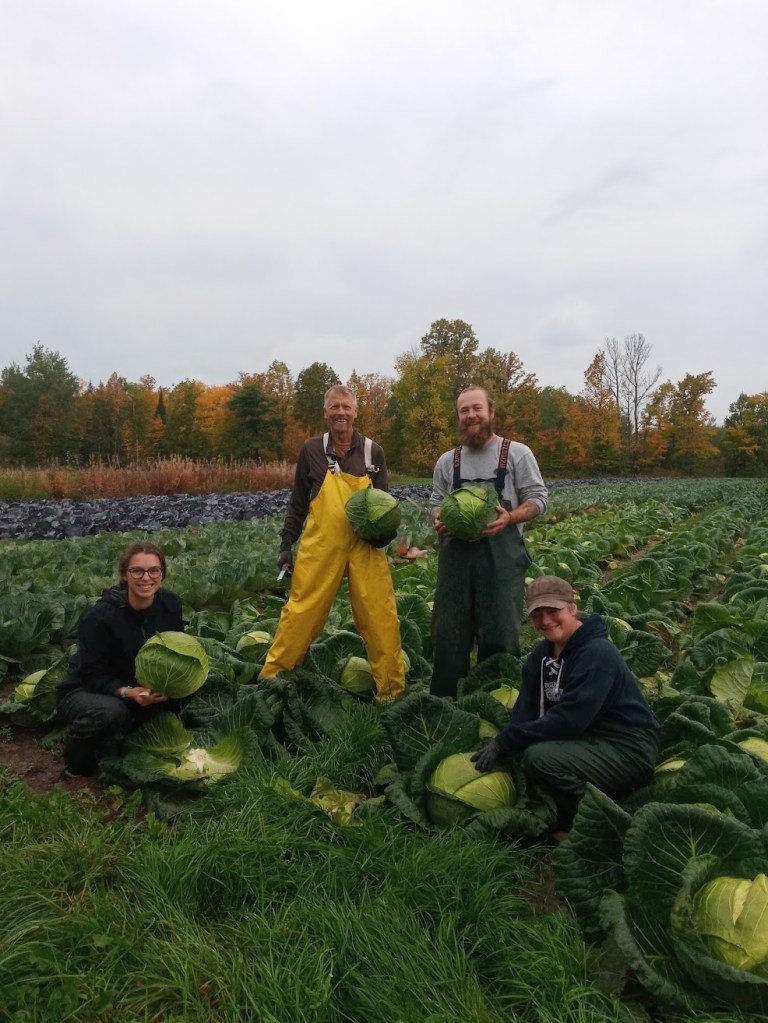
We spent the day Friday harvesting storage cabbage, the biggest one we got was 14 1/2 pounds! Fortunately we sell about 6000 pounds per year for our friends over at Spirit Creek Farm for their delicious kraut and kim chi, and a few restaurants also use it for their cole slaw and kraut as well. So don’t worry, you won’t be getting any cabbages that big in your share!


In your share this week:

Broccoli – Carrots – Cilantro – Cukes – Leeks – Onions Red Peppers

Hot Peppers – Potatoes – Spinach – Delicata Squash – Tomatoes Pumpkins!


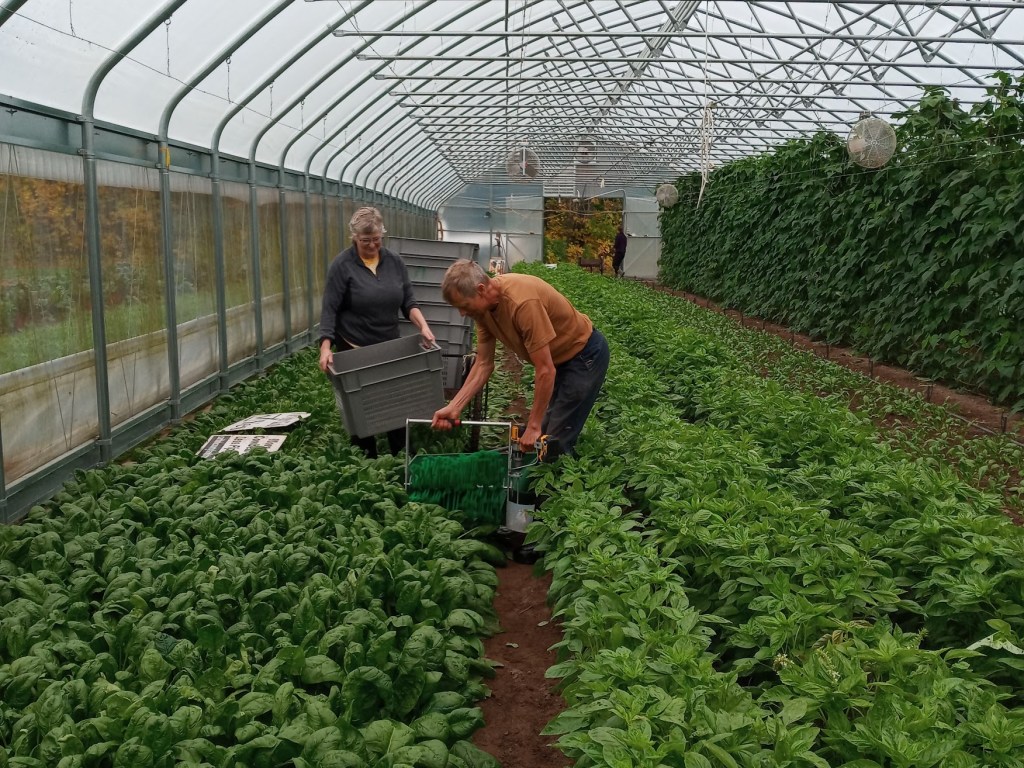
A note regarding this week’s spinach: There has been a recent congregation of cut worms gathering in the greenhouse that our current planting of spinach calls home. While it may be disheartening to discover cutworms feasting on our spinach plants, there’s no need to despair. Cutworms are a common garden pest known for their big appetite, but their presence doesn’t render your spinach inedible. With proper care, you can still enjoy the greens. Simply pick out any affected leaves that we may have missed in the commotion of harvesting, give the remaining spinach a good wash to remove any potential residue, and it will be perfectly safe to include in your meals.


Apple Spinach Salad, from Gimme Some Oven

Salad Ingredients:

5 ounces fresh spinach
2 small apples, cored and thinly sliced
half of a small onion, thinly sliced
1/2 cup chopped walnuts, toasted
1/3 cup dried cranberries
3 ounces crumbled goat cheese

Apple Cider Vinaigrette Ingredients:

1/4 cup extra virgin olive oil
2 tablespoons apple cider vinegar
2 teaspoons honey
1 teaspoon Dijon mustard
1 small garlic clove, peeled and minced
a generous pinch of salt and black pepper

  1. Make the vinaigrette. Combine all of the vinaigrette ingredients together in a bowl and whisk vigorously (or shake them together in a mason jar) to combine.
  2. Toss the salad. Add spinach, apples, onion, walnuts, dried cranberries, and half of the goat cheese to a large bowl.  Drizzle with the vinaigrette, and toss to combine.
  3. Serve. Serve immediately, garnished with the remaining goat cheese, and enjoy!

Delicata Squash Gratin, from Feasting At Home

Yield: 8 servings

2lb delicata squash
2 tablespoons olive oil or butter
2 medium leeks, thinly sliced
4 garlic cloves, rough chopped

15 sage leaves, chopped (8 more for crispy sage leaf garnish – optional)
1 cup heavy cream (or sub coconut milk)
1/2 teaspoon salt and peppers
1/2 teaspoon nutmeg
1/2 teaspoon onion powder, optional

1/4 cup water
3 ounces gruyere cheese (or sub parmesan)
1/2 cup walnuts, chopped

  1. Preheat oven to 375°
  2. Prep Delicata: Thinly slice the squash into 1/8 -inch thick rounds. When you get to the seeds, scoop them out and continue slicing.
  3. Cook the Leeks: Slice and rinse the leeks- the moisture here will help them soften. Heat oil or butter in a large skillet over medium heat. Sauté the leeks, for 8-10 minutes, covering part way through so they soften. Add the garlic, sage and a pinch of salt, cook 2-3 more minutes. Turn heat off.
  4. Whisk: the cream with the salt, pepper, nutmeg and onion powder in a medium bowl.
  5. Layer: Grease a large 9 x 13-inch baking dish or 11-12 inch round baking dish. A big shallow pan is best to ensure even cooking. Grease the pan, add 1/4 cup of water to the bottom of the pan. Layer with squash overlapping slightly. Sprinkle with half of the sautéed leeks. Drizzle with 1/3 cup cream mixture. Sprinkle with one ounce of Gruyere (about 3-4 tablespoons grated). Add the 2nd layer of squash- using up any misshapen pieces here. Scatter with the remaining leeks. Drizzle with 1/3 cup cream mixture and sprinkle with grated gruyere cheese. Add the final layer of squash, overlapping and pressing down so not domed in the middle. Drizzle the remaining cream mixture over top, lightly sprinkle with cheese and the walnuts. Give the pan a little shake, press down in the center again so gratin is level, not domed. Cover, using parchment first as a barrier, under the foil if the foil touches the top of the gratin.
  6. Bake 45 minutes covered. Uncover, confirming the delicata is tender using the tip of a knife, then bake at 400 F uncovered, 15 minutes until beautifully golden
  7. To make the crispy sage leaf garnish, heat 1-2 tablespoons oil or butter in a pan over medium heat, add 8 whole sage leaves, saute each side 30 seconds or so until crisp (try a tester first) and place on a paper towel to cool for a couple of minutes. Arrange over the gratin.

For the farm crew,

Charlie

Summer CSA Week 14, 2023

The Food Farm had a bustling week and weekend! On Saturday, we took part in the annual Lake Superior Harvest Festival, which brought together over 10,000 people of all ages. The event is dedicated to advancing sustainable local food production, recognizing it as a pivotal element in fostering a more robust economy, preserving the environment, and strengthening the community in the Lake Superior region.

A lot of extra harvesting goes into preparing for such a big market, but it all feels worthwhile when we get to see so many smiling faces enjoying the fruits of our labor 🙂

In addition to all the extra harvesting that took place, the crew also managed to trim & clean the garlic that has been curing since being pulled from the fields back in July. It is at this time that Dave carefully selects the best looking heads to be put back in the ground come October.


In your share this week:

Broccoli – Carrots – Cucumber – Leeks – Lettuce – Melons – Onions

Parsley – Red & Green Peppers – Russet Potatoes – Tomatoes


You will notice the new addition of leeks & russet potatoes this week. As the weather begins to cool down, this dynamic duo has arrived just in time for the start of soup season. The recipe that first comes to mind is the ever-so-comforting potato leek soup. I know I am looking forward to whipping up a double batch when I get home from work today!

Also included in the share is a large quantity of Carmen red peppers. It may be more than most families get through in a week, so I’ve included Jane Fisher-Merritt’s delicious marinated pepper recipe. Enjoy 🙂


Potato-Leek Soup, from Serious Eats

Yield ~ 6 servings

2 tablespoons unsalted butter
2 large leeks, white and pale green parts only, rinsed and roughly chopped
1 quart homemade or store-bought low-sodium chicken stock
2 medium russet potatoes, peeled and cut into quarters (about 3/4 pound)
1 bay leaf
Kosher salt and freshly ground black pepper
1 cup buttermilk
1/2 cup heavy cream
1/2 teaspoon freshly ground nutmeg
Sliced chives or scallions, for serving

  1. Melt butter in a large saucepan or Dutch oven over medium heat. Add leeks, reduce heat to low, and cook, stirring frequently, until very soft but not browned, 10 to 15 minutes.
  2. Add stock, potatoes, and bay leaf, and season lightly with salt and pepper. Bring to a boil over high heat, reduce to a gentle simmer, cover, and cook until potatoes are fall-apart tender, about 15 minutes.
  3. To Finish With a Ricer (Recommended): Remove potatoes from soup using tongs and transfer to a bowl. Set aside. Discard bay leaf. Transfer remaining soup to a blender. Slowly increase blender speed to high and blend until completely smooth, about 2 minutes. Return soup to a clean pot.
  4. Press potatoes through a potato ricer or food mill into the pot with the soup. Whisk in buttermilk and heavy cream. Whisking frequently, bring soup to a simmer over medium-high heat. Whisk in grated nutmeg. Season to taste with salt and pepper and serve with chives or scallions.
  5. To Finish With a Blender (Faster): Add heavy cream and buttermilk to pot. Discard bay leaf. Working in batches if necessary, transfer soup to a blender. Slowly increase blender speed to high and blend until completely smooth, about 2 minutes. Return soup to a clean pot, pressing it through a fine-mesh strainer with the bottom of a ladle if a smoother texture is desired. Whisking frequently, bring soup to a simmer over medium-high heat. Alternatively, chill completely and serve cold. Whisk in grated nutmeg. Season to taste with salt and pepper and serve with chives or scallions.

Marinated Peppers, from Jane Fisher-Merritt

2 cups vinegar
2 cups olive oil
2 cups water
4 tablespoons sugar
2 tablespoons salt
(+ 1 clove garlic & 1/2 teaspoon oregano in each jar)

  1. Cut peppers into 1/8″ -1/4″ slices. Pack into hot sterile jars w/ 1 clove garlic & 1/2 teaspoon oregano in each jar.
  2. Combine vinegar, olive oil, water, sugar & salt in a medium saucepan. Bring to a hard boil.
  3. Pour brine mixture over peppers, leaving a 1/2″ of headspace.
  4. Process for 15 minutes in a boiling water canner.

For the farm crew,

Charlie

Summer CSA Week 16

Howdy food sharers,

This past week was the week of squash. To be honest, I’ll probably never see that much squash again in one place. On Wednesday we harvested around 8,000 pounds of Delicata alone. As much as it feels like it will never end when we are in the middle of harvesting, the end results are very satisfying to look at. 4 tons of Delicata sitting on drying racks is a sight for sore eyes (and arms). It is also very funny to be using old bakery racks as storage racks. They sure do get the job done though.

Delicata are not the only variety of squash we are growing this year. The others include: Winter Sweet, Acorn, Kabocha and Sunshine. To be honest I think I would name my pet after these squashes. Maybe not Delicata though… I sometimes think that squash is such an interesting crop so I decided to do a little research to spice up this newsletter. Here are some fun facts about squash:

  • The name “squash” comes from a Native American word “askutasquash” which means “eaten raw or uncooked” which is….ironic. Or at least I have always cooked my squash.
  • Squashes are some of the oldest crops. Some estimates are at 10,000 years old. 
  • The regions of Mexico and surrounding Central American countries are where squash is originally thought to come from. 
  • We grow both summer and winter squash here at Food Farm. Summer squashes are harvested when they’re immature and their skins are still soft. For example, zucchini is a well-known summer squash. Winter squashes are harvested when their skin is hard, making them suitable for long term storage.

Pretty soon your summer CSA will be over and your household may start to accumulate more and more squash. Pumpkins will be on their way to you soon. Jack-o-lanterns will be carved. Pies will be baked. Although this is the beginning of the end of our time being your summer farmers, we still have a LOT to get done on the farm before freeze-up. Best of all, the autumn equinox is on Wednesday. According to the MN DNR Fall Color Finder, between 10-25% of our trees in the area are turning color. Fall has quickly become my favorite time of the year since I started farming.

I’m keeping this newsletter short and sweet, just like our acorn squash.

Thanks for tuning in,

Emily 

In your shares this week: Arugula – Beans – Carrots – Cucumbers – Red Russian Kale – Leeks – Onions – Parsley – Peppers – Potatoes – Acorn and Sunshine Squash – Tomatoes – Zucchini

Chinese Chard with Almonds by TasteofHome

Ingredients

1 bunch chard (about 1 pound), chopped (the Red Russian Kale this week is tender enough to use in place of Chard)

1 tablespoon olive oil

1 large sweet red pepper, cut into strips

1 large tomato, diced

1 small red onion, diced

3 garlic cloves, minced

1 tablespoon minced fresh gingerroot

1 tablespoon hoisin sauce

3/4 teaspoon Chinese five-spice powder

3/4 teaspoon kosher salt

Dash crushed red pepper flakes

2 tablespoons lemon juice

1/2 cup sliced almonds, toasted

Directions

In a large saucepan over medium-high heat, bring 2 in. of water to a boil. Add chard; cook, covered, until crisp-tender, about 5 minutes. Drain; set aside.

In same saucepan, heat oil over medium-high heat. Add pepper, tomato and onion; saute until pepper is crisp-tender, 3-4 minutes. Add garlic; cook 1 minute more. Stir in next five ingredients; add cooked chard. Cook and stir until pepper is tender, 3-4 minutes ; add lemon juice. Top with almonds.

Kale and Leek Gratin by Food & Wine

3 pounds kale, de-stemmed

3 tablespoons extra-virgin olive oil 

5 medium leeks, white and tender green parts only, sliced 1/4 inch thick

Salt

3 garlic cloves, minced

6 tablespoons unsalted butter

2/3 cup all-purpose flour 

1 quart whole milk

1/2 cup shredded Gruyère cheese

1/2 cup freshly grated Parmigiano-Reggiano cheese 

1/4 teaspoon freshly grated nutmeg

Freshly ground pepper

Directions

In a large pot of boiling water, blanch the kale in batches until wilted, about 1 minute. Drain, squeeze dry and chop it.

Heat the oil in the pot. Add the leeks and a pinch of salt. Cover and cook over moderately low heat, stirring, until tender, 7 minutes. Uncover, add the garlic and cook, stirring, until fragrant, 2 minutes. Add the kale, season with salt and remove from the heat.

Preheat the oven to 425°. Butter a 10-by-15-inch baking dish. In a large saucepan, melt the butter. Stir in the flour over moderate heat to form a paste. Gradually whisk in one-third of the milk and cook, whisking, until the mixture starts to thicken. Repeat two more times with the remaining milk. Bring the sauce to a boil, whisking constantly. Reduce the heat to low and cook, whisking often, until thickened and no floury taste remains, 15 minutes. Whisk in the cheeses and the nutmeg; season with salt and pepper. Mix the sauce into the leeks and kale. Season with salt and pepper.

Transfer the mixture to the prepared baking dish. Bake in the upper third of the oven for about 25 minutes, until bubbling and golden brown on top. Let rest for at least 10 minutes before serving.

Summer CSA Week 14

This week was a big week for our dear friends the alliums. Alliums are a genus of plants that include onions, garlic, leeks, and shallots. Onions! Enough to make a grown man cry. To say that these crops are the very backbone of savory dishes in the Midwest is an understatement. Not only do they provide great flavor and texture to our food, they also make the air smell great when you harvest them for several hours. And what do you say to a small onion that has helped you? Thanks shallot. We also started to sort out seed garlic which involves picking out the most perfect heads of garlic to use for next years garlic crop. This process, over the course of years, helps us yield the best looking heads of garlic to give to our dear members and the community.

Soup season is just around the corner, unless you’re like me and believe soup shall not be limited to colder weather. Either way, I feel compelled to throw in a decent soup recipe in these newsletters each week. They’re great for many things but amazing for using up random veggies in your fridges. Great for budgets and your stomachs. This may very well be the beginning of canning season for your household, for which soup is a fantastic candidate. Our dear friend the leek has been patiently waiting it’s arrival in your shares. And you had better believe there’s a soup recipe in this newsletter whose sole intention is to use a decent amount of leeks. Personally, I think the leeks this year look way bigger than last years. This is probably due to the warmer temperatures we have been experiencing.

This weekend you’ll find the Food Farm crew at the Sustainable Farm Association’s annual Harvest Festival at Bayfront Park in Duluth. Have you been wishing to have just a few more heads of broccoli this year? Perhaps you’re wishing for some more tomatoes? Fear not, as we will likely have a wide variety of food available to you. My favorite thing about these festivals as a consumer is seeing the value added goods that people create. Every year there is something new to try and it’s even better knowing it’s local. The annual Harvest Festival is a fun and great way to connect producers directly to consumers. Aside from these newsletters, there are only a handful of ways in which we are able to directly connect with our share members and the general public. We hope to see all of you there! We’ll be there from 10am – 4pm.

Some exciting news from our newest farm hens, they’ve laid their first eggs! These relatively tiny eggs will not be included in the egg shares yet. However, they are a reminder that these chickens play a valuable role on the farm. They provide our members with food and our fields with fertility. Plus they’re cute and full of personality – what more could you ask for in your coworkers?!

If anyone has a soup recipe suggestion, please do not be shy. We must all prosper in the richness that is liquid food.

Your local soup enthusiast,

Emily

In your shares this week:

Broccoli – Carrots – Cilantro – Cucumbers – Garlic – Greens Mix – Leeks – Onions – Hot Pepper – Red Peppers – Potatoes – Tomatoes – Zucchini

Bumble bees are fond of our bean plants and their flowers. I call this photo: “Bumble Bean”

Potato Leek Soup from Tasty

  • 2 tablespoons butter
  • 3 large leeks, chopped
  • 3 cloves garlic, minced
  • 2 lbs potato, cubed
  • salt, to taste
  • pepper, to taste
  • 6 cups vegetable broth
  • 2 cups water
  • 2 sprigs fresh thyme
  • 1 bay leaf
  • ¼ cup fresh chives, chopped
  • hot sauce, to taste
  1. Melt butter on medium heat in a large pot. Add the chopped leeks and stir until coated with butter.
  2. Cover the pot and lower heat, cook for around 10 minutes until the leeks have softened.
  3. Increase to medium-high. Add garlic, potatoes, salt, and pepper. Cook for 1 minute, then add vegetable broth, water, thyme, and bay leaf. Bring to a boil.
  4. Lower heat and cover pot with a lid and simmer for 15 minutes, or until potatoes are tender and easily speared by a fork.
  5. Uncover and remove thyme and bay leaf.
  6. Use an immersion or countertop blender to blend the soup until smooth.
  7. Stir in chives and hot sauce (optional).
  8. Allow to cool 2 minutes and serve

Cucumber Avocado Salsa by To Simply Inspire

  • 1 large cucumber peeled, seeded and finely chopped
  • 1 avocado finely chopped
  • 1 medium tomato finely chopped and seeded
  • 1/4 cup red onion finely chopped
  • 2 – 3 tablespoon fresh cilantro finely chopped
  • 1 garlic clove minced

For the sauce:

  • 1/4 c reduced-fat sour cream
  • 1-1/2 tsp lemon juice
  • 1-1/2 tsp lime juice
  • 1/4 tsp ground cumin
  • 1/4 tsp salt
  1. In a medium bowl, combine the first six ingredients and gently toss
  2. In a separate bowl, combine the sour cream, lemon juice, lime juice, cumin and salt.
  3. Pour over cucumber mixture and gently toss to coat.
  4. Serve with tortilla chips.

Summer CSA Week 14

The extra hurry-hurry of fall on the farm is starting now. We have had a new crew member join our ranks as we’ve had to fill holes in the schedule, and still there is not enough time in the day, most days. We are starting to harvest almost all the time now: keeping the root-cellar stocked for the CSA and our wholesale customers with carrots, beets, potatoes and cabbage. We hope you’ll enjoy the baby carrots in your share today–we had to begin harvesting the second planting before they have completely sized up, so you’ll be getting a bunch of snack sized ones this week and next. Zucchini and cucumbers have had a tough time this year and are starting to fade already, even though frost has not showed up yet. With more produce coming out of the field each week, we’re also working to keep up with pallet box washing, knowing that soon instead of needing one or two at a time, we’ll need 6, 12, 20 in a day.

I love this time of year on the farm. I love when it’s cooler, I love looking over beds and seeing them full of produce early afternoon, and empty by evening. I love getting into a rhythm of harvest-wash-store, repeat, almost every day. Sometimes it can feel like the harvesting takes up an awful lot of time, and couldn’t we just get something done if it weren’t for all these veggies… but then I remember that the harvest is the whole reason we do what we do. Harvest happens, so that your breakfast, lunch and dinner can happen.

Thank you for participating in our farming with us by providing purpose for our veggies! What a change in the bounty from early June to now- so much variety, and so many options of what to make, or store for later. We hope you enjoy the share, and find some (warm and cozy?) ways to enjoy the food.

For the farm crew,

Karin


In your share this week:

Basil – Beets – Carrots – Cucumbers – Garlic – Greens Mix – Leeks – Onions – Red Pepper – Red Potatoes – Tomatoes – Zucchini


Sheetpan Chicken with Cabbage and Leeks

From The Leek and the Carrot

Serves 6-8
Takes 1 hour

1 tablespoon toasted sesame oil
1/4 cup olive oil + more for drizzling
3 tablespoons soy sauce
1 tablespoon rice vinegar
1 tablespoon sriracha, optional
Kosher salt
Freshly ground black pepper
4 bone-in, skin-on chicken thighs
6-8 bone-in, skin-on drumsticks
1 head cabbage
1 head garlic, separated and peeled
3 leeks, white and pale green parts only, cut int 1-inch thick slices

  1. Preheat the oven to 425 degrees.
  2. In a large bowl combine oils, soy sauce, vinegar and sriracha. Place chicken in a second bowl. Sprinkle generously with salt and pepper and then pour 1/4 cup of the oil mixture over the chicken. Let it sit while you prep the veggies.
  3. Cut the cabbage in half through it’s core. Keep halving and slicing the whole head of cabbage until you wind up with lots and lots of wedges (all no thicker than 1-inch). Some pieces of cabbage will shred and fall apart as you cut the cabbage, but it will be fine. Add cabbage to first large bowl (the one with the remaining sauce not the chicken) along with peeled garlic cloves and sliced leeks. Toss to coat veggies with sauce and season with a bit of salt and pepper.
  4. Add chicken to large baking sheet and roast in preheated oven for 10 minutes. Remove pan from oven and nestle chicken with vegetables. It will feel like a lot and you’ll need to nestle the vegetables under the chicken a bit. That’s fine! Roast for 35-40 minutes longer until juices have reduced, veggies begin to caramelize and the skin on the chicken begins to crisp.
  5. Serve veggies and chicken together (atop mashed potatoes) with any residual sauce. Season with salt and pepper as desired.

Potatoes Anna

From The Smitten Kitchen

1/2 cup finely grated aged Pecorino Romano
1 tablespoon potato starch or cornstarch
1/2 teaspoon fine sea or table salt, or to taste
1/2 teaspoon finely ground black pepper, or a larger amount coarsely ground
3 tablespoons unsalted butter, melted, or olive oil
2 pounds potatoes, peeled, cut into 1/8-inch-thick, ideally on a mandolin
8 cups loosely packed arugula
1 tablespoon (15 ml) olive oil
2 teaspoons (10 ml) white wine vinegar

Assemble the potatoes: Heat your oven to 375°F. Combine the cheese, potato starch or cornstarch, salt, and pepper in a small dish. Taste a pinch; you want it to have a strong salty-peppery kick, because it’s going to be distributed all over the galette.

Pour 1 tablespoon butter or oil into the bottom of a 9-inch-diameter cast-iron or ovenproof skillet, and swirl it up the sides. Arrange the potatoes in overlapping concentric circles in a single layer at the bottom of the pan. (This will use approximately a quarter of your sliced potatoes.) Drizzle with 1 teaspoon butter or oil, and sprinkle with 2 tablespoons of the cheese-pepper mixture. You’ll need to repeat this three or four times to use up your potatoes (depending on their size). At the end, you should have about 1 tablespoon cheese-pepper mixture left over; reserve this. Drizzle any remaining melted butter over the top.

To bake: Lightly coat a piece of foil with nonstick spray and cover the skillet tightly with it. Put in heated oven for 35 minutes, at which point the potatoes will be almost tender. Use potholdered hands to press firmly on the foil to compact the potatoes a bit. Remove and reserve the foil and bake for 25 to 30 minutes more, until lightly brown all over. Press again with the foil, remove, then briefly run under the broiler for an even golden-brown finish.

To finish and serve: While the galette bakes, toss the arugula with the olive oil and vinegar, keeping the dressing very light.

Once the galette is out of the oven, let it rest in the skillet for a few minutes before running a knife around to ensure that it is loose. Gently tip the skillet over your sink to drain any excess butter or oil. Invert it onto a plate or cutting board, then flip right side up. Cut the galette into wedges, then top with the dressed greens, and sprinkle with the reserved cheese-pepper mixture.

Do ahead: This galette can be made up to 3 days in advance. Rewarm at 350 degrees for 15 minutes with foil on top.

Summer CSA, Week 16

Honey Boat is a new variety of squash we grew this year. With their dusty orange hue they look a little different then the bright yellow torpedo shaped Delicata.

Standing alone they appear rusty orange but among the old faithful variety the honey boat looks like pink lemonade. Claiming to be sweeter and more fun the honey boat added a bit of pizzazz to the trays of delicata. An intermingled splash of summer to be enjoyed in the coming winter.

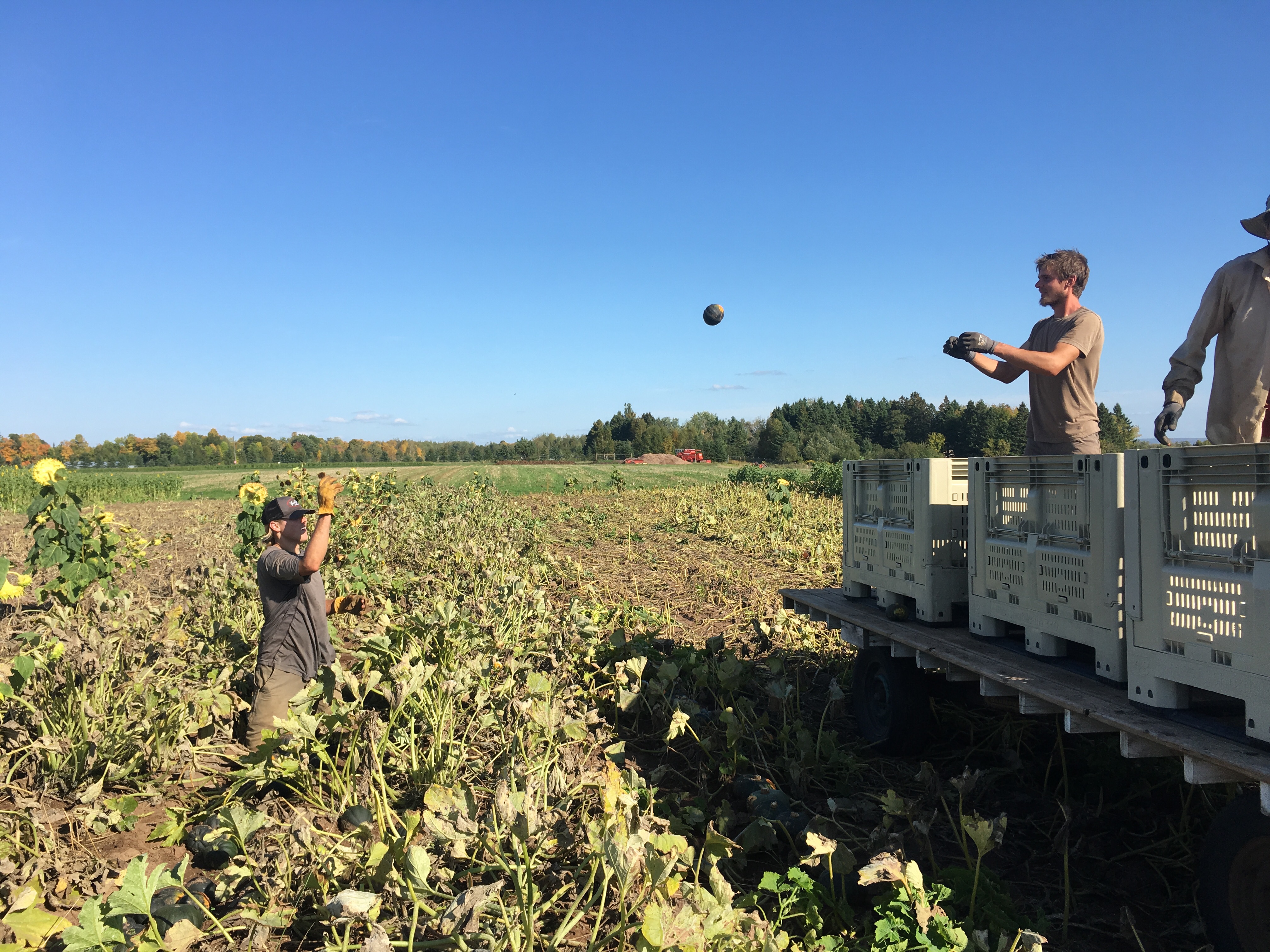
We were slinging squash around all week. We harvested the Delicata in Wednesday. We brought in the Winter Sweet, Kabocha, Acorn and Sunshine on Thursday. And we brought in the pumpkins on Friday.

Also the process of tossing squash to someone on the hay wagon is delightful. We were a well oiled squash slinging machine.

As the daylight diminishes, as we continue to harvest veggies, I think about you all. I think about the people who will enjoy this food come the fall and winter months. I think about the enormous amount of food that is grown here. In one single root cellar we can store enough food to feed shareholders, send food to restaurants, and stock co-op shelves.

The world needs more root cellars and more Fisher-Merritts and more Food Farms.

From our rockstar farm crew,

Tiffany


In your CSA box:

Green Beans, Celery, Carrots, Cilantro, Cucumber, Leeks, Yellow Onions, Sweet Red Peppers, Yellow Potatoes, Tomatoes, Turnips, Acorn squash!


Potato Leek Soup

  • 2 large leeks
  • 2 tbsp butter
  • 4 cups veggie broth
  • 4 cups of potatoes-chopped
  • 1/2 tsp pepper
  • 1 tsp salt
  • 1 tsp dried thyme
  • 1 tsp dried parsley
  • Fresh chopped onion for garnish
  • Salt and pepper to taste

Chop leeks and place in pan with butter, stir until coated in butter. Cover pot and reduce heat to low. Cook leeks 8-10 minutes or until soft. Stir in broth, spices and potatoes.

Increase heat and bring to slight boil. Reduce heat and let simmer 20 minutes. If you desire a creamy consistency add to blender.

Otherwise enjoy chunky.

Acorn Carrot soup

  • 1 acorn squash
  • 2 lbs carrots
  • 2 sticks of celery
  • 1 tsp garlic powder
  • 1/2 medium onion
  • 4 cups veggie broth
  • 1 tbsp olive oil
  • 1 tbsp butter
  • 2 cups water

Prepare squash, carrots, celery and onion by chopping each.

Add olive oil and butter to stock pot and melt together. On medium heat. Add onion and celery. Cook 5 minutes.

Add the veggie broth, water, squash and carrots. Bring soup to boil and let simmer for 30 minutes. Season with salt and pepper and garlic powder.

Let soup cook for 15 minutes. Working in batches blend the soup in a blender. Re heat and serve!