Summer CSA Week 12

Thanks to everyone who spent their Saturday with us. We loved getting to meet so many of you, and having the opportunity to show all of you this beautiful space we love!

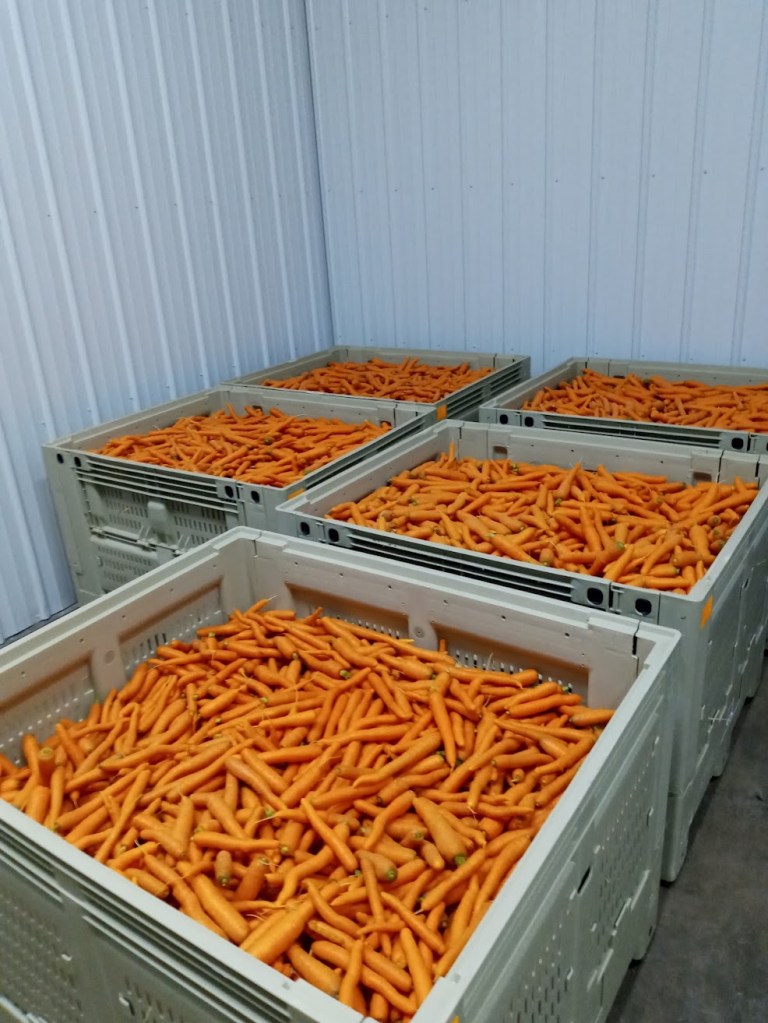
Last week was BUSY here on the farm! We spent the beginning of the week getting the rest of the first two plantings of carrots out of the field and washed. We now have about 7,200 pounds of carrots in our root cellar waiting to be put in your weekly share boxes, and eventually hitting grocery store shelves and restaurant plates.

Now that the first two plantings of carrots are out of the field and washed, we were able to turn our attention to other crops. We spent time pulling all of the onions, and laying them on the plastic mulch to begun the drying process. We leave the onions here for a week or two to let the sun and wind naturally start drying them out. After the onions have begun to dry and form their protective outer shells, we cut off the stem, move them to drying racks in the greenhouse and place them in front of fans to fully dry for winter storage. We usually dry the garlic and have plenty of time to put all the garlic away and clean up the greenhouse before it’s time for the onions to dry. However, if you haven’t caught it yet, this year has been a wild and unpredictable year on the farm. We had to pull the onions a little early this year because some of them had started to bolt. Bolting is when a plant prematurely puts on flowers.

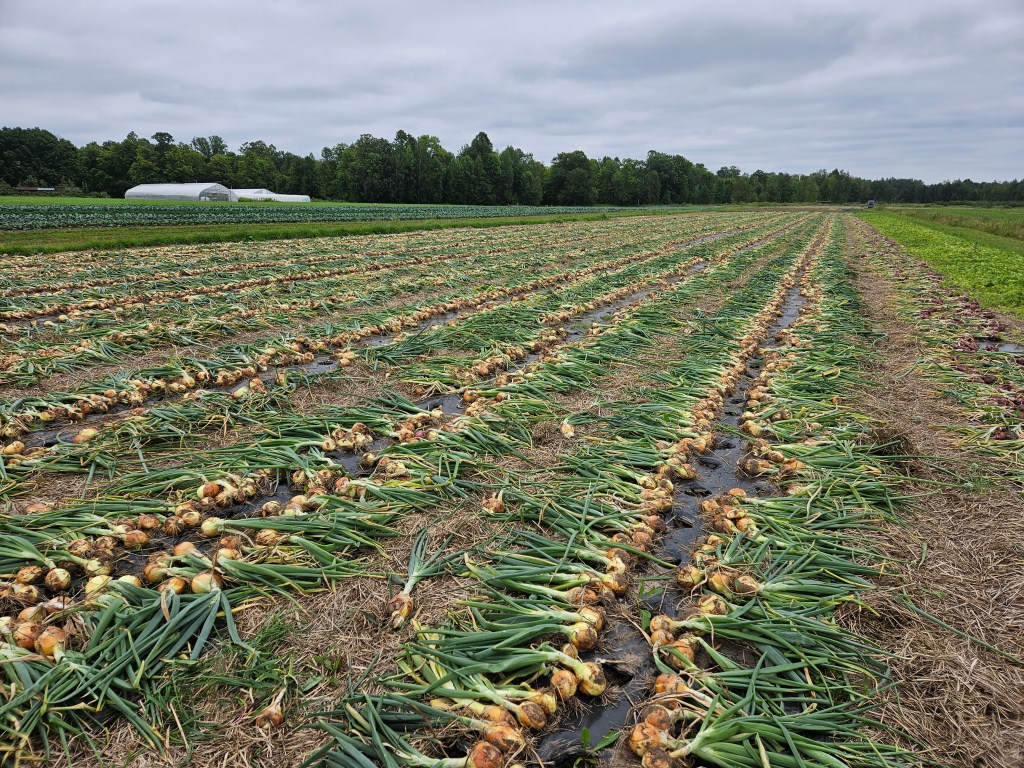
Onions are considered a biennial plant. This means in the first year, we plant the onions from seed and they will create the onion bulbs we all know and love. If we left them in the ground over winter, the next summer the onions would put on a flower and eventually that flower would create seeds (the same ones we plant to create this cycle). Every once in a while, the changes in the environment can confuse the onion into thinking it’s in its second year of growing and needs to put on a flower. Some of these environmental factors are too hot, too cold, too much water, or too little water. My research led me to learn that specifically when temps dip below 45°, the plant thinks it has entered “winter”, then when it warms back up, the plant thinks it has entered summer in year two leading it to put on flowers. Our best guess is that those few overnights in the end of June/early July that got down to low 40s, tricked the onions into believing they were in winter.

When the onions start to bolt, it’s important to get them out of the ground sooner rather than later because the big, thick stems, has the possibility to prevent the onions from properly drying. We rely on the dried onions in the winter for our Winter CSA boxes, and for selling to local restaurants. This means this year we will be drying garlic and onions at the same time. The greenhouse space isn’t big enough to handle both at once (hence why we usually dry one then the other), so we’ve had to get creative clearing out some other spaces to house the onions for a while.

We also picked the first tomatoes from our caterpillar tunnel. We’ve learned a lot from having this new tunnel, but the taste of the tomatoes is the most important part. Beautiful looking plants don’t mean as much to us if the fruit it produces doesn’t taste good. We are doing a taste test of the tomatoes this week. We plan to compare the regular greenhouse tomatoes to the caterpillar tunnel tomatoes to see if one tastes better than the other, or if they are equally delicious. We plan to give you all a thorough update next week on both the tunnel itself and the taste of the tomatoes, so stay tuned!

In your share this week:

Thyme – Onions – Kale – Basil – Green Beans – Carrots – Tomatoes

Zucchini – Cucumber – Cilantro – Green Peppers – Hot Peppers – New Potatoes

Lemon Thyme Shortbread cookies

Ingredients

  • 3/4 cup unsalted butter, softened 
  • 1 1/2 cups powdered sugar, divided
  • 2 Tbsp. lemon zest, plus more for garnish
  • 1 1/2 tsp. chopped fresh thyme, plus more for garnish
  • 1/2 tsp. vanilla bean paste or extract
  • 1 1/2 cups all-purpose flour, plus more for work surface and cutters
  • 1/2 tsp. kosher salt
  • 2 Tbsp. fresh lemon juice (from 1 lemon)

Directions

  1. Beat butter and 1/2 cup of the powdered sugar in a stand mixer fitted with a paddle attachment on medium speed until smooth, about 1 minute. Beat in lemon zest, thyme, and vanilla until combined, about 30 seconds.
  2. Whisk together flour and salt in a medium bowl until combined. With mixer on low speed, gradually add flour mixture to butter mixture, beating just until dough comes together, about 1 minute, stopping to scrape down sides of bowl as needed. Shape dough into a 6-inch disk, and wrap in plastic wrap. Let chill until firm, at least 1 hour or up to 24 hours.
  3. Preheat oven to 350°F. Line a large rimmed baking sheet with parchment paper. Roll out dough on a lightly floured work surface to 1/4-inch thickness. Cut desired shapes using lightly floured 2-inch cookie cutters. Chill, reroll, and cut dough scraps as needed. Transfer shapes to prepared baking sheet, spacing 1 inch apart. Freeze until firm, about 10 minutes.
  4. Bake in preheated oven until the edges are set, 14 to 16 minutes. Let cool on baking sheet for 5 minutes. Transfer cookies to a wire rack; let cool completely, about 30 minutes.
  5. In a medium bowl, whisk together lemon juice and remaining 1 cup powdered sugar until smooth. Dip, drizzle, or spread glaze over cooled cookies as desired. Sprinkle additional lemon zest and thyme over cookies. Let stand until glaze is set, about 30 minutes.

African Peanut Soup

  • 2 tbsp olive oil
  • 1 medium onion, chopped (1 cup)
  • 1 tbsp ginger, minced
  • 1 jalapeño, seeds and ribs removed, diced
  • 4 garlic cloves, minced (1 tbsp)
  • 1/2 tsp pepper
  • 2 tsp cumin
  • 2 tbsp tomato paste
  • 14 oz crushed tomatoes
  • 4 cups chicken stock
  • 1 sweet potato, peeled and diced
  • 1 (14 oz) can chickpeas, drained
  • 1 cup creamy natural peanut butter
  • 4 cups kale, roughly chopped
  • 1.5 lbs skinless, boneless chicken breast, cooked, shredded
  • 1 tsp salt (to taste)
  • peanuts, crushed
  • cilantro, chopped (optional) for garnish
  1. In a large pot heat olive oil over medium heat. Add onions and sauté until softened, about 3-4 minutes.
  2. Add in ginger, jalapeno and garlic and stir until fragrant about 1 min. Add the pepper, cumin and tomato paste and cook for another 2 minutes, stirring, until paste darkens.
  3. Add the crushed tomatoes, stock, sweet potatoes, chickpeas and peanut butter. Bring to a boil and stir until fully combined. Turn the heat down to low and simmer for 15 minutes, until sweet potatoes are tender.
  4. Add in kale and shredded chicken and cook for another 5 minutes. Taste the soup before adding salt. Depending on how salty your stock and/or peanut butter was, it may not need anymore salt. If you use low sodium stock and salt-free peanut butter, it will need a full teaspoon salt, maybe more. Adjust to your own liking.
  5. Serve warm topped with cilantro and crushed peanuts. Enjoy!

For the farm crew,

Jennifer

November Winter Share

The first winter CSA delivery is upon us! For our new members: Welcome to our veggie community and thank you for choosing local and organic 🙂 For our season to season members: Thank you for your continued support and welcome back! It’s been a little over a month since our last summer share box was delivered. We hope the short break in your Food Farm veggie action has not been too much to bear. Despite a pause in share deliveries, the farm crew has done anything but pause…

Next year’s garlic crop all tucked in for the winter

It has been a mad dash to get us set up for winter! A short three weeks ago we were digging the last of our storage potatoes from the ground (a remarkable feat in its own regard), thinking to ourselves “How in the heck are we gonna get 35 tons of carrots, four tons of beets, a couple tons of parsnips and a few thousand pounds of rutabagas from the rapidly cooling earth before it freezes in four days?”

Well… we did things a little differently this year, that’s how.

Usually, during peak harvest time, we operate with two crews. One crew harvesting and another washing. This year, because of the hard freeze during the last week of October, we used all hands on deck (along with some volunteers from Fond du Lac Community College) to harvest everything as quickly as we could. Just in the nick of time, we packed the veggies in pallet boxes and stacked them to the ceiling of our root cellar with dirt still clinging to their skin. We then began November by pulling it all back out, one pallet box at a time, to gently roll or tumble through our washing assembly. We took the occasional break to knock ice free from the spray nozzles and it was a chilly process indeed, but Dave brought lots of extra winter gear and by the end the veggies were shining in vibrant shades of orange, purple & parsnip. It also helped that Janaki kept us fed and happy with hot cocoa, cookies & pizza during our lunch breaks. The morale boost was at times needed.

All in all, it was a year filled with joys and challenges, but we got through it and at the end of the day, that’s farming!


In your share this month:

Beets – Brussels Sprouts – Carrots – Celery – Onions

Red & Yellow Potatoes Delicata & Sunshine Winter Squash – Tatsoi


Thriving under the shelter of Catherine’s hoop houses, the celery reached rather impressive height this fall. We had to cut the stalks in half just to fit them in the share box. Because of this, we went ahead and left the leaves on – something we don’t often do in the summer shares. The leaves present a concentrated flavor that is more robust than the stalks. They can be used in a variety of dishes, including soups, stocks, salads, and as a garnish. Or maybe you would like to include them in your stuffing this holiday season… Included below is a recipe for just that!


Classic Thanksgiving Stuffing (by Anna from crunchycreamysweet.com)

Yield: 6 servings

1 fresh French bread or 10 cups dried cubed bread
1 ½ sticks unsalted butter, divided
1 ½ cup chopped celery
½ cup celery leaves, chopped
1 large yellow onion, chopped
1 tablespoon chopped fresh sage
1 tablespoon fresh thyme
1 tablespoon chopped fresh rosemary
1 teaspoon salt
½ teaspoon black pepper
1 ½ cups broth chicken, turkey or vegetable

  1. If you are using fresh French bread: slice it into ½″ slices, then each slice into ½″ cubes. Place bread cubes on a baking sheet (most likely you will need at least two sheets), in a single layer, then let it air-dry in room temperature overnight OR preheat oven to 250° F and bake bread for 30 to 35 minutes, shaking the pans every 15 minutes. If using already dried bread, place 10 cups in a large bowl.
  2. Preheat oven to 350° F. Butter a 13″x9″ baking dish or 3 quart baking dish. Set aside.
  3. In a skillet, melt 1 stick (½ cup) of butter. Add chopped onion and celery. Saute until veggies are soft.
  4. Add veggies to bread.
  5. Add herbs, celery leaves, salt and pepper. Stir in.
  6. Add broth and stir in gently. Place in buttered dish.
  7. Melt remaining butter and pour over the stuffing.
  8. Cover the dish with aluminum foil.
  9. Bake in preheated oven for 30 to 35 minutes. You can uncover it for the last 5 minutes to toast up the top pieces, if desired.
  10. Let cool for 10 minutes, then serve.

P.S. – For the best texture, bake the stuffing the same day you will serve it. You can prep everything the day before: dry the bread and sauté veggies. The next day just assemble everything and bake!


Bacon & Brussels Sprout Salad (from pinchofyum.com)

Yield: 8-10 servings

Dressing:
1 lemon
1 orange
1-2 tablespoons of apple cider, maple syrup or honey (something for sweetness)
1 shallot, minced
1/2 cup olive oil
1/2 teaspoon salt & pepper to taste

Salad:
4 dozen brussels sprouts
1 cup almonds
6 slices of cooked bacon, crumbled or chopped
1 cup grated parmesan cheese

  1. Combine the lemon juice, orange juice, apple cider, and shallots in a small bowl. Add the olive oil in a steady stream and whisk for a minute or two, until it becomes creamy-looking.
  2. Slice the brussels sprouts with a mandoline, taking care of your fingers! and slicing them as thin as possible. This works best when you hold the stem, slice from the top, and stop with a little bit left at the bottom, discarding the remaining bottom stem part since it’s not very leafy anyway. The thinner the shreds, the better the salad! Toss the shreds and loosen them with your fingers to they separate and fluff a little bit.
  3. Pulse the almonds in a food processor until finely chopped.
  4. Toss the brussels sprouts, almonds, bacon, cheese, and dressing together. Serve immediately or within a few hours of tossing.

This next recipe is rather simple, but I haven’t been able to get enough of it in the last couple weeks. I like it as a side, just as the recipe below says, but I also think it would make a great salad if combined with a bed of greens & dressing of your choice.

Delicata, Beets & Goat Cheese w/ Papitas

Yield: 2 servings

1 delicata squash
2 beets
olive oil
salt & pepper to taste

2 tablespoons toasted & salted pepitas
1-2oz. goat cheese

  1. Preheat the Oven: Preheat your oven to 400°F (200°C).
  2. Prepare the Squash: Wash the delicata squash and cut it in half lengthwise. Scoop out the seeds using a spoon. Then, slice the squash into half-moon shapes about 1/2-inch thick. Leave the skin on as it becomes tender when roasted.
  3. Prepare the Beets: Wash the beets thoroughly to remove any dirt. If the beets are large, you can peel them, but small to medium-sized beets can be roasted with the skin on for easy preparation. Cut the beets into even-sized pieces to ensure uniform cooking. You can either slice them into rounds or cube them, depending on your preference.
  4. Arrange on a Baking Sheet: Lay the squash slices in a single layer on one baking sheet & the beet cubes on another. Make sure not to overcrowd to ensure even roasting. Drizzle with olive oil and season with a generous dusting of salt and pepper.
  5. Roast in the Oven: Roast the delicata squash in the preheated oven for approximately 20-25 minutes, or until the edges are golden brown and the squash is tender. You can flip the slices halfway through the cooking time for even browning. Roast the beets for about 30-40 minutes, or until they are fork-tender. Larger pieces may require more time.
  6. Serve and Enjoy: Once the vegetables have cooled, serve with goat cheese & pepitas!

For the farm crew,

Charlie

Summer CSA Week 13, 2023

This past week, while harvesting carrots, we found bees… or rather, they found me. Maybe it was the lavender soap I had used that morning, maybe it was my sweet disposition, but whatever it was the bees seemed to swarm to it. Each time the carrot harvester made a lap around the edge of the field with the bee boxes I would pick up a stinger or two. I had just about had enough when Janaki hooked me up with a nice bee keepers hat. After which, I was able to complete the harvest much more comfortably than it had begun.

While I was communing with the bees, most of the other crew members gathered around the barrel washer to sort, clean & taste the carrots as they came from the field. The colder nights we had last week really seemed to help bring out their sweetness, and it was great to get them out of the ground before the heat sapped their flavor!

It’s starting to be that time of year when some of the summer crops start to slow down. The outside cucumbers have wrapped up, while the zucchini are hanging on for just a little longer. We were hoping to hoard some melons for the weeks to come, but decided to send what we have for fear of them going bad before they make it to the shares.

We have an exciting new addition this week, however, in the Carmen pepper. Carmen is a unique sweet pepper variety known for its distinctive shape. Unlike the traditional bell pepper shape that most people associate with sweet peppers, Carmen peppers have a more elongated and tapered form, which lead some folks to mistakenly believe they’re hot (there are also green Jalapenos in the share today, and they are hot!) Carmen peppers exhibit their sweetest flavor when they ripen to a vibrant red, but they are also very sweet when they’ve just begun to turn color. Other sweet peppers (like the bell) tend to be more bright and grassy, rather than sweet, in their green state.


In your share this week:

Beans – Beets – Carrots – Cilantro – Cucumbers – Kale – Melons – Onions

Hot PeppersSweet Red Peppers – Potatoes – Tomatoes – Zucchini


When Catherine sent the “best guess” email for the share this week, my mind initially jumped to vegetable enchiladas. This would be a great bounty to prepare something like that, but after melting in the heat all day yesterday, I decided that hot enchiladas was not the move. In an effort to keep the oven off this week, I decided to share a recipe for gazpacho along with a zesty salad dressing that would pair nicely with the kale this week.


Gazpacho, from cookie & kate

2 ½ pounds ripe red tomatoes (about 4 large or 9 small)
1 small sweet yellow onion (½ pound), peeled and cut into rough 1″ chunks
1 small cucumber (½ pound), peeled and seeded
1 medium sweet red pepper, cored and seeded
¼ cup fresh basil leaves, plus extra for garnish
1 large garlic clove, peeled
¼ cup extra-virgin olive oil
2 tablespoons sherry vinegar or red wine vinegar
¾ teaspoon fine sea salt
Freshly ground black pepper

  1. To prepare your veggies, place your blender bowl, a medium serving bowl, and a small bowl on the counter. Core the tomatoes and cut them into rough 1″ chunks. Reserve about ¼ cup of the juicy tomato seeds and place them in your small bowl (we’ll use them as a garnish later). Add half of the tomato chunks to the blender, and the other half to your serving bowl. Add all of the onion chunks to the blender.
  2. Cut off about one-fourth of the cucumber. Finely chop that piece and place it in the small bowl. Slice the rest of the cucumber into rough 1″ chunks, and divide them between the blender and the serving bowl. Cut off about one-fourth of the bell pepper, finely chop that piece, and add it to the small bowl. Slice the rest of the bell pepper into rough 1″ chunks and divide them between the blender and the serving bowl.
  3. To the blender, add the basil, garlic, olive oil, vinegar, salt and about 10 twists of black pepper. Securely fasten the lid and blend, starting on low and increasing to high speed, until the mixture is completely smooth, about 2 minutes.
  4. Pour the contents of the serving bowl (the remaining chunks of tomato, cucumber and bell pepper) into the blender. Fasten the lid and blend for just 10 to 20 seconds, until the ingredients are broken up into small pieces. Stop there, or blend a little longer if you prefer smaller pieces.
  5. Add a small pinch of salt to the small bowl of garnishes, stir, and store it in the fridge. Chill the soup for at least 2 hours, or up to 24 hours.
  6. Before serving, taste, and add additional salt (I sometimes add another ¼ teaspoon) and/or black pepper if necessary. To serve, divide the soup into small bowls or cups, and top with the reserved cucumber and bell pepper. Top with a few tiny or torn basil leaves and a light sprinkle of pepper. Leftover servings keep well, covered and refrigerated, for 3 to 4 days.

Jalapeño Honey Mustard Dressing, from kroll’s korner

1/3 cup olive oil
1/4 cup honey
1/4 cup dijon mustard
2 tablespoons lime juice
1/2 teaspoon lime zest
1/2 jalapeño, diced
2 teaspoons thyme, chopped
Salt & pepper, to taste

  1. In a medium sized bowl, whisk all ingredients together until well combined. Or you can combine all ingredients in a mason jar and give it a nice shake until combined so you don’t have to dirty a bowl! Taste and adjust ingredients as desired. Store in a mason jar or airtight container in the fridge for 1-2 weeks. Makes ~1 cup.

For the farm crew,

Charlie

Summer CSA Week 11, 2023

It’s farm tour time–this Saturday from 10-noon, we’d love to see you!

It’s melon mayhem at the Food Farm! We recently set our new daily harvest record with a whopping 377 cantaloupe. That is more than 800 pounds of weight to pull from the field! We expect them to slow down soon, so enjoy it while it lasts.

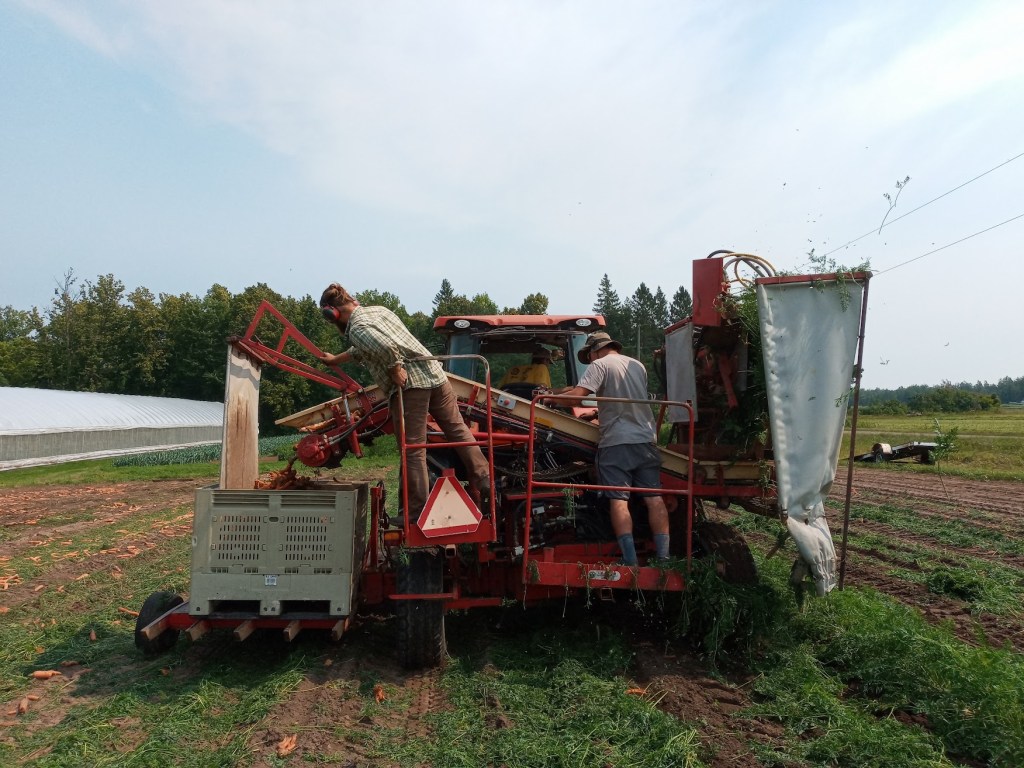
In other news that is orange, the crew christened a “new-to-us” carrot harvester. A lucky few climbed aboard as it took its maiden voyage through the fields, while the rest of the crew assembled at the washing stations. There were certainly some wrinkles to iron out, as there often is with any new piece of machinery, but by the end of the week the process seemed to be moving along rather quickly.


Beans – Broccoli – Carrots – Cilantro – Cucumbers – Dill – Greens Mix – Melons

Onion – Bell Peppers – Hot Peppers – Potatoes – Tomatoes – Zucchini


Usually the melons are best enjoyed straight up in all their glory. That way you can fully appreciate the depth of their flavor. This week though, because there are so many, I thought it would be nice to include a recipe with them in it. It does include basil, which we are not sending this week… I’m hoping some of you still have a few sprigs leftover from last weeks share, or can maybe snag some from a friendly neighbor’s garden.

P.S. The vinaigrette would also go great on the greens mix in today’s share 🙂

Melon Caprese Salad, from Half Baked Harvest

Honey Herb Vinaigrette:
1/4 cup extra virgin olive oil
2 tablespoons honey
Juice of 1 lemon
1 tablespoon white balsamic
1 cup fresh basil
1 tablespoon toasted pine nuts
1 pinch flaky sea salt

  1. To make the vinaigrette, combine all ingredients in a blender and blend until smooth.

3 balls fresh burrata cheese
4 cups melon balls
1/2 cup fresh basil leaves
2 tablespoons fresh mint
6 slices prosciutto

  1. Break the burrata in half and place each half in the bottom of a small bowl or glass (about 8 ounces). Over the burrata, layer the melon balls, basil, and mint. Top with a slice of prosciutto. 
  2. At this point the salad can be covered and placed in the fridge for up to 6 hours. 
  3. Before serving, drizzle over the vinaigrette.

Blistered Green Beans w/ Tomato-Almond Pesto, from Bon Appétit

1 1/4 cups diced tomatoes
1/8 cup unsalted, roasted almonds
1 garlic clove, grated
1 tablespoons olive oil
1 tablespoons Sherry vinegar or red wine vinegar
1/2 teaspoon paprika
Pinch of cayenne pepper
Kosher salt, freshly ground pepper
1 1/2 teaspoons vegetable oil
1 pounds green beans, trimmed

  1. Preheat oven to 450°F. Roast tomatoes on a rimmed baking sheet, turning once, until blistered and lightly charred, 15-20 minutes. Let cool slightly. Finely chop almonds in a food processor. Add garlic, olive oil, vinegar, paprika, cayenne, and half of tomatoes; pulse to a coarse pesto consistency. Season with salt and pepper.
  2. Heat 3/4 tsp. vegetable oil in a large skillet over medium-high. Add half of beans; cook, undisturbed, until beginning to blister, about 2 minutes. Toss and continue to cook, tossing occasionally, until tender, 7–9 minutes; season with salt and pepper. Spread beans out on a platter; let cool. Repeat with remaining vegetable oil and beans.
  3. Toss beans with pesto; season with salt and pepper if needed. Add remaining tomatoes and transfer to a platter.

Summer-Vegetable Casserole, from Food & Wine

Extra-virgin olive oil, for drizzling
1/2 pound potatoes, peeled and sliced 1/4 inch thick
Salt and freshly ground pepper
1 bell pepper, thinly sliced
1 small onion, thinly sliced
1 large garlic clove, minced
1 teaspoon thyme leaves
1/2 pound tomatoes, sliced 1/4 inch thick
1 medium zucchini, sliced on the diagonal 1/4 inch thick
3 tablespoons freshly grated Parmigiano-Reggiano cheese

  1. Preheat the oven to 350°. Coat a 9-inch baking dish with olive oil. Spread the potatoes in the dish in an even layer; drizzle with oil and season with salt and pepper. In a bowl, combine the bell pepper, onion, garlic and thyme and season with salt and pepper. Arrange two-thirds of the bell pepper mixture over the potatoes and drizzle with oil. Top with the tomatoes and the zucchini; drizzle with oil and season with salt and pepper. Cover with the remaining bell pepper mixture and sprinkle with the cheese.
  2. Cover the casserole with foil and bake for 40 minutes. Increase the oven temperature to 425°. Uncover the casserole and bake for about 20 minutes longer, until the vegetables are tender and glazed on top. Let stand for 10 minutes. Serve warm.

For the farm crew,

Charlie

Summer CSA Week 5, 2023

Dear Food Farm Community,

As we delve into the heart of the growing season, we find ourselves knee-deep in the world of weeding. Weeding, although often deemed an arduous task, is an essential part of maintaining the health and vitality of our crops. The crew has been diligently working through the fields, carefully tending to each bed, ensuring that our plants have the space, nutrients, and sunlight they need to thrive.

Soon we’ll begin to notice that the daylight hours are gradually decreasing, but the harvest time seamlessly extends, stretching out longer and longer. More variety means more running around for the crew and volunteers. This morning we were doing just that; shuttling harvest totes to and fro to deliver a well rounded box of vegetables.


In your share this week:

Green-top Beets – Broccoli – Green-top Carrots

Cucumber – Garlic Scapes – Kale – Green Onions – Zucchini


Beet Greens & Kale Sautéed with Garlic Scapes

~ 2 servings

  • 1 tablespoon olive oil
  • 1 slice bacon, cut into small pieces (optional, use a little more oil if omitting)
  • 2 garlic scapes, finely chopped
  • 2 green onions, white and pale green portion, finely chopped
  • 6 leaves beet greens, stems cut into 2-inch pieces
  • 2 leaves kale, ribs and stems removed, chopped
  • salt and pepper to taste
  1. Heat olive oil in a large skillet over low heat. Cook bacon until it begins to brown and crisp, about 2 minutes. Add garlic scapes and green onion, cook and stir until golden brown, 3-5 minutes.
  2. Stir beet stems and kale into skillet. Cover and cook until kale wilts, about 3 minutes. Add beet greens. Cover and cook until bright green and wilted, 1 to 2 minutes.
  3. Season with salt and pepper.

Sautéed Zucchini & Carrots

  • 1 medium zucchini, thinly sliced
  • 2 medium carrots, thinly sliced
  • 1 tablespoon olive oil
  • 1 tablespoon ghee (optional)
  • 1 teaspoon dried thyme
  • salt and pepper to taste
  1. Heat a large skillet over medium-high heat. Add the oil and butter.
  2. Once the better is melted, add the zucchini and carrots. Sprinkle with thyme, salt and pepper, toss to coat.
  3. Sauté vegetables until lightly browned and tender, stirring occasionally so they do not burn.

I know I already included a pickled turnip recipe in the week 2 newsletter, but if you are like me, you may have a few extra rolling around in your fridge still. Here is a recipe that includes beets along with our old friend. If you happen to be out of turnips, just use more beets!

Pink Pickles, from Cotter Crunch

8 servings

  • 12–14 ounces purified water
  • Optional: 1 teaspoon sugar
  • 2 ½ Tablespoon Kosher salt
  • 1 bay leaf
  • ½ cup white vinegar (for quick pickling)
  • 1 small red beet, peeled and sliced
  • 2 turnips (about 1 pound), peeled and sliced
  • 1 clove garlic, chopped
  1. Add beet, turnips and garlic to a heatproof jar or container. Set aside.
  2. In a medium saucepan, bring salt, sugar, bay leaf, and 12 ounces of purified water to a boil, stirring occasionally to dissolve salt and sugar. Turn off heat and let mixture cool down for 5 minutes, then stir in vinegar.
  3. Pour pickling liquid over the contents in the jar, and ensure that the turnip and beet slices are submerged completely in the brining liquid. Let it cool, then close the jar and place it in a dark area for 5 to 7 days.
  4. For best flavor, refrigerate before serving.
  5. Store in a covered jar or container in the refrigerator for up to one month.

For the farm crew,

Charlie

Summer CSA Week 2, 2023

Greetings!

Let’s start things off with a haiku…

Mid June – so so dry
Irrigate to help them grow
Janaki sleeps not

Week two and another round of locally grown goodness! Up this week:


Greens mix – Green onions – Lettuce – Radish – Tatsoi – Turnips


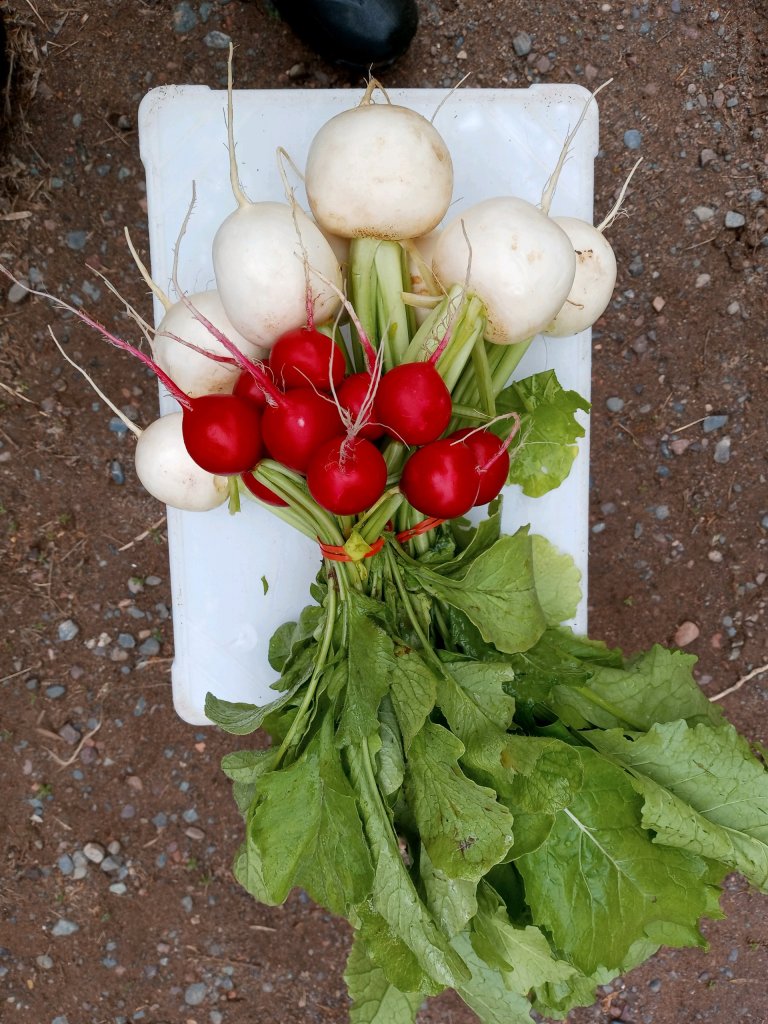
The vegetable spotlight falls on the radish this week. Radishes are not only zesty beauties… they are antioxidant-rich, as well as relatively high in vitamin C, calcium, potassium, and fiber. These cruciferous veggies are entirely edible – all the way from their crunchy bulb to their tender leaves. All parts of the radish are an excellent addition to your summer salad. Radishes are a cool-season vegetable, so they are a little hotter because of how unusually warm and dry it has been, and the heat also means that we’ve had to get all of them out of the field quickly, rather than keeping them for a few weeks. This makes them a great candidate for roasting, transforming the flavor from bright and crisp to mellow and sweet. Find below a two-for-one recipe that uses both your radishes and your turnips to bring out a caramelized quality in both (with a little help from some honey).

Roasted Turnips and Radishes

Serves 4

  • 1 lb turnips, halved or quartered
  • 1 lb radishes, halved or quartered
  • generous drizzle of extra-virgin olive oil
  • kosher salt and freshly ground pepper
  • 2 teaspoons honey, plus more to taste
  • 5 fresh thyme sprigs
  1. Position a rack in the upper third of an oven and preheat to 425 F.
  2. In a large bowl, toss together the turnips, radishes, and olive oil with salt and pepper. Transfer the veggies to a baking sheet and spread into a single layer. Keep your eye on them and roast until the veggies start to char and soften (about 10 minutes). Drizzle the honey and scatter the thyme sprigs on top. Continue roasting until the veggies are fork-tender and have a caramelized finish (about 10 more minutes).
  3. Discard the thyme springs. Transfer the veggies to a platter and drizzle with more honey, if desired. Serve immediately.

Amidst the various harvests of our CSA, our dedicated members occasionally find themselves facing a delightful yet overwhelming challenge: an abundance of produce that tests their culinary prowess and storage capabilities. When unpacking your weekly share of farm-fresh vegetables, you may wonder “what am I supposed to do with a fridge drawer full of Turnips?”

Enter the quick pickle…

Quick pickles will keep in the fridge for months. They are delicious right out of the jar, but also make zingy additions to salads, sandwiches, and really anything that needs a little punch.

Ginger – Pickled Turnips

  • 2 inches fresh ginger, unpeeled, cut into 1/4-inch-thick coins
  • 2 garlic cloves
  • 8 ounces turnips, cut into thin discs or match sticks
  • 1 cup warm water
  • 2 teaspoons kosher salt
  • 1 tablespoon honey
  • 3/4 cup apple cider vinegar
  • 1/4 teaspoon crushed red pepper flakes
  1. Put the ginger and garlic in the bottom of a 2-cup wide-mouth jar. Pack the turnips into the jar.
  2. Combine the water, salt, honey, vinegar, and red pepper flakes in a separate jar. Top it with its lid, and shake vigorously to combine. Pour the brine over the turnips until it just covers them. Top the turnip jar with a lid and refrigerate for at least 24 hours before enjoying.

When the turnips are gone, just shove more vegetables in there – the brine will work its magic on anything from green beans, to radishes, to fennel!

For the farm crew,

Charlie

Summer CSA Week 18, 2022

The last share of the 2022 summer season!

Last week the leaves along the road were golden (pictured left) and this week there are more leaves on the ground than in the trees (pictured right). It is time for us to wrap up our 2022 delivery season. Winter shares will start November 14th. See below what to do with your Summer Share boxes. In your email inbox soon you will find a link to an online survey about how the Summer Share worked for you this season–thanks for taking the time to help us improve!

It has been a pleasure having you as part of the Food Farm family!


In your share this week:

Arugula – Beets – Brussels Sprouts – Red Cabbage – Carrots – Celery – Greens Mix – Onion – Sweet Red Peppers (not hot) – Yellow Potatoes – Rutabaga – Spinach – Winter Squash – Tomato – Thyme


What should I do with my CSA box now that the season is over?

I’m so glad you asked! You have two options:

  1. Bring your own bag or box to your CSA pick-up location. Take your produce and leave the CSA box for us.
  2.  Bring your empty Food Farm CSA share box back at your Please have your box back to your pickup site by next Thursday, October 20th, or bring bags with you to take your veggies home.

Returning your box helps us avoid buying more plastic. 


Beet Arugula Salad

Ingredients

  • 6 medium (2 lbs) beets
  • 5 oz (6 cups) baby arugula, rinsed and spun dry
  • 4 oz or 1/2 cup feta cheese or blue cheese, diced or crumbled
  • 1/2 cup pecans or walnuts, toasted
  • 1/2 cup dried cranberries

Balsamic Vinaigrette

  • 1/2 cup extra virgin olive oil
  • 3 Tbsp balsamic vinegar
  • 1 Tbsp dijon mustard (we love Grey Poupon brand)
  • 1 garlic clove, pressed or finely minced
  • 1/4 tsp salt
  • 1/8 tsp black pepper
  • Try adding minced rosemary and/or thyme

InstructionS

How to Cook Beets in an Instant Pot:

1. Wash and trim the beets so that the stems are about ½-inch long and the roots are no more than about 2 inches long.

2. Place basket insert into instant pot and add 1 cup water. Arrange the beets in a single layer over the insert.

3. Lock the lid and make sure the valve on the lid is pointed at the “Sealing” position. Press the “Pressure Cook” button and cook on high pressure for 15 minutes. (If you have smaller beets, it might take just 10 min to cook. Larger beets, however, will take 20 to 30 minutes to cook.)

Or without an Instant Pot:

1. If you don’t have an instant pot yet: Preheat the oven to 400˚F. Line the bottom of a medium rimmed baking sheet with foil. Wrap each beat in a sheet of foil, wrapping tightly to seal and arrange the beets on the lined baking sheet. Bake in a preheated oven for 1 hour or until largest beet is easily pierced. Remove from oven, unwrap and allow them to cool to room temperature then peel the skins (see Pro Tip Below) and slice into halves and then wedges.

2. Toast 1/2 cup pecans on a dry skillet, tossing frequently until golden and fragrant. Remove from heat and cool to room temperature.

3. Transfer the arugula to a large mixing bowl then add remaining salad ingredients: sliced beets, 1/2 cup feta cheese, 1/2 cup toasted pecans and 1/2 cup dried cranberries.

4. To make balsamic vinagreate, combine all dressing ingredients in a small jar and shake well to combine. Drizzle over salad to taste. If not serving salad right away, shake the dressing again just before drizzling over salad.

Recipe based off Natasha’s Kitchen.


Harvesting cabbages. We love throwing our food!
And there’s lots more harvesting to be done before snow comes!

For the farm crew,

Starr

Summer CSA Week 18

That’s right farm sharers… It’s the final countdown (insert Europe guitarist). I think every one of us on the farm is shocked that the final CSA delivery is upon us. Not only because it’s still in the 70s during the day, but it also seems like only yesterday we were on the back of the transplanter planting the first of thousands of veggie starts. I don’t think we could have done it without that life-saving, and back-saving implement. Moreover, we could not have done it all without the support of our community and share members. It is all of you that keep the farm afloat and drive us to be the best farmers we can be. 18 weeks of shares have gone by in the blink of an eye yet we have so much to show for it. We have fed hundreds of people fresh, local, and organic veggies all while sustainably stewarding our farm.

This is not to say that with the end of the Summer CSA that comes the end of our work on the farm. In fact, we are just starting most of the large scale projects that will prepare us for our ’21-’22 Winter CSA, winter wholesale orders, and winter itself. On the farm hand side of things, this means clearing out the greenhouses, harvesting insane amounts of carrots, potatoes, beets, rutabagas, parsnips and cabbage, taking down trellises, and stowing the irrigation pipe that got our plants through this brutal summer. On the Janaki side of things, this means ensuring that fields are seeded with cover crops, compost is produced to feed our soil microbes, and operating the tractors so that us farm hands do not suffer at the expense of the insane amount of carrots I mentioned. Of course these aren’t the only things we will be doing over the next month, but you get the idea.

Just as we’re putting the farm to bed, we’re including a few sprigs of lavender in your share, long used as an aromatherapy sleep aide.

Here’s a list of things I have learned this season, even though nobody asked for it:

  • Do not waste time picking burs off of Chester. He will only come back around covered in more. He is also a professional skunk hunter and deer carcass finder.
  • Driving a very old tractor (we call it Stubby) is very fun and also terrifying at the same time.
  • Pigweed is a noxious plant that really makes you question whether or not being an organic farm is really worth it… (It is).
  • When a bee colony swarms they are actually super calm because they are not protecting their queen or hive anymore. I once walked through a swarm of thousands of bees to feed the chickens.
  • Raccoons sneak onto the farm for our tiny corn patch and nothing else.
  • Aside from the skunks that Chester brings around, the worst smell on the farm is hands down the smell of rotting daikon radish.
  • Do NOT harvest beets without gloves on unless you want to look like a murder suspect.
  • There is no such thing as a free meal.

Once again, we could not have done it without all of your support this season. We look forward to feeding you again in 2022. Until then, we will be here waiting and working the land to ensure you all receive high quality veggies next time around.

Take care,

Emily

“Agriculture is the noblest of all alchemy; for it turns earth, and even manure, into gold, conferring upon its cultivator the additional reward of health.” – Paul Chatfield

In your shares this week:

Beets – Carrots – Cilantro – Collar Greens – Lavender – Lettuce – Yellow Onions – Sweet Red Peppers – Hot Peppers – Potatoes – Rutabagas – Red Shallots – Delicata and Kabocha Winter Squash

A wonderful rainbow that made an appearance after we were rained on all day.
An absurdly large daikon radish that is destined for Spirit Creek Farm kimchi.

Red Flannel Hash (modified from NYT Cooking)

This recipe also works wonderfully with left-over roasted vegetables!

1.5 cups diced potatoes

1 cup diced squash

1/2 cup diced beets

1/2 cup diced carrots

1/2 cup diced peppers

1/4 cup diced onion

1/2 tsp each thyme and parsley

salt and pepper to taste


*Note:  Dice all the veggies into the similarly sized cubes (~1/2 inch) Heat oven to 425.  Place potatoes, squash, and beets on a rimmed baking sheet with 1 tablespoon of oil and bake for 20 minutes.  Add remaining veggies and herbs to the pan with the remaining olive oil and bake another 25 minutes.   
Fry the baked veggies in a frying pan with butter in a single layer to achieve crispness.  Top with a fried egg and serve with a side salad.


Strata (savory bread pudding)

1/2 lb french bread (stale or leftover works best), enough to make 4 cups of bread cubes

1 cup sliced mushrooms

1/2 cup diced peppers

1 cup diced or grated squash (~1/4″ cubes)

2 cups kale

1 clove garlic, minced

1.5 cups milk

1/2 cup grated hard cheese (swiss, gruyere, or cheddar)

1/4 cup grated Parmesan cheese

2 tbsp olive oil

1 tsp fresh rosemary (or 1/2tsp dried) 

1 tsp salt

4 large eggs


Preheat oven to 350 degrees. Soak the bread cubes in 3/4 c. of the milk. Oil or butter a 2 qt baking dish.  Heat a frying pan and add the kale.  Fry over medium heat until the leaves begin to soften and wilt.  Cover the pan and let the kale steam until cooked (3 minutes).  Remove from pan, press or squeeze out the excess liquid.  Chop coarsely and set aside.  Add 1 tbsp oil to the same frying pan and add the mushrooms and peppers.  Fry on medium heat until the mushrooms are cooked and the peppers have lost some of their moisture.  Add the minced garlic and the squash, and continue to fry for another minute.  Stir in the rosemary and kale.  Remove from heat, pour into a bowl with the cubed bread, the two cheeses, and toss together.  Arrange in a baking dish.
Beat eggs in a medium bowl and add the remaining milk and salt (and a few shakes of black pepper if you like it).  Pour over the bread and press the bread down into the custard mix.  Bake for 40-50 minutes until puffed up and brown and a knife poked into the strata comes out clean.
Note:  this can be assembled and left (covered) in the fridge for the night for a quick and easy morning bake, too!

Summer CSA Week 15

It’s hard to believe that we are already on the 15th week of the CSA, it feels like the season just started last week!? Anyways, while we are excited to share with you the vegetables of the week, there are still a few that you may not see this week, or next. Crops like brussels sprouts take a long time to mature–they’re seeded in early June and usually aren’t ready until the last week of the CSA. Most crops, like the celery in your shares today, are a couple of weeks ahead of schedule, but the brussels are actually slow enough that they may not even mature in time. I’m excited to eat them even if we have to wait for the winter shares.

This past weekend we attended the Harvest Festival at Bayfront and enjoyed seeing many familiar and new faces at the booth. The crew worked all day Friday harvesting vegetables to ensure that festival-goers received the freshest produce possible. It was great to see everyone after a year off from the festival.

The theme of last week seemed to be our potatoes. We worked on getting out the rest of the first planting of potatoes which included whites, russets, and yellows. Potatoes rock our world in so many ways and are incredibly versatile. I thought it might be useful to include a guide as to what potatoes are good for different potato cooking techniques. Disclaimer: this guide is based on a quick Google search and really, you can do whatever you want to your potatoes.

Fingerlings: great for baking, roasting, and potato salads. Not as good for soups.

Russets: These are the long brown potatoes in the share today. These are good for baking, mashing, french fries, and chips.

Reds: Unlike Russets, red potatoes do not fluff up as much when cooked. This makes them good for soups and stews.

Yellow/Gold: Creamier than most and are great for mashing, roasting, and grilling.

White: Great for french fries and hashbrowns. Doesn’t necessarily need peeling due to thin skin.

That’s the reference guide I use when choosing potatoes, but I use the different varieties interchangeably for the most part. Next up, I felt compelled to include a recipe for a classic potato dish that I grew up eating at every family gathering and holiday, and I hope you did too.

Thanks for reading,

Emily

We were fortunate to receive a few random rain showers and a big rainbow last week.

In your shares this week:

Beans – Broccoli – Carrots – Celery – Cucumbers – Dill – Lettuce – Onions – Red Peppers – POTATOES – Acorn Squash – Tomatoes

Farmer Kathleen driving the crew back to the potato fields for harvesting.

Potatoes au Gratin by RecipeTinEats

  • 1 1/2 cups cream
  • 2 garlic cloves, minced
  • 2 tbsp unsalted butter,melted
  • 2 lb starchy potatoes, Russet
  • 1 tsp salt
  • 1/4 tsp pepper
  • 2 1/2 cups gruyere cheese (or mozzarella)
  • 2 tsp thyme leaves
  • Cream Mixture: Place butter, cream and garlic in a jug or jar. Mix until combined.
  • Preheat oven to 350°F.
  • Slice potatoes: Peel the potatoes and slice them 1/8″. Or use a slicer!
  • Layer 1: Spread 1/3 of the potatoes in a baking dish, then pour over 1/3 of the Cream Mixture, scatter with 1/3 of the salt, pepper and thyme. Sprinkle with 3/4 cups cheese.
  • Layers 2 & 3: Repeat for the 2nd and third layer, but do not finish with cheese on the top layer (will add later).
  • Cover & bake: Cover with lid or foil, and bake for 1 hr 15 min or until the potatoes in the middle are soft (use knife to test).
  • Top with cheese, bake again: Remove foil, top with cheese. Bake for a further 10 to 15 minutes until golden and bubbly. Stand 5 minutes before serving.

Cream of Celery Soup by AllRecipes

  • 3 quarts vegetable stock 
  • 1 head of celery, coarsely chopped
  • ½ pound carrots, julienned
  • ½ pound onions, chopped 
  • 1 cup all-purpose flour 
  • 1 tablespoon salt
  • 1 teaspoon ground white pepper
  • 3 quarts hot milk
  • 1 cup margarine
  • Step 1 Pour the vegetable stock into a large pot, and bring to a boil. Add the celery, carrots and onion to the pot.
  • Step 2 Whisk together the flour, salt, pepper, and milk; add to the pot along with the margarine.
  • Step 3 Boil for 10 minutes, then strain out the vegetables by pouring through a sieve, or if the vegetables are large enough, a colander may be used.

Summer CSA Week 14

This week was a big week for our dear friends the alliums. Alliums are a genus of plants that include onions, garlic, leeks, and shallots. Onions! Enough to make a grown man cry. To say that these crops are the very backbone of savory dishes in the Midwest is an understatement. Not only do they provide great flavor and texture to our food, they also make the air smell great when you harvest them for several hours. And what do you say to a small onion that has helped you? Thanks shallot. We also started to sort out seed garlic which involves picking out the most perfect heads of garlic to use for next years garlic crop. This process, over the course of years, helps us yield the best looking heads of garlic to give to our dear members and the community.

Soup season is just around the corner, unless you’re like me and believe soup shall not be limited to colder weather. Either way, I feel compelled to throw in a decent soup recipe in these newsletters each week. They’re great for many things but amazing for using up random veggies in your fridges. Great for budgets and your stomachs. This may very well be the beginning of canning season for your household, for which soup is a fantastic candidate. Our dear friend the leek has been patiently waiting it’s arrival in your shares. And you had better believe there’s a soup recipe in this newsletter whose sole intention is to use a decent amount of leeks. Personally, I think the leeks this year look way bigger than last years. This is probably due to the warmer temperatures we have been experiencing.

This weekend you’ll find the Food Farm crew at the Sustainable Farm Association’s annual Harvest Festival at Bayfront Park in Duluth. Have you been wishing to have just a few more heads of broccoli this year? Perhaps you’re wishing for some more tomatoes? Fear not, as we will likely have a wide variety of food available to you. My favorite thing about these festivals as a consumer is seeing the value added goods that people create. Every year there is something new to try and it’s even better knowing it’s local. The annual Harvest Festival is a fun and great way to connect producers directly to consumers. Aside from these newsletters, there are only a handful of ways in which we are able to directly connect with our share members and the general public. We hope to see all of you there! We’ll be there from 10am – 4pm.

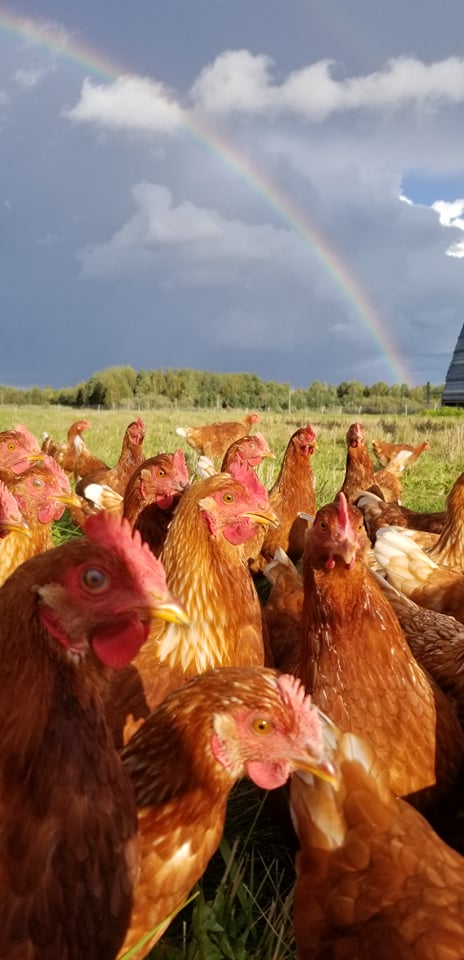
Some exciting news from our newest farm hens, they’ve laid their first eggs! These relatively tiny eggs will not be included in the egg shares yet. However, they are a reminder that these chickens play a valuable role on the farm. They provide our members with food and our fields with fertility. Plus they’re cute and full of personality – what more could you ask for in your coworkers?!

If anyone has a soup recipe suggestion, please do not be shy. We must all prosper in the richness that is liquid food.

Your local soup enthusiast,

Emily

In your shares this week:

Broccoli – Carrots – Cilantro – Cucumbers – Garlic – Greens Mix – Leeks – Onions – Hot Pepper – Red Peppers – Potatoes – Tomatoes – Zucchini

Bumble bees are fond of our bean plants and their flowers. I call this photo: “Bumble Bean”

Potato Leek Soup from Tasty

  • 2 tablespoons butter
  • 3 large leeks, chopped
  • 3 cloves garlic, minced
  • 2 lbs potato, cubed
  • salt, to taste
  • pepper, to taste
  • 6 cups vegetable broth
  • 2 cups water
  • 2 sprigs fresh thyme
  • 1 bay leaf
  • ¼ cup fresh chives, chopped
  • hot sauce, to taste
  1. Melt butter on medium heat in a large pot. Add the chopped leeks and stir until coated with butter.
  2. Cover the pot and lower heat, cook for around 10 minutes until the leeks have softened.
  3. Increase to medium-high. Add garlic, potatoes, salt, and pepper. Cook for 1 minute, then add vegetable broth, water, thyme, and bay leaf. Bring to a boil.
  4. Lower heat and cover pot with a lid and simmer for 15 minutes, or until potatoes are tender and easily speared by a fork.
  5. Uncover and remove thyme and bay leaf.
  6. Use an immersion or countertop blender to blend the soup until smooth.
  7. Stir in chives and hot sauce (optional).
  8. Allow to cool 2 minutes and serve

Cucumber Avocado Salsa by To Simply Inspire

  • 1 large cucumber peeled, seeded and finely chopped
  • 1 avocado finely chopped
  • 1 medium tomato finely chopped and seeded
  • 1/4 cup red onion finely chopped
  • 2 – 3 tablespoon fresh cilantro finely chopped
  • 1 garlic clove minced

For the sauce:

  • 1/4 c reduced-fat sour cream
  • 1-1/2 tsp lemon juice
  • 1-1/2 tsp lime juice
  • 1/4 tsp ground cumin
  • 1/4 tsp salt
  1. In a medium bowl, combine the first six ingredients and gently toss
  2. In a separate bowl, combine the sour cream, lemon juice, lime juice, cumin and salt.
  3. Pour over cucumber mixture and gently toss to coat.
  4. Serve with tortilla chips.