The vegetable spotlight falls on the radish this week. Radishes are not only zesty beauties… they are antioxidant-rich, as well as relatively high in vitamin C, calcium, potassium, and fiber. These cruciferous veggies are entirely edible – all the way from their crunchy bulb to their tender leaves. All parts of the radish are an excellent addition to your summer salad. Radishes are a cool-season vegetable, so they are a little hotter because of how unusually warm and dry it has been, and the heat also means that we’ve had to get all of them out of the field quickly, rather than keeping them for a few weeks. This makes them a great candidate for roasting, transforming the flavor from bright and crisp to mellow and sweet. Find below a two-for-one recipe that uses both your radishes and your turnips to bring out a caramelized quality in both (with a little help from some honey).
Roasted Turnips and Radishes
Serves 4
1 lb turnips, halved or quartered
1 lb radishes, halved or quartered
generous drizzle of extra-virgin olive oil
kosher salt and freshly ground pepper
2 teaspoons honey, plus more to taste
5 fresh thyme sprigs
Position a rack in the upper third of an oven and preheat to 425 F.
In a large bowl, toss together the turnips, radishes, and olive oil with salt and pepper. Transfer the veggies to a baking sheet and spread into a single layer. Keep your eye on them and roast until the veggies start to char and soften (about 10 minutes). Drizzle the honey and scatter the thyme sprigs on top. Continue roasting until the veggies are fork-tender and have a caramelized finish (about 10 more minutes).
Discard the thyme springs. Transfer the veggies to a platter and drizzle with more honey, if desired. Serve immediately.
Amidst the various harvests of our CSA, our dedicated members occasionally find themselves facing a delightful yet overwhelming challenge: an abundance of produce that tests their culinary prowess and storage capabilities. When unpacking your weekly share of farm-fresh vegetables, you may wonder “what am I supposed to do with a fridge drawer full of Turnips?”
Enter the quick pickle…
Quick pickles will keep in the fridge for months. They are delicious right out of the jar, but also make zingy additions to salads, sandwiches, and really anything that needs a little punch.
Ginger – Pickled Turnips
2 inches fresh ginger, unpeeled, cut into 1/4-inch-thick coins
2 garlic cloves
8 ounces turnips, cut into thin discs or match sticks
1 cup warm water
2 teaspoons kosher salt
1 tablespoon honey
3/4 cup apple cider vinegar
1/4 teaspoon crushed red pepper flakes
Put the ginger and garlic in the bottom of a 2-cup wide-mouth jar. Pack the turnips into the jar.
Combine the water, salt, honey, vinegar, and red pepper flakes in a separate jar. Top it with its lid, and shake vigorously to combine. Pour the brine over the turnips until it just covers them. Top the turnip jar with a lid and refrigerate for at least 24 hours before enjoying.
When the turnips are gone, just shove more vegetables in there – the brine will work its magic on anything from green beans, to radishes, to fennel!
Dave, who has been farming with the Fisher-Merritt family for over 30 years now, is much too humble to name his own farming superpower. At first, I was thinking his vast farming knowledge and experience was his superpower, but he made me laugh so much while I was coaxing this information out of him, that I realized that his true superpower is his sense of humor.
How did you make your way to farming in general, and to Food Farm specifically?
John Fisher-Merritt and I had become friends through the Co-op when it was up on 7th and 8th Street in Duluth, and I would sometimes go out to their place in Holyoke and keep an eye on Janaki and Ben when they were kids. Growing up, I always wanted farming to be some part of my life. My grandpa was a farmer, and we’d drive around the countryside, and he’d talk about farms and places and people. In the town I grew up in in southern Minnesota, all my friends were farm kids, and I would go to their places, and for summer vacation I’d go to visit my cousins, who lived on a farm. When I was 15 years old, I started working for a farmer.
John and [his wife] Jane worked together, but at one point, Jane was in a bad car accident, so I started helping John. And this was in the 80’s, so whenever there would be meetings of farmers in the area about what was going on with farming and talk about generating more farming, trying to make a living, and repopulating the countryside, I would go to those meetings and meet people. I also was influenced by Wendell Berry’s writing, of course.
The reason I was sort of interested and willing to follow John was because of his forward thinking and innovative approach to everything, and Janaki is the next generation; always very forward thinking, innovative, and a bit obsessed, in a good way.
At some point the Fisher-Merritts moved from Holyoke to Wrenshall; I remember sneaking on to this property with John when they were considering buying it and taking some soil samples.
What is your current role at the farm?
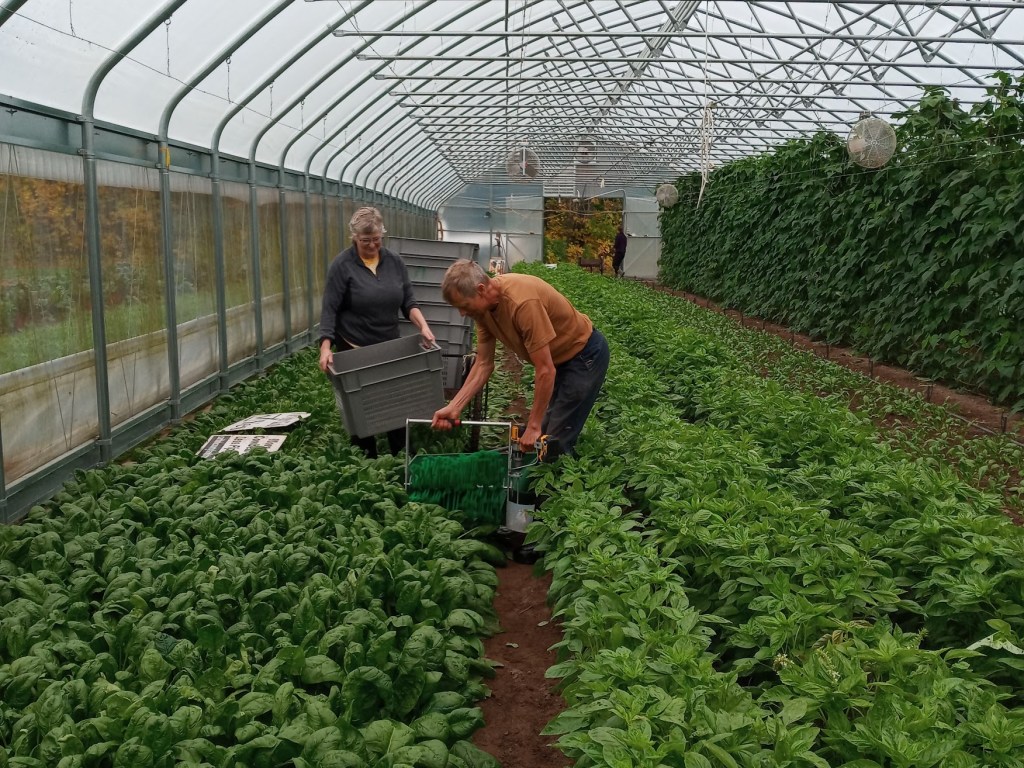
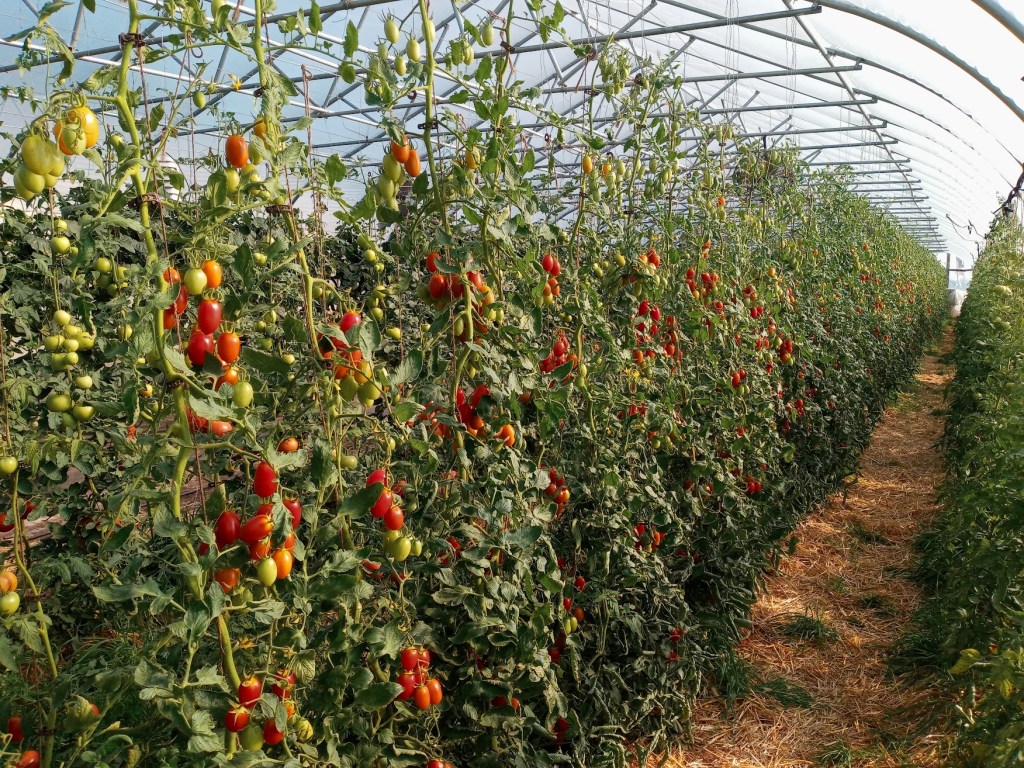
I jokingly call myself “Miscellaneous Man.” The greenhouses tend to be my area of focus. We have around 17,500 square feet of greenhouse space right now. I’m starting plants from seed and keeping successions of crops going in the greenhouses. We grow tomatoes and cucumbers in there of course, but the reason we can send people the greens mix, lettuce, and sometimes spinach that are clean and ahead of what the season up here will allow, is because we’ve got greenhouse space that we can use for that. It’s kind of just cycling through; the greenhouses get pretty intensive use during the season, so I’m just rotating the crops around. Keeping them tended, watered, and fed is my main focus.
What would you say is your farming superpower?
I keep showing up.
What is it about this type of farming that keeps you going?
I do really believe in what we’re doing in relation to feeding the surrounding community. When people express their enthusiasm for that, that’s a pretty great feeling. When we were first going down to Osceola and meeting with farmers there and learning about CSA, that was a big deal. I know there were growers up here before the Food Farm, but there was a time when I remember thinking, “Maybe sometime in the future there can be five vegetable farms like this….” [And now there are many more CSA farms in the area.] That’s a part of it. Feeding that community, seeing that the Food Farm is an example of how our food system could look different. Being part of kind of puzzling that out.
Also, having people on the farm–whether they’re volunteers or paid people–who take ownership or take pride in either certain tasks or work on the farm, makes it feel like you’re part of a working team, and that feels good. Farming can be so isolating in general, so having the CSA also helps in that you have some communication with customers.
What do you like to do when you’re not at the farm?
I like biking around Duluth and wandering around Duluth in general. And relaxing at home.
How are you preparing vegetables these days?
I do like cooking and do quite a bit of cooking at home. Some people can make nice light salads and so forth, but most everything I make seems to end up, no matter what my plan, being kind of goulash-y at the end. I like to slowly build flavor as I go; I just keep adding things and intensifying the flavor. All my food is pretty serious food.
What else do you want people to know about this type of farming?
I do really want to thank all the people who are CSA members–those who’ve been members from the get-go and those who are new. Their willingness to try something different and willingness to be a part of what we’re doing kind of makes it all possible. There have been a lot of people who have really helped this farm over the years, whether they drove the delivery vans or came to the farm to help, or offered their places for drop-off sites, or been part of the core croup; all those people have been really critical to making this work.
Howdy, fellow Food Farm enthusiasts and happy first day of the 2023 Summer CSA season! Thank you for choosing to be a part of our farm family and for valuing the hard work, dedication, and love that we pour into every crop, every animal, and every interaction. Your commitment to local, sustainable agriculture not only supports our farm but also strengthens the fabric of our community, fostering a healthier, more resilient, and connected way of life.
Tatsoi is a versatile green that will elevate your culinary adventures!
Stir-fry perfection: Tatsoi adds a burst of flavor to your veggie stir-fry. With its mild mustard taste reminiscent of baby Pac Choi or Chinese cabbage, tatsoi is a great addition. The best part? It cooks up in a jiffy! Simply toss in the vibrant greens during the final moments of cooking, allowing them to wilt just enough to retain their delightful texture and taste.
A salad sensation: Whether it’s at the microgreen stage, as tender baby leaves, or in its full-grown glory at three to four weeks, tatsoi shines in salad mixes. You may have already noticed its crisp and unique flavor mingled with the mustard greens, arugula, kale, & chard that comprise our usual greens mix blend.
Pesto with a kick: Looking for an adventurous twist on the classic pesto? Get ready to blend your taste buds into a frenzy by incorporating tender tatsoi leaves into a zesty vegan pesto. Just combine them with cashews, a pinch of salt, a drizzle of olive oil, and a sprinkle of nutritional yeast.
Sautéed Tatsoi Recipe, from Niki Nakayama
1 bunch tatsoi
2 teaspoons sesame oil
1 garlic clove, finely chopped or grated
1 teaspoon grated ginger
1 teaspoon fish sauce
Cut off the base of the tatsoi and discard (or save for future stock).
Rinse the leaves, but do not dry them. The excess water will lightly steam the greens while they cook.
Warm the sesame oil in a small frying pan over medium heat.
When the pan is hot and the sesame oil is fragrant, add the garlic and ginger, and sauté until fragrant, about 30 seconds.
Add the still-wet tatsoi and fish sauce, and stir to combine.
Cook uncovered, stirring occasionally until tatsoi stems are tender and leaves are wilted, about 1–2 minutes.
Tatsoi & Basil Pesto, from April Blake
2 cups tatsoi
1 clove garlic
1 cup basil
1/4 cup walnuts
1/4 cup grated parmesan
1-2 tbsp olive oil
salt to taste
Throw everything but the olive oil in a food processor.
Turn it on and if you have the option to drizzle in the oil while the machine is running, add it slowly until the pesto is a spreadable consistency. If you don’t have the luxury of the feature, add one tablespoon of oil, blend, then add the rest as needed.
Teri has been quietly making a big difference at Food Farm for more than 20 years now. She’s our very own Superwoman who makes all our deliveries and helps grow the veggies, too. Plus, she’s in charge of vegetable maintenance – yes, you read that right: vegetable maintenance!
Teri at home with Patsy and her garlic.
How did you make your way to the Food Farm?
I was working at Whole Foods Co-op, at the old location which is now Burrito Union, and I worked with John [Fisher-Merritt]. I was a front-end clerk, and I was going to UMD; it was my senior year, so I was asking around about different experiences for internships. I heard that John had had interns, so I asked him about it. I thought it would be a really fun experience, which seems pretty naïve of me looking back! I ended up working seven days a week as an intern, and I still worked at the Co-op on weekends. It was fun, but a lot of hard work, and I just fell in love with it. I became an employee the next year and have been for 20 years. I took some time off when my kids were really young, but I came back full time in 2016. Over the years, the work has expanded, so now I work almost year-round; throughout the winter I’m organizing winter deliveries and working with a winter crew.
What are some of your early memories of working at Food Farm?
I remember the first CSA harvest days in 2002, which at the time were much smaller; we had less people. It was a little more chaotic. We didn’t have the system that we’ve developed over time. We’d have all the CSA boxes lined up on tables and would have to remember if we put the right amount of vegetables in each box. It’s more of an assembly line now.
My first year, it was really hot and dry, and we had army worms and the associated bugs, which is not a fond memory, but it’s a memory that stuck with me! I honestly thought every season would be like that first one, but I still came back, and it turned out that was the only time we had army worms. There were flies that somehow came along with the worms, and the flies would just cover us because they were attracted to the electrolytes in our sweat.
I also remember that John was such a great teacher; he would talk to me constantly throughout the season. Janaki and Ben [Fisher-Merritt] did work with me, too, but John and Dave really took me under their wings and were my teachers throughout that first season. They had the patience to teach me, because I didn’t know anything.
Speaking of Ben, you two had a bit of a farm romance, correct?
Yes, Ben and I started dating while I was an intern. I was living on the farm in an old camper, which actually was quite nice. Our official first date was probably at the Anchor Bar. We used to go on Wednesday nights as a crew, but then Ben and I went by ourselves as a date. We got engaged the next year, in 2003, and married in 2004, and I hired a catering service that used the Food Farm vegetables and Food Farm chickens for our wedding meal.
And your children are involved at the farm as well?
Yes; Brennan is 16, turning 17 soon; he’ll be a senior this year, and has helped on the farm for a few seasons now, mostly during CSA harvest days. He’s helped with harvesting and then helped me with the delivery. Mina is 12 and has also helped during CSA days. This past year she invited a friend to come over and help as well, so that’s been fun. Mina’s favorite thing is to do the chicken hugging, which happens in the spring and the fall. We just recently moved the chickens from their winter home to their summer home. We wait until it’s dark and they’re very calm; you can just pick them up off their roost and they stay calm. You can take more than one at a time, so you basically have to hug them to transport them to their final destination.
We live right across the road from the Food Farm now – we built our house in 2019-2020, so right during the beginning and the most intense part of the pandemic. It’s really nice to have such a short commute to work.
What is your current role at the farm?
A large part of my role is as the delivery person; I’ve been doing that since 2016, and it’s become a bigger role because we’ve expanded with both CSA members and with our retail partners. Janaki’s low-key talking about getting a bigger van because we may need it soon! During a busy season, the deliveries are about 60 percent of what I do. I deliver vegetables four days a week in the summer and two days a week in winter. I think it’s fun, because my job offers variety. When I’m on my delivery route, I get to talk to the people at the stores and restaurants, and sometimes I see our CSA members when I’m dropping off at our CSA sites. It’s fun to hear how much people love our vegetables and our farm.
The rest of the time I’m out in the field, or in the greenhouses, working along with the rest of the crew. I’m everywhere!
Do you have a favorite farm task or activity?
I have a lot of favorites, but at the beginning of the planting season, in March and April, I love going into the greenhouse and helping seed onions or Brassicas. It’s great after a long winter of vegetable maintenance and winter deliveries, to finally be out in the greenhouse where it’s warm and humid, and to be planting stuff again.
What is vegetable maintenance?
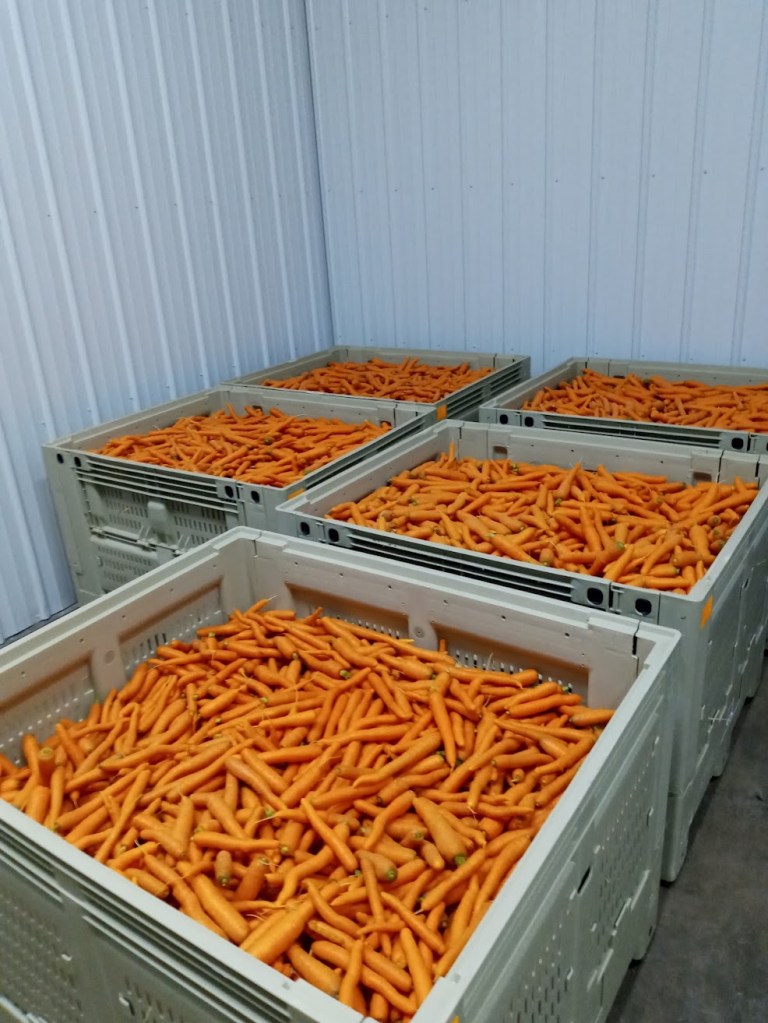
It’s looking after the vegetables in storage in the root cellar. This year we had to wash carrots multiple times throughout the winter; some that hadn’t been washed immediately after harvest in the fall, and later on we washed carrots that had started to sprout, to knock the sprouts off. I’m constantly looking at and going through the vegetables in storage to make sure conditions are right for storage and that they’re staying fresh.
What would you say is your farming superpower?
Most people would probably say I’m good at constantly lifting heavy things; I deliver our wholesale vegetables in 50-pound boxes. I do run into other delivery people on my routes, and they’re mostly guys, and a lot of them wear back braces; it’s physically hard work. It takes 3-4 hours to do a summer CSA delivery. I appreciated some time off to rest and recover this spring [after the root cellar was emptied].
Are there any aspects of farm work that you think would be surprising for our customers to learn?
There’s a lot of record keeping, and it’s necessary so you know from one season to the next what’s been happening. We grow such a variety of veggies, and we need to know what was planted where and where we can plant in the future. For example, we need to leave some distance between where the Brassicas were last year and this year’s Brassica crops, because of disease and pests and crop rotation. It seems like such a miracle when stuff grows, but there’s so much planning and knowledge that goes into it, to make sure that things happen reliably.
What do you like to do when you’re not at the farm?
I just got an inflatable paddle board and I’m excited to try that out. I’ve done stand-up paddling before, but not with an inflatable one.
I also like to take our dog, Patsy, for walks; I like knitting; and I like gardening. People might ask, “Why would you want to garden when you work on a farm?” but I just like planting stuff, and I try different varieties in our garden. I always try to have a pollinator section, and a bed of garlic, because we love garlic, and in the third garden bed, we do miscellaneous stuff.
What’s your current favorite vegetable? How do you like to cook/eat it?
Around this time of year, I love salad greens, and spinach is another seasonal favorite. I can’t wait to eat green stuff in general. I pretty much like everything. Before I started working at the farm, I didn’t have such an expansive palate, so working at the farm has really made me appreciate fresh vegetables much more. I used to hate green beans, and I hated parsnips, but now I love them. To see them growing and be able to harvest them, really gives you a love and appreciation for what you’re eating.
Jennifer had been working at Food Farm for just three weeks when I conducted this interview, but she had already proved herself to be a valuable member of our team. She’s enthusiastic about learning each task and quick to master new skills.
How did you make your way to the Food Farm, and what’s your first memory of working here?
Before this, I was working in corporate America, which was not very interesting to me, and I was tired of waking up to do something that I wasn’t excited about. So, I figured if I could get paid to do something I loved, that would be ideal. And I love food, so working on a farm made sense.
On my first day here, Dave [Hanlon] walked me around to all the greenhouses and showed me everything that was going on, and it was such an exciting moment because I was already learning so much from him. He really took the time to explain things to me, and I appreciated it.
In your short time here, what has been your favorite farm task or activity?
Transplanting onions was one of my favorite things. It was smelly, but it was really cool to be planting something by hand and still using machinery; it was exciting to see how those two things can come together. The transplanter has two seats on it, and there’s shelves above each seat that hold the trays of plants, and there’s a set of wheels that make holes in the soil for the plants and fill them with water. The reason it’s smelly is because there’s fish emulsion added to the water tank, which helps get the plants off to a good start. And, it only takes three days after transplanting for your hands to stop smelling like fish!
What do you think is going to be your farming superpower?
I love to learn about anything and everything, so it’s really hard for me to say no when asked to do something new or different. I think that could be a superpower, but it might also get me into trouble — sometimes in other jobs I ended up doing extra work!
Are there any aspects of farm work that you think would be surprising for our customers to learn?
It’s surprising how much time and effort goes into growing each individual crop. I think a lot of people think you plant this seed in this field and you’re done. There’s so much pre-planning: which field will each crop go in, how will it be fertilized — Dave was explaining that they consider which nutrients are being taken out by each plant, and how do we counteract that. It takes a lot of time before the seed even hits the soil.
What do you like to do when you’re not at the farm?
I like to knit, and I really enjoy being outside, either by myself or with my husband and our dogs. We like hiking and biking. I enjoy gardening at home, too. I feel like my favorite things to grow are probably tomatoes, and the most exciting things to grow are tomatillos and peppers. Tomatoes are safe and you kind of know what to expect from them, but the others are more unpredictable.
What’s your favorite thing to cook?
One thing I’ve been trying to do is to find new and creative ways to reduce food waste. For example, I save my carrot peels to put into soup stock. When the stock is done, I dry the carrot peels and grind them up to add to smoothies. I really like to use all the parts of the plant. Another example is using the leaves of the broccoli plant instead of kale in salads and sandwiches. We use broccoli stems in place of water chestnuts sometimes in stir fries. It’s all edible!
I’m not sure if Charlie’s positive energy helps the plants at Food Farm, but the crew definitely benefits from his good nature! I think it’s safe to say we’re all happy he’s back for a second season.
How long have you worked here, and how did you make your way to the Food Farm?
I’ve worked here a little over a year; I came to it through food. I was working as a cook and for a short time at Third Street Bakery. When Covid happened, I wanted to keep working with food but not work in a restaurant anymore. Working at Food Farm seemed like a good way to explore my love for food, but in a different way than cooking it.
What’s your first memory of working at Food Farm?
My first week of work, we did a lot of bin washing, which is washing and sanitizing all the CSA boxes and the plastic containers that we use for some of our wholesale customers. I also helped install the sink and the kitchen countertops in the new shop [where the crew has lunch and farm events take place]. I remember Dave [Hanlon] saying, “Now you’re farming,” and I learned that there’s a lot of work that’s not necessarily dealing with plants that goes into farming. I did get to do some seeding of something in the greenhouse that week, too, which was more like what I thought I’d be doing here.
Do you have a favorite farm task or activity?
I like the chicken chores a lot; I like to hang out with them. I feed and water the laying hens and keep their grit and calcium full. I collect the eggs and John [Fisher-Merritt] cleans them. The chickens are like little dinosaurs, in a way; I think they’re trippy! I do like the construction-y stuff that I do here, too. I have some background in it, and it’s nice to work with Janaki on stuff like that; he’s a good teacher.
What would you say is your farming superpower?
Giving the plants good vibes; I like to say nice things to them and wish them well. I don’t know for sure that it helps, but it definitely can’t hurt.
Are there any aspects of farm work that you think would be surprising for our customers?
Like I mentioned before, the number of odd jobs that happen on the farm to keep it going. One of the other things that really surprised me was the toughness of the plants. At first, I was afraid of hurting the plants; I was very gentle with them. Dave kind of explained to me, “They want to grow.” Learning about the resiliency of plants was surprising – not that you just throw them around, but it seems like when the plant is healthy, it’s tougher than I thought it would be.
What do you like to do when you’re not at the farm?
I like to play music and cook a lot. The band I’m in now is very indie music; very blended. I also do recording; I record bands and artists and do mixing and mastering. I enjoy that a lot as well. I have a studio set up in my parents’ garage right now; I’ve been doing that for six years.
What sort of things do you like to cook?
Lately my favorite thing has been making stuff from the pantry. Instead of going out and finding a fancy ingredient, just using what the farm has and combining it with pantry staples, and finding something fun to do with what we have. Making broths – vegetable stock and meat stock – is something I’ve been excited about. We have a big tub in the freezer that we put peels and seeds and scraps in, and once it’s full, I’ll make a stock. I really enjoyed making Delicata squash stock last winter.
Throughout the season, you’ll hear about what the Food Farm crew has been busy doing. Most of you probably know Janaki and Annie, the farm’s owners, and their family, but we thought we’d also introduce you to the rest of the crew, before you start enjoying the fruits of their labors.
First up is Jane Marynik, who not only helps keep the farm running smoothly as our crew leader, but also has her own business and is mom to four kids!
How did you make your way to the Food Farm, and how long have you worked here?
This is my fifth season at Food Farm. I worked at UMD’s Land Lab for two seasons, but after I graduated from UMD, I couldn’t work there anymore. I was just looking to get more experience farming. I remember that when I interviewed with Janaki and Karin [White, Food Farm’s former crew leader] for the Food Farm job, my sister had just gotten married and she had made us get our nails done, so I was trying to hide my nails because I didn’t want them to think I was some prissy girl!
What’s your first memory of working at Food Farm?
My first day was seeding the fifth planting of Brassicas, which is an enormous planting. I spent the whole day looking down, and I wasn’t used to that, so my neck really hurt afterward. Everyone was pretty happy that I even came back after that experience.
What is your current role at the farm?
My role is crew wrangler, or crew leader. I get the list of tasks that need to be done from Janaki and plan out who’s going to do what, and I try to keep things organized and smoothly flowing. I take care of our people; if someone is having a physical issue, I try to give them tasks that work for them. I also try to make sure everyone is getting a good variety of tasks so they can learn more about what we’re doing.
Do you have a favorite farm task or activity?
I like being outside in general, and I like helping to grow food for people and helping take good care of the soil. It’s a meaningful job. For specific tasks I like weeding carrots and picking peas. Peas because we get to taste a few as we pick! Weeding I like because I don’t have to think about it too much; you can have good conversations with the other workers while you work.
What would you say is your farming superpower?
I’m good at harvesting broccoli. Normally I’m picking broccoli at least a couple of times a week. The last couple of years we’ve sometimes been harvesting from three different plantings at once, because they all matured at once, so for a while it felt like all I was doing at the farm was just picking broccoli.
The challenge with broccoli is deciding which heads to cut, and which ones will hold in the field until the next harvest. It depends on the weather, the heat, the moisture level, the varieties, etc., so you have to get a feel for it. We’re also watching out for disease–if I notice there’s disease starting in a certain area, I cut those heads right away before it spreads to another area. I’m also trying to judge how much broccoli is out there; if the heads are bigger, they fill up the containers faster, so I’m trying to figure that into the mix.
Are there any aspects of farm work that you think would be surprising/unexpected for our customers to learn?
It’s surprising how many flat tires you get on a farm! And, sometimes what the plants look like while they’re growing in the field is surprising to people. People walking by my garden in Superior one time saw the garlic growing and thought it was corn.
I also think people would be surprised by how early plants go in–how early we start onions (early March); how early we start transplanting in the field (April or May); some of the hardy crops can go out well before the frost date. Also people don’t realize how long you can keep things in the ground, and how long we keep harvesting in the fall.
What do you like to do when you’re not at the farm?
I have my own business called Four Beans Farm; I’ve been doing that for three seasons; this will be my fourth. I grow dry beans, and small scale vegetables. I don’t do a lot of spring stuff, because I don’t have the greenhouse capacity, but I can’t wait to grow more things. I grow some of my crops here at Food Farm and I grow stuff in my gardens at home, and the soil’s different; the temperature’s different; it’s like two different worlds.
I also like to run, which isn’t very compatible with farming [because of the physical demands of vegetable farming], but I enjoy it. My family likes to go canoeing.
What’s your current favorite vegetable, or what veggie do you get most excited about eating?
I’m excited for the first greens of the season, and the first carrots–even though they’re not as good as the fall carrots, there’s just something about them. And snap peas; I eat just snap peas for lunch sometimes!
Greetings! The outside world has temporarily regressed into winter, but things are moving quickly at the farm. We have a full crew lined up for this season, the root cellar is nearly empty, and the greenhouse is filling up with onions, tomatoes, peppers, broccoli, cabbage, and cauliflower transplants. Even with as late of a spring as this, there’s still a good chance that we’ll be able to start the Summer Share season on time. We’re fortunate to have invested a lot in greenhouse space for early crops, and the combination of drainage tile and little to no frost over winter means that we could be ready to get in the field fairly quickly with another stretch of sun and heat.
Speaking of sun and heat, we were able to sneak in a quick getaway to southern Illinois while the kids were on spring break last week. It was delightful to enjoy some sunshine and warm weather, and what do farmers do when they’re on vacation? Farm work, of course! Our friends Segue and Amy of Three Rivers Farm had a work party over the weekend, so we got to help plant onions with them and had a good time talking with their CSA members as we worked.
It may seem like that scene is a long way off for us, but things can turn around quickly and we’re hopeful for a great start to the season. Ultimately, we’re at the mercy of mother nature but we feel pretty well prepared for whatever the season brings. Think sun!
For the farm crew,
Janaki
In your share today:
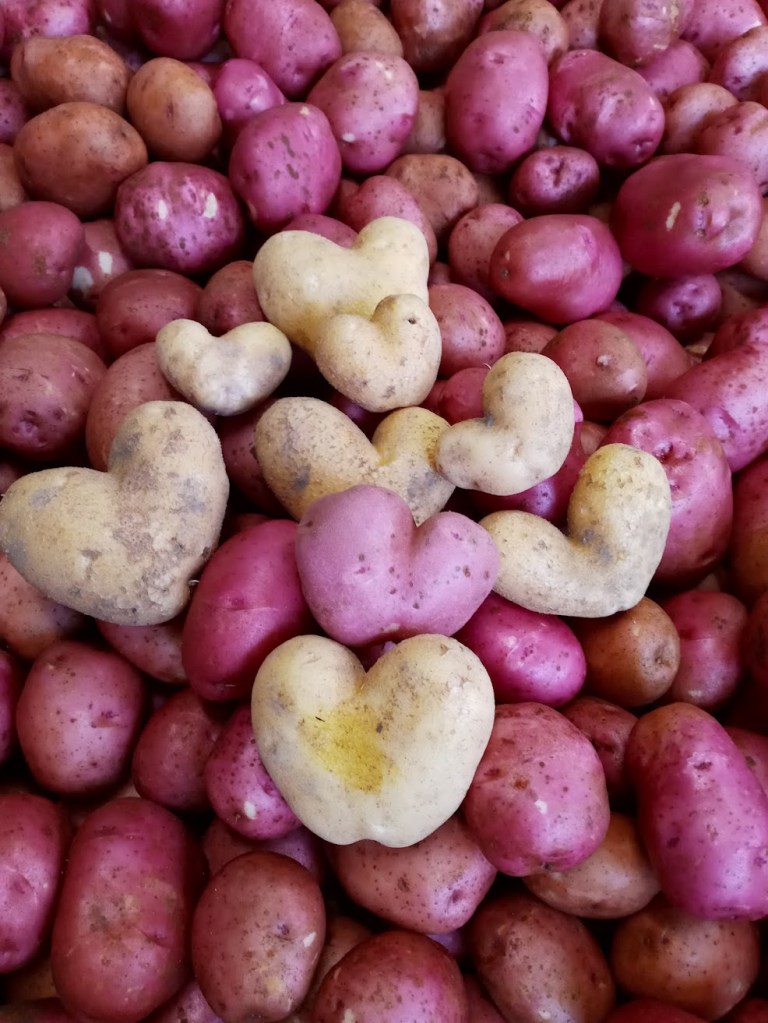
Beets — Orange and Purple Carrots — Garlic — Onions — Red and Russet Potatoes Rutabagas — Shallots — Spinach
Allo Palak (Spinach and Potatoes) modified from NYT
1/4 cup neutral oil
1 large yellow onion, finely chopped
1.5 tsp grated ginger
1 clove garlic, finely grated
1 tsp cumin seeds
3 Thai green chilis, sliced
1 tsp red pepper flakes (or to taste!!)
1/4 tsp turmeric powder
1 cup crushed tomatoes
1/5 tsp salt
3 medium potatoes cut into 1-inch cubes
1 lb fresh spinach, chopped
1/2 tsp garam masala
1. In a large pot, heat oil and onion, ginger, and garlic. Stir for 30 seconds. Add cumin, green chilis, pepper flakes, and turmeric.
2. Add tomatoes and salt. Stir and continue cooking until the tomatoes are jammy and the oil has separated (3-5 minutes).
3. Stir in potatoes. Add 1/2 cup water, bring to a boil and lower heat to medium. Cover and cook for 12 minutes or until potatoes are almost done.
4. Add spinach and turn the heat to high. Once the mix begins to bubble, lower the heat to medium, cover and simmer until potatoes are cooked through, stirring occasionally, 7-10 minutes. Top with garam masala and serve with rice.
Whew, what a winter! Onion seeds are already up, and the greenhouse is tucked in a cozy blanket of snow, but we’re definitely ready to see the banks recede. The first broccoli plants are scheduled to go in the field in just six weeks so we’re getting a little bit antsy! Ellis pretty much summed up our feelings right here: https://photos.app.goo.gl/bhbWAt1VpbyWUFyq8
We are still hiring, so please have folks reach out if they’re looking for some good work this summer.
For the farm crew,
Janaki
In your share today:
Beets — Green Cabbage — Orange and Purple Carrots — Onions — Parsnips Baby Red, Fingerling, and Yellow Potatoes – Rutabagas
Indian spiced pasties
Dough
1 cup boiling water
1 cup shortening
3 cups flour
1 tsp salt
Stir shortening and water in a large bowl until the shortening is melted. Slowly add flour and salt while stirring. When the dough is soft, cover and refrigerate for 1.5 hours.
Filling
2 lbs potatoes, peeled
1 lb rutabaga, peeled
1/2 lb carrot, peeled
2 cups cabbage, finely chopped
1 finely minced onion
2 medium cloves garlic, minced
1.5 cups frozen peas
1 tablespoon freshly grated ginger
1 tsp mustard seeds
1 tsp ground coriander
1 tsp ground roasted cumin seeds
1/4 tsp cayenne pepper
1 tsp salt
2 tablespoons lemon juice
Cube potatoes, rutabagas, and carrots (1/4″ cubes- all veggies to similar size to ensure even cooking). Mix all filling ingredients in a large bowl and stir.
Assembly
On a floured surface, cut the dough into 10 equal portions. Roll one portion into a 8-10″ (appx) circle. Heap 1-1.5 cups of filling onto one half the dough. Fold the dough over (to make a half-moon shape) and crimp edges with fingers or a fork.
Arrange samosa/pasty on ungreased baking sheets. Freeze or bake.
What a difference a month makes! We know that there’s a lot more of winter left, but it feels like spring is just around the corner. Annie and the kids and I are getting away for a family trip to Washington, DC this week to visit friends and family. We’re really looking forward to having a little time away before we open up the greenhouse for onion planting in just two weeks!
Share signups are going well, we’re about 90% full for the summer season, but there’s still a chance to get a spot if you haven’t done it yet.
We are looking for a couple of seasonal farm crew members for the upcoming season, if you know of someone who is interested in good, meaningful work with a team of great people, have them reach out, I’d love to talk with them! https://foodfarmcsa.com/employment/
Unfortunately, it looks like the weather won’t be cooperating for curling on Wednesday, but we’re still planning to bring in a bunch of rutabagas to give away at Wild State Cider on Wednesday evening, and we’d love to see you! If you have friends or family who are interested in the farm, send them down to meet us and answer any questions they might have about being a member.
Enjoy the sunshine! For the farm crew,
Janaki
218-384-4421
In your share today:
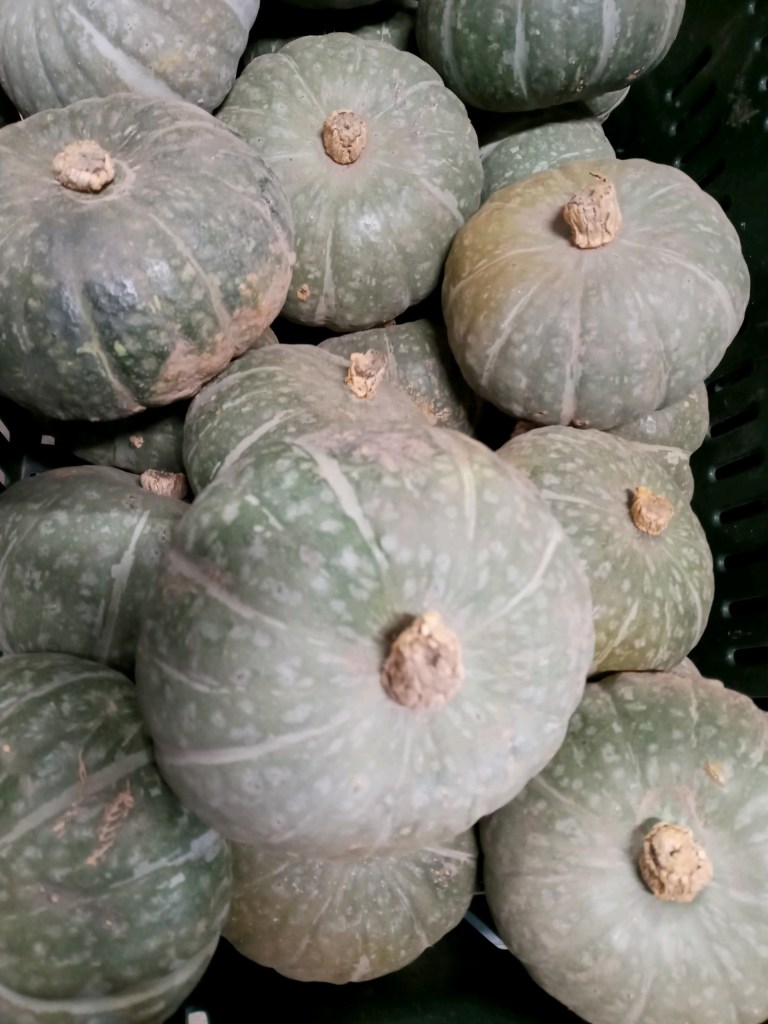
Beets — Green Cabbage — Orange and Purple Carrots — Garlic — Onions — Parsnips Red and Russet Potatoes –Delicata Squash
Valentine’s Casserole (or Hotdish for you true Minnesotans)
5 cups cream or 1/2-n-1/2 (see Tips)
5 cloves garlic, minced
2 cups Parmesan cheese (see tips)
1 tsp cornstarch
1 lb dark leafy greens (kale, collards, or finely chopped green cabbage)
3 cups chopped potatoes and squash (total)
2 cups chopped yellow onion
8 slices bacon, diced (omit if vegetarian)
1/2 cup breadcrumbs
1 Tbsp olive oil
1. Preheat oven to 350°. Bring first two ingredients to a boil over medium high heat. Reduce heat to low, and simmer 30 minutes or until reduced by half. Stir in 1 cup of cheese.
2. Stirred together corn starch and 1 tablespoon of water. Whisk into cream mixture until thickened.
3. Wash and dry greens. If using collards, cook in boiling water until tender (5minutes).
4. Cook bacon in large skillet over medium high heat, stirring often When crisp, add onion, cook five minutes or until tender. Add the diced vegetables and saute for another 5 minutes. Stir in the greens and cook for three more minutes.
5. Mix the cream mixture with the vegetables and pour into a lightly greased 11 x 7 baking dish. Stir the breadcrumbs, remaining cheese, and olive oil together and sprinkle over the casserole.
6. Bake for 35 to 40 minutes until the diced vegetables are cooked thoroughly and the breadcrumbs on top are golden brown. Let stand for five minutes before serving.
Tips:
Try fat free 1/2-n-1/2 rather than milk or the sauce can curdle.
Sharp cheddar also works well but use some Parmesan for the topping.