November Winter Share

We love seeing our fields all tucked in with cover crops for the winter!

Welcome to all of our new members, and welcome back to our returning members. We’re so excited you have chosen to spend your Winter receiving the best veggies in town!

Boy oh boy has it been busy around the farm! I know I said that a lot this year, but this time I really mean it. November marks the busiest time of year here. Our Summer CSA season ended about a month ago, and since then, the farm crew has been hard at work. We said goodbye to all of the tomatoes, cucumbers, pole beans, and some herbs in the greenhouses. Rye got planted in their place to begin putting nutrients back into the soil to prepare it for next spring. We packed up and stored the last of the peppers and kale before we said a final goodbye to those plants as well. We got the 2025 garlic separated, planted, and covered with rye straw to keep it cozy through the winter. We moved onions and winter squash to their more temperature controlled, winter homes in the pack shed. Then we got to harvesting.

It has been all hands on deck, non-stop work, to get everything out of the field. Potatoes, cabbage, brussels sprouts, carrots, beets, and parsnips are all out of the field and crammed into the root cellar for storage. We emptied out the very last greenhouse with the harvest of lettuce and celery for the share boxes. The only things left in the field are rutabaga and daikon radishes. We need to make a little room in the root cellar first so we have space to put them. A wonderful and terrible problem to have. This time of year, our root cellars are filled floor to ceiling, wall to wall with pallet boxes of vegetables. It’s an amazing sight to see. It’s one of my favorite things to stand in the cooler and look around at all the boxes filled with vegetables that we lovingly (and reluctantly) seeded, planted, transplanted, weeded, thinned, hoed, watered, stressed over, and harvested. It’s a year’s-worth of hard work all packed and stacked into massive pallet boxes.

…and the crops all tucked into the cellar for storage!

The hard work doesn’t stop there. Once we get the last of the veggies out of the ground, we hope to take advantage of this nicer weather to get some various projects done around the farm, and clean up some last minute things before the snow starts piling up.

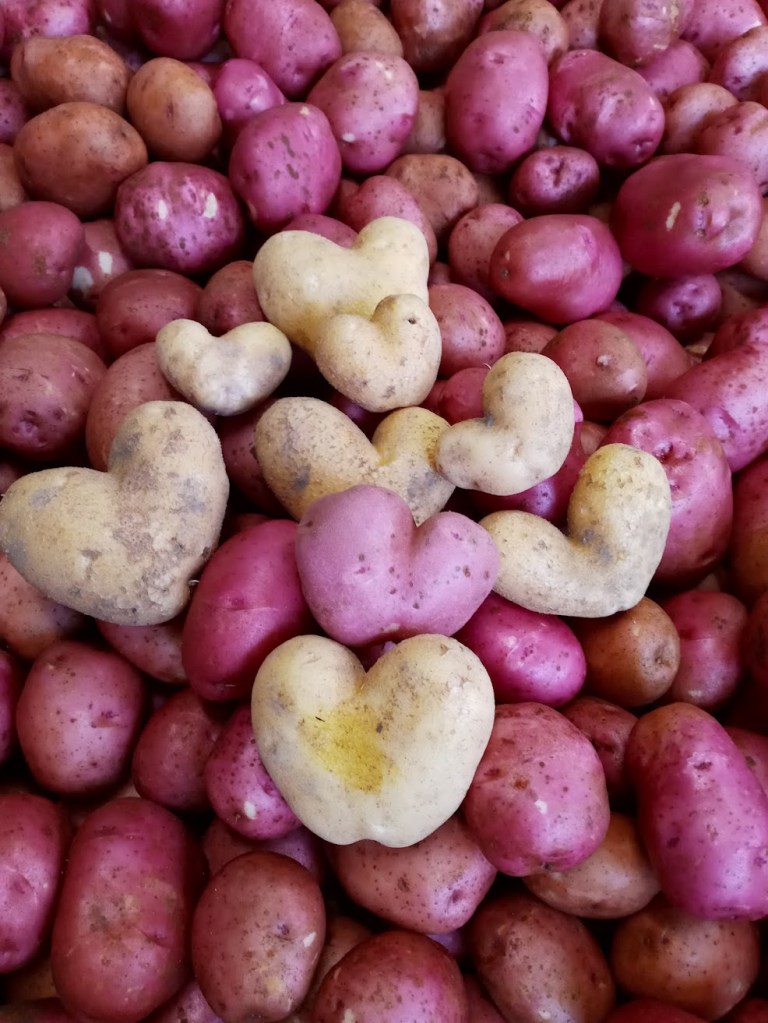
If I had to sum up this share box in two words it would be: Large and Lush. You’ll probably agree with this when you look inside. Thanks to all the rain this year, the carrots are HUGE! In early October, Janaki mowed off the top greenery of the plants in hopes the carrots would stop growing. The carrots didn’t seem to understand, and we harvested really large carrots. They’re still just as tasty as normal, but now, you don’t have to wash and cut as many for dinner. Win! Our friends over at Spirit Creek agreed to take the largest carrots, and a whole pallet box of super large beets as well. This means we can attempt to give you all normal-ish sized food. The weather was perfect for growing lettuce, so you all got one beautiful and lush head of lettuce. It is sturdy and tasty. If you’re not quite ready for cold and snow, this lettuce is the perfect time to make one last Summer salad. The only thing that isn’t large and lush is the celery. This got a slow start, so it’s smaller than the celery we normally send. The smaller size makes it more tender and less stringy. If you aren’t a fan of celery and don’t know what to do with it, did you know it’s a great treat for dogs? The fibers help to clean their teeth, it works to freshen their breath, and the high water content is hydrating. Around our house, we freeze the stalks so the dogs can’t chew through them as fast. Local produce can be fun and tasty for the whole family!

In your share this month:

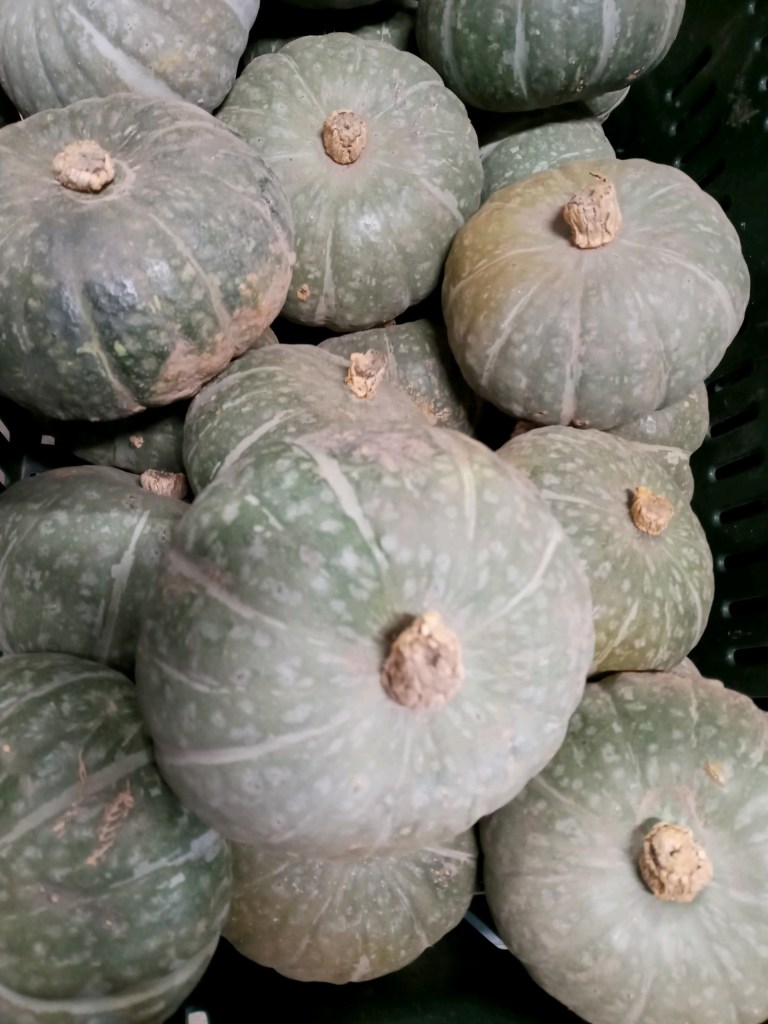
Yellow Potatoes – Red Potatoes – Delicata Squash – Sunshine Squash – Beets

Carrots – Celery – Lettuce – Onions – Brussels Sprouts – Thyme – Rosemary

Persian Celery Stew

INGREDIENTS

  • 2 large onions, thinly sliced
  • 3 cloves of garlic, minced
  • 1 can of butter beans or kidney beans
  • 1 tsp of turmeric
  • 1 bunch of celery stalks (around 6-8 stalks) chopped into 3cm pieces
  • 250g of chopped parsley
  • 50g of chopped fresh mint or 2.5 tbsp of dried mint
  • 130ml juice of lime
  • ½ tsp of saffron dissolved in ¼ cup of boiling water
  • 1 tsp salt
  • ½ tsp freshly cracked black pepper
  • 1 vegetable stock cube
  • Vegetable oil of your choice

INSTRUCTIONS

1. Heat 3 tbsp of vegetable olive oil in a pan over medium heat. Add the chopped mint and parsley and fry for around 10-15 minutes until herbs start getting dark and release their aroma. Add more oil if necessary. The darker the colour, the better the flavour will be.

2. In a separate pot, fry the sliced onion in 3 tbsp of vegetable oil. When translucent, add 1 tsp of turmeric. Then add the garlic and celery pieces and saute for another 5 minutes on medium heat.

3. Add in the butter beans and sauteed herbs and cook for about a minute further.

4. Add in 3 cups of boiling water, followed by the stock cube, lime juice, saffron water, salt, pepper, and cover and cook for at least 45 minutes-1 hour on a very low heat.

5. Make sure it is not completely dry, we want the juice! Add more salt to taste.

6. Serve hot with steamed basmati rice and vegan yoghurt!

Carrot Tahini Soup

Ingredients

  • 2 large onions, thinly sliced
  • 2-4 garlic cloves, minced
  • 5-6 large carrots (about 3 lb. or 1200 g.), chopped
  • 2 tbsp. olive oil
  • ~ 7 cups water or vegetable broth
  • 2/3 to 1 tsp. salt
  • 1 tbsp. fresh or 1/2 tsp dried thyme
  • 1/1 tbsp. Italian seasoning herbs
  • 1 tbsp. smoked paprika
  • 1/4 tsp. chipotle powder
  • 1/4 cup (or a bit more) tahini + more for garnish
  • sesame seeds, lightly toasted, for serving(optional)
  • fresh thyme, for serving (optional)

Directions

  • In a large pot, heat the olive oil and sauté the onions with garlics, 5-7 min, until aromatic and translucent. Add the carrots and cook them for 5 minutes until start to lightly brown.
  • Add the water or broth to the pot along with the ginger juice, seasonings, and maple syrup (if using). Simmer at low-medium heat, covered and skimming the scum (if any appear) for about 12-15 minutes or until the carrots are soft.
  • At the end, stir in the tahini and off heat.  Let it cool a bit until easy to handle. Using an immersion blender, process until smooth. If the soup is too thick to your liking, add a little of hot water or broth. Try and adjust the seasoning (or maybe even more tahini!) if necessary. When serving, drizzle with extra tahini and sprinkle with the sesame seeds, if desired. Enjoy!

Thanksgiving Slaw

Ingredients

For the dressing:

  • 1/2 medium red onion
  • 1/3 cup vegetable or olive oil
  • 1/4 cup apple cider vinegar
  • 2 tablespoons maple syrup
  • 4 teaspoons Dijon mustard
  • 1/2 teaspoon kosher salt

For the salad:

  • 1.5 pounds shredded brussels sprouts
  • 1 bunch fresh parsley
  • 3/4 cup toasted, sliced almonds
  • 3/4 cup dried cranberries
  • Kosher salt
  • Freshly ground black pepper

Instructions

Make the dressing:

  1. Finely chop 1/2 medium red onion and add to a large bowl. Whisk in 1/3 cup vegetable oil, 1/4 cup apple cider vinegar, 2 tablespoons maple syrup, 4 teaspoons Dijon mustard, and 1/2 teaspoon kosher salt. Let sit for at least 10 minutes for the flavors to meld. Meanwhile, prepare the salad.

Make the salad:

  1. Shred the brussels sprouts. Pick the leaves from 1 bunch fresh parsley and coarsely chop until you have 2/3 cup.
  2. Add the shredded brussels sprouts, chopped fresh parsley leaves, 3/4 cup toasted, sliced almonds, and 3/4 cup dried cranberries to the dressing. Toss to combine. Taste and season with kosher salt and black pepper as needed.

For the farm crew,

Jennifer

Summer CSA Week 13

Last week I promised you all an official update on how the caterpillar tunnel experiment went. I know a few of you were heartbroken to learn that this was not in fact a fun tunnel that we let caterpillars run through all day, but instead it was an effort to save our sad looking tomatoes.

At the beginning of the season, before we put the caterpillar tunnel up, the field tomatoes looked very stressed. They had gotten their leaves pelted by so much rain and the soil was soaked. As we hustled to get the tunnel up before yet another 2″ rain, we worried that it might be too late for them to recover. I am happy to report that the exact opposite happened. We put the caterpillar tunnel over the tomatoes, and in just a few weeks, they looked like entirely different plants. The leaves went from a dry, shriveled, brown color to a soft, vibrant green color. The plants started producing more leaf sets, growing taller, and eventually putting on flowers and fruit. We think the protection from the elements really saved them because the rest of the field tomatoes developed early blight.

The fruit has been slow to ripen, but that could be because we pinched off the first one or two sets of flowers in an effort to convince the plant to focus on getting healthy rather than producing fruit. We have been able to harvest a few tomatoes, but most of the fruit on the plants is still green.

The most important factor in determining if this tunnel was a success came down to the taste. First, for background, we haven’t been satisfied with our greenhouse tomatoes for a few years so this year we tested out new fertility sources. Previously, our nitrogen source was coming from fish fertilizer, and our potassium source was mineral based. Nitrogen is important for the chlorophyll formation in plants. Chlorophyll is what makes plants green which allows them to absorb sunlight through photosynthesis. Without adequate nitrogen, plants won’t be “green” enough to absorb sunlight thus stunting their growth, and possibly preventing them from fully maturing. Potassium is important for plants because it aids in regulating the rate of photosynthesis, and it is associated with the movement of water and nutrients throughout the plant. Without adequate potassium, plants have reduced yield, stunted growth, and poor flavor. 

Our previous fertilizer mixture worked okay (though applying fish fertilizer through drip tape is a smelly hassle), but we wanted to see if we could do better so we tried an amino acid based nitrogen. This is beneficial to the plants because amino acids are immediately available for the plants to absorb. The fish fertilizer delivered nitrogen in the form of proteins which can take a while to break down so they can be absorbed by the plants. We also switched to using a plant based potassium source instead of a mineral based source. Mineral based sources can often lead to a build up of minerals at the roots of the plant, preventing the plant from being able to absorb other nutrients. We also added calcium and micronutrients to round out the program.  

Farmer Janaki thought this new fertilizer combination made the greenhouse tomatoes taste significantly better than in previous years. This meant the caterpillar tunnel tomatoes had to be really great in order to earn the top spot for best tomatoes on the farm this year. We had lots of people taste testing, and we all came to the same conclusion: for our Geronimo (large slicing tomatoes) we compared one from our regular greenhouse and one from our caterpillar tunnel, and the greenhouse won. They both had a similar texture, but the greenhouse tomato had more flavor. We also compared an Early Cascade (small canning tomato) from outside and one from the caterpillar tunnel. In this test the caterpillar tunnel won. Again, they had similar textures, but the appearance and flavor of the caterpillar tunnel tomatoes was better. Oddly, the caterpillar tunnel fruit ripened later than both the high tunnel and field tomatoes. We only did a small sample so far, and this is just one year, so we are excited to keep this in mind and see if we feel the same again next year. In farming, there are so many variables that it’s hard to run true experiments that inform results year-to-year, but we keep trying to zero in on better ways of growing healthy food!

In your share this week:

Green Beans – Broccoli – Cucumbers – Zucchini – Tomatoes – Sweet Onions – Carrots

Hot Peppers – Sweet Peppers – Potatoes – Melons – Lavender

Marcella Hazan’s Tomato Sauce 

2 cups of tomatoes with juices

5 tablespoons of butter

One onion, peeled and cut in half

Salt

Combine tomatoes and juices, butter and the onion halves in a sauce pan with one or two pinches of salt.  

Place over medium heat and bring to a simmer. Cook uncovered for 45 minutes occasionally stirring and breaking up chunks of tomatoes with the back of the spoon.

Discard the onion before pouring sauce on cooked pasta.  This recipe creates enough sauce for 1 pound of pasta.

Marinated Vegetable Antipasto

Vegetable suggestions: Blanched and chilled broccoli, cauliflower, and carrots.  Onion, celery, sweet peppers, zucchini

Marinade:

1/2 cup water

1-1/2 cups wine vinegar

1 cup olive oil

2 tbsp sugar

2 tsp fresh oregano, minced

1/2 cup pitted olives

Salt and pepper to taste

Prepare appx 8 cups vegetables by cutting into bite-size pieces.  Bring marinade ingredients to a boil in a larger saucepan.  Add approximately 2 quarts of cut up vegetables – cover and cook 3 to 4 minutes, stirring once.   Uncover, cool and refrigerate for at least two hours. Drain before serving.

November Winter Share

The first winter CSA delivery is upon us! For our new members: Welcome to our veggie community and thank you for choosing local and organic 🙂 For our season to season members: Thank you for your continued support and welcome back! It’s been a little over a month since our last summer share box was delivered. We hope the short break in your Food Farm veggie action has not been too much to bear. Despite a pause in share deliveries, the farm crew has done anything but pause…

Next year’s garlic crop all tucked in for the winter

It has been a mad dash to get us set up for winter! A short three weeks ago we were digging the last of our storage potatoes from the ground (a remarkable feat in its own regard), thinking to ourselves “How in the heck are we gonna get 35 tons of carrots, four tons of beets, a couple tons of parsnips and a few thousand pounds of rutabagas from the rapidly cooling earth before it freezes in four days?”

Well… we did things a little differently this year, that’s how.

Usually, during peak harvest time, we operate with two crews. One crew harvesting and another washing. This year, because of the hard freeze during the last week of October, we used all hands on deck (along with some volunteers from Fond du Lac Community College) to harvest everything as quickly as we could. Just in the nick of time, we packed the veggies in pallet boxes and stacked them to the ceiling of our root cellar with dirt still clinging to their skin. We then began November by pulling it all back out, one pallet box at a time, to gently roll or tumble through our washing assembly. We took the occasional break to knock ice free from the spray nozzles and it was a chilly process indeed, but Dave brought lots of extra winter gear and by the end the veggies were shining in vibrant shades of orange, purple & parsnip. It also helped that Janaki kept us fed and happy with hot cocoa, cookies & pizza during our lunch breaks. The morale boost was at times needed.

All in all, it was a year filled with joys and challenges, but we got through it and at the end of the day, that’s farming!


In your share this month:

Beets – Brussels Sprouts – Carrots – Celery – Onions

Red & Yellow Potatoes Delicata & Sunshine Winter Squash – Tatsoi


Thriving under the shelter of Catherine’s hoop houses, the celery reached rather impressive height this fall. We had to cut the stalks in half just to fit them in the share box. Because of this, we went ahead and left the leaves on – something we don’t often do in the summer shares. The leaves present a concentrated flavor that is more robust than the stalks. They can be used in a variety of dishes, including soups, stocks, salads, and as a garnish. Or maybe you would like to include them in your stuffing this holiday season… Included below is a recipe for just that!


Classic Thanksgiving Stuffing (by Anna from crunchycreamysweet.com)

Yield: 6 servings

1 fresh French bread or 10 cups dried cubed bread
1 ½ sticks unsalted butter, divided
1 ½ cup chopped celery
½ cup celery leaves, chopped
1 large yellow onion, chopped
1 tablespoon chopped fresh sage
1 tablespoon fresh thyme
1 tablespoon chopped fresh rosemary
1 teaspoon salt
½ teaspoon black pepper
1 ½ cups broth chicken, turkey or vegetable

  1. If you are using fresh French bread: slice it into ½″ slices, then each slice into ½″ cubes. Place bread cubes on a baking sheet (most likely you will need at least two sheets), in a single layer, then let it air-dry in room temperature overnight OR preheat oven to 250° F and bake bread for 30 to 35 minutes, shaking the pans every 15 minutes. If using already dried bread, place 10 cups in a large bowl.
  2. Preheat oven to 350° F. Butter a 13″x9″ baking dish or 3 quart baking dish. Set aside.
  3. In a skillet, melt 1 stick (½ cup) of butter. Add chopped onion and celery. Saute until veggies are soft.
  4. Add veggies to bread.
  5. Add herbs, celery leaves, salt and pepper. Stir in.
  6. Add broth and stir in gently. Place in buttered dish.
  7. Melt remaining butter and pour over the stuffing.
  8. Cover the dish with aluminum foil.
  9. Bake in preheated oven for 30 to 35 minutes. You can uncover it for the last 5 minutes to toast up the top pieces, if desired.
  10. Let cool for 10 minutes, then serve.

P.S. – For the best texture, bake the stuffing the same day you will serve it. You can prep everything the day before: dry the bread and sauté veggies. The next day just assemble everything and bake!


Bacon & Brussels Sprout Salad (from pinchofyum.com)

Yield: 8-10 servings

Dressing:
1 lemon
1 orange
1-2 tablespoons of apple cider, maple syrup or honey (something for sweetness)
1 shallot, minced
1/2 cup olive oil
1/2 teaspoon salt & pepper to taste

Salad:
4 dozen brussels sprouts
1 cup almonds
6 slices of cooked bacon, crumbled or chopped
1 cup grated parmesan cheese

  1. Combine the lemon juice, orange juice, apple cider, and shallots in a small bowl. Add the olive oil in a steady stream and whisk for a minute or two, until it becomes creamy-looking.
  2. Slice the brussels sprouts with a mandoline, taking care of your fingers! and slicing them as thin as possible. This works best when you hold the stem, slice from the top, and stop with a little bit left at the bottom, discarding the remaining bottom stem part since it’s not very leafy anyway. The thinner the shreds, the better the salad! Toss the shreds and loosen them with your fingers to they separate and fluff a little bit.
  3. Pulse the almonds in a food processor until finely chopped.
  4. Toss the brussels sprouts, almonds, bacon, cheese, and dressing together. Serve immediately or within a few hours of tossing.

This next recipe is rather simple, but I haven’t been able to get enough of it in the last couple weeks. I like it as a side, just as the recipe below says, but I also think it would make a great salad if combined with a bed of greens & dressing of your choice.

Delicata, Beets & Goat Cheese w/ Papitas

Yield: 2 servings

1 delicata squash
2 beets
olive oil
salt & pepper to taste

2 tablespoons toasted & salted pepitas
1-2oz. goat cheese

  1. Preheat the Oven: Preheat your oven to 400°F (200°C).
  2. Prepare the Squash: Wash the delicata squash and cut it in half lengthwise. Scoop out the seeds using a spoon. Then, slice the squash into half-moon shapes about 1/2-inch thick. Leave the skin on as it becomes tender when roasted.
  3. Prepare the Beets: Wash the beets thoroughly to remove any dirt. If the beets are large, you can peel them, but small to medium-sized beets can be roasted with the skin on for easy preparation. Cut the beets into even-sized pieces to ensure uniform cooking. You can either slice them into rounds or cube them, depending on your preference.
  4. Arrange on a Baking Sheet: Lay the squash slices in a single layer on one baking sheet & the beet cubes on another. Make sure not to overcrowd to ensure even roasting. Drizzle with olive oil and season with a generous dusting of salt and pepper.
  5. Roast in the Oven: Roast the delicata squash in the preheated oven for approximately 20-25 minutes, or until the edges are golden brown and the squash is tender. You can flip the slices halfway through the cooking time for even browning. Roast the beets for about 30-40 minutes, or until they are fork-tender. Larger pieces may require more time.
  6. Serve and Enjoy: Once the vegetables have cooled, serve with goat cheese & pepitas!

For the farm crew,

Charlie

Summer CSA Week 18, 2023

This is the last Summer Share of the season! Please remember to bring any empty boxes back to your pickup site by next Thursday, the 19th. Winter Shares begin on November 13th.

As the chill of autumn sets in, we find ourselves on the threshold of our last CSA distribution of the summer season. As with most endings, it’s a bittersweet feeling.

The CSA boxes are one of our most straightforward connections to the community. The weekly bounties we harvest, wash, package, and deliver give us an opportunity to share the farm with all of you – something we miss during the longer stretches of the winter.

This time of year also signals the ramping up of end-of-season chores! There’s lots to do on the farm to get ready for winter. A big part of our business is caring for and delivering storage crops throughout the non-growing months. The short break between summer and winter CSA gives us just enough time to pull the cabbage, beets, potatoes, daikon radish, rutabaga, parsnips, & carrots from the fields before they freeze!

A big thanks is also in order to all of the volunteers who helped us in countless ways throughout the season. With so much work still to go, I don’t want to start reflecting too early, but I think it is safe to say “Thank you so so much Patricia, Sandy, Betsy, Rollie, Deb, Diane, Pat & any other names I may be forgetting while typing this.” Your work is really appreciated!


In your share this week:

Beets – Brussel Sprouts – Green Cabbage – Carrots – Garlic – Lacinato Kale – Onions

Parsley – Red Peppers – Potatoes – Rutabaga – Winter Squash


Now you’ve had some winter squash in your share this year, but this week will be your first time seeing green kabocha. You can think of it as a cross between a pumpkin and sweet potato. Its flesh has a sweet, earthy flavor that is denser and drier than the other varieties you’ve tasted this year. This makes it an excellent candidate for soups, stews & curries. It is quite dry right now, but should gain moisture as it cures over the next couple of weeks.

Also joining the lineup are tender brussel sprouts, small but mighty in flavor, and rutabagas!

Usually I am a strong endorser of leaving the skin on vegetables when eating. I do this in part for flavor, in part for valuable nutrients and fiber, but mostly out of laziness. Peeling can feel like an unnecessary chore… the worst kind. This year’s rutabaga is not quite as nice and smooth as usual, due in part to stress from our hot dry summer, and may benefit from being peeled.


Roasted Kabocha Squash Soup, from Simply Recipes

Yield: 4-6 Servings

1/2 large kabocha squash, seeded (about 3 to 4 pounds for the 1/2 squash)
2 1/2 tablespoons extra virgin olive oil, divided
Salt
2 cups chopped or sliced onions
2 ribs celery, sliced
3 cloves garlic (about 1 tablespoon)
1 (2-inch) piece fresh ginger, peeled and grated
1/2 teaspoon ground cumin
1 teaspoon ground coriander
4 cups chicken stock
2 teaspoons kosher salt
1/4 teaspoon black pepper
Lime juice, for serving
Chopped fresh cilantro, optional for serving

  1. Set the oven to 400°F.
  2. Roast The Squash: Use a heavy chef’s knife or cleaver (it helps if you have a rubber mallet as well) to cut the kabocha squash half into a few large pieces. (Kabocha squash is thick and meaty and can be a challenge to cut. So take care! Make sure the squash is stable on your cutting board before you start to cut it. You can create a flat side by shaving off a bit of the outside in one spot.)

    Scoop out the seeds (you can toast them like pumpkin seeds!) and stringy insides. Place the squash pieces on a foil, baking parchment, or Silpat-lined roasting pan. Rub 1 tablespoon olive oil over all sides, and sprinkle with salt.

    Put the squash pieces skin side up on the pan. Roast for 45 to 60 minutes until completely cooked through. The pieces should be soft and caramelized at the edges. Remove from oven and let sit.
  3. Sauté the onions, celery, garlic, ginger, and spices: While the squash is cooling, heat the remaining 1 1/2 tablespoons of olive oil on medium-high heat in a large (4- to 6-quart) thick-bottomed pan. Add the onions and celery. Lower the heat to medium and cook until softened, 8 to 10 minutes.

    Add the garlic, ginger, cumin, and coriander and cook 2 minutes more.
  4. Add the squash, stock, salt, and pepper, then simmer: Once the squash is cool enough to handle, remove and discard the skin. Place the roasted kabocha squash flesh into the pot with the onions and celery mixture. Add the stock, salt, and pepper. Increase the heat to high to bring the soup to a simmer. Then, lower the heat to low. Partially cover and cook 8 to 10 minutes.
  5. Purée the soup: Remove from the heat. Use an immersion blender (or work in batches with a standing blender, only filling the blender bowl 1/3 of the way each time) to purée the soup.

    Add more salt to taste. Sprinkle with lime juice and chopped cilantro to serve.

Maple-Roasted Brussel Sprouts and Rutabaga with Hazelnuts, from Martha Stewart

Yield: 5 Servings

½ cup pure maple syrup
2 ½ tablespoons extra-virgin olive oil
1 tablespoon fresh lemon juice
Coarse salt and freshly ground black pepper
2 pounds rutabaga, skin removed and cut into 1 ½-inch pieces (5 cups)
¾ pound brussels sprouts, trimmed and halved lengthwise
1 ounce toasted hazelnuts, chopped (⅓ cup)

  1. Preheat oven to 400 degrees. Whisk together maple syrup, oil, lemon juice, and 1/4 teaspoon salt in a large bowl. Add rutabaga, and toss.
  2. Transfer rutabaga and all but 2 tablespoons glaze to a rimmed baking sheet (leave remaining glaze in bowl). Spread rutabaga in a single layer, sprinkle with 1/4 teaspoon salt, and roast for 35 minutes, tossing halfway through and making sure rutabaga is spread toward the edges of pan.
  3. Raise oven temperature to 450 degrees. Toss brussels sprouts with remaining glaze in bowl and 1/4 teaspoon salt. Remove sheet from oven, and add sprouts. Toss, and spread in a single layer. Roast vegetables, tossing every 5 minutes, until glaze is very thick and vegetables are deep golden brown, about 20 minutes. Season with pepper and sprinkle with hazelnuts.

For the farm crew,

Charlie

Summer CSA Week 17, 2022

It’s pumpkin time!

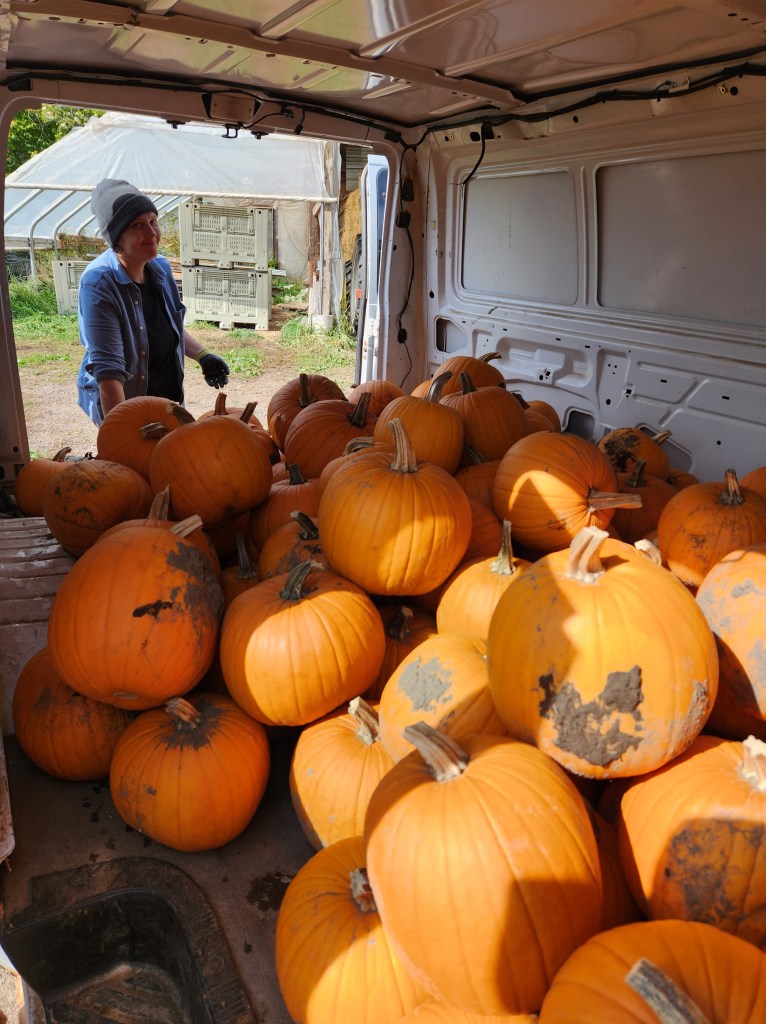
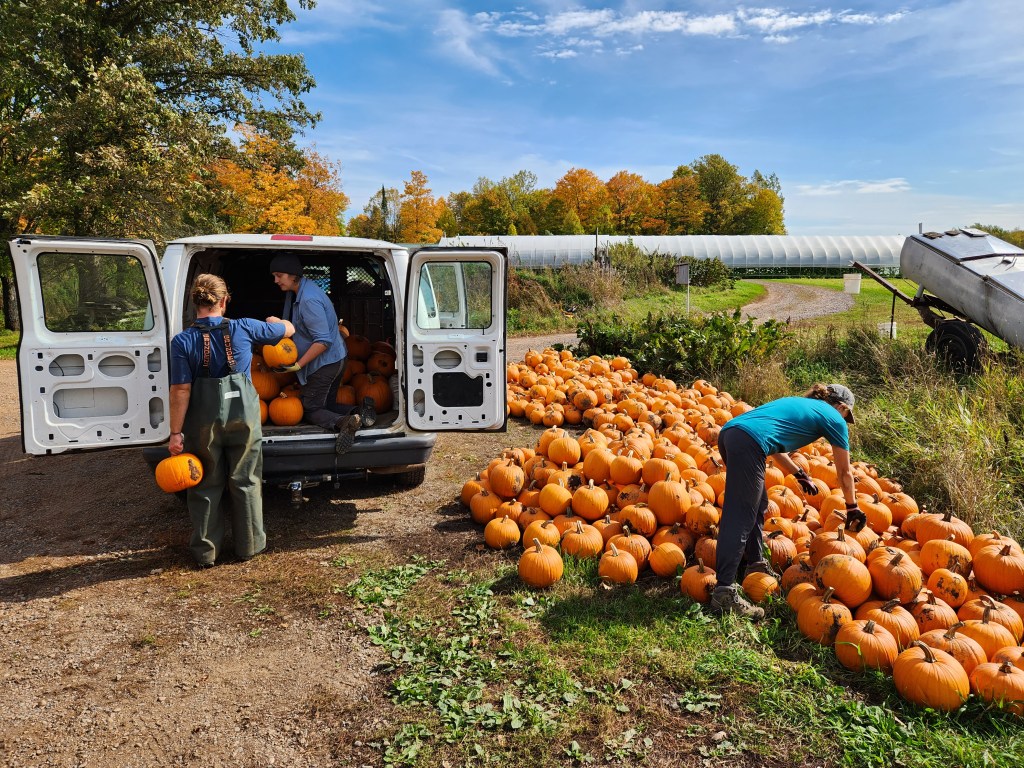
This is the penultimate CSA week! You will be receiving a carving pumpkin with your share this week. The pumpkins do not fit in the box, so please remember to grab your pumpkin when you pick-up. Enjoy carving jack o’lanterns! Try roasting your pumpkin seeds for a bonus tasty snack.

Next week will be the 18th and final CSA box for this season. It has been a joy having you as part of the Food Farm family!

Loading up pumpkins for Monday deliveries.

In your share this week:

Noreaster Beans – Broccoli – Carrots – Garlic – Leeks – Lettuce – Onion – Sweet Red Peppers (not hot) – Jalapeño Pepper (hot) – Yellow Potatoes – Daikon Radish – Delicata and Acorn Squash – Tomatoes – Parsley


Leaves changing at the farm


Universal Cream of Vegetable Soup

This recipe works for nearly any vegetable the farm grows – from celery to leeks to squash! This is also a great way to use up veggies from last week.

Ingredients

  • 4 tbsp butter
  • 6-8 cups coarsely chopped veggies (suggested starting point: 1 med onion coarsely chopped, 2 leeks, one clove garlic minced, 2 diced carrots,  2-3 stalks celery coarsely chopped, 2 potatoes diced. Add any other veggie like broccoli, cauliflower, or  squash to total 6 cups veggies.)
  • 1/4 cup flour.  
  • 4 cups broth (chicken, pork or veggie)
  • 1/2 to 1 cup milk or cream
  • Salt and pepper to taste

Instructions

  1. Sauté veggies in the butter 10-15 minutes (until tender but not brown).
  2. Add flour and cook for a couple of minutes.  
  3. Turn heat to high and add 4 cups of broth (chicken, pork or veggie), while constantly stirring as the soup thickens.  Bring to a boil.  
  4. Reduce heat to simmer the soup.  Cook, partially covered, until the vegetables are very tender (appx 30 minutes).   Using an immersion blender, food processor, or blender process the soup until smooth.  Add a little water or more broth if the soup is too thick and difficult to process.  
  5. Return soup to the pot and add 1/2-1 cups milk or cream.  Salt and pepper to taste.
  6. Can be served with grated cheese.

Recipe from Deb Rausch


What to do with Daikon Radish?!

This week you will find daikon radish in your box. Daikon is a large peppery variety of radish that is common in Asian cuisines. This crunchy vegetable can be eaten raw, pickled (like in traditional kimchi), or cooked.

Vietnamese Pickled Carrots & Daikon Radish (Đồ Chua)

Ingredients

  • 1/2 lb daikon radish*
  • 1/2 lb carrots*
  • 1 tbsp salt
  • 1/2 c boiling water
  • 5 tbsp granulated white sugar
  • filtered room temp. water
  • 4 tbsp distilled vinegar

Instructions

  1. Peel daikon and carrots, then cut with mandolin slicer medium to small matchsticks. Smaller cuts will pickle faster.
  2. In a large bowl, sprinkle with salt evenly and toss to coat. Soak for 15 minutes.
  3. Rinse thoroughly to remove the salt and in small hand-fulls, squeeze to remove as much moister as you can.
  4. Add to jars, filling almost to the top.
  5. Create the vinegar solution (brine) by boiling water then adding sugar. Mix to dissolve. Add vinegar.
  6. Pour this liquid evenly into your jars. If needed, add extra room temp water to barely fully submerge the veggies.
  7. Screw on the lids, store at room temperature until pickled to your taste, checking every 12 or 24 hours. It usually takes 2-5 days depending on the temperature.
  8. Refrigerate when ready, for up to 3 weeks, or until too sour or veggies lose their crunch.

*You can change the ratio of veggies to your preference and/or scale the recipe up or down depending on how much veg you have to pickle. Just make sure you have enough brine to completely submerge your veggies.

Based off recipe from Hungry Huy.

Check out other daikon recipes here.


For the farm crew,

Starr

Summer CSA Week 6, 2022

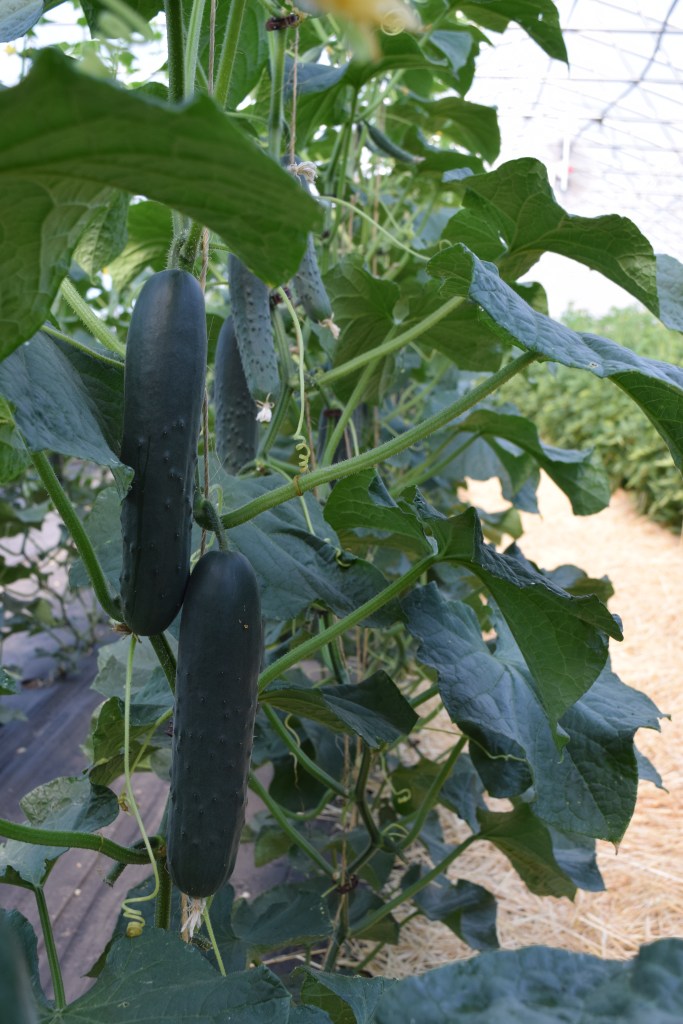
Cucumbers ripening in the greenhouse

It’s hot and the CSA boxes are bursting! New in the box this week is Swiss chard and napa cabbage. We hope you’re staying hydrated and wearing plenty of sunblock and enjoying the heat!


In your share this week:

Swiss Chard – Napa Cabbage – Lettuce – Cucumbers – Green Onions – Broccoli – Carrots with Tops – Beets – Parsley – Garlic Scapes


Vegan Borscht

Serves 4

Ingredients

2 medium beets

3 small carrots (~1 1/4 medium carrots)

2 medium red-skinned potatoes

2/3 medium onion diced (approximately 2/3 cups, try substitution with the green onions in your box!)

2 stalks celery, diced

1 tablespoon and 1 teaspoon extra virgin olive oil

5 cups vegetable stock

1 1/4 cups shredded red cabbage

1 1/4 cups chopped beet greens or chard

1 tablespoon and 1 teaspoon chopped fresh dill

1 tablespoon and 1 teaspoon white vinegar

1 tablespoon and 1 teaspoon fine sea salt or to taste

freshly ground black pepper or to taste

1/4 cup sour cream vegan or regular (optional)

Instructions

  1. Begin by prepping your vegetables. Peel the beets. Scrub the carrots and potatoes. Dice everything up. It’s best if the beets are a slightly smaller dice than the rest as they take a little longer to cook (you could also shred them in a food processor).
  2. Heat the olive oil in a large pot over medium heat. Add the diced onion and celery and sauté for 5 minutes or until slightly softened. Add the diced carrots and cook for an additional minute or two.
  3. Tumble in the beets and the potatoes. Pour in the vegetable stock and bring to a boil. Reduce heat and simmer until root vegetables are al dente.
  4. Tip in the cabbage and beet greens. Bring soup back up to a boil, then reduce heat and simmer for 10-12 minutes. Vegetables should be tender.
  5. Sprinkle in the dill and the vinegar. Season the borscht to taste with salt and pepper.
  6. Ladle borscht into bowls and serve with a dollop of vegan or regular sour cream.

Notes

Cool completely before refrigerating the leftovers in airtight containers. Borscht will keep for up to five days in the fridge and up to six months in the freezer.

Based off a recipe from Simple Bites.


Beets and Chard

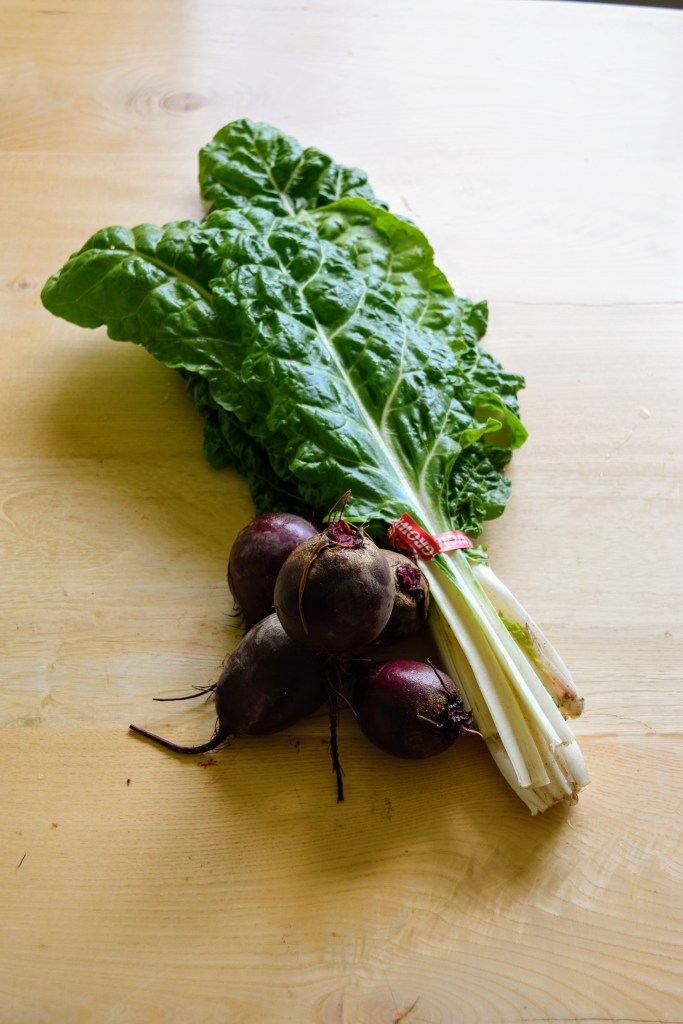
Did you know beets and chard are actually the same plant, Beta vulgaris? If you’ve grown both in your home garden, you may have noticed the similarities between the seeds and the leaves. The difference is that Swiss chard has been bred to favor leaf production, while beets have been bred to favor sweet fleshy roots.

The vegetables we eat didn’t just appear in the wild one day. Desirable traits have been “selected” for thousands of years to develop the tasty crops we enjoy today. Seeds are saved from plants that show the genetic variations we enjoy (more leaves versus fleshier roots) and then crossed through pollination with other plants with desirable traits so the offspring are better and better for human production and consumption. Please note, this is different from genetically modified which is done in a laboratory versus going through the generations of plants crossing for desirable traits already present in the species.

Rows of chard in the field

Resources for Veg Care and Use!

Remember to use the Vegetable Guide! Click the link below to see a pdf that describes most of the Food Farms crops and how to best care for the produce:

For the farm crew,

Starr

December Winter CSA

One of the highlights of my life the last few months is food preservation. It looks me right in the face every time I step foot in our amazing root cellar at the farm. From seed to storage, there is nothing more satisfying than preserving the bounty of the season, especially when you can watch a crop throughout its entire lifetime. My shelves are full of some amazing local produce thanks both to my job at the farm and having friends in the farm community. I am still relatively new to food preserving. The volume needed for a highly self-sustaining lifestyle hasn’t been attainable quite yet, so it seems like less of a chore and more of an experiment. We all know there are much less time-strenuous ways of getting and keeping food but I’m enjoying honing the craft of putting up food for the winter.

When I’m sweating over a hot stove by myself I often thing about the times when people would participate in community canning parties. It seems like a big stretch to organize events like that today, but it seems like such a great thing and I love hearing stories about farm members getting together with friends and family to process food together! It’s so great to know exactly what you’re eating and where it comes from, and doing the work with others makes it an occasion rather than just a chore. Plus, the apple fruit roll-ups I made with local apples taste much better than Betty Crocker’s.

Preserve (ca. 1917-1919) by Carter Housh

After last week’s storm the fields are covered in snow, though it looks like we may lose it all this week. A good hard freeze gives our soil a nice reset each year and can kill invasive pests, so we’re hoping that we do get some extended winter weather soon, and we sure could use some moisture in the ground. Towards the end of this harvest season, we removed all of the plastic walls from one of the greenhouses to give the soil inside a much-needed snow treatment this winter. While the plastic stays up on most of the greenhouses every winter, we try to leave it off over winter when it needs to be replaced. This helps wash away mineral build ups from many seasons of irrigation, loosen the soil with a few good freeze-thaw cycles, and build up the subsoil water reserves. I have a feeling that one of the first tasks to happen on the farm this spring is reassembling the greenhouse. I hope we have some calm days this spring, because any breeze can get pretty exciting when you’re holding a 48×150 foot kite! If you see us hitchhiking back from Wisconsin in April you’ll know what happened.

From Food Farm to you, enjoy this holiday season!

Queue “It’s Beginning To Look A Lot Like Christmas” by Bing Crosby

For the farm crew, Emily


In your shares this month:

Beets – Green Cabbage – Orange and Purple Carrots – Garlic – Onions – French Fingerling and Yellow Potatoes – Sunshine and Delicata Squash


Beet, Apple, and Walnut Salad – The Book of Salads by Sonia Uvezian

  • 2 large, cooked beets – peeled and chopped
  • 2 tart apples – peeled, cored, and chopped
  • 6 stalks celery
  • 1/2 cup chopped walnuts
  • 1/4 cup olive oil
  • 2 Tbsp wine vinegar
  • 2 Tbsp orange juice
  • 1 small clove of garlic – crushed (optional)
  • salt and pepper to taste
  • Combine apples, beets, celery and walnuts in a bowl. 
  • Beat together the oil, vinegar, juice, salt, pepper, and garlic with a fork and whisk until well blended. 
  • Pour over salad.  Toss gently but thoroughly.  Taste and adjust the seasoning.

Creamy Garlic Dressing – Moosewood Cooks at Home

  • 3 garlic cloves – minced or pressed
  • 3/4 cup vegetable oil
  • 1/4 cup red wine vinegar
  • 1 tbsp chopped basil (or 1 tsp dried)
  • 1 tsp salt
  • 1 tbsp grated Parmesan
  • pepper to taste
  • 1/2 cup milk
  • Put garlic, oil, vinegar, basil, salt, Parmesan, and pepper into a blender or processor and whirl for a couple of seconds. 
  • With the blender still running, slowly add the milk, whirling until the dressing is thick and smooth. Covered and refrigerated, this will keep a week.

Roasted [Sunshine] Squash Soup – Simply Recipes

  • 3-4 lbs. sunshine squash, seeded (about 1 large squash)
    • This squash is in your share this month!
  • 2 1/2 tablespoons extra virgin olive oil, divided
  • Salt
  • 2 cups chopped or sliced onions
  • 2 ribs celery, sliced
  • 3 cloves garlic, chopped (about 2 tablespoons)
  • 2-inch piece of fresh ginger root, peeled and grated
  • 1/2 teaspoon ground cumin
  • 1 teaspoon ground coriander
  • 4 cups chicken or vegetable stock
  • 2 teaspoons salt
  • 1/4 teaspoon black pepper
  • Lime juice, for serving
  • Chopped fresh cilantro, for serving
  • Roast the squash: Preheat oven to 400°F. Use a heavy chef’s knife or cleaver (it helps if you have a rubber mallet as well) to cut the kabocha squash half into a few large pieces. (Kabocha squash is thick and meaty and can be a challenge to cut. Make sure the squash is stable on your cutting board before you start to cut it.) Scoop out the seeds (you can toast them like pumpkin seeds!) and stringy insides. Place the squash pieces on a foil or Silpat lined roasting pan.
  • Rub 1 tablespoon olive oil over all sides, and sprinkle with salt. Put the squash pieces skin side up on the pan. Roast for 45 minutes to an hour, until completely cooked through, soft, and caramelized at the edges. Remove from oven and let sit.
  • Sauté onions, celery, garlic, ginger, cumin, coriander: Heat the remaining 1 1/2 tablespoons of olive oil on medium-high heat in a large (4 to 6 quart) thick-bottomed pan. Add the onions and celery. Lower the heat to medium and cook until softened, 8 to 10 minutes.
  • Add the garlic, ginger, cumin, and coriander and cook 2 minutes more.
  • Add squash, stock, salt, pepper, then simmer: Once squash is cool enough to handle, remove and discard the skin. Place the roasted kabocha squash flesh into the pot with the onions and celery mixture. Add the stock, salt and pepper. Increase heat to high to bring the soup to a simmer, then lower the heat to low, partially cover and cook 8 to 10 minutes.
  • Purée the soup: Remove from heat. Use an immersion blender (or work in batches with a standing blender, only filling the blender bowl 1/3 of the way each time) to purée the soup.
  • Add more salt to taste. Sprinkle with lime juice and chopped cilantro to serve.

November Winter CSA

Welcome to the first winter share of the season! There is no better time to receive your first dose of winter veggies than right after daylight savings time. Personally, after a long season here at the farm an extra hour of sleep is more than needed, even though we have to put up with Janaki complaining that his kids now wake up at 4:30 in the morning. This is also the final week of the season for many of our farm hands, some of whom have their own winter adventures ahead of them. Lucky for me, I get to stick around the farm this winter to help pack your winter shares and local wholesale orders.

If this is your first share with us, thank you for choosing local and organic. If you have been a member here for years, thank you for continuing to support our mission. Although we farm hands don’t interact with members very much, we definitely keep all of you in mind when doing various tasks on the farm. As we ventured through the great carrot and potato harvests of 2021, I considered how many mouths these crops will feed through the winter and it made the work more fulfilling.

The last few weeks have been really busy here at the farm to get us set up for the winter. We have cleared many fields of the crops they have been growing all season long. We harvested so many tons of carrots, potatoes, parsnips, cabbage, and Dave’s favorite crop: rutabagas. Among these harvests, Janaki has a plan for exactly which crop is going where this winter. Many carrots will end up in your winter shares. Others will be on the shelves at local grocery stores. The odd shaped and broken carrots even get sold to local businesses to make things such as kimchi. If it’s in the root cellar, it has a plan.

Also, be sure not to forget that it’s officially SOUP SEASON! I know I said that right at the turn of the first leaf this fall, but now it’s more relevant as we have finally experienced cooler temperatures. As a disclaimer, you’ll probably see many soup recipes in these newsletters this winter. A staple in the diets of many Minnesotans, soup may be the defining soup of the winter season. Luckily for you all, many (if not all) of our winter crops are perfect for soup makin’.

Your local soup enthusiast,

Emily

In your shares this month:

Beets, Brussel Sprouts, Carrots, Celery, Onions, Russet and Red Potatoes, Rosemary, Spinach, and Delicata and Kabocha Winter Squash

Indonesian Carrot Soup (from New England Soup Factory Cookbook, Druker and Silverstein)

  • 2 tbsp olive oil
  • 2 whole cloves garlic, peeled
  • 1 tbsp minced fresh ginger
  • 1 large onion, peeled and diced
  • 2 ribs celery, sliced
  • 1.5 lbs carrots (we also use winter squash), peeled and sliced
  • 1 tsp curry powder
  • 1 tsp ground coriander
  • 1/2 tsp ground cumin
  • 1/4 tsp red pepper flakes (optional)
  • 4 cups vegetable stock
  • 1/4 cup sherry
  • 1/4 cup honey
  • 16 oz coconut milk (one can)
  • 2 tbsp cilantro 
  • salt and pepper to taste

Heat stockpot over medium high heat.  Add olive oil, garlic, ginger, onion, celery and carrots/squash.  Sauté for 10 minutes.  Add curry, coriander, cumin, pepper flakes, stock and sherry.  Bring to a boil.  Reduce heat to med and simmer 30-40 minutes (until carrots and/or squash are tender).  Remove from heat and add honey, coconut milk, cilantro, salt, and pepper.  Puree the soup using immersion or conventional blender.  Makes 5-6 servings.

Spanish Tortilla (New York Times, Mark Bittman)

  • 1.25 lbs potatoes (3-4 medium)
  • 1 medium onion
  • 1 cup olive oil
  • salt and pepper
  • 6 extra large eggs

Peel and thinly slice potatoes and onions.  Heat oil in nonstick skillet over medium heat.  After 3-4 minutes, drop in a potato slice.  When tiny bubbles appear around its edges, add potatoes, onions, salt and pepper.  Gently turn mixture in oil with a wooden spoon and adjust heat so oil bubbles lazily. Cook, turning potatoes every few minutes, until they are tender when pierced with a knife.  Adjust the heat.  If potatoes begin to break, they are overdone.  As potatoes cook, beat eggs with salt and pepper in a large bowl.  Turn oven on to 350 degrees F.  Drain the potatoes in a colander.  Wipe out skillet and heat over medium heat for one minute.  Add 2 tbsp. of oil.  Gently mix warm potatoes with eggs and add to skillet.  As soon as edges firm up, reduce heat to medium low and cook for 5 minutes.  Finish cooking in the oven.  Bake until firm (appx 10-15 minutes).  Serve warm (not hot) or at room temperature.

Summer CSA Week 15

It’s hard to believe that we are already on the 15th week of the CSA, it feels like the season just started last week!? Anyways, while we are excited to share with you the vegetables of the week, there are still a few that you may not see this week, or next. Crops like brussels sprouts take a long time to mature–they’re seeded in early June and usually aren’t ready until the last week of the CSA. Most crops, like the celery in your shares today, are a couple of weeks ahead of schedule, but the brussels are actually slow enough that they may not even mature in time. I’m excited to eat them even if we have to wait for the winter shares.

This past weekend we attended the Harvest Festival at Bayfront and enjoyed seeing many familiar and new faces at the booth. The crew worked all day Friday harvesting vegetables to ensure that festival-goers received the freshest produce possible. It was great to see everyone after a year off from the festival.

The theme of last week seemed to be our potatoes. We worked on getting out the rest of the first planting of potatoes which included whites, russets, and yellows. Potatoes rock our world in so many ways and are incredibly versatile. I thought it might be useful to include a guide as to what potatoes are good for different potato cooking techniques. Disclaimer: this guide is based on a quick Google search and really, you can do whatever you want to your potatoes.

Fingerlings: great for baking, roasting, and potato salads. Not as good for soups.

Russets: These are the long brown potatoes in the share today. These are good for baking, mashing, french fries, and chips.

Reds: Unlike Russets, red potatoes do not fluff up as much when cooked. This makes them good for soups and stews.

Yellow/Gold: Creamier than most and are great for mashing, roasting, and grilling.

White: Great for french fries and hashbrowns. Doesn’t necessarily need peeling due to thin skin.

That’s the reference guide I use when choosing potatoes, but I use the different varieties interchangeably for the most part. Next up, I felt compelled to include a recipe for a classic potato dish that I grew up eating at every family gathering and holiday, and I hope you did too.

Thanks for reading,

Emily

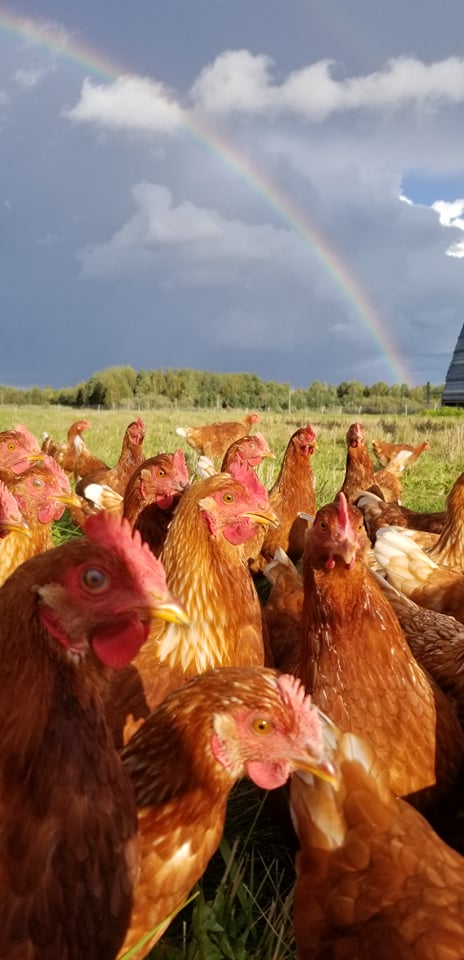
We were fortunate to receive a few random rain showers and a big rainbow last week.

In your shares this week:

Beans – Broccoli – Carrots – Celery – Cucumbers – Dill – Lettuce – Onions – Red Peppers – POTATOES – Acorn Squash – Tomatoes

Farmer Kathleen driving the crew back to the potato fields for harvesting.

Potatoes au Gratin by RecipeTinEats

  • 1 1/2 cups cream
  • 2 garlic cloves, minced
  • 2 tbsp unsalted butter,melted
  • 2 lb starchy potatoes, Russet
  • 1 tsp salt
  • 1/4 tsp pepper
  • 2 1/2 cups gruyere cheese (or mozzarella)
  • 2 tsp thyme leaves
  • Cream Mixture: Place butter, cream and garlic in a jug or jar. Mix until combined.
  • Preheat oven to 350°F.
  • Slice potatoes: Peel the potatoes and slice them 1/8″. Or use a slicer!
  • Layer 1: Spread 1/3 of the potatoes in a baking dish, then pour over 1/3 of the Cream Mixture, scatter with 1/3 of the salt, pepper and thyme. Sprinkle with 3/4 cups cheese.
  • Layers 2 & 3: Repeat for the 2nd and third layer, but do not finish with cheese on the top layer (will add later).
  • Cover & bake: Cover with lid or foil, and bake for 1 hr 15 min or until the potatoes in the middle are soft (use knife to test).
  • Top with cheese, bake again: Remove foil, top with cheese. Bake for a further 10 to 15 minutes until golden and bubbly. Stand 5 minutes before serving.

Cream of Celery Soup by AllRecipes

  • 3 quarts vegetable stock 
  • 1 head of celery, coarsely chopped
  • ½ pound carrots, julienned
  • ½ pound onions, chopped 
  • 1 cup all-purpose flour 
  • 1 tablespoon salt
  • 1 teaspoon ground white pepper
  • 3 quarts hot milk
  • 1 cup margarine
  • Step 1 Pour the vegetable stock into a large pot, and bring to a boil. Add the celery, carrots and onion to the pot.
  • Step 2 Whisk together the flour, salt, pepper, and milk; add to the pot along with the margarine.
  • Step 3 Boil for 10 minutes, then strain out the vegetables by pouring through a sieve, or if the vegetables are large enough, a colander may be used.

Summer CSA Week 6

It seems that somehow the weather has been colluding with current events – when it rains it pours. When it pours it also hails. If you haven’t yet read Janaki’s storm report from mid-week last week it’s worth reading through, just scroll down this page.

We take a lot of pride in the food we send in the shares each week. The plants get a lot of TLC around here between greenhouse time, or field weeding and hoeing time (not to mention the tractor time and watering time). Janaki and Dave are always considering this or that about the appearance of the leaves, or the way plants look when they sprout, or how to perfectly place pac choi in a box so it’s as unrumpled it can be. The care and precision for every aspect of a plant’s life is time consuming, and it rubs off on everyone who works on the farm.

Doing things to the best of our ability is all we can do, and there is so much that isn’t up to us.. It is disappointing, and a little nerve wracking to see plants we are counting on look like someone stepped all over them. We can still do our best to care for the plants and to harvest them tenderly, but nothing is going to change the pock marks in the peas, or the dead carrots or other crops now open to more pressure from pests or disease.

During this whole insane time we find ourselves in as a society, I have really struggled to pull myself back from the precipice of “everything-is-horrible-and-it-shouldn’t-be-and-if-only-people-had-done-the-work-in-the-beginning-or-at-least-tried-even-later-or-just-did-anything-at-all-even-small-things-this-wouldn’t-be-happening-and-if-I-get-mad-enough-at-strangers-in-the-grocery-store-will-that-fix-how-terrible-I-feel”. It’s a long name for a precipice. I should consider an acronym.

This year so far has been a lot of rubber meeting the road and wool being pulled from our eyes. It is a lot to digest, and it feels like it’ll digest us. It’s not easy to put one’s head down and keep doing right, and keep working for better when it seems like a hail storm is going to come along and undo whatever you’ve worked for. Or even trying again after a hailstorm of life- it’s hard to keep on when maybe the damage that’s been done won’t be out-weighed by the effort and vulnerability of our attempt for better.

In pulling myself back from the aforementioned precipice, I have to constantly remind myself that I am only in control of what I do and don’t do. I can not control most of what happens to me, or other people. I can not control what the weather does, or the climate, or the people in the grocery store.

On the farm, we’ll keep tending to the crops tenderly, even though (especially because) they’re in rough shape. We’ll harvest them well and pack them for you as gingerly as we can. That’s what we can do. We can keep on doing the right thing for the soil on the farm, year in year out and keep making choices that keep us as off the grid as possible.

Thanks for doing your part by using our vegetables, and for sharing in the ups and downs of farming and life with us. None of this would be happening without all of you choosing to eat our food for yourselves and your families.

For the farm crew,

Karin


img_0786


In your share this week:

Beets – Broccoli – Cauliflower – Carrots – Cucumbers – Head lettuce- Snap peas


img_0789

Straw all stacked -done and done!

Napa Cabbage Salad with Buttermilk Dressing

From The Smitten Kitchen

-I am including this recipe mostly for the dressing, because having a good dressing on hand can be a key part of getting veggies from your fridge and into your mouth! Also, did you know that Napa cabbage (should you have any left from last week) can be stored for quite a while, well wrapped in the fridge? Not maybe as long as hard cabbage, but for at least a month.

1/2 cup well-shaken buttermilk
2 tablespoons mayonnaise
2 tablespoons cider vinegar
2 tablespoons minced shallot
1 tablespoon sugar
3 tablespoons finely chopped chives (or green onions!)
1 pound Napa cabbage, cored and thinly sliced crosswise (4 cups)
6 radishes, diced
2 celery ribs, thinly sliced diagonally

Whisk together buttermilk, mayonnaise, vinegar, shallot, sugar, 1/2 teaspoon salt, and 1/4 teaspoon pepper in a large bowl until sugar has dissolved, then whisk in chives.

Toss cabbage, radishes, and celery with dressing.