Summer CSA Week 6

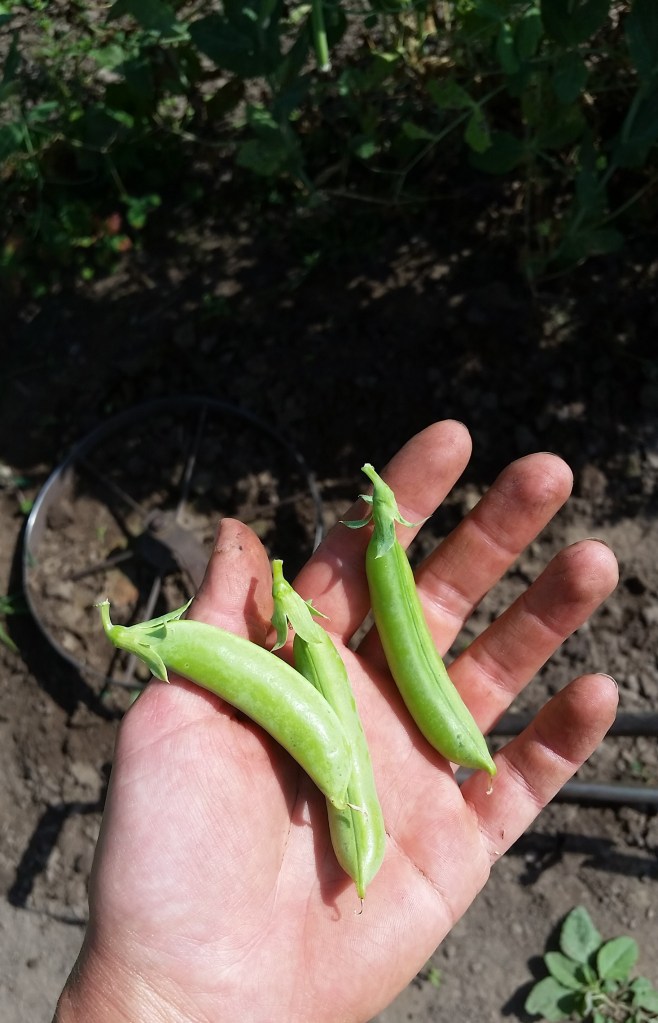
It’s time to harvest pea-pods again – one of my favorite times of the year! There is just a small bag today, but there should be more by next week. Pea season seems to go by quickly, so I try to soak it up. By soak it up I mean I let myself eat a few while picking. There aren’t many other things we harvest that are conducive to eating as we go. At least, I keep myself from taking big bites out of the cucumbers and red peppers and things like that. You’re welcome.
This image has an empty alt attribute; its file name is 20180724_161203-e1532908530579.jpg

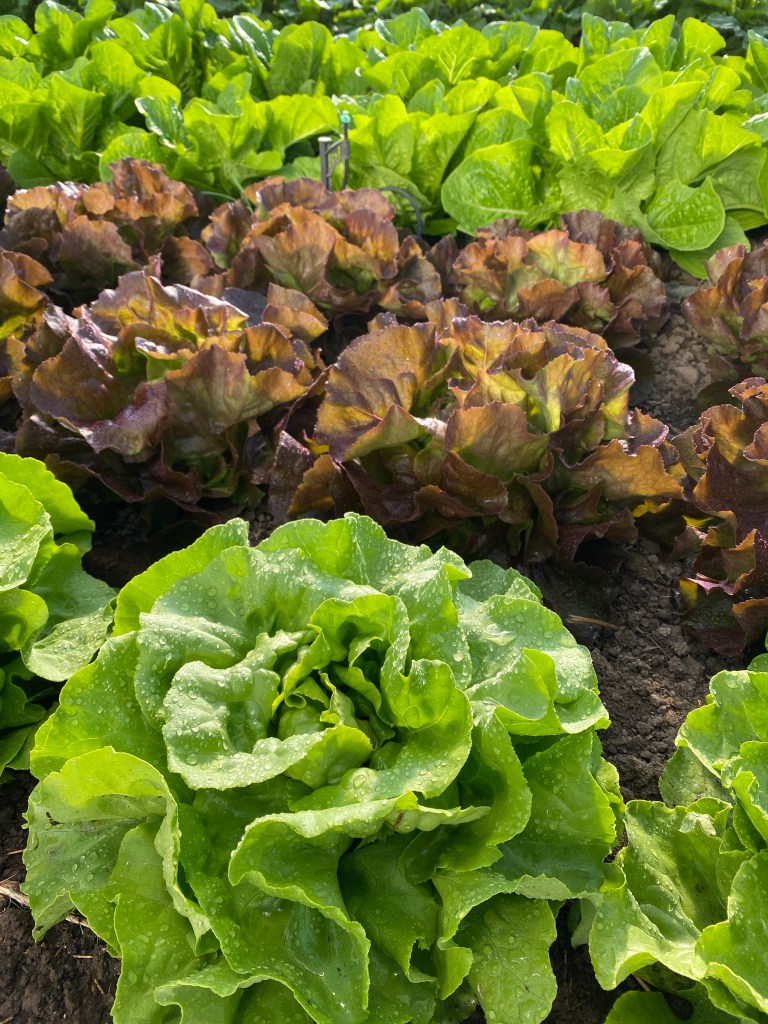
Eating while working is one of my favorite ways to eat. When harvesting head lettuce, I love grabbing a few lower leaves that have fallen off and doing a taste test. Some cilantro, sweet peppers, tomatoes, a broccoli bit here and there: it all adds up to a salad or so on the go. It is nice to be able to eat the freshest food – one of the perks of working at the farm!

Another perk is the conversations that happen, especially on CSA harvest days with extra people helping. Picking the peas is a prime spot for talking – as long as people speak up and keep up. I love walking up to a field of peas with people already harvesting and hearing bits of conversations going on. Because peas are rather putsy to harvest, it’s an all hands on deck sort of event that happens twice a week for 3 or 4 weeks. Maybe this is the year we’ll solve the world’s problems while harvesting and talking. We’ll probably just talk about that guy who was in that movie a while ago, or what we didn’t get done over the weekend.

As you pick up, put away, and prepare your share this week, I hope you enjoy all the steps: whether you find yourself eating a cucumber like an apple, or working through an involved recipe you can’t pronounce the name of – hopefully the end result is joy. Perhaps some good conversations will happen in your world over the food this week too. Food and conversation sit well together. And, if there’s no one there but you, maybe the peas will pass on what they heard in the field this week.

For the farm crew,
Karin


In your share this week:

Broccoli – Red Cabbage – Carrots – Cucumbers – Greens mix – Green Onions

Peas – Juliet Tomatoes


Tahini Sauce:

  • 3 tablespoons tahini
  • 2 tablespoons white miso paste
  • 1 tablespoon sesame oil
  • 2 tablespoons olive oil
  • 1/4 cup rice wine vinegar
  • 1 tablespoon honey
  • 1 teaspoon soy sauce
  • Fresh ground black pepper

Use this to top steamed or roasted broccoli over a grain of your choice! …You are also allowed to put it on other veggies.

Carrot-top Pesto

  • 1 cup lightly packed carrot leaves (stems removed)
  • 6 tablespoon extra-virgin olive oil
  • 1 large garlic clove
  • 1/4 teaspoon kosher or fine sea salt
  • 3 tablespoons pine nuts, toasted
  • 1/4 cup freshly grated Parmesan cheese

Toasting pine nuts, almonds, walnuts, pecans, hazelnuts, cashews and pumpkin seeds brings out their flavor. Spread the nuts or seeds in a single layer on a rimmed baking sheet, place in a preheated 350-degree oven and toast until fragrant and lightly browned, 5 to 10 minutes, depending on the nut or seed. Alternatively, nuts and seeds can be browned in a microwave. Spread in a single layer on a microwave-safe plate and microwave on high power, stopping to stir once or twice, until fragrant and lightly browned, 5 to 8 minutes. Watch them closely so they don’t burn.

In a food processor, combine the carrot leaves, oil, garlic, and salt and process until finely minced. Add the pine nuts and pulse until finely chopped. Add the Parmesan and pulse just until combined. Taste and adjust the seasoning. Use immediately or cover and refrigerate for up to 2 days.

Summer CSA Week 5

It looks like it will cool down this coming week- and maybe bring a little rain (fingers crossed). As I write this however, it is in the mid 80s and it’s late evening… so I have the heat on my mind. Hot days, and warm evenings, make it hard to predict when vegetables will be their best. Broccoli and greens especially don’t want to be this hot. How crazy it is to have the number of 80 degree days we’ve had at the early part of our season. I also have a harder time predicting when I’ll be my best in this heat – but it is probably when both my hands are submerged in the dunk tank with bins of lettuce!

This heat also has me looking at today’s share list and thinking: you can eat all this stuff just how it is, you don’t even need to stand over a stove! This will obviously read differently on a 70 degree day later in the week–hold on future self, I’m coming! Truly though, I do love the weeks where the share can almost all be chopped up and served together in a big, colorful heap of verdant goodness. Add some dressing, nuts, and maybe (definitely) feta and you’re good to go! Disclaimer: I wouldn’t eat all the garlic scapes at once…

Picking up your share on hot days (should you be picking up Monday) can also be a bit more work. I have the luxury of raiding the cooler or fields on the farm on an as-needed basis. But getting veggies out of the heat and into cool water or the fridge to freshen back up is important for peak quality. Pick up your share as early as possible on days like this, and don’t hesitate to fill a side of your sink and let things like broccoli, chard and head lettuce rehydrate and cool for a bit if they seem warm. Even if your kitchen feels hot to you, the cold tap water will bring the heat back out of them much more quickly than just going into the fridge dry.

I hope this week’s share finds you all well. And I hope that the abundance of produce brings extra joy to your table- maybe someone else’s table too!

For the farm crew,
Karin


In your share this week:
Beets – Broccoli – Carrots – Cauliflower – Chard – Cucumbers – Garlic Scapes – Lettuce – Napa Cabbage – Green Onions


Mango Slaw with Cashews and Mint

From The Smitten Kitchen

2 mangoes, peeled, pitted and julienned
1 to 1 1/4 pounds Napa cabbage, halved and sliced very thinly
1 red pepper, julienned
1/2 red onion, thinly sliced
6 tablespoons of fresh lime juice, from about two limes
1/4 cup rice vinegar
2 tablespoons oil of your choice
1/2 teaspoon salt
1/4 teaspoon red pepper flakes, or to taste (or omit this and whisk in a chile paste to taste)
1/4 cup thinly sliced fresh mint leaves
1/4 cup toasted cashews, coarsely chopped

Toss mangoes, cabbage, pepper and onion in a large bowl. Whisk lime juice, vinegar, oil, salt and red pepper in a smaller bowl and pour over slaw. You can either serve this immediately or leave the flavors to muddle for an hour in the fridge. Before serving, toss with mint leaves and sprinkle with cashews.

About the mango: This salad will work with almost any variety or ripeness of mango, whether sour or sweet. Use the one you can get, or that you enjoy the most. In general, a firmish not overly ripe mango (unlike the very ripe, sweet one I used) holds up best but all will be delicious in this salad.

Easy Caesar Dressing

From Cookie and Kate

  • ½ cup mayonnaise
  • 1 medium garlic clove, minced (or you could try a scape!)
  • 2 teaspoons lemon juice, to taste
  • 1 teaspoon Dijon mustard
  • ½ teaspoon Worcestershire sauce, to taste
  • ⅛ teaspoon fine salt
  • ⅓ cup (1 ounce) finely grated Parmesan cheese
  • 1 tablespoon water
  • Freshly ground black pepper, to taste
  1. In a liquid measuring cup or bowl, combine the mayonnaise, garlic, lemon juice, Dijon, and Worcestershire sauce, and salt. Stir to combine.
  2. Stir in the Parmesan, followed by the water. Season generously with black pepper, to taste. I usually think the dressing tastes just right, but if you’d prefer a more bold dressing, add another ¼ teaspoon Worcestershire sauce, or for more zippy dressing, add up to 1 teaspoon additional lemon juice. Serve as desired. Keeps 5 days.

Summer CSA Week 4

When I was somewhere between a child and an adult, I always felt like summer really started with the Fourth of July, but would also be over in a blink of an eye. We didn’t have many 80 degree and dry Junes in my childhood, I guess, to kick-start summer with. It’s the time of year to soak it up!

When living in Texas, I came home one August for a visit, and was thrilled with the 80

something degree weather Duluth was experiencing. What a nice 20 degree dip! So I made bread, to my mother’s horror upon arriving back home after work. Oops. Though I don’t run the oven “unnecessarily” it is such a short summer and pies and summer quiches can’t bake themselves!

At some other point between childhood and now, the Fourth of July was my second favorite holiday. I loved everything summery about it, the cookouts and the stay-up-late night and the careful clothing selection to find the reddest, bluest and whitest combinations I could muster out of my closet.

My relationship to the coming holiday is more complicated these days as, more and more, America feels like a child whom I will love no matter what, but who can also break my heart. Despite that, it is still nice to gather with friends and family. Soaking up the nice parts of the day is my goal. Maybe a nice part of the day will be a fantastic salad you make to impress all your friends with!

Whatever you make of the coming weekend, and whatever you make of your CSA share, I hope it is good despite any imperfection you feel in the mix.

For the farm crew,

Karin

P.S.
Dave wanted me to note that our first greenhouse cucumbers are not quite as glamorous as we usually expect. Hot winds from the south has brought added pest pressure, and consequently mesh screens have been put up around the openings to keep them out. That also cuts way down on air circulation so they are feeling the heat! We don’t know if the cosmetic issue will go away as the plants grow, or if it’s with us to stay.


In your share this week:
Broccoli – Cucumber – Garlic scapes – Lettuce – Green Onions – Pac Choi – Radishes – Parsley


Dave’s garlic scape recipe:

Dave recommends prepping your scapes this way to preserve them, and make them easy and fast to use for flavor in you meals for the week and beyond.

  • All your scapes (loosely chopped)
  • 1/2 cup (or more for consistency and/or longer storage) oil of your choice
  • 1/2 tsp or more salt to taste
  • Optional add ins: pepper, nuts (to make a pesto) any spices you’d like

    Blend all together in a food processor until smooth. If you use nuts in your batch, put them in after you’ve partly blended the other ingredients together.

    Store in a jar and use as a spread, or tossed into salads, with pasta, in eggs, mixed into rice or grain dishes, or as a facial scrub (wanted to see if you were paying attention).
    The possibilities are almost endless.
  • You can also freeze some to throw in dishes in the coming months!

Creamy Avocado Dressing

For all that lettuce salad! Keeps 3-4 days. Try using some chopped garlic scape instead of a clove!

  • 1 large avocado
  • 1 clove garlic, peeled
  • 1/2 tablespoon fresh lime or lemon juice
  • 3 tablespoons olive oil or avocado oil
  • 1/4 teaspoon kosher salt, or to taste
  • 1/4 teaspoon ground black pepper, or to taste
  • water, as needed (I add up to 1/4 cup)

INSTRUCTIONS

  1. In a mini food processor add the peeled clove of garlic, avocado, lime or lemon juice, olive oil, salt and pepper.
  2. Process until smooth, stopping to scrape down the sides a few times. Thin the salad dressing out with a little bit of water (1/4 cup or more) until it reaches a desired consistency.
  3. Keep in an airtight container for at least a week, but 3 to 4 days is best.

Summer CSA Week 2

I don’t think of myself as a superstitious person typically, but in the past couple weeks I have: left car windows open, left laundry on the line over night, left an open bag of potting soil on my deck (for days), not washed the car, left the garbage lid open, and left the deck chairs out instead of tipped up. This list isn’t just to show how lazy I am, it’s to show that I am TRYING to send a message (to whom it may concern) that we need rain! If I leave these things this way maybe they can be a sacrifice of sorts for rain. None of the passing showers that went through the area have hit the farm and we’ve had less than 1/4″ of rain in the last three scorching weeks, so I invite you all to participate in my efforts such as they are. Maybe the message will get through (and we’ll all have to take in that sopping laundry with joy).

These hot windy days are not only very drying, but also prevent us from irrigating during the day, so Janaki has been moving the irrigation around a lot at night (you know, in his spare time) to make sure all the plants get what they need, especially when so many are tiny seedlings without deep roots yet.

What can we say but say the so-annoying phrase “new normal”? Late spring used to bring rain fairly consistently, and in a soaking, spread out kind of way. And they sometimes still do. Sometimes there are still 45 and foggy days in the end of May- we had a few of those this year. Predictability and farming have never danced well together, but this new climate has scratched up the record we were trying to dance to. In the back of my head now I have a fear about dry-dry-dry and then a deluge of 5 inches of rain over night. It seems to be what happens.

On a sort of lame flip side – I think we’re staying on top of the weeds pretty well so far. Turns out they need water too (though somehow less…. how is that fair?) This past week saw the second and largest planting of potatoes in the ground, as well as the 5th and BY FAR largest planting of cabbage and some broccoli. Good luck out there little babies. We’re on your side!

We are happy to send a box that’s a little fluffier and fuller this week. It would have been a hot week to try to save the rhubarb and early spinach through -hopefully you found that harvest to be worth it! Each week -bit by bit there will be more variety in the boxes headed your way. As you get home with your share, especially on these warm days, a quick soak in a sink full of cold water can help prolong the life of many greens like pac choi and lettuce. They get cooled after we harvest them, but may warm up again at your pick up site. Cut-greens like this week’s greens mix could be put in the fridge with the bag open, but make sure to close the bag up again before night so they don’t dry out. If you use radish and turnip greens, good for you! They could also benefit from a cold soak, though I would really try to dry them well and then use them sooner than later.

Like greens, humans keep better with a good dunking now and then. If not that, maybe you can at least make time to dump some water on your head, or run your wrists under some cool water (trust me, it helps). And, if you do those things, maybe stand by a plant to share some of that water!

Enjoy the veggies!

For the farm crew,

Karin

Flying row cover!

Floating row cover!


In your share this week:
Greens Mix – Romaine Lettuce – Pac Choi – Radishes – Spinach – Turnips


Turnip and Kale Gratin
-From Bon Appetit

In the body of text about this recipe, it says that turnip greens can be used in place of the kale! Voila!

5 garlic cloves, thinly sliced
2 cups heavy cream
½ teaspoon dried thyme
2 tablespoons unsalted butter, divided
3 medium onions, thinly sliced
Kosher salt
3 bunches Tuscan kale, ribs and stems removed, leaves torn
4 medium turnips (about 1¾ pounds total), trimmed, peeled, cut into ½-inch pieces
3 large eggs, beaten to blend
4 ounces Fontina cheese, grated (about 1 cup)
1 ounce Parmesan, finely grated (about 1 cup)
8 ounces day-old white country-style bread, cut into ½-inch pieces
Freshly ground black pepper

Preparation

Step 1

Bring garlic, cream, and thyme to a bare simmer over medium heat. Reduce heat to low and let cream simmer 30 minutes. Let cool.

Step 2

Meanwhile, heat 1 Tbsp. butter in a large skillet over medium-low. Add onions, season with salt, and cook, stirring occasionally and adding a splash or two of water if onions begin to stick to pan, until caramelized and amber colored, 45–60 minutes. Transfer to a large bowl and let cool. Wipe out skillet.

Step 3

Heat remaining 1 Tbsp. butter in same skillet. Working in batches, add kale, tossing and letting it wilt slightly before adding more; season with salt. Cook until kale is wilted and tender, 5–8 minutes; transfer to bowl with onions.

Step 4

While kale is cooking, cook turnips in a large pot of boiling well-salted water until crisp-tender, about 2 minutes; drain. Transfer to a bowl of ice water and let cool. Drain; pat dry. Transfer to bowl with onions.

Step 5

Preheat oven to 375°. Whisk eggs, Fontina cheese, Parmesan, and cooled cream mixture in a large bowl to combine. Add onion mixture and bread; season with salt and pepper. Transfer to a 13×9″ baking dish and press down on mixture with your hands to form a tight, even layer. Bake gratin, uncovered, until well browned, 40–50 minutes. Let rest 10 minutes before serving.

Gratin can be assembled 12 hours ahead. Cover and chill.


Pac Choi and Shiitake Stir-fry
From The Spruce Eats

3 to 4 cloves garlic (minced)
1 cup shiitake mushrooms (sliced OR 1/2 cup sliced shiitake mushrooms and 1/2 cup sliced button mushrooms)
2 teaspoons canola oil or other high-heat oil
1 tablespoon soy sauce (or, use tamari)
1 pac choi
5 to 6 green onions (sliced)
1/4 cup vegetable broth
2 teaspoons fresh ginger (minced or grated)
2 teaspoons sesame oil
2 tablespoons sesame seeds (optional)

Saute the garlic and mushrooms in oil for 3 to 5 minutes then add in the soy sauce, the bok choy and scallions, and cook for a few more minutes. Reduce heat to medium-low and add vegetable broth and ginger. Simmer for another 3 to 5 minutes. Finally, stir in the sesame oil and the optional sesame seeds and remove from heat.

Eat as is or enjoy over rice or another grain!

Summer CSA Week 1

Happy first Summer CSA 2021 to you all! -and what a summery start indeed! I trust if you are reading this you didn’t totally melt this past weekend. It’s a warm week for farming, and we’ll be staying hydrated while getting back into the swing of harvest and the rhythm that the CSA brings to our summer weeks. The farm crew will be moving from mostly greenhouse seeding, transplanting, and miscellaneous spring cleaning projects into a routine of harvest, weed, weed, plant, weed, plant, harvest, weed.

Aside from the weather weirdness, this farm season is feeling a little bit more normal since we are our own vaccinated bubble of sorts. We’re not quite back to sharing water out of the same cup yet (ever again?) but at least we can enjoy each other’s company a bit more. What a good feeling after a year of extra stress.

We’re glad you’re a part of our farm- all of your share memberships make what we do possible. Whether you’ve been with us for decades or this is your first year, welcome! If this is your first year, we hope you won’t hesitate to reach out with questions if any arise during the season.

Hopefully you all are also excited for the rhythm that the weekly CSA brings to your summer. We know it takes extra time to utilize whole food and to do the work of unpacking and repacking produce in a way that keeps it fresh. Thanks for taking on the food-work! Any time we don’t reach for convenience food shipped from miles and miles away we do something good for our community, planet and ourselves. Whole food is a counter-cultural act these days.

We look forward to growing (and mostly weeding) for you during the season. Thanks for choosing our veggies to feed yourselves with!

For the farm crew,
Karin

In your share this week:

Greens Mix – Kale – Rhubarb – Spinach – Oregano & Sage

Oregano and sage may seem like an odd addition to a spring share, but they were too pretty and fresh for us to ignore. They come from a little corner of the greenhouse and managed to survive the winter, got mowed to the ground, and have recovered with some beautiful spring growth so we hope you will enjoy them now or hang them up to dry for future use. 

This first box is significantly smaller than usual, but early shares generally include a goodly portion of greens. It can become easy to feel daunted by the volume in your weekly box. After a winter of store bought veggies (potato chips are veggies?) getting back in the swing of eating up a box of veggies can be a switch. No shame! I spent this winter eating bagels and pasta so it’s a switch for me too. A couple of things about greens: they all cook down. True, you may not be making lettuce soup this summer (please don’t), but all the other greens you get that seem like so much will disappear when stir-fried, tossed into a soup, cooked in an egg bake or made into a savory pie.

It also helps to have some dressings on hand that you LOVE for fresh greens. Adding a fat to salad is actually really healthy because that is what helps our brain recognize when we’ve eaten enough of something. So dressing, feta, avocado and things like that are perfect additions. You should add whatever you need to a salad to get you excited about eating it.

Here are some dressings that I am stealing from our friends at the Duluth Grill. Whip up a couple of these for your greens if you fancy!

Cilantro Lime Vinaigrette

2 Tbsp lime juice
1/2 cup cilantro
1/2 cup olive oil
1/4 tsp salt
1/4 tsp white pepper
1/4 cup maple syrup (I bet you could use honey or agave nectar at about the same ratio)
2 Tbsp apple cider vinegar
2 Tbsp orange juice
1 tsp brown mustard

Combine all ingredients except olive oil in blender. Blend until smooth, then add olive oil slowly to emulsify. Yield about 1 1/12 cups.

Curry Sauce

1/4 cup seeded serrano chilies
1 1/2 tsp coriander seeds
1/4 tsp cumin
1/8 tsp black pepper corns
1/2 stalk lemongrass (the Co-op often carries this)
1 tsp chopped cilantro
1 Tbsp grated fresh ginger
1/2 lime zest and 1 tsp lime juice
1 Tbsp chopped garlic
1 Tbsp diced onion
1 1/2 tsp aminos (or soy sauce might be fine)
1 1/2tsp salt
2 Tbsp sugar
1 1/2 tsp turmeric
1 -15oz can coconut milk

Toast coriander seeds and black pepper corns in a skillet. Trim and chop lemongrass. Combine all ingredients except coconut milk in a food processor until smooth.

Place puree into a medium pot and simmer for 5 minutes. Add coconut milk, whisk and simmer for another 15 minutes. Serve over greens (or anything)

April Winter Share

We have made it to the true end of another season at the Food Farm. Where there used to be pallet boxes of root-vegetables stacked to the (very high) ceiling there are now only a few, with dribs and drabs left in them, hither and thither, with much room to spare in the cooler. The potato room is more full of stacks of empty pallet boxes and stored machinery than potatoes.

Now is the time for looking ahead to the coming season. Onions, leeks, inside tomatoes, peppers, and broccoli have all been started already. It is nice to have a change of scenery by walking into the greenhouse after being in the root cellar all day. It is like getting to the land of Oz, with less singing. Dave was mowing the rye grass cover crop in the newest green house the other day and the smell wafted over to the driveway where I was standing- fresh mown grass has got to be in the top 10 best smells.

We hope you like the note the winter share is ending on. Expected root-staples and some greens and spinach to brighten up your tables. I am always hungry for the first greens out of the green house- it’s almost like the first raspberry. But greener.

I tell ya, the few 60 degree days we’ve had ruin me. Even being from here, it still makes me lose my mind. I want to pack away all my sweaters (which is silly, because of course they stay out all year)- put the screens back in the windows and hang all my jackets in the closet. The little hints of warmth are a joy- but there is a lot of spring left. I’m trying to have patience. I’m waiting for the warm part of spring like my little boy waits for toast to pop out of the toaster. Only he’s cuter.

Maybe these last cool weeks will give you a chance to make another great veggie soup, or some other warm and roasty concoction with your share.
If you also have a summer share this year, we’ll see you at the season-turn with more greens, and ever growing color and variety.

Thank you for coming along with us through, what felt to me, to be a rather long and dismal winter. We hope yours was made better at least by the food on your plate.

‘Til next time, and for the farm crew,

Karin


In your share this month:
Beets – Purple and Orange Carrots – Onions – Parsnips – Russet and Yellow Potatoes – Rutabaga… and Spinach & Greens Mix! Happy Spring!


Using the spinach: wash spinach well by dunking at least twice (or until water is clean) and spinning or draining in between. Remove stems if you want – and eat it sooner than later as some of it was frost damaged, as you will see. Store in a bag loose, with a tea towel.

There is about 3/4 pound in your share, and it could be used in a small batch of Saag, or spanakopita, or used in a quiche or with eggs during the week. If you don’t think you’ll get to it this week, blanch it for about 2 minutes, dunk in cold water and freeze in a baggy for later. This crop was planted in September and managed to survive even through the extreme cold we had in February. Overwintered spinach is almost like a different vegetable, and it’s one of our favorites even though it takes a little prep work to trim off the frosted tips.


Indian-Spiced Carrots with Yogurt
From the Leek and the Carrot

½ cup Greek yogurt, divided
1 tablespoon curry powder
1-1/2 teaspoons onion powder
1-1/2 teaspoons garlic powder
2 garlic cloves, minced, divided
3 tablespoons olive oil
1 pound carrots tops trimmed, cut in half if large
2 tablespoons lemon juice
Kosher salt and freshly ground black pepper, to taste

  1. Preheat oven to 450 degrees.  Mix together ¼ cup yogurt, curry powder, onion powder, garlic powder, 1 minced garlic clove, and olive oil in a large bowl until smooth.  Season well with salt and pepper.  Add carrots and toss to coat.  Roast on a baking sheet in a single layer, turning occasionally, for 30 minutes.  You’ll want them to be lightly charred in spots and very tender.
  2. Meanwhile, whisk together lemon juice, remaining garlic clove and remaining ¼ cup yogurt in a small bowl.  Season well with salt and pepper.
  3. Place cooked carrots on a platter (along with any crunchy bits left on the baking sheet).  Drizzle with yogurt mixture.  Serve warm.

March Winter Share

We have a birthday, and tiny little party planned, on the farm for Dave today. It’s a birthday that ends with a zero, so we can’t let it pass by. I think maybe he’s 20, which is a little crazy because he’s worked out here 28 years or so. We’re excited for a little fun together at the farm.

In thinking about this small party I am reminded of the handful of friend and family birthday parties that got put off early last spring, in hope of a chance to hold a celebration in a couple of months. Those postponed parties never happened, and bit by bit the newness and scariness of the pandemic gave-way to this current reality. The beginning of this month seems to have a lot of people reminiscing about the last “normal” gatherings they were a part of, or about the few days that things went from open to shut down.

One silver lining about the time we have all found ourselves in this past year might include food. Last spring, interest in our Summer CSA shares lead us to filling up, and going past our target number, very quickly. This year again, we filled up quickly for the coming Summer CSA too. This is nice for us, for the local economy, and, we trust, for you our members too. Perhaps preparing food and sharing food has turned into a different experience for some of you this past year with changing schedules and fewer places to go. Canning supplies, seeds, community gardens – all these things are in hot demand. This seems like a good thing to me. Of course, it can feel normal to most of us to think of having a pantry full of food or time to make some new pastries or bread, but this time has shown the immense inequity in pay, job security, and food security in our country and it is a privilege to have canning lids or instant yeast be the only scarcity some of us have to think about.

During this time, the partnership between food and celebration is what I miss most. Sometimes I catch some question in the news to the extent of ‘will we ever go back to… the old normal?’ Plenty of things about the old normal weren’t so great to start with, but when it comes to things like pot-lucks, Holiday dinners and other extraordinary but regular gatherings I am sure we’ll go back to it. Those things feel essential to our humanity in some way. If we never shared meals together again, it would be like never hearing music again.

This pandemic has felt like a year of holding ones’ breath. Whenever it’s safe- I’ll be ready with a plate and fork to eat with anyone who will sit with me.

For the farm crew,

Karin


In your share this month:
Beets – Red cabbage – Carrots – Onions – Russet and French Fingerling potatoes – Rutabaga

Carrot Cake
From The Smitten Kitchen

Makes 24 cupcakes (or one two-layer cake, instructions at end)

2 cups all purpose flour
2 teaspoons baking soda
1 teaspoon table salt
2 teaspoons ground cinnamon
1/2 teaspoon ground nutmeg
1 teaspoon ground ginger
2 cups granulated sugar
1 1/4 cups canola oil
4 large eggs
3 cups grated peeled carrots (Note, I grate mine in my with my finest grater, though it’s slower. Worth it for a smooth and fluffy texture!)
1 cups coarsely chopped walnuts (optional)
1/2 cup raisins (optional)

Preheat oven to 350°F.

Line 24 cupcake molds with papers, or butter and flour them.

Whisk flour, baking soda, salt, cinnamon, nutmeg and ginger in medium bowl to blend. Whisk sugar and oil in large bowl until well blended. Whisk in eggs 1 at a time. Add flour mixture and stir until blended. Stir in carrots, walnuts and raisins, if using them. Divide batter among cupcake molds, filling 3/4 of each.

Bake cupcakes 14 to 18 minutes, or until a tester inserted into the center of one comes out clean. Let cool in pans for five minutes or so, then transfer cakes to a cooling rack. Let cool completely before icing them.

To make a carrot layer cake: Butter two 9-inch-diameter cake pans instead of cupcake molds. Line bottom of pans with parchment paper. Butter and flour paper; tap out excess flour. Divide the batter between the prepared pans, and bake the layers for about 40 minutes each, or until a tester inserted into center comes out clean. Cool cakes in pans 15 minutes. Turn out onto racks. Peel off paper; cool cakes completely.

Maple Cream Cheese Frosting

Two (8-ounce) packages cream cheese, softened
1 stick unsalted butter, room temperature
2 cups confectioners’ sugar
1/4 cup pure maple syrup

In a stand mixer beat all the ingredients on medium until fluffy. Chill the frosting for 10 to 20 minutes, until it has set up enough to spread smoothly.

To assemble a carrot layer cake, frost the top of one cake, place the other cake on top. Frost the sides and top, swirling decoratively. Refrigerate the cake for 30 minutes to set up frosting.

For the layer cake scenario, you will probably have a bit of leftover frosting, which you can tint and use for decorating, or save to smear on gingersnaps. What, you don’t do that too?


Slow Cooked Rutabagas with pork
From the Southern Kitchen

Ingredients
2 to 4 pounds boneless pork shoulder, tied into a single roast with butcher’s twine
5 large garlic cloves, halved
Salt and freshly ground black pepper
2 tablespoons extra-virgin olive oil
4 (1-pound) rutabagas, peeled and cut into 1-inch pieces
1/4 cup sugar, plus more to taste
2 to 4 cups low-sodium chicken broth
Pepper vinegar
Apple cider vinegar

Instructions
Heat the oven to 300 degrees.

Use a paring knife to poke 10 slits about 1 inch deep all around the pork shoulder. Stick one garlic halve in each slit. Aggressively season the pork shoulder with salt and pepper. 

In a large Dutch oven or other large, heavy pot, heat the olive oil over medium-high heat. When the oil is shimmering, add the pork shoulder and sear until well-browned on all sides, 10 to 15 minutes. Transfer to the oven and roast until fork-tender, 3 to 4 hours. Let rest in the pot until cool enough to handle.

Use two forks to shred the pork into bite-sized pieces, leaving all drippings and cooking liquid in the pot. Add the rutabagas and sugar. Pour in enough chicken broth to come to the top of the meat and vegetables. Add water, if needed, to fill the pot. Season with salt and pepper. 

Place the pot over high heat and bring the cooking liquid to a boil. Cover the pot, reduce the heat to low, and cook until the rutabaga is very tender and the sauce is fully-flavored, about 12 hours. (See note.)

After 12 hours of cooking, taste the stew and season with additional salt and sugar, if needed. Skim off any excess fat from the top of the stew. Stir in vinegars to taste, and serve hot.

February Winter Share

Now we have four Winter Shares done, and two to go! I hope that you all are well into the swing of using these storage-time staples each month. It can be nice to settle into patterns and familiar recipes. I’ve been through a few: hashbrowns, cubed and sautéed roots together with an egg on top, spicy coleslaw, miso soup, chocolate-chocolate chip cookies with peanut butter. Oh wait, that’s a different category.

If your go-to recipes are starting to feel more like a rut, and less like a comfort, I hope you can find some ways to add some pep and switch things up this month. Making a meal plan change can be as easy as trying a new condiment, or digging into the back of the spice cupboard and see what has fallen out of use for a while (not too long though… they do go bad [mom]). If you normally reach for lemon juice to brighten dishes, try a new vinegar, or some wine.

I know I’ve said before, that I have learned more about cooking from friends and roommates than I ever have from a cook-book or blog. From canning tomatoes to homemade pita bread to massaged kale to chopping food small enough- my friends didn’t even know the lessons they passed on just by sharing a kitchen.

The joy of cooking and preparing food together is something I miss. Sharing meals and passing dishes around a table to friends or family is going to be the first thing I do whenever those kinds of things can happen again. I am sure I will cry the first time.

With the sharing of food in groups missing, the connection between food and community might feel non-existent at times. Maybe if you split your share with another family you have an additional sense of connection as you sort through boxes together or drop food off. I am glad that at least, with the food you get from our farm, we are all still connected, and your support is a critical part of how we can do what we do. Indeed, of why we do what we do.

Even if you find yourself alone over a plate of uninspired-feeling (but delicious tasting) roasted delicata some time this month… you might not actually be as alone in that as you think.

For the farm crew,

Karin


In your share this month:
Beets – Purple and Orange Carrots – Green Cabbage – Delicata Squash – Onions – Parsnips* – Red and Baby Yellow Potatoes


*A note on our tiny little parsnips: this crop got 2020ed (is that be a verb now?), and the replanted ones didn’t have time to size up very well. I would recommend NOT peeling them, but scrubbing them well instead. The rusty, oxidized look on the outside shouldn’t affect the taste. They are just too small to peel. Here’s to next year’s planting going better.


Potato-Parsnip Latkes with Horseradish and Dill
From the Smitten Kitchen

Yield: About 18 2 1/2 to 3-inch latkes

Pancakes
1/2 pound (about 1 large) potato
1 tablespoon fresh lemon juice
1 pound parsnips (Farm note: you got 1 1/2 lbs in your share, and you could probably get away with using all of them in this)
1/4 cup all-purpose flour
1 teaspoon baking powder
2 large eggs, lightly beaten
2 tablespoons chopped fresh dill
1 teaspoon table salt
1/4 teaspoon freshly ground black pepper
Olive oil (or a mix of olive and vegetable or peanut oil) for frying

Sauce
1 cup sour cream
1 tablespoon lemon juice
1/2 teaspoon table salt
1 tablespoon freshly grated or prepared horseradish
1 tablespoon chopped dill

Preheat: Oven to 250 degrees. Line one large or two smaller baking sheets with foil and leave them in the oven until needed.

Prepare vegetables: grate them on the large holes of a box grater or (my preferred method) using the shredding blade of a food processor.

Transfer shredded vegetables to a lint-free dishtowel or square of cheesecloth, and wring out as much liquid as possible. Let stand for two minutes, then wring again. Wetness is the enemy of crisp, light latkes, so we want to get rid of as much as possible.

Make batter: Transfer wrung-out vegetables to a large bowl. Add lemon juice. In a tiny dish, stir together the flour, baking powder, salt, pepper and any herbs or additional seasonings and toss with vegetables, evenly coating the strands. In the same tiny dish, whisk your egg(s) and then stir this into the vegetable-flour mixture, evenly coating the strands.

Prepare pan: Heat a large, heavy skillet, preferably cast iron, over medium heat. Once skillet is hot, add 3 tablespoons oil and heat oil until shimmering. If you’re unsure, you can flick a droplet of water onto the oil; if it hisses and sputters, you’re good to go.

Cook: Using a fork or your fingertips (letting the eggy batter drain off a little is good), gather spoonful-sized mounds of battered vegetables and drop them onto the heated skillet. When golden underneath, 3 to 4 minutes later, flip pancakes. Cook on the other side until nicely bronzed underneath, another 2 to 3 minutes, and transfer to paper towels briefly to drain pancakes, before transferring them again to tray(s) in warm oven. If latkes cook too quickly or slowly on the stove, adjust the heat accordingly.

Add more oil if needed (you want to keep the pan at that 3 tablespoon level), being sure it is heated before adding more pancakes to the skillet. Repeat with remaining batter. I like to keep the latkes in the oven for at least 10 minutes to ensure they’ve cooked through before serving them. This gives you time to…

Make sauce: Mix sauce ingredients in a small dish. Adjust seasonings to taste.

Beet and Carrot salad with Currants
From the Leek and the Carrot

4 garlic cloves, minced
1/2 cup dried currants (or cranberries)
1/4 cup champagne vinegar
2 large (or 1 extra-large) beets, peeled
3-4 large carrots, peeled
2 apples
1/2 lemon, juiced
1 teaspoon Kosher salt
1/2 teaspoon freshly ground black pepper
1/4 teaspoon red pepper flakes
1/2 cup olive oil
1-2 cups chopped and toasted almonds

  1. In a small bowl, combine garlic, currants and vinegar. Let currants plump and garlic mellow in there for at least 20 minutes. It will likely take that long to get your veggies cut up anyhow.
  2. Cut the beets, carrots and apples into matchsticks and place in a large bowl. Squeeze with lemon and season with salt, pepper, and red pepper flakes. Toss to combine then add the garlic and currant mixture. Drizzle with olive oil and toss several more times to combine. Taste and adjust seasonings as desired.
  3. When ready to eat, serve with toasted almonds. If not eating all at once, keep toasted almonds to the side and add right before eating so they maintain their crunch.

First 2020 Winter Share, November

Welcome to the first 2020/2021 Winter share. Thanks for choosing our vegetables to grace your tables this fall… winter… spring… the season we call winter tends to drag itself out, doesn’t it? Each month, I hope that you will see your winter share as a re-setting of sorts for yourself and anyone you share food with as you get replenished with winter staples.

If this is your first time getting a CSA share with us- a special welcome! In times of uncertainty, thank you for plugging into something local. If this is your twentieth share with us, or some number in between, thank you for coming back for more. And, if you had a summer share with us… you can go ahead and use that one last carrot you’ve been hoarding–I speak from experience.

The end of last season’s Winter share felt smothered in uncertainty. The start of this one feels similar. We are facing a long winter with more uncertainty. In the midst of all the challenge and trouble, I hope you can find ways to lean into any and all of the things that feel positive and bring you joy. Maybe finding new ways to use your CSA share, or creative ways to share food with others in a safe way will be a focus this season.

Trepidation, shaken, not stirred, seems to be on the drink menu for our country, and world, this year. I’m not a linguist, but trepidation has always felt like a word of movement to me. I suppose one could sit in trepidation, though I think of it pairing with “walking forward in -” or “moving through with -“.

Whatever comes in these winter months, I hope that in moving forward, with whichever emotions we bring, we can work in our own day-to-days to bring healing and to make manifest a world with more possibility for everyone.

For the farm crew,

Karin


In your share this month:
Brussels Sprouts – Beets – Green Cabbage – Carrots – Celery* – Delicata and Kabocha Winter Squash – Onions – Red and Yellow Potatoes – Turnips

A note on the celery in today’s share: this crop was one of the things that we harvested half-frozen in the snow a few weeks ago, and it was the least able to cope with that kind of abuse. It’s not in great shape and we debated not sending it at all, but in the end decided that we would let members make the call of whether they can use it or not. It wouldn’t fit in the regular boxes, so look for the gray harvest bins nearby. This is a new-ish crop for us, and when it works well the flavor is amazing so we hope it’s worth your patience at times like this when it’s below our normal quality standards.

Brussels Sprouts – From the Crowded Kitchen

  • 3 ½ lbs. brussels sprouts, peeled
  • 3 tbsp olive oil
  • ½ tbsp fine kosher salt
  • ½ tsp ground black pepper

Maple Mustard Dressing:

  • 2 tbsp vegan mayonnaise
  • 1 tbsp maple syrup
  • 1 tbsp dijon mustard
  • ¼ tsp pepper
  • ⅛ tsp salt

INSTRUCTIONS

  1. Preheat oven to 400˚F. 
  2. Wash and thoroughly dry brussels sprouts. To prep brussels sprouts, slice off the woody, tough stem, then use your hands to peel off the leaves. You may have to trim the steam again as you work towards the interior. See blog posts for photo tutorial! 
  3. Toss leaves with olive oil, salt and pepper and transfer to 2 large sheet pans. Roast for 30-35 minutes total, stirring well half way through cook time and again at 25 minutes. For even cooking, switch bottom and top trays halfway through cooking. Keep a close eye on the oven as oven times may differ. 
  4. Meanwhile, whisk together all dressing ingredients until smooth. 
  5. Remove brussels sprouts from oven, transfer to a large bowl and toss with dressing. Serve warm. 

Lemon Tahini Dressing for roasted veggies (or whatever!)

  • 2 tablespoons tahini
  • 1 juice and zest of lemon
  • 1 clove garlic grated
  • ½ teaspoon salt
  • ~¼ cup hot water
  • ¼ cup parsley minced

In a small bowl, whisk together tahini, lemon juice/zest, garlic, and salt. Slowly add in the hot water until desired consistency is reached. Stir in parsley and toss on roasted vegetables!

Last Summer CSA, Week 18

As I look back over this farm season, I am reminded of how challenging it has been. There was not enough rain, then too much at once, then hail, then not enough rain again. It hasn’t been an easy year on the vegetables = not an easy year on the farmers.

Obviously, out there in the world there has been a huge amount of difficulty and unpredictability that has affected all of us. So much rubber seems to be meeting the road at once and it stinks. I practically have to hold my nose while listening to the news.

I think a lot of us have been thinking about food, how we get it, and how much of it we keep on hand at any one time during these past several months. Or any shopping and consuming really; I’ve learned about myself that I ran way more petty errands than I needed to in the “before times”.

For me, preparing food has been a nice diversion from other parts of life that feel more unsure, and more stressful. It’s been nice to sometimes, not always, have a meditative approach to cooking and baking to go along with the sometimes meditative aspects of farming. I’ve been lucky to be on both sides for a while now.

I hope that for you, getting your CSA share each week has been a positive point of structure and rhythm, even as normal rhythms get canceled, changed or postponed. We are glad you chose our CSA, and want to hear what you thought about it on the end of season survey! We’re always fine-tuning things to most closely match what has been working best for our members.

If you are also a member of our Winter Share, then we’ll “see” you in a few weeks. (A few weeks that is a blur of harvest activity around the farm!). If you just get our Summer Shares, we hope you have a good fall and winter, and look forward to connecting again in the spring.
Either way, we hope your dinner table continues to be a center for you in these un-centering times.

Thank you for participating with us in this crazy, messy, tasty thing we call life.

For the farm crew,

Karin


In your share this week:
Brussels Sprouts – Carrots – Celery – Cilantro – Cucumber – Garlic – Greens Mix – Kale – Lettuce – Onions – Sweet and Hot Peppers – French Fingerling Potatoes – Delicata Squash – Tomatoes

Roasted & Stuffed Squash

From No Crumbs Left

For the Squash:
Delicata squash
1 tsp salt
½ tsp pepper
1 Tbsp olive oil

For the Ground Sirloin Filling:
2 Tbsp olive oil
2/3 cup chopped onion
2 garlic cloves, finely chopped
2 ½ – 3 cups sliced brown mushrooms
1 ½ pounds ground sirloin
1 tsp salt
1/2 tsp pepper
¼ tsp cayenne
2 generous handfuls spinach, chopped (could use greens mix!)

Preheat oven to 400. Peel and cut the squash into 1” thick rounds.  
Brush with olive oil, sprinkle with salt and pepper. Place on a large sheet pan, lined with parchment paper.  Cook until soft but not mushy, about 55 minutes, flipping halfway through.
While the squash is cooking, make the filling:
Heat 2 Tbsp olive oil in a large sauté pan over medium heat. Sauté the onions for 3 minutes then add the garlic and cook for 30 more seconds, stirring. Add the mushrooms and cook, covered for 3 minutes. Uncover and cook for 3 more minutes. Add the ground sirloin and cook over high heat, about 6 minutes (or until meat is no longer pink), breaking up clumps with a wooden spoon.  

Add the salt, pepper and cayenne. Then add the spinach and cook for about 2 minutes.
Remove the squash from the oven and place on plates. Top with the meat mixture and serve.

Dijon-Braised Brussels Sprouts

1 pound brussels sprouts
1 tablespoon unsalted butter
1 tablespoon olive oil
Salt
Freshly ground black pepper
1/2 cup dry white wine
1 cup broth (chicken or vegetable)
2 to 3 shallots, peeled and thinly sliced
2 tablespoons heavy cream
1 tablespoon smooth dijon mustard (or more to taste)
2 tablespoons chopped flat-leaf parsley (optional)

Trim sprouts and halve lengthwise. In a large, heavy 12-inch skillet heat butter and oil over moderate heat. Arrange halved sprouts in skillet, cut sides down, in one layer. Sprinkle with salt and pepper, to taste. Cook sprouts, without turning until undersides are golden brown, about 5 minutes. [Updated to note: If your sprouts don’t fit in one layer, don’t fret! Brown them in batches, then add them all back to the pan, spreading them as flat as possible, before continuing with the shallots, wine, etc.]

Add the shallots, wine and stock and bring to a simmer. Once simmering, reduce the heat to medium-low (for a gentle simmer), cover the pot with a lid (foil works too, if your skillet lacks a lid) and cook the sprouts until they are tender can be pierced easily with the tip of a paring knife, about 15 to 20 minutes.

Remove the lid, and scoop out brussels (leaving the sauce behind). Add cream and simmer for two to three minutes, until slightly thickened. Whisk in mustard. Taste for seasoning, and adjust as necessary with more salt, pepper or Dijon. Pour sauce over brussels, sprinkle with parsley, if using, and serve immediately.