Summer CSA Week 4

For all of us who put in a plea to Mother Nature, it worked…sort of. Last week felt like a normal week on the farm (if such a thing even exists in agriculture). This time of year, as the seasons shift from Spring to Summer, the farm crew’s agenda changes from spontaneous to more routine. It usually means weeding, row cover, weeding, bug hunting, and more weeding. Janaki and the crew were finally able to get out into the fields to do some much needed field work.

The drier weather gave us the opportunity to roll up all of our row cover. If you aren’t familiar with it, row cover is a permeable fabric that we lay over the top of our plants, specifically the brassicas. The row cover has multiple benefits, but the main ones we use it for on the farm are for deterring pests, and adding some extra early season heat. Broccoli is generally a cool season crop, but “cool season” generally refers to our normal weather in early June, while our first planting goes in the ground in mid-April. This is one of the reasons we are able to provide all of you with broccoli so early in the summer. It’s a large task to lay out the 30’x400′ sheets of row cover after each Spring planting of brassicas, but it’s an even larger task to roll all of it back up. 

We also made it across the road to weed through the first two plantings of outdoor carrots, and do some bug hunting while we were over by the potatoes. Each year we find ourselves fully experiencing what it means to work for an organic farm. It means that instead of the farm crew going out to spray insecticides on the plants, we take the organic approach. Think Ghostbusters, but instead of proton packs and cool jumpsuits, we get 5 gallon buckets and overalls. We go row by row, plant by plant, searching for the various life stages of the Colorado Potato Beetle. The eggs are by far the easiest to spot since they are bright orange against the deep green foliage of the plants. The larvae are a little more difficult, but get easier to spot as they go through the 4 larval stages. They start out really tiny with a black head and brown body, and slowly grow to almost being the size of an adult beetle. Once they’ve reached the adult stage, they get wings and stripes on their back which help them to be more noticeable against the plant. The worst thing about the Colorado Potato Beetle is how adaptable it is. These bugs overwinter in different life stages, don’t have to mate in the spring before they lay eggs, and aren’t even solely attracted to potato plants! Their favorites are potatoes and eggplant, they will also survive on other members of the nightshade family. This unfortunately meant we found quite a few on our outdoor tomatoes. Nothing the Beetlebusters (aka the farm crew) couldn’t handle. 

In case that wasn’t enough bug fun, we also noticed cucumber beetles on our greenhouse cucumbers, and squash beetles on our squash. We did identify a ‘new’ pest on the potatoes called a blister beetle. Mother nature is always keeping us on our toes. This summer is going to have a lot of bug pressure. We are coming off of a mild winter which didn’t get cold enough to kill most of the populations, then following that up with warm wet weather in the Spring/Summer, it’s the perfect recipe for a lot of bugs! This is all to remind you that if you ever find a little critter, or see some holes on your veggies, we promise it’s okay. It’s just nature’s way of reminding all of you that the veggies you receive each week are grown with love instead of harsh chemicals!

This week in your share: 

Arugula – Broccoli – Turnips – Radishes – Spinach – Green Onions

Garlic Scapes – Cucumbers – Green-top Carrots

This week we are giving you garlic scapes. If you’ve never used these before, they have the same flavor you get from fresh garlic, only a little milder and a lot less work since no peeling is involved. You can substitute scapes for fresh garlic in almost any recipe using 4-6 scapes = 1 clove of garlic.

One- Pan Orzo With Spinach and Feta

Ingredients

Yield:4 servings

  • 2tablespoons unsalted butter
  • 4large green onions, trimmed and thinly sliced
  • 2large garlic cloves, minced
  • 8ounces baby spinach leaves (8 cups), coarsely chopped
  • 1teaspoon kosher salt
  • 1¾cups low-sodium chicken or vegetable stock
  • 1cup orzo
  • 1teaspoon finely grated lemon zest (from 1 lemon)
  • ¾cup crumbled feta (3 ounces), plus more for garnish
  • ½cup frozen peas, thawed (optional)
  • 1cup chopped fresh dill, or use parsley or cilantro

PREPARATION

  1. Heat a 10-inch skillet over medium, then melt butter, 30 seconds to 1 minute. Stir in about three-quarters of the green onions (saving some of the green parts for garnish) and garlic, and cook until softened, stirring frequently, about 3 minutes.
  2. Stir in spinach, adding in batches if it doesn’t all fit in the pan at once, and ½ teaspoon salt. Continue to cook, stirring occasionally, until spinach is wilted, about 5 minutes.
  3. Stir in stock and bring to a simmer. Stir in orzo, lemon zest and remaining ½ teaspoon salt. Cover and simmer over medium-low heat until orzo is nearly cooked through and most of the liquid is absorbed, 10 to 14 minutes, stirring once or twice.
  4. Stir in cheese, peas (if you like) and dill, cover the pan, and cook for another 1 minute, to finish cooking and warm the peas. To serve, sprinkle with more cheese and the reserved green onions

Salmon Cakes With Arugula Salad

Ingredients

  • 1 pound salmon, skinned (canned will also work)
  • 2 tablespoons lemon juice, divided
  • 2 teaspoons Dijon mustard, divided
  • ½ cup finely chopped yellow bell pepper
  • 1 tablespoon finely chopped shallot
  • ½ teaspoon ground pepper, divided
  • ½ cup panko breadcrumbs
  • ½ cup crème fraîche or sour cream
  • ¼ cup buttermilk
  • 3 tablespoons chopped fresh dill
  • ½ teaspoon salt, divided
  • 2 tablespoons extra-virgin olive oil
  • 5 ounces arugula
  • 1 cup sliced radishes

Directions

  • Coarsely chop salmon and place half in a food processor. Add 1 tablespoon lemon juice and 1 teaspoon mustard. Process, scraping down the sides as necessary, until smooth. Add the remaining salmon, bell pepper, shallot and 1/4 teaspoon pepper and pulse until the mixture is combined but still chunky.
  • Transfer the salmon mixture to a medium bowl. Add breadcrumbs and stir until combined. Form the salmon into 4 patties, about 4 inches wide each, and place on a plate. Freeze for 5 minutes.
  • Meanwhile, whisk crème fraîche (or sour cream), buttermilk, dill and 1/4 teaspoon salt with the remaining 1 tablespoon lemon juice, 1 teaspoon mustard and 1/4 teaspoon pepper in a large bowl. Set aside 1/4 cup of the dressing for drizzling.
  • Heat oil in a large cast-iron or nonstick skillet over medium-high heat. Add the salmon cakes and cook, flipping once, until well browned and cooked through, 2 to 3 minutes per side. Transfer to a clean plate and sprinkle with the remaining 1/4 teaspoon salt.
  • Add arugula and radishes to the dressing in the large bowl. Toss to coat. Serve the salmon cakes on top of the salad, drizzled with the reserved 1/4 cup dressing

Carrot Top Salsa (The CSA Cookbook by Linda Ly)

2 cups minced carrot greens leaves and tender, stems only

3 tablespoons minced garlic

3 tablespoons minced fresh oregano

2 tablespoons minced jalapeño

One to one and a quarter cups olive oil

1/4 of a cup red wine vinegar

Zest and juice of lemon

Add all the ingredients to a medium bowl and stir to combine (use more or less oil to make a chunkier or thinner sauce).  Cover and let stand at room temperature overnight so the flavors intermingle.  This salsa gets better with age – so the carrot have turned to deep muted shade of army green is still good!!  Decant into a jar and refrigerate.  The oil will congeal in the cold temperature, but it does not affect the flavor. Bring the salsa to room temperature before serving.

For the farm crew,

Jennifer
Summer CSA Week 2

It’s the second week of Summer CSA season, and the crew is getting back into the harvesting rhythm. 

Last week was a big week for us on the farm. We needed to play catch up on some plantings. It was a daunting task, but our crew worked extra hard to get it all done, with time to spare. 

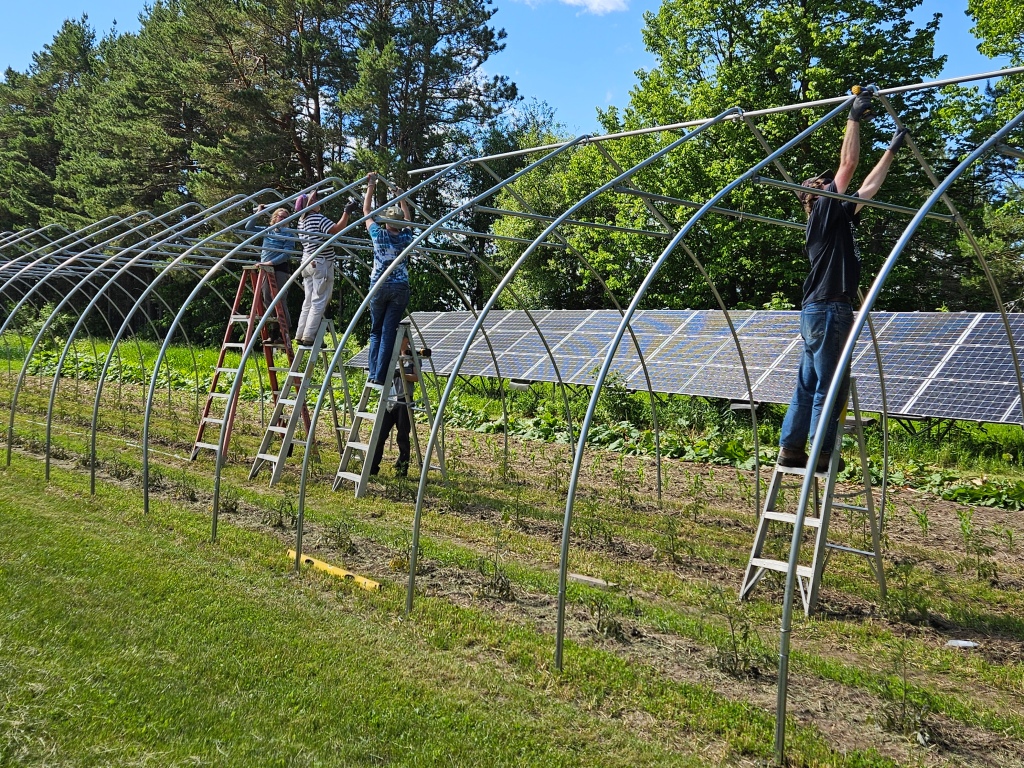
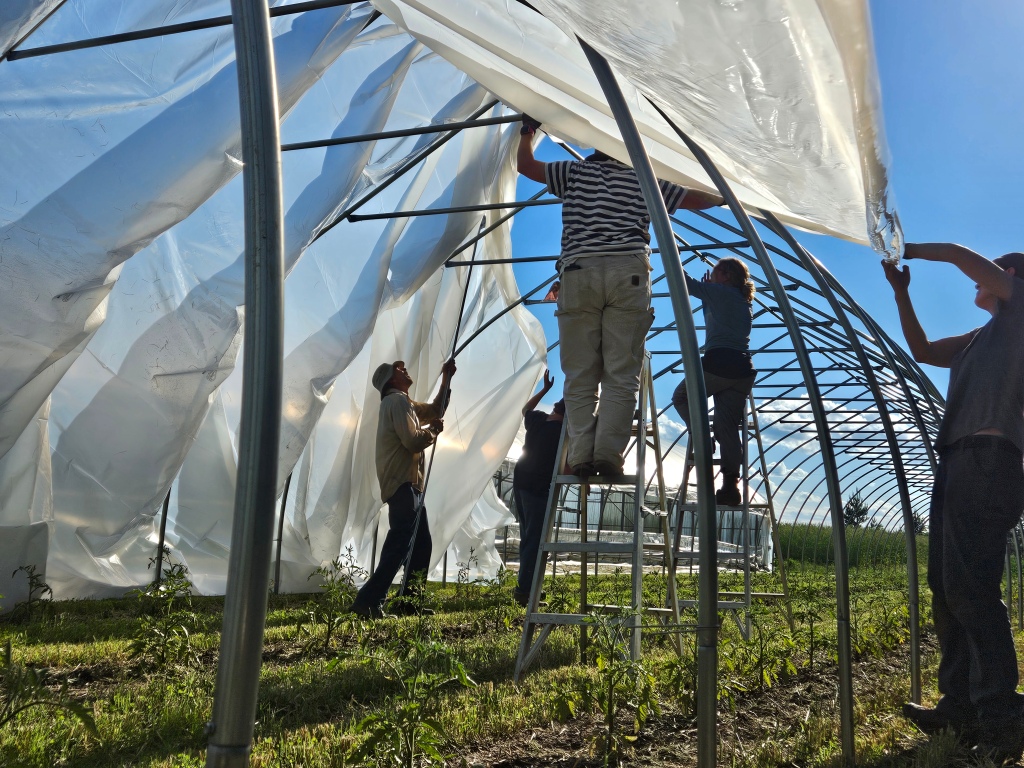
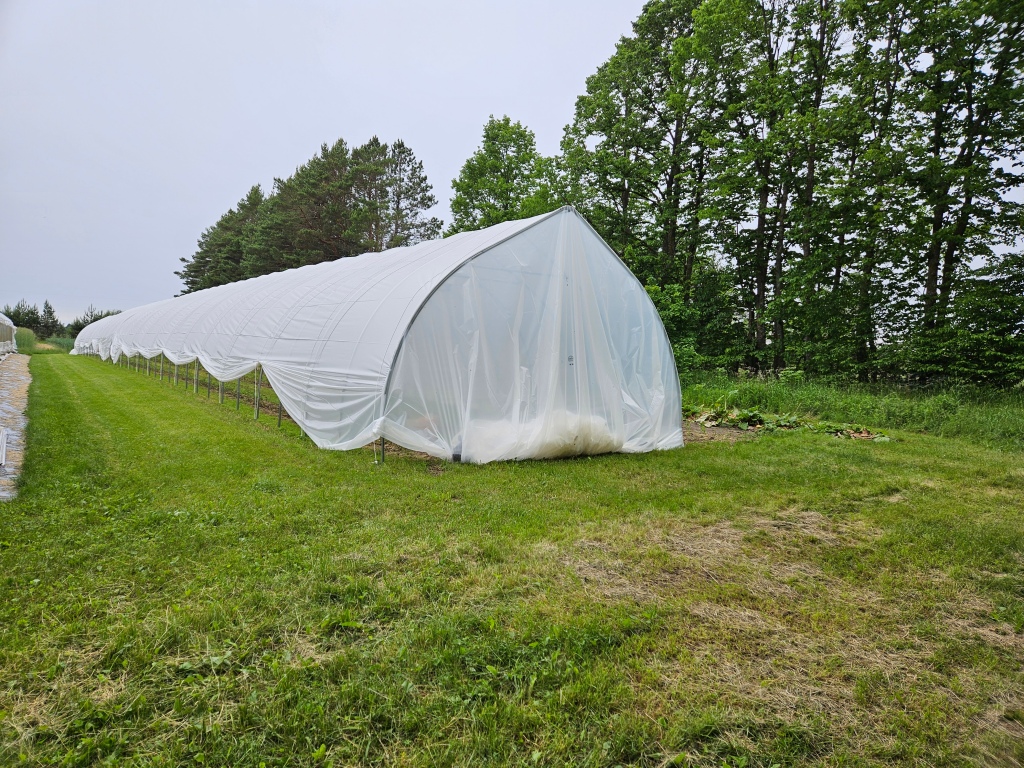
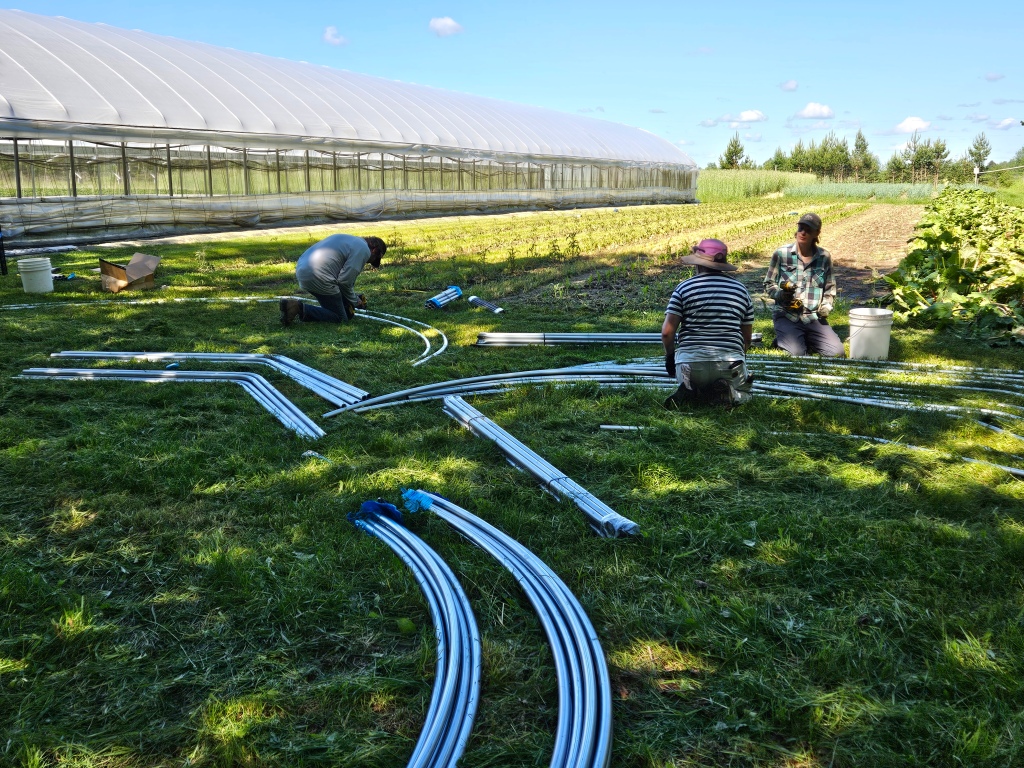
Thanks to dryer days, and all hands on deck, we had time to accomplish a few additional things last week as well. The most noteworthy was the caterpillar tunnel the crew put together on Friday.

This tunnel is part of an experiment we are trying on the farm with some of our outdoor tomatoes. The main variety of slicing tomatoes you will be receiving in your box this season is called Geronimo. These tomatoes are know for being prolific producers, resistant to some common diseases, and for producing uniform fruit. The downside that they do best in a greenhouse and often crack before they’re ready to be harvested when subjected to the elements. We have several permanent greenhouses that house our earliest planting of tomatoes, but the tomatoes are more flavorful when grown in field soil rather than soil that’s been permanently protected. Our hope with the caterpillar tunnel is that it will give us the best of both worlds. Since they can be moved easily each year, we get the delicious flavor from the outdoor soil, but we get the protection of a greenhouse. 

As any of our science-loving members know, a good experiment always has a control group. We have standard greenhouse tomatoes, and we have standard outdoor tomatoes serving as our control groups. We can use these control group tomatoes to compare against our experimental tomatoes, to see if the quality and flavor are the same or different. 

I am very excited for this experiment. Mostly because I love tomatoes, but also because it’s refreshing to know that after many decades, and 2 generations, Farmer Janaki is still learning. Often we look at farms of this size and think they must know it all, and do everything perfectly. Nope! Janaki and the farm crew are learning and trying new things every day just like all of you. I believe that every experiment is worth it because even if it doesn’t go as planned, you always learn something from the process, and I think learning is half the fun of trying something new. 

You’ll still have to wait a little while for any tomatoes, but this week in your share you can expect to see: 

Turnips – Broccoli – Lettuce – Rhubarb – Greens mixRadish


We’ve been giving you lots of lettuce lately, if you are stumped on fun ways to enjoy it, one of my favorite ways is to grill it before putting it on a sandwich or chopping it up to add to a salad. Grilling the lettuce will add a smoky flavor, and takes out some of the bitterness. This works best with Romaine lettuce because it’s a little firmer. With the Butter Crunch, or softer lettuce, I like to use the leaves as lettuce wraps. It’s a nice way to lighten any dish that you would usually use bread or a tortilla with. On a hot summer day, a lighter dinner is just what I crave after a long day on the farm.

Another fun way to use lettuce is as a dip for bread, veggies, or whatever you can think of. I like this Peruvian Aji-style sauce.

Ingredients

  • 1 head lettuce, stem-end trimmed and discarded
  • ½ bunch fresh cilantro, stems removed
  • 5 green onions
  • ¼ cup mayonnaise or olive oil
  • 2 jalapeno peppers, seeded
  • 1 clove garlic
  • salt and ground black pepper to taste

Directions

  1. Place lettuce, cilantro, green onions, mayonnaise (or oil), jalapeño peppers, garlic, salt, and black pepper into a blender; blend until smooth, about 2 minutes.

Honey-Glazed Radishes and Turnips

Ingredients

  • 2 Tbsp. margarine or butter
  • 1 large shallot, sliced
  • 1 1/2 lb. radishes, halved
  • 1 1/2 lb. small turnips, halved or quartered
  • 1/3 c. water
  • 1/4 c. lower-sodium chicken broth
  • 1 Tbsp. honey
  • Kosher salt and freshly ground pepper
  • 2 Tbsp. thinly sliced mint leaves
  • 1 Tbsp. finely chopped chives

Directions

  1. Step 1In 12-inch skillet, melt margarine or butter on medium-high. Add shallot and cook 2 minutes or until golden and tender, stirring occasionally. Add radishes and turnips; stir until well coated. Stir in water, broth, honey, 1/4 teaspoon salt, and 1/4 teaspoon freshly ground black pepper. Heat to boiling. Reduce heat to medium-low; cover and cook 15 minutes.
  2. Step 2Uncover and cook 7 to 10 minutes longer or until vegetables are glazed and most of liquid has evaporated, stirring occasionally. Remove from heat and stir in mint and chives. Transfer to serving platter and garnish with mint leaves

For the farm crew, 

Jennifer 

Summer CSA Week 2, 2023

Greetings!

Let’s start things off with a haiku…

Mid June – so so dry
Irrigate to help them grow
Janaki sleeps not

Week two and another round of locally grown goodness! Up this week:


Greens mix – Green onions – Lettuce – Radish – Tatsoi – Turnips


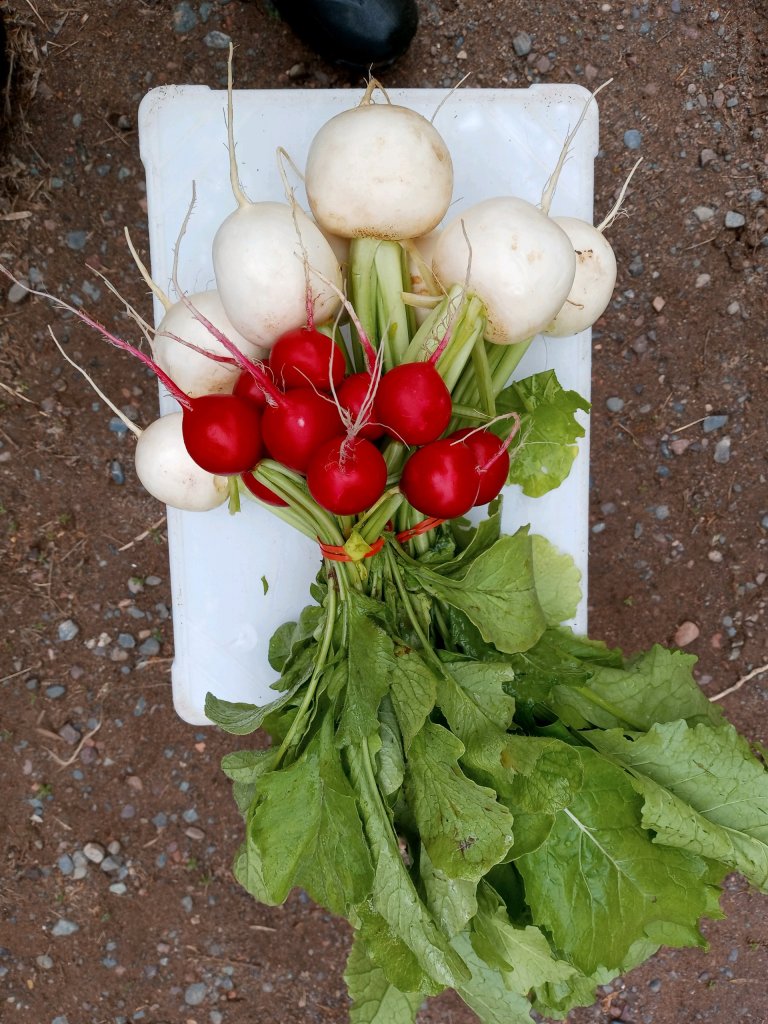
The vegetable spotlight falls on the radish this week. Radishes are not only zesty beauties… they are antioxidant-rich, as well as relatively high in vitamin C, calcium, potassium, and fiber. These cruciferous veggies are entirely edible – all the way from their crunchy bulb to their tender leaves. All parts of the radish are an excellent addition to your summer salad. Radishes are a cool-season vegetable, so they are a little hotter because of how unusually warm and dry it has been, and the heat also means that we’ve had to get all of them out of the field quickly, rather than keeping them for a few weeks. This makes them a great candidate for roasting, transforming the flavor from bright and crisp to mellow and sweet. Find below a two-for-one recipe that uses both your radishes and your turnips to bring out a caramelized quality in both (with a little help from some honey).

Roasted Turnips and Radishes

Serves 4

  • 1 lb turnips, halved or quartered
  • 1 lb radishes, halved or quartered
  • generous drizzle of extra-virgin olive oil
  • kosher salt and freshly ground pepper
  • 2 teaspoons honey, plus more to taste
  • 5 fresh thyme sprigs
  1. Position a rack in the upper third of an oven and preheat to 425 F.
  2. In a large bowl, toss together the turnips, radishes, and olive oil with salt and pepper. Transfer the veggies to a baking sheet and spread into a single layer. Keep your eye on them and roast until the veggies start to char and soften (about 10 minutes). Drizzle the honey and scatter the thyme sprigs on top. Continue roasting until the veggies are fork-tender and have a caramelized finish (about 10 more minutes).
  3. Discard the thyme springs. Transfer the veggies to a platter and drizzle with more honey, if desired. Serve immediately.

Amidst the various harvests of our CSA, our dedicated members occasionally find themselves facing a delightful yet overwhelming challenge: an abundance of produce that tests their culinary prowess and storage capabilities. When unpacking your weekly share of farm-fresh vegetables, you may wonder “what am I supposed to do with a fridge drawer full of Turnips?”

Enter the quick pickle…

Quick pickles will keep in the fridge for months. They are delicious right out of the jar, but also make zingy additions to salads, sandwiches, and really anything that needs a little punch.

Ginger – Pickled Turnips

  • 2 inches fresh ginger, unpeeled, cut into 1/4-inch-thick coins
  • 2 garlic cloves
  • 8 ounces turnips, cut into thin discs or match sticks
  • 1 cup warm water
  • 2 teaspoons kosher salt
  • 1 tablespoon honey
  • 3/4 cup apple cider vinegar
  • 1/4 teaspoon crushed red pepper flakes
  1. Put the ginger and garlic in the bottom of a 2-cup wide-mouth jar. Pack the turnips into the jar.
  2. Combine the water, salt, honey, vinegar, and red pepper flakes in a separate jar. Top it with its lid, and shake vigorously to combine. Pour the brine over the turnips until it just covers them. Top the turnip jar with a lid and refrigerate for at least 24 hours before enjoying.

When the turnips are gone, just shove more vegetables in there – the brine will work its magic on anything from green beans, to radishes, to fennel!

For the farm crew,

Charlie

Summer CSA Week 4, 2022

We have fun, even when mulching tomatoes on a hot day.

Happy Fourth of July! I hope you enjoy some family time, great food, and protect your dogs from the scary firework noises.

On the farm we’re celebrating with our first harvest of carrots! The carrots in the share this week are coming with their tops ON because carrots greens are edible and TASTY. See below for a carrot top pesto recipe.


In your share this week:

Green Onions – Broccoli – Lettuce – Carrots with tops – Radishes


Carrot Top Pesto

Ingredients

1/3 cup pine nuts (try substituting cashews, walnuts or sunflower seeds)

2 small cloves garlic, peeled

4 cups lightly packed, well washed and dried carrot top greens (from 1 1-pound bunch of carrots)

1 cup lightly packed fresh basil leaves, plus more as needed (NOTE: If your bunch of carrots yields less than 4 cups of greens, add as much basil as you need to get a total of 5 cups of greens.)

1/3 cup (1 ounce) freshly grated Parmesan cheese

2 tablespoons fresh lemon juice

1 tablespoon water

1/2 teaspoon fine salt

1/4 teaspoon freshly ground black pepper

1/2 cup extra-virgin olive oil

Preparation

  1. In a small, dry skillet over medium heat, toast the pine nuts, shaking the pan frequently, until fragrant and golden brown, about 3 minutes. Transfer to a plate and let cool slightly.
  2. In a food processor, process the pine nuts with garlic until minced. Add the carrot tops, basil, cheese, lemon juice, water, salt and pepper and process until finely minced. With the machine running, slowly pour the oil in a steady stream through the feed tube and process until well blended.

Radish Salad

1 serving

Ingredients

6 radishes

1/2 tablespoon salt, plus more to season

vinaigrette or orange juice

olive oil

pepper

red pepper flakes (optional)

mint or parsley (garnish)

Preparation

  1. Cut about radishes into matchsticks or sliced very thinly and placed in a bowl of cold water with a tablespoon of salt. Let the radishes soak for about 15 minutes, drain them, and rinse them well.
  2. Dress the radishes with a vinaigrette or orange juice and a bit of olive oil. Salt and pepper to taste. Add a pinch of hot pepper flakes if you like them and garnish with mint or parsley.


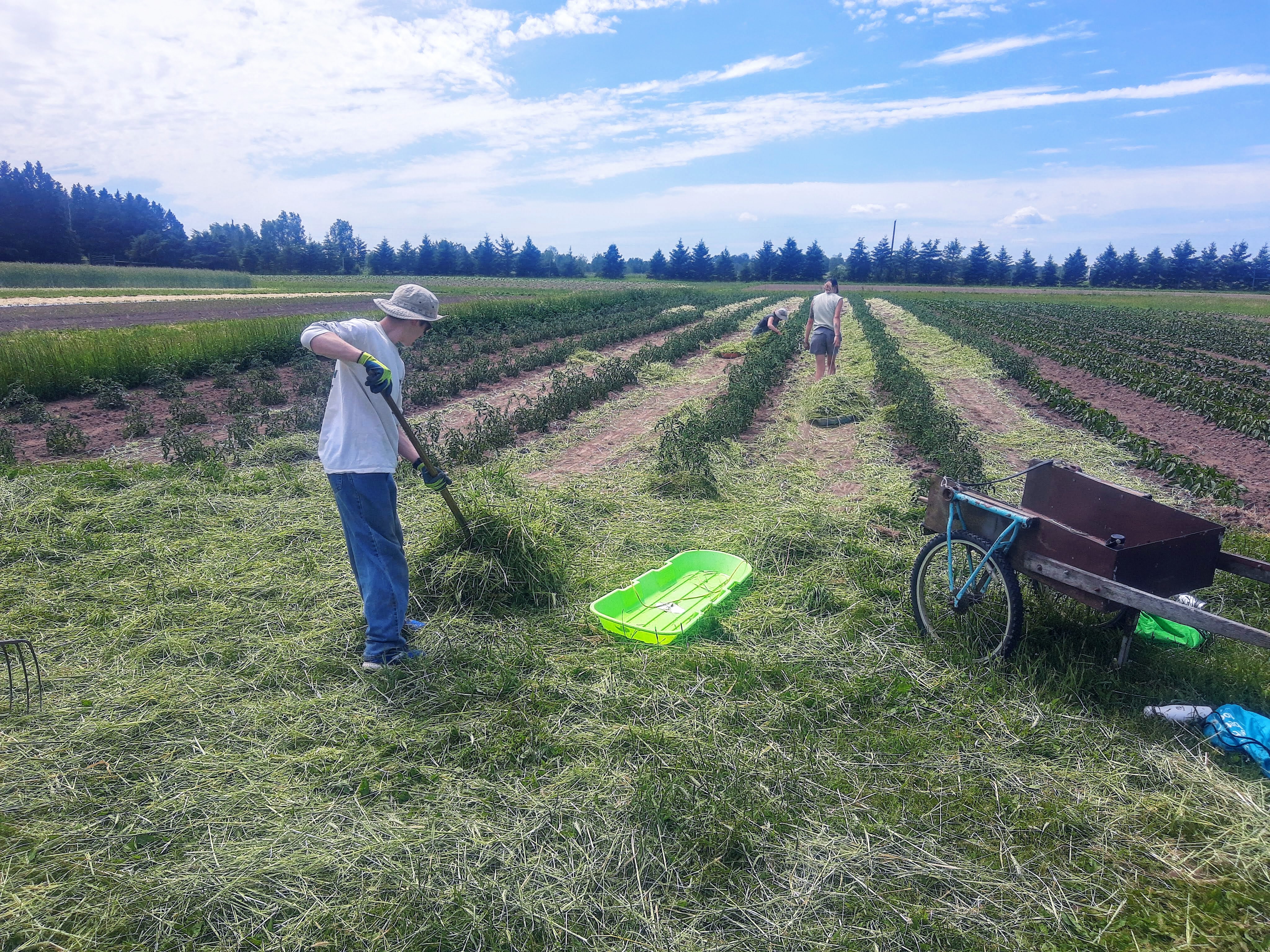
Last week we mulched the field tomatoes (pictured above). These tomatoes are paste type tomatoes for sauces and will go towards the canning tomato preserving share. Food Farm preserving shares are one-time boxes made specially for the canning crowd. Whether you want to stock up on freezer pesto, make all your family dilly beans for Christmas, or perfect your marinara recipe, the preserving shares are ideal for community members who want bulk orders of the freshest local produce. Canning tomatoes will be ready for pick-up between the beginning of August and the first frost, but you can (and should!) get your preserving share order in now at foodfarm.csaware.com .

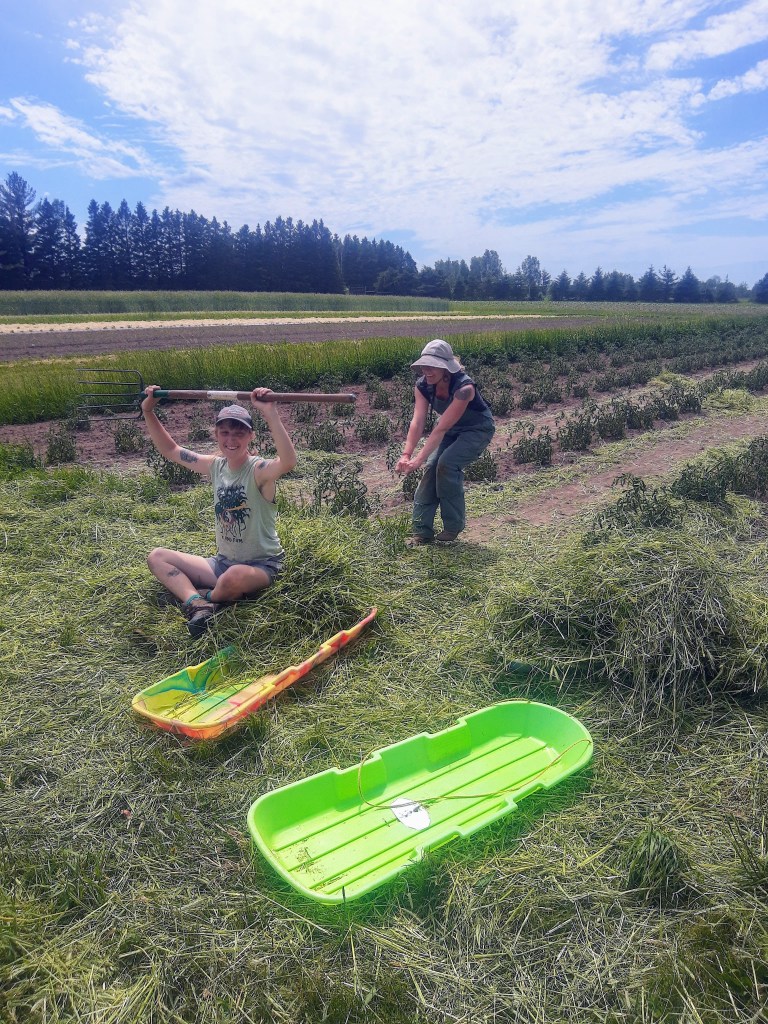
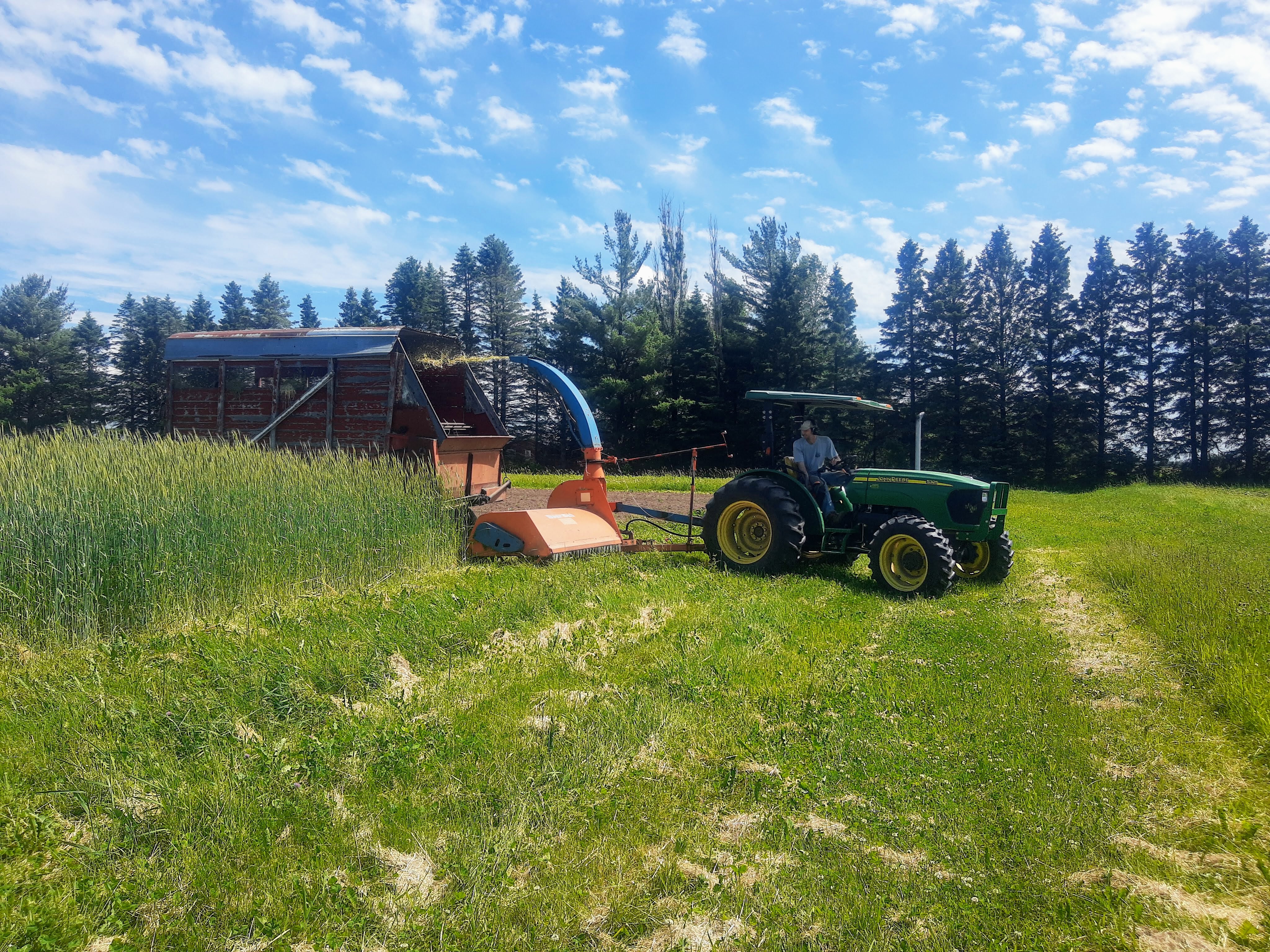
We are fortunate at the Food Farm to have enough space and appropriate equipment to grow our own mulch. Other farms have to buy in straw. Janaki cuts fields of tall rye cover crop and then the crew tucks in the tomatoes using sleds and pitchforks. It’s like sledding, but all uphill and a lot more itchy! The mulch will suppress the weeds and keep in soil moisture so our tomatoes grow big and strong.

Golden hour on the farm.

For the farm crew,

Starr

Summer CSA Week 10

A couple of weeks ago we walked through some fields – with newly sprouted cover crop – to pull out some of the towering (compared to the baby cover crop!) pig weed and lambs quarter. Looking across the fields they looked much better after, though when we were in there we could see plenty more weeds that we may get to at some point. Maybe.

Soon Janaki will be doing trip after trip with the old dump truck full of manure from a local cattle farm. The manure gets turned and composted and turned again and composted some more (a few cycles of that over weeks) and then can get used on fields next year to add rich nutrition to the soil.

Next year, crops will be moved around to avoid being planted in the same places as this year. That way we can avoid disease, pests (hopefully), and the plants can go into fields that have had time, cover crop, and nutrition added back in. Our healthy soil and extra work to maintain it keeps our vegetables healthy, and the farm healthy for years to come.

Janaki has some of the rotating stuff down to a science (I mean spreadsheets), but much of it is still an art. He knows what fields may have low spots that will be wet in spring, and can’t be used for early crops. He knows which ones have heavier, and richer soil that might be good to go to plant into, and which ones might need some organic fertilizer added in. He has a rotation of cover crops that works well for us down to a science too. Bare fields can equal sad soil, and having crops that add organic matter, or elusive nitrogen naturally back into the soil is a must for organic agriculture.

It’s a cycle of wholeness. And it leads to some pretty good whole food.

I wish I could say that everything I eat or otherwise consume follows this same pattern, or puts back what it takes out from the planet. I can’t say that; though I hope to keep moving that direction.
More and more, it is so challenging to me when I think of what things cost on the shelf not always being reflective of how much they really cost from an environmental (yes, that includes humans too!) perspective.

The truth is the cost on the shelf for organic food, or organic clothing (or non-toxic baby mattresses as I’ve found out) is an insurmountable barrier for many people, both here and around the world. I don’t want to minimize that. It’s a real problem.

Conventional agriculture is also a problem. Perhaps many of you have our CSA share because you already know this and are bothered by mono-cropping, pesticide use, loss of top soil and the list of negativity goes on.

Might I add another to the list.

Ammonium nitrate.
The elusive nitrogen that all crops (corn needs a lot, for example) require. Ammonium nitrate is one of the fertilizers that gets used around the world, in staggering quantities, in the production of all kinds of non-organic crops.

And it’s a bomb.
I feel like I should say it “can be” a bomb. It’s very often used for agriculture, but it’s also also used in war. And, I’m sure many of you remember exactly where you were on April 19th, 1995.

And in Beirut… does it matter now what the original purpose of it’s manufacture or intended destination was? Does it matter that it *could have been* fertilizer if it becomes a bomb in the middle of a city anyway?

I was living and farming in Waco, Texas when a fertilizer plant 25 minutes north, in the town of West, exploded. At the time it happened, I was video chatting with friends at a cafe, and it was only after the call ended that I realized that I had been half-hearing sirens the entire time through my head phones. When I went inside to return my cup (and to see if anyone knew what was going on), the TVs were all on, and everyone was silent or on phones trying to call friends or family.
You’d be forgiven for not remembering, it was two days after the Boston Marathon bombing.

I had no idea that that plant was up there, and if I would have known I had no idea at the time what ammonium nitrate was. I am sure many (most?) people in Beirut or in the whole of Lebanon didn’t know that tons of the stuff was being, almost randomly, disastrously, stupidly stored at their port.

I think as humans we just can’t keep up with how dangerous our world is. How much danger we add to it. We won’t be able to control storms, or drought, or volcanoes (though our actions surly add to the devastation they cause). But what we can and do add in the way of poisons, bombs… it’s overwhelming.

I wish this could be a swords to plowshares kind of post… but the materials we’re talking about aren’t nearly as simple as hammering metal into a different shape. If only that was the task we were undertaking. Again, so what if it’s destined to be fertilizer if it blows up anyway?

By partaking in the food from your CSA share each week you’re taking steps (and power!) away from the machine that seems to roll along in our world and hurt so much in it’s path. You’re taking steps (and giving power!) to safer, cleaner alternatives. It’s hard to feel like we have much power in the face of such destruction, or in the face of such wide-spread unsustainability, but the power we do have we can wield. Even by wielding your fork.

For the farm crew,

Karin


img_1104


In your share this week: Green Beans, Broccoli, Carrots, Cucumbers, Dill, Lettuce Mix, Green Onions, Parsley, Green Peppers, New Potatoes, Tomatoes, Zucchini


Many of you long-time members will remember the porch at 427 N. 16th Avenue East. The Benson’s have been members since the beginning–before the beginning, actually. Their porch served as a pickup site from 1994 until this year because they were anticipating the sale of their home. It is officially on the market this week, and I promised a number of people that I would pass along the listing once it was up. Since I don’t remember who that was, I’m sending it along to everyone in the hopes that this special place might stay in the Food Farm family: https://s.paragonrels.com/goto/2_IPp


img_1107

It doesn’t hurt that weeds can be so beautiful.


Refrigerator Pickled Green Beans

Can double or triple.

  • 5 ounces green beans
  • 1 clove garlic
  • 1/2 teaspoon coriander seeds
  • 1 small dried chile
  • 1/8 teaspoon black peppercorns
  • 1 bay leaf
  • 1 cup cider vinegar
  • 1/2 cup white wine
  • 1 tablespoon sugar
  • 1 teaspoon fine sea salt

Steps to Make It

  1. Gather the ingredients.

  2. Before you trim the green beans, arrange them vertically in a 1-pint jar to see how many will fit. Pack them in as tightly as you can—once you add the hot liquid, they will shrink just a bit, so feel free to really cram them in.

  3. Remove the beans from the jar and trim them to fit, leaving at least 1/2 inch of head-space. Pack the trimmed beans back into the jar.

  4. Peel the garlic and cut it into quarters. Stuff the garlic pieces into the jar with the green beans.

  5. Add the coriander seeds, dried chile, peppercorns, and the bay leaf into the jar around the beans.

  6. Put the vinegar, wine, sugar, and salt in a small saucepan. Bring it to a boil over high heat and boil for 2 minutes (the sugar and salt should be completely dissolved).

  7. Pour the hot mixture over the beans. The liquid should completely cover all of the beans. Screw on the lid and let the jar sit until it’s cooled to room temperature.

  8. Once the jar is cool, refrigerate the bean pickles for at least 2 days or up to 6 months before eating.


Herby Potato and Green Bean Salad

From Taproot Magazine

1 1/2 lb potatoes, cubed
1 1/2 tsp salt
1/2 lb green beans
6-8 radishes
1/4 medium onion
1/2 cup loosely packed fresh dill
1/2 cup loosely packed fresh parsley
2 sprigs fresh tarragon
3-5 green onions (to taste)

Dressing:

1/2 tsp yellow mustard seeds
1/2 tsp brown mustard seeds
1/4 c olive oil
2 Tbsp grainy mustard
2 Tbsp red or white wine vinegar
2 Tbsp lemon juice
1 Tbsp honey’
3/4 tsp salt
1/2 tsp black pepper

Boil or steam potatoes. Boil or steam beans. If boiling, add plenty of salt to water. Chill beans after cooking in ice water. Salt after steaming/rinsing.

Fold the chopped herbs and radishes, beans, and potatoes once cooled.

Lightly toast mustard seeds on medium low heat in a pan, stirring to avoid burning. Crush seeds in mortar with a pestle. Shake all dressing ingredients together in a jar.

Gently mix dressing into salad, taste for salt. Serve a bit warm, or out of the fridge up to 4 days later.


Summer CSA Week 6

It seems that somehow the weather has been colluding with current events – when it rains it pours. When it pours it also hails. If you haven’t yet read Janaki’s storm report from mid-week last week it’s worth reading through, just scroll down this page.

We take a lot of pride in the food we send in the shares each week. The plants get a lot of TLC around here between greenhouse time, or field weeding and hoeing time (not to mention the tractor time and watering time). Janaki and Dave are always considering this or that about the appearance of the leaves, or the way plants look when they sprout, or how to perfectly place pac choi in a box so it’s as unrumpled it can be. The care and precision for every aspect of a plant’s life is time consuming, and it rubs off on everyone who works on the farm.

Doing things to the best of our ability is all we can do, and there is so much that isn’t up to us.. It is disappointing, and a little nerve wracking to see plants we are counting on look like someone stepped all over them. We can still do our best to care for the plants and to harvest them tenderly, but nothing is going to change the pock marks in the peas, or the dead carrots or other crops now open to more pressure from pests or disease.

During this whole insane time we find ourselves in as a society, I have really struggled to pull myself back from the precipice of “everything-is-horrible-and-it-shouldn’t-be-and-if-only-people-had-done-the-work-in-the-beginning-or-at-least-tried-even-later-or-just-did-anything-at-all-even-small-things-this-wouldn’t-be-happening-and-if-I-get-mad-enough-at-strangers-in-the-grocery-store-will-that-fix-how-terrible-I-feel”. It’s a long name for a precipice. I should consider an acronym.

This year so far has been a lot of rubber meeting the road and wool being pulled from our eyes. It is a lot to digest, and it feels like it’ll digest us. It’s not easy to put one’s head down and keep doing right, and keep working for better when it seems like a hail storm is going to come along and undo whatever you’ve worked for. Or even trying again after a hailstorm of life- it’s hard to keep on when maybe the damage that’s been done won’t be out-weighed by the effort and vulnerability of our attempt for better.

In pulling myself back from the aforementioned precipice, I have to constantly remind myself that I am only in control of what I do and don’t do. I can not control most of what happens to me, or other people. I can not control what the weather does, or the climate, or the people in the grocery store.

On the farm, we’ll keep tending to the crops tenderly, even though (especially because) they’re in rough shape. We’ll harvest them well and pack them for you as gingerly as we can. That’s what we can do. We can keep on doing the right thing for the soil on the farm, year in year out and keep making choices that keep us as off the grid as possible.

Thanks for doing your part by using our vegetables, and for sharing in the ups and downs of farming and life with us. None of this would be happening without all of you choosing to eat our food for yourselves and your families.

For the farm crew,

Karin


img_0786


In your share this week:

Beets – Broccoli – Cauliflower – Carrots – Cucumbers – Head lettuce- Snap peas


img_0789

Straw all stacked -done and done!

Napa Cabbage Salad with Buttermilk Dressing

From The Smitten Kitchen

-I am including this recipe mostly for the dressing, because having a good dressing on hand can be a key part of getting veggies from your fridge and into your mouth! Also, did you know that Napa cabbage (should you have any left from last week) can be stored for quite a while, well wrapped in the fridge? Not maybe as long as hard cabbage, but for at least a month.

1/2 cup well-shaken buttermilk
2 tablespoons mayonnaise
2 tablespoons cider vinegar
2 tablespoons minced shallot
1 tablespoon sugar
3 tablespoons finely chopped chives (or green onions!)
1 pound Napa cabbage, cored and thinly sliced crosswise (4 cups)
6 radishes, diced
2 celery ribs, thinly sliced diagonally

Whisk together buttermilk, mayonnaise, vinegar, shallot, sugar, 1/2 teaspoon salt, and 1/4 teaspoon pepper in a large bowl until sugar has dissolved, then whisk in chives.

Toss cabbage, radishes, and celery with dressing.

Summer CSA Week 3

I love this time of year. The time of light. This year, with a little baby added into my evening and morning routines, I find myself wanting to loll in bed for a bit longer first thing than I used to. Even so, it is nice to wake up to brightness, and to have an evening of light.

Like my little one’s babyhood – I wish I could put some of summer in a bottle to take sips of later in the year.

On the farm we’ve been enjoying the lovely days -though we would rather it rained. When “nice” weather goes on and on, it becomes too much of a good thing–all of the recent rain showers have missed the farm so there has been no real moisture for two months. Janaki has been spending more time than he has (yes, there is a black-hole on the farm where time gets sucked up and obliterated) moving irrigation from one field to the next to keep up with the demands of new plants and sprouting seeds with very young (i.e., short and delicate) root systems. It’s like putting out acres of tiny fires. Oh gosh-what an image.

Not a small part of me feels like our country right now fits this description somehow: like things have gotten to hot and dry for too long, and too few people are running around trying to fix the problems. Maybe what we need is, metaphorically, a deep cleansing rain as a country to wash the dust off and wet our cracking mouths. Or maybe what we need is a salve of sorts. Something to heal. Or maybe we are in a time where we just need to let wounds see the light of day, and have time to air out and be seen before anything more can be done.

I don’t really know.

I do know that with how interconnected we all are (and boy, did we ever really realize how much until lately?), even “just” getting a share from a local farm is part of the healing work. Sustainable food is part of food fairness, just as climate justice is social justice, and healthy choices for an individual add up to being healthy choices for a community.

Thank you for being part of our farm and for participating in our work by gaining your daily sustenance from our food.

For the thirsty farm crew,

Karin

img_0549


In your share this week:

Beets – Greens mix – Lettuce – Green onions – Radishes – Spinach – Turnips


So many greens!

Does it feel like you are getting so many greens in your first shares this season? You are! That’s what the early shares are all about- and it feels good after a long season of fewer fresh salads!

It can feel like a lot to keep up with too. It doesn’t take more than a bag of sub-prime wilted greens in my fridge to make me feel discouraged about food choices I make during the week. Look no further than your freezer should you feel yourself drowning in greens. This week, beet tops, turnip tops and any spinach that feels like more than you’d use up this week can all be frozen.

Cut into 2″ square pieces, wash (per last week’s manifesto against gritty greens), blanch in a pot of boiling water for a minute and a half or so, dunk in an ice bath and then remove as much of the water as you can in a towel or by squeezing the greens. Freeze in a baggy or freezer paper for up to a year (but preferably less). Frozen greens work well for smoothies, adding to soups at the last minute or working into a meal of pasta or grains and legumes.

20180621_182715


Quick, spicy pickled radishes

From Cookie + Kate

Serving ideas- on top of or on the side of any thing you eat this week!

INGREDIENTS

  • 1 bunch radishes
  • ¾ cup white wine vinegar or apple cider vinegar
  • ¾ cup water
  • 3 tablespoons honey or maple syrup
  • 2 teaspoons salt
  • 1 teaspoon red pepper flakes (this yields very spicy pickles, so use ½ teaspoon for medium spicy pickles or none at all)
  • ½ teaspoon whole mustard seeds (optional)
  • Optional add-ins: garlic cloves, black peppercorns, fennel seeds, coriander seeds

  1. To prepare the radishes: Slice off the tops and bottoms of the radishes, then use a sharp chef’s knife or mandoline to slice the radishes into very thin rounds. Pack the rounds into a pint-sized canning jar. Top the rounds with red pepper flakes and mustard seeds.
  2. To prepare the brine: In a small saucepan, combine the vinegar, water, honey or maple syrup and salt. Bring the mixture to a boil, stirring occasionally, then pour the mixture over the radishes.
  3. Let the mixture cool to room temperature. You can serve the pickles immediately or cover and refrigerate for later consumption. The pickles will keep well in the refrigerator for several weeks, although they are in their most fresh and crisp state for about 5 days after pickling.