Summer CSA Week 4

For all of us who put in a plea to Mother Nature, it worked…sort of. Last week felt like a normal week on the farm (if such a thing even exists in agriculture). This time of year, as the seasons shift from Spring to Summer, the farm crew’s agenda changes from spontaneous to more routine. It usually means weeding, row cover, weeding, bug hunting, and more weeding. Janaki and the crew were finally able to get out into the fields to do some much needed field work.

The drier weather gave us the opportunity to roll up all of our row cover. If you aren’t familiar with it, row cover is a permeable fabric that we lay over the top of our plants, specifically the brassicas. The row cover has multiple benefits, but the main ones we use it for on the farm are for deterring pests, and adding some extra early season heat. Broccoli is generally a cool season crop, but “cool season” generally refers to our normal weather in early June, while our first planting goes in the ground in mid-April. This is one of the reasons we are able to provide all of you with broccoli so early in the summer. It’s a large task to lay out the 30’x400′ sheets of row cover after each Spring planting of brassicas, but it’s an even larger task to roll all of it back up. 

We also made it across the road to weed through the first two plantings of outdoor carrots, and do some bug hunting while we were over by the potatoes. Each year we find ourselves fully experiencing what it means to work for an organic farm. It means that instead of the farm crew going out to spray insecticides on the plants, we take the organic approach. Think Ghostbusters, but instead of proton packs and cool jumpsuits, we get 5 gallon buckets and overalls. We go row by row, plant by plant, searching for the various life stages of the Colorado Potato Beetle. The eggs are by far the easiest to spot since they are bright orange against the deep green foliage of the plants. The larvae are a little more difficult, but get easier to spot as they go through the 4 larval stages. They start out really tiny with a black head and brown body, and slowly grow to almost being the size of an adult beetle. Once they’ve reached the adult stage, they get wings and stripes on their back which help them to be more noticeable against the plant. The worst thing about the Colorado Potato Beetle is how adaptable it is. These bugs overwinter in different life stages, don’t have to mate in the spring before they lay eggs, and aren’t even solely attracted to potato plants! Their favorites are potatoes and eggplant, they will also survive on other members of the nightshade family. This unfortunately meant we found quite a few on our outdoor tomatoes. Nothing the Beetlebusters (aka the farm crew) couldn’t handle. 

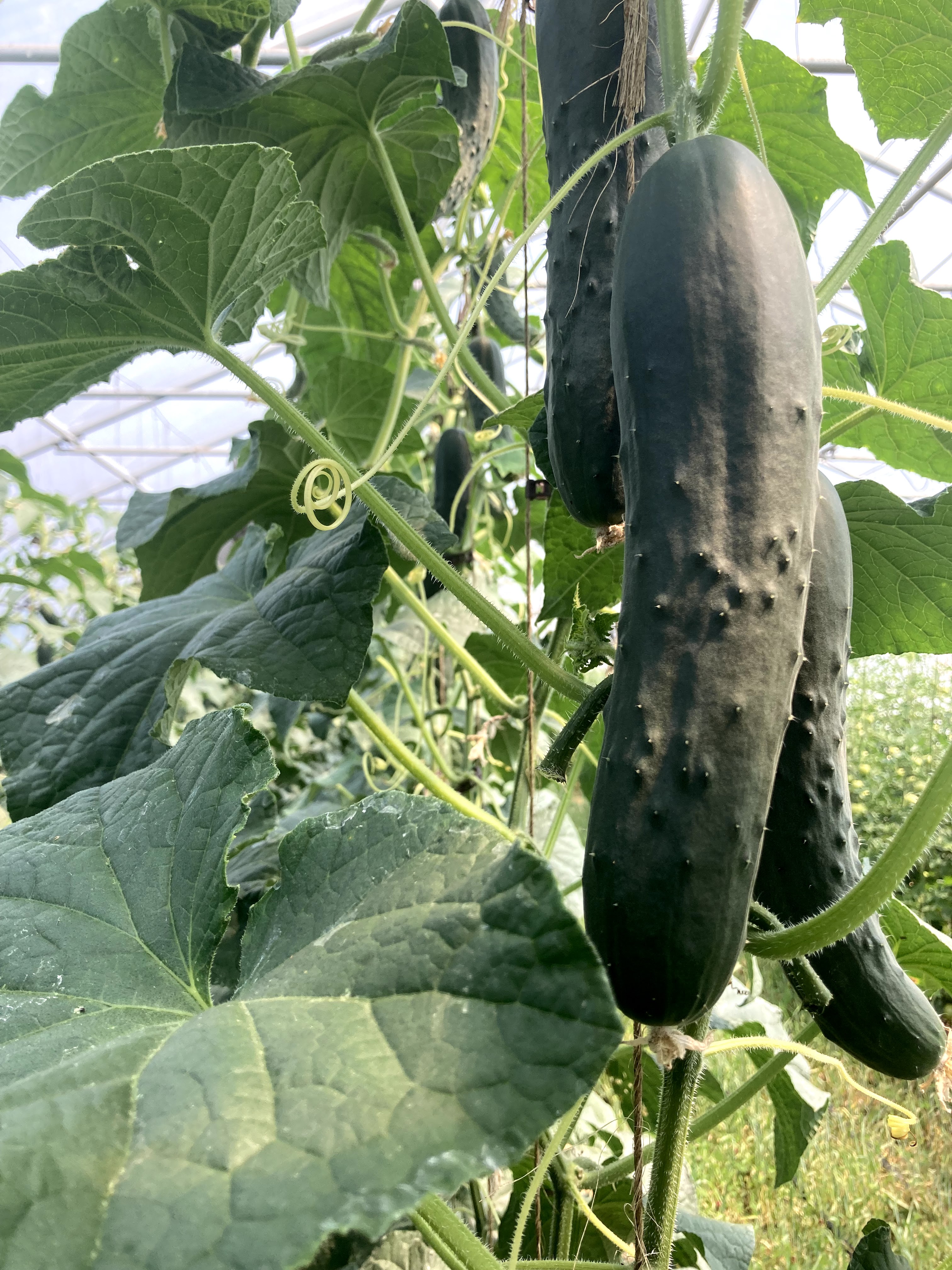
In case that wasn’t enough bug fun, we also noticed cucumber beetles on our greenhouse cucumbers, and squash beetles on our squash. We did identify a ‘new’ pest on the potatoes called a blister beetle. Mother nature is always keeping us on our toes. This summer is going to have a lot of bug pressure. We are coming off of a mild winter which didn’t get cold enough to kill most of the populations, then following that up with warm wet weather in the Spring/Summer, it’s the perfect recipe for a lot of bugs! This is all to remind you that if you ever find a little critter, or see some holes on your veggies, we promise it’s okay. It’s just nature’s way of reminding all of you that the veggies you receive each week are grown with love instead of harsh chemicals!

This week in your share: 

Arugula – Broccoli – Turnips – Radishes – Spinach – Green Onions

Garlic Scapes – Cucumbers – Green-top Carrots

This week we are giving you garlic scapes. If you’ve never used these before, they have the same flavor you get from fresh garlic, only a little milder and a lot less work since no peeling is involved. You can substitute scapes for fresh garlic in almost any recipe using 4-6 scapes = 1 clove of garlic.

One- Pan Orzo With Spinach and Feta

Ingredients

Yield:4 servings

  • 2tablespoons unsalted butter
  • 4large green onions, trimmed and thinly sliced
  • 2large garlic cloves, minced
  • 8ounces baby spinach leaves (8 cups), coarsely chopped
  • 1teaspoon kosher salt
  • 1¾cups low-sodium chicken or vegetable stock
  • 1cup orzo
  • 1teaspoon finely grated lemon zest (from 1 lemon)
  • ¾cup crumbled feta (3 ounces), plus more for garnish
  • ½cup frozen peas, thawed (optional)
  • 1cup chopped fresh dill, or use parsley or cilantro

PREPARATION

  1. Heat a 10-inch skillet over medium, then melt butter, 30 seconds to 1 minute. Stir in about three-quarters of the green onions (saving some of the green parts for garnish) and garlic, and cook until softened, stirring frequently, about 3 minutes.
  2. Stir in spinach, adding in batches if it doesn’t all fit in the pan at once, and ½ teaspoon salt. Continue to cook, stirring occasionally, until spinach is wilted, about 5 minutes.
  3. Stir in stock and bring to a simmer. Stir in orzo, lemon zest and remaining ½ teaspoon salt. Cover and simmer over medium-low heat until orzo is nearly cooked through and most of the liquid is absorbed, 10 to 14 minutes, stirring once or twice.
  4. Stir in cheese, peas (if you like) and dill, cover the pan, and cook for another 1 minute, to finish cooking and warm the peas. To serve, sprinkle with more cheese and the reserved green onions

Salmon Cakes With Arugula Salad

Ingredients

  • 1 pound salmon, skinned (canned will also work)
  • 2 tablespoons lemon juice, divided
  • 2 teaspoons Dijon mustard, divided
  • ½ cup finely chopped yellow bell pepper
  • 1 tablespoon finely chopped shallot
  • ½ teaspoon ground pepper, divided
  • ½ cup panko breadcrumbs
  • ½ cup crème fraîche or sour cream
  • ¼ cup buttermilk
  • 3 tablespoons chopped fresh dill
  • ½ teaspoon salt, divided
  • 2 tablespoons extra-virgin olive oil
  • 5 ounces arugula
  • 1 cup sliced radishes

Directions

  • Coarsely chop salmon and place half in a food processor. Add 1 tablespoon lemon juice and 1 teaspoon mustard. Process, scraping down the sides as necessary, until smooth. Add the remaining salmon, bell pepper, shallot and 1/4 teaspoon pepper and pulse until the mixture is combined but still chunky.
  • Transfer the salmon mixture to a medium bowl. Add breadcrumbs and stir until combined. Form the salmon into 4 patties, about 4 inches wide each, and place on a plate. Freeze for 5 minutes.
  • Meanwhile, whisk crème fraîche (or sour cream), buttermilk, dill and 1/4 teaspoon salt with the remaining 1 tablespoon lemon juice, 1 teaspoon mustard and 1/4 teaspoon pepper in a large bowl. Set aside 1/4 cup of the dressing for drizzling.
  • Heat oil in a large cast-iron or nonstick skillet over medium-high heat. Add the salmon cakes and cook, flipping once, until well browned and cooked through, 2 to 3 minutes per side. Transfer to a clean plate and sprinkle with the remaining 1/4 teaspoon salt.
  • Add arugula and radishes to the dressing in the large bowl. Toss to coat. Serve the salmon cakes on top of the salad, drizzled with the reserved 1/4 cup dressing

Carrot Top Salsa (The CSA Cookbook by Linda Ly)

2 cups minced carrot greens leaves and tender, stems only

3 tablespoons minced garlic

3 tablespoons minced fresh oregano

2 tablespoons minced jalapeño

One to one and a quarter cups olive oil

1/4 of a cup red wine vinegar

Zest and juice of lemon

Add all the ingredients to a medium bowl and stir to combine (use more or less oil to make a chunkier or thinner sauce).  Cover and let stand at room temperature overnight so the flavors intermingle.  This salsa gets better with age – so the carrot have turned to deep muted shade of army green is still good!!  Decant into a jar and refrigerate.  The oil will congeal in the cold temperature, but it does not affect the flavor. Bring the salsa to room temperature before serving.

For the farm crew,

Jennifer
Summer CSA Week 2

It’s the second week of Summer CSA season, and the crew is getting back into the harvesting rhythm. 

Last week was a big week for us on the farm. We needed to play catch up on some plantings. It was a daunting task, but our crew worked extra hard to get it all done, with time to spare. 

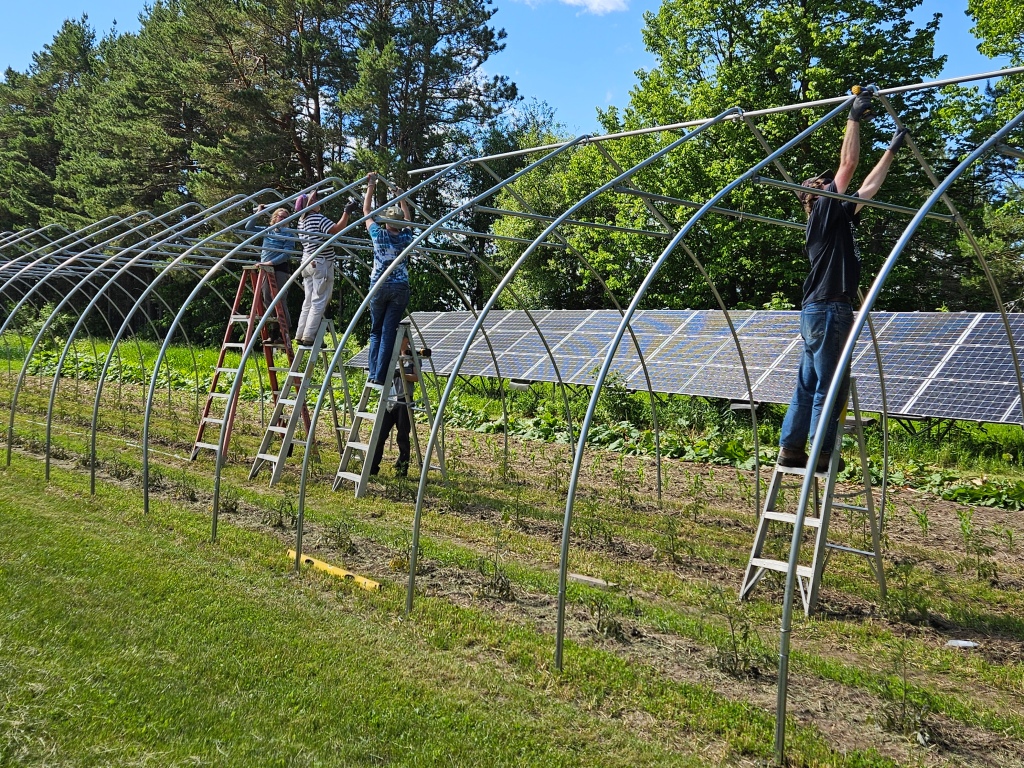
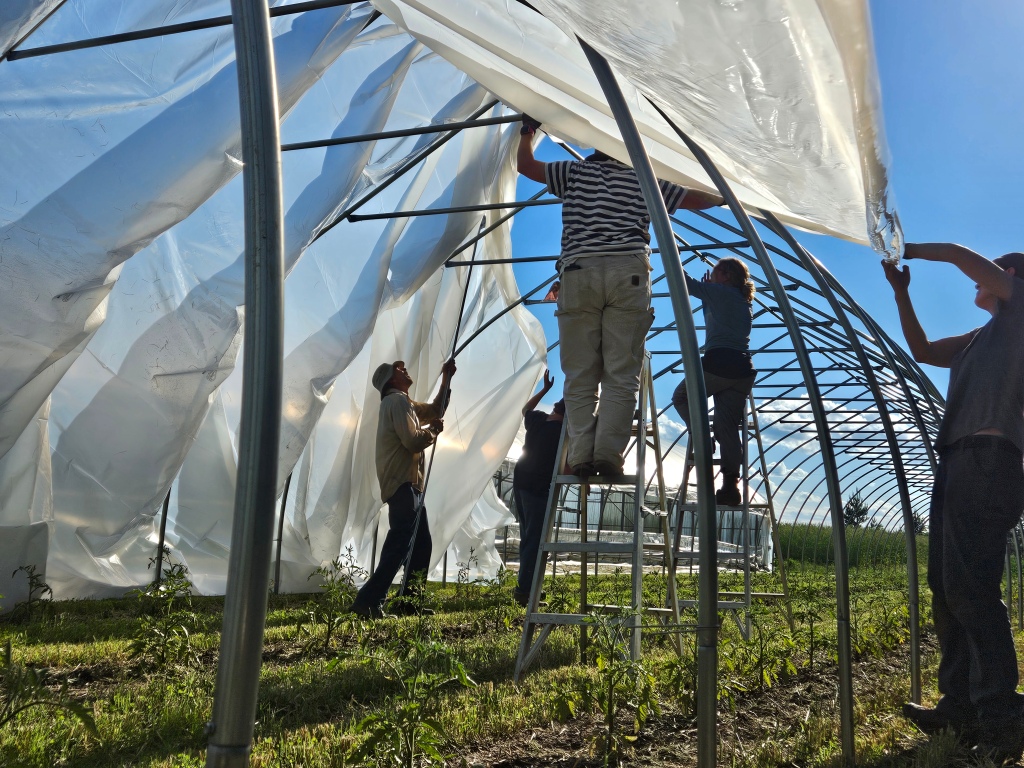
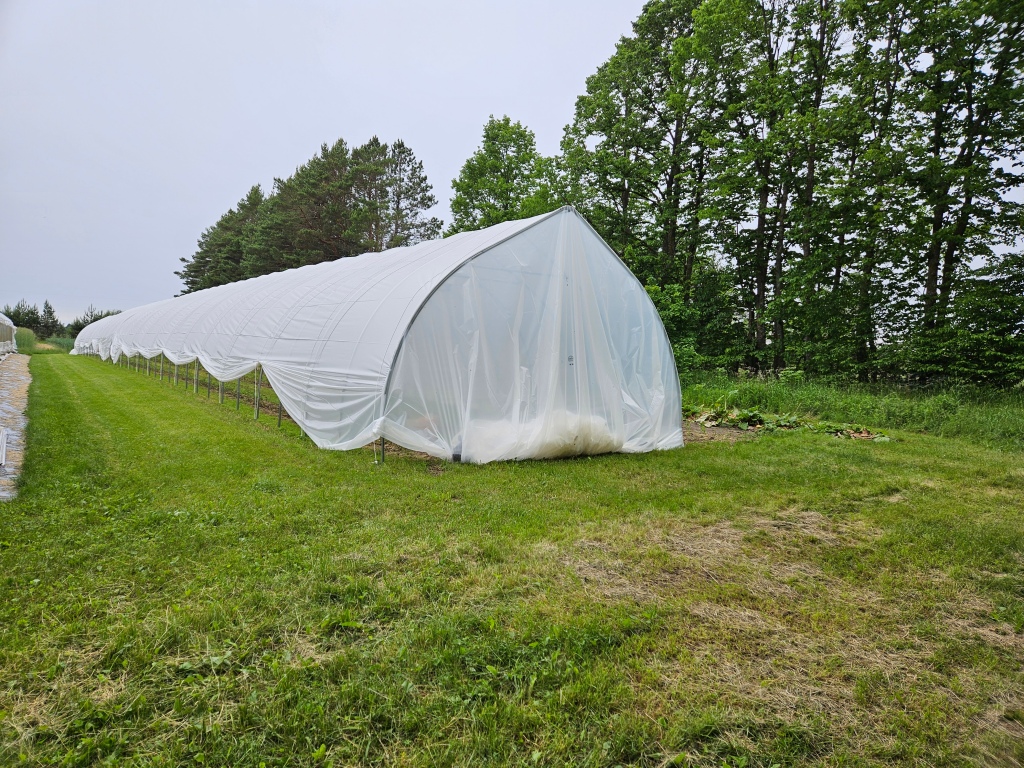
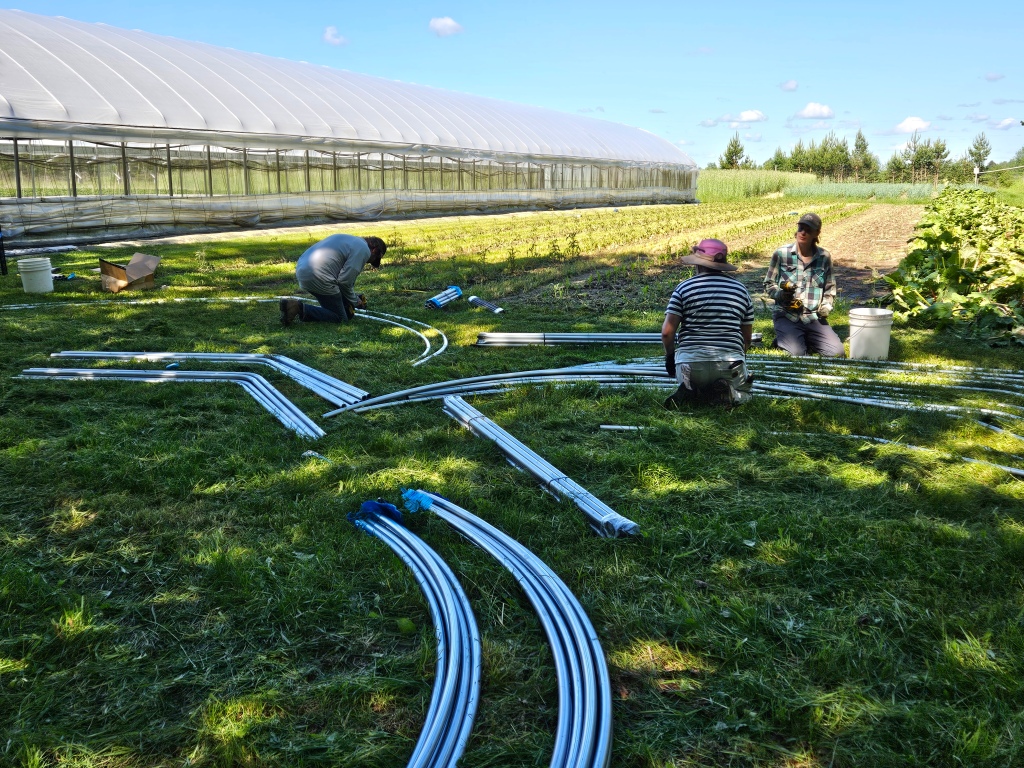
Thanks to dryer days, and all hands on deck, we had time to accomplish a few additional things last week as well. The most noteworthy was the caterpillar tunnel the crew put together on Friday.

This tunnel is part of an experiment we are trying on the farm with some of our outdoor tomatoes. The main variety of slicing tomatoes you will be receiving in your box this season is called Geronimo. These tomatoes are know for being prolific producers, resistant to some common diseases, and for producing uniform fruit. The downside that they do best in a greenhouse and often crack before they’re ready to be harvested when subjected to the elements. We have several permanent greenhouses that house our earliest planting of tomatoes, but the tomatoes are more flavorful when grown in field soil rather than soil that’s been permanently protected. Our hope with the caterpillar tunnel is that it will give us the best of both worlds. Since they can be moved easily each year, we get the delicious flavor from the outdoor soil, but we get the protection of a greenhouse. 

As any of our science-loving members know, a good experiment always has a control group. We have standard greenhouse tomatoes, and we have standard outdoor tomatoes serving as our control groups. We can use these control group tomatoes to compare against our experimental tomatoes, to see if the quality and flavor are the same or different. 

I am very excited for this experiment. Mostly because I love tomatoes, but also because it’s refreshing to know that after many decades, and 2 generations, Farmer Janaki is still learning. Often we look at farms of this size and think they must know it all, and do everything perfectly. Nope! Janaki and the farm crew are learning and trying new things every day just like all of you. I believe that every experiment is worth it because even if it doesn’t go as planned, you always learn something from the process, and I think learning is half the fun of trying something new. 

You’ll still have to wait a little while for any tomatoes, but this week in your share you can expect to see: 

Turnips – Broccoli – Lettuce – Rhubarb – Greens mixRadish


We’ve been giving you lots of lettuce lately, if you are stumped on fun ways to enjoy it, one of my favorite ways is to grill it before putting it on a sandwich or chopping it up to add to a salad. Grilling the lettuce will add a smoky flavor, and takes out some of the bitterness. This works best with Romaine lettuce because it’s a little firmer. With the Butter Crunch, or softer lettuce, I like to use the leaves as lettuce wraps. It’s a nice way to lighten any dish that you would usually use bread or a tortilla with. On a hot summer day, a lighter dinner is just what I crave after a long day on the farm.

Another fun way to use lettuce is as a dip for bread, veggies, or whatever you can think of. I like this Peruvian Aji-style sauce.

Ingredients

  • 1 head lettuce, stem-end trimmed and discarded
  • ½ bunch fresh cilantro, stems removed
  • 5 green onions
  • ¼ cup mayonnaise or olive oil
  • 2 jalapeno peppers, seeded
  • 1 clove garlic
  • salt and ground black pepper to taste

Directions

  1. Place lettuce, cilantro, green onions, mayonnaise (or oil), jalapeño peppers, garlic, salt, and black pepper into a blender; blend until smooth, about 2 minutes.

Honey-Glazed Radishes and Turnips

Ingredients

  • 2 Tbsp. margarine or butter
  • 1 large shallot, sliced
  • 1 1/2 lb. radishes, halved
  • 1 1/2 lb. small turnips, halved or quartered
  • 1/3 c. water
  • 1/4 c. lower-sodium chicken broth
  • 1 Tbsp. honey
  • Kosher salt and freshly ground pepper
  • 2 Tbsp. thinly sliced mint leaves
  • 1 Tbsp. finely chopped chives

Directions

  1. Step 1In 12-inch skillet, melt margarine or butter on medium-high. Add shallot and cook 2 minutes or until golden and tender, stirring occasionally. Add radishes and turnips; stir until well coated. Stir in water, broth, honey, 1/4 teaspoon salt, and 1/4 teaspoon freshly ground black pepper. Heat to boiling. Reduce heat to medium-low; cover and cook 15 minutes.
  2. Step 2Uncover and cook 7 to 10 minutes longer or until vegetables are glazed and most of liquid has evaporated, stirring occasionally. Remove from heat and stir in mint and chives. Transfer to serving platter and garnish with mint leaves

For the farm crew, 

Jennifer 

March Winter Share

It’s the second to last winter CSA delivery and the farm season is just around the corner!

🌱 Greenhouse Delights: There’s an unmistakable magic in the revival of the greenhouse scents, which is where the crew has gotten to hang out more and more recently 🙂 Our first planting of onions are just starting to poke out of the potting soil, with subsequent plantings not far behind.

🥕 Carrot Countdown: I am not 100% sure how many pounds of carrots we bagged up this winter, but I do know it was a lot! When the winter began, the root cellar was packed to the ceiling with pallet boxes of them… I mean packed, you could barely move around in there. Now there is but a few pallet boxes remaining and most of them will be reserved for the final CSA delivery in April. This means that this is the last week you will find our carrots in local restaurants and stores!


In Your Share This Month:

Beets – Green Cabbage – Purple and Orange Carrots – Onions – Shallots

Parsnips – Fingerling, Baby Yellow, & Red Potatoes – Rutabagas


For the recipes this month, it’s back to basics… One of my favorite ways to eat root vegetables is to roast them in the oven with nothing but a little olive oil, salt & pepper. They can then be enjoyed as a side dish, thrown on salads for fiber & flavor, or paired with a tasty sauce… like the caramelized shallot & herb aioli recipe below.

When roasting, I’m typically a fan of potato skins, but the French fingerlings in this month’s share have a slightly rough texture. They remain delicious, but I do suggest peeling them this time round.


Roasted Root Vegetables

Ingredients:

Assorted root vegetables (such as carrots, potatoes, parsnips, Rutabaga, etc.)
Olive oil
Salt and pepper to taste

Directions:

  1. Preheat your oven to 425°F
  2. Wash and peel the root vegetables, then chop them into similar-sized pieces to ensure even cooking.
  3. Place the chopped vegetables in a large mixing bowl.
  4. Drizzle olive oil over the vegetables, using enough to coat them evenly. Toss the vegetables with your hands or a spoon to ensure they are all well coated with the oil.
  5. Season the vegetables generously with salt and pepper, adjusting the amount to taste.
  6. Spread the seasoned vegetables out in a single layer on a large baking sheet. Make sure they are not overcrowded to allow for even roasting.
  7. Place the baking sheet in the preheated oven and roast the vegetables for about 25-35 minutes, or until they are tender and golden brown, stirring halfway through the cooking time for even browning.
  8. Once the vegetables are roasted to your desired level of doneness, remove them from the oven and transfer them to a serving dish.

Feel free to customize this recipe by adding other seasonings or herbs such as garlic powder, rosemary, thyme, or paprika for extra flavor!


Caramelized Shallot & Herb Aioli by newinthekitchen.wordpress.com

Ingredients:

3/4 cup light mayonnaise
2 tablespoons freshly squeezed lemon juice, plus a pinch of zest
3 tablespoons fresh parsley, chopped finely
2 tablespoons fresh dill, chopped finely
1 tablespoon dijon mustard
1 teaspoon hot sauce (your choice of brand, we enjoy Cholula)
3 shallots, minced
Olive Oil
Salt and pepper, to taste

Directions:

1. Heat a saute pan with one tablespoon of olive oil over medium heat.
2. Add shallots and cooked until browned and caramelized, about 10 minutes.
3. Allow shallots to cool.
4. Meanwhile, combine mayonnaise, herbs, lemon juice and zest, dijon mustard, hot sauce, and salt and pepper to taste.
5. When shallots are cooled, add them to mixture. Stir to combine.
6. Allow Aioli to chill in the refrigerator for about an hour prior to serving to allow flavors to combine.


For the farm crew,

Charlie

Summer CSA Week 10, 2023

Let’s take a moment to say thank you for the bit of rain that came last week. The farm was lucky enough to get three quarters of an inch, which isn’t that much in the grand scheme of things, but as my mother likes to say “beggars can’t be choosers.” The problem is that we need rain consistently to make much of an impact. Every hotter-than-normal, rainless day with ample sunshine dries the soil out. We do have a pond toward the back of the farm property, which we are able to pump water from to aid in our irrigation efforts, but it certainly wouldn’t hurt if we all put some collective energy into wishing for more rain to fall 🙂

We are getting to that time of year where every day is a harvest day. Whether it’s digging beets, carrots & potatoes, picking canning tomatoes, or slicing bunches of kale, there just doesn’t seem to be enough time in the day. One fun item that got added to the list this week is cantaloupe. This is a crop that can be difficult to grow in our area, but through a lot of trial an error, we have managed to grow consistently for the last five or so years. It has become somewhat of a crowd favorite and for good reason! Nothing quite cuts the summer heat like a freshly sliced melon!


Carrots – Cilantro – Cukes – Kale – Lettuce – Green Onions – Green Peppers

Green BeansHot Peppers – Parsley – Potatoes – Tomatoes – Zucchini – Melons


Feel free to get creative with the salad recipe below… As is, it uses up a good chunk of the ingredients in your share this week, but it could feature even more farm goodness if you happen to have some leftover cabbage or snap peas hiding in your fridge from weeks prior. The dressing itself is also pretty versatile and would make a wonderful marinade or stir fry sauce.

Salad w/ Peanut Butter Dressing

2 medium cucumbers
1/2 cup shredded carrots
1 green onion, thinly sliced
1/4 cup salted & roasted peanuts, chopped
2 tablespoons cilantro, chopped
1-2 hot pepper, finely diced (optional)

PB Dressing, from theendlessmeal.com:
1/2 cup peanut butter
1/4 cup lime juice
1 tablespoon soy sauce
1 tablespoon ginger, finely minced
2 teaspoons toasted sesame oil
2 cloves garlic, finely minced
1/4 – 1/2 cup water
sea salt, to taste

  1. In a medium-sized bowl, whisk the peanut butter, lime juice, soy sauce, ginger, sesame oil, and garlic. Thin with the water, starting with ¼ cup. (The amount of water you’ll need to add will depend on how thick your peanut butter is and how thick or thin you’d like the dressing to be).
  2. Taste and add salt as needed.
  3. Dress the salad as you see fit!

Potato Salad w/ Grilled Kale, from Bon Appétit

5 tablespoons olive oil, divided, plus more
2 pounds potatoes
1 pound shallots, unpeeled
3 tablespoons lemon juice
1 tablespoon apple cider vinegar
freshly ground black pepper
1/4 cup chopped pickles
2 tablespoons drained capers (optional)
1 bunch kale, ribs and stems removed
3 green onions, sliced
1 cup parsley leaves w/ tender stems

  1. Prepare a grill for medium-high heat; lightly oil grate. Place potatoes in a large saucepan and pour in cold water to cover by 1″. Season with salt and bring to a boil. Reduce heat; simmer until tender, 15–18 minutes. Drain and return to saucepan.
  2. Meanwhile, grill shallots, turning occasionally, until skins are blackened and flesh is tender, 15–20 minutes. Let cool. Halve lengthwise and scoop out insides (discard skins).
  3. Whisk lemon juice, vinegar, and 3 Tbsp. oil in a large bowl; season with salt and pepper. Add cornichons, capers, and potatoes and toss to coat.
  4. Toss kale and remaining 2 Tbsp. oil in a medium bowl; season with salt. Grill, turning often, until charred and crisp-tender, about 1 minute. Fold into salad along with scallions, parsley, and shallots.
  5. Do Ahead: Potato salad can be made 1 hour ahead. Store tightly covered at room temperature.

For the farm crew,


Charlie

Winter CSA Box 1, November 2022

Welcome to the first month of the Winter CSA Season! Thank you for choosing local and organic.

Farm polar bear, Chester, wandering the fields around the chickens after a light dusting of snow. Chester keeps everyone safe on the farm!

Things have been busy busy busy this fall! The farm crew has been working hard filling up the root cellar with all the produce that will feed the CSA members through the winter and be sold to local restaurants and grocery stores. Our final full crew work day culminated in a party where we honored Dave our farm manager, who has been working at the Food Farm for 30 years! Thank you for being a great leader Dave!

I took the liberty of wearing my Halloween costume to the party, because I felt it was appropriate to what we do at the farm. Can you tell which vegetable I am? If you’re confused, just look at the skirt and ignore the rest. You’ll be getting this vegetable in next month’s CSA box!


In your share this month:

Beets – Brussels Sprouts – Red Cabbage – Carrots – Celery – Fresh Herbs – Onion – Red Potatoes – Yellow Potatoes Delicata Squash Kabocha Squash


On our last full crew work day last Friday, we moved the chickens into their winter home. The girls would get too cold out in the field during the deep winter, so they are moved to an indoor barn area to keep warm. You may wonder how we move 100 chickens from a wide open field to another area of the farm. In the evening all the chickens go into their coop for protection (the metal structure pictured above). Little do the chickens know that their house is actually a trailer on wheels that can be pulled by tractor to a new location. Once the the coop is moved close to the chickens’ winter home, we get them into the building by forming a long line of farm crew, family members and volunteers, and we commence the biannual chicken hugging. Janaki hands each person two chickens which are held in a “bear” hug and walked to the barn where they are loving deposited into their winter coop. As we move them, Farmer John serenades them with a special song he wrote for the occasion!


Balsamic-Roasted Brussels Sprouts

2-3 servings

Ingredients

  • 2 Tbsp extra-virgin olive oil
  • 1.5 Tbsp balsamic vinegar
  • .5 Tbsp. (or more) honey
  • 1 tsp. Diamond Crystal or .5 and a pinch tsp. Morton kosher salt
  • 2 medium garlic cloves, finely grated
  • Freshly cracked black pepper
  • 1lb. brussels sprouts, trimmed, halved, quartered if large
  • Flaky sea salt (as garnish)

Instructions

  1. Place a rimmed baking sheet on middle rack in oven; preheat oven to 425°. Stir together olive oil, balsamic vinegar, honey, salt, and garlic in a medium bowl; season with freshly cracked black pepper. Taste mixture and add more honey if needed. Add Brussels sprouts along with any loose leaves; toss to coat.
  2. Carefully remove baking sheet from oven. Using tongs, arrange brussels sprouts cut side down on baking sheet. Roast until deeply browned underneath and tender, 25–30 minutes. Sprinkle with flaky sea salt.

Based off recipe from Bon Appétit.


Stuffed Delicata Squash with Quinoa, Cranberry and Pistaschio.

Ingredients

Squash

  • Delicata squash, sliced in half lengthwise and seeds removed (recipe for 3, but make as many or few as you like or have, adjust the stuffing quantity accordingly)
  • 1 tablespoon pure maple syrup or olive oil
  • 2 teaspoons thyme, fresh or dried (try substituting with rosemary from your CSA box!)

Quinoa Stuffing

  • 1 cup dried quinoa, rinsed well
  • 1 3/4 cup water
  • 1/2 – 3/4 cup dried cranberries
  • 1/2 – 3/4 cup pistachios
  • 1 shallot, finely diced (try substituting with onion from your box!)
  • salt & pepper to taste

Instructions

  1. Preheat oven to 375 degrees F. Line a baking sheet with parchment or silicon mat.
  2. Prep and roast the squash: Wash and dry squash. Slice each squash in half lengthwise, remove seeds. The seeds should come out easily by scraping the inside of the squash with a spoon. Lightly brush the inside of each squash with a little oil or maple syrup. Sprinkle with a bit of salt and herbs. Place on baking sheet cut side up. Bake in oven for 35 – 40 minutes, or until squash is tender and pierces easily with a fork.
  3. Quinoa Stuffing: In a medium pot, add quinoa and water, bring to a boil, cover, reduce heat to low and simmer for 15 minutes. Remove lid, fluff a fork and let set 10 minutes. Add pistachios, cranberries, shallots, salt, pepper. Toss well to combine.
  4. Assemble: Scoop quinoa into squash halves, place back in the oven for 10 minutes to warm if needed, and serve.

Recipe from The Simple Veganista


Pictures from Harvesting

In preparation for this Winter season.

Cabbage
Winter Squash
Onions drying
The carrot harvester in action

For the farm crew,

Starr

March Winter CSA

Hello beloved farm members,

This is the time of the year when our farm seasons begin to overlap. We are still packing up the last of our veggies from this past growing season and sending them to our wholesale customers and your CSA shares. In addition, the crew also started planting onions and greens for this upcoming season. Onions are the first to be seeded into flats, and one of the first be transplanted into the fields each year. This year we planted over 40,000 onion seeds! Greens mix is relatively quick, but it’s always touch and go whether they’ll be ready in time for the April Winter Shares, so bring on the sun! It’s exciting every year to get the new season rolling while we’re still sending out produce from last year.

This growing season we will have some new faces here on the farm as well as some seasoned veterans. Personally, I am excited to meet new crew members and learn their life stories and what brought them to work at the Food Farm. Everyone’s story is different but our goals are all relatively the same: getting our hands dirty and growing good organic veggies for our community. I feel like I learn new things almost every day at the farm, so I am also looking forward to that this year too.

A few weeks ago we had the pleasure of being interviewed by Fox21 to let our community know how things are going for us at the farm. Check our the interview (and my cinematic debut) by clicking this link here: https://www.fox21online.com/2022/02/28/food-farm-ready-for-2022-farming-season/?fbclid=IwAR1iteB7ZoSbY1O-82BXkTwMGjuKBPEG1ULnkIjY1QuBdD9-I94tPLq4k5A

We hope you’ll have a chance to get outside and enjoy the warmer weather this week!

For the farm crew, Emily

In your shares this month you will find:

Red Cabbage, Rutabaga, Beets, Red Potatoes, Fingerling Potatoes, Onions, Parsnips, and Orange and Purple Carrots.

May be an image of 1 person and outdoors

Beet and Fennel Salad with Citrus 

  • 2 lbs beets
  • 3 oranges (assortment looks pretty:  navel, cara cara, mandarins, blood oranges)
  • Fennel (one bulb), very thinly sliced
  • 1 shallot, very thinly sliced (or red onion)
  • 1/2 cup olive oil
  • 2 tbsp vinegar (white wine or champagne best, white is OK)
  • 1/2-1 tsp sugar or honey
  • Heat oven to 400 degrees.  Trim and wash the beets and wrap them in foil.  Put them in the oven and roast for 45-60 minutes, until tender.  Let cool.
  • Slice the peels and pith off the citrus.  Thinly slice (1/4″ or less) or section the oranges over a bowl to catch the juices.  
  • Slice or dice the beets and layer them on a platter.  Place the thinly sliced fennel, orange sections, and shallots on top of the beets.  
  • Make the vinaigrette by combining the vinegar, olive oil, sugar, salt and pepper (to taste) in a bowl.  Whisk until emulsified and pour over the salad. 
  • This salad is also very good with the addition of sliced avocado, but the leftovers are less attractive.  🙂

Carrot-Parsnip Soup (New York Times)

  • 2 tbsp olive oil
  • 2 1/2 cups chopped yellow onion
  • 3 cups coarsely chopped parsnip (about 1 lb)
  • 3 cups water
  • 2 1/2 cups coarsely chopped carrot (about 1 lb)
  • 2 cans (28oz total) vegetable broth
  • 1/4 tsp salt
  • 1 tbsp chives (garnish)
  • Heat the olive oil in a Dutch oven over medium heat.  Add the onion and cook 10 minutes or until tender, stirring occasionally.  Add chopped parsnip, water, carrot and broth:  bring to a boil.  Reduce heat and simmer 50 minutes or until vegetables are tender.  Remove from heat and let stand 5 minutes.  
  • Place 1/2 of parsnip mixture in a blender: process until smooth.  Pour pureed carrot mixture into a large bowl.  Repeat procedure with remaining veggies.  Stir in salt and pepper. 
  • Sprinkle chives on top of soup before serving.  

Summer CSA Week 17

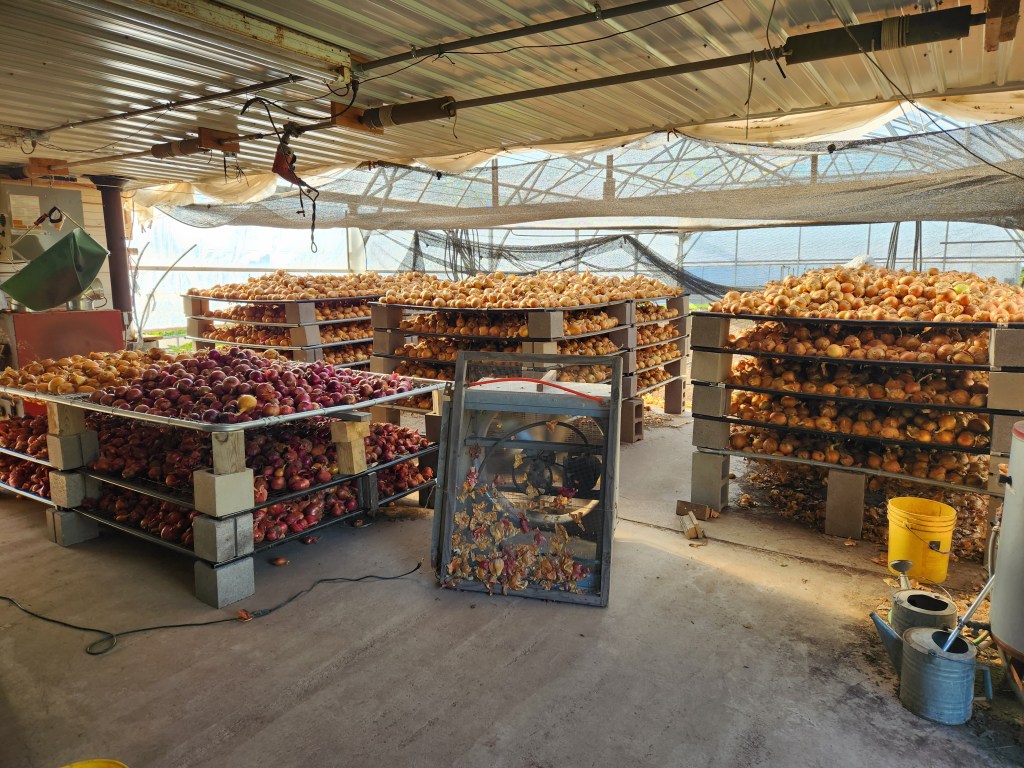
I hope everyone’s fall equinox was filled with fall festivities. Leaf watchers should be infiltrating the region en masse in the coming weeks. Luckily we don’t have to go very far at the Farm to see the beautiful colors of fall. For those who have been out to the Farm, you know what I mean. This is also the week where onion cleaning is in full swing which means that the falling leaves will become mostly indistinguishable from onion skins that are left to the ground.

Onions are one of our main storage crops for the winter. Last week we harvested several thousand pounds of storage crops. These include squash, potatoes, cabbage, and daikon radish. Speaking of… daikons will be making an appearance in your shares this week. The following recipes are heavily influenced by daikons as they are probably not used as often in people’s cooking routines.

This is a really nice time on the farm.  The weather is not too hot, and not yet cold. The weeds and bugs have slowed, and we are no longer planting vegetable starts or seeds into the field with the exception of cover crop seed. The frost seems to be keeping its distance and we received a 3/4″ of rain this week. All of our “free time” is pretty focused on harvesting storage crops.

Also, this week we will be sending out pumpkins! Farmer Janaki notes that although these are technically edible, the texture and flavor is not as good for eating. This variety is mainly used for carving. Let the fall festivities ensue.

Thanks for reading,

Emily

Terri hauling pumpkins while wearing her pumpkin colored overalls.

In your shares this week: Pole Beans – Carrots – Celery – Cilantro – Cucumbers – Greens Mix – Onions – Red Peppers – Hot Peppers – Fingerling Potatoes –  Daikon Radishes – Spinach – Delicata Squash – Tomatoes – Zucchini

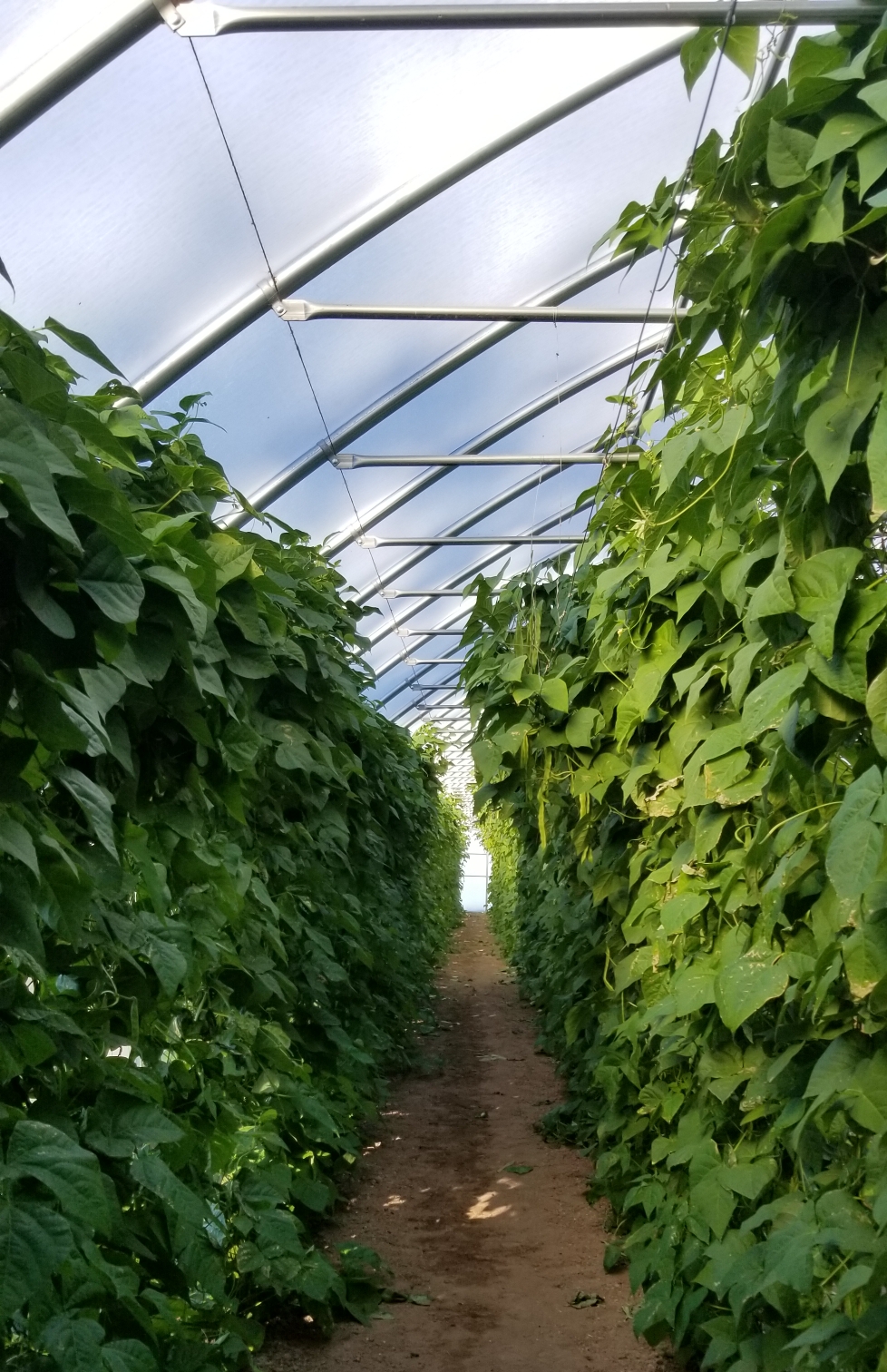
Beans in the greenhouse.

This recipe is good for a quick addition to anything that might need the crunch of a pickle (salads, grilled items).  The original recipe also called for carrots. 


Daikon Radish Quick Pickle (Modified from The CSA Cookbook (Ly)


1/2 lb daikon cut into 2-inch matchsticks

1tsp salt

1/2 cup rice vinegar

1/2 cup water

2 tbsp sugar


Toss the daikon with the salt and let it sit in a colander in the sink for about 30 minutes.  Toss once or twice to remove as much liquid as possible.  Combine the vinegar, water, and sugar in a saucepan.  Cook over medium heat, stirring until the sugar is dissolved.  Let the brine cool to room temp.Rinse the daikon under cold water to remove the salt and pack into a container.  Cover the daikon matchsticks with the brine and let them stand for at least 4 hours at room temperature.  Pickles are best if refrigerated overnight.

Spicy Chinese Slaw (The Joy of Cooking)


Slice into 2-inch matchsticks- Daikon, cucumbers and cabbage (to equal 3 cups)

Place in bowl and toss with 4 tablespoons of salt.  Let stand to drain for 30-45 minutes. 

Rinse veggies with cool water to remove the salt.  Drain well and place into serving bowl. 

Stir in: 1 tsp minced garlic Red pepper flakes (to taste)

1 tablespoon sugar

1 tablespoon rice wine vinegar

1.5 tablespoons olive oil

1.5-2 tablespoons of sesame oil

salt to taste. Marinate for at least an hour.  

The 3rd recipe I chose should use some of the root veggies in this share…YUMMY!


Roasted Roots with Vinaigrette (modified from The Smitten Kitchen)


1 cup of cooked grains – quinoa, barley, couscous, farro (your choice!)

salt

3 small shallots or 1 small garlic clove

olive oil

3-4 cups mixed root vegetables (possibilities:  radishes, turnips, beets, carrots, potatoes, squash, cabbage, zucchini) – you can also include any non-root veggies from your shares.

2 tablespoons lemon juice


Preheat oven to 400 degrees F. Peel shallots (or garlic), break the shallot into clove-sized portions and wrap in aluminum foil with a few drops of olive oil. Place in oven. Coat baking sheet or roasting pan lightly with olive oil. Arrange the root veggies in one layer and drizzle with as much olive oil as you like to use (at least 2T). Sprinkle with lemon juice, sprinkle generously with salt and pepper to taste. Add roasting pan to oven. Roast veggies for 20 minutes, flip them over and roast for 10-20 more (until tender and slightly brown).  Remove both veggies and foil packet from oven.


Vinaigrette

2 tablespoons mild vinegar (sherry is good)

1 tablespoon balsamic vinegar

1/4 tsp salt

3 tbsp olive oil

pepper to taste


Remove the shallot or garlic from the foil packet and toss into blender with the vinegers and salt.  Drizzle in olive oil and sample the dressing.  Add salt and pepper to taste.  
To assemble:  spoon the grain onto a platter.  Arrange roasted root veggies over the grains and drizzle with the dressing.    

Summer CSA Week 7

It isn’t an easy summer to be a plant – or someone trying to grow plants. All the trees around town look tired and soft, like a sweaty brochure being used as a fan. Janaki is spending his time running irrigation around to keep vegetables alive in their turn, constant triage ensuring that every crop has what it needs. There are around 42 fields now, some quite large. Wow, I had never counted. No wonder I still get “lost” with the field numbers.

This image has an empty alt attribute; its file name is img_3230.jpg

There is something daunting about the weather this year. It’s not a good rain year. Last year wasn’t a good rain year, nor particularly snowy. Who can say if this is a trend, but who can say what a trend is other than unusual and more intense. It feels unsettling to know that the rest of my life will be marked by these changes. Perhaps some more “normal” feeling seasons or years will still happen- but I fear for more winters with little snow (what is the point of winter if there is no snow!?) and more growing seasons that are hot and dry. And what all will that change? In my life time will pine trees become more rare, will more invasive pests and plants make their way north, will all the ash trees die? Probably. Maybe I’ll find myself accepting change and growing a patch of lavender in my 70s. Or maybe I’ll move somewhere I can still ski.

Going down either an emotional or intellectual rabbit hole of climate worry will drive anyone insane after a while. Beyond my worry is grief, which is easier to be with than worry in the long term, but still not easy.

The other day I found myself thinking how hard it would be to plan and build for these changes we see. From air conditioning in schools to making changes to river banks – a lot could get done and some of it is a guessing game.

On the farm Janaki is continually making those guesses as well as he can in an attempt to mitigate risk and maintain some level of sanity in our work. We can’t make it rain, but he is in the market for a more sustainable and efficient irrigation system. And when (not if) the 5 inches of rain in a weekend fall, he has drain-tile now throughout the fields, to give the water somewhere to go instead of sitting and rotting carrots. We use refrigeration in the root cellar now, instead of solely relying on cold fall air to cool the old cellar for winter storage. Many changes in the past 8 seasons I have known the farm – and many of them just in time. We’re trying, folks. Thanks for coming with us on the journey.

For the farm crew,

Karin


In your share this week:
Broccoli – Carrots – Cucumbers – Lettuce – Green Onions – Peas – Tomatoes


Carrot and White Bean Burgers

From The Smitten Kitchen

  • Olive oil
  • 1/2 cup panko-style breadcrumbs
  • 3 shallots, or 1 small onion, diced
  • 1 tablespoon tomato paste
  • 1 1/2 teaspoons kosher salt
  • 1 cup packed grated carrot (from 2 medium carrots)
  • 1 1/2 tablespoons apple cider vinegar
  • Two 15-ounce cans cannellini or other white beans, drained and rinsed
  • 1 large egg, beaten
  • Freshly ground black pepper
  • Burger accompaniments, as you like

Heat 1 tablespoon olive oil in a large skillet over low heat. Add the panko and cook, stirring often, until lightly browned and crisp, 3 to 5 minutes. Transfer crumbs to a large bowl, then return the pan to the heat.

Add 2 tablespoons olive oil to the skillet, followed by the shallot or onion. Cook until softened and lightly golden, 8 to 10 minutes. Stir in the tomato paste, salt, and carrots and stir frequently until the carrots are soft and a bit blistered, another 8 to 10 minutes. Add the vinegar, scraping up all the browned bits until the pan is dry. Remove from heat and add the bowl with the toasted panko. Add beans and use a wooden spoon or spatula to very coarsely mash the mixture until a bit pasty and the mixture coheres in places—there should still be plenty of beans intact. Add pepper, and more salt if needed, to aste. Stir in the egg. Shape into 6 patties (I used a 1/2 cup measure as a scoop) for the size burger you see here; 4 patties for really large burgers (to warn, I found this size a little unwieldy), or 8 to 10 for slider-size.

To cook the veggie burgers, heat a thin layer of olive oil in a wide skillet over medium heat and carefully cook until browned and slightly firm to the touch, 3 to 4 minutes per side. It may be necessary to cook in batches. Serve hot or at room temperature, with whatever you like on or with veggie burgers.

Quinoa Broccoli Salad

From Cookie and Kate

Slaw

  • ¾ cup uncooked quinoa
  • 1 ½ cups water
  • ½ cup slivered or sliced almonds
  • 1 ½ pounds broccoli (about 2 large or 3 medium heads)
  • ⅓ cup chopped fresh basil

Honey-mustard dressing

  • ½ cup olive oil
  • 2 tablespoons lemon juice
  • 2 tablespoons smooth Dijon mustard
  • 1 tablespoon apple cider vinegar or more lemon juice
  • 1 tablespoon honey
  • 2 medium cloves garlic, pressed or minced
  • ½ teaspoon sea salt
  • Freshly ground pepper, to taste
  • Red pepper flakes, optional (for heat)
  1. To cook the quinoa: First, rinse the quinoa in a fine mesh colander under running water. In a medium-sized pot, combine the rinsed quinoa and 1 ½ cups water. Bring the mixture to a gentle boil over medium heat, then reduce the heat to medium-low and gently simmer the quinoa until it has absorbed all of the water. Remove the quinoa from heat, cover the pot and let it rest for 5 minutes. Uncover the pot and fluff the quinoa with a fork. Set it aside to cool.
  2. Meanwhile, toast the almonds: In a small skillet over medium heat, toast the almonds, stirring frequently, until they are fragrant and starting to turn golden on the edges, about 5 to 7 minutes. Transfer to a large serving bowl to cool.
  3. To prepare the broccoli slice the florets off the stems into manageable pieces. Feed the broccoli florets through your food processor using the slicing blade, then switch to the grating blade to shred the stems. Alternatively, you can shred the broccoli with a mandoline or by hand with a sharp knife.
  4. Combine all of the dressing ingredients in a liquid measuring cup and whisk until emulsified. The dressing should be pleasantly tangy and pack a punch. If it’s overwhelmingly acidic, add a little more honey to balance out the flavors. If it needs more kick, add a bit more mustard or lemon juice.
  5. Add the shredded broccoli slaw, cooked quinoa and chopped basil to your large serving bowl. Pour the dressing over the mixture and toss until well mixed. Let the slaw rest for about 20 minutes to let the flavors meld.

Last Summer CSA, Week 18

As I look back over this farm season, I am reminded of how challenging it has been. There was not enough rain, then too much at once, then hail, then not enough rain again. It hasn’t been an easy year on the vegetables = not an easy year on the farmers.

Obviously, out there in the world there has been a huge amount of difficulty and unpredictability that has affected all of us. So much rubber seems to be meeting the road at once and it stinks. I practically have to hold my nose while listening to the news.

I think a lot of us have been thinking about food, how we get it, and how much of it we keep on hand at any one time during these past several months. Or any shopping and consuming really; I’ve learned about myself that I ran way more petty errands than I needed to in the “before times”.

For me, preparing food has been a nice diversion from other parts of life that feel more unsure, and more stressful. It’s been nice to sometimes, not always, have a meditative approach to cooking and baking to go along with the sometimes meditative aspects of farming. I’ve been lucky to be on both sides for a while now.

I hope that for you, getting your CSA share each week has been a positive point of structure and rhythm, even as normal rhythms get canceled, changed or postponed. We are glad you chose our CSA, and want to hear what you thought about it on the end of season survey! We’re always fine-tuning things to most closely match what has been working best for our members.

If you are also a member of our Winter Share, then we’ll “see” you in a few weeks. (A few weeks that is a blur of harvest activity around the farm!). If you just get our Summer Shares, we hope you have a good fall and winter, and look forward to connecting again in the spring.
Either way, we hope your dinner table continues to be a center for you in these un-centering times.

Thank you for participating with us in this crazy, messy, tasty thing we call life.

For the farm crew,

Karin


In your share this week:
Brussels Sprouts – Carrots – Celery – Cilantro – Cucumber – Garlic – Greens Mix – Kale – Lettuce – Onions – Sweet and Hot Peppers – French Fingerling Potatoes – Delicata Squash – Tomatoes

Roasted & Stuffed Squash

From No Crumbs Left

For the Squash:
Delicata squash
1 tsp salt
½ tsp pepper
1 Tbsp olive oil

For the Ground Sirloin Filling:
2 Tbsp olive oil
2/3 cup chopped onion
2 garlic cloves, finely chopped
2 ½ – 3 cups sliced brown mushrooms
1 ½ pounds ground sirloin
1 tsp salt
1/2 tsp pepper
¼ tsp cayenne
2 generous handfuls spinach, chopped (could use greens mix!)

Preheat oven to 400. Peel and cut the squash into 1” thick rounds.  
Brush with olive oil, sprinkle with salt and pepper. Place on a large sheet pan, lined with parchment paper.  Cook until soft but not mushy, about 55 minutes, flipping halfway through.
While the squash is cooking, make the filling:
Heat 2 Tbsp olive oil in a large sauté pan over medium heat. Sauté the onions for 3 minutes then add the garlic and cook for 30 more seconds, stirring. Add the mushrooms and cook, covered for 3 minutes. Uncover and cook for 3 more minutes. Add the ground sirloin and cook over high heat, about 6 minutes (or until meat is no longer pink), breaking up clumps with a wooden spoon.  

Add the salt, pepper and cayenne. Then add the spinach and cook for about 2 minutes.
Remove the squash from the oven and place on plates. Top with the meat mixture and serve.

Dijon-Braised Brussels Sprouts

1 pound brussels sprouts
1 tablespoon unsalted butter
1 tablespoon olive oil
Salt
Freshly ground black pepper
1/2 cup dry white wine
1 cup broth (chicken or vegetable)
2 to 3 shallots, peeled and thinly sliced
2 tablespoons heavy cream
1 tablespoon smooth dijon mustard (or more to taste)
2 tablespoons chopped flat-leaf parsley (optional)

Trim sprouts and halve lengthwise. In a large, heavy 12-inch skillet heat butter and oil over moderate heat. Arrange halved sprouts in skillet, cut sides down, in one layer. Sprinkle with salt and pepper, to taste. Cook sprouts, without turning until undersides are golden brown, about 5 minutes. [Updated to note: If your sprouts don’t fit in one layer, don’t fret! Brown them in batches, then add them all back to the pan, spreading them as flat as possible, before continuing with the shallots, wine, etc.]

Add the shallots, wine and stock and bring to a simmer. Once simmering, reduce the heat to medium-low (for a gentle simmer), cover the pot with a lid (foil works too, if your skillet lacks a lid) and cook the sprouts until they are tender can be pierced easily with the tip of a paring knife, about 15 to 20 minutes.

Remove the lid, and scoop out brussels (leaving the sauce behind). Add cream and simmer for two to three minutes, until slightly thickened. Whisk in mustard. Taste for seasoning, and adjust as necessary with more salt, pepper or Dijon. Pour sauce over brussels, sprinkle with parsley, if using, and serve immediately.

Summer CSA Week 13

I love the little chill in the air that we have in the morning and evening now. On the farm, we’ve put in our time with some very hot and humid days! -and it’s good for a break.
Ever since I can remember I have loved this time of year, mostly. Knowing school was starting back up wasn’t usually the best part, but even the settling back into routine ended up being good for me as a kid. And as an adult, I think I always started college semesters off feeling strong and hopeful and organized (even if it ended in panicked 3am paper editing  by mid-December).

This year it feels like the shift back to school for kids and adults, and all those that teach or work with/around them is clouded in a troubling unknown. Whether you have or know children in school (however it looks), or you work with or around students in some capacity, we wish you the best as you start this next school year.
I know so many people have wondered and dreamed about what it would be like to send a child to Kindergarten one day, or to pack up for college… none of us would have dreamed this up to add to the list of worries along the way.

I think we’re all pretty sick of so many aspects of life feeling harder, or sadder, or more complicated and divisive than normal (show of hands for who thought there was more than enough of that to begin with…). I hope that there are bright spots in the midst of all of it for you as well, whether it’s been family time, or new habits or getting outside more.

As we move forward as a country with so many returning to school, I hope that in your home (regardless of connection to a school, after all, we’re all connected in this) the dinner table, or maybe breakfast table, can be a place were connection is found, worries heard and validated, and wholesome sustenance consumed to see you through incredibly challenging days.

For the farm crew,

Karin


In your share this week: Green Beans, Green Cabbage, Carrots, Cilantro, Cucumbers, Sweet Onions, Parsley, Red and Hot Peppers, Red Potatoes, Tomatoes, Zucchini


img_1241

Green Bean Salad

From The Leek and the Carrot

1 pound green beans, ends trimmed and cut in half if large (about 4-5 cups)
1 head washed lettuce, thinly sliced
1 large shallot or onion, halved and thinly sliced
1 cup crumbled feta cheese
2 cups chopped tomatoes
1 cup chopped toasted walnuts
1/2 teaspoon dried oregano
2 minced garlic cloves
1 tablespoon sherry or red wine vinegar
1/2 teaspoon dried oregano
1/2 teaspoon Kosher salt
1/4 teaspoon freshly ground black pepper
2 minced garlic cloves
3 tablespoons olive oil
Flaky sea salt, for serving

  1. Bring a large pot of water to a boil. Add green beans and cook for 4 minutes then rinse under cold water. Pat dry with a towel.
  2. Toss together lettuce, beans, shallots and tomatoes in a large bowl (or four small bowls). Top with feta and walnuts.
  3. Whisk sherry vinegar with dried oregano, salt, pepper, and garlic. Once combined, whisk in olive oil. Taste and adjust flavors as desired. Drizzle over salad. Sprinkle with a little extra flaky sea salt right before serving.

Parsley Pesto

2 cloves garlic

2 cups packed, stemmed Italian parsley

Course salt

1/4 cup walnuts

1/2 cup freshly grated Parmesan cheese, or to taste

2/3 cup olive oil

Salt and pepper

Directions

  1. In a food processor place the garlic, parsley, pinch salt, walnuts, and cheese. Process until they form a paste. Gradually blend in olive oil, taste adjust your seasoning if necessary. Great with pasta, poultry, vegetables and rice.