Summer CSA Week 16

It feels like June was just a few days ago, and here we are in our 16th week of CSA shares! Maybe that’s because the weather the last few weeks have felt more like Summer than Fall. Sunday night’s chill was a nice reminder that it is indeed officially Fall, but we’re looking forward to another beautiful week to get things done.

For most people, this time of year means slowing down and getting cozy as the days shorten and the nights lengthen. For those of us lucky people in agriculture, we won’t be slowing down any time soon. The Fall equinox marks the start of the busiest time of year for us (and also the perfect time to sign up for a Winter Share)!

Over the next few weeks, we’ll say goodbye to our Summer crops such as melons, zucchini, and cucumbers. Those fields will soon go from green to brown, then back to green as we make our final harvests, till in the plants, and seed our cover crop. We will begin to say hello to more of our Fall and winter crops such as leeks, rutabaga, parsnips, and winter squash. This also means we will be spending lots of time cleaning and sanitizing storage space to put all of these crops for the winter. 

With the colder nights, this time also begins to signal a flavor change in the crops. The colder weather causes some crops to convert a portion of their starches into sugars. The addition of sugar causes the freezing point of the water inside the plant to be lowered. This now means the plant can withstand colder temperatures before it’s ruined. The plants most known for this are carrots, kale, and beets. This is one of the reasons why we have a spring/Summer planting and a fall planting of these veggies. The early planting becomes available at a time when we are all excited (and possibly a little desperate) to add some color back into our food after the long winter. The early plantings add more of an earthy flavor to dishes, while the later planting adds a little bit more sweetness. Getting to enjoy the flavor changes in the vegetables is one of the many beautiful things about farming.

Another exciting change happening on the farm is that our smaller hens have started laying eggs! For those of you with an egg share, you may have already noticed this last week when one or two smaller eggs showed up in your share. These are thanks to our little ladies who are just starting to lay. We got these hens back in early May. They’ve spent the last 4 months growing and exploring different areas of the farm. They start out in a fully enclosed shed to keep them warm, and protected from the elements. After about a month, we move them to a mobile chicken coop that we place over one of our fields we aren’t currently using. This allows them to start getting used to the wind and change in temperature while still being fully protected from the rain. It also introduces them to insects and vegetation. It’s beneficial for the farm because they are producing free fertilizer for us which adds nutrients back into the field. Once the hens get bigger and start showing signs of being adventurous (aka once they start trying to escape), we move them to a fenced off area with a larger mobile coop. This allows them to roam around in a larger area during the day, but still have a sheltered place to protect them from the rain and sun. The mobile coop also houses their egg boxes, food and water. It also is fully enclosed with a lockable door for protection at night. The Farm has a surprisingly high amount of coyotes, wolves, raccoons, and foxes close by, so keeping the chickens locked up at night is a must! 

In your shares this week:

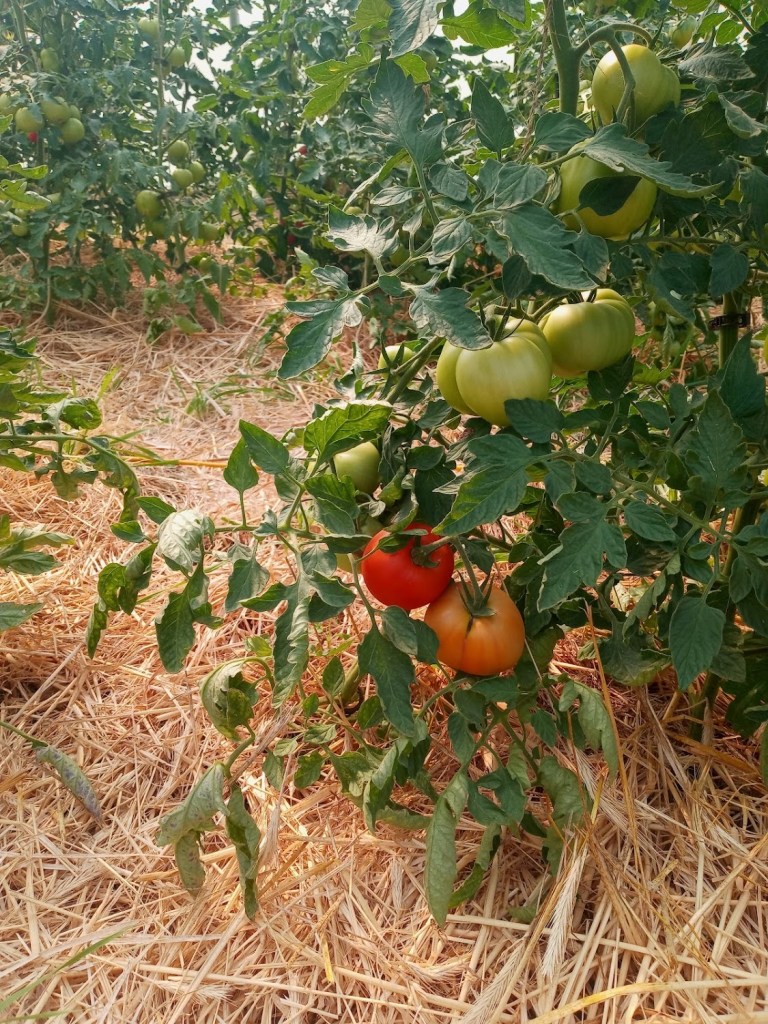
Carrots – Cucumber – Northeaster Pole Beans – Leeks – Lettuce – Melons – Onions – Parsley – Red Peppers – Russet Potatoes – Winter Squash – Tomatoes – Zucchini

Winter Squash Crumb Cake

Streusel:

1/2 packed cup of light brown sugar

1/2 c flour

1 tsp pumpkin spice blend

1/4 cup unsalted butter cut into cubes

Cake:

1 cup light brown sugar

2 large eggs

2 cups pureed squash

1/4 unsalted butter, melted

1/4 cup neutral oil

1 Tbsp pumpkin spice blend

1/2 tsp salt

1 tsp baking powder

1/2 tsp baking soda

1 1/2 cups flour

1.  Heat oven to 350 degrees.  Grease 8″ square or 9″ round baking pan and line with parchment paper.

2.  Make the streusel:  in a small bowl, combine sugar, flour, spice and salt.  Add the butter then pinch the butter into the four mixture with your fingertips until the mix forms pebble-size crumbs.

3.  Make the cake:  in a large bowl, whisk the sugar and eggs until pale and foamy, about 1 minute.  Add the squash puree, melted butter, oil, pumpkin spice and salt.  Whisk until combined and smooth.  Whisk in the baking powder and baking soda then whisk in the flour. 

4.  Transfer the batter to the prepared pan, smooth the top and tap on the counter a few times to release any large air bubbles.  Sprinkle the streusel evenly over the top.

5.  Bake the cake until puffed and golden and a toothpick inserted into the center comes out clean (40-45 minutes).  Set the cake in the pan on a rack to cool.  After about 15 minutes remove the cake from the pan and set it on a rack to cool completely

Turkish- Style Braised Leeks

  • 3 large leeks, cleaned well and trimmed, whites and tender green parts sliced into ¼-inch rounds
  • 2 to 3 carrots, peeled and cut into ¼-inch rounds
  • 3 large garlic cloves, minced
  • Kosher salt and black pepper
  • 1 teaspoon cumin
  • 1 teaspoon Aleppo pepper
  • 2 tablespoons rice, I used Arborio rice, rinsed
  • Juice and zest of 1 large lemon
  • ½ cup chopped fresh parsley
  • Olive oil
  • In a medium saucepan heat ¼ cup extra virgin olive oil over medium-high heat until shimmering. Add the leeks, carrots, and garlic and season with kosher salt, black pepper, and the spices. Toss around and cook for about 5 to 7 minutes, stirring regularly as needed until the leeks and carrots soften just a bit.
  • Add 2 cups of water, the rice, and lemon juice. Bring the water to a boil, then lower the heat and let simmer for 15 to 20 minutes or until the rice is fully cooked and the vegetables are fully tender.
  • Let the leeks and carrots cool down to room temperature, then stir in the fresh parsley, lemon zest, and another good drizzle of extra virgin olive oil.

Tomato-Green Bean Salad with Chickpeas, Feta and Dill

salt and pepper

3/4 lb green beans (cut diagonally into 1in pieces)

2 Tbsp lemon juice

1 Tbsp red wine vinegar

1 garlic clove (or less), minced finely

3 Tbsp olive oil

2 cups tomatoes cut into bite sized pieces

2 cups cooked chickpeas (1 can), drained

1/2 cup crumbled feta

2-3 Tbsp roughly chopped dill

pinch of dried oregano

1.  bring medium saucepan of water to boil over high heat.  Add 1 tsp salt then green beans.  Cook until beans are tender-crisp (about 2 minutes).  Transfer to large bowl of cold water.  Drain in colander and blot dry.

2. Make dressing by combining lemon juice, vinegar, garlic, pinch of salt and some black pepper in a small bowl.  Whisk in the olive oil.

3.  In a large salad bowl, combine tomatoes, beans and chickpeas.  Season to taste with salt and pepper.  Add dressing and stir to coat.  Add feta and toss once more.  Let marinate for 10-15 minutes before serving.

4.  Before serving, sprinkle generously with dill and oregano

For the farm crew, 

Jennifer

Summer CSA Week 4

For all of us who put in a plea to Mother Nature, it worked…sort of. Last week felt like a normal week on the farm (if such a thing even exists in agriculture). This time of year, as the seasons shift from Spring to Summer, the farm crew’s agenda changes from spontaneous to more routine. It usually means weeding, row cover, weeding, bug hunting, and more weeding. Janaki and the crew were finally able to get out into the fields to do some much needed field work.

The drier weather gave us the opportunity to roll up all of our row cover. If you aren’t familiar with it, row cover is a permeable fabric that we lay over the top of our plants, specifically the brassicas. The row cover has multiple benefits, but the main ones we use it for on the farm are for deterring pests, and adding some extra early season heat. Broccoli is generally a cool season crop, but “cool season” generally refers to our normal weather in early June, while our first planting goes in the ground in mid-April. This is one of the reasons we are able to provide all of you with broccoli so early in the summer. It’s a large task to lay out the 30’x400′ sheets of row cover after each Spring planting of brassicas, but it’s an even larger task to roll all of it back up. 

We also made it across the road to weed through the first two plantings of outdoor carrots, and do some bug hunting while we were over by the potatoes. Each year we find ourselves fully experiencing what it means to work for an organic farm. It means that instead of the farm crew going out to spray insecticides on the plants, we take the organic approach. Think Ghostbusters, but instead of proton packs and cool jumpsuits, we get 5 gallon buckets and overalls. We go row by row, plant by plant, searching for the various life stages of the Colorado Potato Beetle. The eggs are by far the easiest to spot since they are bright orange against the deep green foliage of the plants. The larvae are a little more difficult, but get easier to spot as they go through the 4 larval stages. They start out really tiny with a black head and brown body, and slowly grow to almost being the size of an adult beetle. Once they’ve reached the adult stage, they get wings and stripes on their back which help them to be more noticeable against the plant. The worst thing about the Colorado Potato Beetle is how adaptable it is. These bugs overwinter in different life stages, don’t have to mate in the spring before they lay eggs, and aren’t even solely attracted to potato plants! Their favorites are potatoes and eggplant, they will also survive on other members of the nightshade family. This unfortunately meant we found quite a few on our outdoor tomatoes. Nothing the Beetlebusters (aka the farm crew) couldn’t handle. 

In case that wasn’t enough bug fun, we also noticed cucumber beetles on our greenhouse cucumbers, and squash beetles on our squash. We did identify a ‘new’ pest on the potatoes called a blister beetle. Mother nature is always keeping us on our toes. This summer is going to have a lot of bug pressure. We are coming off of a mild winter which didn’t get cold enough to kill most of the populations, then following that up with warm wet weather in the Spring/Summer, it’s the perfect recipe for a lot of bugs! This is all to remind you that if you ever find a little critter, or see some holes on your veggies, we promise it’s okay. It’s just nature’s way of reminding all of you that the veggies you receive each week are grown with love instead of harsh chemicals!

This week in your share: 

Arugula – Broccoli – Turnips – Radishes – Spinach – Green Onions

Garlic Scapes – Cucumbers – Green-top Carrots

This week we are giving you garlic scapes. If you’ve never used these before, they have the same flavor you get from fresh garlic, only a little milder and a lot less work since no peeling is involved. You can substitute scapes for fresh garlic in almost any recipe using 4-6 scapes = 1 clove of garlic.

One- Pan Orzo With Spinach and Feta

Ingredients

Yield:4 servings

  • 2tablespoons unsalted butter
  • 4large green onions, trimmed and thinly sliced
  • 2large garlic cloves, minced
  • 8ounces baby spinach leaves (8 cups), coarsely chopped
  • 1teaspoon kosher salt
  • 1¾cups low-sodium chicken or vegetable stock
  • 1cup orzo
  • 1teaspoon finely grated lemon zest (from 1 lemon)
  • ¾cup crumbled feta (3 ounces), plus more for garnish
  • ½cup frozen peas, thawed (optional)
  • 1cup chopped fresh dill, or use parsley or cilantro

PREPARATION

  1. Heat a 10-inch skillet over medium, then melt butter, 30 seconds to 1 minute. Stir in about three-quarters of the green onions (saving some of the green parts for garnish) and garlic, and cook until softened, stirring frequently, about 3 minutes.
  2. Stir in spinach, adding in batches if it doesn’t all fit in the pan at once, and ½ teaspoon salt. Continue to cook, stirring occasionally, until spinach is wilted, about 5 minutes.
  3. Stir in stock and bring to a simmer. Stir in orzo, lemon zest and remaining ½ teaspoon salt. Cover and simmer over medium-low heat until orzo is nearly cooked through and most of the liquid is absorbed, 10 to 14 minutes, stirring once or twice.
  4. Stir in cheese, peas (if you like) and dill, cover the pan, and cook for another 1 minute, to finish cooking and warm the peas. To serve, sprinkle with more cheese and the reserved green onions

Salmon Cakes With Arugula Salad

Ingredients

  • 1 pound salmon, skinned (canned will also work)
  • 2 tablespoons lemon juice, divided
  • 2 teaspoons Dijon mustard, divided
  • ½ cup finely chopped yellow bell pepper
  • 1 tablespoon finely chopped shallot
  • ½ teaspoon ground pepper, divided
  • ½ cup panko breadcrumbs
  • ½ cup crème fraîche or sour cream
  • ¼ cup buttermilk
  • 3 tablespoons chopped fresh dill
  • ½ teaspoon salt, divided
  • 2 tablespoons extra-virgin olive oil
  • 5 ounces arugula
  • 1 cup sliced radishes

Directions

  • Coarsely chop salmon and place half in a food processor. Add 1 tablespoon lemon juice and 1 teaspoon mustard. Process, scraping down the sides as necessary, until smooth. Add the remaining salmon, bell pepper, shallot and 1/4 teaspoon pepper and pulse until the mixture is combined but still chunky.
  • Transfer the salmon mixture to a medium bowl. Add breadcrumbs and stir until combined. Form the salmon into 4 patties, about 4 inches wide each, and place on a plate. Freeze for 5 minutes.
  • Meanwhile, whisk crème fraîche (or sour cream), buttermilk, dill and 1/4 teaspoon salt with the remaining 1 tablespoon lemon juice, 1 teaspoon mustard and 1/4 teaspoon pepper in a large bowl. Set aside 1/4 cup of the dressing for drizzling.
  • Heat oil in a large cast-iron or nonstick skillet over medium-high heat. Add the salmon cakes and cook, flipping once, until well browned and cooked through, 2 to 3 minutes per side. Transfer to a clean plate and sprinkle with the remaining 1/4 teaspoon salt.
  • Add arugula and radishes to the dressing in the large bowl. Toss to coat. Serve the salmon cakes on top of the salad, drizzled with the reserved 1/4 cup dressing

Carrot Top Salsa (The CSA Cookbook by Linda Ly)

2 cups minced carrot greens leaves and tender, stems only

3 tablespoons minced garlic

3 tablespoons minced fresh oregano

2 tablespoons minced jalapeño

One to one and a quarter cups olive oil

1/4 of a cup red wine vinegar

Zest and juice of lemon

Add all the ingredients to a medium bowl and stir to combine (use more or less oil to make a chunkier or thinner sauce).  Cover and let stand at room temperature overnight so the flavors intermingle.  This salsa gets better with age – so the carrot have turned to deep muted shade of army green is still good!!  Decant into a jar and refrigerate.  The oil will congeal in the cold temperature, but it does not affect the flavor. Bring the salsa to room temperature before serving.

For the farm crew,

Jennifer

March Winter Share

It’s the second to last winter CSA delivery and the farm season is just around the corner!

🌱 Greenhouse Delights: There’s an unmistakable magic in the revival of the greenhouse scents, which is where the crew has gotten to hang out more and more recently 🙂 Our first planting of onions are just starting to poke out of the potting soil, with subsequent plantings not far behind.

🥕 Carrot Countdown: I am not 100% sure how many pounds of carrots we bagged up this winter, but I do know it was a lot! When the winter began, the root cellar was packed to the ceiling with pallet boxes of them… I mean packed, you could barely move around in there. Now there is but a few pallet boxes remaining and most of them will be reserved for the final CSA delivery in April. This means that this is the last week you will find our carrots in local restaurants and stores!


In Your Share This Month:

Beets – Green Cabbage – Purple and Orange Carrots – Onions – Shallots

Parsnips – Fingerling, Baby Yellow, & Red Potatoes – Rutabagas


For the recipes this month, it’s back to basics… One of my favorite ways to eat root vegetables is to roast them in the oven with nothing but a little olive oil, salt & pepper. They can then be enjoyed as a side dish, thrown on salads for fiber & flavor, or paired with a tasty sauce… like the caramelized shallot & herb aioli recipe below.

When roasting, I’m typically a fan of potato skins, but the French fingerlings in this month’s share have a slightly rough texture. They remain delicious, but I do suggest peeling them this time round.


Roasted Root Vegetables

Ingredients:

Assorted root vegetables (such as carrots, potatoes, parsnips, Rutabaga, etc.)
Olive oil
Salt and pepper to taste

Directions:

  1. Preheat your oven to 425°F
  2. Wash and peel the root vegetables, then chop them into similar-sized pieces to ensure even cooking.
  3. Place the chopped vegetables in a large mixing bowl.
  4. Drizzle olive oil over the vegetables, using enough to coat them evenly. Toss the vegetables with your hands or a spoon to ensure they are all well coated with the oil.
  5. Season the vegetables generously with salt and pepper, adjusting the amount to taste.
  6. Spread the seasoned vegetables out in a single layer on a large baking sheet. Make sure they are not overcrowded to allow for even roasting.
  7. Place the baking sheet in the preheated oven and roast the vegetables for about 25-35 minutes, or until they are tender and golden brown, stirring halfway through the cooking time for even browning.
  8. Once the vegetables are roasted to your desired level of doneness, remove them from the oven and transfer them to a serving dish.

Feel free to customize this recipe by adding other seasonings or herbs such as garlic powder, rosemary, thyme, or paprika for extra flavor!


Caramelized Shallot & Herb Aioli by newinthekitchen.wordpress.com

Ingredients:

3/4 cup light mayonnaise
2 tablespoons freshly squeezed lemon juice, plus a pinch of zest
3 tablespoons fresh parsley, chopped finely
2 tablespoons fresh dill, chopped finely
1 tablespoon dijon mustard
1 teaspoon hot sauce (your choice of brand, we enjoy Cholula)
3 shallots, minced
Olive Oil
Salt and pepper, to taste

Directions:

1. Heat a saute pan with one tablespoon of olive oil over medium heat.
2. Add shallots and cooked until browned and caramelized, about 10 minutes.
3. Allow shallots to cool.
4. Meanwhile, combine mayonnaise, herbs, lemon juice and zest, dijon mustard, hot sauce, and salt and pepper to taste.
5. When shallots are cooled, add them to mixture. Stir to combine.
6. Allow Aioli to chill in the refrigerator for about an hour prior to serving to allow flavors to combine.


For the farm crew,

Charlie

Summer CSA Week 8, 2023

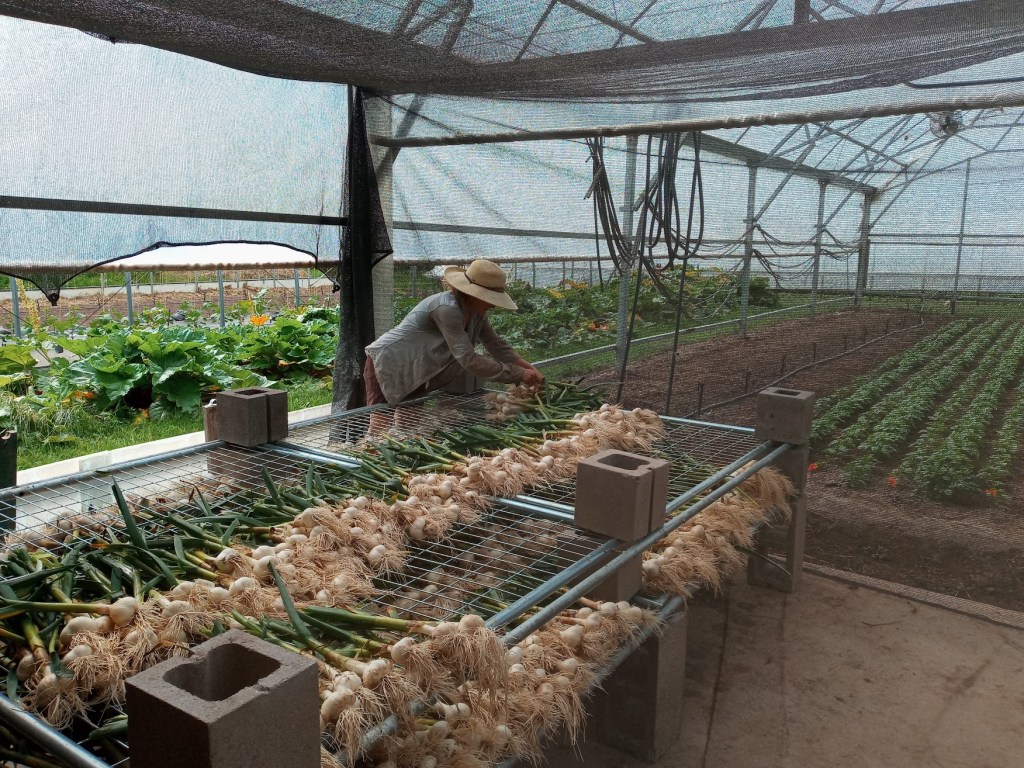
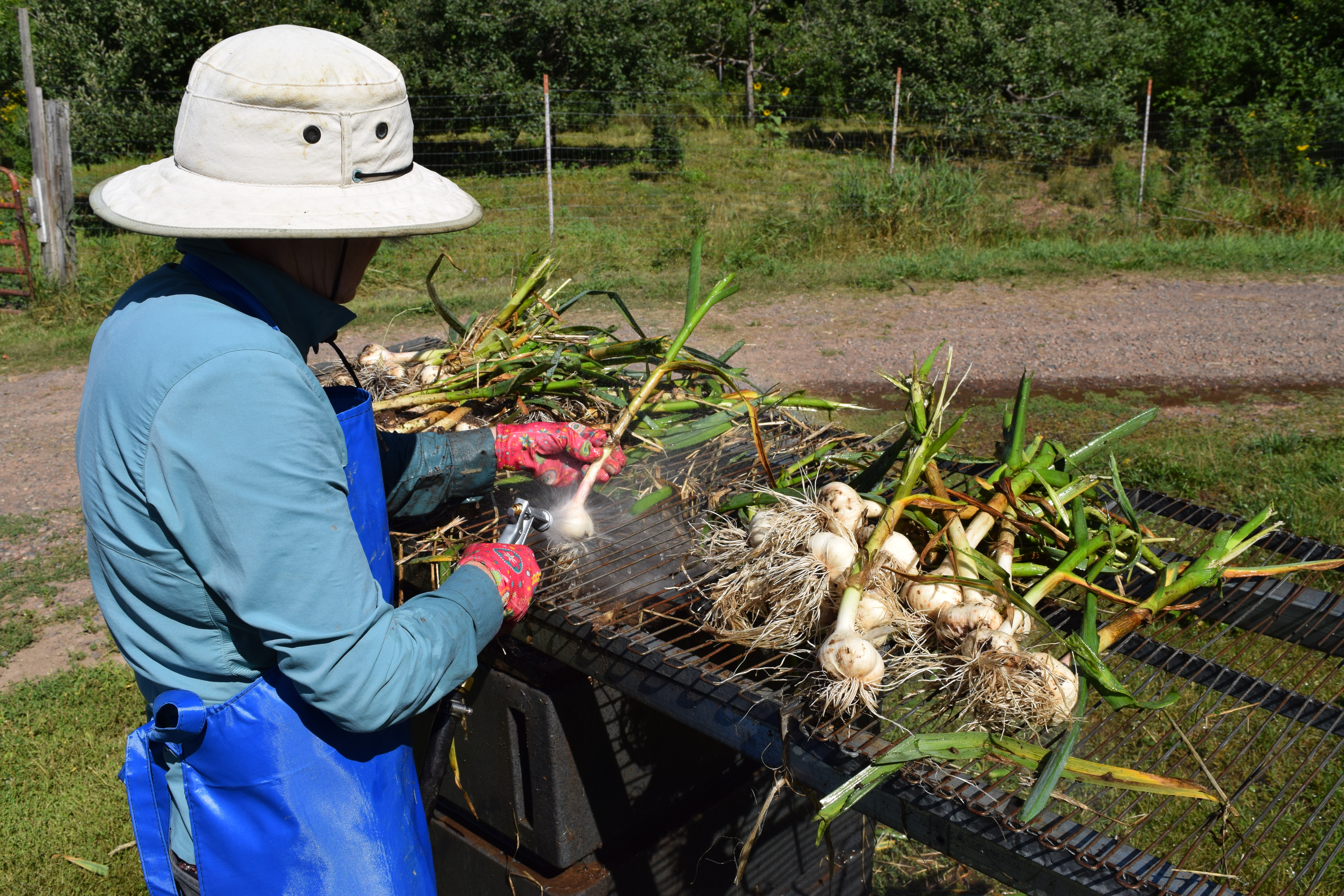
Garlic season has arrived! Last Wednesday was all hands on deck as the crew shuttled wagon load after wagon load of freshly harvested German Extra Hardy to washing stations. Once washed the garlic was gently laid out on wire racks (see below). Although it is edible right from the ground, you won’t be seeing it in the shares for at least a couple weeks. To stay fresh in the pantry for any extended period of time, it must go through the curing process – essentially just letting it dry out. As the garlic dries, the skin shrinks and turns papery, forming a protective barrier against moisture and mold.

As we wait for the garlic to be ready, we can take a little time to enjoy another new addition to this weeks box… Potatoes! Not just any old potatoes, but new potatoes. New potatoes are essentially young potatoes that are harvested before they reach full maturity. They are the same varieties as their larger counterparts but are picked early in the growing season, typically about three to four months after planting. Because they are harvested at this young stage, new potatoes are sweeter and more delicate in flavor than mature potatoes. Their skin is thin, tender, and often flaky, which makes them particularly appealing for potato salad. This week i’ve included one of my favorite recipes for just that.


In your share this week:

Cabbage – Carrots – Cilantro – Dill – Cucumbers – Lettuce – Green Onions – Snap Peas

Jalapeño Peppers – New Red Potatoes – Tomatoes – Zucchini


Herby Potato Salad, from Half Baked Harvest

Yield: 6 servings

2 pounds new potatoes
3 cloves garlic
kosher salt
1/2 cup raw cashews, soaked in hot water for 30 minutes, then drained
1 tablespoon dijon mustard
1/3 cup olive oil
1 cup fresh basil, chopped
1/4 fresh dill, chopped
2 chives, chopped
flakey sea salt and black pepper
1 pinch crushed red pepper flakes
juice of 1 lemon

1. Place the potatoes, garlic and a tablespoon of salt in a large pot and fill with water. Bring to a boil over high heat and then reduce the to heat to medium, simmer 10-15 minutes or until the potatoes are just fork tender. Drain. Place the potatoes back in the hot pot. Remove the garlic cloves. Cover the pot and let the potatoes steam for another 20 minutes.

2. Meanwhile, combine the cooked garlic, drained cashews, mustard, and olive oil in a food processor. Pulse until smooth and creamy, adding water if needed to thin slightly. 

3. Cut the potatoes in half and add to a large serving bowl. Add the cashew sauce, basil, dill, chives, lemon juice, and a pinch each of salt, pepper, and crushed red pepper flakes. Toss well to combine. Taste and adjust salt and pepper to your liking. Serve warm or cover and place in the fridge. Can be served at room temp or cold.


Cilantro Lime Slaw, from Gimme Some Oven

Yield: 4-6 servings

1 cup plain Greek yogurt
1/2 cup tightly-packed fresh cilantro
1/4 cup freshly-squeezed lime juice
1/2 teaspoon ground cumin
1/2 teaspoon fine sea salt
1/4 teaspoon freshly-cracked black pepper
3 green onions (just the green parts)
2 garlic cloves
1 jalapeño or serrano pepper, stemmed and cored
14 ounces cabbage, thinly sliced

1. Combine the Greek yogurt, cilantro, lime juice, cumin, salt, black pepper, green onions, garlic and jalapeño in a blender or food processor*.  Pulse briefly a few times until the mixtures is combined.

2. Place the cabbage in a large mixing bowl. Drizzle the sauce on top of the cole slaw, then toss until the mixture is evenly combined.  Season with extra pepper and/or lime juice if needed.

3. Serve immediately, or cover and refrigerate for up to 24 hours.


For the farm crew,

Charlie

Summer CSA Week 7, 2023

In our region, July is known for claiming the title of the hottest month of the year. Last week you wouldn’t have guessed it as the crew enjoyed slightly cooler temps. We won’t be so lucky this week, however, with the forecast pushing 90° for the next few days. Such high temps may be hard on the farm crew, but many of the vegetable varieties are going to love it!

This weeks box brings a few new additions in cilantro, dill and even a couple of salad tomatoes 🙂

Dill is an especially exciting one for me. While it is often associated with dill pickles and potato salad, its culinary significance spans centuries across Europe and Asia, enriching a wide array of cuisines. Due to its distinct and potent flavor, even a small quantity of dill can make a significant impact, making it an excellent choice as a garnish. The delicate, feathery texture of dill leaves adds a touch of beauty, while a mere sprig can infuse a dish with a noticeable and delightful aroma. Moreover, dill finds its place in salads and serves as a crucial component, along with buttermilk, in bestowing homemade ranch dressing with its unique and flavorful character.

When considering planting dill, it’s worth noting that this annual herb, related to celery, possesses a natural tendency to self-replant and propagate extensively, adding to its appeal as a versatile and abundant addition to your garden space.


In your share this week:

Beets – Broccoli – Carrots – Chard – Cilantro – Cucumbers

Dill – Lettuce – Tomatoes – Green Onions – Snap Peas – Zucchini


Dilly Ranch Dressing, from Feasting at Home

Yield: 1 1/4 Cup

1/3 cup mayo
1/3 cup buttermilk
1/3 cup sour cream
1-2 garlic cloves, finely minced
1/2 cup fresh dill
2 tablespoons tarragon
1 tablespoon parsley, chopped
1/2 teaspoon salt, more to taste
1 teaspoon pepper
1 tablespoon lemon juice, more to taste
1 teaspoon apple cider vinegar

  1. Whisk the mayo, buttermilk, and sour cream in a medium bowl until smooth.
  2. Stir in the remaining ingredients: garlic, herbs, salt, pepper, lemon juice, and vinegar.
  3. Taste- you want this slightly salty and tangy- so adjust salt and lemon juice to bump up the flavor.
  4. Place in a sealed jar and chill. You want this cold!

Cucumber Salsa, from Lemon Tree Dwelling

The farm peppers will be in your shares soon enough, but for now store bought will have to do for this recipe…

Yield: 8 servings

1 large English cucumber, about 2 1/2 cups chopped
1/4 cup red onion, chopped
1/3 cup yellow bell pepper, chopped
1/3 cup green bell pepper, chopped
2 tomatoes, chopped
1 jalapeño, minced
1/4 cup cilantro, minced
2 cloves garlic, minced
juice of 1/2 lemon
juice of 1/2 lime
1 teaspoon salt

  1. Chop the cucumbers, peppers, tomatoes, and onions into small pieces, about 1/4 inch. Add them to a medium mixing bowl.
  2. Mince the jalapeño (remove seeds for less heat as desired), cilantro, and fresh garlic. Add it to the chopped veggies in the bowl. 
  3. Squeeze in the fresh citrus juices and add the salt.
  4. Stir well; enjoy immediately or refrigerate until ready to use.

Carrot, Date and Feta Salad; from Food Network

Yield: 4 servings

3 medium carrots
2 tablespoons roughly chopped fresh cilantro
1 1/2 tablespoons extra-virgin olive oil
2 teaspoons honey
Kosher salt
Juice of 1 lime
1/4 cup crumbled feta cheese
2 tablespoons chopped toasted almonds
2 tablespoons finely chopped dates

  1. Thinly slice the carrots into ribbons using a vegetable peeler or mandolin, including any remaining “stubs” of carrot. Soak in ice water until the ribbons firm up and curl, about 15 minutes. Drain and pat dry. 
  2. Whisk together the cilantro, olive oil, honey, 1/2 teaspoon salt and the lime juice in a medium bowl. Add the carrots along with the feta cheese, almonds and dates, and toss until evenly combined. Serve immediately, or let the salad marinate a bit before serving. 

When I first started working at the farm, a little over a year ago, I thought that all of the job would be directly dealing with plants or dirt. I quickly learned, however, that there are many tasks we do that don’t necessarily pop into your mind when you think farming. A lot of the equipment we use here is quite old. The thing about old stuff is that it tends to break. It would be really nice to just replace something when it breaks, but new stuff is rather expensive. We will usually opt for the fix it yourself mentality – something Janaki and Dave are rather good at.

Above you can see Dave hard at work as he repairs our flail mower.

For the farm crew,

Charlie

Winter CSA Box 2, December 2022

Garlic ready to go out in shares.

Happy December! We hope you’re keeping warm and enjoying the holiday season.


In your share this month:

Chioggia Beets – Orange and Purple Carrots – Green Cabbage – Garlic – Yellow and Red Onions – French Fingerling & Russet Potatoes – Sunshine and Delicata Squash


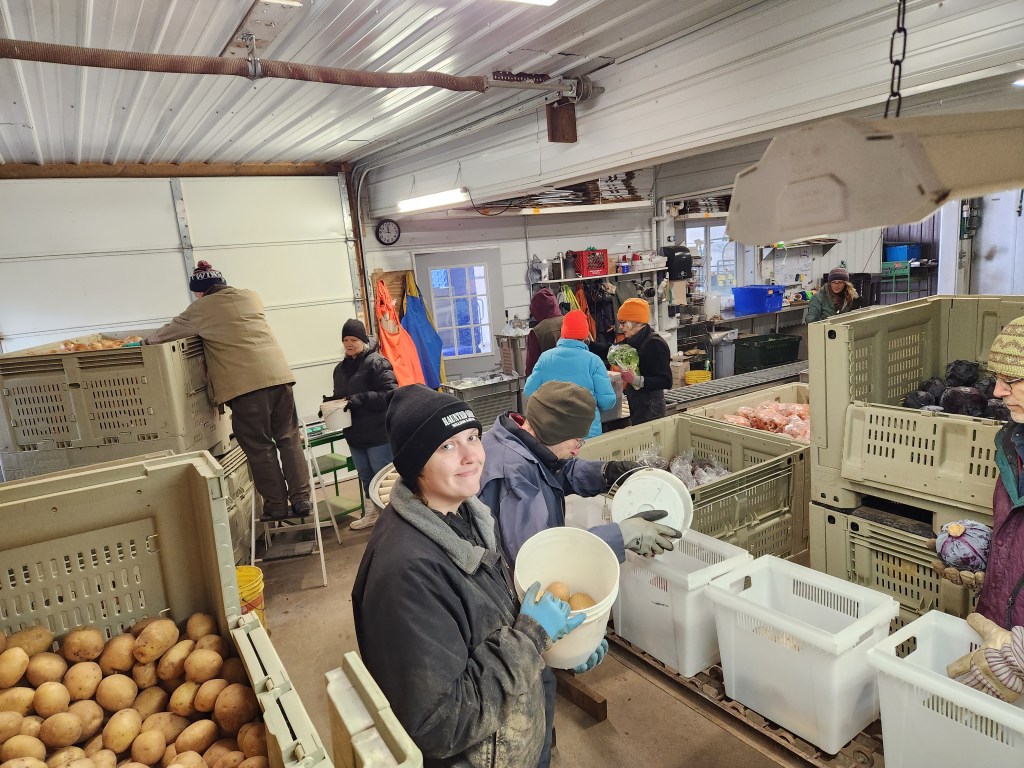
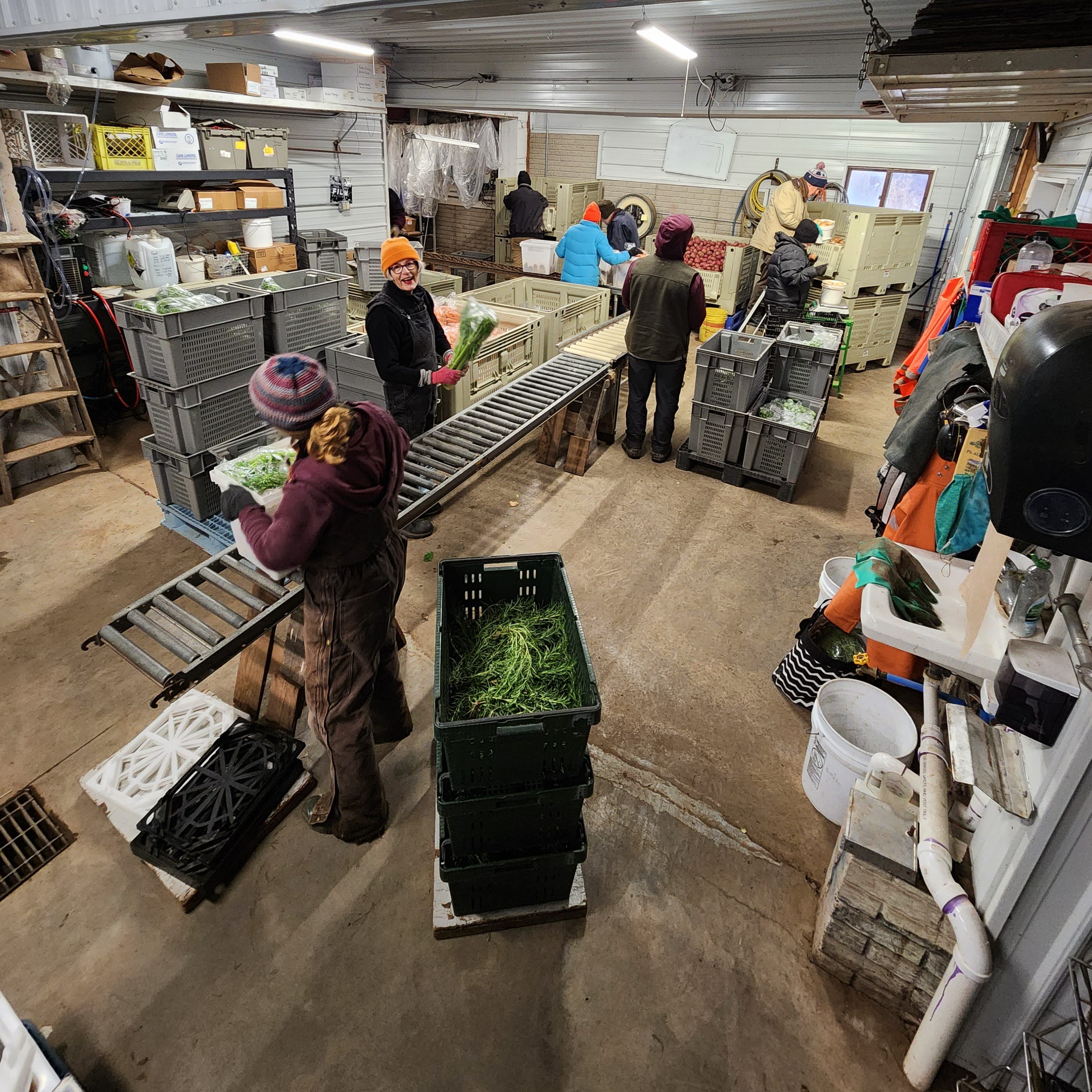
Packing winter share boxes is quite a production! We have all hands on deck and a conveyer table set up that reaches all the way across the pack house.


Egyptian Stuffed Cabbage

Serves 10

Ingredients

Cabbage braising

  • 1 head of cabbage
  • 2 tablespoons salt
  • 1 tablespoon ground cumin

Stuffing

  • 1 tablespoon vegetable or olive oil
  • 1 large onion, finely minced
  • 1-1.5 pounds lean ground beef
  • 1 tablespoon minced garlic
  • 1 can, tomato paste (6 oz.)
  • 3 cups Egyptian rice, or Goya medium grain rice, washed until water is clear
  • 2 tablespoons salt
  • 2 teaspoons ground black pepper
  • 1 teaspoon allspice (optional)
  • 1+ can, crushed tomatoes (28 oz)
  • 1 cup finely minced flat leaf parsley
  • 1 cup finely minced cilantro
  • 1 cup finely minced dill
  • 1 tablespoon Better Than Bullion Chicken flavor
  • 2 tablespoons butter

Instructions

Cabbage braising

  1. In a large, heavy pot, fill with water until about 2/3 full. Add salt and cumin, cover and bring to a boil. 
  2. Remove any wilted or damaged leaves from the cabbage. Turn cabbage upside down (with stem facing you) on a cutting board. Make deep gashes into the cabbage leaves as close to the stem as possible in a circular fashion. Hold the stem and gently pull apart the leaves, one at a time, careful not to rip them. 
  3. Place leaves 2-3 at a time in the boiling water. Allow to cook for 2-3 minutes until it becomes less stiff and just wilted. Do not overcook. Remove and place in a colander. 
  4. Gently peel leaves from the cabbage and cook in small batches. At some point, the cabbage will become too compact to remove the leaves. Hold the cabbage stem and gently lower half the remaining cabbage in the water. With your other hand, you can begin loosening the cabbage leaves one by one into the water. Once you have loosened 2-3 leaves, remove the head and set aside. Repeat until most of the cabbage is cooked. It’s ok to stop at the deepest part of the cabbage, as the leaves become too crinkly to be rolled. 
  5. Allow cabbage to cool. Meanwhile, prepare the stuffing mix. 

Stuffing

  1. In a large Dutch oven or non-stick pot, add the vegetable oil and bring to medium high heat. 
  2. Add the onions and sauté until translucent. If using, add the beef all at once, mixing with the onions and breaking up the clumps. Sauté until browned. 
  3. Add the garlic and mince until fragrant (about 1 minute). Add all of the tomato paste, stirring constantly for 3-4 minutes (the texture will change and become less of a formed paste). Add salt, pepper, and all-spice.
  4. Add the can of crushed tomatoes and stir until evenly mixed. Turn off the heat. 
  5. Pour in all of the washed rice, stirring until mixed. Now add all of the herbs and stir until everything is combined. If necessary, adjust the salt. Transfer to a large mixing bowl and allow to cool. 
  6. Prep the cabbage leaves for rolling. Set up a clean work area with a cutting board. Take one cabbage leaf at a time and spread it out over the board. Cut out the thick stem, reserve for later. With the flat leaf on the board, cut it into 2-3 even pieces that can be rolled in a straight line, about 2 inches wide x 3-5 inches long. See Photo. Make a stack of leaf segments on a clean plate. 
  7. Prepare the pan for cooking: generously drizzle vegetable or olive oil at the bottom of the Dutch oven or nonstick pot. Take several of the cabbage stems and cover the bottom to prevent the rolled leaves from scorching on the bottom layer. 
  8. Roll the leaves: place an entire leaf segment on the cutting board. Leaving 1/2 inch of space at one end, place a line of the stuffing mixture about 1/2 inch wide inside the leaf. Gently roll it up (important to roll it securely but not too tightly, as the rice still needs to expand). See photo. 
  9. Layer the rolled cabbage leaves in one direction until one layer is completely filled, then top with another layer at a ninety degree angle to the first one to prevent the rolled cabbages from unraveling. Continue rolling and layering at 90 degrees until all of the cabbage leaves are rolled (extra rice mixture may remain). 
  10. In a small saucepan, bring 1 cup of crushed tomatoes + 1 1/2 cups of water to a boil. (Alternatively, you can use 2 1/2 cups of water and 1/2 can of tomato paste). Add 1 tablespoon of butter and 1 heaping tablespoon of bullion paste and boil until dissolved. 
  11. Place the pot with the rolled cabbage on medium heat. Pour all of the water/tomato mixture on the rolled cabbages. Cover and cook on medium low for 45 minute-1 hour. Do not uncover for the first 30 minutes, then begin checking if the rice is cooked on the top layers. If it appears too dry, add in 1/2 cup of water and continue to check. The cabbage is done with the rice is completely cooked and the liquid has been absorbed. 
  12. Turn off heat. Add small pats of butter to the top. Cover. Allow to rest for 15 minutes. Enjoy, or: 
  13. Place a large plate over the opening of the pot. Carefully invert the entire pot and let rest for 5-10 minutes. Gently remove the pot and serve immediately.

Recipe from Food52.


Archived Recipes

You can now search previously posted Food Farm recipes using the “Tag Cloud” below. If you click an ingredient below it will take you to a list of the newsletters that include a recipe using that ingredient. Larger text means there are many recipes using that ingredient while smaller text means fewer recipes have been tagged so far.


Arugula Basil Beet Bell Pepper Broccoli Brussels Sprout Brussels Sprouts Cabbage Carrot Cauliflower Celery Cilantro Cucumber Delicata Squash Dill Dressing/Sauce Egg Garlic Garlic Scape Green Bean Green Onion Jalapeno Kale Leek Lettuce Mint Napa Cabbage Onion Parsley Parsnip Pepper Potato Radish Red Onion Rutabaga Scallion Shallot Spinach Squash Thyme Tomato Turnip Winter Squash Yellow Onion Zucchini


We hope this will help you explore new and old recipes and take advantage of the produce in your share!


For the farm crew,

Starr

Summer CSA Week 10, 2022

The crew preparing to harvest carrots with THE HARVESTER.

Last week was a big week for the Food Farm crew: we harvested our long awaited garlic! You’ll find more pictures and descriptions of that process below. We also brought out the carrot harvester, which is efficient but requires many hands to run smoothly. Boxes are filled with high summer bounty. New this week you’ll find green peppers and GARLIC! The garlic in the box this week is “green” or not yet cured. It should be left out on the counter with good ventilation so it does not mildew.

Would you like to come see the farm at peak season? You’re in luck! We are hosting a farm tour and pizza dinner on Saturday, August 27th! Come by the farm at 2612 County Road 1, Wrenshall from 4:00pm to 6:00. We’ll be serving pizza hot from our wood fired oven and giving farm tours. Free for all to attend, we’d love to see you!


In your share this week:

Basil – Beets – Cabbage – Carrots – Cucumber – Dill – Green Garlic – Green Pepper – Green Onion – New Potatoes – Parsley – Tomato – Zucchini


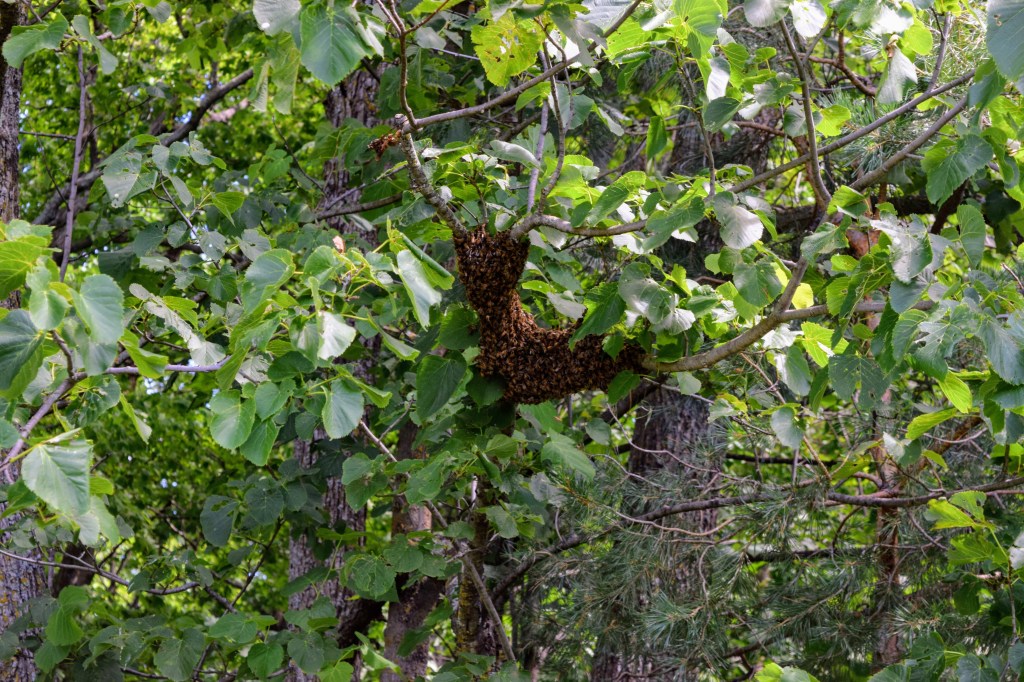
What am I looking at?

This is a swarm of honey bees seen near the farm hives recently. When a hive gets large enough it splits into two distinct colonies. During this process, part of the hive leaves as a swarm to find a new home. These swarms are often very docile because they are not guarding honey or a queen, but always be careful around bees, especially if there there is a chance you could be allergic.


Cucumber and Tomato Salad

From Claudia Roden’s Mediterranean

Ingredients

  • Cucumber (peeled, seeded and cut into pieces)
  • 2 large tomatoes, seeded and cut into pieces
  • green onion
  • 3 Tbsp olive oil
  • juice of 1/2 lemon
  • salt and black pepper to taste
  • small handful of fresh herbs (parsley, oregano, dill, cilantro) chopped

Instructions

  1. Put cucumbers, tomatoes, and onions into a bowl. In another bowl, whisk together the olive oil and lemon juice and season with salt and pepper to make a dressing. Just before serving, pour the dressing over the salad and mix well. Sprinkle with the herbs and add feta if you like.

Basic Pesto

We have garlic AND basil in the box this week. The only option is to make pesto 😉

Ingredients

  • 2 cups fresh basil leaves (no stems)
  • 2 tablespoons pine nuts or walnuts
  • 2 large cloves garlic
  • ½ cup extra-virgin olive oil
  • ½ cup freshly grated parmesan cheese

Instructions

  1. Combine basil leaves, pine nuts or walnuts and garlic in a food processor and process until very finely minced.
  2. With the machine running slowly dribble in the oil and process until the mixture is smooth.
  3. Add the cheese and process very briefly, just long enough to combine. Store in refrigerator or freezer.

From NYT Cooking


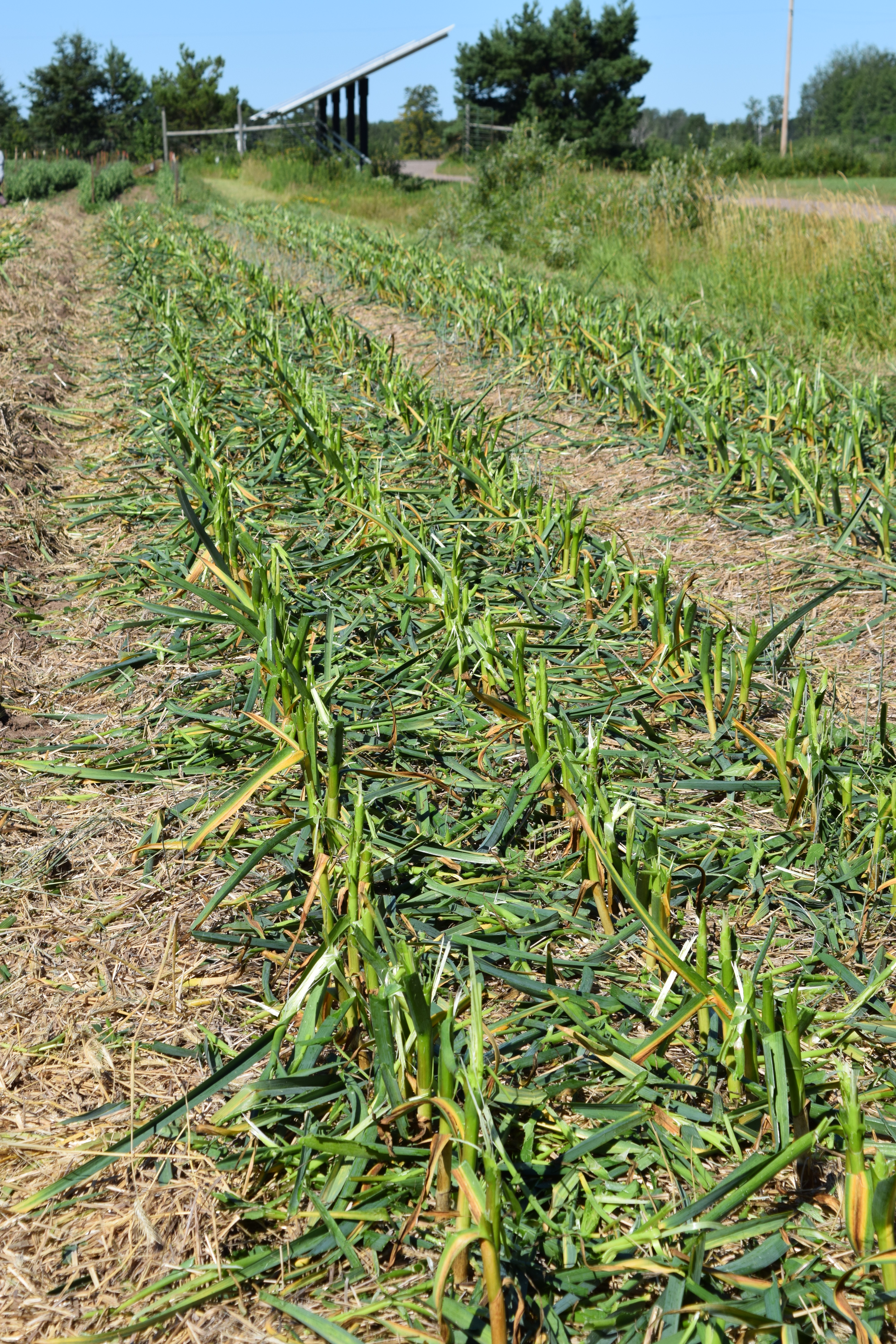
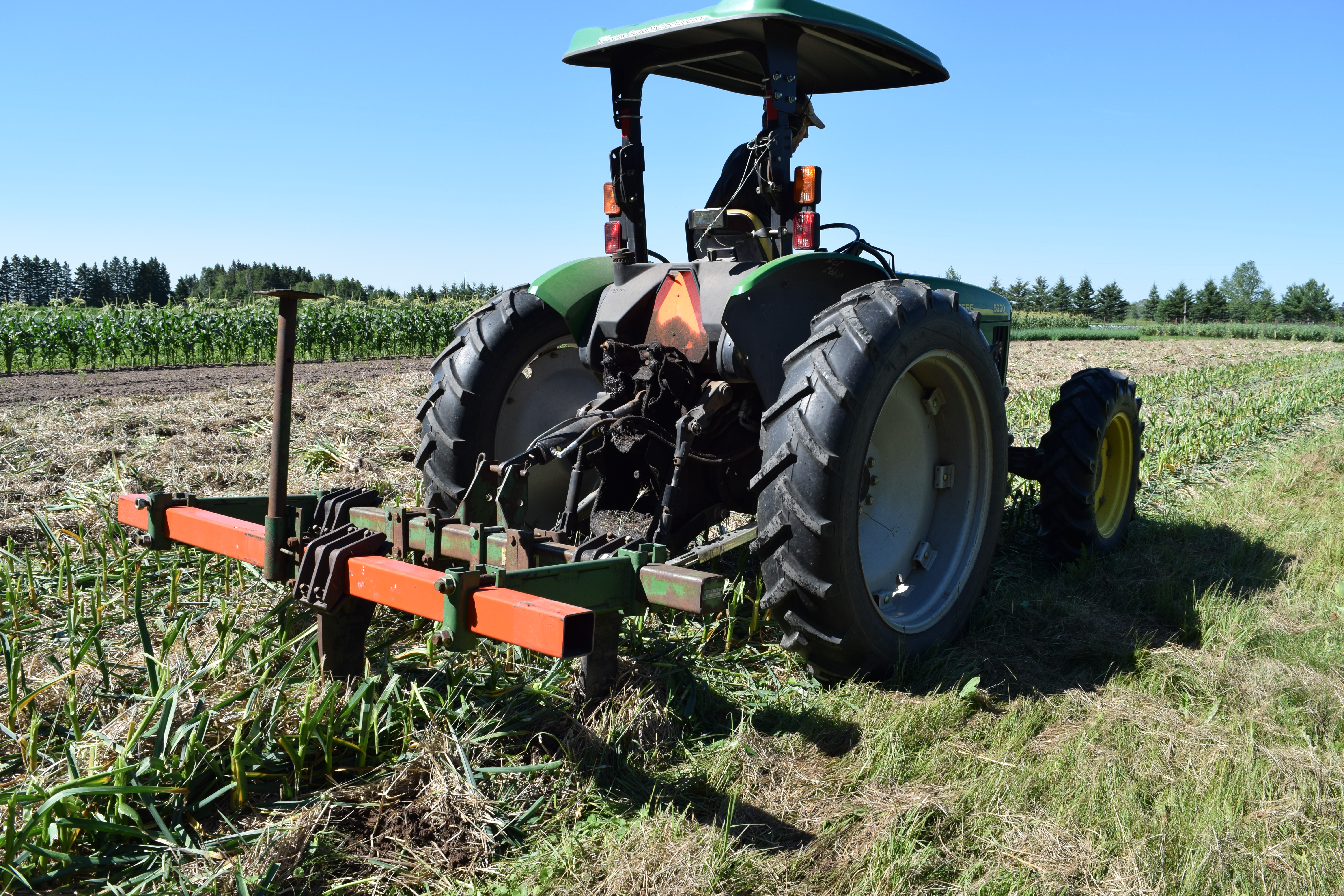
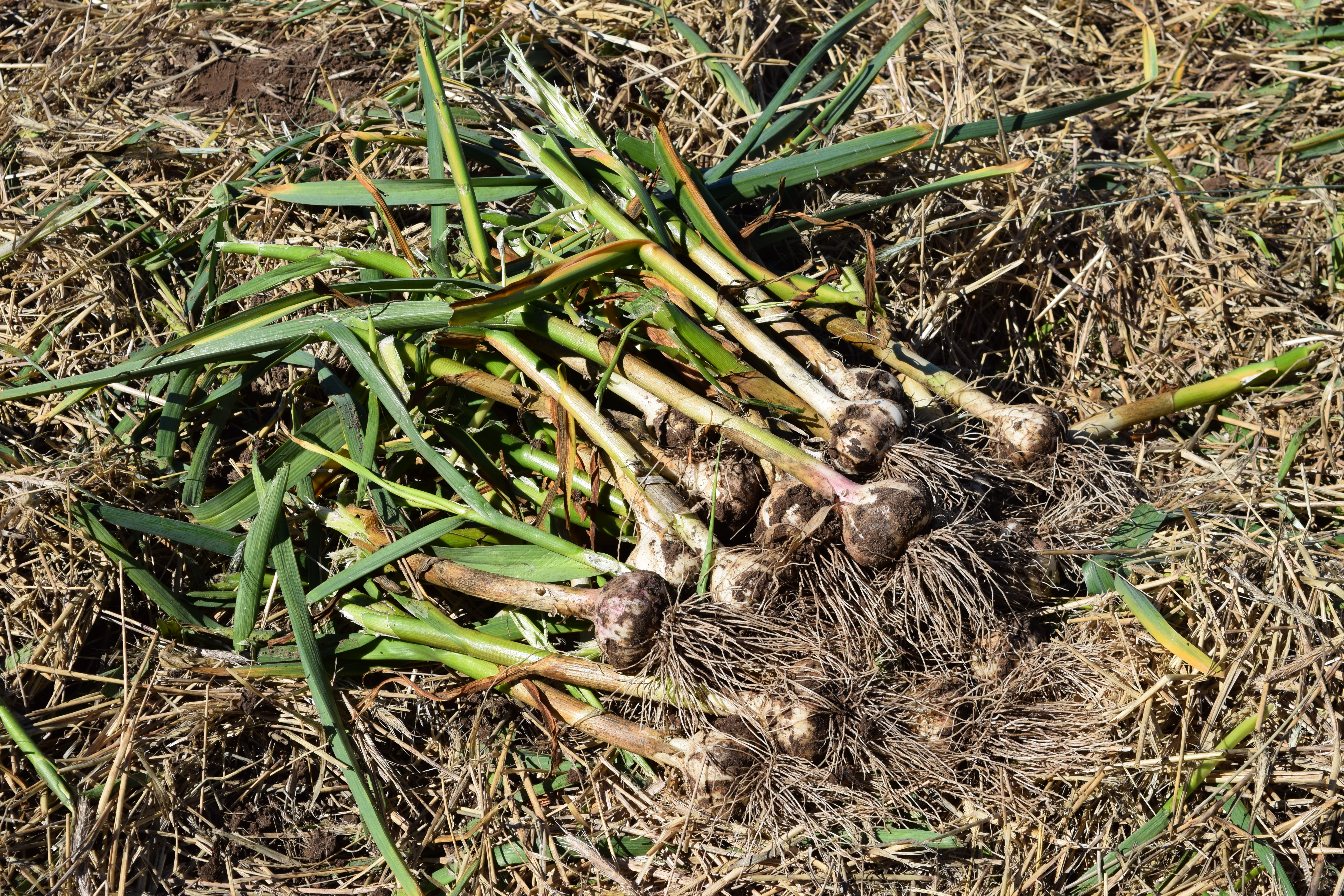
What is Harvesting Garlic Like?

Step one: Janaki uses the tractor to mow and subsoil the garlic. The subsoiler has big hooks that dig down between the garlic rows, loosening the soil and lifting up bulbs.

Step two: Bring in the farm crew! We pull the garlic and stack it up in piles. These piles are then loaded on a trailer and brought to the wash station.

Step three: Scrub-a-dub. The garlic is washed, removing any dirt that’s still on the bulbs.

Step four: Stack and cure. In order for garlic to last into the winter it must “cure” or partially dry for a few weeks.

Garlic takes at least three weeks to cure. Then, if stored properly, garlic should last through the next spring!


For the farm crew,

Starr

Summer CSA Week 9, 2022

Emily, Ellis and Janaki packing Monday CSA boxes

We have full and diverse box for you this week. We had all hands on deck to harvest everything in time for Monday deliveries! Annie and Ellis were even helping packing boxes. This week new in the box we have cilantro, dill, onion, hot pepper, and new potatoes. “New potatoes” are young tender potatoes.


In your share this week:

Carrots – Cilantro – Cucumber – Dill – Greens Mix – Lettuce – Onion – Snap Peas – Hot Pepper – New Potatoes – Tomato – Zucchini


Terri harvesting dill in the field.

Georgian Cilantro Sauce

This sweet, pungent sauce is a mainstay of Georgian national cuisine, often served with grilled meat, chicken or vegetables. It’s great way to use fresh summer herbs!

Ingredients

  • 2 ounces dried apricots
  • 1 cup boiling water
  • ⅓ cup shelled walnuts (1 ounce)
  • 2 to 4 garlic cloves (to taste), halved, green shoots removed
  • ¼ cup freshly squeezed lemon juice
  • ½ teaspoon salt (more to taste)
  • Freshly ground black pepper to taste
  • Pinch of cayenne
  • 2 cups cilantro leaves (2 good-size bunches), coarsely chopped
  • 1 ½ cups parsley leaves (1 1/2 bunches), coarsely chopped
  • ½ cup coarsely chopped mixed basil, tarragon, and dill
  • 5 tablespoons walnut oil (or more, to taste) (substitute with unrefined peanut oil, or olive oil)
  • ½ cup soaking water from the apricots, as needed

Instructions

  1. Place the dried apricots in a bowl and pour on the boiling water. Let sit for at least an hour, more if possible, even overnight. Drain over a measuring cup and retain 1/2 cup of the soaking water.
  2. Turn on a food processor fitted with the steel blade, and drop in the garlic. When it is chopped and adhering to the sides of the bowl, stop the machine and scrape down the bowl. Add the walnuts, and process with the garlic. Scrape down the sides of the bowl. Add the drained apricots, the lemon juice, salt, pepper and cayenne to the bowl, and process to a puree. Add the cilantro and other chopped herbs, and puree, stopping the machine to scrape down the sides several times. Combine the walnut oil and soaking water from the apricots, and with the machine running, gradually add it to the puree. Process until smooth. Transfer to a bowl, and let sit for one hour. Taste and adjust salt. Serve with beans, chicken, meat or fish, grilled or roasted vegetables, or grains.

From the New York Times.


Crushed New Potatoes

Ingredients

  • 1 pound (450 grams) baby potatoes
  • 2 tablespoons olive oil
  • 1 clove garlic crushed
  • 1 teaspoon parsley or basil
  • ½ teaspoon ground black pepper
  • ½ teaspoon salt

Instructions

  1. Boil slightly salted water, then throw your baby potatoes into the pot. Leave them to cook for 15-20 minutes or until they’re cooked through and soft.
  2. Grease your baking tray with olive oil, and get the potatoes out of the pot and onto the baking tray.
  3. Lightly crush the potatoes with a fork or a potato masher, but make sure not to over do it as you don’t want really flat pieces of potato all over your baking sheet.
  4. Using the excess olive oil on the baking tray, light brush the potatoes with the olive oil.
  5. Season with freshly ground black pepper, and sea salt.
  6. Sprinkle with either dried or fresh herbs and garlic.
  7. Bake in the oven for 10-15 more minutes at 200°C (392°F). The baking time depends on the size of your potatoes, so keep checking on them as they bake.
  8. Served Immediately. 

From Little Sunny Kitchen.


Janaki and the farm crew bagging up snap peas. Yes, he is indeed that talll!

For the farm crew,

Starr

Summer CSA Week 6, 2022

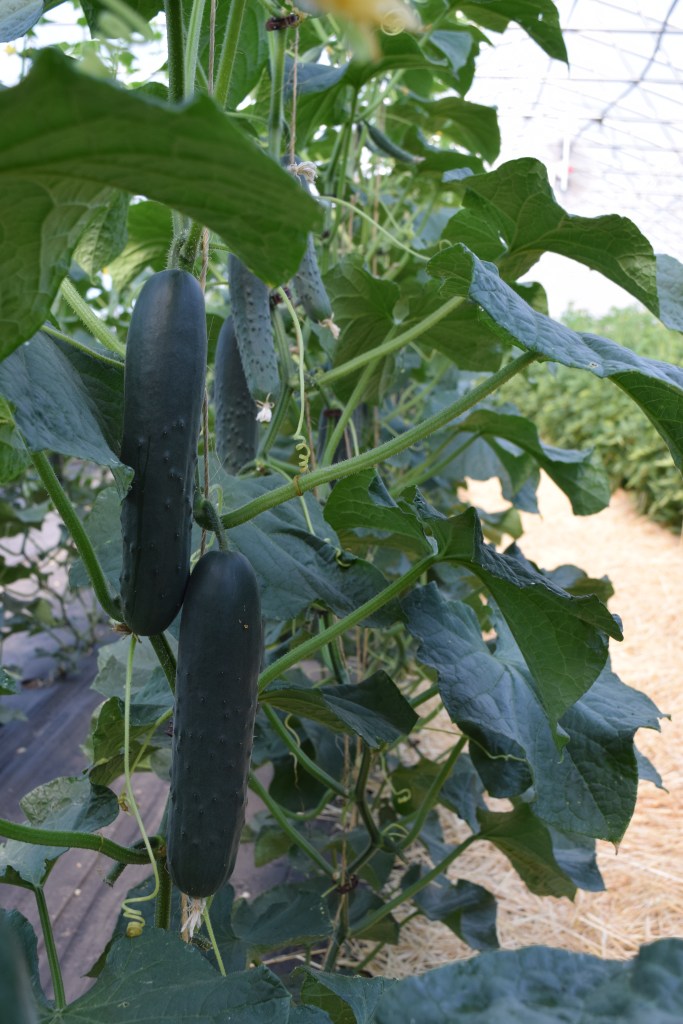
Cucumbers ripening in the greenhouse

It’s hot and the CSA boxes are bursting! New in the box this week is Swiss chard and napa cabbage. We hope you’re staying hydrated and wearing plenty of sunblock and enjoying the heat!


In your share this week:

Swiss Chard – Napa Cabbage – Lettuce – Cucumbers – Green Onions – Broccoli – Carrots with Tops – Beets – Parsley – Garlic Scapes


Vegan Borscht

Serves 4

Ingredients

2 medium beets

3 small carrots (~1 1/4 medium carrots)

2 medium red-skinned potatoes

2/3 medium onion diced (approximately 2/3 cups, try substitution with the green onions in your box!)

2 stalks celery, diced

1 tablespoon and 1 teaspoon extra virgin olive oil

5 cups vegetable stock

1 1/4 cups shredded red cabbage

1 1/4 cups chopped beet greens or chard

1 tablespoon and 1 teaspoon chopped fresh dill

1 tablespoon and 1 teaspoon white vinegar

1 tablespoon and 1 teaspoon fine sea salt or to taste

freshly ground black pepper or to taste

1/4 cup sour cream vegan or regular (optional)

Instructions

  1. Begin by prepping your vegetables. Peel the beets. Scrub the carrots and potatoes. Dice everything up. It’s best if the beets are a slightly smaller dice than the rest as they take a little longer to cook (you could also shred them in a food processor).
  2. Heat the olive oil in a large pot over medium heat. Add the diced onion and celery and sauté for 5 minutes or until slightly softened. Add the diced carrots and cook for an additional minute or two.
  3. Tumble in the beets and the potatoes. Pour in the vegetable stock and bring to a boil. Reduce heat and simmer until root vegetables are al dente.
  4. Tip in the cabbage and beet greens. Bring soup back up to a boil, then reduce heat and simmer for 10-12 minutes. Vegetables should be tender.
  5. Sprinkle in the dill and the vinegar. Season the borscht to taste with salt and pepper.
  6. Ladle borscht into bowls and serve with a dollop of vegan or regular sour cream.

Notes

Cool completely before refrigerating the leftovers in airtight containers. Borscht will keep for up to five days in the fridge and up to six months in the freezer.

Based off a recipe from Simple Bites.


Beets and Chard

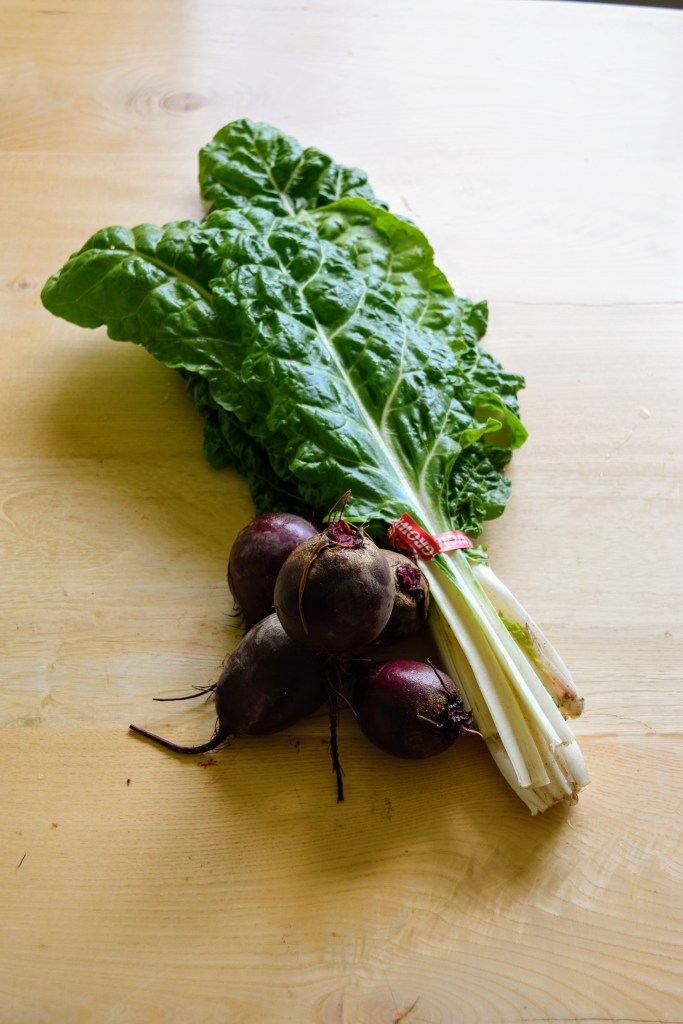
Did you know beets and chard are actually the same plant, Beta vulgaris? If you’ve grown both in your home garden, you may have noticed the similarities between the seeds and the leaves. The difference is that Swiss chard has been bred to favor leaf production, while beets have been bred to favor sweet fleshy roots.

The vegetables we eat didn’t just appear in the wild one day. Desirable traits have been “selected” for thousands of years to develop the tasty crops we enjoy today. Seeds are saved from plants that show the genetic variations we enjoy (more leaves versus fleshier roots) and then crossed through pollination with other plants with desirable traits so the offspring are better and better for human production and consumption. Please note, this is different from genetically modified which is done in a laboratory versus going through the generations of plants crossing for desirable traits already present in the species.

Rows of chard in the field

Resources for Veg Care and Use!

Remember to use the Vegetable Guide! Click the link below to see a pdf that describes most of the Food Farms crops and how to best care for the produce:

For the farm crew,

Starr

Summer CSA Week 3, 2022

Ellis with turnips

Welcome to summer! June 21st was the Summer Solstice, the longest day and shortest night of the year. We received 15 hours 52 minutes on the farm!


In your share this week:

Green Top Beets – Lettuce – Green Onions – Pac Choi – Radishes – Spinach – Salad Turnips


A note on this week’s spinach: our previous batches of spinach have come from our greenhouses which means they have been protected from the elements. This week’s spinach is from the field, so you may find it a little dusty from splash back from the rain and wind. We don’t wash the spinach on farm, because we find it lasts longer if we don’t get it wet before we get it to you. When you’re ready to use your spinach give it a wash, and either wash and dry the bag or transfer it to a clean bag. See how to wash greens in the video we posted last week!


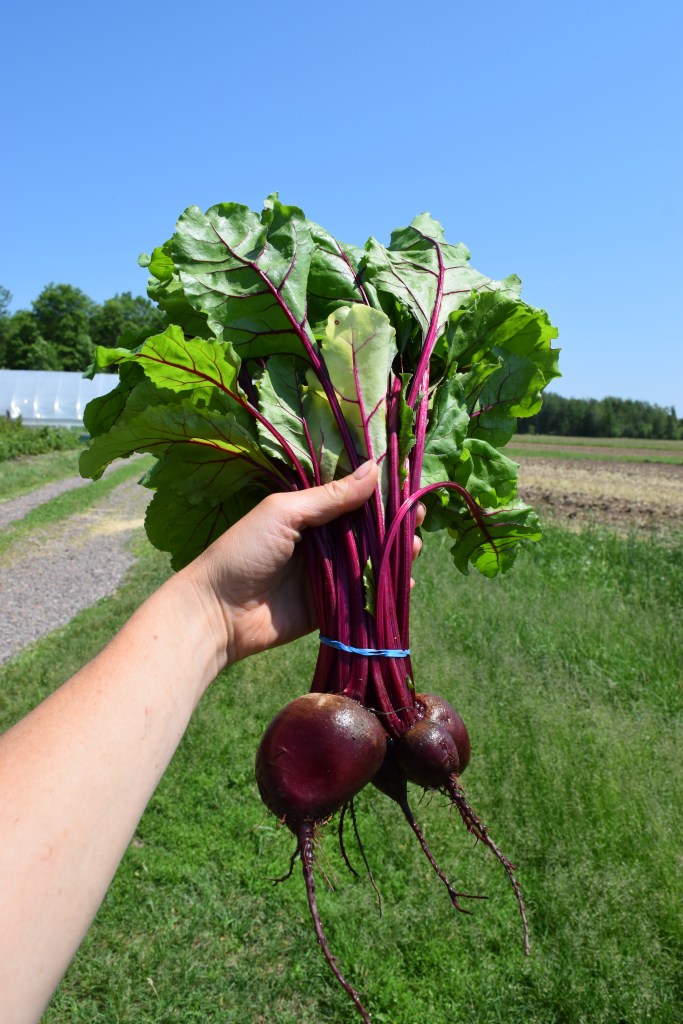
Beets with greens ready to go out in a CSA share!

The beet beat: did you now every part of the beet is edible? Beets tend to mature at varying rates, so you’ll probably find a range of sizes in your bunch this week. One thing they all have in common is delicious greens! Beet greens can be prepared any way you’d prepare kale. The most common way to prepare beet greens is in a sauté. Coat a pan with olive oil and cook your greens until they are wilted and tender (5 to 8 minutes). Add minced garlic, salt and pepper, or try experiencing with any of your favorite seasonings and aromatics.


You will find lots of salad turnips in your share this week! These turnips are best eaten fresh, but can be cooked (see a recipe below). These turnips are similar to radishes, but without the spiciness. You’ll find the turnips delightfully crunchy and juicy. Throw them in a big salad or eat them straight as a snack.

Here is a turnip poem written by a nine-year-old Henry Wadsworth Longfellow. It sounds like Longfellow only had access to old storage turnips. This poem might be a little more joyful if it was a fresh salad turnip they were eating, but we still love any literary ode to veggies.

Mr. Finney’s Turnip

By Henry Wadsworth Longfellow

Mr. Finney had a turnip,
And it grew, and it grew,
And it grew behind the barn,
And the turnip did no harm.

And it grew, and it grew,
Till it could grow no taller;
Then Mr. Finney took it up
And put it in the cellar.

There it lay, there it lay,
Till it began to rot ;
When his daughter Susie washed it
And put it in the pot.

Then she boiled it and boiled it,
As long as she was able;
Then his daughter Susie took it
And put it on the table.

Mr. Finney and his wife
Both sat down to sup;
And they ate, and they ate,
Until they ate the turnip up.

Lebanese Pink Pickled Turnips

Ingredients

1 pound turnips, peeled, quartered, and sliced 1/4 inch thick

1 small beet, peeled and quartered

1 clove garlic thinly sliced

1/2 cup vinegar

2 tablespoons kosher salt

1 teaspoon sugar

1 1/2 cups water

Preparation

  1. Put turnips, beet and garlic into a wide mouth heatproof 1 quart jar.
  2. In a small saucepan, bring vinegar, salt, sugar and water to a boil. When salt and sugar are completely dissolved, pour brine over vegetables to fill the jar. Leave to cool.
  3. When completely cool, cover jar and chill for 1 week.

Caramelized Hakurei Turnips

“Hakurei” turnips are another name for salad turnips, originally developed in Japan.

Ingredients

4 servings

2 tablespoons olive oil, plus more for greasing the baking sheet

2 bunches hakurei turnips, greens removed, washed but not peeled

1 teaspoon kosher salt

Freshly ground black pepper

Preparation

  1. Preheat oven to 425 degrees F. Grease baking sheet lightly with olive oil.
  2. Slice the turnips about 1/4 inch thick. You can do this with the slicing disk of a food processor, an adjustable mandoline, or by hand with a knife.
  3. Combine turnips with 2 tablespoons of olive oil and salt in a large bowl. Toss and coat turnips.
  4. Pile turnips on prepared baking sheet, spreading them as close as possible to a single layer.
  5. Roast the turnips until they are crisp and golden around the edges, 15-20 minutes. Shuffle turnips and roast 5 minutes more. Remove from oven and top with freshly ground black pepper.

Basic Vinaigrette

Spring and early summer is the season of greens! It is easy to make your own salad dressing at home. I like to put all my vinaigrette ingredients in a jar, and shake to combine. That way any dressing I don’t use, I can leave in the fridge for a future salad! Add any seasonings and herbs you prefer for different flavors.

Ingredients

¼ cup extra virgin olive oil
2 tablespoon balsamic vinegar
1 tablespoon whole grain dijon mustard
1 ½ teaspoon maple syrup (or agave)
1 teaspoon fine grain kosher salt
½ teaspoon ground black pepper

Preparation

  1. Combine!

Greenhouse after harvesting beets and scallions for Monday’s shares. Lots more tasty produce to come!

For the farm crew,

Starr