Summer CSA Week 5, 2023

Dear Food Farm Community,

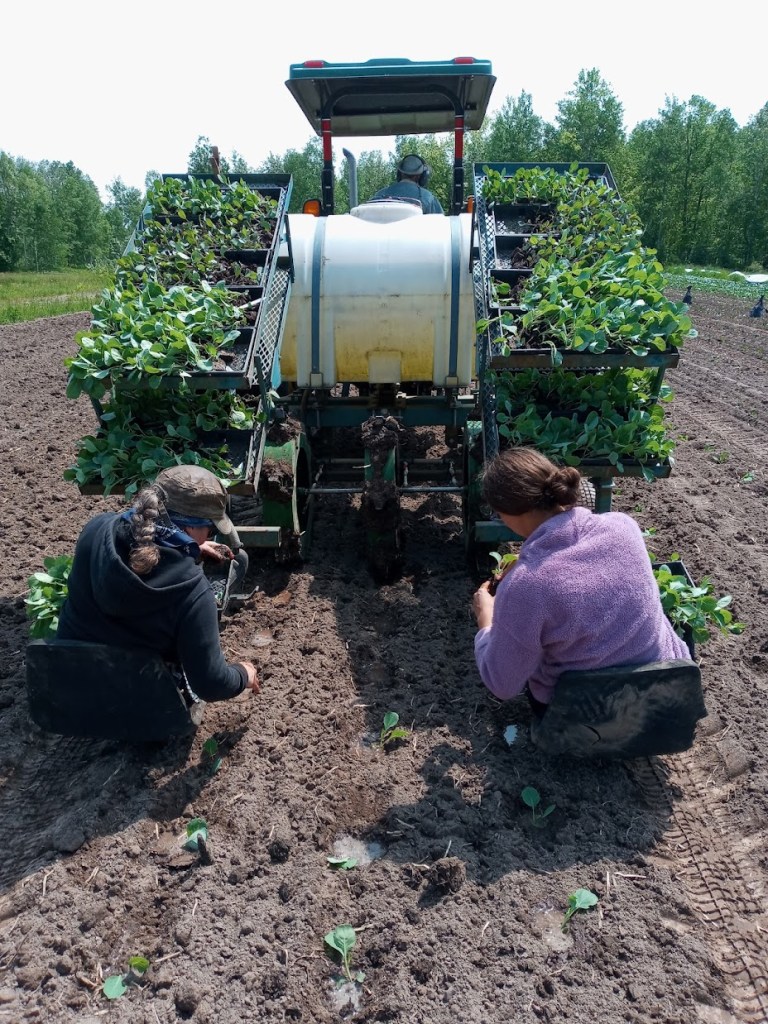
As we delve into the heart of the growing season, we find ourselves knee-deep in the world of weeding. Weeding, although often deemed an arduous task, is an essential part of maintaining the health and vitality of our crops. The crew has been diligently working through the fields, carefully tending to each bed, ensuring that our plants have the space, nutrients, and sunlight they need to thrive.

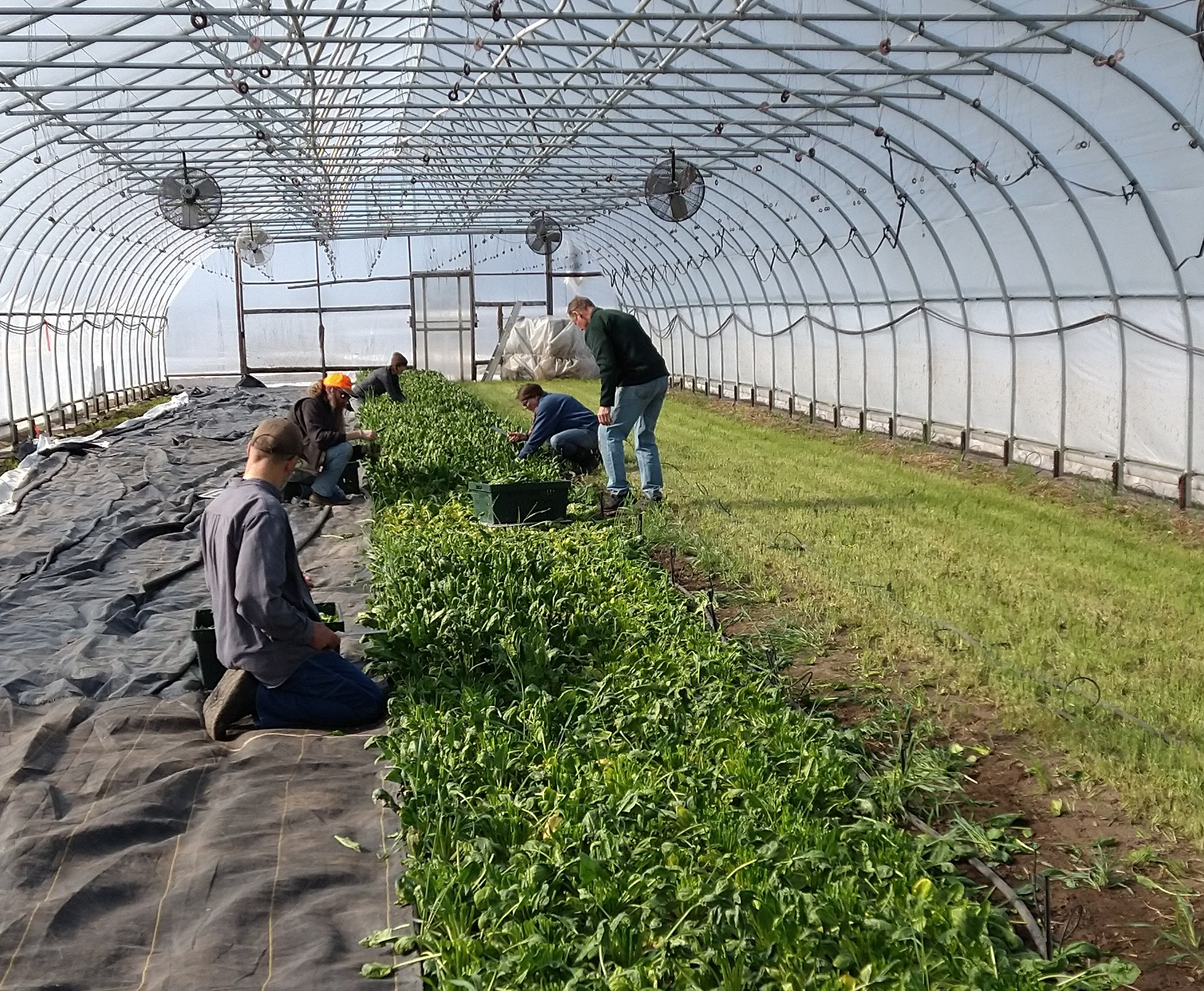
Soon we’ll begin to notice that the daylight hours are gradually decreasing, but the harvest time seamlessly extends, stretching out longer and longer. More variety means more running around for the crew and volunteers. This morning we were doing just that; shuttling harvest totes to and fro to deliver a well rounded box of vegetables.


In your share this week:

Green-top Beets – Broccoli – Green-top Carrots

Cucumber – Garlic Scapes – Kale – Green Onions – Zucchini


Beet Greens & Kale Sautéed with Garlic Scapes

~ 2 servings

  • 1 tablespoon olive oil
  • 1 slice bacon, cut into small pieces (optional, use a little more oil if omitting)
  • 2 garlic scapes, finely chopped
  • 2 green onions, white and pale green portion, finely chopped
  • 6 leaves beet greens, stems cut into 2-inch pieces
  • 2 leaves kale, ribs and stems removed, chopped
  • salt and pepper to taste
  1. Heat olive oil in a large skillet over low heat. Cook bacon until it begins to brown and crisp, about 2 minutes. Add garlic scapes and green onion, cook and stir until golden brown, 3-5 minutes.
  2. Stir beet stems and kale into skillet. Cover and cook until kale wilts, about 3 minutes. Add beet greens. Cover and cook until bright green and wilted, 1 to 2 minutes.
  3. Season with salt and pepper.

Sautéed Zucchini & Carrots

  • 1 medium zucchini, thinly sliced
  • 2 medium carrots, thinly sliced
  • 1 tablespoon olive oil
  • 1 tablespoon ghee (optional)
  • 1 teaspoon dried thyme
  • salt and pepper to taste
  1. Heat a large skillet over medium-high heat. Add the oil and butter.
  2. Once the better is melted, add the zucchini and carrots. Sprinkle with thyme, salt and pepper, toss to coat.
  3. Sauté vegetables until lightly browned and tender, stirring occasionally so they do not burn.

I know I already included a pickled turnip recipe in the week 2 newsletter, but if you are like me, you may have a few extra rolling around in your fridge still. Here is a recipe that includes beets along with our old friend. If you happen to be out of turnips, just use more beets!

Pink Pickles, from Cotter Crunch

8 servings

  • 12–14 ounces purified water
  • Optional: 1 teaspoon sugar
  • 2 ½ Tablespoon Kosher salt
  • 1 bay leaf
  • ½ cup white vinegar (for quick pickling)
  • 1 small red beet, peeled and sliced
  • 2 turnips (about 1 pound), peeled and sliced
  • 1 clove garlic, chopped
  1. Add beet, turnips and garlic to a heatproof jar or container. Set aside.
  2. In a medium saucepan, bring salt, sugar, bay leaf, and 12 ounces of purified water to a boil, stirring occasionally to dissolve salt and sugar. Turn off heat and let mixture cool down for 5 minutes, then stir in vinegar.
  3. Pour pickling liquid over the contents in the jar, and ensure that the turnip and beet slices are submerged completely in the brining liquid. Let it cool, then close the jar and place it in a dark area for 5 to 7 days.
  4. For best flavor, refrigerate before serving.
  5. Store in a covered jar or container in the refrigerator for up to one month.

For the farm crew,

Charlie
Summer CSA Week 2, 2023

Greetings!

Let’s start things off with a haiku…

Mid June – so so dry
Irrigate to help them grow
Janaki sleeps not

Week two and another round of locally grown goodness! Up this week:


Greens mix – Green onions – Lettuce – Radish – Tatsoi – Turnips


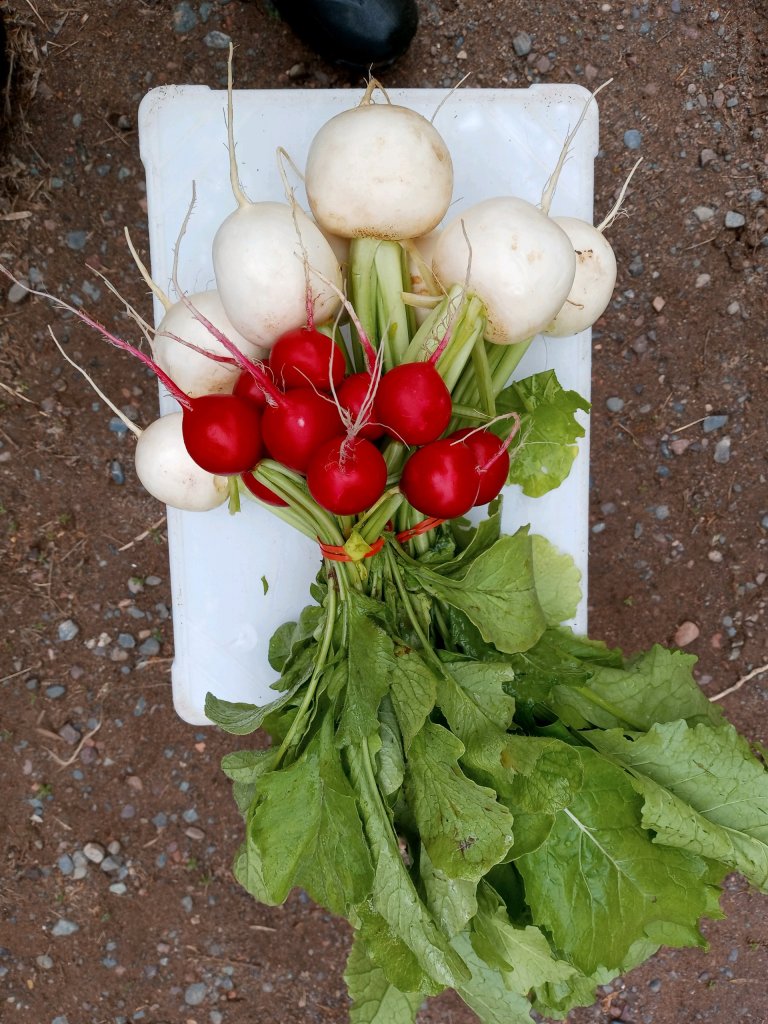
The vegetable spotlight falls on the radish this week. Radishes are not only zesty beauties… they are antioxidant-rich, as well as relatively high in vitamin C, calcium, potassium, and fiber. These cruciferous veggies are entirely edible – all the way from their crunchy bulb to their tender leaves. All parts of the radish are an excellent addition to your summer salad. Radishes are a cool-season vegetable, so they are a little hotter because of how unusually warm and dry it has been, and the heat also means that we’ve had to get all of them out of the field quickly, rather than keeping them for a few weeks. This makes them a great candidate for roasting, transforming the flavor from bright and crisp to mellow and sweet. Find below a two-for-one recipe that uses both your radishes and your turnips to bring out a caramelized quality in both (with a little help from some honey).

Roasted Turnips and Radishes

Serves 4

  • 1 lb turnips, halved or quartered
  • 1 lb radishes, halved or quartered
  • generous drizzle of extra-virgin olive oil
  • kosher salt and freshly ground pepper
  • 2 teaspoons honey, plus more to taste
  • 5 fresh thyme sprigs
  1. Position a rack in the upper third of an oven and preheat to 425 F.
  2. In a large bowl, toss together the turnips, radishes, and olive oil with salt and pepper. Transfer the veggies to a baking sheet and spread into a single layer. Keep your eye on them and roast until the veggies start to char and soften (about 10 minutes). Drizzle the honey and scatter the thyme sprigs on top. Continue roasting until the veggies are fork-tender and have a caramelized finish (about 10 more minutes).
  3. Discard the thyme springs. Transfer the veggies to a platter and drizzle with more honey, if desired. Serve immediately.

Amidst the various harvests of our CSA, our dedicated members occasionally find themselves facing a delightful yet overwhelming challenge: an abundance of produce that tests their culinary prowess and storage capabilities. When unpacking your weekly share of farm-fresh vegetables, you may wonder “what am I supposed to do with a fridge drawer full of Turnips?”

Enter the quick pickle…

Quick pickles will keep in the fridge for months. They are delicious right out of the jar, but also make zingy additions to salads, sandwiches, and really anything that needs a little punch.

Ginger – Pickled Turnips

  • 2 inches fresh ginger, unpeeled, cut into 1/4-inch-thick coins
  • 2 garlic cloves
  • 8 ounces turnips, cut into thin discs or match sticks
  • 1 cup warm water
  • 2 teaspoons kosher salt
  • 1 tablespoon honey
  • 3/4 cup apple cider vinegar
  • 1/4 teaspoon crushed red pepper flakes
  1. Put the ginger and garlic in the bottom of a 2-cup wide-mouth jar. Pack the turnips into the jar.
  2. Combine the water, salt, honey, vinegar, and red pepper flakes in a separate jar. Top it with its lid, and shake vigorously to combine. Pour the brine over the turnips until it just covers them. Top the turnip jar with a lid and refrigerate for at least 24 hours before enjoying.

When the turnips are gone, just shove more vegetables in there – the brine will work its magic on anything from green beans, to radishes, to fennel!

For the farm crew,

Charlie
Summer CSA Week 1, 2023

Howdy, fellow Food Farm enthusiasts and happy first day of the 2023 Summer CSA season! Thank you for choosing to be a part of our farm family and for valuing the hard work, dedication, and love that we pour into every crop, every animal, and every interaction. Your commitment to local, sustainable agriculture not only supports our farm but also strengthens the fabric of our community, fostering a healthier, more resilient, and connected way of life.


In your share this week:

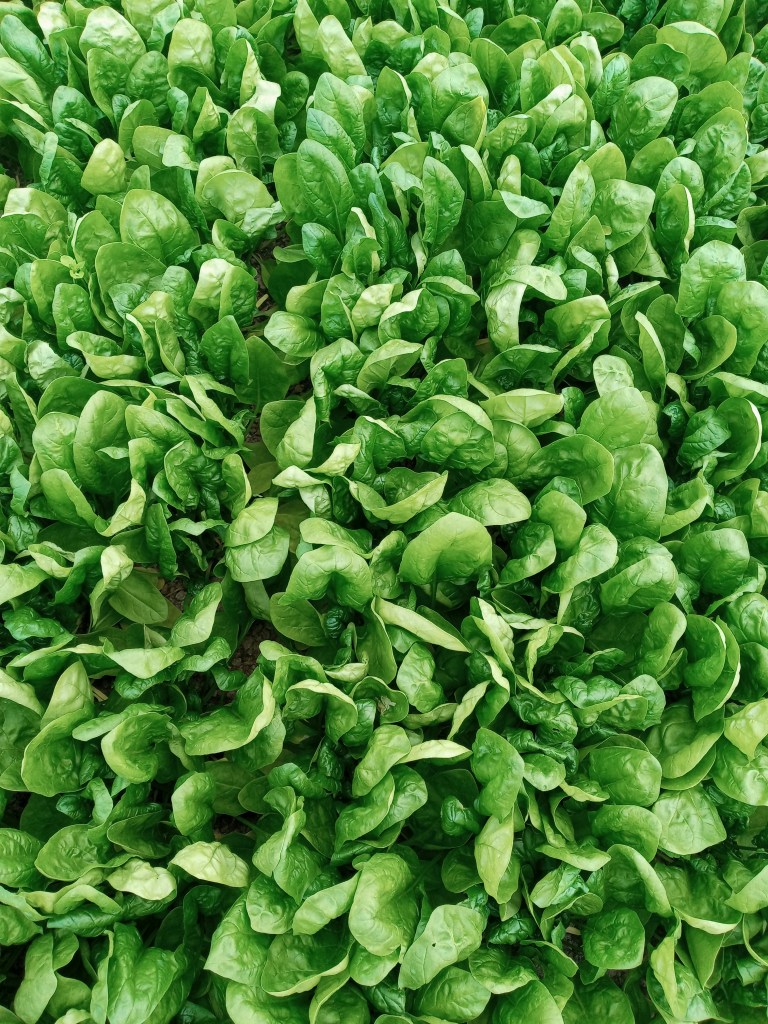
Spinach – Green Onions – Lettuce – Greens Mix – Rhubarb – Radish – Oregano – Tatsoi


Tatsoi is a versatile green that will elevate your culinary adventures!

Stir-fry perfection: Tatsoi adds a burst of flavor to your veggie stir-fry. With its mild mustard taste reminiscent of baby Pac Choi or Chinese cabbage, tatsoi is a great addition. The best part? It cooks up in a jiffy! Simply toss in the vibrant greens during the final moments of cooking, allowing them to wilt just enough to retain their delightful texture and taste.

A salad sensation: Whether it’s at the microgreen stage, as tender baby leaves, or in its full-grown glory at three to four weeks, tatsoi shines in salad mixes. You may have already noticed its crisp and unique flavor mingled with the mustard greens, arugula, kale, & chard that comprise our usual greens mix blend.

Pesto with a kick: Looking for an adventurous twist on the classic pesto? Get ready to blend your taste buds into a frenzy by incorporating tender tatsoi leaves into a zesty vegan pesto. Just combine them with cashews, a pinch of salt, a drizzle of olive oil, and a sprinkle of nutritional yeast.

Sautéed Tatsoi Recipe, from Niki Nakayama

  • 1 bunch tatsoi
  • 2 teaspoons sesame oil
  • 1 garlic clove, finely chopped or grated
  • 1 teaspoon grated ginger
  • 1 teaspoon fish sauce
  1. Cut off the base of the tatsoi and discard (or save for future stock).
  2. Rinse the leaves, but do not dry them. The excess water will lightly steam the greens while they cook.
  3. Warm the sesame oil in a small frying pan over medium heat.
  4. When the pan is hot and the sesame oil is fragrant, add the garlic and ginger, and sauté until fragrant, about 30 seconds.
  5. Add the still-wet tatsoi and fish sauce, and stir to combine.
  6. Cook uncovered, stirring occasionally until tatsoi stems are tender and leaves are wilted, about 1–2 minutes.

Tatsoi & Basil Pesto, from April Blake

  • 2 cups tatsoi
  • 1 clove garlic
  • 1 cup basil
  • 1/4 cup walnuts
  • 1/4 cup grated parmesan
  • 1-2 tbsp olive oil
  • salt to taste
  1. Throw everything but the olive oil in a food processor.
  2. Turn it on and if you have the option to drizzle in the oil while the machine is running, add it slowly until the pesto is a spreadable consistency. If you don’t have the luxury of the feature, add one tablespoon of oil, blend, then add the rest as needed.
  3. Salt to taste or add a little more cheese.

April Winter Share

Greetings! The outside world has temporarily regressed into winter, but things are moving quickly at the farm. We have a full crew lined up for this season, the root cellar is nearly empty, and the greenhouse is filling up with onions, tomatoes, peppers, broccoli, cabbage, and cauliflower transplants. Even with as late of a spring as this, there’s still a good chance that we’ll be able to start the Summer Share season on time. We’re fortunate to have invested a lot in greenhouse space for early crops, and the combination of drainage tile and little to no frost over winter means that we could be ready to get in the field fairly quickly with another stretch of sun and heat.

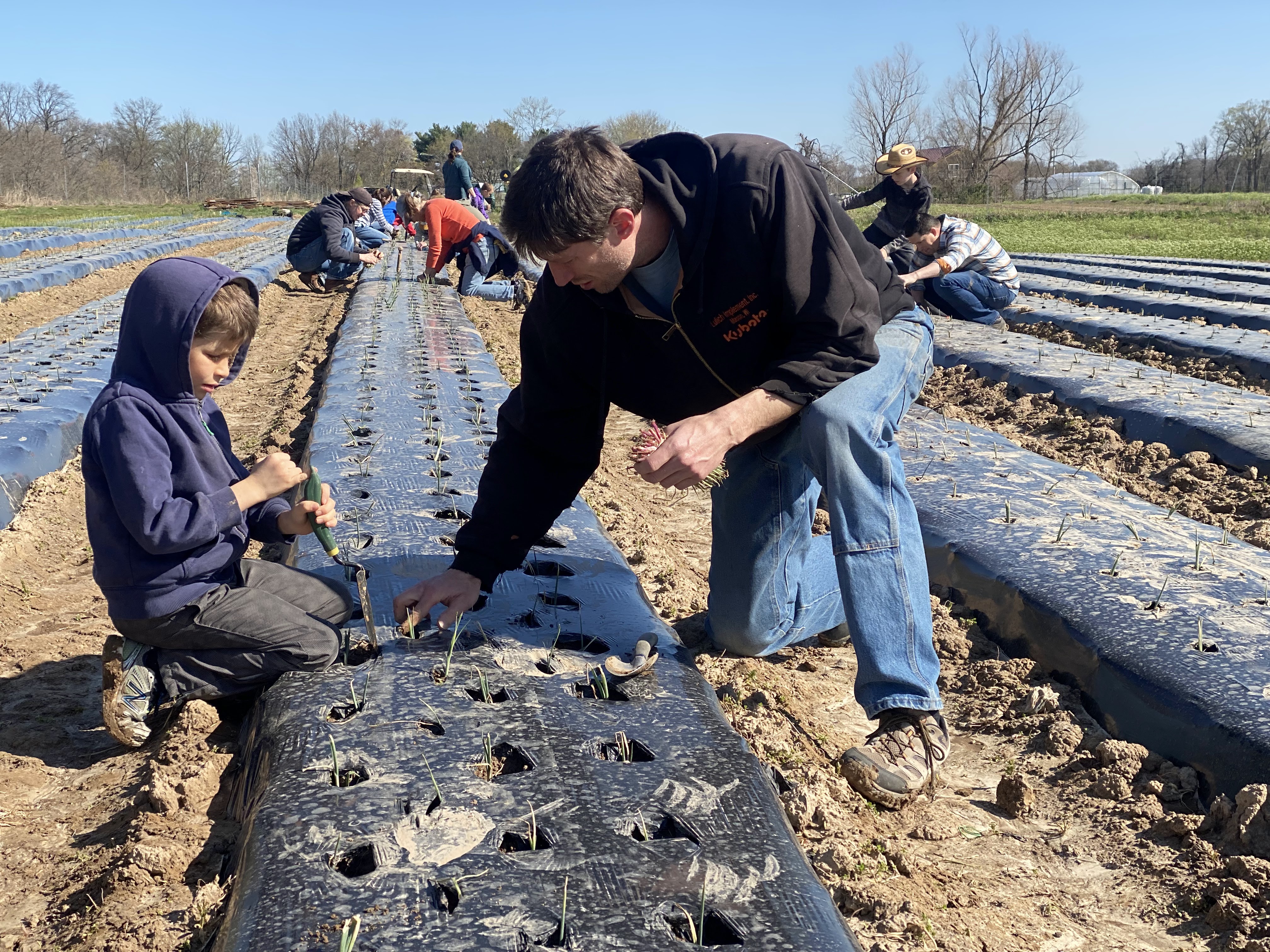
Speaking of sun and heat, we were able to sneak in a quick getaway to southern Illinois while the kids were on spring break last week. It was delightful to enjoy some sunshine and warm weather, and what do farmers do when they’re on vacation? Farm work, of course! Our friends Segue and Amy of Three Rivers Farm had a work party over the weekend, so we got to help plant onions with them and had a good time talking with their CSA members as we worked.

It may seem like that scene is a long way off for us, but things can turn around quickly and we’re hopeful for a great start to the season. Ultimately, we’re at the mercy of mother nature but we feel pretty well prepared for whatever the season brings. Think sun!

For the farm crew,

Janaki

In your share today:  

Beets — Orange and Purple Carrots — Garlic — Onions — Red and Russet Potatoes Rutabagas — Shallots — Spinach

Allo Palak (Spinach and Potatoes)
modified from NYT

  • 1/4 cup neutral oil
  • 1 large yellow onion, finely chopped
  • 1.5 tsp grated ginger
  • 1 clove garlic, finely grated
  • 1 tsp cumin seeds
  • 3 Thai green chilis, sliced
  • 1 tsp red pepper flakes (or to taste!!)
  • 1/4 tsp turmeric powder
  • 1 cup crushed tomatoes
  • 1/5 tsp salt
  • 3 medium potatoes cut into 1-inch cubes
  • 1 lb fresh spinach, chopped
  • 1/2 tsp garam masala

1.  In a large pot, heat oil and onion, ginger, and garlic.  Stir for 30 seconds.  Add cumin, green chilis, pepper flakes, and turmeric.

2.  Add tomatoes and salt.  Stir and continue cooking until the tomatoes are jammy and the oil has separated (3-5 minutes).

3.  Stir in potatoes.  Add 1/2 cup water, bring to a boil and lower heat to medium.  Cover and cook for 12 minutes or until potatoes are almost done.

4.  Add spinach and turn the heat to high.  Once the mix begins to bubble, lower the heat to medium, cover and simmer until potatoes are cooked through, stirring occasionally, 7-10 minutes.  Top with garam masala and serve with rice.  

March Winter Share

Whew, what a winter! Onion seeds are already up, and the greenhouse is tucked in a cozy blanket of snow, but we’re definitely ready to see the banks recede. The first broccoli plants are scheduled to go in the field in just six weeks so we’re getting a little bit antsy! Ellis pretty much summed up our feelings right here: https://photos.app.goo.gl/bhbWAt1VpbyWUFyq8

We are still hiring, so please have folks reach out if they’re looking for some good work this summer.

For the farm crew,

Janaki

In your share today:  

Beets — Green Cabbage — Orange and Purple Carrots — Onions — Parsnips Baby Red, Fingerling, and Yellow Potatoes – Rutabagas

Indian spiced pasties

Dough

  • 1 cup boiling water
  • 1 cup shortening
  • 3 cups flour
  • 1 tsp salt

Stir shortening and water in a large bowl until the shortening is melted.  Slowly add flour and salt while stirring.  When the dough is soft, cover and refrigerate for 1.5 hours.  

Filling

  • 2 lbs potatoes, peeled
  • 1 lb rutabaga, peeled
  • 1/2 lb carrot, peeled
  • 2  cups cabbage, finely chopped
  • 1 finely minced onion
  • 2 medium cloves garlic, minced
  • 1.5 cups frozen peas
  • 1 tablespoon freshly grated ginger
  • 1 tsp mustard seeds
  • 1 tsp ground coriander
  • 1 tsp ground roasted cumin seeds
  • 1/4 tsp cayenne pepper
  • 1 tsp salt
  • 2 tablespoons lemon juice

Cube potatoes, rutabagas, and carrots (1/4″ cubes- all veggies to similar size to ensure even cooking).  Mix all filling ingredients in a large bowl and stir.  

Assembly

On a floured surface, cut the dough into 10 equal portions.  Roll one portion into a 8-10″ (appx) circle.  Heap 1-1.5 cups of filling onto one half the dough.  Fold the dough over (to make a half-moon shape) and crimp edges with fingers or a fork.  

Arrange samosa/pasty on ungreased baking sheets.  Freeze or bake.

Bake appx 1 hour at 350degrees

February Winter Share

What a difference a month makes! We know that there’s a lot more of winter left, but it feels like spring is just around the corner. Annie and the kids and I are getting away for a family trip to Washington, DC this week to visit friends and family. We’re really looking forward to having a little time away before we open up the greenhouse for onion planting in just two weeks!

Share signups are going well, we’re about 90% full for the summer season, but there’s still a chance to get a spot if you haven’t done it yet.

We are looking for a couple of seasonal farm crew members for the upcoming season, if you know of someone who is interested in good, meaningful work with a team of great people, have them reach out, I’d love to talk with them! https://foodfarmcsa.com/employment/

Unfortunately, it looks like the weather won’t be cooperating for curling on Wednesday, but we’re still planning to bring in a bunch of rutabagas to give away at Wild State Cider on Wednesday evening, and we’d love to see you! If you have friends or family who are interested in the farm, send them down to meet us and answer any questions they might have about being a member.

Enjoy the sunshine! For the farm crew,

Janaki

218-384-4421

In your share today:  

Beets — Green Cabbage — Orange and Purple Carrots — Garlic — Onions — Parsnips Red and Russet Potatoes –Delicata Squash

Valentine’s Casserole (or Hotdish for you true Minnesotans)

  • 5 cups cream or 1/2-n-1/2 (see Tips)
  • 5 cloves garlic, minced
  • 2 cups Parmesan cheese (see tips)
  • 1 tsp cornstarch
  • 1 lb dark leafy greens (kale, collards, or finely chopped green cabbage)
  • 3 cups chopped potatoes and squash (total)
  • 2 cups chopped yellow onion
  • 8 slices bacon, diced (omit if vegetarian)
  • 1/2 cup breadcrumbs
  • 1 Tbsp olive oil

1.  Preheat oven to 350°.  Bring first two ingredients to a boil over medium high heat. Reduce heat to low, and simmer 30 minutes or until reduced by half. Stir in 1 cup of cheese.

2.  Stirred together corn starch and 1 tablespoon of water. Whisk into cream mixture until thickened.

3.  Wash and dry greens.  If using collards, cook in boiling water until tender (5minutes).

4.  Cook bacon in large skillet over medium high heat, stirring often When crisp, add onion, cook five minutes or until tender. Add the diced vegetables and saute for another 5 minutes.  Stir in the greens and cook for three more minutes.  

5.  Mix the cream mixture with the vegetables and pour into a lightly greased 11 x 7 baking dish. Stir the breadcrumbs, remaining cheese, and olive oil together and sprinkle over the casserole.

6.  Bake for 35 to 40 minutes until the diced vegetables are cooked thoroughly and the breadcrumbs on top are golden brown. Let stand for five minutes before serving.

Tips:

Try fat free 1/2-n-1/2 rather than milk or the sauce can curdle.

Sharp cheddar also works well but use some Parmesan for the topping.

Winter CSA Box 2, December 2022

Garlic ready to go out in shares.

Happy December! We hope you’re keeping warm and enjoying the holiday season.


In your share this month:

Chioggia Beets – Orange and Purple Carrots – Green Cabbage – Garlic – Yellow and Red Onions – French Fingerling & Russet Potatoes – Sunshine and Delicata Squash


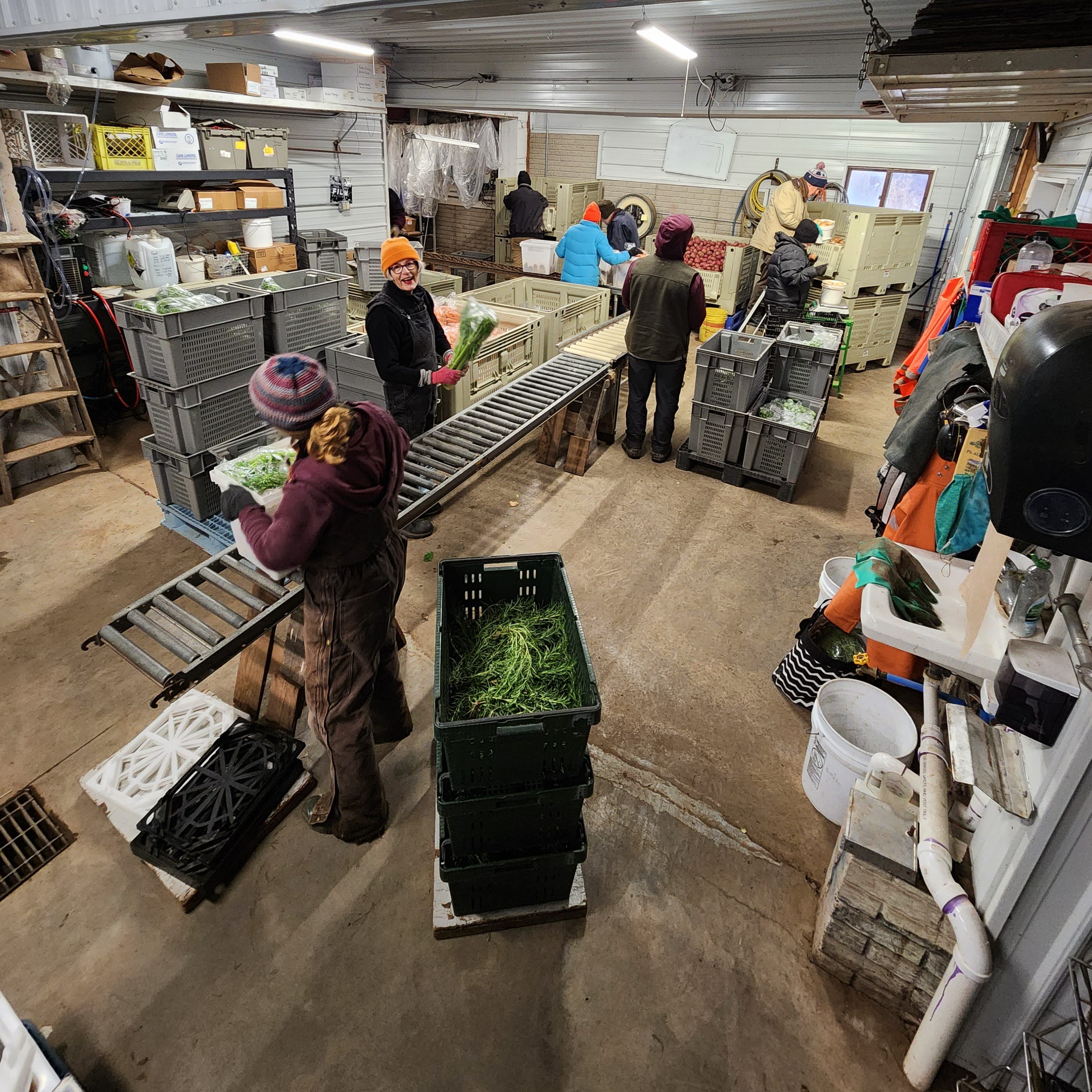
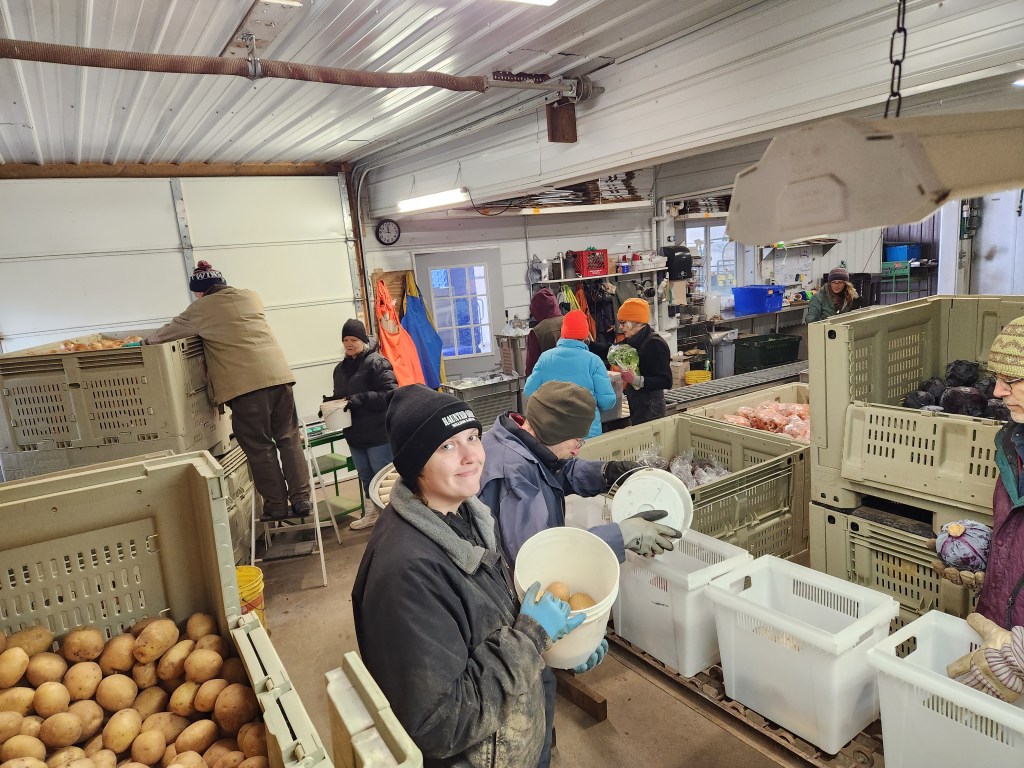
Packing winter share boxes is quite a production! We have all hands on deck and a conveyer table set up that reaches all the way across the pack house.


Egyptian Stuffed Cabbage

Serves 10

Ingredients

Cabbage braising

  • 1 head of cabbage
  • 2 tablespoons salt
  • 1 tablespoon ground cumin

Stuffing

  • 1 tablespoon vegetable or olive oil
  • 1 large onion, finely minced
  • 1-1.5 pounds lean ground beef
  • 1 tablespoon minced garlic
  • 1 can, tomato paste (6 oz.)
  • 3 cups Egyptian rice, or Goya medium grain rice, washed until water is clear
  • 2 tablespoons salt
  • 2 teaspoons ground black pepper
  • 1 teaspoon allspice (optional)
  • 1+ can, crushed tomatoes (28 oz)
  • 1 cup finely minced flat leaf parsley
  • 1 cup finely minced cilantro
  • 1 cup finely minced dill
  • 1 tablespoon Better Than Bullion Chicken flavor
  • 2 tablespoons butter

Instructions

Cabbage braising

  1. In a large, heavy pot, fill with water until about 2/3 full. Add salt and cumin, cover and bring to a boil. 
  2. Remove any wilted or damaged leaves from the cabbage. Turn cabbage upside down (with stem facing you) on a cutting board. Make deep gashes into the cabbage leaves as close to the stem as possible in a circular fashion. Hold the stem and gently pull apart the leaves, one at a time, careful not to rip them. 
  3. Place leaves 2-3 at a time in the boiling water. Allow to cook for 2-3 minutes until it becomes less stiff and just wilted. Do not overcook. Remove and place in a colander. 
  4. Gently peel leaves from the cabbage and cook in small batches. At some point, the cabbage will become too compact to remove the leaves. Hold the cabbage stem and gently lower half the remaining cabbage in the water. With your other hand, you can begin loosening the cabbage leaves one by one into the water. Once you have loosened 2-3 leaves, remove the head and set aside. Repeat until most of the cabbage is cooked. It’s ok to stop at the deepest part of the cabbage, as the leaves become too crinkly to be rolled. 
  5. Allow cabbage to cool. Meanwhile, prepare the stuffing mix. 

Stuffing

  1. In a large Dutch oven or non-stick pot, add the vegetable oil and bring to medium high heat. 
  2. Add the onions and sauté until translucent. If using, add the beef all at once, mixing with the onions and breaking up the clumps. Sauté until browned. 
  3. Add the garlic and mince until fragrant (about 1 minute). Add all of the tomato paste, stirring constantly for 3-4 minutes (the texture will change and become less of a formed paste). Add salt, pepper, and all-spice.
  4. Add the can of crushed tomatoes and stir until evenly mixed. Turn off the heat. 
  5. Pour in all of the washed rice, stirring until mixed. Now add all of the herbs and stir until everything is combined. If necessary, adjust the salt. Transfer to a large mixing bowl and allow to cool. 
  6. Prep the cabbage leaves for rolling. Set up a clean work area with a cutting board. Take one cabbage leaf at a time and spread it out over the board. Cut out the thick stem, reserve for later. With the flat leaf on the board, cut it into 2-3 even pieces that can be rolled in a straight line, about 2 inches wide x 3-5 inches long. See Photo. Make a stack of leaf segments on a clean plate. 
  7. Prepare the pan for cooking: generously drizzle vegetable or olive oil at the bottom of the Dutch oven or nonstick pot. Take several of the cabbage stems and cover the bottom to prevent the rolled leaves from scorching on the bottom layer. 
  8. Roll the leaves: place an entire leaf segment on the cutting board. Leaving 1/2 inch of space at one end, place a line of the stuffing mixture about 1/2 inch wide inside the leaf. Gently roll it up (important to roll it securely but not too tightly, as the rice still needs to expand). See photo. 
  9. Layer the rolled cabbage leaves in one direction until one layer is completely filled, then top with another layer at a ninety degree angle to the first one to prevent the rolled cabbages from unraveling. Continue rolling and layering at 90 degrees until all of the cabbage leaves are rolled (extra rice mixture may remain). 
  10. In a small saucepan, bring 1 cup of crushed tomatoes + 1 1/2 cups of water to a boil. (Alternatively, you can use 2 1/2 cups of water and 1/2 can of tomato paste). Add 1 tablespoon of butter and 1 heaping tablespoon of bullion paste and boil until dissolved. 
  11. Place the pot with the rolled cabbage on medium heat. Pour all of the water/tomato mixture on the rolled cabbages. Cover and cook on medium low for 45 minute-1 hour. Do not uncover for the first 30 minutes, then begin checking if the rice is cooked on the top layers. If it appears too dry, add in 1/2 cup of water and continue to check. The cabbage is done with the rice is completely cooked and the liquid has been absorbed. 
  12. Turn off heat. Add small pats of butter to the top. Cover. Allow to rest for 15 minutes. Enjoy, or: 
  13. Place a large plate over the opening of the pot. Carefully invert the entire pot and let rest for 5-10 minutes. Gently remove the pot and serve immediately.

Recipe from Food52.


Archived Recipes

You can now search previously posted Food Farm recipes using the “Tag Cloud” below. If you click an ingredient below it will take you to a list of the newsletters that include a recipe using that ingredient. Larger text means there are many recipes using that ingredient while smaller text means fewer recipes have been tagged so far.


Arugula Basil Beet Bell Pepper Broccoli Brussels Sprout Brussels Sprouts Cabbage Carrot Cauliflower Celery Cilantro Cucumber Delicata Squash Dill Dressing/Sauce Egg Garlic Garlic Scape Green Bean Green Onion Jalapeno Kale Leek Lettuce Mint Napa Cabbage Onion Parsley Parsnip Pepper Potato Radish Red Onion Rutabaga Scallion Shallot Spinach Squash Thyme Tomato Turnip Winter Squash Yellow Onion Zucchini


We hope this will help you explore new and old recipes and take advantage of the produce in your share!


For the farm crew,

Starr

Winter CSA Box 1, November 2022

Welcome to the first month of the Winter CSA Season! Thank you for choosing local and organic.

Farm polar bear, Chester, wandering the fields around the chickens after a light dusting of snow. Chester keeps everyone safe on the farm!

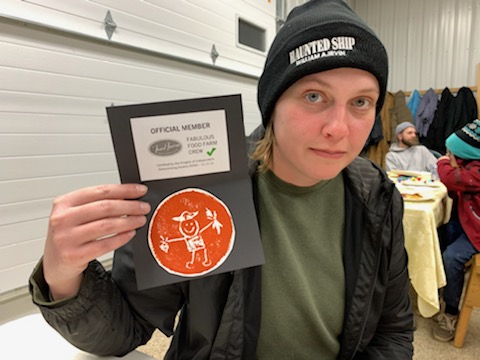
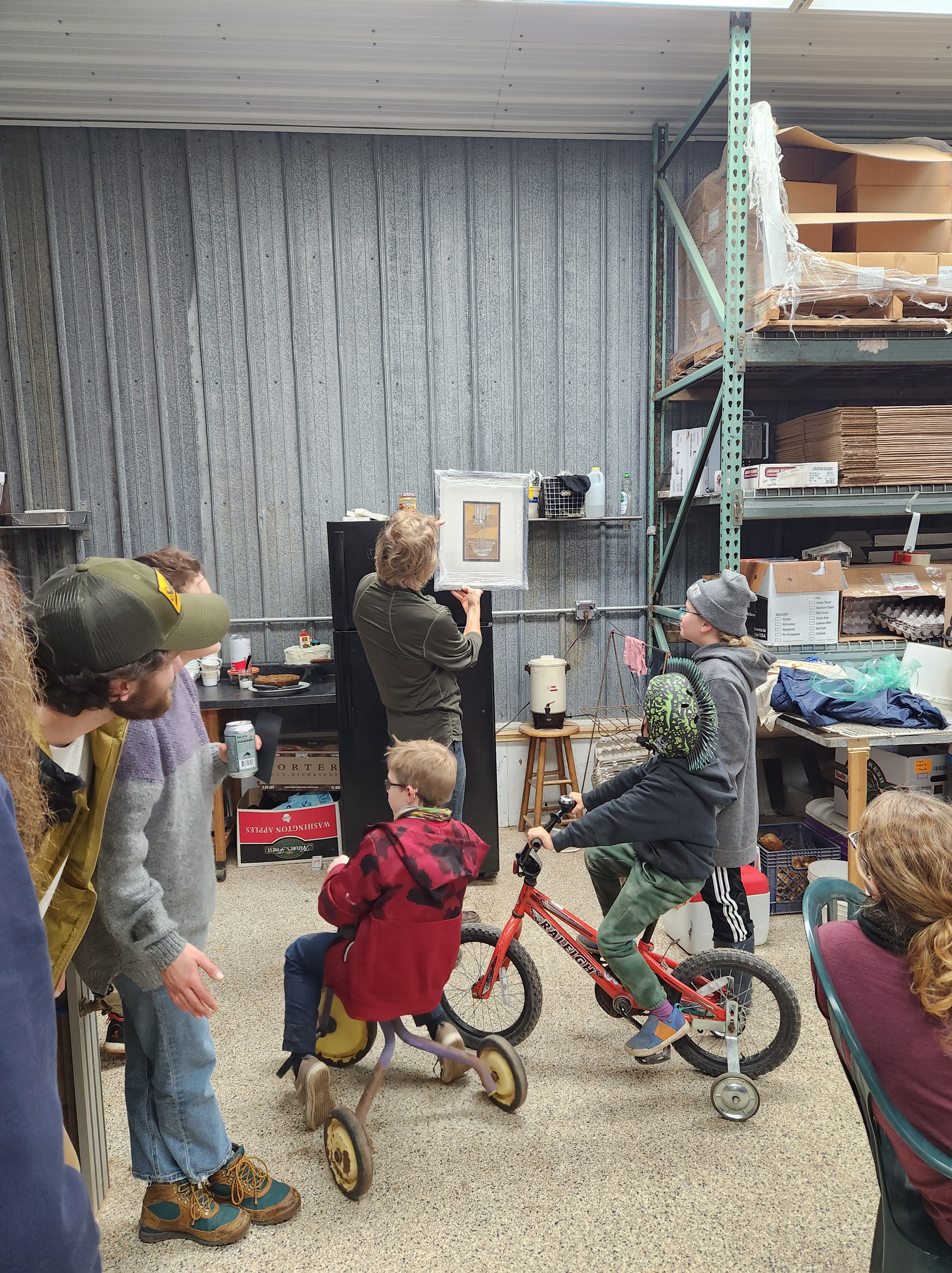
Things have been busy busy busy this fall! The farm crew has been working hard filling up the root cellar with all the produce that will feed the CSA members through the winter and be sold to local restaurants and grocery stores. Our final full crew work day culminated in a party where we honored Dave our farm manager, who has been working at the Food Farm for 30 years! Thank you for being a great leader Dave!

I took the liberty of wearing my Halloween costume to the party, because I felt it was appropriate to what we do at the farm. Can you tell which vegetable I am? If you’re confused, just look at the skirt and ignore the rest. You’ll be getting this vegetable in next month’s CSA box!


In your share this month:

Beets – Brussels Sprouts – Red Cabbage – Carrots – Celery – Fresh Herbs – Onion – Red Potatoes – Yellow Potatoes Delicata Squash Kabocha Squash


On our last full crew work day last Friday, we moved the chickens into their winter home. The girls would get too cold out in the field during the deep winter, so they are moved to an indoor barn area to keep warm. You may wonder how we move 100 chickens from a wide open field to another area of the farm. In the evening all the chickens go into their coop for protection (the metal structure pictured above). Little do the chickens know that their house is actually a trailer on wheels that can be pulled by tractor to a new location. Once the the coop is moved close to the chickens’ winter home, we get them into the building by forming a long line of farm crew, family members and volunteers, and we commence the biannual chicken hugging. Janaki hands each person two chickens which are held in a “bear” hug and walked to the barn where they are loving deposited into their winter coop. As we move them, Farmer John serenades them with a special song he wrote for the occasion!


Balsamic-Roasted Brussels Sprouts

2-3 servings

Ingredients

  • 2 Tbsp extra-virgin olive oil
  • 1.5 Tbsp balsamic vinegar
  • .5 Tbsp. (or more) honey
  • 1 tsp. Diamond Crystal or .5 and a pinch tsp. Morton kosher salt
  • 2 medium garlic cloves, finely grated
  • Freshly cracked black pepper
  • 1lb. brussels sprouts, trimmed, halved, quartered if large
  • Flaky sea salt (as garnish)

Instructions

  1. Place a rimmed baking sheet on middle rack in oven; preheat oven to 425°. Stir together olive oil, balsamic vinegar, honey, salt, and garlic in a medium bowl; season with freshly cracked black pepper. Taste mixture and add more honey if needed. Add Brussels sprouts along with any loose leaves; toss to coat.
  2. Carefully remove baking sheet from oven. Using tongs, arrange brussels sprouts cut side down on baking sheet. Roast until deeply browned underneath and tender, 25–30 minutes. Sprinkle with flaky sea salt.

Based off recipe from Bon Appétit.


Stuffed Delicata Squash with Quinoa, Cranberry and Pistaschio.

Ingredients

Squash

  • Delicata squash, sliced in half lengthwise and seeds removed (recipe for 3, but make as many or few as you like or have, adjust the stuffing quantity accordingly)
  • 1 tablespoon pure maple syrup or olive oil
  • 2 teaspoons thyme, fresh or dried (try substituting with rosemary from your CSA box!)

Quinoa Stuffing

  • 1 cup dried quinoa, rinsed well
  • 1 3/4 cup water
  • 1/2 – 3/4 cup dried cranberries
  • 1/2 – 3/4 cup pistachios
  • 1 shallot, finely diced (try substituting with onion from your box!)
  • salt & pepper to taste

Instructions

  1. Preheat oven to 375 degrees F. Line a baking sheet with parchment or silicon mat.
  2. Prep and roast the squash: Wash and dry squash. Slice each squash in half lengthwise, remove seeds. The seeds should come out easily by scraping the inside of the squash with a spoon. Lightly brush the inside of each squash with a little oil or maple syrup. Sprinkle with a bit of salt and herbs. Place on baking sheet cut side up. Bake in oven for 35 – 40 minutes, or until squash is tender and pierces easily with a fork.
  3. Quinoa Stuffing: In a medium pot, add quinoa and water, bring to a boil, cover, reduce heat to low and simmer for 15 minutes. Remove lid, fluff a fork and let set 10 minutes. Add pistachios, cranberries, shallots, salt, pepper. Toss well to combine.
  4. Assemble: Scoop quinoa into squash halves, place back in the oven for 10 minutes to warm if needed, and serve.

Recipe from The Simple Veganista


Pictures from Harvesting

In preparation for this Winter season.

Cabbage
Winter Squash
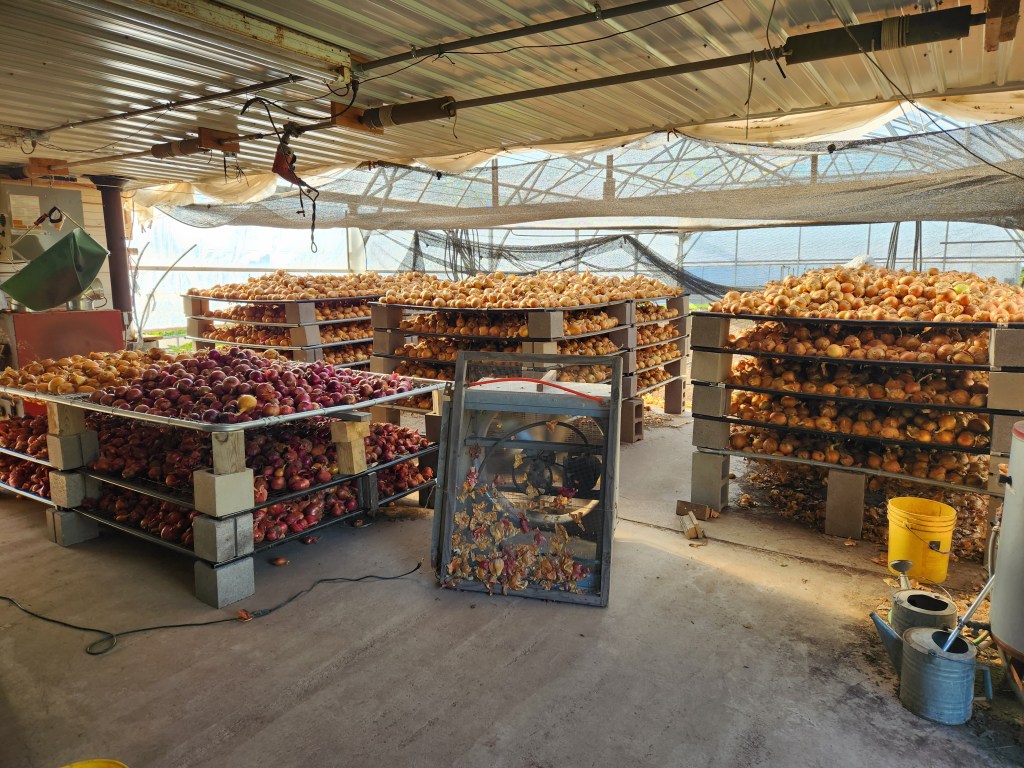
Onions drying
The carrot harvester in action

For the farm crew,

Starr

Summer CSA Week 18, 2022

The last share of the 2022 summer season!

Last week the leaves along the road were golden (pictured left) and this week there are more leaves on the ground than in the trees (pictured right). It is time for us to wrap up our 2022 delivery season. Winter shares will start November 14th. See below what to do with your Summer Share boxes. In your email inbox soon you will find a link to an online survey about how the Summer Share worked for you this season–thanks for taking the time to help us improve!

It has been a pleasure having you as part of the Food Farm family!


In your share this week:

Arugula – Beets – Brussels Sprouts – Red Cabbage – Carrots – Celery – Greens Mix – Onion – Sweet Red Peppers (not hot) – Yellow Potatoes – Rutabaga – Spinach – Winter Squash – Tomato – Thyme


What should I do with my CSA box now that the season is over?

I’m so glad you asked! You have two options:

  1. Bring your own bag or box to your CSA pick-up location. Take your produce and leave the CSA box for us.
  2.  Bring your empty Food Farm CSA share box back at your Please have your box back to your pickup site by next Thursday, October 20th, or bring bags with you to take your veggies home.

Returning your box helps us avoid buying more plastic. 


Beet Arugula Salad

Ingredients

  • 6 medium (2 lbs) beets
  • 5 oz (6 cups) baby arugula, rinsed and spun dry
  • 4 oz or 1/2 cup feta cheese or blue cheese, diced or crumbled
  • 1/2 cup pecans or walnuts, toasted
  • 1/2 cup dried cranberries

Balsamic Vinaigrette

  • 1/2 cup extra virgin olive oil
  • 3 Tbsp balsamic vinegar
  • 1 Tbsp dijon mustard (we love Grey Poupon brand)
  • 1 garlic clove, pressed or finely minced
  • 1/4 tsp salt
  • 1/8 tsp black pepper
  • Try adding minced rosemary and/or thyme

InstructionS

How to Cook Beets in an Instant Pot:

1. Wash and trim the beets so that the stems are about ½-inch long and the roots are no more than about 2 inches long.

2. Place basket insert into instant pot and add 1 cup water. Arrange the beets in a single layer over the insert.

3. Lock the lid and make sure the valve on the lid is pointed at the “Sealing” position. Press the “Pressure Cook” button and cook on high pressure for 15 minutes. (If you have smaller beets, it might take just 10 min to cook. Larger beets, however, will take 20 to 30 minutes to cook.)

Or without an Instant Pot:

1. If you don’t have an instant pot yet: Preheat the oven to 400˚F. Line the bottom of a medium rimmed baking sheet with foil. Wrap each beat in a sheet of foil, wrapping tightly to seal and arrange the beets on the lined baking sheet. Bake in a preheated oven for 1 hour or until largest beet is easily pierced. Remove from oven, unwrap and allow them to cool to room temperature then peel the skins (see Pro Tip Below) and slice into halves and then wedges.

2. Toast 1/2 cup pecans on a dry skillet, tossing frequently until golden and fragrant. Remove from heat and cool to room temperature.

3. Transfer the arugula to a large mixing bowl then add remaining salad ingredients: sliced beets, 1/2 cup feta cheese, 1/2 cup toasted pecans and 1/2 cup dried cranberries.

4. To make balsamic vinagreate, combine all dressing ingredients in a small jar and shake well to combine. Drizzle over salad to taste. If not serving salad right away, shake the dressing again just before drizzling over salad.

Recipe based off Natasha’s Kitchen.


Harvesting cabbages. We love throwing our food!
And there’s lots more harvesting to be done before snow comes!

For the farm crew,

Starr

Summer CSA Week 17, 2022

It’s pumpkin time!

This is the penultimate CSA week! You will be receiving a carving pumpkin with your share this week. The pumpkins do not fit in the box, so please remember to grab your pumpkin when you pick-up. Enjoy carving jack o’lanterns! Try roasting your pumpkin seeds for a bonus tasty snack.

Next week will be the 18th and final CSA box for this season. It has been a joy having you as part of the Food Farm family!

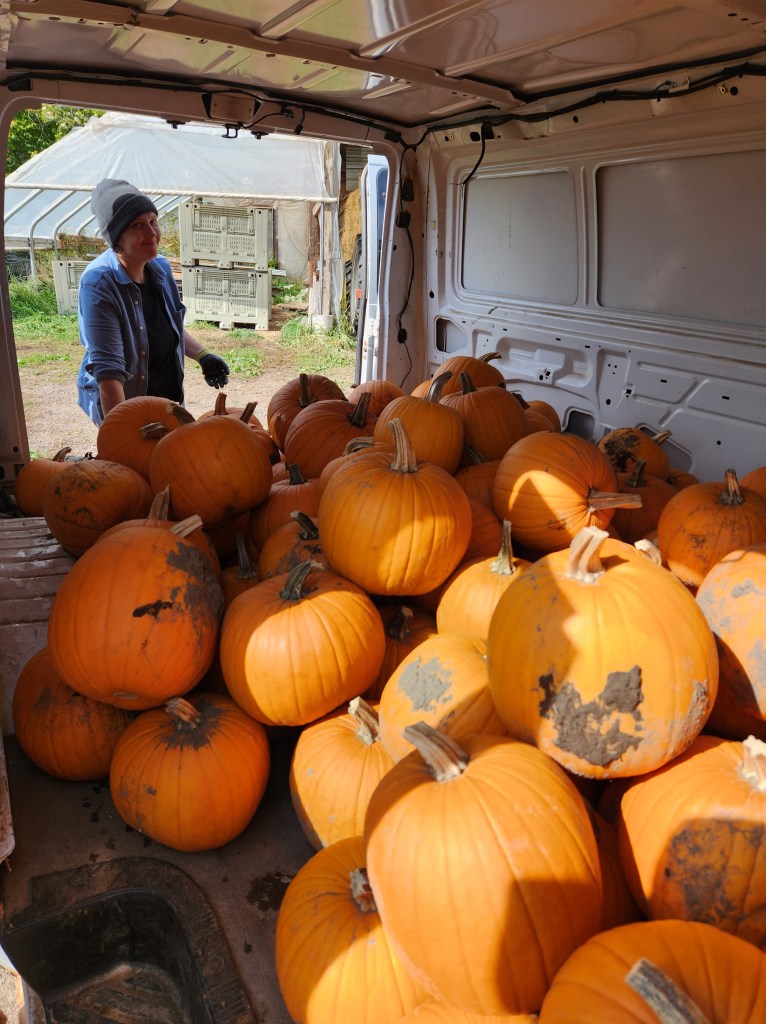
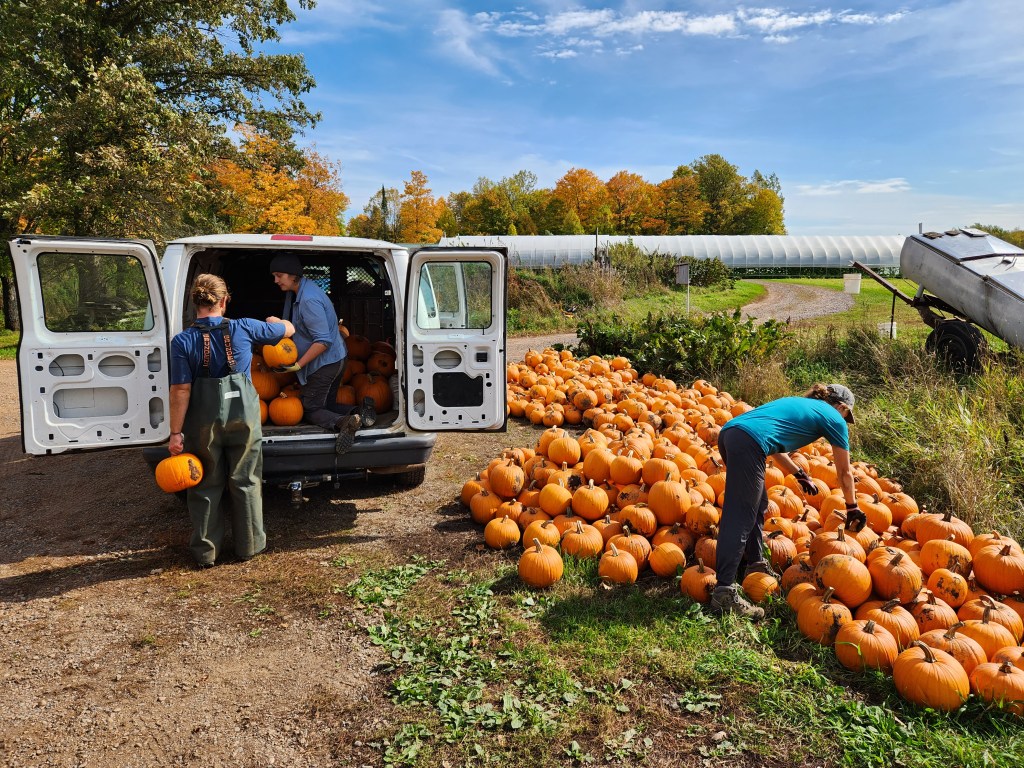
Loading up pumpkins for Monday deliveries.

In your share this week:

Noreaster Beans – Broccoli – Carrots – Garlic – Leeks – Lettuce – Onion – Sweet Red Peppers (not hot) – Jalapeño Pepper (hot) – Yellow Potatoes – Daikon Radish – Delicata and Acorn Squash – Tomatoes – Parsley


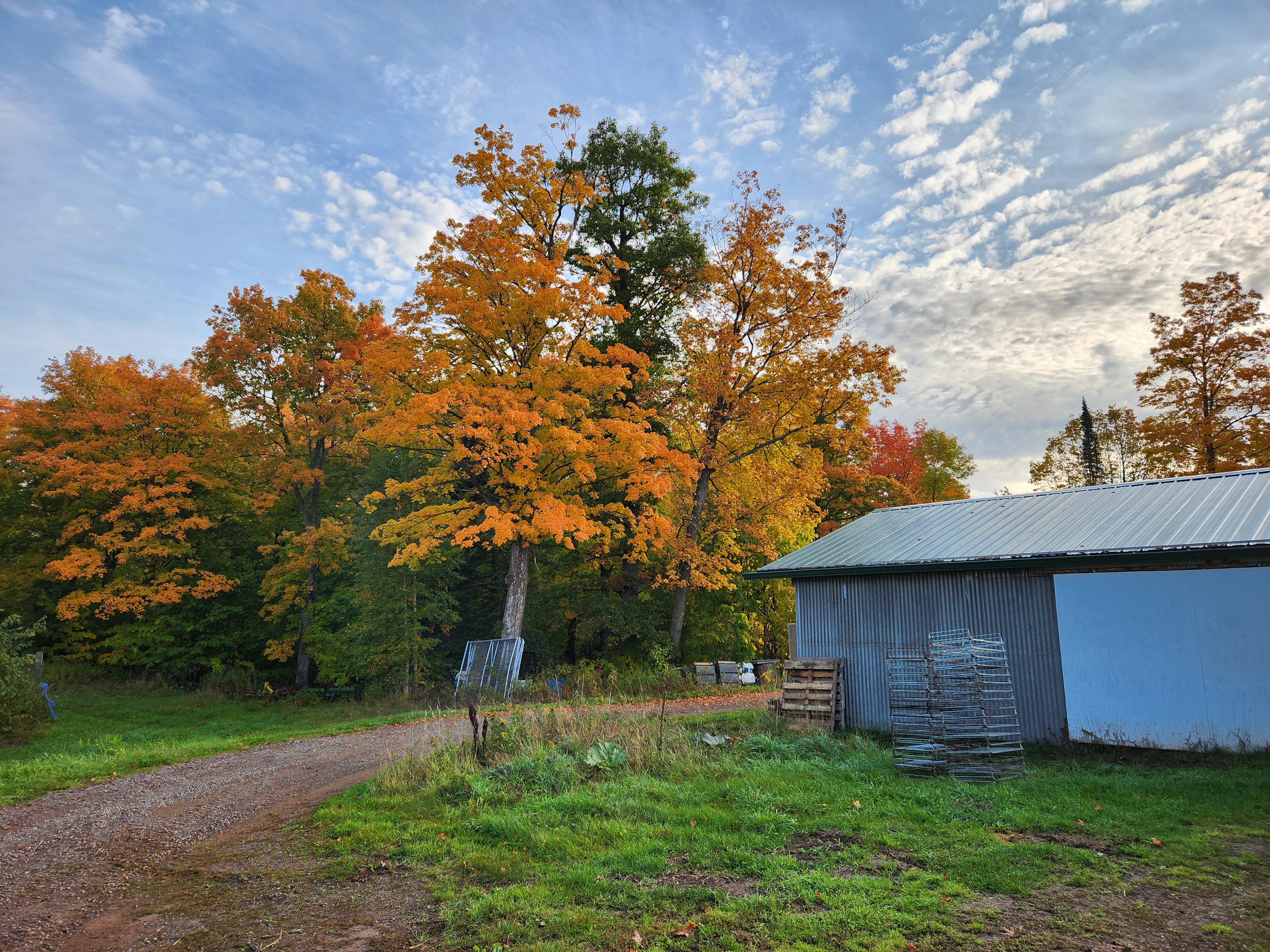
Leaves changing at the farm


Universal Cream of Vegetable Soup

This recipe works for nearly any vegetable the farm grows – from celery to leeks to squash! This is also a great way to use up veggies from last week.

Ingredients

  • 4 tbsp butter
  • 6-8 cups coarsely chopped veggies (suggested starting point: 1 med onion coarsely chopped, 2 leeks, one clove garlic minced, 2 diced carrots,  2-3 stalks celery coarsely chopped, 2 potatoes diced. Add any other veggie like broccoli, cauliflower, or  squash to total 6 cups veggies.)
  • 1/4 cup flour.  
  • 4 cups broth (chicken, pork or veggie)
  • 1/2 to 1 cup milk or cream
  • Salt and pepper to taste

Instructions

  1. Sauté veggies in the butter 10-15 minutes (until tender but not brown).
  2. Add flour and cook for a couple of minutes.  
  3. Turn heat to high and add 4 cups of broth (chicken, pork or veggie), while constantly stirring as the soup thickens.  Bring to a boil.  
  4. Reduce heat to simmer the soup.  Cook, partially covered, until the vegetables are very tender (appx 30 minutes).   Using an immersion blender, food processor, or blender process the soup until smooth.  Add a little water or more broth if the soup is too thick and difficult to process.  
  5. Return soup to the pot and add 1/2-1 cups milk or cream.  Salt and pepper to taste.
  6. Can be served with grated cheese.

Recipe from Deb Rausch


What to do with Daikon Radish?!

This week you will find daikon radish in your box. Daikon is a large peppery variety of radish that is common in Asian cuisines. This crunchy vegetable can be eaten raw, pickled (like in traditional kimchi), or cooked.

Vietnamese Pickled Carrots & Daikon Radish (Đồ Chua)

Ingredients

  • 1/2 lb daikon radish*
  • 1/2 lb carrots*
  • 1 tbsp salt
  • 1/2 c boiling water
  • 5 tbsp granulated white sugar
  • filtered room temp. water
  • 4 tbsp distilled vinegar

Instructions

  1. Peel daikon and carrots, then cut with mandolin slicer medium to small matchsticks. Smaller cuts will pickle faster.
  2. In a large bowl, sprinkle with salt evenly and toss to coat. Soak for 15 minutes.
  3. Rinse thoroughly to remove the salt and in small hand-fulls, squeeze to remove as much moister as you can.
  4. Add to jars, filling almost to the top.
  5. Create the vinegar solution (brine) by boiling water then adding sugar. Mix to dissolve. Add vinegar.
  6. Pour this liquid evenly into your jars. If needed, add extra room temp water to barely fully submerge the veggies.
  7. Screw on the lids, store at room temperature until pickled to your taste, checking every 12 or 24 hours. It usually takes 2-5 days depending on the temperature.
  8. Refrigerate when ready, for up to 3 weeks, or until too sour or veggies lose their crunch.

*You can change the ratio of veggies to your preference and/or scale the recipe up or down depending on how much veg you have to pickle. Just make sure you have enough brine to completely submerge your veggies.

Based off recipe from Hungry Huy.

Check out other daikon recipes here.


For the farm crew,

Starr