Summer CSA Week 13, 2023

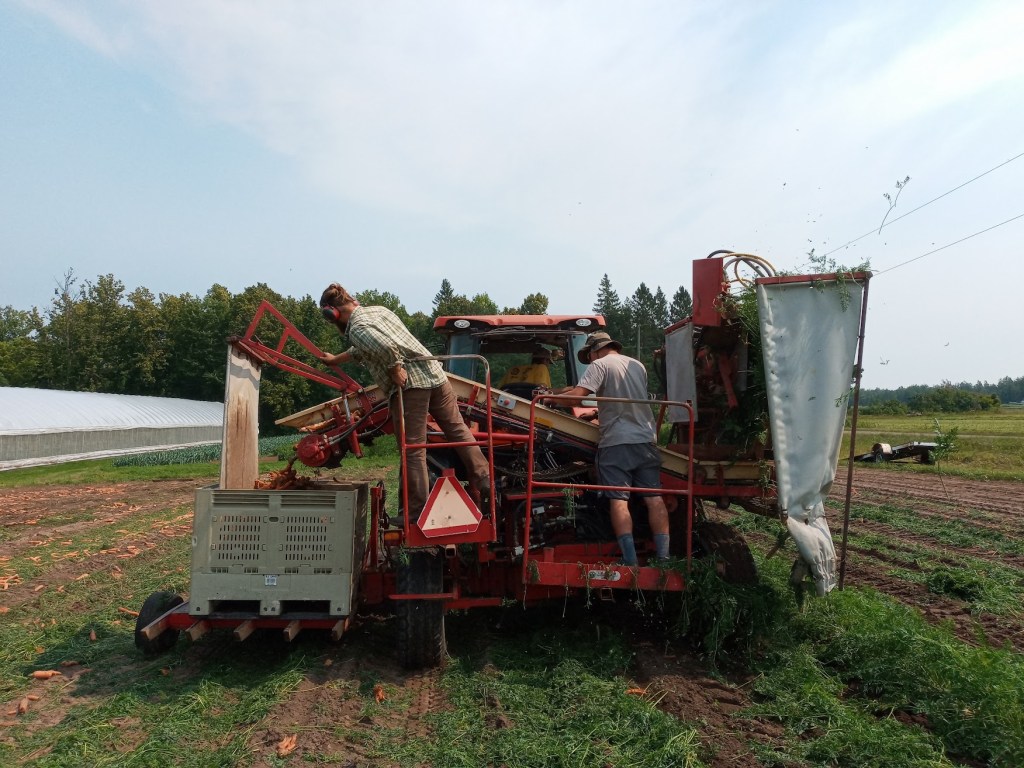
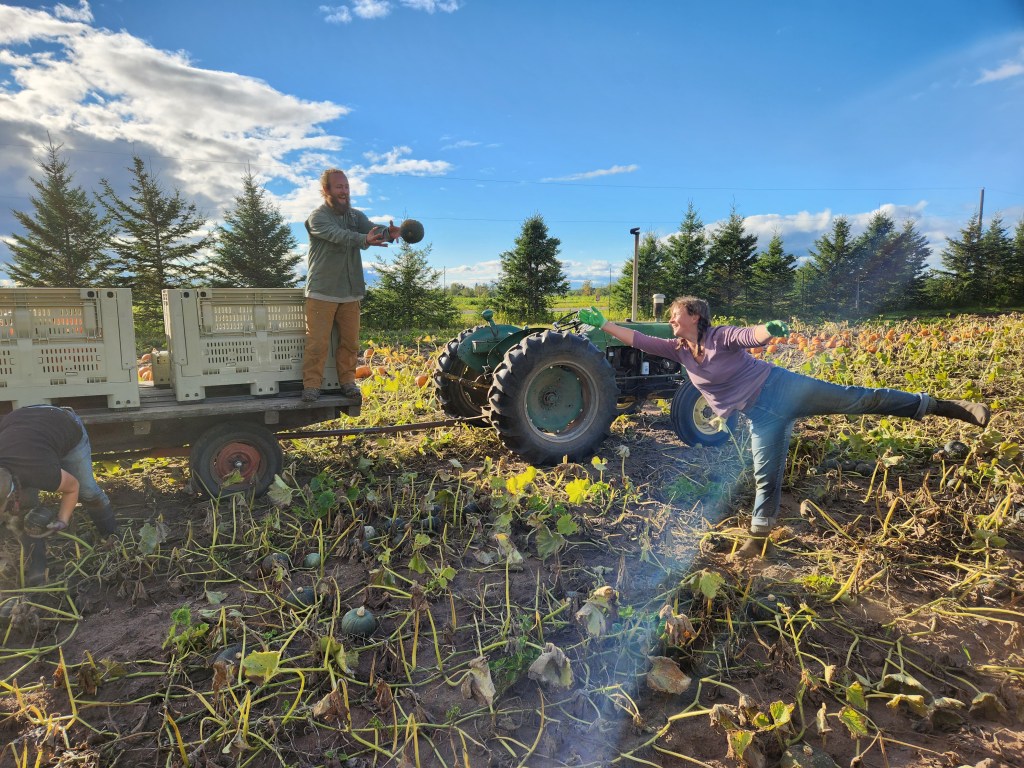
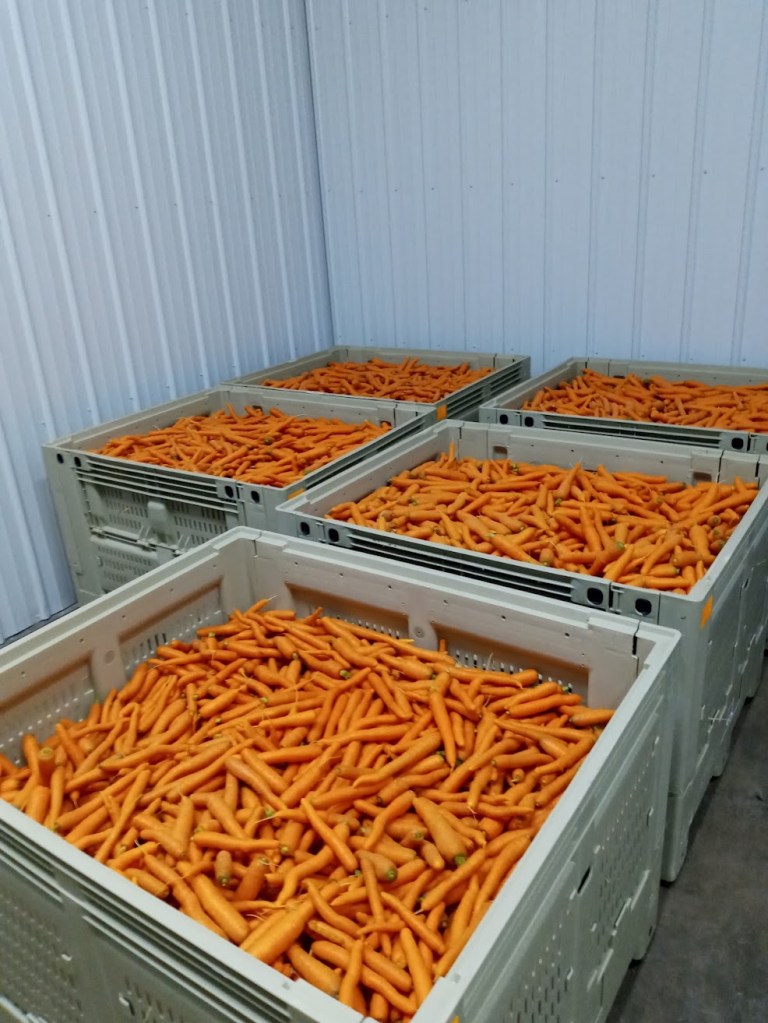
This past week, while harvesting carrots, we found bees… or rather, they found me. Maybe it was the lavender soap I had used that morning, maybe it was my sweet disposition, but whatever it was the bees seemed to swarm to it. Each time the carrot harvester made a lap around the edge of the field with the bee boxes I would pick up a stinger or two. I had just about had enough when Janaki hooked me up with a nice bee keepers hat. After which, I was able to complete the harvest much more comfortably than it had begun.

While I was communing with the bees, most of the other crew members gathered around the barrel washer to sort, clean & taste the carrots as they came from the field. The colder nights we had last week really seemed to help bring out their sweetness, and it was great to get them out of the ground before the heat sapped their flavor!

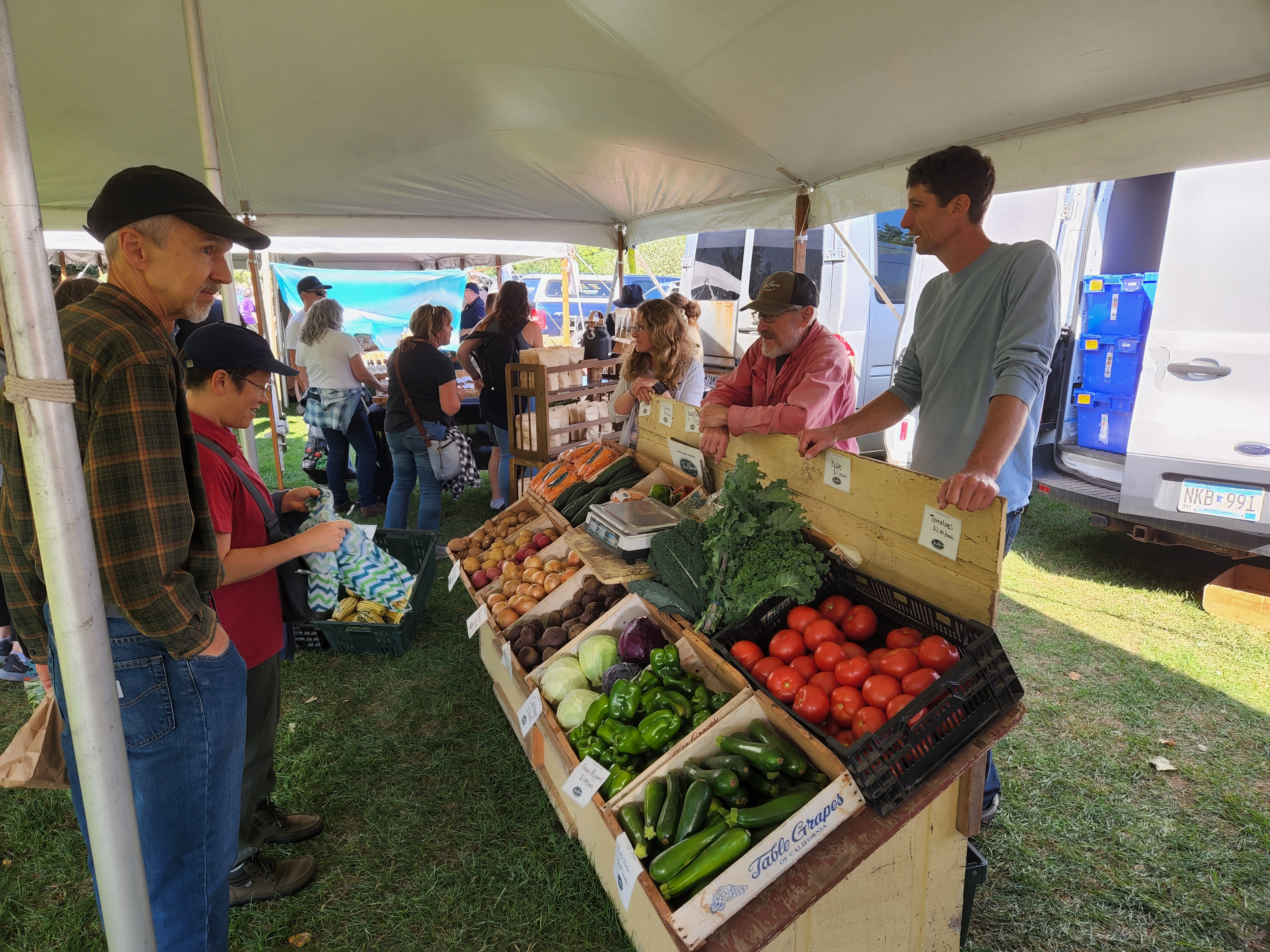
It’s starting to be that time of year when some of the summer crops start to slow down. The outside cucumbers have wrapped up, while the zucchini are hanging on for just a little longer. We were hoping to hoard some melons for the weeks to come, but decided to send what we have for fear of them going bad before they make it to the shares.

We have an exciting new addition this week, however, in the Carmen pepper. Carmen is a unique sweet pepper variety known for its distinctive shape. Unlike the traditional bell pepper shape that most people associate with sweet peppers, Carmen peppers have a more elongated and tapered form, which lead some folks to mistakenly believe they’re hot (there are also green Jalapenos in the share today, and they are hot!) Carmen peppers exhibit their sweetest flavor when they ripen to a vibrant red, but they are also very sweet when they’ve just begun to turn color. Other sweet peppers (like the bell) tend to be more bright and grassy, rather than sweet, in their green state.

In your share this week:

Beans – Beets – Carrots – Cilantro – Cucumbers – Kale – Melons – Onions

Hot PeppersSweet Red Peppers – Potatoes – Tomatoes – Zucchini


When Catherine sent the “best guess” email for the share this week, my mind initially jumped to vegetable enchiladas. This would be a great bounty to prepare something like that, but after melting in the heat all day yesterday, I decided that hot enchiladas was not the move. In an effort to keep the oven off this week, I decided to share a recipe for gazpacho along with a zesty salad dressing that would pair nicely with the kale this week.


Gazpacho, from cookie & kate

2 ½ pounds ripe red tomatoes (about 4 large or 9 small)
1 small sweet yellow onion (½ pound), peeled and cut into rough 1″ chunks
1 small cucumber (½ pound), peeled and seeded
1 medium sweet red pepper, cored and seeded
¼ cup fresh basil leaves, plus extra for garnish
1 large garlic clove, peeled
¼ cup extra-virgin olive oil
2 tablespoons sherry vinegar or red wine vinegar
¾ teaspoon fine sea salt
Freshly ground black pepper

  1. To prepare your veggies, place your blender bowl, a medium serving bowl, and a small bowl on the counter. Core the tomatoes and cut them into rough 1″ chunks. Reserve about ¼ cup of the juicy tomato seeds and place them in your small bowl (we’ll use them as a garnish later). Add half of the tomato chunks to the blender, and the other half to your serving bowl. Add all of the onion chunks to the blender.
  2. Cut off about one-fourth of the cucumber. Finely chop that piece and place it in the small bowl. Slice the rest of the cucumber into rough 1″ chunks, and divide them between the blender and the serving bowl. Cut off about one-fourth of the bell pepper, finely chop that piece, and add it to the small bowl. Slice the rest of the bell pepper into rough 1″ chunks and divide them between the blender and the serving bowl.
  3. To the blender, add the basil, garlic, olive oil, vinegar, salt and about 10 twists of black pepper. Securely fasten the lid and blend, starting on low and increasing to high speed, until the mixture is completely smooth, about 2 minutes.
  4. Pour the contents of the serving bowl (the remaining chunks of tomato, cucumber and bell pepper) into the blender. Fasten the lid and blend for just 10 to 20 seconds, until the ingredients are broken up into small pieces. Stop there, or blend a little longer if you prefer smaller pieces.
  5. Add a small pinch of salt to the small bowl of garnishes, stir, and store it in the fridge. Chill the soup for at least 2 hours, or up to 24 hours.
  6. Before serving, taste, and add additional salt (I sometimes add another ¼ teaspoon) and/or black pepper if necessary. To serve, divide the soup into small bowls or cups, and top with the reserved cucumber and bell pepper. Top with a few tiny or torn basil leaves and a light sprinkle of pepper. Leftover servings keep well, covered and refrigerated, for 3 to 4 days.

Jalapeño Honey Mustard Dressing, from kroll’s korner

1/3 cup olive oil
1/4 cup honey
1/4 cup dijon mustard
2 tablespoons lime juice
1/2 teaspoon lime zest
1/2 jalapeño, diced
2 teaspoons thyme, chopped
Salt & pepper, to taste

  1. In a medium sized bowl, whisk all ingredients together until well combined. Or you can combine all ingredients in a mason jar and give it a nice shake until combined so you don’t have to dirty a bowl! Taste and adjust ingredients as desired. Store in a mason jar or airtight container in the fridge for 1-2 weeks. Makes ~1 cup.

For the farm crew,

Charlie

Summer CSA Week 11, 2023

It’s farm tour time–this Saturday from 10-noon, we’d love to see you!

It’s melon mayhem at the Food Farm! We recently set our new daily harvest record with a whopping 377 cantaloupe. That is more than 800 pounds of weight to pull from the field! We expect them to slow down soon, so enjoy it while it lasts.

In other news that is orange, the crew christened a “new-to-us” carrot harvester. A lucky few climbed aboard as it took its maiden voyage through the fields, while the rest of the crew assembled at the washing stations. There were certainly some wrinkles to iron out, as there often is with any new piece of machinery, but by the end of the week the process seemed to be moving along rather quickly.


Beans – Broccoli – Carrots – Cilantro – Cucumbers – Dill – Greens Mix – Melons

Onion – Bell Peppers – Hot Peppers – Potatoes – Tomatoes – Zucchini


Usually the melons are best enjoyed straight up in all their glory. That way you can fully appreciate the depth of their flavor. This week though, because there are so many, I thought it would be nice to include a recipe with them in it. It does include basil, which we are not sending this week… I’m hoping some of you still have a few sprigs leftover from last weeks share, or can maybe snag some from a friendly neighbor’s garden.

P.S. The vinaigrette would also go great on the greens mix in today’s share 🙂

Melon Caprese Salad, from Half Baked Harvest

Honey Herb Vinaigrette:
1/4 cup extra virgin olive oil
2 tablespoons honey
Juice of 1 lemon
1 tablespoon white balsamic
1 cup fresh basil
1 tablespoon toasted pine nuts
1 pinch flaky sea salt

  1. To make the vinaigrette, combine all ingredients in a blender and blend until smooth.

3 balls fresh burrata cheese
4 cups melon balls
1/2 cup fresh basil leaves
2 tablespoons fresh mint
6 slices prosciutto

  1. Break the burrata in half and place each half in the bottom of a small bowl or glass (about 8 ounces). Over the burrata, layer the melon balls, basil, and mint. Top with a slice of prosciutto. 
  2. At this point the salad can be covered and placed in the fridge for up to 6 hours. 
  3. Before serving, drizzle over the vinaigrette.

Blistered Green Beans w/ Tomato-Almond Pesto, from Bon Appétit

1 1/4 cups diced tomatoes
1/8 cup unsalted, roasted almonds
1 garlic clove, grated
1 tablespoons olive oil
1 tablespoons Sherry vinegar or red wine vinegar
1/2 teaspoon paprika
Pinch of cayenne pepper
Kosher salt, freshly ground pepper
1 1/2 teaspoons vegetable oil
1 pounds green beans, trimmed

  1. Preheat oven to 450°F. Roast tomatoes on a rimmed baking sheet, turning once, until blistered and lightly charred, 15-20 minutes. Let cool slightly. Finely chop almonds in a food processor. Add garlic, olive oil, vinegar, paprika, cayenne, and half of tomatoes; pulse to a coarse pesto consistency. Season with salt and pepper.
  2. Heat 3/4 tsp. vegetable oil in a large skillet over medium-high. Add half of beans; cook, undisturbed, until beginning to blister, about 2 minutes. Toss and continue to cook, tossing occasionally, until tender, 7–9 minutes; season with salt and pepper. Spread beans out on a platter; let cool. Repeat with remaining vegetable oil and beans.
  3. Toss beans with pesto; season with salt and pepper if needed. Add remaining tomatoes and transfer to a platter.

Summer-Vegetable Casserole, from Food & Wine

Extra-virgin olive oil, for drizzling
1/2 pound potatoes, peeled and sliced 1/4 inch thick
Salt and freshly ground pepper
1 bell pepper, thinly sliced
1 small onion, thinly sliced
1 large garlic clove, minced
1 teaspoon thyme leaves
1/2 pound tomatoes, sliced 1/4 inch thick
1 medium zucchini, sliced on the diagonal 1/4 inch thick
3 tablespoons freshly grated Parmigiano-Reggiano cheese

  1. Preheat the oven to 350°. Coat a 9-inch baking dish with olive oil. Spread the potatoes in the dish in an even layer; drizzle with oil and season with salt and pepper. In a bowl, combine the bell pepper, onion, garlic and thyme and season with salt and pepper. Arrange two-thirds of the bell pepper mixture over the potatoes and drizzle with oil. Top with the tomatoes and the zucchini; drizzle with oil and season with salt and pepper. Cover with the remaining bell pepper mixture and sprinkle with the cheese.
  2. Cover the casserole with foil and bake for 40 minutes. Increase the oven temperature to 425°. Uncover the casserole and bake for about 20 minutes longer, until the vegetables are tender and glazed on top. Let stand for 10 minutes. Serve warm.

For the farm crew,

Charlie
Summer CSA Week 4, 2023

Greetings & Happy Fourth of July!

It’s a big week for us here at the farm as the first carrot harvest is underway. If there is one crop we are “known for” this could be it. Carrots have been a Fisher-Merritt staple since before the Food Farm was located in Wrenshall; back to when John and Jane were farming in Holyoke, MN. Thats over 48 years of experience and artistry!

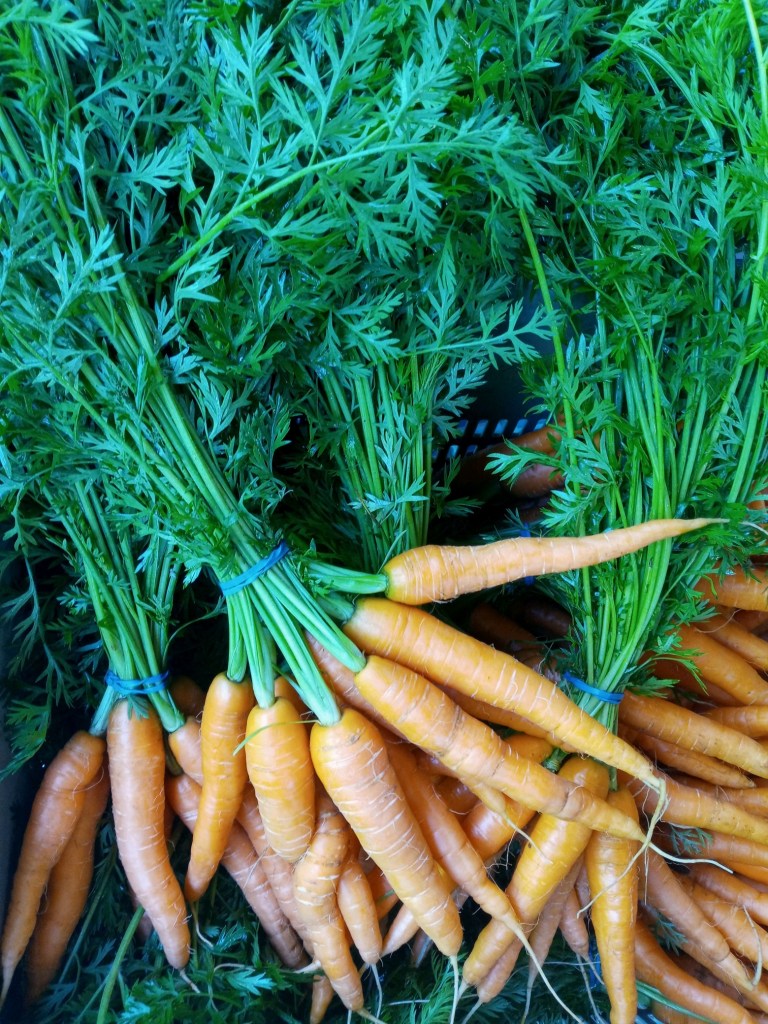
These particular carrots are grown in our greenhouses and still feature their tops (which make a great addition to pesto). The variety is called “Ya Ya” and have been meticulously selected for their summer sweetness. Carrots always seem to taste better in the fall as they turn starches into sugars as a defense mechanism against the colder temperatures. It can be tough to find a variety with that desirable sweetness during the heat of the season, but these are always tender and sweet from the greenhouse.


In your share this week:

Cauliflower – Carrots – Chard – Cucumber – Garlic Scapes – Green Onions –

Napa Cabbage – TurnipsLettuce


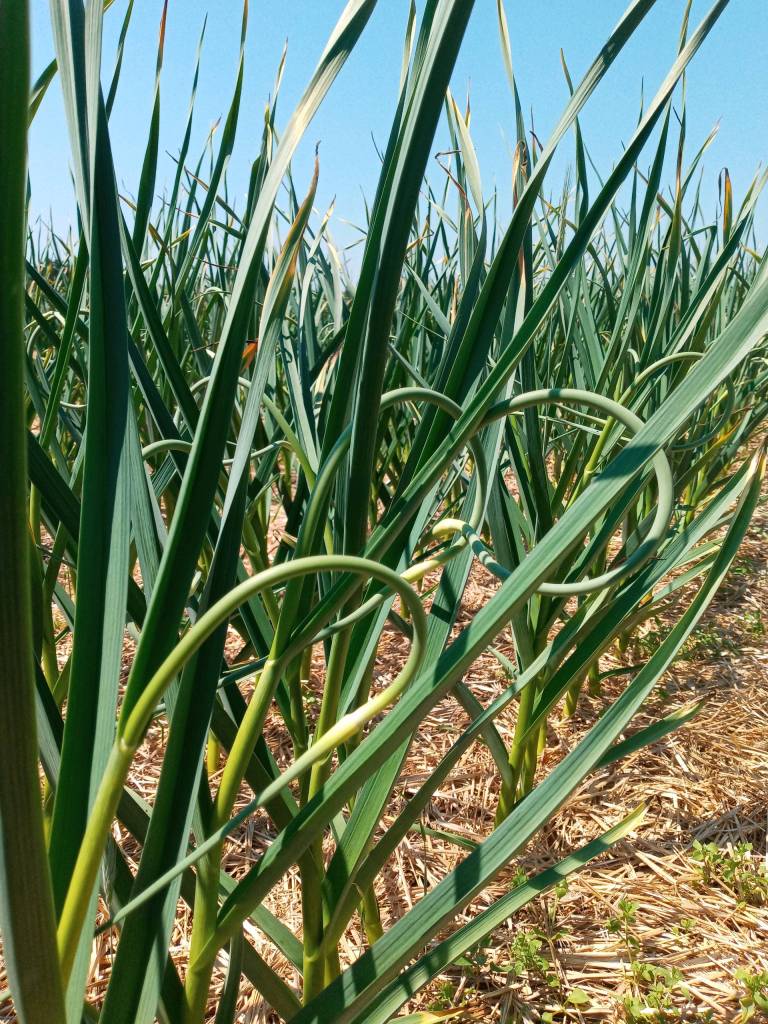
Another exciting addition to the boxes this week is garlic scapes. Garlic scapes emerge from the garlic top and start to curl and twist as they grow. It is important to harvest them before they straighten out and become woody, as this will ensure their optimal flavor and texture. Typically, garlic scapes are ready for harvest when they reach a length of 8 to 12 inches, although this may vary depending on the garlic variety. Harvesting garlic scapes at the right time not only allows you to enjoy their unique flavor but also encourages the garlic plant to direct its energy towards bulb development, resulting in plump and flavorful garlic cloves at harvest time.

Raw garlic scapes pack a robust and assertive garlic flavor, with hints of onion and a pungent, herbaceous quality, yet they offer a milder spice compared to raw garlic cloves. However, when cooked, these scapes transform into a delightful treat, revealing a sweeter profile akin to roasted garlic. In essence, their taste embodies a harmonious fusion of garlic and chives.

Garlic Scape Pesto, from NYT Cooking

yields ~ 1 Cup

  • 1 cup garlic scapes, roughly chopped (about 10 to 12 scapes)
  • 1/4 cup raw sunflower seeds
  • 1/2 cup extra virgin olive oil
  • 1/4 cup Parmesan cheese
  • 1/2 cup basil leaves
  • Juice of one lemon
  1. Place the garlic scapes in a food processor and pulse for 30 seconds.
  2. Add the sunflower seeds and pulse for 30 seconds. Scrape down the sides of the bowl.
  3. Add the olive oil and process on high for 15 seconds.
  4. Add the Parmesan cheese and pulse until the ingredients are combined.
  5. Add the basil and lemon juice, and process until reaching the desired consistency.
  6. Add salt to taste and serve immediately.

Napa Cabbage & Cucumber Slaw, from Bon Appétit

4 servings

  • 6 cups thinly shaved or slices cucumbers and/or Napa Cabbage
  • 1/4 red or white onion, very thinly sliced
  • 1/4 cup seasoned rice vinegar
  • 2 tablespoons extra-virgin olive oil
  1. Combine vegetables and onion in a medium bowl; season generously with salt. Let sit until they start to release their water, 8–10 minutes, then begin to massage, gently at first so they don’t break, then harder as they begin to expel their liquid, until softened to about the texture of coleslaw. Pour off all excess liquid and add vinegar and oil; toss to coat. Taste and season with more salt if needed.

Do Ahead: Slaw can be made 3 days ahead. Cover and chill.


As the summer scorches along, more and more people will be breaking out the grills. Here’s a friendly reminder that this doesn’t always mean brats and burgers! Veggies are also delicious when grilled – especially when paired with a yummy dip.

Veggie Dunkin’ Dip Ideas:

Hummus or Tzatziki


For the farm crew,

Charlie
April Winter Share

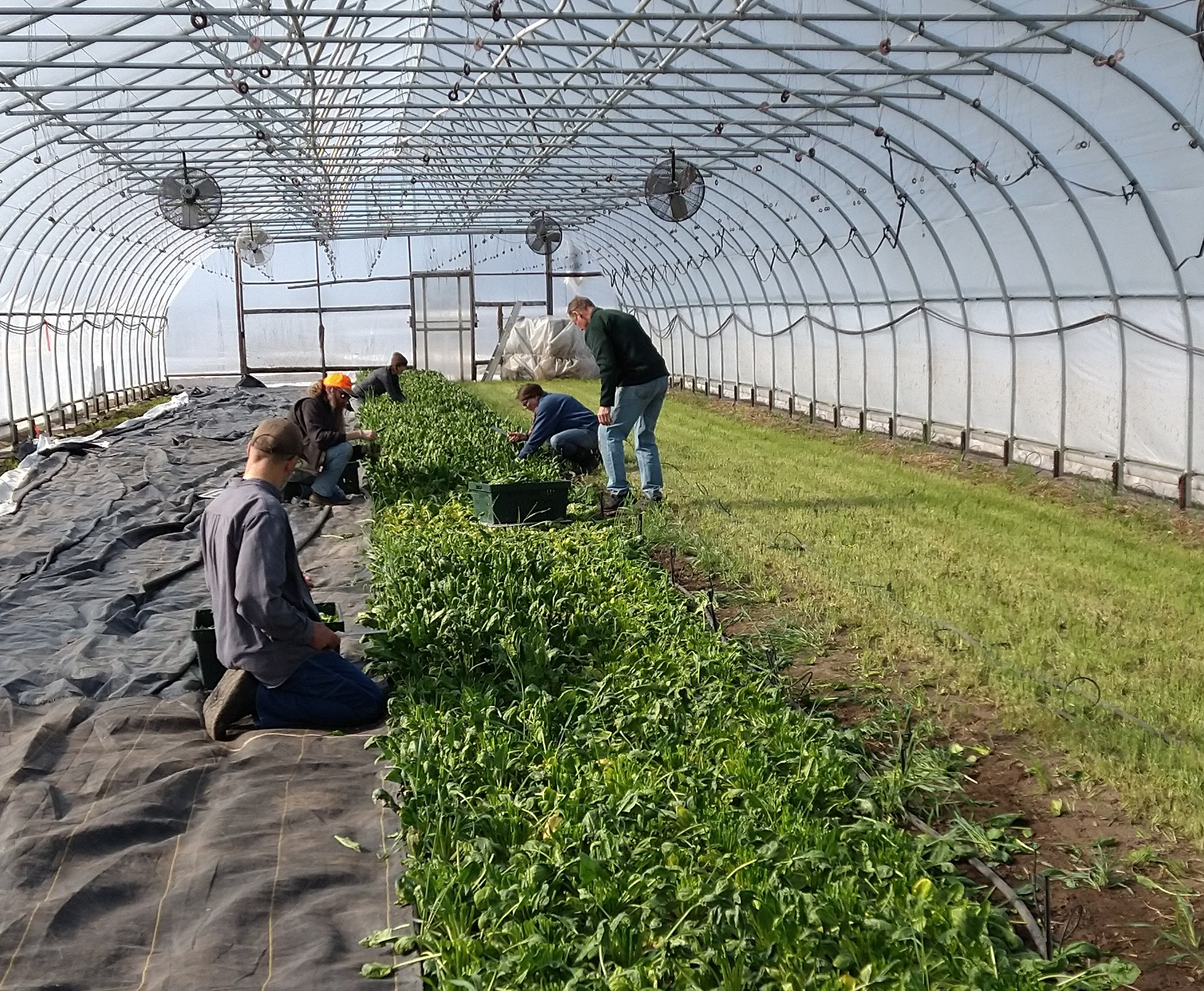
Greetings! The outside world has temporarily regressed into winter, but things are moving quickly at the farm. We have a full crew lined up for this season, the root cellar is nearly empty, and the greenhouse is filling up with onions, tomatoes, peppers, broccoli, cabbage, and cauliflower transplants. Even with as late of a spring as this, there’s still a good chance that we’ll be able to start the Summer Share season on time. We’re fortunate to have invested a lot in greenhouse space for early crops, and the combination of drainage tile and little to no frost over winter means that we could be ready to get in the field fairly quickly with another stretch of sun and heat.

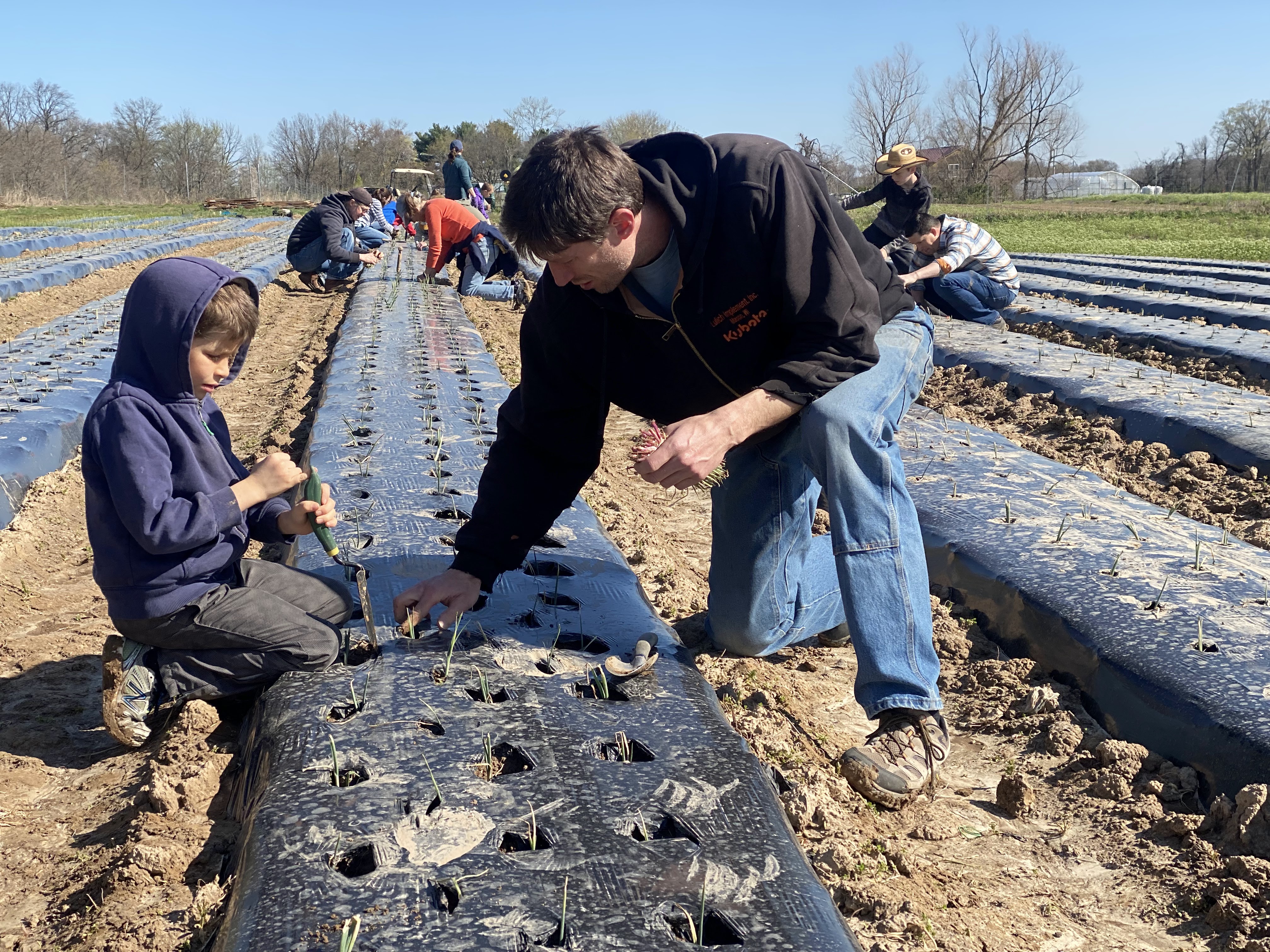
Speaking of sun and heat, we were able to sneak in a quick getaway to southern Illinois while the kids were on spring break last week. It was delightful to enjoy some sunshine and warm weather, and what do farmers do when they’re on vacation? Farm work, of course! Our friends Segue and Amy of Three Rivers Farm had a work party over the weekend, so we got to help plant onions with them and had a good time talking with their CSA members as we worked.

It may seem like that scene is a long way off for us, but things can turn around quickly and we’re hopeful for a great start to the season. Ultimately, we’re at the mercy of mother nature but we feel pretty well prepared for whatever the season brings. Think sun!

For the farm crew,

Janaki

In your share today:  

Beets — Orange and Purple Carrots — Garlic — Onions — Red and Russet Potatoes Rutabagas — Shallots — Spinach

Allo Palak (Spinach and Potatoes)
modified from NYT

  • 1/4 cup neutral oil
  • 1 large yellow onion, finely chopped
  • 1.5 tsp grated ginger
  • 1 clove garlic, finely grated
  • 1 tsp cumin seeds
  • 3 Thai green chilis, sliced
  • 1 tsp red pepper flakes (or to taste!!)
  • 1/4 tsp turmeric powder
  • 1 cup crushed tomatoes
  • 1/5 tsp salt
  • 3 medium potatoes cut into 1-inch cubes
  • 1 lb fresh spinach, chopped
  • 1/2 tsp garam masala

1.  In a large pot, heat oil and onion, ginger, and garlic.  Stir for 30 seconds.  Add cumin, green chilis, pepper flakes, and turmeric.

2.  Add tomatoes and salt.  Stir and continue cooking until the tomatoes are jammy and the oil has separated (3-5 minutes).

3.  Stir in potatoes.  Add 1/2 cup water, bring to a boil and lower heat to medium.  Cover and cook for 12 minutes or until potatoes are almost done.

4.  Add spinach and turn the heat to high.  Once the mix begins to bubble, lower the heat to medium, cover and simmer until potatoes are cooked through, stirring occasionally, 7-10 minutes.  Top with garam masala and serve with rice.  

March Winter Share

Whew, what a winter! Onion seeds are already up, and the greenhouse is tucked in a cozy blanket of snow, but we’re definitely ready to see the banks recede. The first broccoli plants are scheduled to go in the field in just six weeks so we’re getting a little bit antsy! Ellis pretty much summed up our feelings right here: https://photos.app.goo.gl/bhbWAt1VpbyWUFyq8

We are still hiring, so please have folks reach out if they’re looking for some good work this summer.

For the farm crew,

Janaki

In your share today:  

Beets — Green Cabbage — Orange and Purple Carrots — Onions — Parsnips Baby Red, Fingerling, and Yellow Potatoes – Rutabagas

Indian spiced pasties

Dough

  • 1 cup boiling water
  • 1 cup shortening
  • 3 cups flour
  • 1 tsp salt

Stir shortening and water in a large bowl until the shortening is melted.  Slowly add flour and salt while stirring.  When the dough is soft, cover and refrigerate for 1.5 hours.  

Filling

  • 2 lbs potatoes, peeled
  • 1 lb rutabaga, peeled
  • 1/2 lb carrot, peeled
  • 2  cups cabbage, finely chopped
  • 1 finely minced onion
  • 2 medium cloves garlic, minced
  • 1.5 cups frozen peas
  • 1 tablespoon freshly grated ginger
  • 1 tsp mustard seeds
  • 1 tsp ground coriander
  • 1 tsp ground roasted cumin seeds
  • 1/4 tsp cayenne pepper
  • 1 tsp salt
  • 2 tablespoons lemon juice

Cube potatoes, rutabagas, and carrots (1/4″ cubes- all veggies to similar size to ensure even cooking).  Mix all filling ingredients in a large bowl and stir.  

Assembly

On a floured surface, cut the dough into 10 equal portions.  Roll one portion into a 8-10″ (appx) circle.  Heap 1-1.5 cups of filling onto one half the dough.  Fold the dough over (to make a half-moon shape) and crimp edges with fingers or a fork.  

Arrange samosa/pasty on ungreased baking sheets.  Freeze or bake.

Bake appx 1 hour at 350degrees

February Winter Share

What a difference a month makes! We know that there’s a lot more of winter left, but it feels like spring is just around the corner. Annie and the kids and I are getting away for a family trip to Washington, DC this week to visit friends and family. We’re really looking forward to having a little time away before we open up the greenhouse for onion planting in just two weeks!

Share signups are going well, we’re about 90% full for the summer season, but there’s still a chance to get a spot if you haven’t done it yet.

We are looking for a couple of seasonal farm crew members for the upcoming season, if you know of someone who is interested in good, meaningful work with a team of great people, have them reach out, I’d love to talk with them! https://foodfarmcsa.com/employment/

Unfortunately, it looks like the weather won’t be cooperating for curling on Wednesday, but we’re still planning to bring in a bunch of rutabagas to give away at Wild State Cider on Wednesday evening, and we’d love to see you! If you have friends or family who are interested in the farm, send them down to meet us and answer any questions they might have about being a member.

Enjoy the sunshine! For the farm crew,

Janaki

218-384-4421

In your share today:  

Beets — Green Cabbage — Orange and Purple Carrots — Garlic — Onions — Parsnips Red and Russet Potatoes –Delicata Squash

Valentine’s Casserole (or Hotdish for you true Minnesotans)

  • 5 cups cream or 1/2-n-1/2 (see Tips)
  • 5 cloves garlic, minced
  • 2 cups Parmesan cheese (see tips)
  • 1 tsp cornstarch
  • 1 lb dark leafy greens (kale, collards, or finely chopped green cabbage)
  • 3 cups chopped potatoes and squash (total)
  • 2 cups chopped yellow onion
  • 8 slices bacon, diced (omit if vegetarian)
  • 1/2 cup breadcrumbs
  • 1 Tbsp olive oil

1.  Preheat oven to 350°.  Bring first two ingredients to a boil over medium high heat. Reduce heat to low, and simmer 30 minutes or until reduced by half. Stir in 1 cup of cheese.

2.  Stirred together corn starch and 1 tablespoon of water. Whisk into cream mixture until thickened.

3.  Wash and dry greens.  If using collards, cook in boiling water until tender (5minutes).

4.  Cook bacon in large skillet over medium high heat, stirring often When crisp, add onion, cook five minutes or until tender. Add the diced vegetables and saute for another 5 minutes.  Stir in the greens and cook for three more minutes.  

5.  Mix the cream mixture with the vegetables and pour into a lightly greased 11 x 7 baking dish. Stir the breadcrumbs, remaining cheese, and olive oil together and sprinkle over the casserole.

6.  Bake for 35 to 40 minutes until the diced vegetables are cooked thoroughly and the breadcrumbs on top are golden brown. Let stand for five minutes before serving.

Tips:

Try fat free 1/2-n-1/2 rather than milk or the sauce can curdle.

Sharp cheddar also works well but use some Parmesan for the topping.

Winter CSA Box 2, December 2022

Garlic ready to go out in shares.

Happy December! We hope you’re keeping warm and enjoying the holiday season.


In your share this month:

Chioggia Beets – Orange and Purple Carrots – Green Cabbage – Garlic – Yellow and Red Onions – French Fingerling & Russet Potatoes – Sunshine and Delicata Squash


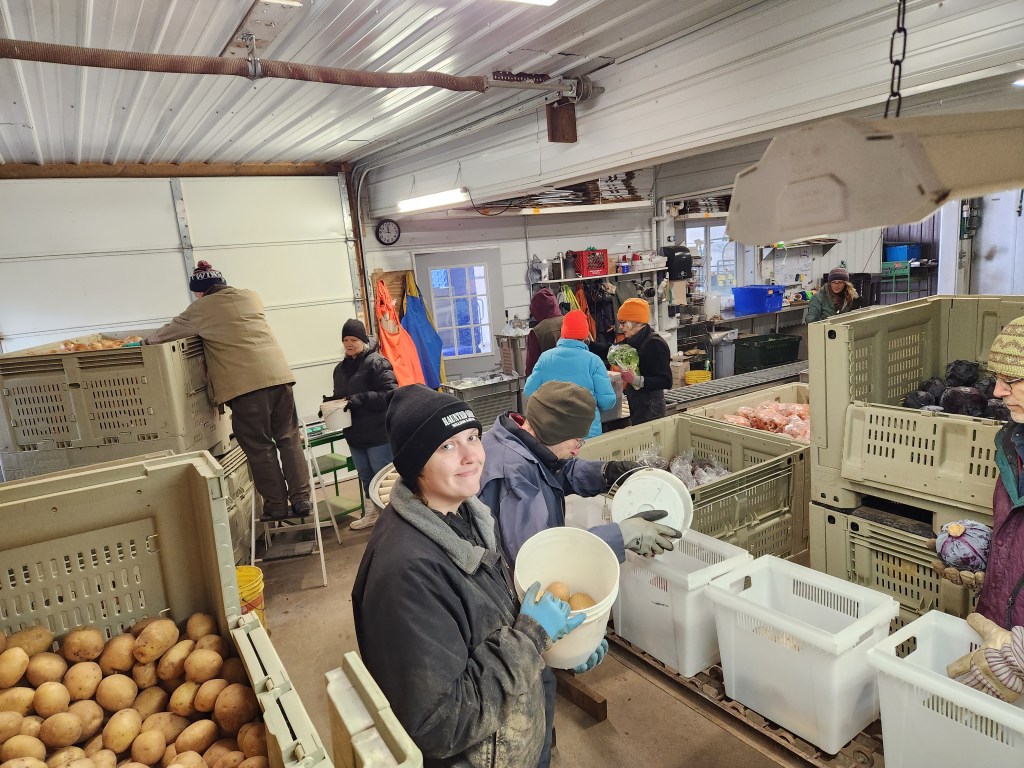
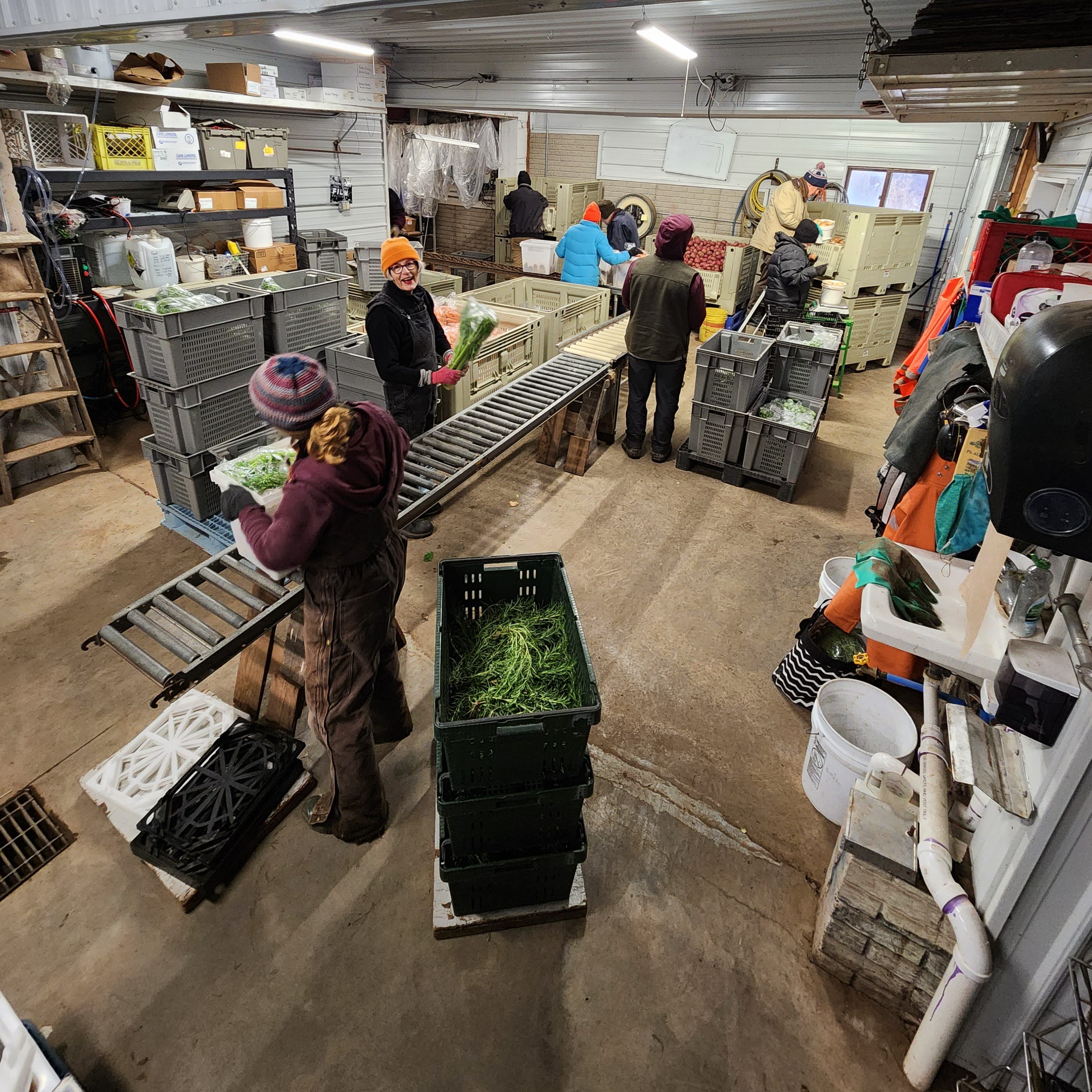
Packing winter share boxes is quite a production! We have all hands on deck and a conveyer table set up that reaches all the way across the pack house.


Egyptian Stuffed Cabbage

Serves 10

Ingredients

Cabbage braising

  • 1 head of cabbage
  • 2 tablespoons salt
  • 1 tablespoon ground cumin

Stuffing

  • 1 tablespoon vegetable or olive oil
  • 1 large onion, finely minced
  • 1-1.5 pounds lean ground beef
  • 1 tablespoon minced garlic
  • 1 can, tomato paste (6 oz.)
  • 3 cups Egyptian rice, or Goya medium grain rice, washed until water is clear
  • 2 tablespoons salt
  • 2 teaspoons ground black pepper
  • 1 teaspoon allspice (optional)
  • 1+ can, crushed tomatoes (28 oz)
  • 1 cup finely minced flat leaf parsley
  • 1 cup finely minced cilantro
  • 1 cup finely minced dill
  • 1 tablespoon Better Than Bullion Chicken flavor
  • 2 tablespoons butter

Instructions

Cabbage braising

  1. In a large, heavy pot, fill with water until about 2/3 full. Add salt and cumin, cover and bring to a boil. 
  2. Remove any wilted or damaged leaves from the cabbage. Turn cabbage upside down (with stem facing you) on a cutting board. Make deep gashes into the cabbage leaves as close to the stem as possible in a circular fashion. Hold the stem and gently pull apart the leaves, one at a time, careful not to rip them. 
  3. Place leaves 2-3 at a time in the boiling water. Allow to cook for 2-3 minutes until it becomes less stiff and just wilted. Do not overcook. Remove and place in a colander. 
  4. Gently peel leaves from the cabbage and cook in small batches. At some point, the cabbage will become too compact to remove the leaves. Hold the cabbage stem and gently lower half the remaining cabbage in the water. With your other hand, you can begin loosening the cabbage leaves one by one into the water. Once you have loosened 2-3 leaves, remove the head and set aside. Repeat until most of the cabbage is cooked. It’s ok to stop at the deepest part of the cabbage, as the leaves become too crinkly to be rolled. 
  5. Allow cabbage to cool. Meanwhile, prepare the stuffing mix. 

Stuffing

  1. In a large Dutch oven or non-stick pot, add the vegetable oil and bring to medium high heat. 
  2. Add the onions and sauté until translucent. If using, add the beef all at once, mixing with the onions and breaking up the clumps. Sauté until browned. 
  3. Add the garlic and mince until fragrant (about 1 minute). Add all of the tomato paste, stirring constantly for 3-4 minutes (the texture will change and become less of a formed paste). Add salt, pepper, and all-spice.
  4. Add the can of crushed tomatoes and stir until evenly mixed. Turn off the heat. 
  5. Pour in all of the washed rice, stirring until mixed. Now add all of the herbs and stir until everything is combined. If necessary, adjust the salt. Transfer to a large mixing bowl and allow to cool. 
  6. Prep the cabbage leaves for rolling. Set up a clean work area with a cutting board. Take one cabbage leaf at a time and spread it out over the board. Cut out the thick stem, reserve for later. With the flat leaf on the board, cut it into 2-3 even pieces that can be rolled in a straight line, about 2 inches wide x 3-5 inches long. See Photo. Make a stack of leaf segments on a clean plate. 
  7. Prepare the pan for cooking: generously drizzle vegetable or olive oil at the bottom of the Dutch oven or nonstick pot. Take several of the cabbage stems and cover the bottom to prevent the rolled leaves from scorching on the bottom layer. 
  8. Roll the leaves: place an entire leaf segment on the cutting board. Leaving 1/2 inch of space at one end, place a line of the stuffing mixture about 1/2 inch wide inside the leaf. Gently roll it up (important to roll it securely but not too tightly, as the rice still needs to expand). See photo. 
  9. Layer the rolled cabbage leaves in one direction until one layer is completely filled, then top with another layer at a ninety degree angle to the first one to prevent the rolled cabbages from unraveling. Continue rolling and layering at 90 degrees until all of the cabbage leaves are rolled (extra rice mixture may remain). 
  10. In a small saucepan, bring 1 cup of crushed tomatoes + 1 1/2 cups of water to a boil. (Alternatively, you can use 2 1/2 cups of water and 1/2 can of tomato paste). Add 1 tablespoon of butter and 1 heaping tablespoon of bullion paste and boil until dissolved. 
  11. Place the pot with the rolled cabbage on medium heat. Pour all of the water/tomato mixture on the rolled cabbages. Cover and cook on medium low for 45 minute-1 hour. Do not uncover for the first 30 minutes, then begin checking if the rice is cooked on the top layers. If it appears too dry, add in 1/2 cup of water and continue to check. The cabbage is done with the rice is completely cooked and the liquid has been absorbed. 
  12. Turn off heat. Add small pats of butter to the top. Cover. Allow to rest for 15 minutes. Enjoy, or: 
  13. Place a large plate over the opening of the pot. Carefully invert the entire pot and let rest for 5-10 minutes. Gently remove the pot and serve immediately.

Recipe from Food52.


Archived Recipes

You can now search previously posted Food Farm recipes using the “Tag Cloud” below. If you click an ingredient below it will take you to a list of the newsletters that include a recipe using that ingredient. Larger text means there are many recipes using that ingredient while smaller text means fewer recipes have been tagged so far.


Arugula Basil Beet Bell Pepper Broccoli Brussels Sprout Brussels Sprouts Cabbage Carrot Cauliflower Celery Cilantro Cucumber Delicata Squash Dill Dressing/Sauce Egg Garlic Garlic Scape Green Bean Green Onion Jalapeno Kale Leek Lettuce Mint Napa Cabbage Onion Parsley Parsnip Pepper Potato Radish Red Onion Rutabaga Scallion Shallot Spinach Squash Thyme Tomato Turnip Winter Squash Yellow Onion Zucchini


We hope this will help you explore new and old recipes and take advantage of the produce in your share!


For the farm crew,

Starr

Summer CSA Week 17, 2022

It’s pumpkin time!

This is the penultimate CSA week! You will be receiving a carving pumpkin with your share this week. The pumpkins do not fit in the box, so please remember to grab your pumpkin when you pick-up. Enjoy carving jack o’lanterns! Try roasting your pumpkin seeds for a bonus tasty snack.

Next week will be the 18th and final CSA box for this season. It has been a joy having you as part of the Food Farm family!

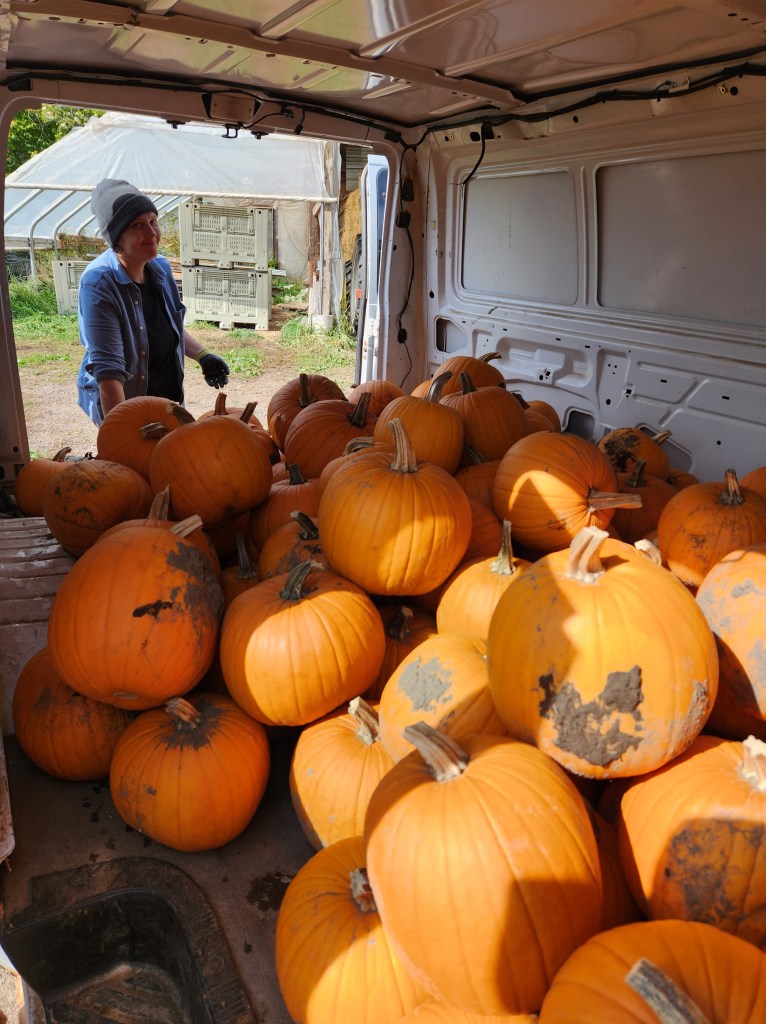
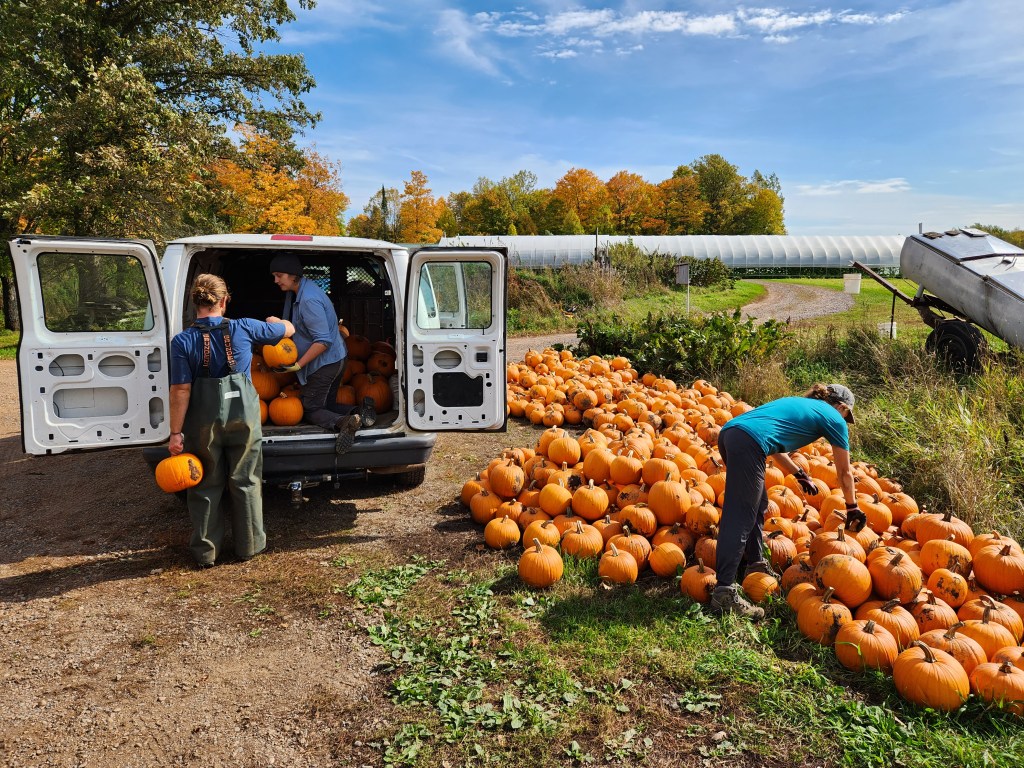
Loading up pumpkins for Monday deliveries.

In your share this week:

Noreaster Beans – Broccoli – Carrots – Garlic – Leeks – Lettuce – Onion – Sweet Red Peppers (not hot) – Jalapeño Pepper (hot) – Yellow Potatoes – Daikon Radish – Delicata and Acorn Squash – Tomatoes – Parsley


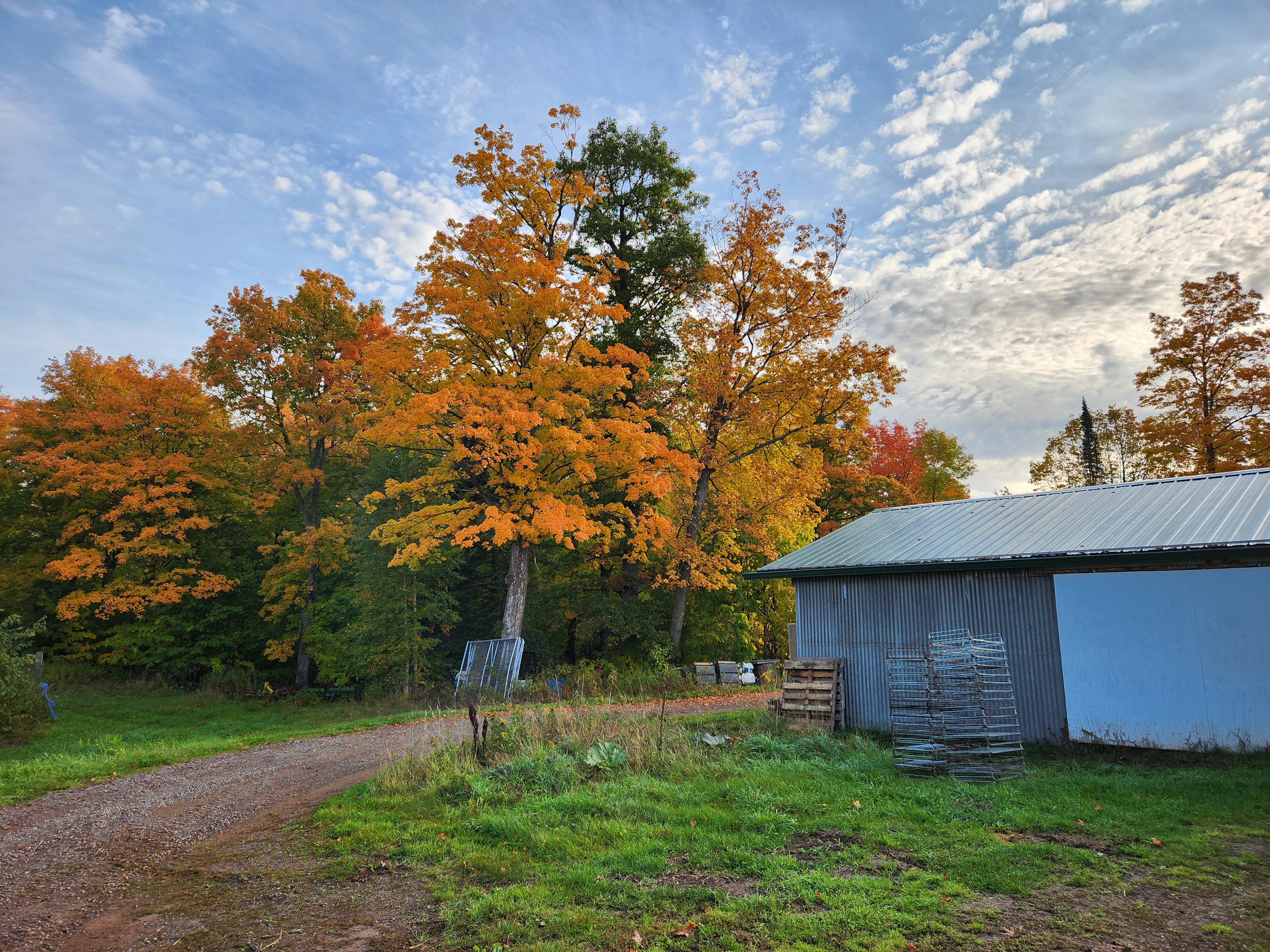
Leaves changing at the farm


Universal Cream of Vegetable Soup

This recipe works for nearly any vegetable the farm grows – from celery to leeks to squash! This is also a great way to use up veggies from last week.

Ingredients

  • 4 tbsp butter
  • 6-8 cups coarsely chopped veggies (suggested starting point: 1 med onion coarsely chopped, 2 leeks, one clove garlic minced, 2 diced carrots,  2-3 stalks celery coarsely chopped, 2 potatoes diced. Add any other veggie like broccoli, cauliflower, or  squash to total 6 cups veggies.)
  • 1/4 cup flour.  
  • 4 cups broth (chicken, pork or veggie)
  • 1/2 to 1 cup milk or cream
  • Salt and pepper to taste

Instructions

  1. Sauté veggies in the butter 10-15 minutes (until tender but not brown).
  2. Add flour and cook for a couple of minutes.  
  3. Turn heat to high and add 4 cups of broth (chicken, pork or veggie), while constantly stirring as the soup thickens.  Bring to a boil.  
  4. Reduce heat to simmer the soup.  Cook, partially covered, until the vegetables are very tender (appx 30 minutes).   Using an immersion blender, food processor, or blender process the soup until smooth.  Add a little water or more broth if the soup is too thick and difficult to process.  
  5. Return soup to the pot and add 1/2-1 cups milk or cream.  Salt and pepper to taste.
  6. Can be served with grated cheese.

Recipe from Deb Rausch


What to do with Daikon Radish?!

This week you will find daikon radish in your box. Daikon is a large peppery variety of radish that is common in Asian cuisines. This crunchy vegetable can be eaten raw, pickled (like in traditional kimchi), or cooked.

Vietnamese Pickled Carrots & Daikon Radish (Đồ Chua)

Ingredients

  • 1/2 lb daikon radish*
  • 1/2 lb carrots*
  • 1 tbsp salt
  • 1/2 c boiling water
  • 5 tbsp granulated white sugar
  • filtered room temp. water
  • 4 tbsp distilled vinegar

Instructions

  1. Peel daikon and carrots, then cut with mandolin slicer medium to small matchsticks. Smaller cuts will pickle faster.
  2. In a large bowl, sprinkle with salt evenly and toss to coat. Soak for 15 minutes.
  3. Rinse thoroughly to remove the salt and in small hand-fulls, squeeze to remove as much moister as you can.
  4. Add to jars, filling almost to the top.
  5. Create the vinegar solution (brine) by boiling water then adding sugar. Mix to dissolve. Add vinegar.
  6. Pour this liquid evenly into your jars. If needed, add extra room temp water to barely fully submerge the veggies.
  7. Screw on the lids, store at room temperature until pickled to your taste, checking every 12 or 24 hours. It usually takes 2-5 days depending on the temperature.
  8. Refrigerate when ready, for up to 3 weeks, or until too sour or veggies lose their crunch.

*You can change the ratio of veggies to your preference and/or scale the recipe up or down depending on how much veg you have to pickle. Just make sure you have enough brine to completely submerge your veggies.

Based off recipe from Hungry Huy.

Check out other daikon recipes here.


For the farm crew,

Starr

Summer CSA Week 16, 2022

Leaves are starting to change color on the farm.

Sixteen weeks! Can you believe it? After this week, we have two more distributions in our summer CSA. Autumn is truly harvest season. Shares this week are overflowing and the farm crew is building muscle bringing in heavy squash, pumpkins and carrots. Temperatures are brisk and refreshing and we are making preparations for the fast approaching first frost.

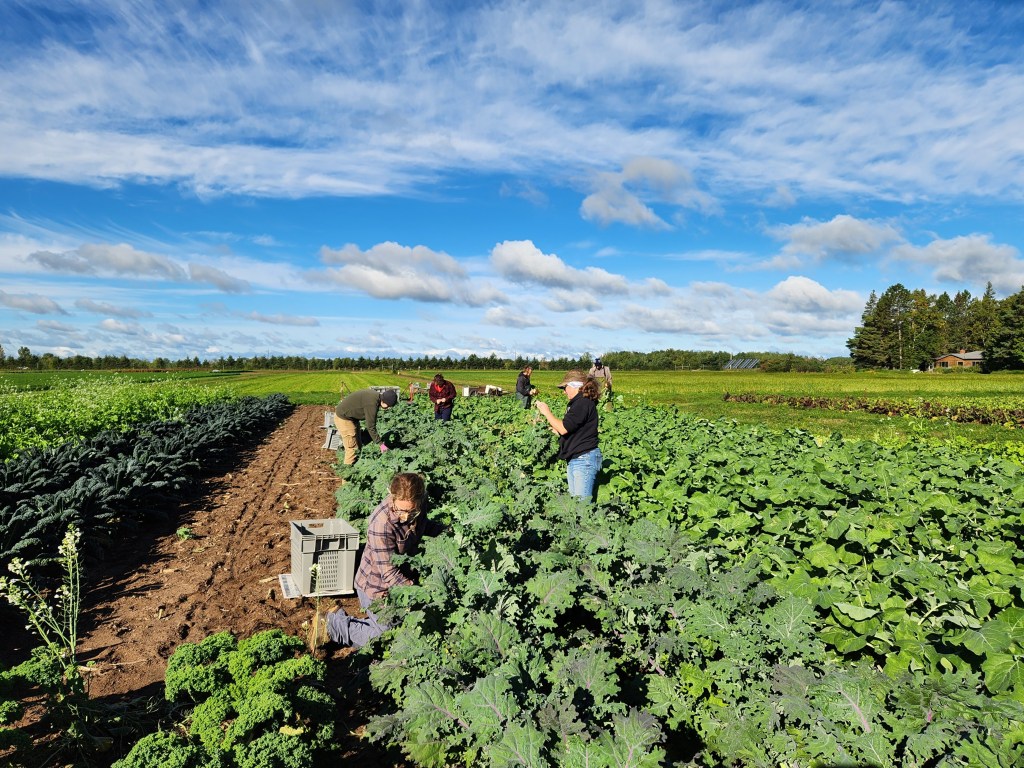
Crew harvesting kale and rutabagas

In your share this week:

Green Beans – Carrots – Cilantro – Cucumber – Kale – Onion – Sweet Red Peppers (not hot) – Green Bell Peppers – Hot Wax Pepper – Potatoes – Rutabaga – Squash – Spinach – Tomatoes


Harvesting Squash

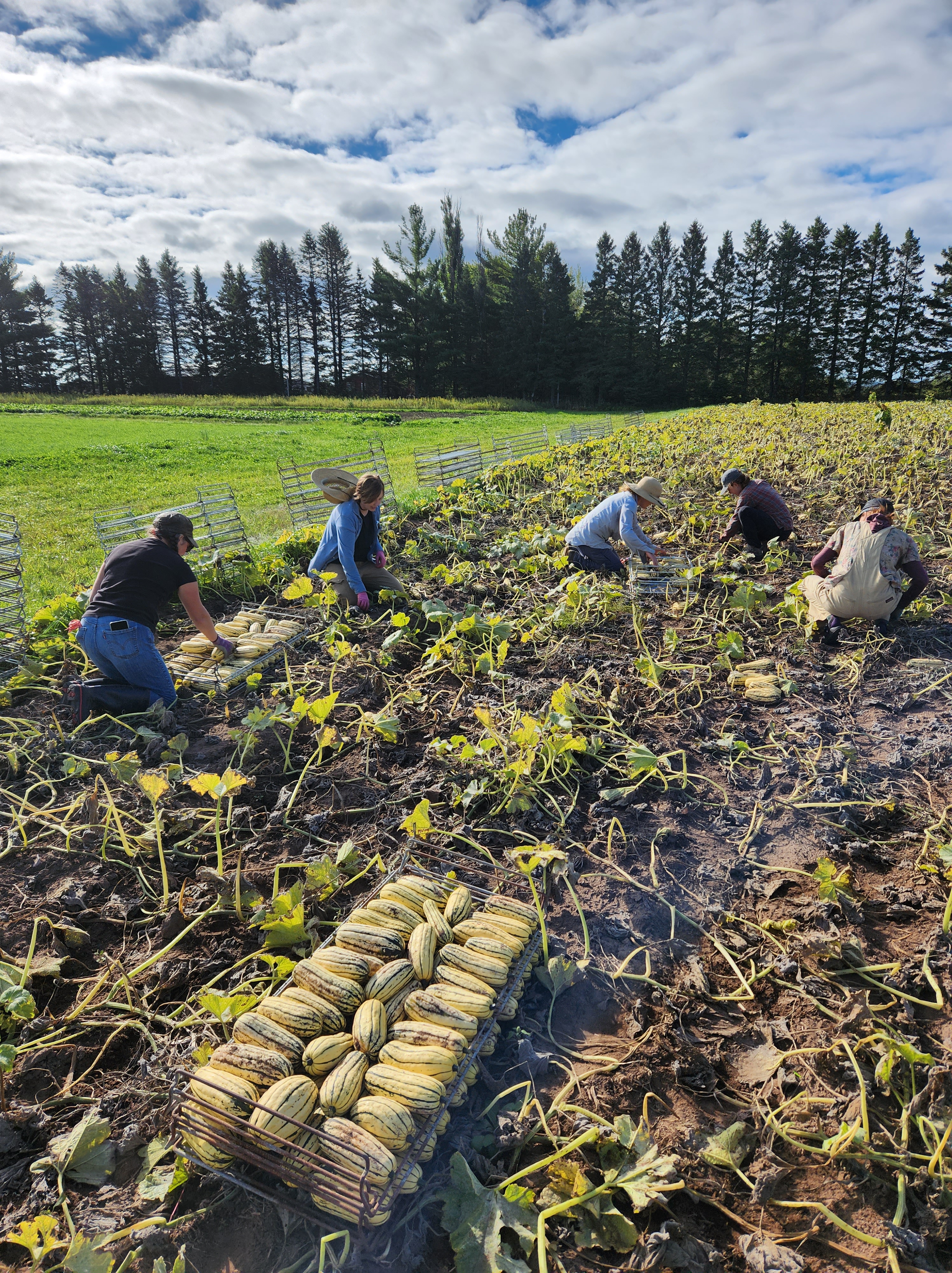
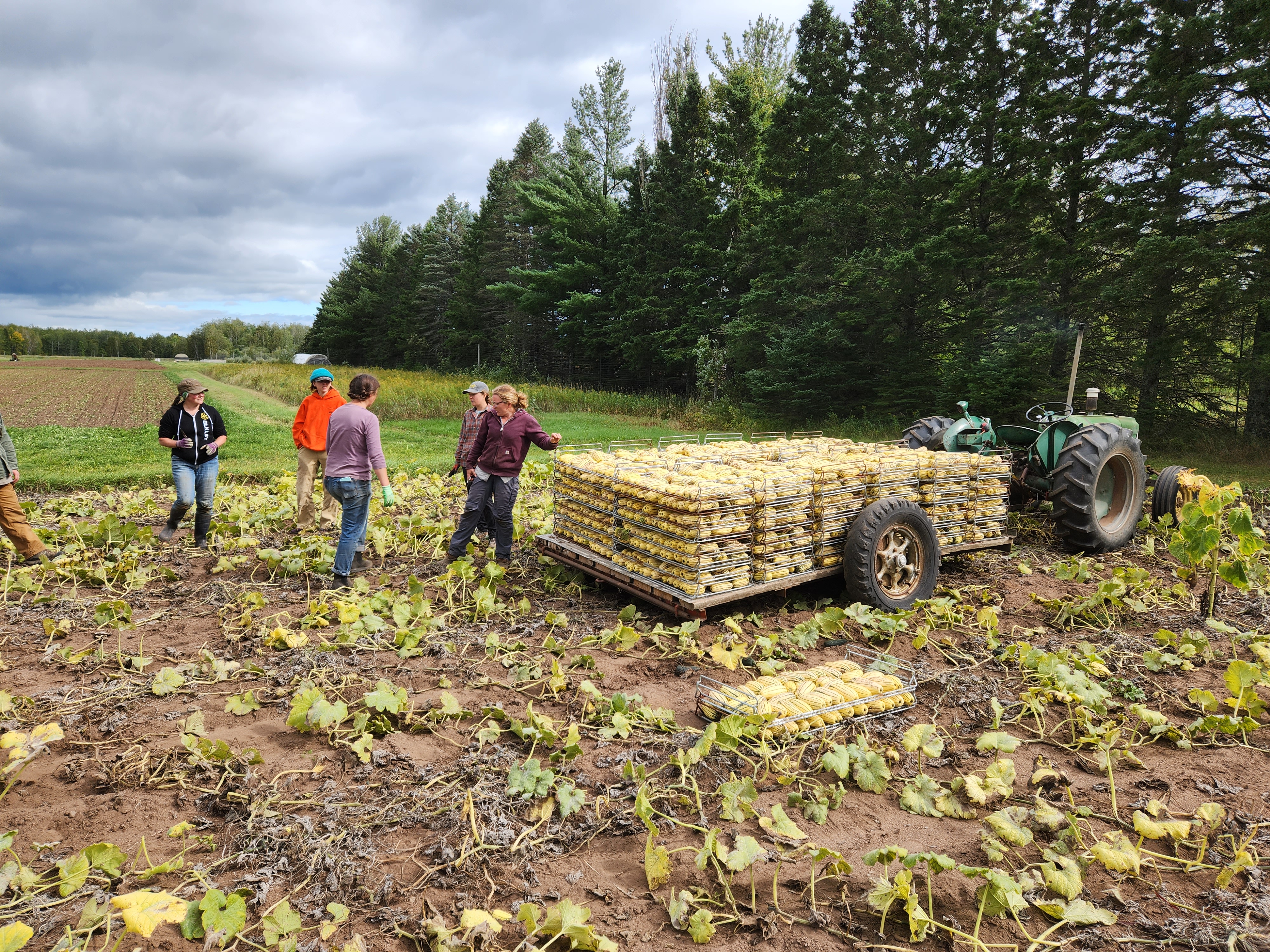
It’s always fun when throwing food is encouraged! The squash plants spreads out across the whole field, so when we harvest, squash are spread everywhere. To get squash consolidated we toss squash to each other across the field. You will find delicata and kabocha squash in your shares this week


Onions curing

Minnesota Pasties

This week’s box has all the vegetable ingredients you need for tasty pasties!

Ingredients

Crust

  • 1 stick butter, cubed
  • 1/2 cup shortening (Crisco)
  • 1 cup boiling water
  • 1 tsp salt
  • 3 1/2 to 4 cups flour

Filling

  • 1 1/2 lb meat, 70% ground beef, 30% ground pork (make vegetarian by excluding meat and adding a vegetarian gravy to the veggie filling)
  • 2 diced onions
  • 1 cup carrots, diced
  • 1 1/2 cups rutabaga, peeled and diced
  • 4 cups potatoes diced
  • 2 tsp salt
  • 1 tsp pepper
  • dash of garlic salt (or use a minced fresh garlic clove)
  • butter
  • milk

Instructions

  1. Melt butter and Crisco in microwave. Stir in rest of crust ingredients. Do not over mix. Let cool to room temperature.
  2. Preheat oven to 400°F.
  3. In a very large bowl, add ground beef and pork together, squishing together with a clean hand to combine. Roughly break apart into dime sized pieces. Add in all veggies and seasoning and mix ingredients well.
  4. For jumbo sized pasties, roll dough into 10 inch circles. Add 1 cup filling on one side of each circle. With water, wet the edges of the dough around the filling. Add 1/2 tsp butter on top of filling. Fold dough over the side with the filling making a pouch. Press and seal all edges tightly. Trim any uneven edges and make a 1 inch slit on top of the pasty. Brush top with milk. Repeat until all ingredients are gone. For smaller pasties use 5 inch circles of dough and 1/2 cup of filling.
  5. Bake for 1 hour at 400° F. Let cool slightly before serving, or let cool completely before storing.

Recipe from Just a Pinch Recipes.

Check out some other great rutabaga recipes in our “April Winter CSA” post.


A sneak peak of what’s to come!

For the farm crew,

Starr

Summer CSA Week 14, 2022

The whole crew picking green beans.

It has been an exciting week! Saturday was Harvest Fest at Bayfront Festival Park. It was great seeing all of you that stopped by our booth. We have also had a new crew member join the gang and an old crew member move on to great new things.

A note about peppers: The large pointy red peppers are a SWEET pepper variety named Carmen. The smaller yellow pointy pepper are a HOT pepper variety.

In your share this week:

Green Beans – Carrots – Celery – Cilantro – Cucumber – Garlic – Onion – Red Pepper – Green Peppers – Hot Peppers – Potatoes – Tomato – Zucchini


Here are pictures from our Harvest Fest booth! We moved a lot of produce on Saturday. Thank you to everyone who came out. Harvest Fest is hosted by the Lake Superior Sustainable Farming Association.


Tomato and Pepper Chunky Salsa

Salsa is one of the joys of summer. It’s great as a snack with tortilla chips or on top of eggs. Luckily, salsa is very easy to make!

Ingredients

  • 7 medium tomatoes
  • 1 red bell pepper (the long pointed one)
  • 1 small diced red onion
  • 1 hot pepper
  • ½ cup fresh cilantro
  • 1–2 garlic cloves
  • juice of 1 lime
  • ½ tsp pepper
  • ½ tsp cumin
  • 1 tsp salt, or to taste

Instructions

  1. Finely dice the tomatoes, red bell pepper, red onion, hot pepper, garlic and cilantro. Combine in a large bowl and add lime juice and seasonings.
  2. Alternatively, process all ingredients in a food processor for 30 seconds.
  3. Store in the refrigerator in an airtight container for up to 1 week.

Recipe based off the green creator..


Congrats to our former crew member, Emily, who is moving on to a great new job in her field. Emily has been with the Food Farm for two years and wrote last year’s newsletters.

This beautiful key lime pie was made in Emily’s honor by Charlie, a fellow crew member.


A great morning for spiders!

The first spider is a funnel-weaver spider with in her name-sake funnel web beautifully outlined in morning dew. This spider was found next to our celery rows. The picture doesn’t do justice to the unique 3D tunnel structure this spider builds. The second spider is a black and yellow argiope, also called a black-and-yellow garden spider, which may be the largest web-building spider in the northern United States. She was a big one! She was found feasting on a fly in her web that spanned one of the green bean paths. (We made certain not to disrupt her.) Many think because this spider is so colorful and large it must be dangerous, but in reality, they are shy and rarely venture off their webs. We appreciate these spiders eating the more annoying bugs for us!


For the farm crew,

Starr