We’d love to see you this Saturday for our annual farm tour!
In your share this week:
Basil – Carrots – Cilantro – Cucumber – Kale – Lettuce – Bell Peppers – Hot Pepper – Onion – New Potatoes – Tomato – Zucchini
Guess what vegetable these baby plants will grow up into!
Scroll to the bottom for the answer.
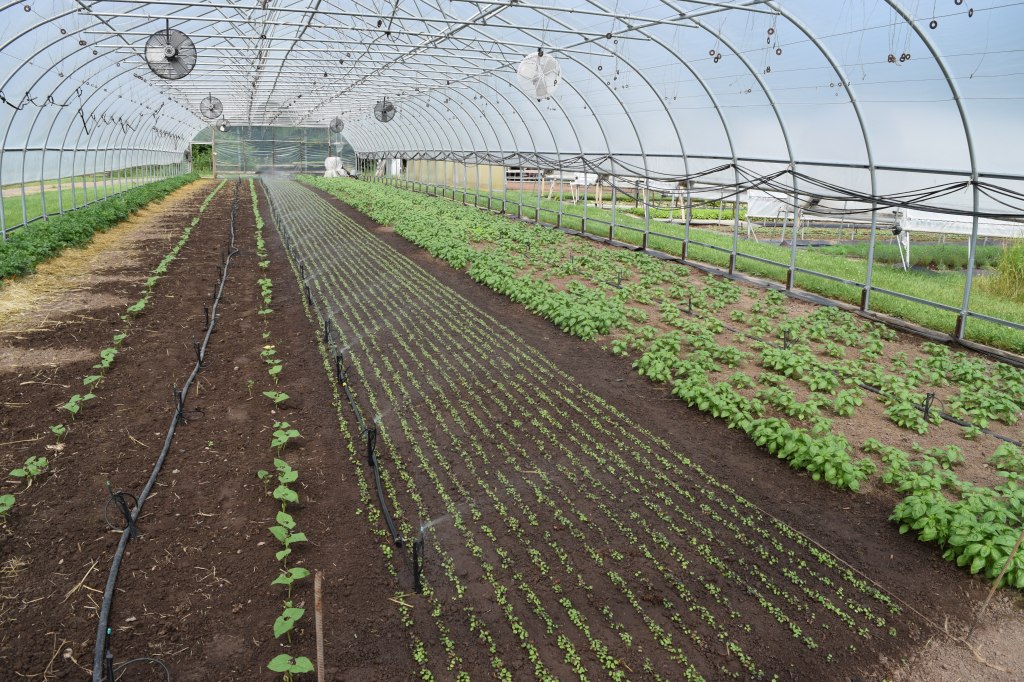
Basil, greens mix and young pole beans in the greenhouse.
Scalloped Potatoes
Ingredients
1 clove garlic, lightly smashed and peeled
Unsalted butter, room temperature, for pan
2 pounds think skinned potatoes
1 cups heavy cream
1 cups whole milk
1/2 tablespoon lightly packed fresh thyme leaves
Coarse salt and freshly ground pepper
a pinch of freshly grated nutmeg
3 ounces Gruyere, coarsely grated (1 cup)
Instructions
Preheat oven to 375 degrees. Rub the bottom and sides of a baking dish with garlic; reserve garlic. Brush pan generously with butter. Wash and cut potatoes into 1/8-inch-thick rounds.
Transfer potatoes and garlic to a large pot with cream, milk, thyme, 1 tablespoon salt, 1/2 teaspoon pepper, and nutmeg. Bring to a boil over high. Reduce heat to medium and simmer 1 minute. Let cool slightly, about 10 minutes.
Spoon one-third of potato mixture into prepared dish. Sprinkle with one-third of cheese. Repeat layering twice more. Loosely cover dish with parchment-lined foil.
Bake until potatoes are tender when pierced with the tip of a knife, 35 to 40 minutes. Remove foil; turn oven to broil. Broil until potatoes are bubbly and browned in places, 3 to 5 minutes. Let cool 15 minutes before serving.
Rutabaga or “swede” is a root vegetable and part of the Brassica family. Did you know that the first Jack O’lanterns were carved from rutabagas and turnips?
The crew preparing to harvest carrots with THE HARVESTER.
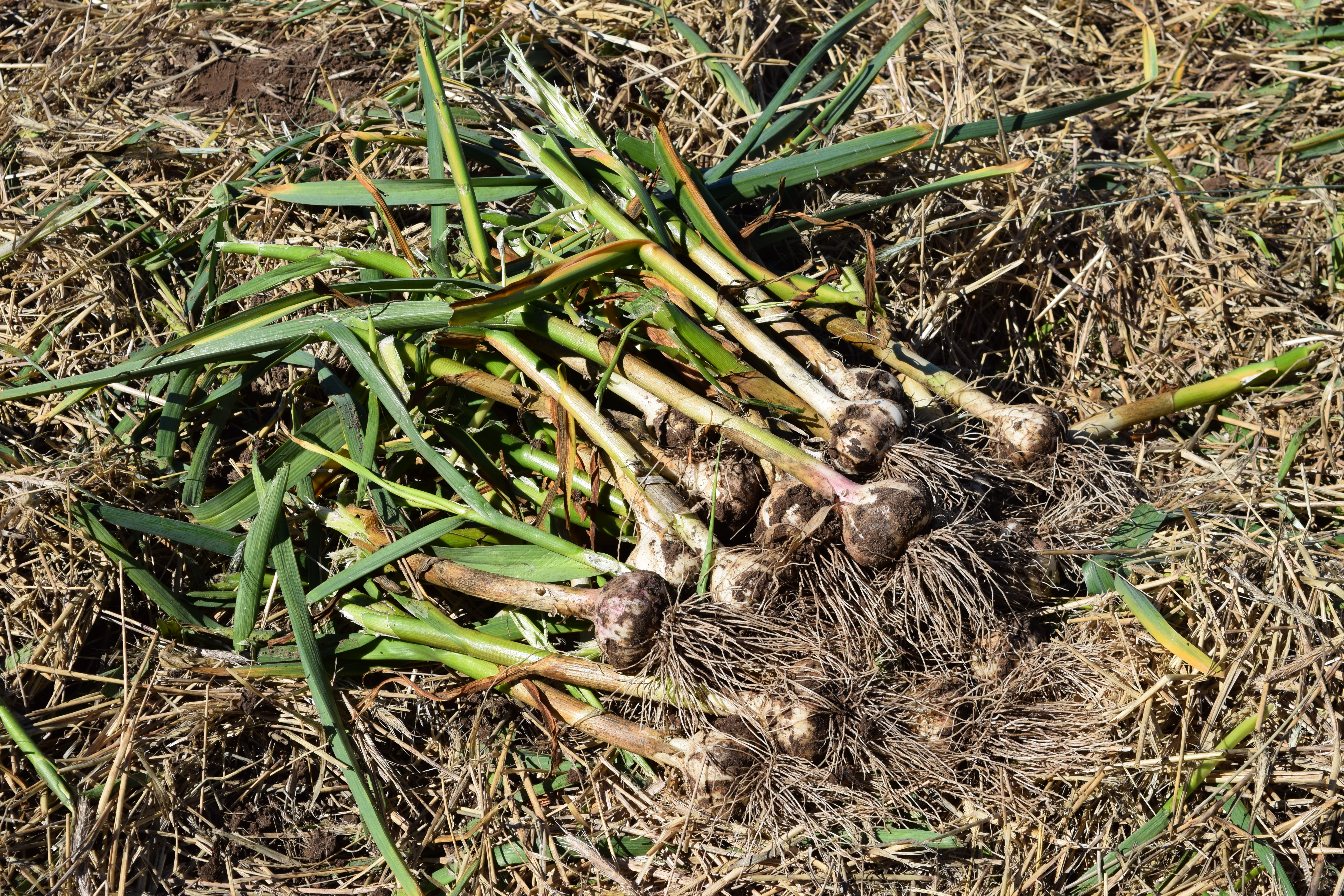
Last week was a big week for the Food Farm crew: we harvested our long awaited garlic! You’ll find more pictures and descriptions of that process below. We also brought out the carrot harvester, which is efficient but requires many hands to run smoothly. Boxes are filled with high summer bounty. New this week you’ll find green peppers and GARLIC! The garlic in the box this week is “green” or not yet cured. It should be left out on the counter with good ventilation so it does not mildew.
Would you like to come see the farm at peak season? You’re in luck! We are hosting a farm tour and pizza dinner on Saturday, August 27th! Come by the farm at 2612 County Road 1, Wrenshall from 4:00pm to 6:00. We’ll be serving pizza hot from our wood fired oven and giving farm tours. Free for all to attend, we’d love to see you!
In your share this week:
Basil – Beets – Cabbage – Carrots – Cucumber – Dill – Green Garlic – Green Pepper – Green Onion – New Potatoes – Parsley – Tomato – Zucchini
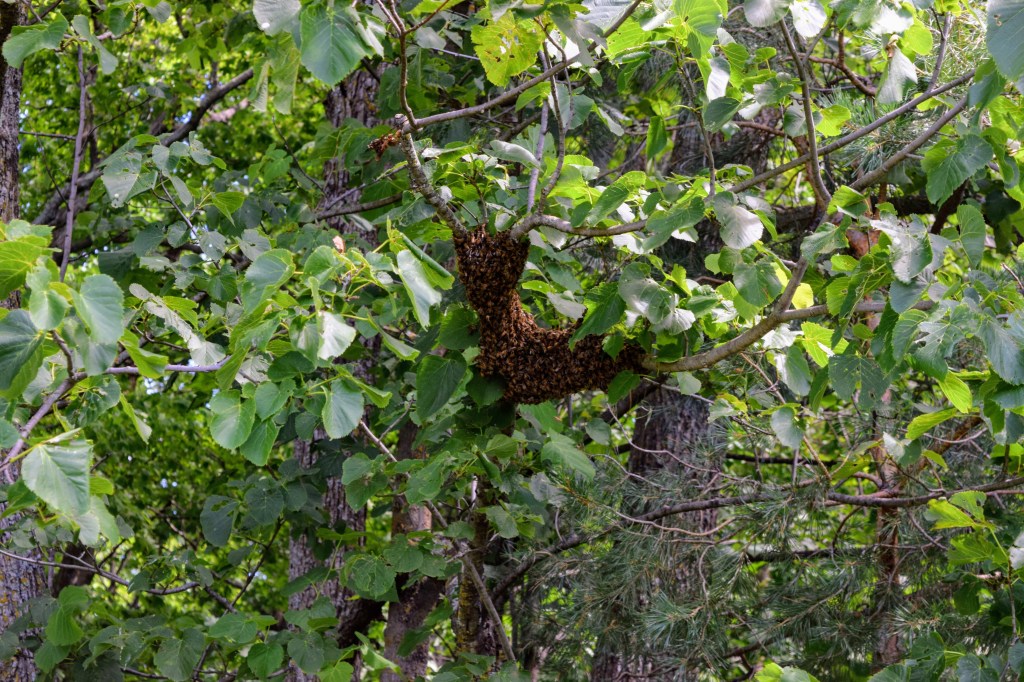
What am I looking at?
This is a swarm of honey bees seen near the farm hives recently. When a hive gets large enough it splits into two distinct colonies. During this process, part of the hive leaves as a swarm to find a new home. These swarms are often very docile because they are not guarding honey or a queen, but always be careful around bees, especially if there there is a chance you could be allergic.
Cucumber and Tomato Salad
From Claudia Roden’s Mediterranean
Ingredients
Cucumber (peeled, seeded and cut into pieces)
2 large tomatoes, seeded and cut into pieces
green onion
3 Tbsp olive oil
juice of 1/2 lemon
salt and black pepper to taste
small handful of fresh herbs (parsley, oregano, dill, cilantro) chopped
Instructions
Put cucumbers, tomatoes, and onions into a bowl. In another bowl, whisk together the olive oil and lemon juice and season with salt and pepper to make a dressing. Just before serving, pour the dressing over the salad and mix well. Sprinkle with the herbs and add feta if you like.
Basic Pesto
We have garlic AND basil in the box this week. The only option is to make pesto 😉
Ingredients
2 cups fresh basil leaves (no stems)
2 tablespoons pine nuts or walnuts
2 large cloves garlic
½ cup extra-virgin olive oil
½ cup freshly grated parmesan cheese
Instructions
Combine basil leaves, pine nuts or walnuts and garlic in a food processor and process until very finely minced.
With the machine running slowly dribble in the oil and process until the mixture is smooth.
Add the cheese and process very briefly, just long enough to combine. Store in refrigerator or freezer.
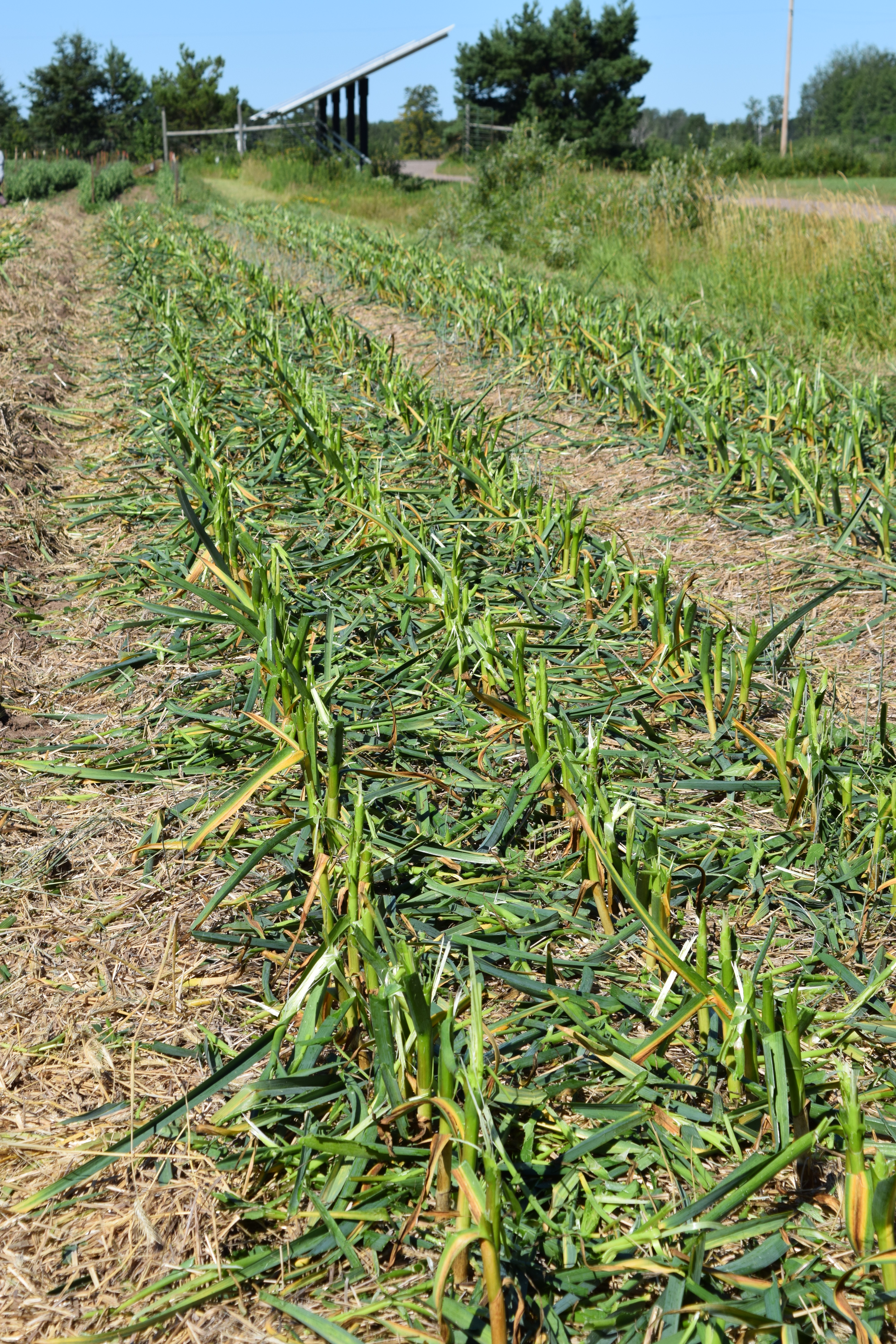
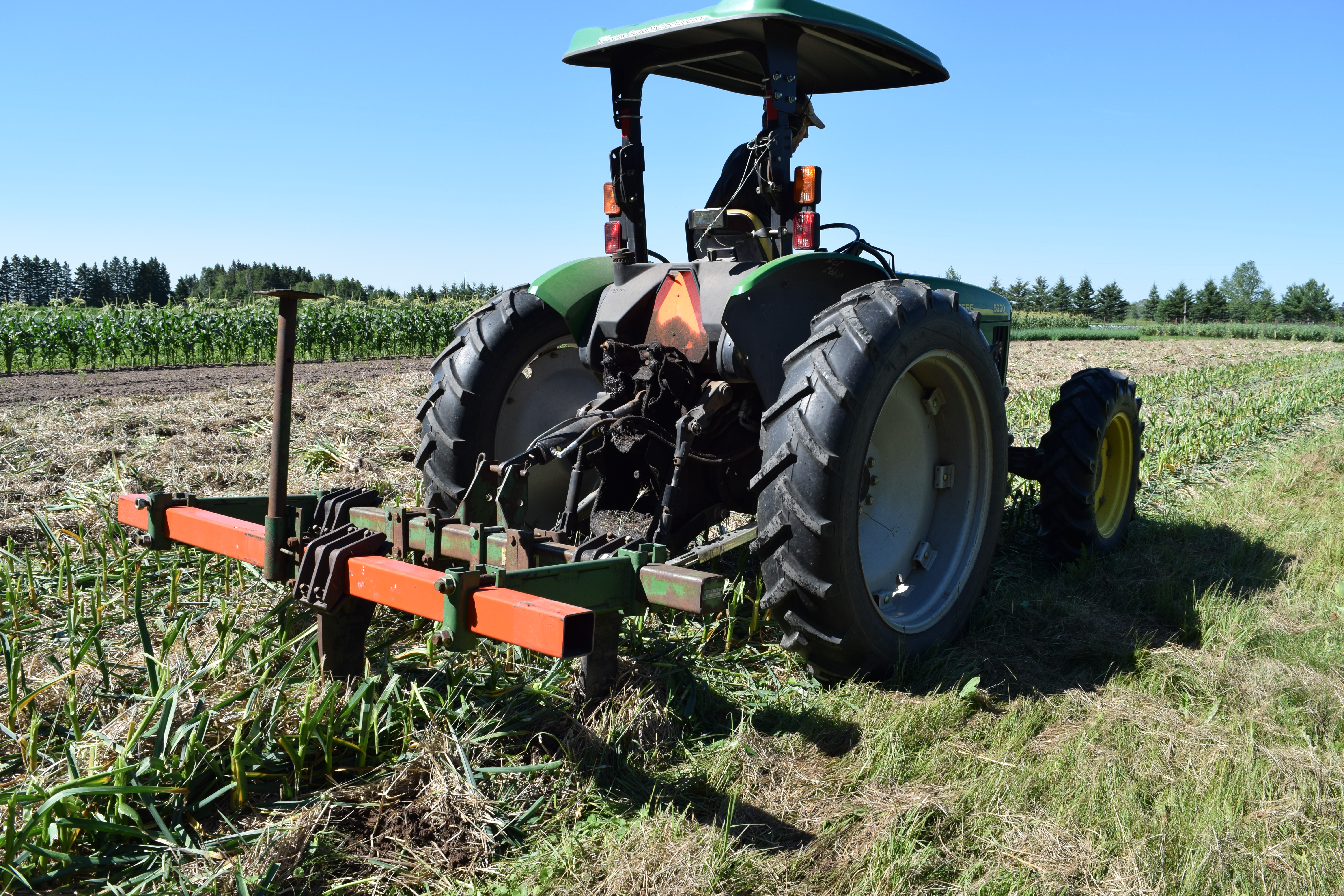
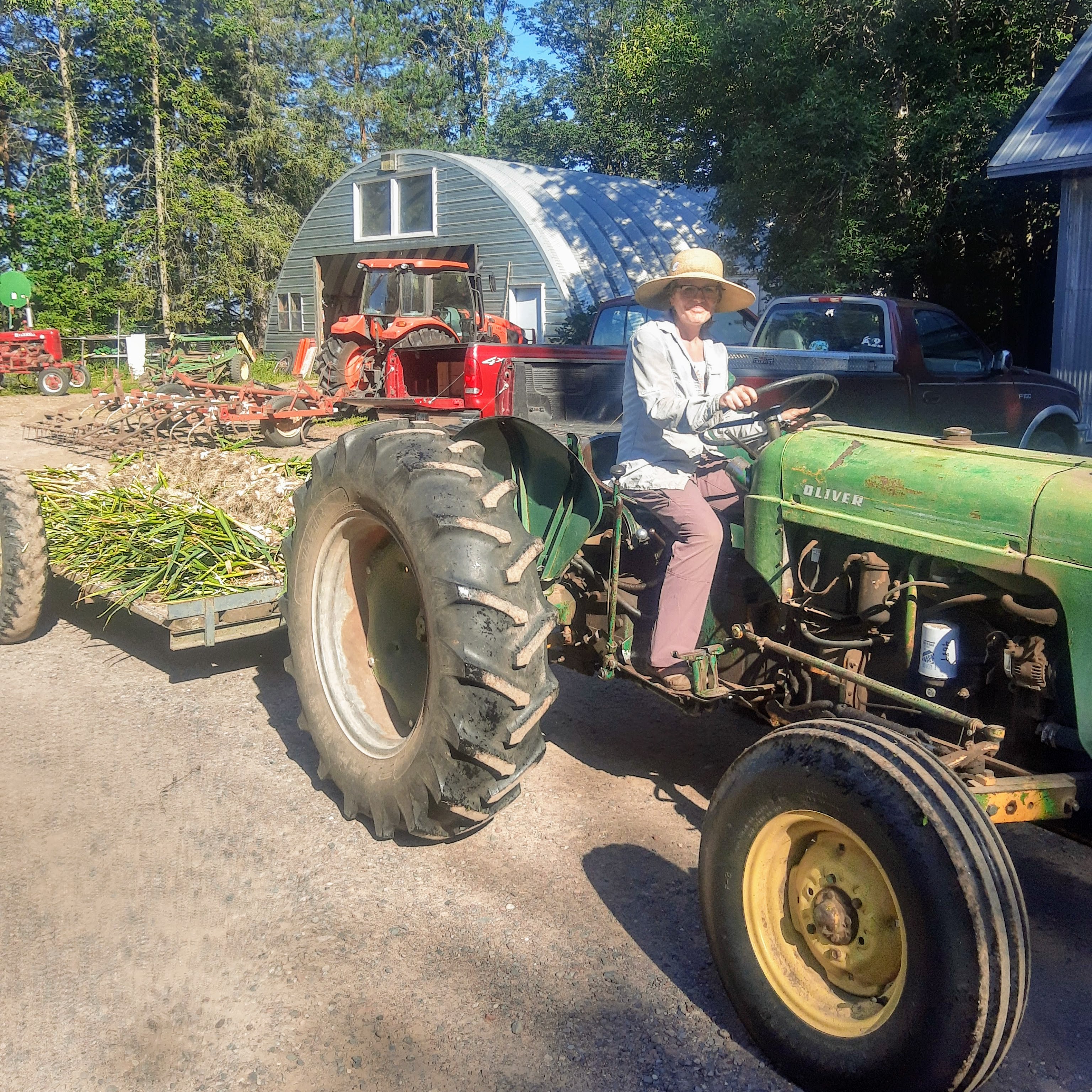
Step one: Janaki uses the tractor to mow and subsoil the garlic. The subsoiler has big hooks that dig down between the garlic rows, loosening the soil and lifting up bulbs.
Step two: Bring in the farm crew! We pull the garlic and stack it up in piles. These piles are then loaded on a trailer and brought to the wash station.
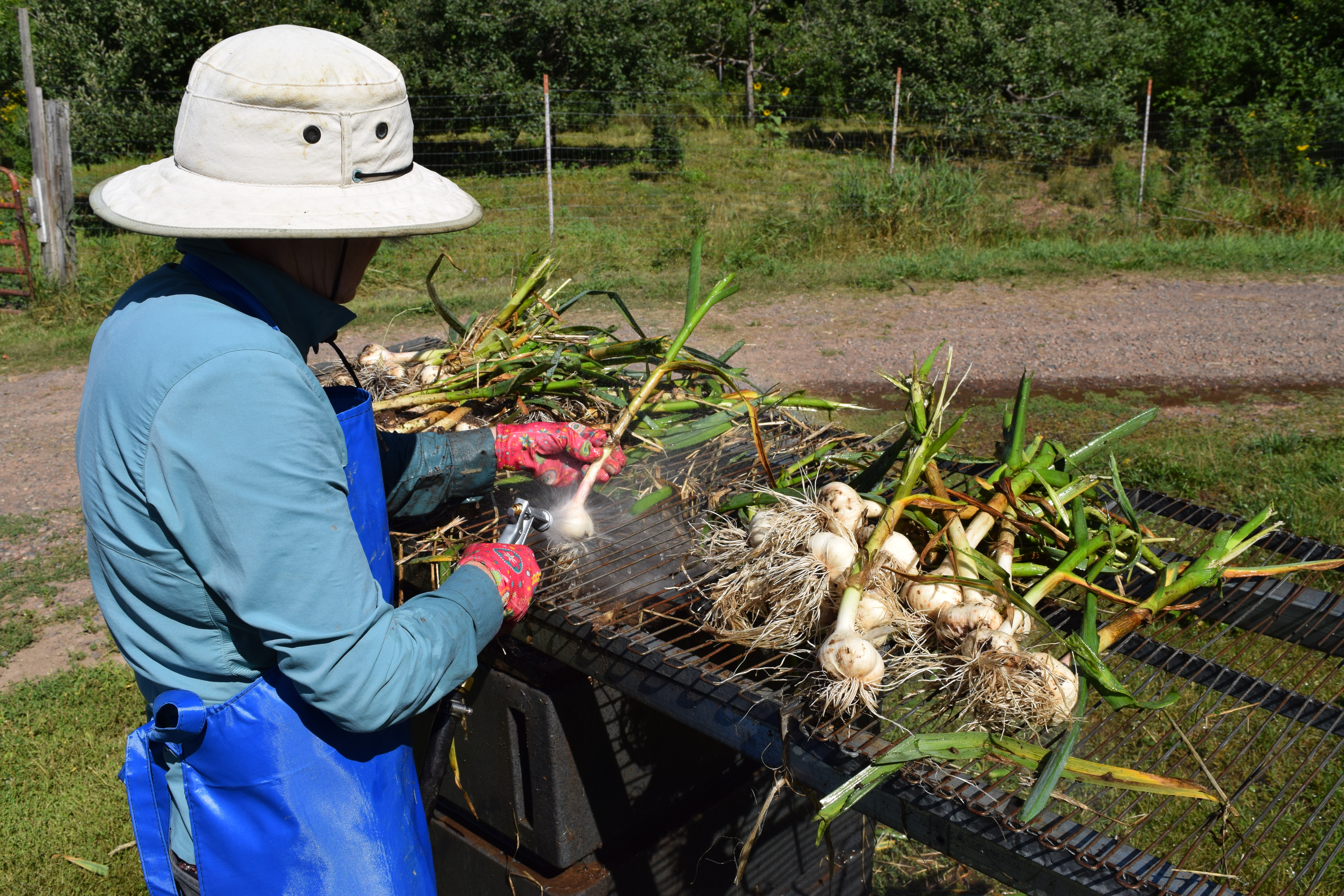
Step three: Scrub-a-dub. The garlic is washed, removing any dirt that’s still on the bulbs.
Step four: Stack and cure. In order for garlic to last into the winter it must “cure” or partially dry for a few weeks.
Garlic takes at least three weeks to cure. Then, if stored properly, garlic should last through the next spring!
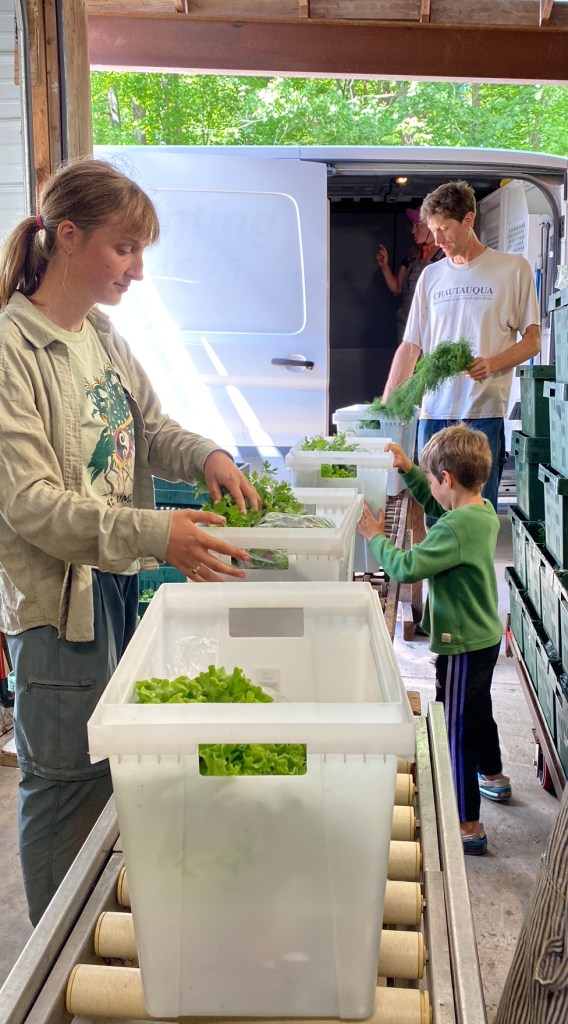
We have full and diverse box for you this week. We had all hands on deck to harvest everything in time for Monday deliveries! Annie and Ellis were even helping packing boxes. This week new in the box we have cilantro, dill, onion, hot pepper, and new potatoes. “New potatoes” are young tender potatoes.
This sweet, pungent sauce is a mainstay of Georgian national cuisine, often served with grilled meat, chicken or vegetables. It’s great way to use fresh summer herbs!
Ingredients
2 ounces dried apricots
1 cup boiling water
⅓ cup shelled walnuts (1 ounce)
2 to 4 garlic cloves (to taste), halved, green shoots removed
1 ½ cups parsley leaves (1 1/2 bunches), coarsely chopped
½ cup coarsely chopped mixed basil, tarragon, and dill
5 tablespoons walnut oil (or more, to taste) (substitute with unrefined peanut oil, or olive oil)
½ cup soaking water from the apricots, as needed
Instructions
Place the dried apricots in a bowl and pour on the boiling water. Let sit for at least an hour, more if possible, even overnight. Drain over a measuring cup and retain 1/2 cup of the soaking water.
Turn on a food processor fitted with the steel blade, and drop in the garlic. When it is chopped and adhering to the sides of the bowl, stop the machine and scrape down the bowl. Add the walnuts, and process with the garlic. Scrape down the sides of the bowl. Add the drained apricots, the lemon juice, salt, pepper and cayenne to the bowl, and process to a puree. Add the cilantro and other chopped herbs, and puree, stopping the machine to scrape down the sides several times. Combine the walnut oil and soaking water from the apricots, and with the machine running, gradually add it to the puree. Process until smooth. Transfer to a bowl, and let sit for one hour. Taste and adjust salt. Serve with beans, chicken, meat or fish, grilled or roasted vegetables, or grains.
Boil slightly salted water, then throw your baby potatoes into the pot. Leave them to cook for 15-20 minutes or until they’re cooked through and soft.
Grease your baking tray with olive oil, and get the potatoes out of the pot and onto the baking tray.
Lightly crush the potatoes with a fork or a potato masher, but make sure not to over do it as you don’t want really flat pieces of potato all over your baking sheet.
Using the excess olive oil on the baking tray, light brush the potatoes with the olive oil.
Season with freshly ground black pepper, and sea salt.
Sprinkle with either dried or fresh herbs and garlic.
Bake in the oven for 10-15 more minutes at 200°C (392°F). The baking time depends on the size of your potatoes, so keep checking on them as they bake.
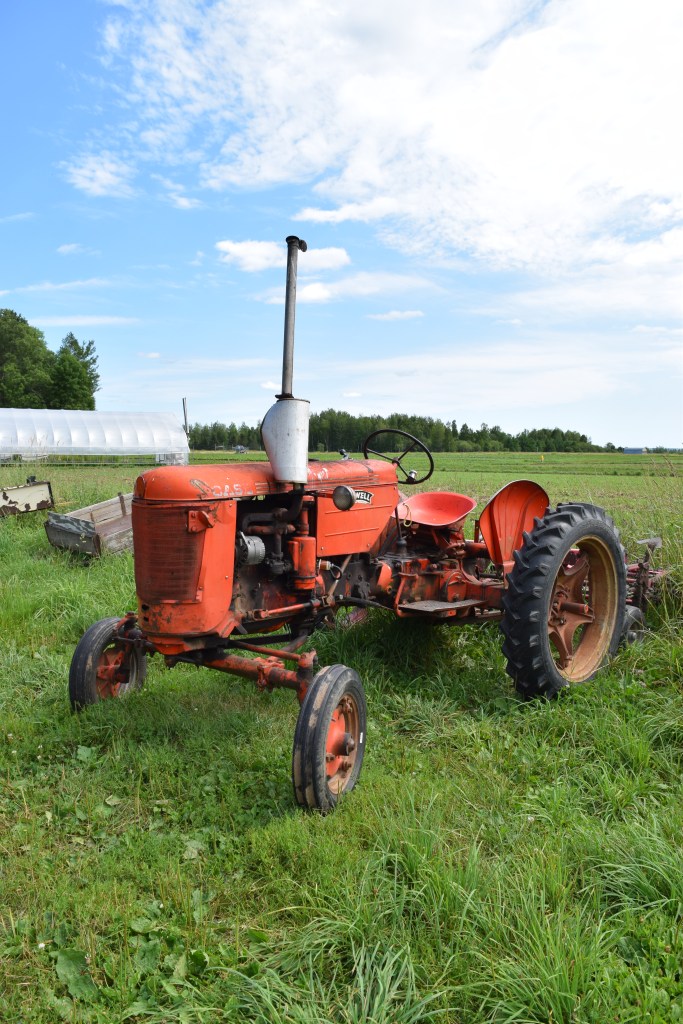
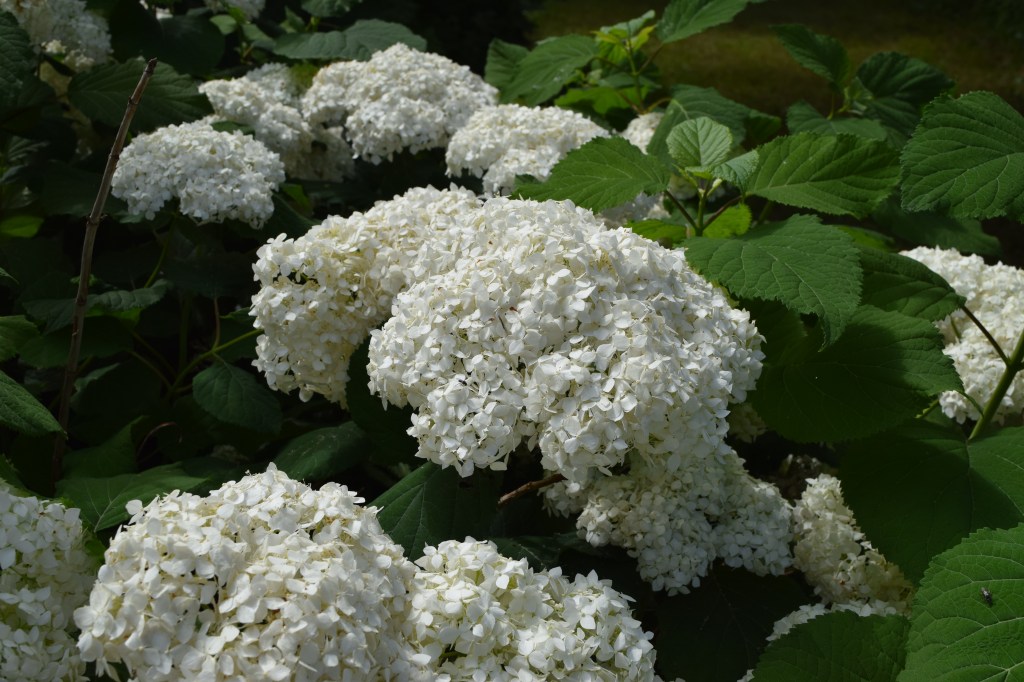
– Sights around the farm: tractors, sprawling fields, and farm house hydrangeas.
New in the box this week we have tomatoes and basil; the perfect pair. Now we really know it’s summer! Janaki has taken a well earned vacation with his family this week. The farm crew is happy to hold down the fort here in Wrenshall. We’re still planting fall brassicas, weeding young plants, and looking forward to the coming preserving shares.
In your share this week:
Basil – Broccoli – Carrots with Tops – Cucumber – Kale – Lettuce – Green Onion – Snap Peas – Tomato – Zucchini
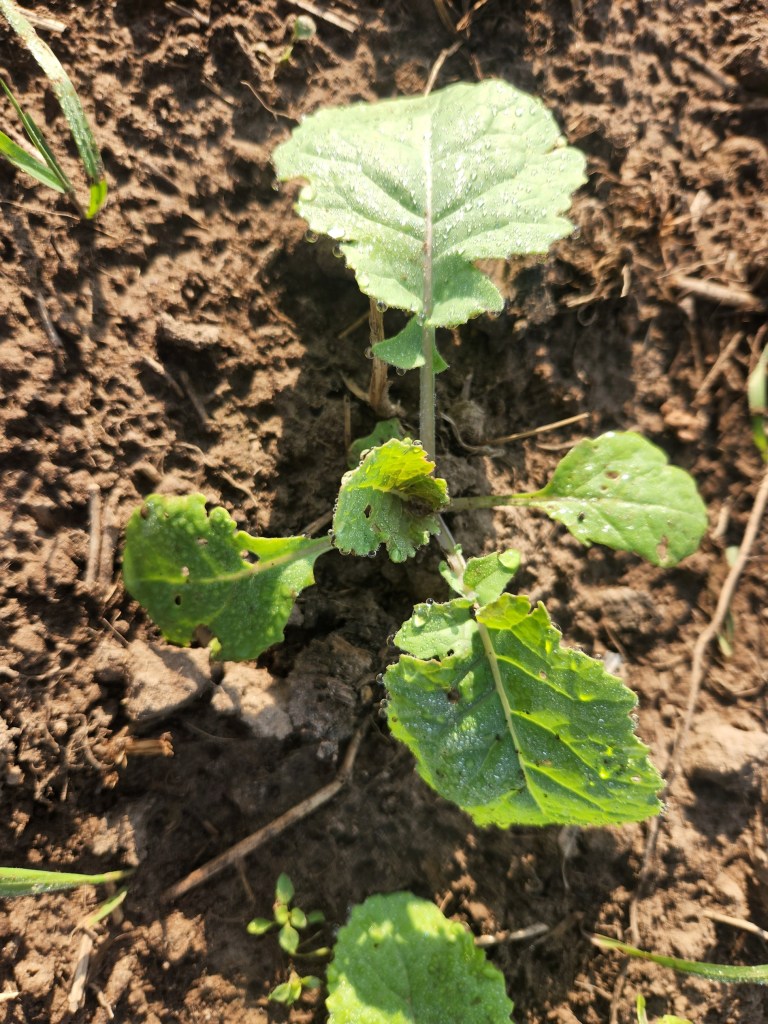
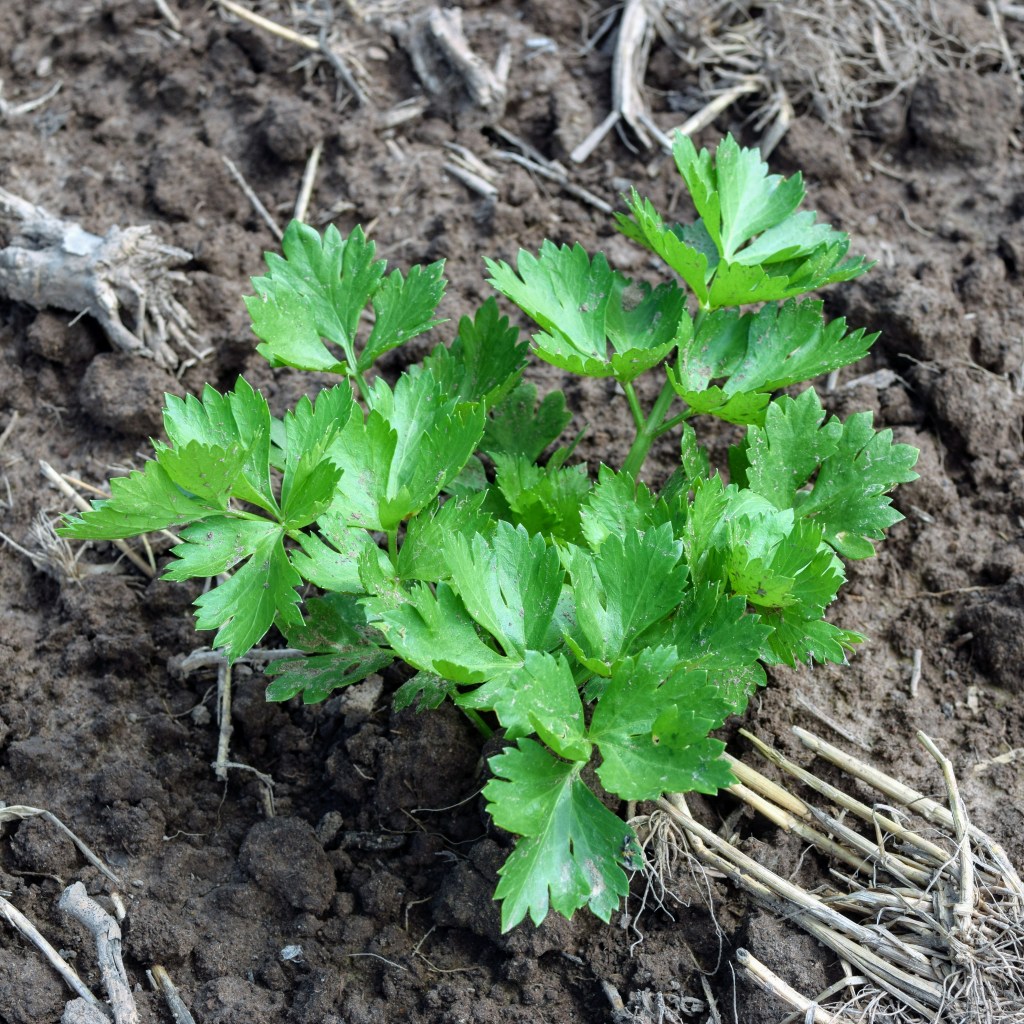
Guess what vegetable these baby plants will grow up into!
Scroll to the bottom for the answer.
Quinoa Vegetable Salad with Tahini Dressing
Ingredients
4 cups chopped kale
1 ½ cup chopped cucumber
1 ½ cup snap peas trimmed
1 cup chopped tomatoes
1/3 cup quinoa (or 1 cup cooked quinoa. Raw quinoa will give you 3x as much cooked quinoa)
Tahini Dressing
3 tablespoons fresh lemon juice
2 tablespoons tahini (sesame paste)
1 tablespoon warm water
1 teaspoon agave nectar (can substitute with honey)
Salt and pepper to taste
Instructions
Cook Quinoa – If you are starting with cooked quinoa, skip to step 3! Rinse raw quinoa for 30 seconds in a fine mesh colander. Drain well.
Combine the rinsed quinoa and 2/3 cups water in a saucepan. Bring the mixture to a boil over medium-high heat, then decrease the heat a bit to maintain a gentle simmer. Cook until the quinoa has absorbed all of the water, about 10 minutes.
Remove the pot from heat, cover, and let the quinoa steam for 5 minutes. Remove the lid and fluff the quinoa with a fork. Season with a pinch of salt. Allow to cool completely.
Make the Dressing – In a small glass bowl, whisk together the lemon juice, tahini, water and agave nectar. If the tahini is difficult to whisk, microwave the mixture on HIGH for about 10 seconds. Salt and pepper to taste.
Assemble the Salad – Place the kale in a colander and run warm water over it while massaging the leaves until the kale softens.
In a large bowl, combine the kale, cucumber, snap peas, tomatoes and quinoa. Toss with the dressing. Serve.
This is a young celery plant. Celery is related to parsnips, carrot and parsley. Celery is grown for the stalks and leaves, and ground celery seed is used as a spice.
Sugar snap peas below solar panels in the front of the farm.
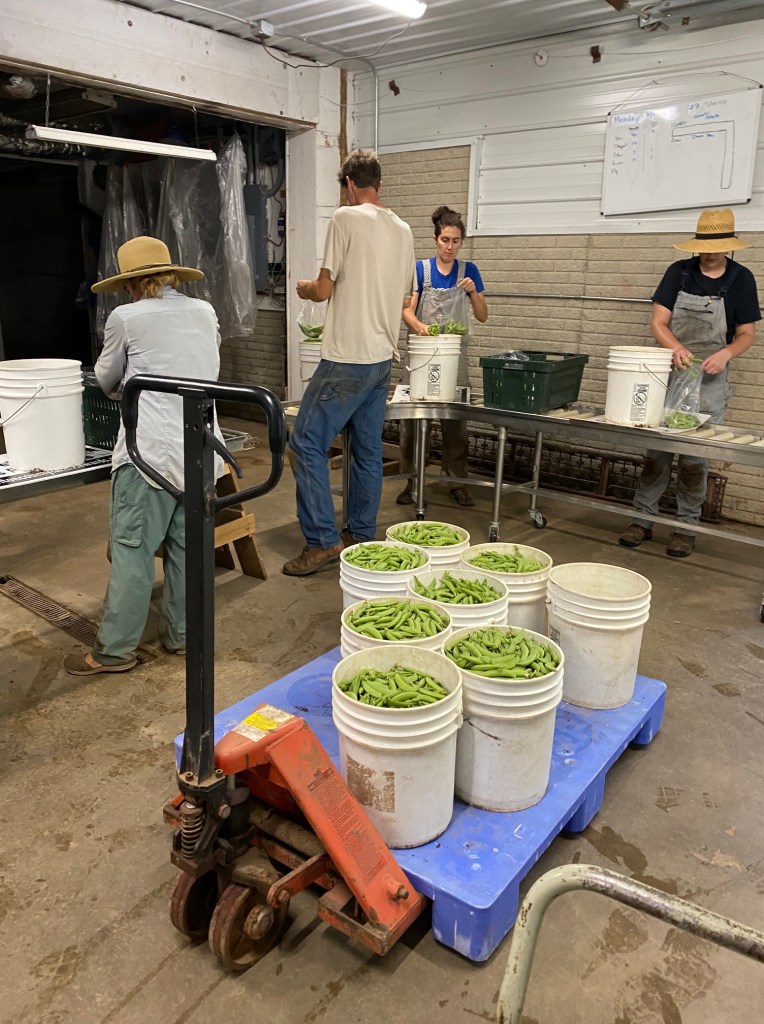
Can you believe we’re already at the end of July?! We can’t! We are approaching harvest time for our preserving shares, one-time bulk produce boxes made specially for canning and freezing. We have shares of canning tomatoes, basil, garlic, green beans, juice carrots, and leafy greens. Get your preserving share order in now at foodfarm.csaware.com! These preserving shares are distributed via our CSA pick-up sites, so you can pick up with your regular summer share. The one exception is our green bean share, which you pick yourself; a fun excuse to come see the farm and get into the field. If you already have a preserving share, we will contact you in the coming weeks via email to schedule pick up.
New in the box this week is zucchini and snap peas. Snap peas are a favorite for fresh snacking.
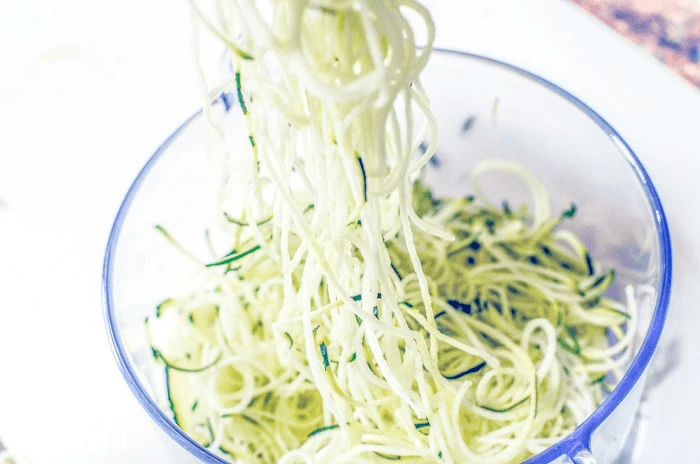
Here are some tips for making great zoodles or zucchini noodles. Zoodles are a healthy gluten-free alternative to pasta!
Ingredients
Zucchini
Salt
Olive oil (about a tablespoon)
Pasta sauce of your choice
Finished spiralized zoodles
Instructions
Cut the zoodles: Wash your zucchini, but don’t bother peeling. You may have seen or tried long curly zoodles before (image below). These are made with a spiralizer. If you have this tool, follow the manufactures instructions to slice up your zuc. If you don’t have a spiralizer, have no fear! A basic kitchen peeler will work just as well. Just keep peeling past the skin and peel the whole zucchini into long strips. Watch out for your fingers at the end.
Remove excess moisture: Pat your zoodles between paper towels. Sprinkle with salt and allow to rest for 10-20 minutes. This will draw out excess moisture. Press into the paper towels one more time then you’re ready to cook your zoodles.
Cook the zoodles: Saute your zoodles in a pan with a little olive oil over medium heat. Cook for 4-6 minutes or until the zoodles become tender. For the best non-watery results. Do not cover with a lid. Do not overcook. Season with salt and pepper if desired.
It’s hot and the CSA boxes are bursting! New in the box this week is Swiss chard and napa cabbage. We hope you’re staying hydrated and wearing plenty of sunblock and enjoying the heat!
1 tablespoon and 1 teaspoon fine sea salt or to taste
freshly ground black pepper or to taste
1/4 cup sour cream vegan or regular (optional)
Instructions
Begin by prepping your vegetables. Peel the beets. Scrub the carrots and potatoes. Dice everything up. It’s best if the beets are a slightly smaller dice than the rest as they take a little longer to cook (you could also shred them in a food processor).
Heat the olive oil in a large pot over medium heat. Add the diced onion and celery and sauté for 5 minutes or until slightly softened. Add the diced carrots and cook for an additional minute or two.
Tumble in the beets and the potatoes. Pour in the vegetable stock and bring to a boil. Reduce heat and simmer until root vegetables are al dente.
Tip in the cabbage and beet greens. Bring soup back up to a boil, then reduce heat and simmer for 10-12 minutes. Vegetables should be tender.
Sprinkle in the dill and the vinegar. Season the borscht to taste with salt and pepper.
Ladle borscht into bowls and serve with a dollop of vegan or regular sour cream.
Notes
Cool completely before refrigerating the leftovers in airtight containers. Borscht will keep for up to five days in the fridge and up to six months in the freezer.
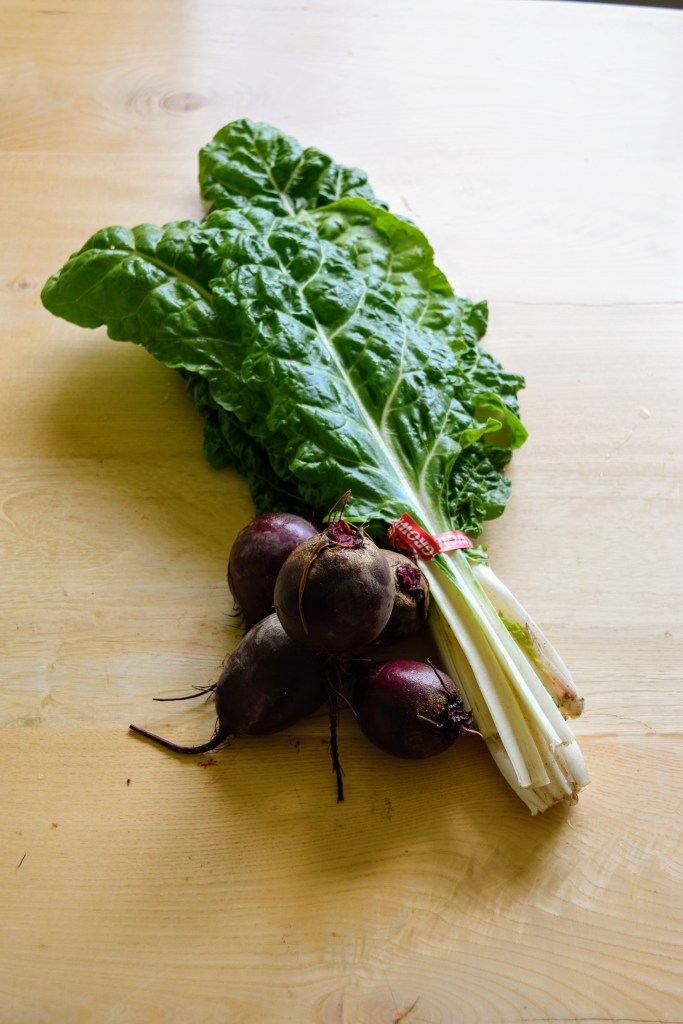
Did you know beets and chard are actually the same plant, Beta vulgaris? If you’ve grown both in your home garden, you may have noticed the similarities between the seeds and the leaves. The difference is that Swiss chard has been bred to favor leaf production, while beets have been bred to favor sweet fleshy roots.
The vegetables we eat didn’t just appear in the wild one day. Desirable traits have been “selected” for thousands of years to develop the tasty crops we enjoy today. Seeds are saved from plants that show the genetic variations we enjoy (more leaves versus fleshier roots) and then crossed through pollination with other plants with desirable traits so the offspring are better and better for human production and consumption. Please note, this is different from genetically modified which is done in a laboratory versus going through the generations of plants crossing for desirable traits already present in the species.
Rows of chard in the field
Resources for Veg Care and Use!
Remember to use the Vegetable Guide! Click the link below to see a pdf that describes most of the Food Farms crops and how to best care for the produce:
We love fresh produce any time of the year, but early summer is particularly special. There’s something magical about the first time in a season we’re able to share a vegetable. We have several firsts this week: cauliflower, kale, cucumber, AND garlic scapes. We’re watching our harvests diversify and we love it!
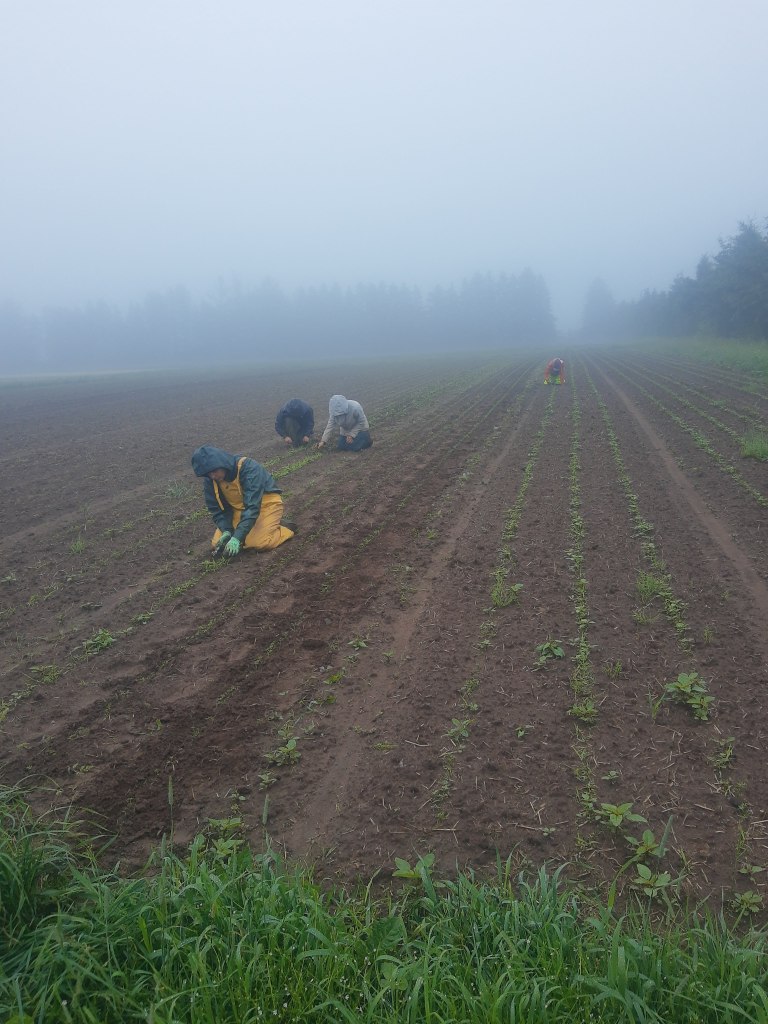
Pictured to the right: the crew weeding carrots in a wet fog on the 4th of July.
We’ve had some more storms and wet weather this past week, but fortunately nothing severe, and the moisture levels aren’t excessive. A word of advice to home gardeners: stay out of your gardens as much as possible in wet weather. Stepping in wet mud will cause compaction and be detrimental to your soil’s health. Plant diseases spread more readily in wet weather and your hands and tools could make that worse. On the Farm, have to keep working, even when it’s rainy, but we’re very selective about the tasks we do and how we harvest. Keep dry!
In your share this week:
Broccoli – Cauliflower – Lettuce – Green Onions – Carrots with Tops – Kale – Garlic Scapes – Cucumber
Forager’s Soup
Serves 6-8
Ingredients
4 tablespoons butter (use olive oil for a vegan alternative)
1 cup diced onion
1 medium potato, peeled and diced
salt and freshly ground black pepper
2 cups chicken or vegetable stock or hot water
1 1/2 cups whole milk (optional)
1/4 cup heavy cream (optional)
~4 cups (8 oz) mixed chopped spring greens, include scapes, kale, green onions, carrot tops, and/or broccoli (use whatever is on hand!)
3 tablespoons olive oil (to cook meat)
3 oz chorizo or bacon, finely diced (optional)
Preparation
Melt butter in a large pot over medium-high heat. Once the butter foams add onion and potato and stir to coat butter. Add salt and pepper. Turn down heat and sweat the onions and potato on with a tight fitting lid for 10 minutes. Vegetables should not brown.
Heat the stock (or water) in a saucepan until simmering. Add hot liquid to potatoes and onions and simmer 5-10 minutes more until vegetables are completely cooked. Add greens and simmer uncovered for 2-3 minutes more. (Don’t over cook the greens!)
Blend with a blender or hand blender. Puree until smooth. Salt and pepper to taste. Stir or blend in milk and cream.
If adding meat, heat olive oil in a small skillet. Add chorizo or bacon and cook until fat is rendered and meat is crisp, 5-10 minutes. Remove and drain on paper towels. Reserve the oil for a garnish or other cooking projects.
Serve soup hot with the above meat and a few drops of the cooking oil to garnish.
This soup can be made a day in advance and kept in the refrigerator! Just gently reheat on the stove top, uncovered. To make this recipe vegetarian, use vegetable broth and skip step 4. To make vegan, also exclude the milk and cream, or substitute with vegan milk option.
*The above recipe is adapted from “Forgotten Skills of Cooking” by Darina Allen and has revisions from volunteer Deb Rausch to better suit our boxes this week. *(Source of recipe previously listed incorrectly.)
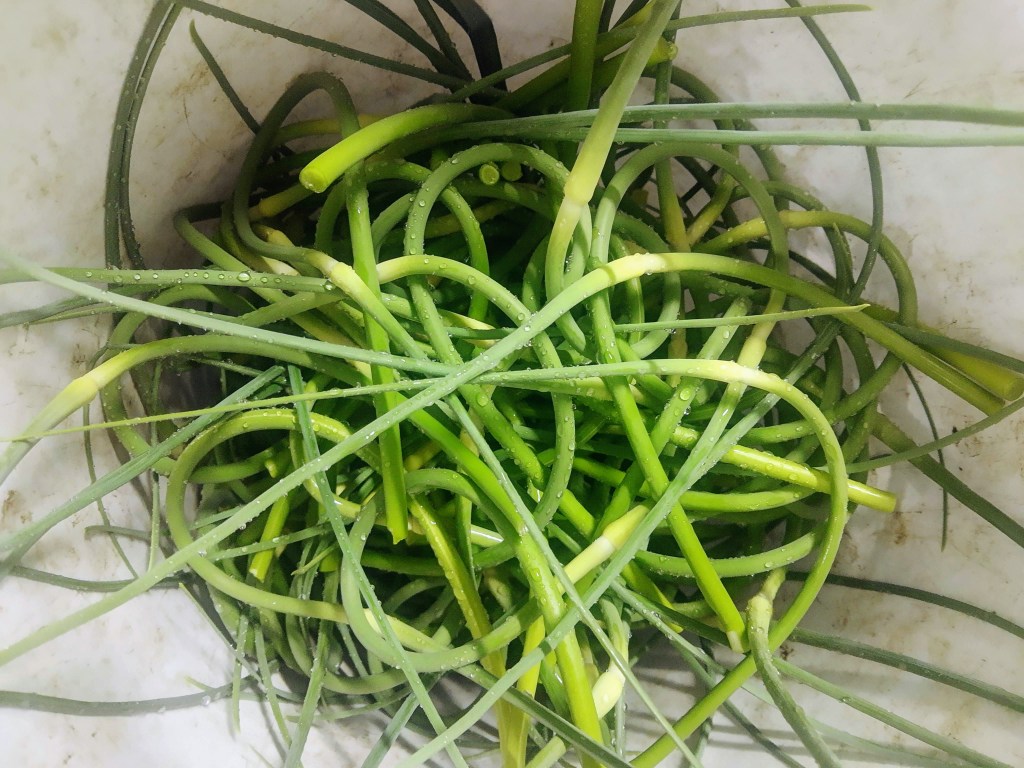
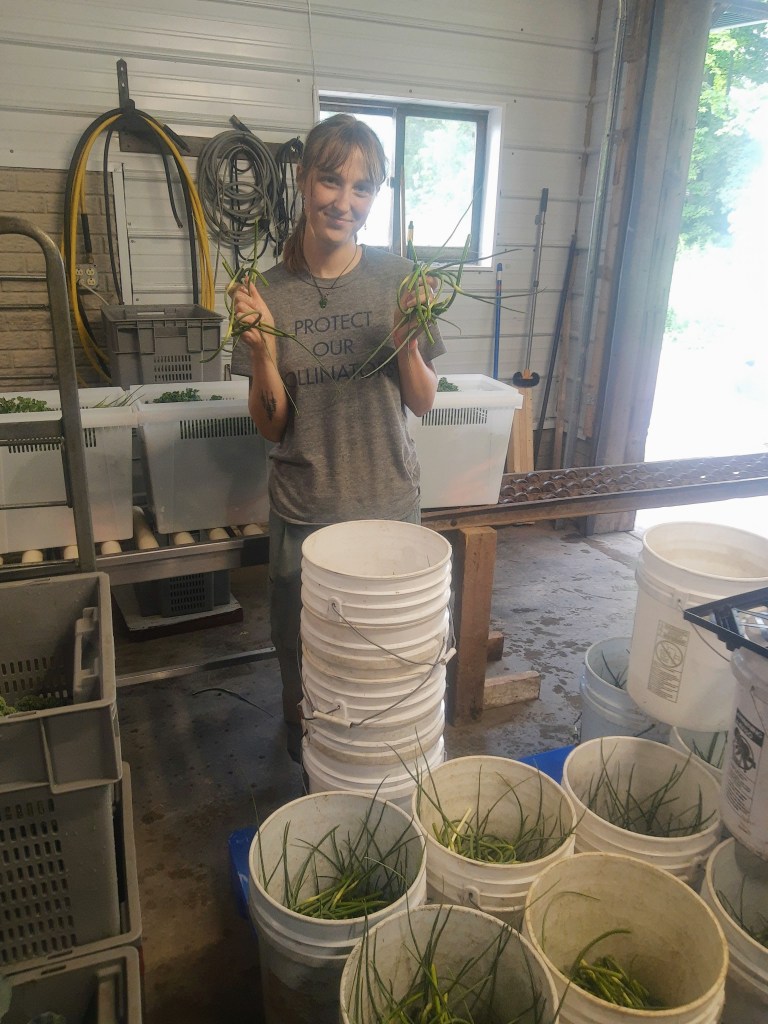
garlic scapes ready to go into share boxes
What are garlic scapes?
Scapes are the curly stems produced by hardneck varieties of garlic. We prune off these scapes so the garlic plant puts more energy into producing the garlic heads we all enjoy. If left on the plant these scapes would produce bulbils, which are like seeds that produce a clone of the parent plant.
Lucky for us, scapes are super tasty and get us through the early summer before the garlic crop is ready! Scapes are have a hot garlic flavor when eaten fresh and are a great garlic replacement in pesto. When cooked, the flavor mellows out. Try grilling garlic scapes or adding them to soups.
Still looking for recipes?
Use the Tag Cloud below to find archived recipes from past years. Just click an ingredient below and you’ll be taken to a list of all posted newsletters with a recipe that includes that vegetable. The larger the text below, the more posts there are including that vegetable.
We have fun, even when mulching tomatoes on a hot day.
Happy Fourth of July! I hope you enjoy some family time, great food, and protect your dogs from the scary firework noises.
On the farm we’re celebrating with our first harvest of carrots! The carrots in the share this week are coming with their tops ON because carrots greens are edible and TASTY. See below for a carrot top pesto recipe.
In your share this week:
Green Onions – Broccoli – Lettuce – Carrots with tops – Radishes
Carrot Top Pesto
Ingredients
1/3 cup pine nuts (try substituting cashews, walnuts or sunflower seeds)
2 small cloves garlic, peeled
4 cups lightly packed, well washed and dried carrot top greens (from 1 1-pound bunch of carrots)
1 cup lightly packed fresh basil leaves, plus more as needed (NOTE: If your bunch of carrots yields less than 4 cups of greens, add as much basil as you need to get a total of 5 cups of greens.)
1/3 cup (1 ounce) freshly grated Parmesan cheese
2 tablespoons fresh lemon juice
1 tablespoon water
1/2 teaspoon fine salt
1/4 teaspoon freshly ground black pepper
1/2 cup extra-virgin olive oil
Preparation
In a small, dry skillet over medium heat, toast the pine nuts, shaking the pan frequently, until fragrant and golden brown, about 3 minutes. Transfer to a plate and let cool slightly.
In a food processor, process the pine nuts with garlic until minced. Add the carrot tops, basil, cheese, lemon juice, water, salt and pepper and process until finely minced. With the machine running, slowly pour the oil in a steady stream through the feed tube and process until well blended.
Radish Salad
1 serving
Ingredients
6 radishes
1/2 tablespoon salt, plus more to season
vinaigrette or orange juice
olive oil
pepper
red pepper flakes (optional)
mint or parsley (garnish)
Preparation
Cut about radishes into matchsticks or sliced very thinly and placed in a bowl of cold water with a tablespoon of salt. Let the radishes soak for about 15 minutes, drain them, and rinse them well.
Dress the radishes with a vinaigrette or orange juice and a bit of olive oil. Salt and pepper to taste. Add a pinch of hot pepper flakes if you like them and garnish with mint or parsley.
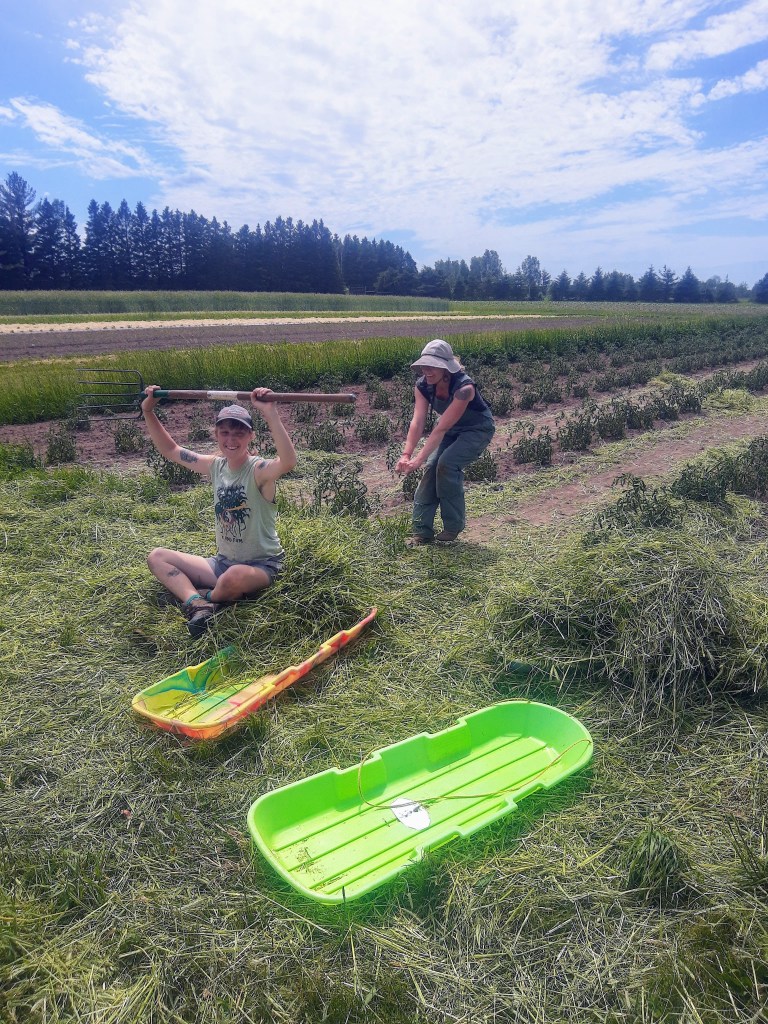
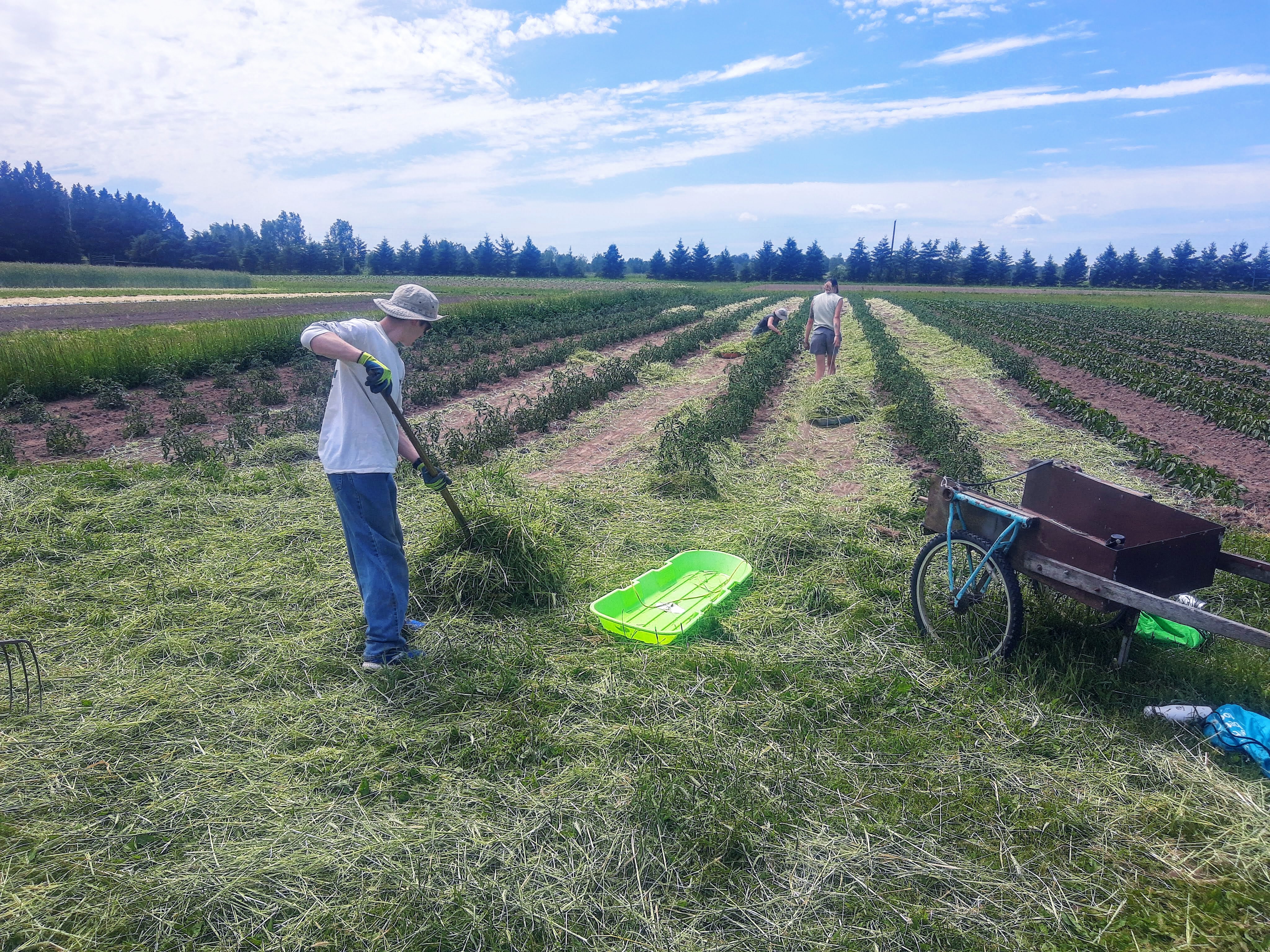
Last week we mulched the field tomatoes (pictured above). These tomatoes are paste type tomatoes for sauces and will go towards the canning tomato preserving share. Food Farm preserving shares are one-time boxes made specially for the canning crowd. Whether you want to stock up on freezer pesto, make all your family dilly beans for Christmas, or perfect your marinara recipe, the preserving shares are ideal for community members who want bulk orders of the freshest local produce. Canning tomatoes will be ready for pick-up between the beginning of August and the first frost, but you can (and should!) get your preserving share order in now at foodfarm.csaware.com .
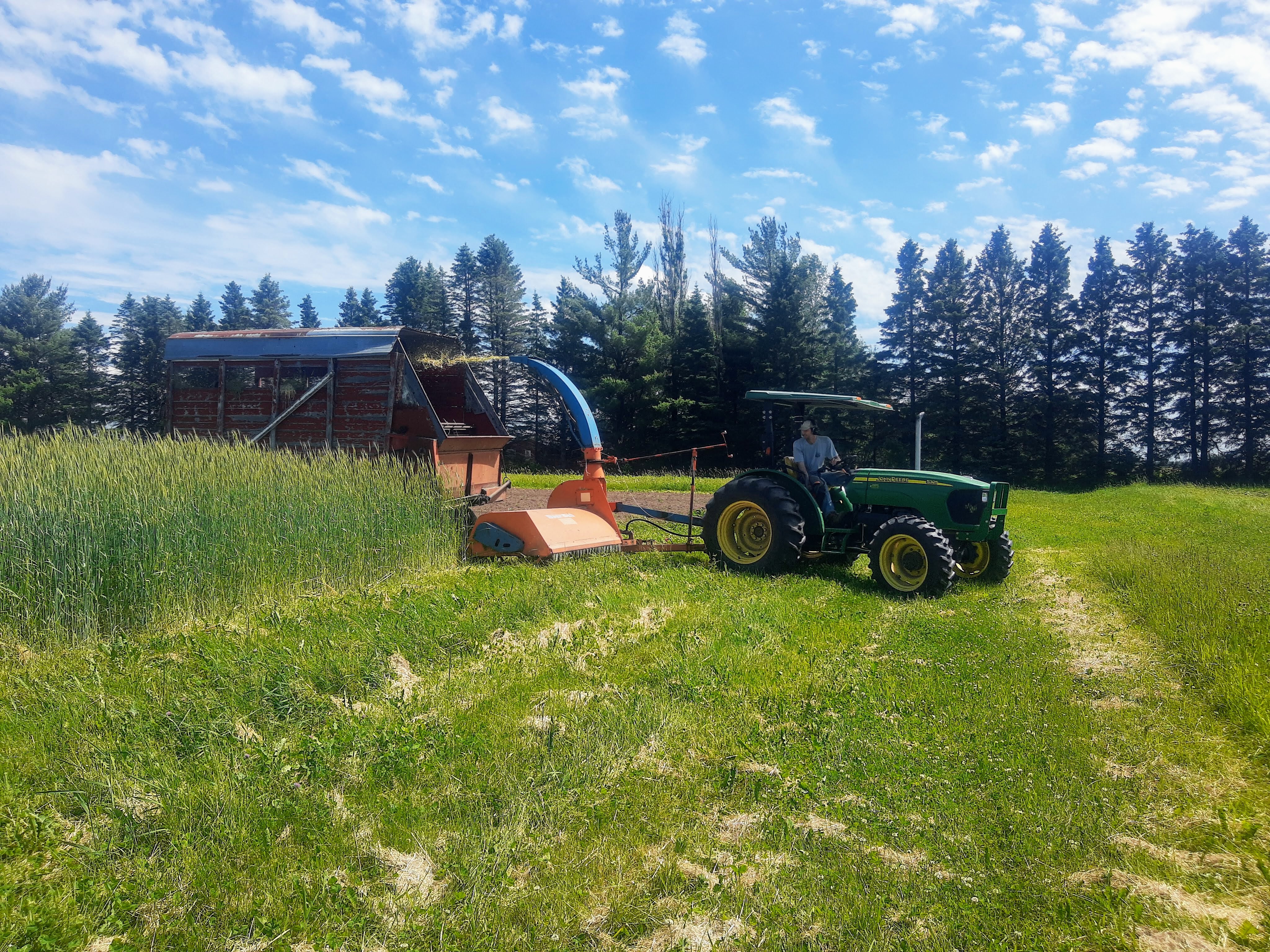
We are fortunate at the Food Farm to have enough space and appropriate equipment to grow our own mulch. Other farms have to buy in straw. Janaki cuts fields of tall rye cover crop and then the crew tucks in the tomatoes using sleds and pitchforks. It’s like sledding, but all uphill and a lot more itchy! The mulch will suppress the weeds and keep in soil moisture so our tomatoes grow big and strong.
Welcome to summer! June 21st was the Summer Solstice, the longest day and shortest night of the year. We received 15 hours 52 minutes on the farm!
In your share this week:
Green Top Beets – Lettuce – Green Onions – Pac Choi – Radishes – Spinach – Salad Turnips
A note on this week’s spinach: our previous batches of spinach have come from our greenhouses which means they have been protected from the elements. This week’s spinach is from the field, so you may find it a little dusty from splash back from the rain and wind. We don’t wash the spinach on farm, because we find it lasts longer if we don’t get it wet before we get it to you. When you’re ready to use your spinach give it a wash, and either wash and dry the bag or transfer it to a clean bag. See how to wash greens in the video we posted last week!
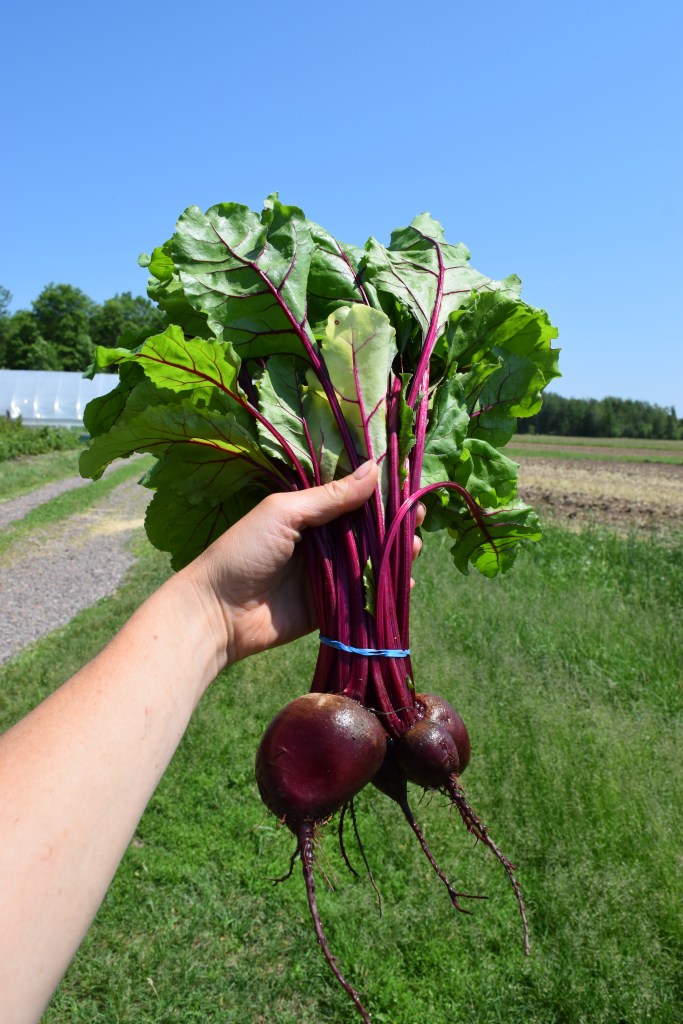
Beets with greens ready to go out in a CSA share!
The beet beat: did you now every part of the beet is edible? Beets tend to mature at varying rates, so you’ll probably find a range of sizes in your bunch this week. One thing they all have in common is delicious greens! Beet greens can be prepared any way you’d prepare kale. The most common way to prepare beet greens is in a sauté. Coat a pan with olive oil and cook your greens until they are wilted and tender (5 to 8 minutes). Add minced garlic, salt and pepper, or try experiencing with any of your favorite seasonings and aromatics.
You will find lots of salad turnips in your share this week! These turnips are best eaten fresh, but can be cooked (see a recipe below). These turnips are similar to radishes, but without the spiciness. You’ll find the turnips delightfully crunchy and juicy. Throw them in a big salad or eat them straight as a snack.
Here is a turnip poem written by a nine-year-old Henry Wadsworth Longfellow. It sounds like Longfellow only had access to old storage turnips. This poem might be a little more joyful if it was a fresh salad turnip they were eating, but we still love any literary ode to veggies.
Mr. Finney had a turnip, And it grew, and it grew, And it grew behind the barn, And the turnip did no harm.
And it grew, and it grew, Till it could grow no taller; Then Mr. Finney took it up And put it in the cellar.
There it lay, there it lay, Till it began to rot ; When his daughter Susie washed it And put it in the pot.
Then she boiled it and boiled it, As long as she was able; Then his daughter Susie took it And put it on the table.
Mr. Finney and his wife Both sat down to sup; And they ate, and they ate, Until they ate the turnip up.
Lebanese Pink Pickled Turnips
Ingredients
1 pound turnips, peeled, quartered, and sliced 1/4 inch thick
1 small beet, peeled and quartered
1 clove garlic thinly sliced
1/2 cup vinegar
2 tablespoons kosher salt
1 teaspoon sugar
1 1/2 cups water
Preparation
Put turnips, beet and garlic into a wide mouth heatproof 1 quart jar.
In a small saucepan, bring vinegar, salt, sugar and water to a boil. When salt and sugar are completely dissolved, pour brine over vegetables to fill the jar. Leave to cool.
When completely cool, cover jar and chill for 1 week.
Caramelized Hakurei Turnips
“Hakurei” turnips are another name for salad turnips, originally developed in Japan.
Ingredients
4 servings
2 tablespoons olive oil, plus more for greasing the baking sheet
2 bunches hakurei turnips, greens removed, washed but not peeled
1 teaspoon kosher salt
Freshly ground black pepper
Preparation
Preheat oven to 425 degrees F. Grease baking sheet lightly with olive oil.
Slice the turnips about 1/4 inch thick. You can do this with the slicing disk of a food processor, an adjustable mandoline, or by hand with a knife.
Combine turnips with 2 tablespoons of olive oil and salt in a large bowl. Toss and coat turnips.
Pile turnips on prepared baking sheet, spreading them as close as possible to a single layer.
Roast the turnips until they are crisp and golden around the edges, 15-20 minutes. Shuffle turnips and roast 5 minutes more. Remove from oven and top with freshly ground black pepper.
Basic Vinaigrette
Spring and early summer is the season of greens! It is easy to make your own salad dressing at home. I like to put all my vinaigrette ingredients in a jar, and shake to combine. That way any dressing I don’t use, I can leave in the fridge for a future salad! Add any seasonings and herbs you prefer for different flavors.
Ingredients
¼ cup extra virgin olive oil 2 tablespoon balsamic vinegar 1 tablespoon whole grain dijon mustard 1 ½ teaspoon maple syrup (or agave) 1 teaspoon fine grain kosher salt ½ teaspoon ground black pepper
Preparation
Combine!
Greenhouse after harvesting beets and scallions for Monday’s shares. Lots more tasty produce to come!
Super star Food Farm member, Lynne, shows us how to unbox your veggie box and keep the produce fresh for your consumption!
Week 2 of the CSA! Our crew is back in the CSA rhythm and excited to bring you more delicious produce. Thanks to some super star volunteers we have an educational video for you about how to take care of the producing coming in your shares. Experienced CSA members and newbies alike will benefit from watching the video above!
Things are moving fast here at the farm, the hustle intensifies in hot weather as both crops and weeds develop quickly and need attention. On a related note: that’s why there are three heads of lettuce in your share this week!
This share includes the last of the 2021 potatoes. This is very late to store potatoes, so please keep them in the refrigerator and use them quickly. If your potatoes sprout you can still break off the sprouts and use the potato as usual. You’ll have potatoes in your box again in August when our first crop of “new” potatoes is ready.
Greek Potatoes
Ingredients
6 servings
6 medium potatoes, cubed (3 pounds)
1/2 cup fresh lemon juice (~2 1/2 lemons)
1/3 cup vegetable oil
1 tablespoon olive oil
2 teaspoons salt
1/2 teaspoon black pepper
11/2 tablespoon fresh oregano
2 garlic gloves, minced
3 cups hot water
chopped fresh parsley
Preparation
Preheat oven to 475 degrees.
Toss together potatoes, lemon juice, salt, pepper, oregano and garlic in a deep flat pan about 8 x 12 inches. Add water to the pan.
Bake for 1 1/2 hours at 475. Stir every 20 minutes adding more if needed to prevent sticking. Be careful not to burn in the last 30 minutes of cooking. During the final 15 to 20 minutes, allow water to evaporate.
Garnish with fresh parsley and serve.
You can also try recipes from past newsletters like:
The Free Range Film Festival is THIS WEEK. This is your opportunity to come out to Wrenshall and watch independent films in a beautiful historic barn. Friday and Saturday at 7pm. There will also be music by Darin Bergsven and the Denfeld Honors Quartet and a food truck on site. We’d love to see you there!
909 County Road 4, Wrenshall MN
June 24 & 25, 7:00pm
While there is officially no charge for admission, the organizers do ask audience members for a $10 donation to help pay for barn maintenance.






















 Food Farm