March Winter Share

Before we get into what’s going on on the farm, we have a little reminder for you all. If you’ve been thinking about ordering a Summer Share but haven’t yet, we only have 15 left, so hurry before they’re gone!

Things around the farm have been heating up. Both literally and figuratively. 

In the packing shed, Catherine, Teri, and myself are still hard at work packing vegetables for our weekly retail and restaurant orders. The vegetable quantities are quickly dwindling, and we’re pretty much out of wholesale produce so what’s left is all for CSA members. Once the coolers empty out, the crew starts deep cleaning not only the coolers but the entire packing shed. It’s the perfect time for us to reset not only our spaces, but also our brains and bodies (by doing something other than bagging and boxing veggies for hours on end) to prepare for the growing season ahead. 

Last week we planted the first seeds of the 2025 season! Dave and Catherine planted greens mix in the greenhouse. This is a little sneak peak into your box next month. If all goes well, everyone will get their first taste of Spring with this tasty greens mix. The first round of the onions were seeded, and the trays got placed in the germination chamber. This week, we will be seeding round two of onions. The germination chamber is an enclosed shelving unit with a steam heater. Once seeds get planted in the trays, the trays get a light watering and are placed in the germination chamber where they will remain mostly undisturbed for a couple of days until the seed germinate, and the green tops start poking through the soil. The combination of heat and darkness help the seeds to germinate faster than if they were left at room temp, in the light. 
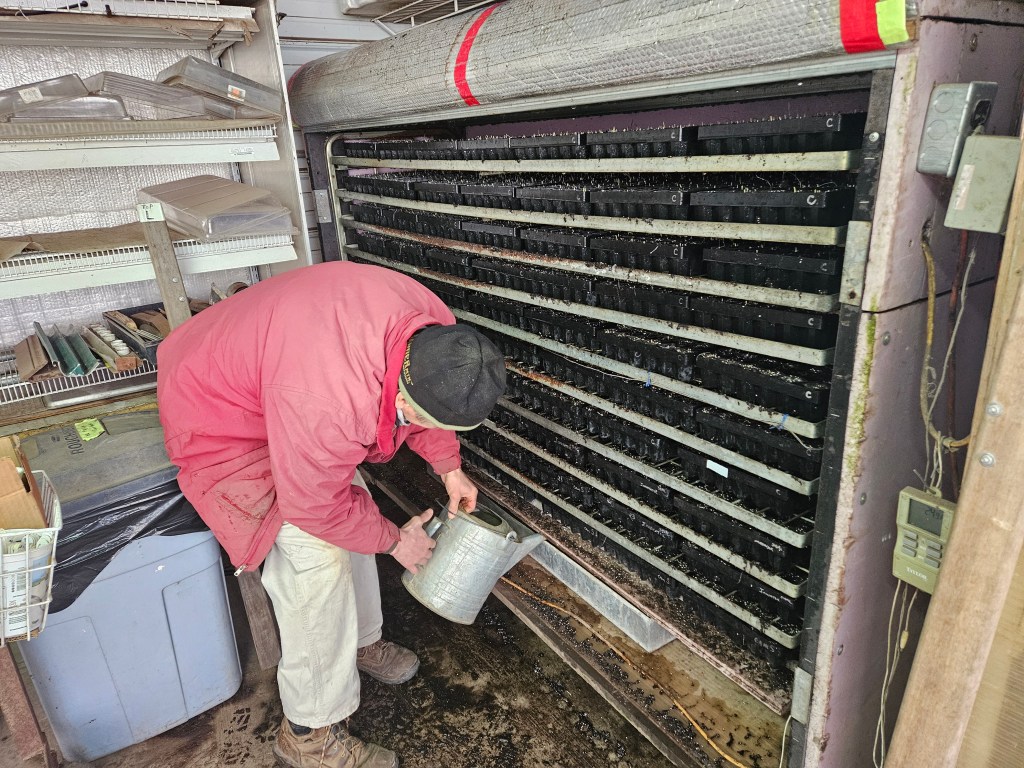
Dave adding water to the germination chamber to keep things warm and toasty

Once the seeds have germinated, and the green tops are visible, we move the trays out of the germination chamber so they can start receiving light. If the trays are kept in the germination chamber for too long, the plants will begin searching for a light source causing the plants to become tall and weak. Most people know this as having “leggy” plants. We try our best to avoid having leggy plants because it makes the plants weaker causing them to be more prone to breaking and falling over once they’re placed outside.
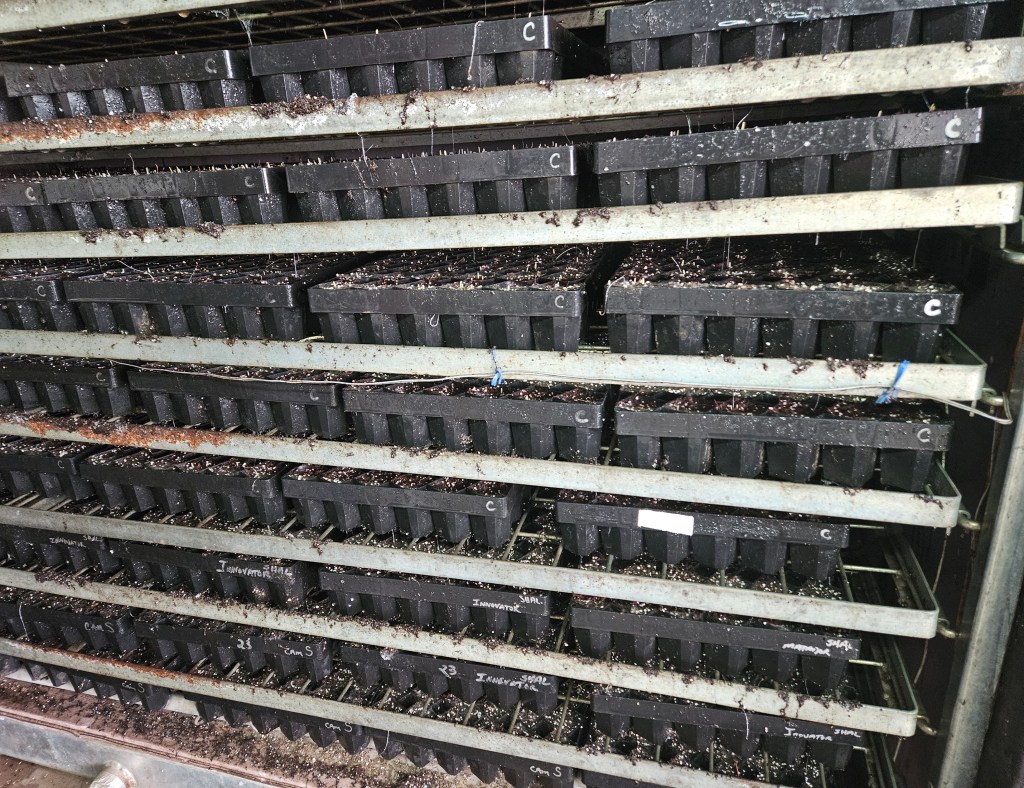
A portion of onion trays all packed into the germination chamber

Due to the large quantity of onions we plant, we generally move the trays of seedlings out onto tables in the greenhouse. This allows the plants to soak in all the beautiful sunshine we’ve been getting lately. It also protects them from the elements, and thanks to a wood burning stove, keeps them warm and toasty no matter the weather outside. The onion plants will continue growing and thriving in their little trays in the greenhouse until early May when we put them in the field. 

Did you know that the largest onion ever recorded weighed over 19 pounds! That’s an un-peel-ievably big onion. 

In your share this month:

Russet potatoes – Baby red potatoes – French Fingerling potatoes

Green Cabbage – Rutabaga – Onions – Parsnips – Red beets

Chioggia beets – Orange carrots – Purple carrots
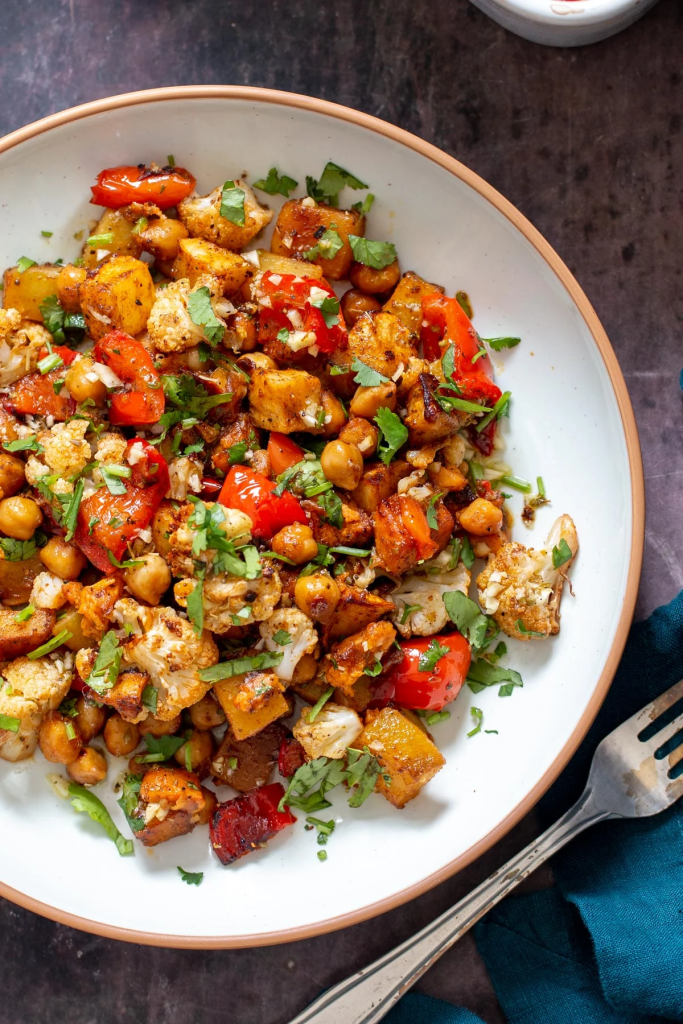
This recipe from Vegan Richa is a fun way to use up any root veggies you might have. It uses bright spices, incorporates any root vegetables you want, and gets topped off with a bright lemon dressing. It’s perfect for those days when you want something light, but full of flavor. If you’ve been struggling to find a fun way to use your rutabaga, this would be a great recipe for it!

If you love cabbage rolls and just want some variety, or you’ve never made them before but want to try, check out these Asian pork cabbage rolls from From A Chef’s Kitchen. The recipe starts by walking you through two different ways to get the leaves off the head of cabbage. These delicious bundles are filled with a pork, rice, and veggie filling. Then they’re topped with a sweet and spicy sauce that adds a burst of flavor. They also freeze and reheat really well!

For the farm crew,

Jennifer

Summer CSA Week 18

Today marks the final Summer CSA delivery.  We are sad to see this part of our season come to a close, but what a wonderful season it has been. This year has been filled with seeding, planting, harvesting, learning, laughing, and gratitude. 

Our Farm crew shows up and works incredibly hard every day, but as the saying goes, many hands make light work. On Mondays and Thursdays we are grateful for our wonderful volunteers that help to lighten the load. This year we had quite the list of volunteers come out to help–if you braved the weather to come bag vegetables, harvest, weigh items, fill boxes, wash veggies, or cheer us on while we did those things, we appreciate you and your time more than words could express! Our CSA deliveries also wouldn’t be possible without our wonderful site hosts. Thank you to all of you who allowed us to use space at your home or business. This allows us to get local veggies onto the plates of more families by making pick up locations closer to their homes. 

Today may end the CSA season, but it doesn’t end the farming season. These next 3 weeks are crunch time for us. We still have lots of veggies in the field that can handle a light frost ( and remember from last week, some of them even taste better), but too much frost can damage the crops. We also had a hard start to the growing season with how wet this spring was, so the longer we can let the plants grow, the better.

We will start the harvesting with things that shouldn’t get too cold such as potatoes and brussels sprouts. We will finish the harvest with our most cold hardy vegetables such as carrots and parsnips. By the end of October, all of the fields will be empty and everything that shows up on grocery store shelves, or in the Winter CSA boxes has been carefully stored over many months. Vegetables can last for a very long time if they are properly stored. We are grateful for our root cellar that will soon get packed from floor to ceiling with vegetables. This year was finally time to admit that we might be growing more vegetables than we have storage for. Janaki applied for, and got approved for a grant that will allow us to expand our cold storage area. By the end of the project, we will have increased our cold storage by over 50%, and give us a bit more space to wash and pack those veggies as well. If the mild weather continues, the plan is to get the footings in place before snow flies. The rest of the project will have to wait until Spring, so check back for more updates. 

Another fun project we have in the works is adding another well. Up to this point, we’ve been using our household well to irrigate all of our greenhouses and tunnels, as well as a few of the smaller fields that don’t fit our larger irrigation equipment. This has required a careful dance to make sure everything gets watered and we still have pressure to wash and pack everything we need to. We hired a crew to come out a few weeks ago and dig the new well, and they’ll be coming back soon to install the pump and run new pipe to connect the buildings. We’re looking forward to having easy access and enough water pressure to provide water to the greenhouses, pack shed, and maybe even run a load of laundry at the same time.

Once November hits, we say goodbye to most of our summer crew. A couple people will stay on to fill retail orders, box Winter shares, wash vegetables (there isn’t always enough time to harvest and wash before the season ends) and do various tasks over the winter. The Summer crew will rejoin in late April or early May to start the cleaning process and take everything out of storage so we can do this all over again next year. 

Before we end this last newsletter, we need to say a big thank you to all of you. Thank you for supporting us. Thank you for believing in us. Thank you for being here with us through the twists and turns. Farming isn’t easy. We give up a lot of control to mother nature, and hope things work out how we want them to…and sometimes they do! Having your support makes the challenges a little easier. Thank you for putting your trust in us, for supporting your local farmers, and for allowing us to wake up each day and do what we love. We hope to see you all again next year!

In your share this week:

Arugula – Northeaster Beans – Beets – Brussels Sprouts – Cabbage – Carrots – Cucumbers – Lettuce – Onions – Peppers – Potatoes – Winter Squash – Tomatoes

Egyptian red lentil soup

One large onion, chopped

One carrot finely chopped

4 to 5 garlic cloves, finely chopped

3 tablespoons olive oil

1 1/2 cups split red lentils

8 1/2 cups chicken or vegetable stock

2 teaspoons ground cumin

1 1/2 teaspoons ground coriander

One good pinch, hot pepper flakes

Juice of one lemon

Salt and pepper to taste

Soften the onion, carrot and garlic in the olive oil in a large pan over low heat for about 10 minutes. Add the lentils in stock to the pan bring to boil and skim off the foam that forms on the top simmer for 20 to 40 minutes until the lentils have disintegrated.  Stir in the spices and lemon juice and season with salt and pepper. Simmer for five minutes more – if the soup needs thinning, add water and bring to boil again.

Winter Salad

For the Salad:

  • 6 oz. shredded kale
  • 1/2 small lemon, juiced
  • 1 Tbsp. extra-virgin olive oil
  • 6 oz. shredded vegetables, such as Brussels sprouts, cabbage, carrots
  • 2 medium apples, cored and diced
  • 1 1/2 c. candied pecans
  • 4 oz. crumbled goat cheese
  • 1 1/2 c. roasted winter squash
  • 1/2 c. pomegranate arils

For the Dressing:

  • 1/2 c. red wine vinegar
  • 4 tsp. whole grain or dijon mustard
  • 4 tsp. pure maple syrup
  • 1 tsp. kosher salt
  • 1/2 tsp. ground black pepper
  • 1/2 c. extra-virgin olive oil

Directions

  • Place the shredded kale in a very large salad bowl. Add the lemon juice and oil. Use your hands to massage the lemon juice and oil into the greens, about a minute or so. The greens should wilt slightly and take on a deep green color.
  • Add the other shredded vegetables to the bowl as well as the chopped apple.
  • Make the dressing by combining all of the dressing ingredients in a mason jar. Shake vigorously for 30 seconds and then pour it over the salad. Toss well to combine.
  • Add the pecans, goat cheese, squash, and pomegranate arils on top. Serve.

For the farm crew,

Jennifer
Summer CSA Week 8, 2023

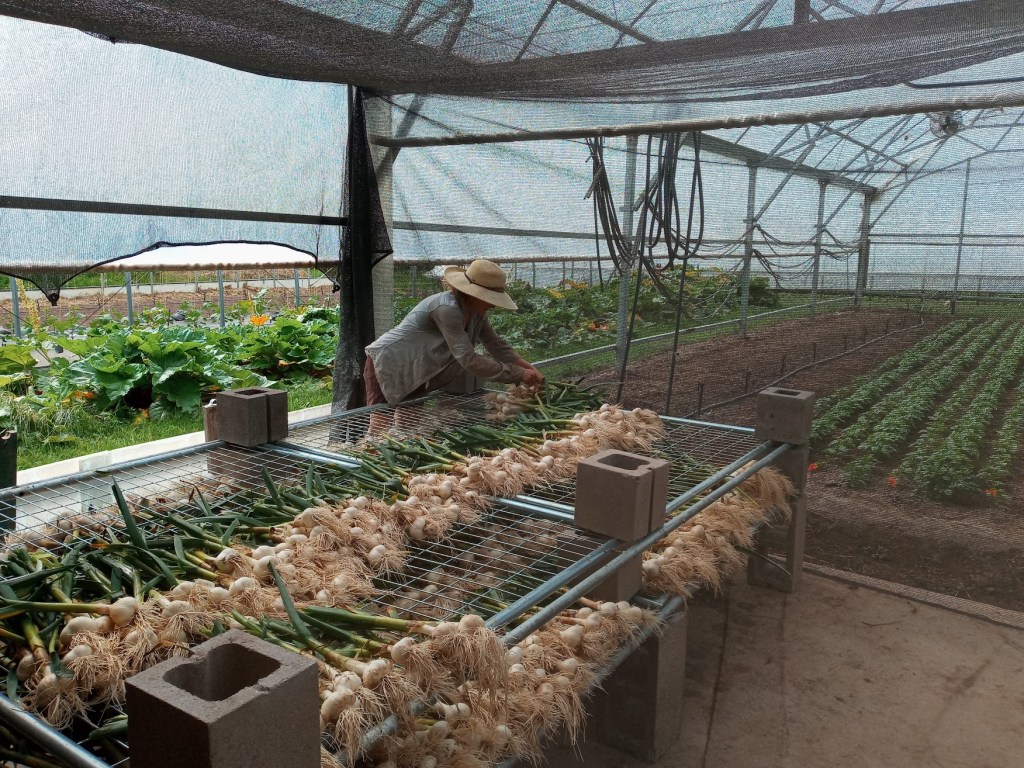
Garlic season has arrived! Last Wednesday was all hands on deck as the crew shuttled wagon load after wagon load of freshly harvested German Extra Hardy to washing stations. Once washed the garlic was gently laid out on wire racks (see below). Although it is edible right from the ground, you won’t be seeing it in the shares for at least a couple weeks. To stay fresh in the pantry for any extended period of time, it must go through the curing process – essentially just letting it dry out. As the garlic dries, the skin shrinks and turns papery, forming a protective barrier against moisture and mold.

As we wait for the garlic to be ready, we can take a little time to enjoy another new addition to this weeks box… Potatoes! Not just any old potatoes, but new potatoes. New potatoes are essentially young potatoes that are harvested before they reach full maturity. They are the same varieties as their larger counterparts but are picked early in the growing season, typically about three to four months after planting. Because they are harvested at this young stage, new potatoes are sweeter and more delicate in flavor than mature potatoes. Their skin is thin, tender, and often flaky, which makes them particularly appealing for potato salad. This week i’ve included one of my favorite recipes for just that.


In your share this week:

Cabbage – Carrots – Cilantro – Dill – Cucumbers – Lettuce – Green Onions – Snap Peas

Jalapeño Peppers – New Red Potatoes – Tomatoes – Zucchini


Herby Potato Salad, from Half Baked Harvest

Yield: 6 servings

2 pounds new potatoes
3 cloves garlic
kosher salt
1/2 cup raw cashews, soaked in hot water for 30 minutes, then drained
1 tablespoon dijon mustard
1/3 cup olive oil
1 cup fresh basil, chopped
1/4 fresh dill, chopped
2 chives, chopped
flakey sea salt and black pepper
1 pinch crushed red pepper flakes
juice of 1 lemon

1. Place the potatoes, garlic and a tablespoon of salt in a large pot and fill with water. Bring to a boil over high heat and then reduce the to heat to medium, simmer 10-15 minutes or until the potatoes are just fork tender. Drain. Place the potatoes back in the hot pot. Remove the garlic cloves. Cover the pot and let the potatoes steam for another 20 minutes.

2. Meanwhile, combine the cooked garlic, drained cashews, mustard, and olive oil in a food processor. Pulse until smooth and creamy, adding water if needed to thin slightly. 

3. Cut the potatoes in half and add to a large serving bowl. Add the cashew sauce, basil, dill, chives, lemon juice, and a pinch each of salt, pepper, and crushed red pepper flakes. Toss well to combine. Taste and adjust salt and pepper to your liking. Serve warm or cover and place in the fridge. Can be served at room temp or cold.


Cilantro Lime Slaw, from Gimme Some Oven

Yield: 4-6 servings

1 cup plain Greek yogurt
1/2 cup tightly-packed fresh cilantro
1/4 cup freshly-squeezed lime juice
1/2 teaspoon ground cumin
1/2 teaspoon fine sea salt
1/4 teaspoon freshly-cracked black pepper
3 green onions (just the green parts)
2 garlic cloves
1 jalapeño or serrano pepper, stemmed and cored
14 ounces cabbage, thinly sliced

1. Combine the Greek yogurt, cilantro, lime juice, cumin, salt, black pepper, green onions, garlic and jalapeño in a blender or food processor*.  Pulse briefly a few times until the mixtures is combined.

2. Place the cabbage in a large mixing bowl. Drizzle the sauce on top of the cole slaw, then toss until the mixture is evenly combined.  Season with extra pepper and/or lime juice if needed.

3. Serve immediately, or cover and refrigerate for up to 24 hours.


For the farm crew,

Charlie

March Winter Share

Whew, what a winter! Onion seeds are already up, and the greenhouse is tucked in a cozy blanket of snow, but we’re definitely ready to see the banks recede. The first broccoli plants are scheduled to go in the field in just six weeks so we’re getting a little bit antsy! Ellis pretty much summed up our feelings right here: https://photos.app.goo.gl/bhbWAt1VpbyWUFyq8

We are still hiring, so please have folks reach out if they’re looking for some good work this summer.

For the farm crew,

Janaki

In your share today:  

Beets — Green Cabbage — Orange and Purple Carrots — Onions — Parsnips Baby Red, Fingerling, and Yellow Potatoes – Rutabagas

Indian spiced pasties

Dough

  • 1 cup boiling water
  • 1 cup shortening
  • 3 cups flour
  • 1 tsp salt

Stir shortening and water in a large bowl until the shortening is melted.  Slowly add flour and salt while stirring.  When the dough is soft, cover and refrigerate for 1.5 hours.  

Filling

  • 2 lbs potatoes, peeled
  • 1 lb rutabaga, peeled
  • 1/2 lb carrot, peeled
  • 2  cups cabbage, finely chopped
  • 1 finely minced onion
  • 2 medium cloves garlic, minced
  • 1.5 cups frozen peas
  • 1 tablespoon freshly grated ginger
  • 1 tsp mustard seeds
  • 1 tsp ground coriander
  • 1 tsp ground roasted cumin seeds
  • 1/4 tsp cayenne pepper
  • 1 tsp salt
  • 2 tablespoons lemon juice

Cube potatoes, rutabagas, and carrots (1/4″ cubes- all veggies to similar size to ensure even cooking).  Mix all filling ingredients in a large bowl and stir.  

Assembly

On a floured surface, cut the dough into 10 equal portions.  Roll one portion into a 8-10″ (appx) circle.  Heap 1-1.5 cups of filling onto one half the dough.  Fold the dough over (to make a half-moon shape) and crimp edges with fingers or a fork.  

Arrange samosa/pasty on ungreased baking sheets.  Freeze or bake.

Bake appx 1 hour at 350degrees

Winter CSA Box 2, December 2022

Garlic ready to go out in shares.

Happy December! We hope you’re keeping warm and enjoying the holiday season.


In your share this month:

Chioggia Beets – Orange and Purple Carrots – Green Cabbage – Garlic – Yellow and Red Onions – French Fingerling & Russet Potatoes – Sunshine and Delicata Squash


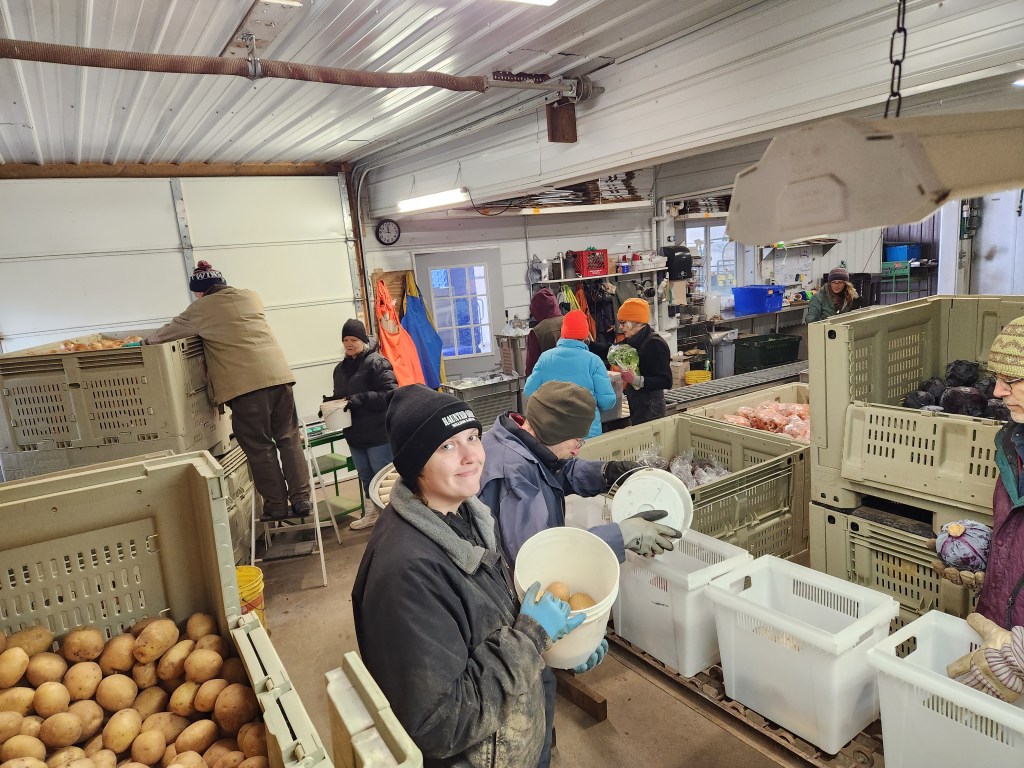
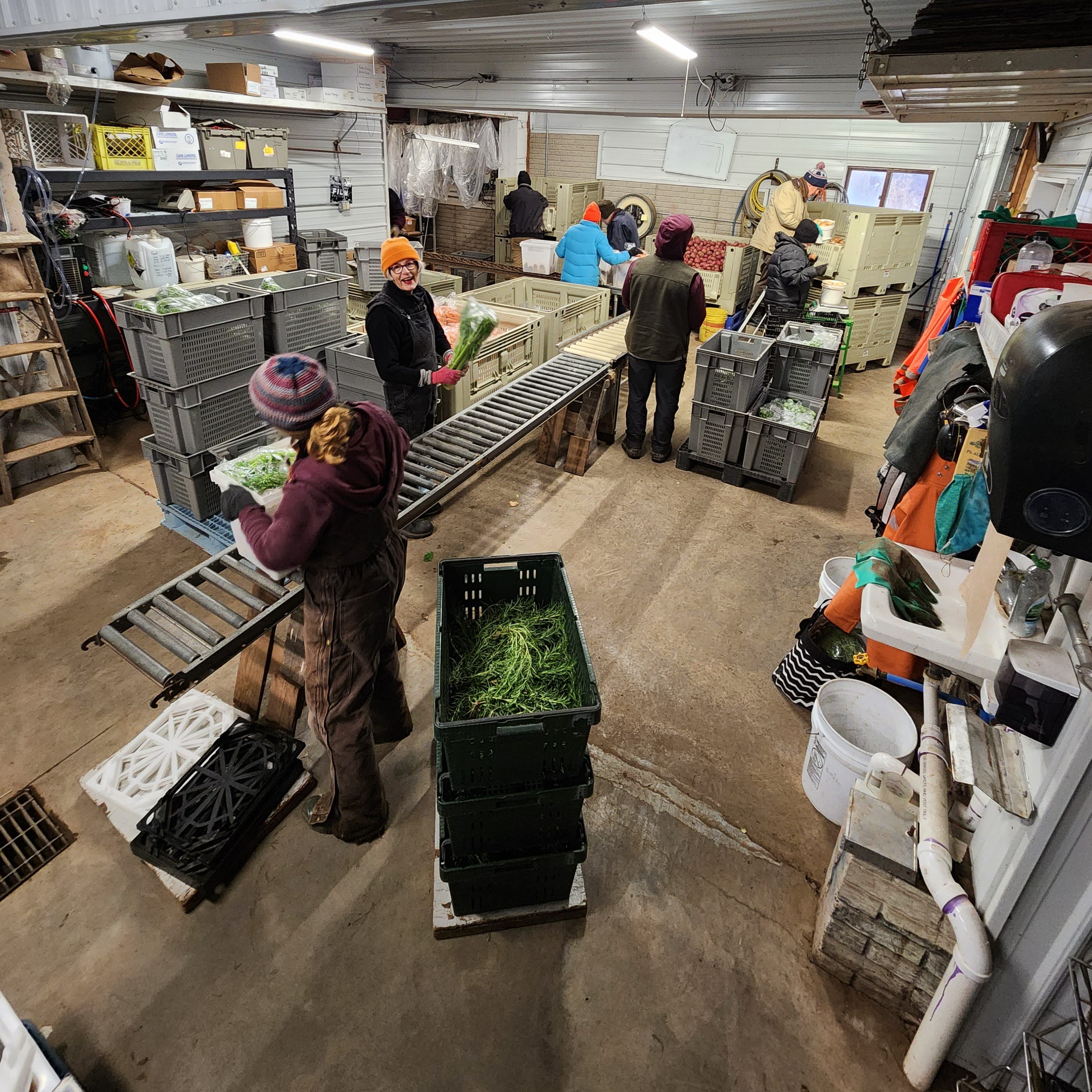
Packing winter share boxes is quite a production! We have all hands on deck and a conveyer table set up that reaches all the way across the pack house.


Egyptian Stuffed Cabbage

Serves 10

Ingredients

Cabbage braising

  • 1 head of cabbage
  • 2 tablespoons salt
  • 1 tablespoon ground cumin

Stuffing

  • 1 tablespoon vegetable or olive oil
  • 1 large onion, finely minced
  • 1-1.5 pounds lean ground beef
  • 1 tablespoon minced garlic
  • 1 can, tomato paste (6 oz.)
  • 3 cups Egyptian rice, or Goya medium grain rice, washed until water is clear
  • 2 tablespoons salt
  • 2 teaspoons ground black pepper
  • 1 teaspoon allspice (optional)
  • 1+ can, crushed tomatoes (28 oz)
  • 1 cup finely minced flat leaf parsley
  • 1 cup finely minced cilantro
  • 1 cup finely minced dill
  • 1 tablespoon Better Than Bullion Chicken flavor
  • 2 tablespoons butter

Instructions

Cabbage braising

  1. In a large, heavy pot, fill with water until about 2/3 full. Add salt and cumin, cover and bring to a boil. 
  2. Remove any wilted or damaged leaves from the cabbage. Turn cabbage upside down (with stem facing you) on a cutting board. Make deep gashes into the cabbage leaves as close to the stem as possible in a circular fashion. Hold the stem and gently pull apart the leaves, one at a time, careful not to rip them. 
  3. Place leaves 2-3 at a time in the boiling water. Allow to cook for 2-3 minutes until it becomes less stiff and just wilted. Do not overcook. Remove and place in a colander. 
  4. Gently peel leaves from the cabbage and cook in small batches. At some point, the cabbage will become too compact to remove the leaves. Hold the cabbage stem and gently lower half the remaining cabbage in the water. With your other hand, you can begin loosening the cabbage leaves one by one into the water. Once you have loosened 2-3 leaves, remove the head and set aside. Repeat until most of the cabbage is cooked. It’s ok to stop at the deepest part of the cabbage, as the leaves become too crinkly to be rolled. 
  5. Allow cabbage to cool. Meanwhile, prepare the stuffing mix. 

Stuffing

  1. In a large Dutch oven or non-stick pot, add the vegetable oil and bring to medium high heat. 
  2. Add the onions and sauté until translucent. If using, add the beef all at once, mixing with the onions and breaking up the clumps. Sauté until browned. 
  3. Add the garlic and mince until fragrant (about 1 minute). Add all of the tomato paste, stirring constantly for 3-4 minutes (the texture will change and become less of a formed paste). Add salt, pepper, and all-spice.
  4. Add the can of crushed tomatoes and stir until evenly mixed. Turn off the heat. 
  5. Pour in all of the washed rice, stirring until mixed. Now add all of the herbs and stir until everything is combined. If necessary, adjust the salt. Transfer to a large mixing bowl and allow to cool. 
  6. Prep the cabbage leaves for rolling. Set up a clean work area with a cutting board. Take one cabbage leaf at a time and spread it out over the board. Cut out the thick stem, reserve for later. With the flat leaf on the board, cut it into 2-3 even pieces that can be rolled in a straight line, about 2 inches wide x 3-5 inches long. See Photo. Make a stack of leaf segments on a clean plate. 
  7. Prepare the pan for cooking: generously drizzle vegetable or olive oil at the bottom of the Dutch oven or nonstick pot. Take several of the cabbage stems and cover the bottom to prevent the rolled leaves from scorching on the bottom layer. 
  8. Roll the leaves: place an entire leaf segment on the cutting board. Leaving 1/2 inch of space at one end, place a line of the stuffing mixture about 1/2 inch wide inside the leaf. Gently roll it up (important to roll it securely but not too tightly, as the rice still needs to expand). See photo. 
  9. Layer the rolled cabbage leaves in one direction until one layer is completely filled, then top with another layer at a ninety degree angle to the first one to prevent the rolled cabbages from unraveling. Continue rolling and layering at 90 degrees until all of the cabbage leaves are rolled (extra rice mixture may remain). 
  10. In a small saucepan, bring 1 cup of crushed tomatoes + 1 1/2 cups of water to a boil. (Alternatively, you can use 2 1/2 cups of water and 1/2 can of tomato paste). Add 1 tablespoon of butter and 1 heaping tablespoon of bullion paste and boil until dissolved. 
  11. Place the pot with the rolled cabbage on medium heat. Pour all of the water/tomato mixture on the rolled cabbages. Cover and cook on medium low for 45 minute-1 hour. Do not uncover for the first 30 minutes, then begin checking if the rice is cooked on the top layers. If it appears too dry, add in 1/2 cup of water and continue to check. The cabbage is done with the rice is completely cooked and the liquid has been absorbed. 
  12. Turn off heat. Add small pats of butter to the top. Cover. Allow to rest for 15 minutes. Enjoy, or: 
  13. Place a large plate over the opening of the pot. Carefully invert the entire pot and let rest for 5-10 minutes. Gently remove the pot and serve immediately.

Recipe from Food52.


Archived Recipes

You can now search previously posted Food Farm recipes using the “Tag Cloud” below. If you click an ingredient below it will take you to a list of the newsletters that include a recipe using that ingredient. Larger text means there are many recipes using that ingredient while smaller text means fewer recipes have been tagged so far.


Arugula Basil Beet Bell Pepper Broccoli Brussels Sprout Brussels Sprouts Cabbage Carrot Cauliflower Celery Cilantro Cucumber Delicata Squash Dill Dressing/Sauce Egg Garlic Garlic Scape Green Bean Green Onion Jalapeno Kale Leek Lettuce Mint Napa Cabbage Onion Parsley Parsnip Pepper Potato Radish Red Onion Rutabaga Scallion Shallot Spinach Squash Thyme Tomato Turnip Winter Squash Yellow Onion Zucchini


We hope this will help you explore new and old recipes and take advantage of the produce in your share!


For the farm crew,

Starr

February Winter CSA

Greetings fellow food lovers,

It has been awfully chilly the last few weeks around the farm. Normally, we run around in circles and light veggie scraps on fire to stay warm every morning. We’ve also been curating a new dance routine to really turn up the heat in the packing shed. This helps us pack your veggies faster and also keeps our toes from freezing. Although I am just kidding, I often wonder during these cold midwinter stretches, “Why do I live somewhere that if I stayed outside too long, I would die?” On the other hand, the long winter can be a nice break from all of the summer work we do at the farm, and I love that we have real seasons in the Northland.

Speaking of the Northland, we had a great time seeing our community at Wild State Cider last week for our annual rutabaga giveaway. In case you missed it, this event had a unique twist this year: rutabaga curling! I can’t think of a better way to take advantage of this unique vegetable (aside from, you know, eating it). Plus, curlers can really sweep you off your feet. Our friends helped make a wonderful video with some highlights from the event which you can find on our Facebook page or by clicking this link: https://fb.watch/b8eTjlvrps/.

Make sure you sign up for your summer shares if you haven’t already! These spots tend to fill quickly. More of this information can be found right on our website. Let us know if you have any questions. Throughout these recent times of uncertainty in our food systems, the importance of local farms has really been brought to light. Community Supported Agriculture has given all of us stability and the ability to contribute to something bigger than ourselves. Our crew at the Food Farm continues to take this responsibility seriously and we appreciate our members and your support!

By the time I write the next newsletter, I expect we will have seen warmer days (by warmer days I mean anything above 20 degrees), and we’ll be starting up greenhouse work and seeding onions! Oh, and remember: organic vegetables make the perfect Valentine’s Day gifts.

Stay warm,

Emily

Your CSA farmers love you!

In your shares this month:

Beets – Carrots – Green Cabbage – Parsnips – Baby Red and Russett Potatoes – Onions – Garlic – Delicata Squash

Mulligan Stew (The Soup and Bread Cookbook, B. Ojakangas)

  • 2 lbs beef stew meat cut into 1″ cubes (or substitute beans for a vegetarian version)
  • 4 medium thin skinned potatoes, yellow or red, washed, unpeeled and quartered
  • 4 medium carrots, cut into 2″ pieces
  • 4 small onions, quartered
  • 1 (1/2 lb) rutabaga, peeled and cut into 1″ cubes
  • 3 sprigs parsley
  • 1 tbsp sugar
  • 2 tsp salt
  • 1/4 tsp black pepper
  • 2 tbsp flour
  • 1/2 cup red wine or water

In a 4-qt soup pot, combine the meat and cold water to cover and bring to a boil.  Add the potatoes, carrots, onions, rutabaga, parsley, sugar, salt, and pepper.  Simmer, tightly covered, over low heat until the meat is tender, about 2 hours and 30 minutes.

In a cup, mix the flour and wine/water until smooth.  Stir into the stew and cook for 15 minutes, stirring frequently to thicken the stew. 

Kalldolmer (Danish cabbage rolls)(Danish Food Cookbook)

  • 3/4 lb ground beef
  • 1/4 lb ground pork
  • 1 egg
  • 1/2 cup cooked rice or 1/4 cup breadcrumbs
  • 1/2 cup milk
  • 1 small onion, grated
  • 1 tsp salt 
  • 1/2 tsp pepper
  • 2 cans stewed tomatoes
  • 12 cabbage leaves (large)

Mix meats, rice/bread crumbs, onion, milk, egg, salt and pepper in a bowl.  Rinse a large cabbage head and remove about 12 large leaves.  Drop the leaves into boiling water for a few minutes to soften them.  Drain the leaves.  Place about 1/4 cup of meatball mix into the center of the leaf and wrap it like a package.  Brown in a frying pan and then place seam side down in a 9″x13″ baking pan.  Pour the tomatoes over them.  Bake 350F for about an hour.

Summer CSA Week 17

I hope everyone’s fall equinox was filled with fall festivities. Leaf watchers should be infiltrating the region en masse in the coming weeks. Luckily we don’t have to go very far at the Farm to see the beautiful colors of fall. For those who have been out to the Farm, you know what I mean. This is also the week where onion cleaning is in full swing which means that the falling leaves will become mostly indistinguishable from onion skins that are left to the ground.

Onions are one of our main storage crops for the winter. Last week we harvested several thousand pounds of storage crops. These include squash, potatoes, cabbage, and daikon radish. Speaking of… daikons will be making an appearance in your shares this week. The following recipes are heavily influenced by daikons as they are probably not used as often in people’s cooking routines.

This is a really nice time on the farm.  The weather is not too hot, and not yet cold. The weeds and bugs have slowed, and we are no longer planting vegetable starts or seeds into the field with the exception of cover crop seed. The frost seems to be keeping its distance and we received a 3/4″ of rain this week. All of our “free time” is pretty focused on harvesting storage crops.

Also, this week we will be sending out pumpkins! Farmer Janaki notes that although these are technically edible, the texture and flavor is not as good for eating. This variety is mainly used for carving. Let the fall festivities ensue.

Thanks for reading,

Emily

Terri hauling pumpkins while wearing her pumpkin colored overalls.

In your shares this week: Pole Beans – Carrots – Celery – Cilantro – Cucumbers – Greens Mix – Onions – Red Peppers – Hot Peppers – Fingerling Potatoes –  Daikon Radishes – Spinach – Delicata Squash – Tomatoes – Zucchini

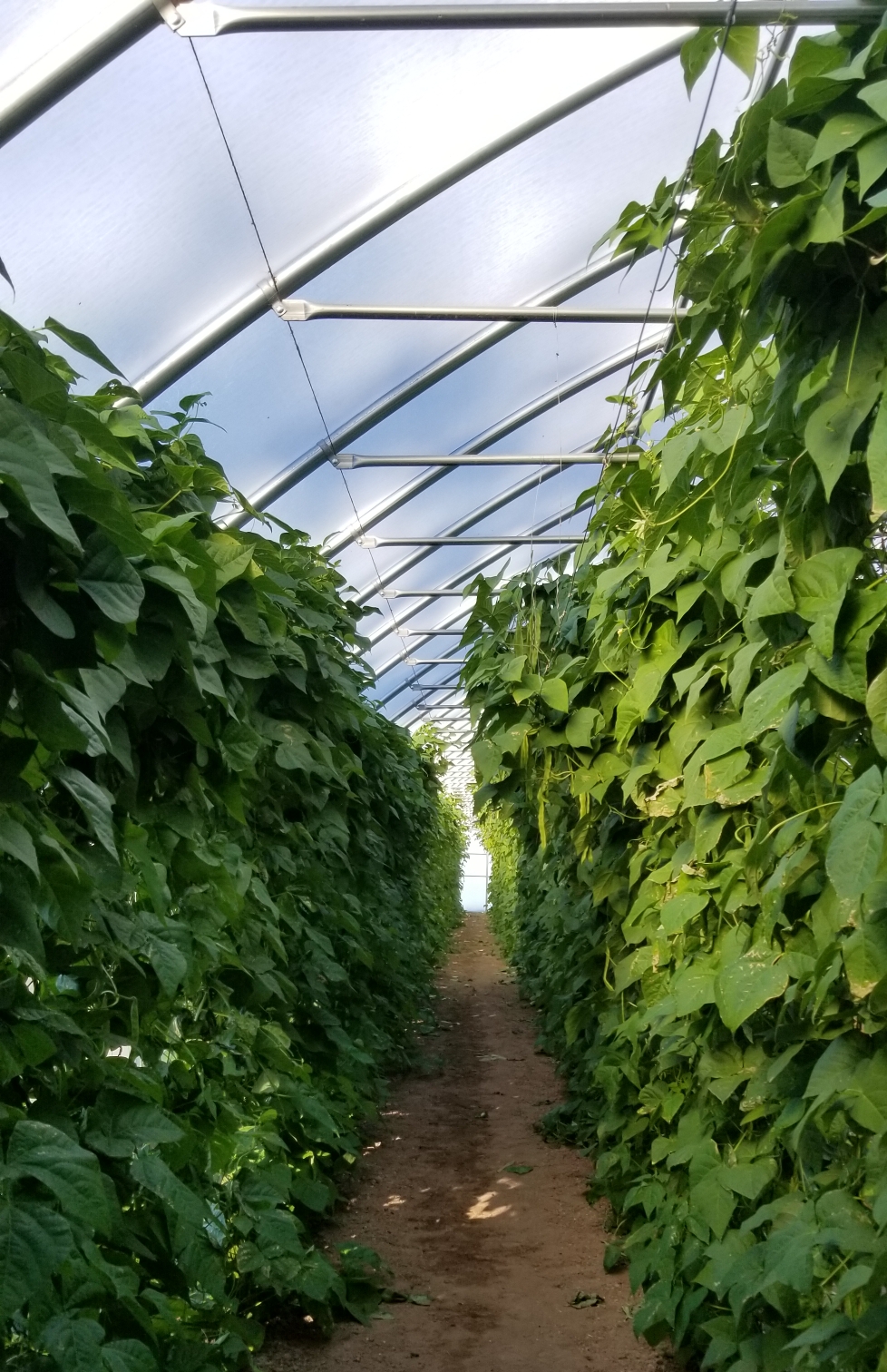
Beans in the greenhouse.

This recipe is good for a quick addition to anything that might need the crunch of a pickle (salads, grilled items).  The original recipe also called for carrots. 


Daikon Radish Quick Pickle (Modified from The CSA Cookbook (Ly)


1/2 lb daikon cut into 2-inch matchsticks

1tsp salt

1/2 cup rice vinegar

1/2 cup water

2 tbsp sugar


Toss the daikon with the salt and let it sit in a colander in the sink for about 30 minutes.  Toss once or twice to remove as much liquid as possible.  Combine the vinegar, water, and sugar in a saucepan.  Cook over medium heat, stirring until the sugar is dissolved.  Let the brine cool to room temp.Rinse the daikon under cold water to remove the salt and pack into a container.  Cover the daikon matchsticks with the brine and let them stand for at least 4 hours at room temperature.  Pickles are best if refrigerated overnight.

Spicy Chinese Slaw (The Joy of Cooking)


Slice into 2-inch matchsticks- Daikon, cucumbers and cabbage (to equal 3 cups)

Place in bowl and toss with 4 tablespoons of salt.  Let stand to drain for 30-45 minutes. 

Rinse veggies with cool water to remove the salt.  Drain well and place into serving bowl. 

Stir in: 1 tsp minced garlic Red pepper flakes (to taste)

1 tablespoon sugar

1 tablespoon rice wine vinegar

1.5 tablespoons olive oil

1.5-2 tablespoons of sesame oil

salt to taste. Marinate for at least an hour.  

The 3rd recipe I chose should use some of the root veggies in this share…YUMMY!


Roasted Roots with Vinaigrette (modified from The Smitten Kitchen)


1 cup of cooked grains – quinoa, barley, couscous, farro (your choice!)

salt

3 small shallots or 1 small garlic clove

olive oil

3-4 cups mixed root vegetables (possibilities:  radishes, turnips, beets, carrots, potatoes, squash, cabbage, zucchini) – you can also include any non-root veggies from your shares.

2 tablespoons lemon juice


Preheat oven to 400 degrees F. Peel shallots (or garlic), break the shallot into clove-sized portions and wrap in aluminum foil with a few drops of olive oil. Place in oven. Coat baking sheet or roasting pan lightly with olive oil. Arrange the root veggies in one layer and drizzle with as much olive oil as you like to use (at least 2T). Sprinkle with lemon juice, sprinkle generously with salt and pepper to taste. Add roasting pan to oven. Roast veggies for 20 minutes, flip them over and roast for 10-20 more (until tender and slightly brown).  Remove both veggies and foil packet from oven.


Vinaigrette

2 tablespoons mild vinegar (sherry is good)

1 tablespoon balsamic vinegar

1/4 tsp salt

3 tbsp olive oil

pepper to taste


Remove the shallot or garlic from the foil packet and toss into blender with the vinegers and salt.  Drizzle in olive oil and sample the dressing.  Add salt and pepper to taste.  
To assemble:  spoon the grain onto a platter.  Arrange roasted root veggies over the grains and drizzle with the dressing.    

Summer CSA Week 14

The extra hurry-hurry of fall on the farm is starting now. We have had a new crew member join our ranks as we’ve had to fill holes in the schedule, and still there is not enough time in the day, most days. We are starting to harvest almost all the time now: keeping the root-cellar stocked for the CSA and our wholesale customers with carrots, beets, potatoes and cabbage. We hope you’ll enjoy the baby carrots in your share today–we had to begin harvesting the second planting before they have completely sized up, so you’ll be getting a bunch of snack sized ones this week and next. Zucchini and cucumbers have had a tough time this year and are starting to fade already, even though frost has not showed up yet. With more produce coming out of the field each week, we’re also working to keep up with pallet box washing, knowing that soon instead of needing one or two at a time, we’ll need 6, 12, 20 in a day.

I love this time of year on the farm. I love when it’s cooler, I love looking over beds and seeing them full of produce early afternoon, and empty by evening. I love getting into a rhythm of harvest-wash-store, repeat, almost every day. Sometimes it can feel like the harvesting takes up an awful lot of time, and couldn’t we just get something done if it weren’t for all these veggies… but then I remember that the harvest is the whole reason we do what we do. Harvest happens, so that your breakfast, lunch and dinner can happen.

Thank you for participating in our farming with us by providing purpose for our veggies! What a change in the bounty from early June to now- so much variety, and so many options of what to make, or store for later. We hope you enjoy the share, and find some (warm and cozy?) ways to enjoy the food.

For the farm crew,

Karin


In your share this week:

Basil – Beets – Carrots – Cucumbers – Garlic – Greens Mix – Leeks – Onions – Red Pepper – Red Potatoes – Tomatoes – Zucchini


Sheetpan Chicken with Cabbage and Leeks

From The Leek and the Carrot

Serves 6-8
Takes 1 hour

1 tablespoon toasted sesame oil
1/4 cup olive oil + more for drizzling
3 tablespoons soy sauce
1 tablespoon rice vinegar
1 tablespoon sriracha, optional
Kosher salt
Freshly ground black pepper
4 bone-in, skin-on chicken thighs
6-8 bone-in, skin-on drumsticks
1 head cabbage
1 head garlic, separated and peeled
3 leeks, white and pale green parts only, cut int 1-inch thick slices

  1. Preheat the oven to 425 degrees.
  2. In a large bowl combine oils, soy sauce, vinegar and sriracha. Place chicken in a second bowl. Sprinkle generously with salt and pepper and then pour 1/4 cup of the oil mixture over the chicken. Let it sit while you prep the veggies.
  3. Cut the cabbage in half through it’s core. Keep halving and slicing the whole head of cabbage until you wind up with lots and lots of wedges (all no thicker than 1-inch). Some pieces of cabbage will shred and fall apart as you cut the cabbage, but it will be fine. Add cabbage to first large bowl (the one with the remaining sauce not the chicken) along with peeled garlic cloves and sliced leeks. Toss to coat veggies with sauce and season with a bit of salt and pepper.
  4. Add chicken to large baking sheet and roast in preheated oven for 10 minutes. Remove pan from oven and nestle chicken with vegetables. It will feel like a lot and you’ll need to nestle the vegetables under the chicken a bit. That’s fine! Roast for 35-40 minutes longer until juices have reduced, veggies begin to caramelize and the skin on the chicken begins to crisp.
  5. Serve veggies and chicken together (atop mashed potatoes) with any residual sauce. Season with salt and pepper as desired.

Potatoes Anna

From The Smitten Kitchen

1/2 cup finely grated aged Pecorino Romano
1 tablespoon potato starch or cornstarch
1/2 teaspoon fine sea or table salt, or to taste
1/2 teaspoon finely ground black pepper, or a larger amount coarsely ground
3 tablespoons unsalted butter, melted, or olive oil
2 pounds potatoes, peeled, cut into 1/8-inch-thick, ideally on a mandolin
8 cups loosely packed arugula
1 tablespoon (15 ml) olive oil
2 teaspoons (10 ml) white wine vinegar

Assemble the potatoes: Heat your oven to 375°F. Combine the cheese, potato starch or cornstarch, salt, and pepper in a small dish. Taste a pinch; you want it to have a strong salty-peppery kick, because it’s going to be distributed all over the galette.

Pour 1 tablespoon butter or oil into the bottom of a 9-inch-diameter cast-iron or ovenproof skillet, and swirl it up the sides. Arrange the potatoes in overlapping concentric circles in a single layer at the bottom of the pan. (This will use approximately a quarter of your sliced potatoes.) Drizzle with 1 teaspoon butter or oil, and sprinkle with 2 tablespoons of the cheese-pepper mixture. You’ll need to repeat this three or four times to use up your potatoes (depending on their size). At the end, you should have about 1 tablespoon cheese-pepper mixture left over; reserve this. Drizzle any remaining melted butter over the top.

To bake: Lightly coat a piece of foil with nonstick spray and cover the skillet tightly with it. Put in heated oven for 35 minutes, at which point the potatoes will be almost tender. Use potholdered hands to press firmly on the foil to compact the potatoes a bit. Remove and reserve the foil and bake for 25 to 30 minutes more, until lightly brown all over. Press again with the foil, remove, then briefly run under the broiler for an even golden-brown finish.

To finish and serve: While the galette bakes, toss the arugula with the olive oil and vinegar, keeping the dressing very light.

Once the galette is out of the oven, let it rest in the skillet for a few minutes before running a knife around to ensure that it is loose. Gently tip the skillet over your sink to drain any excess butter or oil. Invert it onto a plate or cutting board, then flip right side up. Cut the galette into wedges, then top with the dressed greens, and sprinkle with the reserved cheese-pepper mixture.

Do ahead: This galette can be made up to 3 days in advance. Rewarm at 350 degrees for 15 minutes with foil on top.

April Winter Share

Welcome to

In the few years I’ve been writing the Food Farm newsletter, this spring one has usually been especially fun to write. I like noting the melting snow, the running streams, the singing birds, new greens. Now though, I am just focused on willing the weather to hurry up and get warm so I can sit outside and talk with my family without shivering. So that we all can. 

The uncertainty of life is being exemplified right now, loud and clear. Intellectually, of course, I know that life is uncertain. Death and taxes and all that. But the magnitude of this cross-(insert all boundaries here) crisis and its still-unclear, unseeable conclusion has shaken me.

My feelings have been yo-yo-ing a lot this past month. I’ve been angry (my personal go to), sad, restful, indignant, needy, munchy, introspective, the opposite of introspective, blessed feeling, stressed feeling and most of the other ones except confident.

My thoughts, similarly, go round and round: I wonder about the lasting impact economically, socially. I think I should stop listening to MPR. I think I should never stop listening to MPR. I wonder if this will change the way my generation is treating the planet. I wonder if my generation can change.

In my own discombobulation, it’s hard to feel like I have much to offer you in a newsletter.

I can only say we are connected. We’re so wonderfully connected.

Of course we know that on some level day to day, but now the necessity of our separation makes it so…real, but unreachable. We’ve been together in stores, and on sidewalks and at funerals and concerts and on the beach and on airplanes and in meetings. I’ve driven past you with my windows down, I’ve handed you a shopping list you dropped. I’ve bent down to check on your kid who fell of her bike. I’ve breathed in the air you’ve breathed out. I’ve touched the food you’ve eaten from the farm for years, at planting, weeding, and harvest, and I’ll do it again this summer.

It feels amazing to be back on the farm after weeks of cocooning with my little family. Replacing those mixed-up thoughts and feelings with good, solid work that is for a purpose. Thinking of all of you, most of whom I’ve never met, gaining sustenance from what I’m doing helps get out of my head and chill out. The separation we’re participating in is abnormal, temporary, and a reminder of the power in human closeness, from necessary care to those everyday moments.

There’s no telling exactly what the coming weeks and months will bring. Some of us will get sick. Perhaps a lot of us. All of us will miss friends and family and walking down a sidewalk without side-stepping each other.

I wish you all well in this time.

For the masked farm crew,

Karin


In your share this month:

Beets – Carrots – Onions – Parsnips – Fingerling, Russet, and Baby Yellow Potatoes – Rutabaga – Spinach, Greens Mix and Thyme!


I’m trying to include recipes that are either flexible, or use a lot of staples that I hope you all have!

Carrot Cake Bread 

Ingredients

1/2 cup canola oil 

1/2 cup light brown sugar

1/3 cup granulated sugar

2 large eggs 

1/3 cup unsweetened apple sauce

1 teaspoon vanilla extract 

1 1/2 cups all purpose flour 

½  tsp cinnamon

½ tsp nutmeg

½ tsp ginger

1 teaspoon baking powder 

1/2 teaspoon baking soda 

1/2 teaspoon salt (scant)

2 cups finely grated carrots 

1/4 cup raisins (optional soaked in brandy or rum)

1/4 cup finely chopped walnuts (optional)

Directions

  1. Preheat the oven to 350°F.
  2. Spray a 9×5-inch loaf pan with nonstick cooking spray. Set aside.
  3. Place the canola oil, brown sugar, granulated sugar, eggs, applesauce and vanilla extract in a large mixing bowl. Whisk vigorously until smooth and combined.
  4. Add the flour, pumpkin pie spice, baking powder, baking soda and salt to the bowl. Continue whisking until the mixture is just combined. Do not over-mix.
  5. Fold in the grated carrots, raisins and walnuts and then pour the batter into the loaf pan.
  6. Bake the bread for 55-65 minutes on the middle rack until a toothpick inserted in the center comes out clean.
  7. Check to see that bread is done. Remove from oven or add time as needed.
  8. Allow the bread to rest in the pan for 10 minutes and then release the bread from the pan onto a cooling rack. Allow to cool for at least 1 hour before slicing and serving.

Vegetable Pancakes +sauce

I have found this recipe to be very flexible. You could use parsnips, beets or rutabaga easily, just keep the ratio of veggies to flour and egg about the same and shred everything finely.

Pancakes
1/2 small head cabbage, very thinly sliced (1 pound or 5 to 6 cups shreds) which will be easiest on a mandoline if you have one
4 medium carrots, peeled into ribbons with a vegetable peeler
1 onion, thinly sliced
1 teaspoon kosher salt
1/2 cup all-purpose flour
6 large eggs, lightly beaten
Canola, safflower or peanut oil for frying

Tangy Sauce
1/4 cup ketchup
1 1/2 tablespoons Worcestershire sauce (note: this is not vegetarian)
1/4 teaspoon dijon mustard
1 tablespoon rice cooking wine or sake
1 teaspoon soy sauce
1 tablespoon honey (use 2 if you like a sweeter sauce)
1/8 teaspoon ground ginger

Make the pancakes: Toss cabbage, carrot, onions and salt together in a large bowl. Toss mixture with flour so it coats all of the vegetables. Stir in the eggs. Heat a large heavy skillet on medium-high heat. Coat the bottom with oil and heat that too.

To make a large pancake, add 1/4 of the vegetable mixture to the skillet, pressing it out into a 1/2- to 3/4-inch pancake. Gently press the pancake down flat. Cook until the edges beging to brown, about 3 minutes. 30 seconds to 1 minute later, flip the pancake with a large spatula. (If this is terrifying, you can first slide the pancake onto a plate, and, using potholders, reverse it back into the hot skillet.) Cook on the other side until the edges brown, and then again up to a minute more (you can peek to make sure the color is right underneath).

To make small pancakes, you can use tongs but I seriously find using my fingers and grabbing little piles, letting a little batter drip back into the bowl, and depositing them in piles on the skillet easier, to form 3 to 4 pancakes. Press down gently with a spatula to they flatten slightly, but no need to spread them much. Cook for 3 minutes, or until the edges brown. Flip the pancakes and cook them again until brown underneath.

Regardless of pancake size, you can keep them warm on a tray in the oven at 200 to 250 degrees until needed.

If desired, make okonomiyaki sauce: Combine all sauce ingredients in a small saucepan and let simmer for 3 to 5 minutes, until smooth and thick.

Serve pancakes with sauce and any of the other fixings listed above, from Japanese mayo to scallions and toasted sesame seeds.

Do ahead: Extra pancakes will keep in the fridge for a couple days, or can be spread on a tray in the freezer until frozen, then combined in a freezer bag to be stored until needed. Reheat on a baking sheet in a hot oven until crisp again.

January Winter Share

dapper

When I was a kid I hated January. I loved November (my birthday month, and Thanksgiving) and I loved December and the lead up to the holidays. When all the excitement was over, my little kid feelings (which are the biggest feelings) were in a free fall. School started again. There wasn’t any more candy. No more lights and Christmas music.

For years and years now, much as I love the holiday season, I tend to think of January as the real start to winter, and I’m glad to see it come. It is the real time of hunkering down and getting in the swing of winter and all its glory. To me that means burning candles, reading books, getting out for winter walks, and eating a lot of potatoes and parsnips. My baby enjoys three of those four things. These next couple of weeks we’ll be working on the love of food. I think he’ll be a natural, since putting things in his mouth seems to be the main event of any given minute.

All the candle burning and walking doesn’t always make up for this being a challenging time of year for many of us though. Short, cloudy days can leave one feeling rather bleak and cooped up. I hadn’t realized I was feeling that way until I was in the root cellar on what felt like the first sunny day in forever, last week. There will be more where that came from though, I’m sure.

Until then, I hope you all can bask in the left over summer sun that has been hiding in the vegetables! Squash and carrots and beets can add a splash of color to a winter plate. Perhaps you’ve started off this year with some new goals, or aspirations. Mine is to eat more squash! I’m so obsessed with potatoes, all the time, but I want to mix it up. And eating more squash really isn’t mixing it up so much. I’ve got some pesto thawing in the fridge right now – more stored up summer sunshine – and I love a big spoon-full on delicata halves.

I hope this New Year has been good to you so far, and that you’ve been good to you as well. And I’m sure our winter veggies will brighten your meals, and hopefully inspire more slow, good food!

For the hunkered in farm crew,

Karin


In your share this month: 

Beets, green cabbage, carrots, onions, parsnips, red and yellow potatoes,

Delicata and Kabocha squash


Cabbage Soup -from the Smitten Kitchen

1 pound pork butt, cut into small cubes
1 1/2 quarts chicken stock
4 cups water
3 allspice berries
3 bay leaves
1 tablespoon dried marjoram
1 cup sauerkraut, plus around 4 tablespoons juice
1 large potato, peeled and diced
2 carrots, minced
3 stalks celery, minced
1 onion, diced
2 cups fresh cabbage, shredded thin

Place the pork in a medium stockpot with the chicken stock, water, allspice, bay leaves, and marjoram. Bring to a boil and then simmer on low heat for about 2 hours. Remove the pork and set aside on a plate to cool. Skim fat from stock, leaving a few “eyes” of fat for flavor.

Add sauerkraut and simmer for 20 minutes. Add potato and simmer for 5 minutes. Add the carrots, celery, onion, and cabbage and simmer for 20 minutes. Add the pork and simmer for 10 more minutes. Season with salt and pepper. Add sauerkraut juice.


As you may know by now, I am not much of a recipe person, but I wanted to pass on something I’ve made a couple of times, and enjoyed. During the summer season I love making zucchini fritters for lunches on the farm. When the weather turned cool last year I found myself wondering about a winter veggie version of  farm-fritters.

Roughly, this is what I do:

Grate a delicata squash, a carrot or two, a potato or two (and parsnips too, why not?) and lightly steam. Turn out into large bowl and add 3-4 eggs and ~3/4 cup flour. Eye ball it so it looks lightly battery, i.e., add another egg if necessary. Add salt to taste.

Spoon onto a heated pan with cooking oil, and fry on both sides until crispy brown. Serve with pepper and whatever condiments you like!