Summer CSA Week 8, 2023

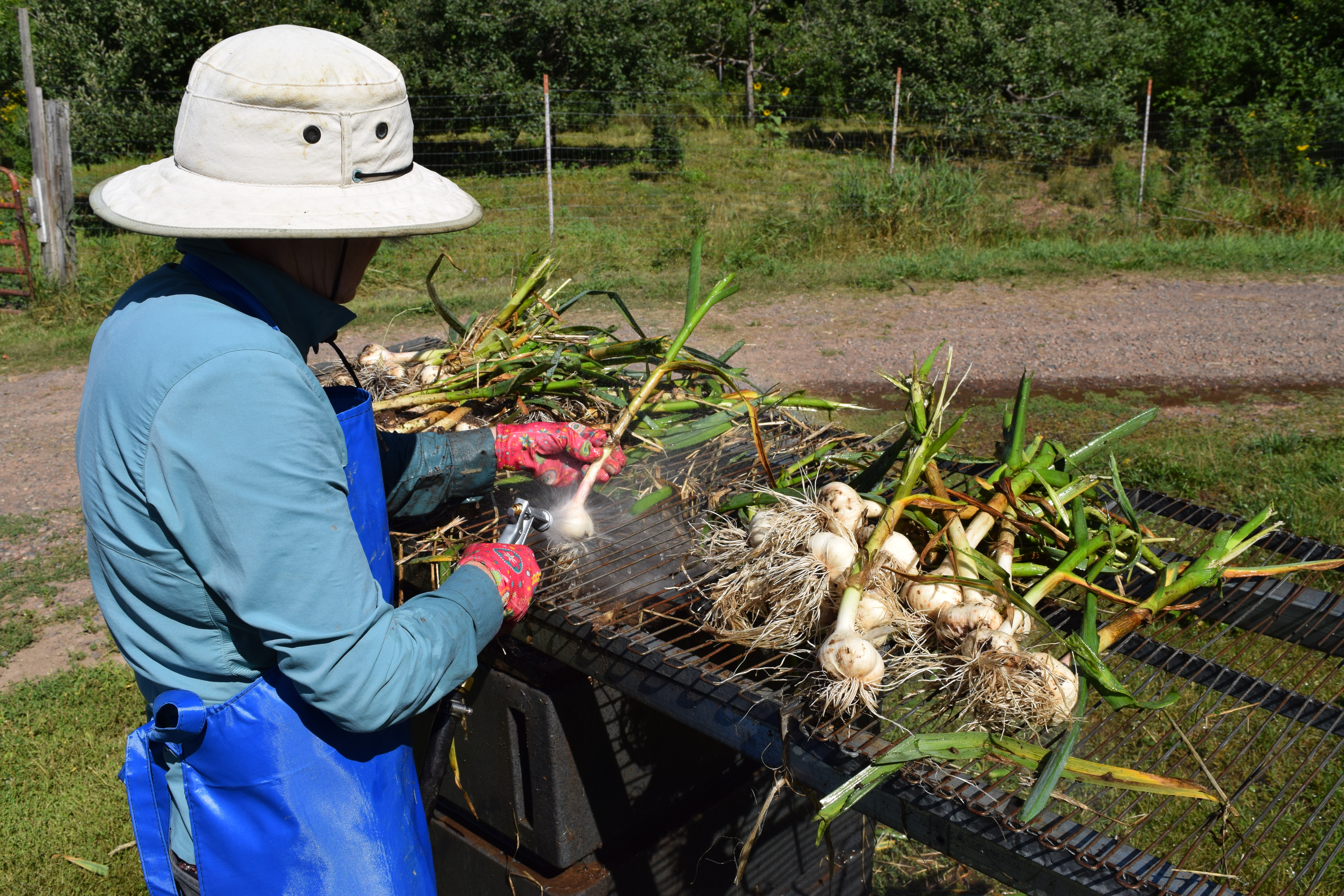
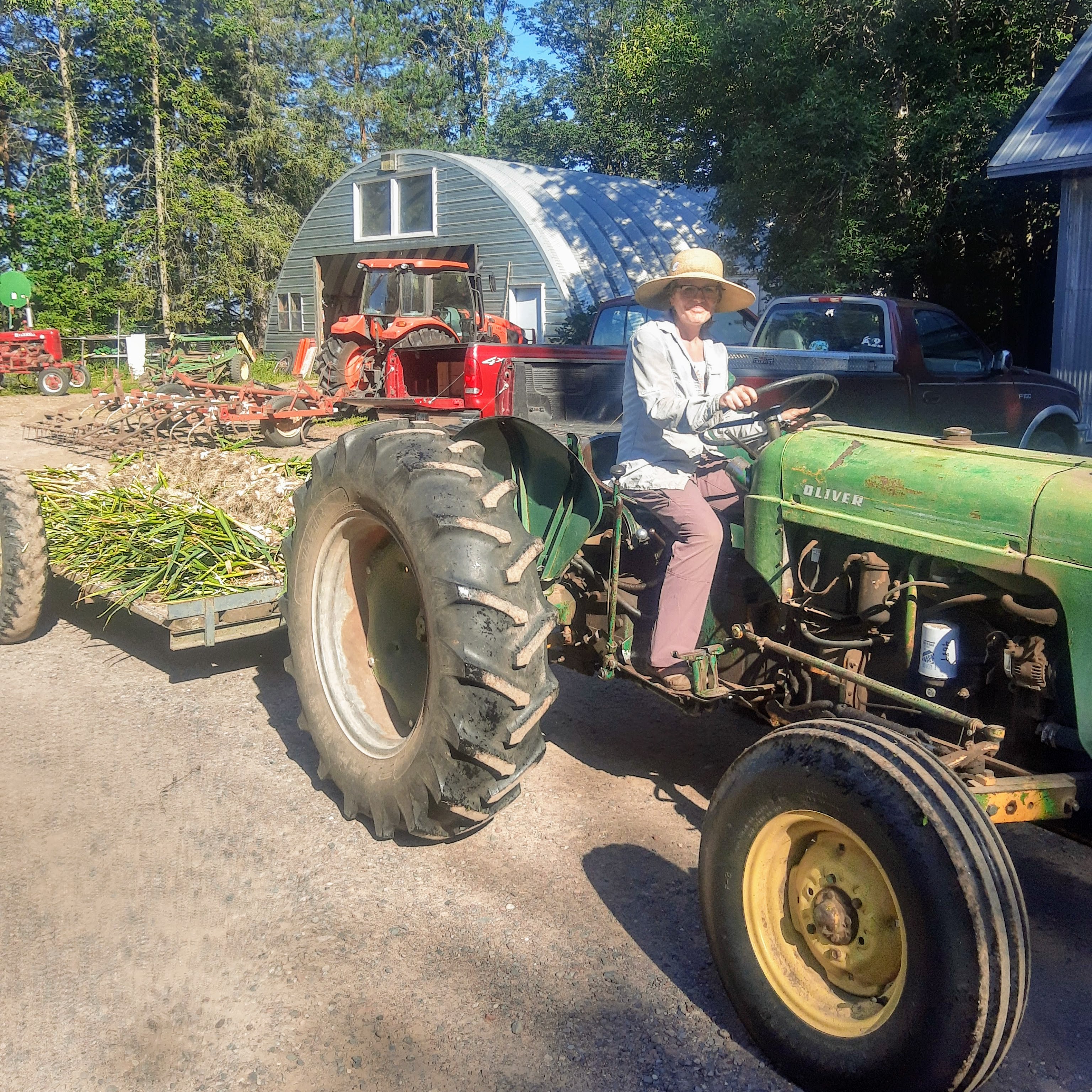
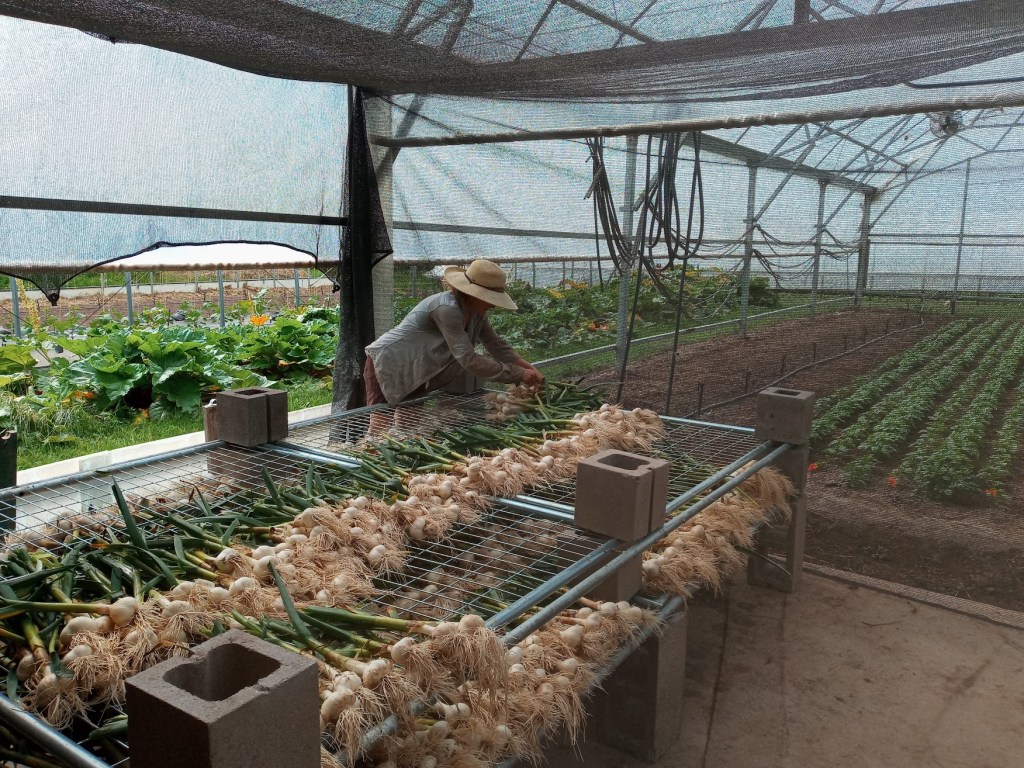
Garlic season has arrived! Last Wednesday was all hands on deck as the crew shuttled wagon load after wagon load of freshly harvested German Extra Hardy to washing stations. Once washed the garlic was gently laid out on wire racks (see below). Although it is edible right from the ground, you won’t be seeing it in the shares for at least a couple weeks. To stay fresh in the pantry for any extended period of time, it must go through the curing process – essentially just letting it dry out. As the garlic dries, the skin shrinks and turns papery, forming a protective barrier against moisture and mold.

As we wait for the garlic to be ready, we can take a little time to enjoy another new addition to this weeks box… Potatoes! Not just any old potatoes, but new potatoes. New potatoes are essentially young potatoes that are harvested before they reach full maturity. They are the same varieties as their larger counterparts but are picked early in the growing season, typically about three to four months after planting. Because they are harvested at this young stage, new potatoes are sweeter and more delicate in flavor than mature potatoes. Their skin is thin, tender, and often flaky, which makes them particularly appealing for potato salad. This week i’ve included one of my favorite recipes for just that.

In your share this week:

Cabbage – Carrots – Cilantro – Dill – Cucumbers – Lettuce – Green Onions – Snap Peas

Jalapeño Peppers – New Red Potatoes – Tomatoes – Zucchini


Herby Potato Salad, from Half Baked Harvest

Yield: 6 servings

2 pounds new potatoes
3 cloves garlic
kosher salt
1/2 cup raw cashews, soaked in hot water for 30 minutes, then drained
1 tablespoon dijon mustard
1/3 cup olive oil
1 cup fresh basil, chopped
1/4 fresh dill, chopped
2 chives, chopped
flakey sea salt and black pepper
1 pinch crushed red pepper flakes
juice of 1 lemon

1. Place the potatoes, garlic and a tablespoon of salt in a large pot and fill with water. Bring to a boil over high heat and then reduce the to heat to medium, simmer 10-15 minutes or until the potatoes are just fork tender. Drain. Place the potatoes back in the hot pot. Remove the garlic cloves. Cover the pot and let the potatoes steam for another 20 minutes.

2. Meanwhile, combine the cooked garlic, drained cashews, mustard, and olive oil in a food processor. Pulse until smooth and creamy, adding water if needed to thin slightly. 

3. Cut the potatoes in half and add to a large serving bowl. Add the cashew sauce, basil, dill, chives, lemon juice, and a pinch each of salt, pepper, and crushed red pepper flakes. Toss well to combine. Taste and adjust salt and pepper to your liking. Serve warm or cover and place in the fridge. Can be served at room temp or cold.


Cilantro Lime Slaw, from Gimme Some Oven

Yield: 4-6 servings

1 cup plain Greek yogurt
1/2 cup tightly-packed fresh cilantro
1/4 cup freshly-squeezed lime juice
1/2 teaspoon ground cumin
1/2 teaspoon fine sea salt
1/4 teaspoon freshly-cracked black pepper
3 green onions (just the green parts)
2 garlic cloves
1 jalapeño or serrano pepper, stemmed and cored
14 ounces cabbage, thinly sliced

1. Combine the Greek yogurt, cilantro, lime juice, cumin, salt, black pepper, green onions, garlic and jalapeño in a blender or food processor*.  Pulse briefly a few times until the mixtures is combined.

2. Place the cabbage in a large mixing bowl. Drizzle the sauce on top of the cole slaw, then toss until the mixture is evenly combined.  Season with extra pepper and/or lime juice if needed.

3. Serve immediately, or cover and refrigerate for up to 24 hours.


For the farm crew,

Charlie

Summer CSA Week 7, 2023

In our region, July is known for claiming the title of the hottest month of the year. Last week you wouldn’t have guessed it as the crew enjoyed slightly cooler temps. We won’t be so lucky this week, however, with the forecast pushing 90° for the next few days. Such high temps may be hard on the farm crew, but many of the vegetable varieties are going to love it!

This weeks box brings a few new additions in cilantro, dill and even a couple of salad tomatoes 🙂

Dill is an especially exciting one for me. While it is often associated with dill pickles and potato salad, its culinary significance spans centuries across Europe and Asia, enriching a wide array of cuisines. Due to its distinct and potent flavor, even a small quantity of dill can make a significant impact, making it an excellent choice as a garnish. The delicate, feathery texture of dill leaves adds a touch of beauty, while a mere sprig can infuse a dish with a noticeable and delightful aroma. Moreover, dill finds its place in salads and serves as a crucial component, along with buttermilk, in bestowing homemade ranch dressing with its unique and flavorful character.

When considering planting dill, it’s worth noting that this annual herb, related to celery, possesses a natural tendency to self-replant and propagate extensively, adding to its appeal as a versatile and abundant addition to your garden space.


In your share this week:

Beets – Broccoli – Carrots – Chard – Cilantro – Cucumbers

Dill – Lettuce – Tomatoes – Green Onions – Snap Peas – Zucchini


Dilly Ranch Dressing, from Feasting at Home

Yield: 1 1/4 Cup

1/3 cup mayo
1/3 cup buttermilk
1/3 cup sour cream
1-2 garlic cloves, finely minced
1/2 cup fresh dill
2 tablespoons tarragon
1 tablespoon parsley, chopped
1/2 teaspoon salt, more to taste
1 teaspoon pepper
1 tablespoon lemon juice, more to taste
1 teaspoon apple cider vinegar

  1. Whisk the mayo, buttermilk, and sour cream in a medium bowl until smooth.
  2. Stir in the remaining ingredients: garlic, herbs, salt, pepper, lemon juice, and vinegar.
  3. Taste- you want this slightly salty and tangy- so adjust salt and lemon juice to bump up the flavor.
  4. Place in a sealed jar and chill. You want this cold!

Cucumber Salsa, from Lemon Tree Dwelling

The farm peppers will be in your shares soon enough, but for now store bought will have to do for this recipe…

Yield: 8 servings

1 large English cucumber, about 2 1/2 cups chopped
1/4 cup red onion, chopped
1/3 cup yellow bell pepper, chopped
1/3 cup green bell pepper, chopped
2 tomatoes, chopped
1 jalapeño, minced
1/4 cup cilantro, minced
2 cloves garlic, minced
juice of 1/2 lemon
juice of 1/2 lime
1 teaspoon salt

  1. Chop the cucumbers, peppers, tomatoes, and onions into small pieces, about 1/4 inch. Add them to a medium mixing bowl.
  2. Mince the jalapeño (remove seeds for less heat as desired), cilantro, and fresh garlic. Add it to the chopped veggies in the bowl. 
  3. Squeeze in the fresh citrus juices and add the salt.
  4. Stir well; enjoy immediately or refrigerate until ready to use.

Carrot, Date and Feta Salad; from Food Network

Yield: 4 servings

3 medium carrots
2 tablespoons roughly chopped fresh cilantro
1 1/2 tablespoons extra-virgin olive oil
2 teaspoons honey
Kosher salt
Juice of 1 lime
1/4 cup crumbled feta cheese
2 tablespoons chopped toasted almonds
2 tablespoons finely chopped dates

  1. Thinly slice the carrots into ribbons using a vegetable peeler or mandolin, including any remaining “stubs” of carrot. Soak in ice water until the ribbons firm up and curl, about 15 minutes. Drain and pat dry. 
  2. Whisk together the cilantro, olive oil, honey, 1/2 teaspoon salt and the lime juice in a medium bowl. Add the carrots along with the feta cheese, almonds and dates, and toss until evenly combined. Serve immediately, or let the salad marinate a bit before serving. 

When I first started working at the farm, a little over a year ago, I thought that all of the job would be directly dealing with plants or dirt. I quickly learned, however, that there are many tasks we do that don’t necessarily pop into your mind when you think farming. A lot of the equipment we use here is quite old. The thing about old stuff is that it tends to break. It would be really nice to just replace something when it breaks, but new stuff is rather expensive. We will usually opt for the fix it yourself mentality – something Janaki and Dave are rather good at.

Above you can see Dave hard at work as he repairs our flail mower.

For the farm crew,

Charlie

Winter CSA Box 2, December 2022

Garlic ready to go out in shares.

Happy December! We hope you’re keeping warm and enjoying the holiday season.


In your share this month:

Chioggia Beets – Orange and Purple Carrots – Green Cabbage – Garlic – Yellow and Red Onions – French Fingerling & Russet Potatoes – Sunshine and Delicata Squash


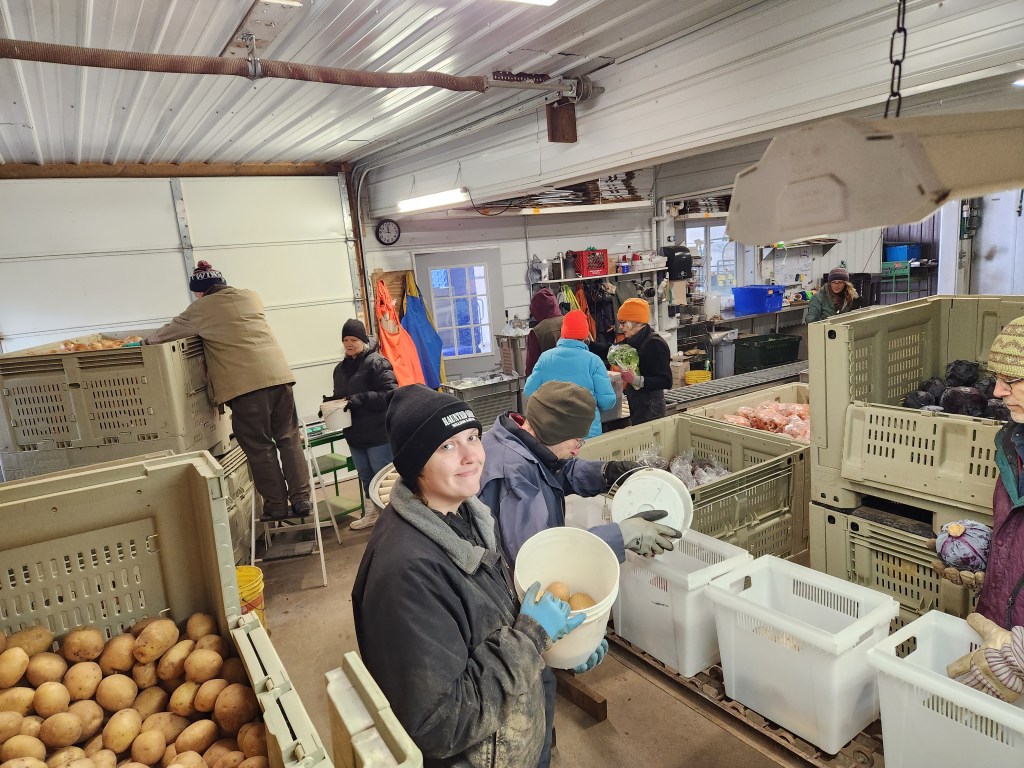
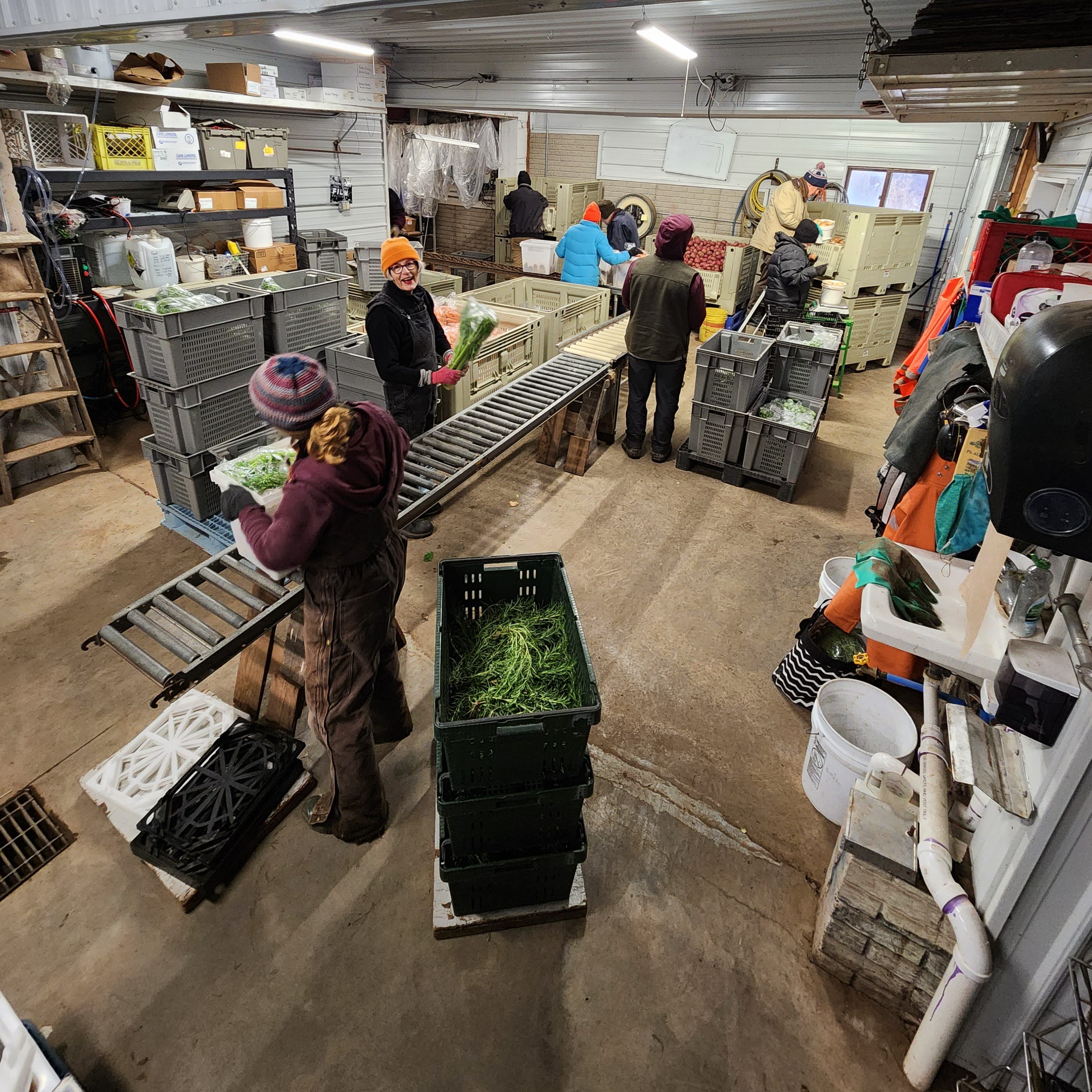
Packing winter share boxes is quite a production! We have all hands on deck and a conveyer table set up that reaches all the way across the pack house.


Egyptian Stuffed Cabbage

Serves 10

Ingredients

Cabbage braising

  • 1 head of cabbage
  • 2 tablespoons salt
  • 1 tablespoon ground cumin

Stuffing

  • 1 tablespoon vegetable or olive oil
  • 1 large onion, finely minced
  • 1-1.5 pounds lean ground beef
  • 1 tablespoon minced garlic
  • 1 can, tomato paste (6 oz.)
  • 3 cups Egyptian rice, or Goya medium grain rice, washed until water is clear
  • 2 tablespoons salt
  • 2 teaspoons ground black pepper
  • 1 teaspoon allspice (optional)
  • 1+ can, crushed tomatoes (28 oz)
  • 1 cup finely minced flat leaf parsley
  • 1 cup finely minced cilantro
  • 1 cup finely minced dill
  • 1 tablespoon Better Than Bullion Chicken flavor
  • 2 tablespoons butter

Instructions

Cabbage braising

  1. In a large, heavy pot, fill with water until about 2/3 full. Add salt and cumin, cover and bring to a boil. 
  2. Remove any wilted or damaged leaves from the cabbage. Turn cabbage upside down (with stem facing you) on a cutting board. Make deep gashes into the cabbage leaves as close to the stem as possible in a circular fashion. Hold the stem and gently pull apart the leaves, one at a time, careful not to rip them. 
  3. Place leaves 2-3 at a time in the boiling water. Allow to cook for 2-3 minutes until it becomes less stiff and just wilted. Do not overcook. Remove and place in a colander. 
  4. Gently peel leaves from the cabbage and cook in small batches. At some point, the cabbage will become too compact to remove the leaves. Hold the cabbage stem and gently lower half the remaining cabbage in the water. With your other hand, you can begin loosening the cabbage leaves one by one into the water. Once you have loosened 2-3 leaves, remove the head and set aside. Repeat until most of the cabbage is cooked. It’s ok to stop at the deepest part of the cabbage, as the leaves become too crinkly to be rolled. 
  5. Allow cabbage to cool. Meanwhile, prepare the stuffing mix. 

Stuffing

  1. In a large Dutch oven or non-stick pot, add the vegetable oil and bring to medium high heat. 
  2. Add the onions and sauté until translucent. If using, add the beef all at once, mixing with the onions and breaking up the clumps. Sauté until browned. 
  3. Add the garlic and mince until fragrant (about 1 minute). Add all of the tomato paste, stirring constantly for 3-4 minutes (the texture will change and become less of a formed paste). Add salt, pepper, and all-spice.
  4. Add the can of crushed tomatoes and stir until evenly mixed. Turn off the heat. 
  5. Pour in all of the washed rice, stirring until mixed. Now add all of the herbs and stir until everything is combined. If necessary, adjust the salt. Transfer to a large mixing bowl and allow to cool. 
  6. Prep the cabbage leaves for rolling. Set up a clean work area with a cutting board. Take one cabbage leaf at a time and spread it out over the board. Cut out the thick stem, reserve for later. With the flat leaf on the board, cut it into 2-3 even pieces that can be rolled in a straight line, about 2 inches wide x 3-5 inches long. See Photo. Make a stack of leaf segments on a clean plate. 
  7. Prepare the pan for cooking: generously drizzle vegetable or olive oil at the bottom of the Dutch oven or nonstick pot. Take several of the cabbage stems and cover the bottom to prevent the rolled leaves from scorching on the bottom layer. 
  8. Roll the leaves: place an entire leaf segment on the cutting board. Leaving 1/2 inch of space at one end, place a line of the stuffing mixture about 1/2 inch wide inside the leaf. Gently roll it up (important to roll it securely but not too tightly, as the rice still needs to expand). See photo. 
  9. Layer the rolled cabbage leaves in one direction until one layer is completely filled, then top with another layer at a ninety degree angle to the first one to prevent the rolled cabbages from unraveling. Continue rolling and layering at 90 degrees until all of the cabbage leaves are rolled (extra rice mixture may remain). 
  10. In a small saucepan, bring 1 cup of crushed tomatoes + 1 1/2 cups of water to a boil. (Alternatively, you can use 2 1/2 cups of water and 1/2 can of tomato paste). Add 1 tablespoon of butter and 1 heaping tablespoon of bullion paste and boil until dissolved. 
  11. Place the pot with the rolled cabbage on medium heat. Pour all of the water/tomato mixture on the rolled cabbages. Cover and cook on medium low for 45 minute-1 hour. Do not uncover for the first 30 minutes, then begin checking if the rice is cooked on the top layers. If it appears too dry, add in 1/2 cup of water and continue to check. The cabbage is done with the rice is completely cooked and the liquid has been absorbed. 
  12. Turn off heat. Add small pats of butter to the top. Cover. Allow to rest for 15 minutes. Enjoy, or: 
  13. Place a large plate over the opening of the pot. Carefully invert the entire pot and let rest for 5-10 minutes. Gently remove the pot and serve immediately.

Recipe from Food52.


Archived Recipes

You can now search previously posted Food Farm recipes using the “Tag Cloud” below. If you click an ingredient below it will take you to a list of the newsletters that include a recipe using that ingredient. Larger text means there are many recipes using that ingredient while smaller text means fewer recipes have been tagged so far.


Arugula Basil Beet Bell Pepper Broccoli Brussels Sprout Brussels Sprouts Cabbage Carrot Cauliflower Celery Cilantro Cucumber Delicata Squash Dill Dressing/Sauce Egg Garlic Garlic Scape Green Bean Green Onion Jalapeno Kale Leek Lettuce Mint Napa Cabbage Onion Parsley Parsnip Pepper Potato Radish Red Onion Rutabaga Scallion Shallot Spinach Squash Thyme Tomato Turnip Winter Squash Yellow Onion Zucchini


We hope this will help you explore new and old recipes and take advantage of the produce in your share!


For the farm crew,

Starr

Summer CSA Week 14, 2022

The whole crew picking green beans.

It has been an exciting week! Saturday was Harvest Fest at Bayfront Festival Park. It was great seeing all of you that stopped by our booth. We have also had a new crew member join the gang and an old crew member move on to great new things.

A note about peppers: The large pointy red peppers are a SWEET pepper variety named Carmen. The smaller yellow pointy pepper are a HOT pepper variety.

In your share this week:

Green Beans – Carrots – Celery – Cilantro – Cucumber – Garlic – Onion – Red Pepper – Green Peppers – Hot Peppers – Potatoes – Tomato – Zucchini


Here are pictures from our Harvest Fest booth! We moved a lot of produce on Saturday. Thank you to everyone who came out. Harvest Fest is hosted by the Lake Superior Sustainable Farming Association.


Tomato and Pepper Chunky Salsa

Salsa is one of the joys of summer. It’s great as a snack with tortilla chips or on top of eggs. Luckily, salsa is very easy to make!

Ingredients

  • 7 medium tomatoes
  • 1 red bell pepper (the long pointed one)
  • 1 small diced red onion
  • 1 hot pepper
  • ½ cup fresh cilantro
  • 1–2 garlic cloves
  • juice of 1 lime
  • ½ tsp pepper
  • ½ tsp cumin
  • 1 tsp salt, or to taste

Instructions

  1. Finely dice the tomatoes, red bell pepper, red onion, hot pepper, garlic and cilantro. Combine in a large bowl and add lime juice and seasonings.
  2. Alternatively, process all ingredients in a food processor for 30 seconds.
  3. Store in the refrigerator in an airtight container for up to 1 week.

Recipe based off the green creator..


Congrats to our former crew member, Emily, who is moving on to a great new job in her field. Emily has been with the Food Farm for two years and wrote last year’s newsletters.

This beautiful key lime pie was made in Emily’s honor by Charlie, a fellow crew member.


A great morning for spiders!

The first spider is a funnel-weaver spider with in her name-sake funnel web beautifully outlined in morning dew. This spider was found next to our celery rows. The picture doesn’t do justice to the unique 3D tunnel structure this spider builds. The second spider is a black and yellow argiope, also called a black-and-yellow garden spider, which may be the largest web-building spider in the northern United States. She was a big one! She was found feasting on a fly in her web that spanned one of the green bean paths. (We made certain not to disrupt her.) Many think because this spider is so colorful and large it must be dangerous, but in reality, they are shy and rarely venture off their webs. We appreciate these spiders eating the more annoying bugs for us!


For the farm crew,

Starr

Summer CSA Week 10, 2022

The crew preparing to harvest carrots with THE HARVESTER.

Last week was a big week for the Food Farm crew: we harvested our long awaited garlic! You’ll find more pictures and descriptions of that process below. We also brought out the carrot harvester, which is efficient but requires many hands to run smoothly. Boxes are filled with high summer bounty. New this week you’ll find green peppers and GARLIC! The garlic in the box this week is “green” or not yet cured. It should be left out on the counter with good ventilation so it does not mildew.

Would you like to come see the farm at peak season? You’re in luck! We are hosting a farm tour and pizza dinner on Saturday, August 27th! Come by the farm at 2612 County Road 1, Wrenshall from 4:00pm to 6:00. We’ll be serving pizza hot from our wood fired oven and giving farm tours. Free for all to attend, we’d love to see you!


In your share this week:

Basil – Beets – Cabbage – Carrots – Cucumber – Dill – Green Garlic – Green Pepper – Green Onion – New Potatoes – Parsley – Tomato – Zucchini


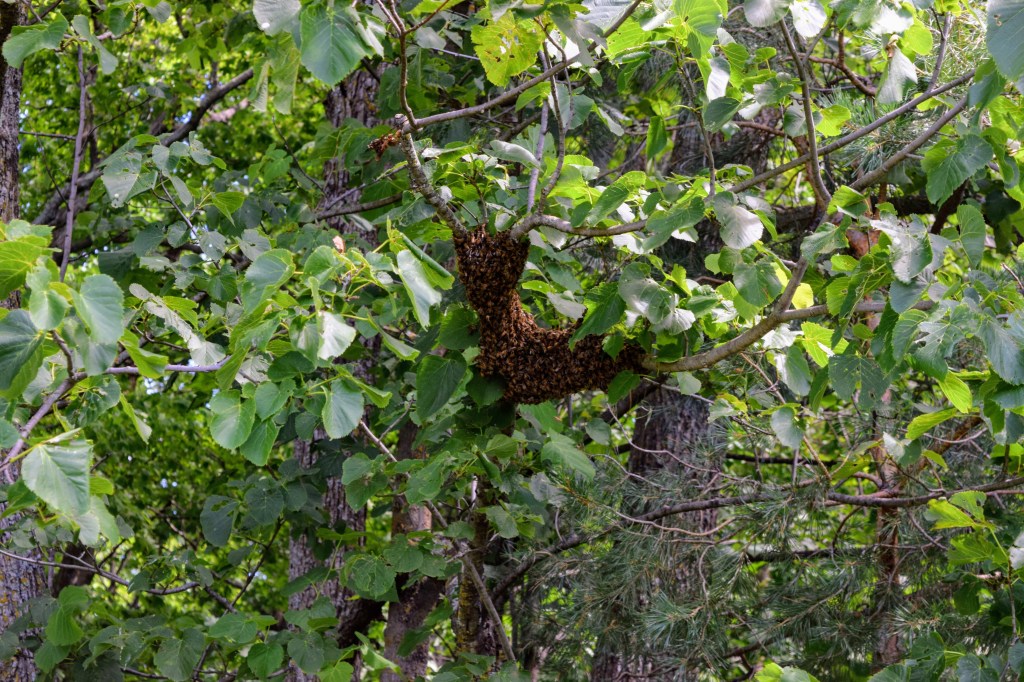
What am I looking at?

This is a swarm of honey bees seen near the farm hives recently. When a hive gets large enough it splits into two distinct colonies. During this process, part of the hive leaves as a swarm to find a new home. These swarms are often very docile because they are not guarding honey or a queen, but always be careful around bees, especially if there there is a chance you could be allergic.


Cucumber and Tomato Salad

From Claudia Roden’s Mediterranean

Ingredients

  • Cucumber (peeled, seeded and cut into pieces)
  • 2 large tomatoes, seeded and cut into pieces
  • green onion
  • 3 Tbsp olive oil
  • juice of 1/2 lemon
  • salt and black pepper to taste
  • small handful of fresh herbs (parsley, oregano, dill, cilantro) chopped

Instructions

  1. Put cucumbers, tomatoes, and onions into a bowl. In another bowl, whisk together the olive oil and lemon juice and season with salt and pepper to make a dressing. Just before serving, pour the dressing over the salad and mix well. Sprinkle with the herbs and add feta if you like.

Basic Pesto

We have garlic AND basil in the box this week. The only option is to make pesto 😉

Ingredients

  • 2 cups fresh basil leaves (no stems)
  • 2 tablespoons pine nuts or walnuts
  • 2 large cloves garlic
  • ½ cup extra-virgin olive oil
  • ½ cup freshly grated parmesan cheese

Instructions

  1. Combine basil leaves, pine nuts or walnuts and garlic in a food processor and process until very finely minced.
  2. With the machine running slowly dribble in the oil and process until the mixture is smooth.
  3. Add the cheese and process very briefly, just long enough to combine. Store in refrigerator or freezer.

From NYT Cooking


What is Harvesting Garlic Like?

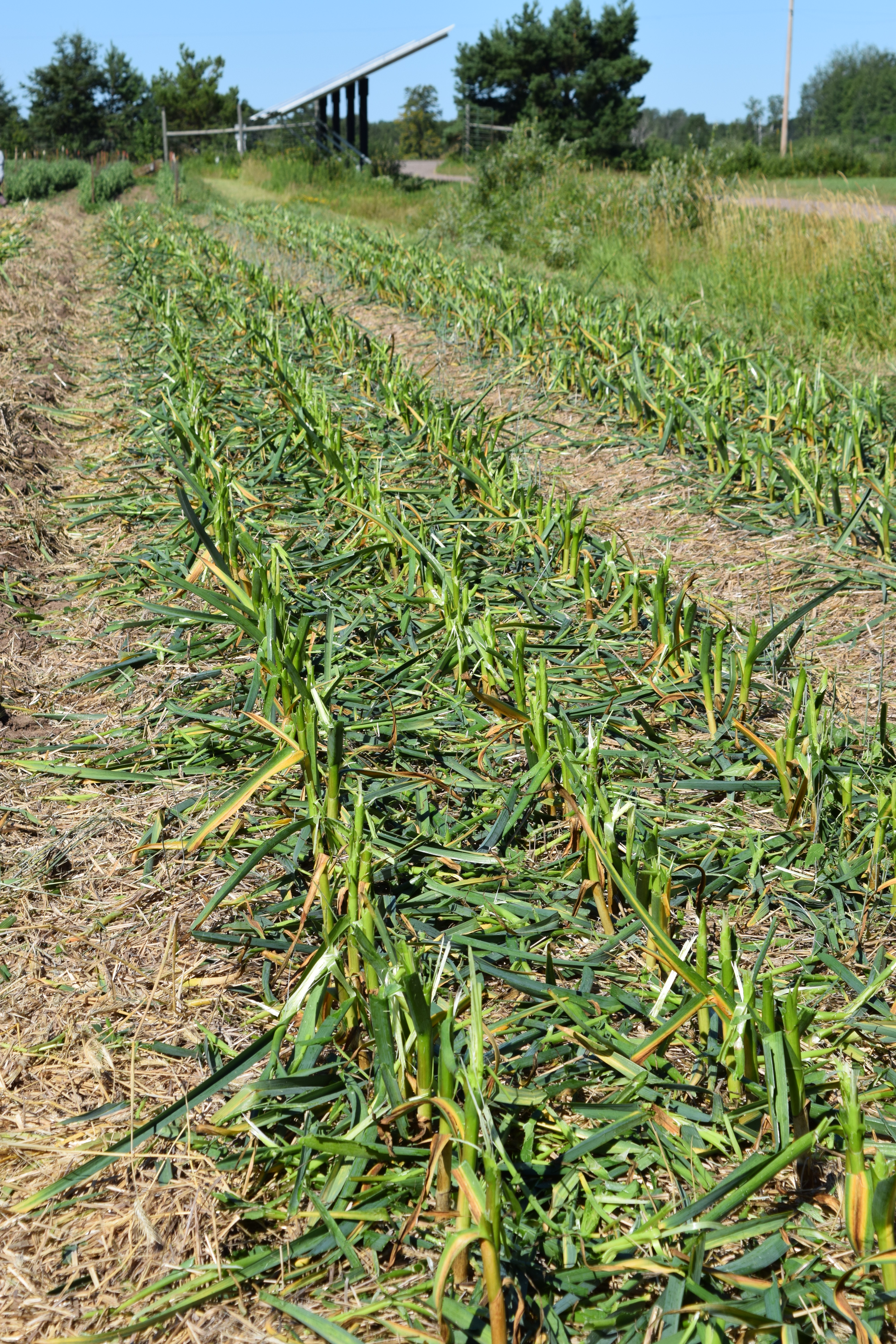
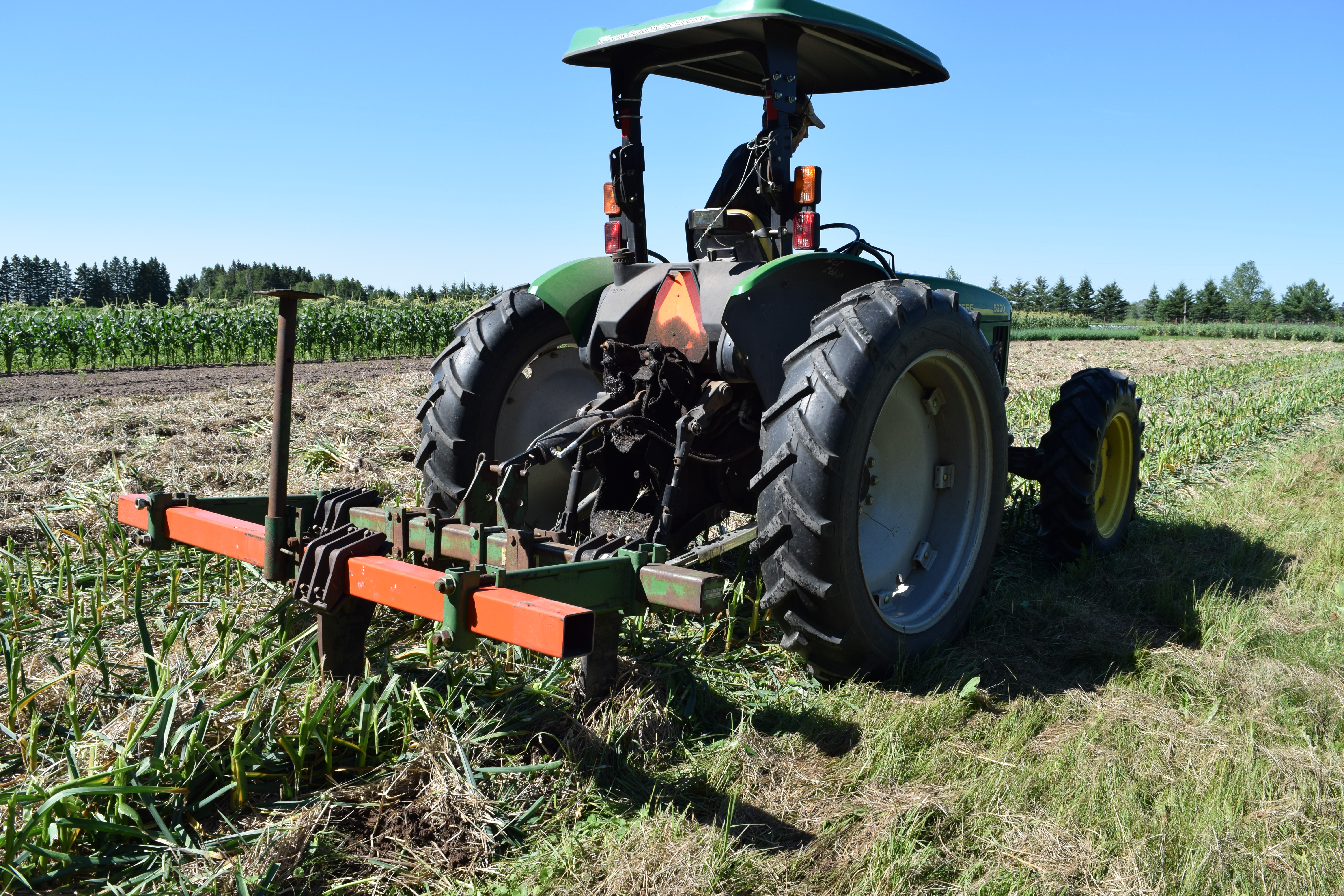
Step one: Janaki uses the tractor to mow and subsoil the garlic. The subsoiler has big hooks that dig down between the garlic rows, loosening the soil and lifting up bulbs.

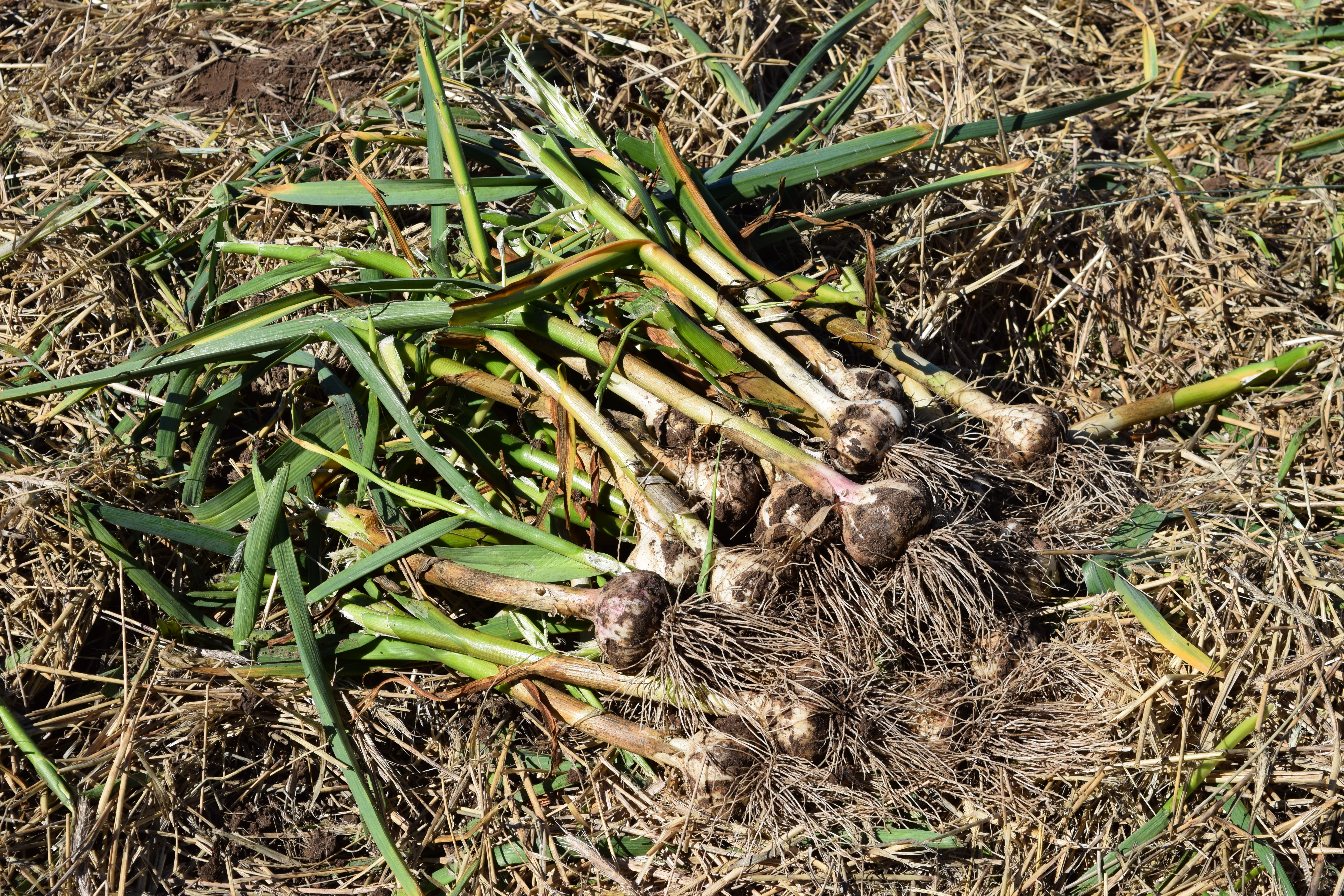
Step two: Bring in the farm crew! We pull the garlic and stack it up in piles. These piles are then loaded on a trailer and brought to the wash station.

Step three: Scrub-a-dub. The garlic is washed, removing any dirt that’s still on the bulbs.

Step four: Stack and cure. In order for garlic to last into the winter it must “cure” or partially dry for a few weeks.

Garlic takes at least three weeks to cure. Then, if stored properly, garlic should last through the next spring!


For the farm crew,

Starr

Summer CSA Week 9, 2022

Emily, Ellis and Janaki packing Monday CSA boxes

We have full and diverse box for you this week. We had all hands on deck to harvest everything in time for Monday deliveries! Annie and Ellis were even helping packing boxes. This week new in the box we have cilantro, dill, onion, hot pepper, and new potatoes. “New potatoes” are young tender potatoes.


In your share this week:

Carrots – Cilantro – Cucumber – Dill – Greens Mix – Lettuce – Onion – Snap Peas – Hot Pepper – New Potatoes – Tomato – Zucchini


Terri harvesting dill in the field.

Georgian Cilantro Sauce

This sweet, pungent sauce is a mainstay of Georgian national cuisine, often served with grilled meat, chicken or vegetables. It’s great way to use fresh summer herbs!

Ingredients

  • 2 ounces dried apricots
  • 1 cup boiling water
  • ⅓ cup shelled walnuts (1 ounce)
  • 2 to 4 garlic cloves (to taste), halved, green shoots removed
  • ¼ cup freshly squeezed lemon juice
  • ½ teaspoon salt (more to taste)
  • Freshly ground black pepper to taste
  • Pinch of cayenne
  • 2 cups cilantro leaves (2 good-size bunches), coarsely chopped
  • 1 ½ cups parsley leaves (1 1/2 bunches), coarsely chopped
  • ½ cup coarsely chopped mixed basil, tarragon, and dill
  • 5 tablespoons walnut oil (or more, to taste) (substitute with unrefined peanut oil, or olive oil)
  • ½ cup soaking water from the apricots, as needed

Instructions

  1. Place the dried apricots in a bowl and pour on the boiling water. Let sit for at least an hour, more if possible, even overnight. Drain over a measuring cup and retain 1/2 cup of the soaking water.
  2. Turn on a food processor fitted with the steel blade, and drop in the garlic. When it is chopped and adhering to the sides of the bowl, stop the machine and scrape down the bowl. Add the walnuts, and process with the garlic. Scrape down the sides of the bowl. Add the drained apricots, the lemon juice, salt, pepper and cayenne to the bowl, and process to a puree. Add the cilantro and other chopped herbs, and puree, stopping the machine to scrape down the sides several times. Combine the walnut oil and soaking water from the apricots, and with the machine running, gradually add it to the puree. Process until smooth. Transfer to a bowl, and let sit for one hour. Taste and adjust salt. Serve with beans, chicken, meat or fish, grilled or roasted vegetables, or grains.

From the New York Times.


Crushed New Potatoes

Ingredients

  • 1 pound (450 grams) baby potatoes
  • 2 tablespoons olive oil
  • 1 clove garlic crushed
  • 1 teaspoon parsley or basil
  • ½ teaspoon ground black pepper
  • ½ teaspoon salt

Instructions

  1. Boil slightly salted water, then throw your baby potatoes into the pot. Leave them to cook for 15-20 minutes or until they’re cooked through and soft.
  2. Grease your baking tray with olive oil, and get the potatoes out of the pot and onto the baking tray.
  3. Lightly crush the potatoes with a fork or a potato masher, but make sure not to over do it as you don’t want really flat pieces of potato all over your baking sheet.
  4. Using the excess olive oil on the baking tray, light brush the potatoes with the olive oil.
  5. Season with freshly ground black pepper, and sea salt.
  6. Sprinkle with either dried or fresh herbs and garlic.
  7. Bake in the oven for 10-15 more minutes at 200°C (392°F). The baking time depends on the size of your potatoes, so keep checking on them as they bake.
  8. Served Immediately. 

From Little Sunny Kitchen.


Janaki and the farm crew bagging up snap peas. Yes, he is indeed that talll!

For the farm crew,

Starr

December Winter CSA

One of the highlights of my life the last few months is food preservation. It looks me right in the face every time I step foot in our amazing root cellar at the farm. From seed to storage, there is nothing more satisfying than preserving the bounty of the season, especially when you can watch a crop throughout its entire lifetime. My shelves are full of some amazing local produce thanks both to my job at the farm and having friends in the farm community. I am still relatively new to food preserving. The volume needed for a highly self-sustaining lifestyle hasn’t been attainable quite yet, so it seems like less of a chore and more of an experiment. We all know there are much less time-strenuous ways of getting and keeping food but I’m enjoying honing the craft of putting up food for the winter.

When I’m sweating over a hot stove by myself I often thing about the times when people would participate in community canning parties. It seems like a big stretch to organize events like that today, but it seems like such a great thing and I love hearing stories about farm members getting together with friends and family to process food together! It’s so great to know exactly what you’re eating and where it comes from, and doing the work with others makes it an occasion rather than just a chore. Plus, the apple fruit roll-ups I made with local apples taste much better than Betty Crocker’s.

Preserve (ca. 1917-1919) by Carter Housh

After last week’s storm the fields are covered in snow, though it looks like we may lose it all this week. A good hard freeze gives our soil a nice reset each year and can kill invasive pests, so we’re hoping that we do get some extended winter weather soon, and we sure could use some moisture in the ground. Towards the end of this harvest season, we removed all of the plastic walls from one of the greenhouses to give the soil inside a much-needed snow treatment this winter. While the plastic stays up on most of the greenhouses every winter, we try to leave it off over winter when it needs to be replaced. This helps wash away mineral build ups from many seasons of irrigation, loosen the soil with a few good freeze-thaw cycles, and build up the subsoil water reserves. I have a feeling that one of the first tasks to happen on the farm this spring is reassembling the greenhouse. I hope we have some calm days this spring, because any breeze can get pretty exciting when you’re holding a 48×150 foot kite! If you see us hitchhiking back from Wisconsin in April you’ll know what happened.

From Food Farm to you, enjoy this holiday season!

Queue “It’s Beginning To Look A Lot Like Christmas” by Bing Crosby

For the farm crew, Emily


In your shares this month:

Beets – Green Cabbage – Orange and Purple Carrots – Garlic – Onions – French Fingerling and Yellow Potatoes – Sunshine and Delicata Squash


Beet, Apple, and Walnut Salad – The Book of Salads by Sonia Uvezian

  • 2 large, cooked beets – peeled and chopped
  • 2 tart apples – peeled, cored, and chopped
  • 6 stalks celery
  • 1/2 cup chopped walnuts
  • 1/4 cup olive oil
  • 2 Tbsp wine vinegar
  • 2 Tbsp orange juice
  • 1 small clove of garlic – crushed (optional)
  • salt and pepper to taste
  • Combine apples, beets, celery and walnuts in a bowl. 
  • Beat together the oil, vinegar, juice, salt, pepper, and garlic with a fork and whisk until well blended. 
  • Pour over salad.  Toss gently but thoroughly.  Taste and adjust the seasoning.

Creamy Garlic Dressing – Moosewood Cooks at Home

  • 3 garlic cloves – minced or pressed
  • 3/4 cup vegetable oil
  • 1/4 cup red wine vinegar
  • 1 tbsp chopped basil (or 1 tsp dried)
  • 1 tsp salt
  • 1 tbsp grated Parmesan
  • pepper to taste
  • 1/2 cup milk
  • Put garlic, oil, vinegar, basil, salt, Parmesan, and pepper into a blender or processor and whirl for a couple of seconds. 
  • With the blender still running, slowly add the milk, whirling until the dressing is thick and smooth. Covered and refrigerated, this will keep a week.

Roasted [Sunshine] Squash Soup – Simply Recipes

  • 3-4 lbs. sunshine squash, seeded (about 1 large squash)
    • This squash is in your share this month!
  • 2 1/2 tablespoons extra virgin olive oil, divided
  • Salt
  • 2 cups chopped or sliced onions
  • 2 ribs celery, sliced
  • 3 cloves garlic, chopped (about 2 tablespoons)
  • 2-inch piece of fresh ginger root, peeled and grated
  • 1/2 teaspoon ground cumin
  • 1 teaspoon ground coriander
  • 4 cups chicken or vegetable stock
  • 2 teaspoons salt
  • 1/4 teaspoon black pepper
  • Lime juice, for serving
  • Chopped fresh cilantro, for serving
  • Roast the squash: Preheat oven to 400°F. Use a heavy chef’s knife or cleaver (it helps if you have a rubber mallet as well) to cut the kabocha squash half into a few large pieces. (Kabocha squash is thick and meaty and can be a challenge to cut. Make sure the squash is stable on your cutting board before you start to cut it.) Scoop out the seeds (you can toast them like pumpkin seeds!) and stringy insides. Place the squash pieces on a foil or Silpat lined roasting pan.
  • Rub 1 tablespoon olive oil over all sides, and sprinkle with salt. Put the squash pieces skin side up on the pan. Roast for 45 minutes to an hour, until completely cooked through, soft, and caramelized at the edges. Remove from oven and let sit.
  • Sauté onions, celery, garlic, ginger, cumin, coriander: Heat the remaining 1 1/2 tablespoons of olive oil on medium-high heat in a large (4 to 6 quart) thick-bottomed pan. Add the onions and celery. Lower the heat to medium and cook until softened, 8 to 10 minutes.
  • Add the garlic, ginger, cumin, and coriander and cook 2 minutes more.
  • Add squash, stock, salt, pepper, then simmer: Once squash is cool enough to handle, remove and discard the skin. Place the roasted kabocha squash flesh into the pot with the onions and celery mixture. Add the stock, salt and pepper. Increase heat to high to bring the soup to a simmer, then lower the heat to low, partially cover and cook 8 to 10 minutes.
  • Purée the soup: Remove from heat. Use an immersion blender (or work in batches with a standing blender, only filling the blender bowl 1/3 of the way each time) to purée the soup.
  • Add more salt to taste. Sprinkle with lime juice and chopped cilantro to serve.

November Winter CSA

Welcome to the first winter share of the season! There is no better time to receive your first dose of winter veggies than right after daylight savings time. Personally, after a long season here at the farm an extra hour of sleep is more than needed, even though we have to put up with Janaki complaining that his kids now wake up at 4:30 in the morning. This is also the final week of the season for many of our farm hands, some of whom have their own winter adventures ahead of them. Lucky for me, I get to stick around the farm this winter to help pack your winter shares and local wholesale orders.

If this is your first share with us, thank you for choosing local and organic. If you have been a member here for years, thank you for continuing to support our mission. Although we farm hands don’t interact with members very much, we definitely keep all of you in mind when doing various tasks on the farm. As we ventured through the great carrot and potato harvests of 2021, I considered how many mouths these crops will feed through the winter and it made the work more fulfilling.

The last few weeks have been really busy here at the farm to get us set up for the winter. We have cleared many fields of the crops they have been growing all season long. We harvested so many tons of carrots, potatoes, parsnips, cabbage, and Dave’s favorite crop: rutabagas. Among these harvests, Janaki has a plan for exactly which crop is going where this winter. Many carrots will end up in your winter shares. Others will be on the shelves at local grocery stores. The odd shaped and broken carrots even get sold to local businesses to make things such as kimchi. If it’s in the root cellar, it has a plan.

Also, be sure not to forget that it’s officially SOUP SEASON! I know I said that right at the turn of the first leaf this fall, but now it’s more relevant as we have finally experienced cooler temperatures. As a disclaimer, you’ll probably see many soup recipes in these newsletters this winter. A staple in the diets of many Minnesotans, soup may be the defining soup of the winter season. Luckily for you all, many (if not all) of our winter crops are perfect for soup makin’.

Your local soup enthusiast,

Emily

In your shares this month:

Beets, Brussel Sprouts, Carrots, Celery, Onions, Russet and Red Potatoes, Rosemary, Spinach, and Delicata and Kabocha Winter Squash

Indonesian Carrot Soup (from New England Soup Factory Cookbook, Druker and Silverstein)

  • 2 tbsp olive oil
  • 2 whole cloves garlic, peeled
  • 1 tbsp minced fresh ginger
  • 1 large onion, peeled and diced
  • 2 ribs celery, sliced
  • 1.5 lbs carrots (we also use winter squash), peeled and sliced
  • 1 tsp curry powder
  • 1 tsp ground coriander
  • 1/2 tsp ground cumin
  • 1/4 tsp red pepper flakes (optional)
  • 4 cups vegetable stock
  • 1/4 cup sherry
  • 1/4 cup honey
  • 16 oz coconut milk (one can)
  • 2 tbsp cilantro 
  • salt and pepper to taste

Heat stockpot over medium high heat.  Add olive oil, garlic, ginger, onion, celery and carrots/squash.  Sauté for 10 minutes.  Add curry, coriander, cumin, pepper flakes, stock and sherry.  Bring to a boil.  Reduce heat to med and simmer 30-40 minutes (until carrots and/or squash are tender).  Remove from heat and add honey, coconut milk, cilantro, salt, and pepper.  Puree the soup using immersion or conventional blender.  Makes 5-6 servings.

Spanish Tortilla (New York Times, Mark Bittman)

  • 1.25 lbs potatoes (3-4 medium)
  • 1 medium onion
  • 1 cup olive oil
  • salt and pepper
  • 6 extra large eggs

Peel and thinly slice potatoes and onions.  Heat oil in nonstick skillet over medium heat.  After 3-4 minutes, drop in a potato slice.  When tiny bubbles appear around its edges, add potatoes, onions, salt and pepper.  Gently turn mixture in oil with a wooden spoon and adjust heat so oil bubbles lazily. Cook, turning potatoes every few minutes, until they are tender when pierced with a knife.  Adjust the heat.  If potatoes begin to break, they are overdone.  As potatoes cook, beat eggs with salt and pepper in a large bowl.  Turn oven on to 350 degrees F.  Drain the potatoes in a colander.  Wipe out skillet and heat over medium heat for one minute.  Add 2 tbsp. of oil.  Gently mix warm potatoes with eggs and add to skillet.  As soon as edges firm up, reduce heat to medium low and cook for 5 minutes.  Finish cooking in the oven.  Bake until firm (appx 10-15 minutes).  Serve warm (not hot) or at room temperature.

Summer CSA Week 14

This week was a big week for our dear friends the alliums. Alliums are a genus of plants that include onions, garlic, leeks, and shallots. Onions! Enough to make a grown man cry. To say that these crops are the very backbone of savory dishes in the Midwest is an understatement. Not only do they provide great flavor and texture to our food, they also make the air smell great when you harvest them for several hours. And what do you say to a small onion that has helped you? Thanks shallot. We also started to sort out seed garlic which involves picking out the most perfect heads of garlic to use for next years garlic crop. This process, over the course of years, helps us yield the best looking heads of garlic to give to our dear members and the community.

Soup season is just around the corner, unless you’re like me and believe soup shall not be limited to colder weather. Either way, I feel compelled to throw in a decent soup recipe in these newsletters each week. They’re great for many things but amazing for using up random veggies in your fridges. Great for budgets and your stomachs. This may very well be the beginning of canning season for your household, for which soup is a fantastic candidate. Our dear friend the leek has been patiently waiting it’s arrival in your shares. And you had better believe there’s a soup recipe in this newsletter whose sole intention is to use a decent amount of leeks. Personally, I think the leeks this year look way bigger than last years. This is probably due to the warmer temperatures we have been experiencing.

This weekend you’ll find the Food Farm crew at the Sustainable Farm Association’s annual Harvest Festival at Bayfront Park in Duluth. Have you been wishing to have just a few more heads of broccoli this year? Perhaps you’re wishing for some more tomatoes? Fear not, as we will likely have a wide variety of food available to you. My favorite thing about these festivals as a consumer is seeing the value added goods that people create. Every year there is something new to try and it’s even better knowing it’s local. The annual Harvest Festival is a fun and great way to connect producers directly to consumers. Aside from these newsletters, there are only a handful of ways in which we are able to directly connect with our share members and the general public. We hope to see all of you there! We’ll be there from 10am – 4pm.

Some exciting news from our newest farm hens, they’ve laid their first eggs! These relatively tiny eggs will not be included in the egg shares yet. However, they are a reminder that these chickens play a valuable role on the farm. They provide our members with food and our fields with fertility. Plus they’re cute and full of personality – what more could you ask for in your coworkers?!

If anyone has a soup recipe suggestion, please do not be shy. We must all prosper in the richness that is liquid food.

Your local soup enthusiast,

Emily

In your shares this week:

Broccoli – Carrots – Cilantro – Cucumbers – Garlic – Greens Mix – Leeks – Onions – Hot Pepper – Red Peppers – Potatoes – Tomatoes – Zucchini

Bumble bees are fond of our bean plants and their flowers. I call this photo: “Bumble Bean”

Potato Leek Soup from Tasty

  • 2 tablespoons butter
  • 3 large leeks, chopped
  • 3 cloves garlic, minced
  • 2 lbs potato, cubed
  • salt, to taste
  • pepper, to taste
  • 6 cups vegetable broth
  • 2 cups water
  • 2 sprigs fresh thyme
  • 1 bay leaf
  • ¼ cup fresh chives, chopped
  • hot sauce, to taste
  1. Melt butter on medium heat in a large pot. Add the chopped leeks and stir until coated with butter.
  2. Cover the pot and lower heat, cook for around 10 minutes until the leeks have softened.
  3. Increase to medium-high. Add garlic, potatoes, salt, and pepper. Cook for 1 minute, then add vegetable broth, water, thyme, and bay leaf. Bring to a boil.
  4. Lower heat and cover pot with a lid and simmer for 15 minutes, or until potatoes are tender and easily speared by a fork.
  5. Uncover and remove thyme and bay leaf.
  6. Use an immersion or countertop blender to blend the soup until smooth.
  7. Stir in chives and hot sauce (optional).
  8. Allow to cool 2 minutes and serve

Cucumber Avocado Salsa by To Simply Inspire

  • 1 large cucumber peeled, seeded and finely chopped
  • 1 avocado finely chopped
  • 1 medium tomato finely chopped and seeded
  • 1/4 cup red onion finely chopped
  • 2 – 3 tablespoon fresh cilantro finely chopped
  • 1 garlic clove minced

For the sauce:

  • 1/4 c reduced-fat sour cream
  • 1-1/2 tsp lemon juice
  • 1-1/2 tsp lime juice
  • 1/4 tsp ground cumin
  • 1/4 tsp salt
  1. In a medium bowl, combine the first six ingredients and gently toss
  2. In a separate bowl, combine the sour cream, lemon juice, lime juice, cumin and salt.
  3. Pour over cucumber mixture and gently toss to coat.
  4. Serve with tortilla chips.

Summer CSA Week 1

Happy first Summer CSA 2021 to you all! -and what a summery start indeed! I trust if you are reading this you didn’t totally melt this past weekend. It’s a warm week for farming, and we’ll be staying hydrated while getting back into the swing of harvest and the rhythm that the CSA brings to our summer weeks. The farm crew will be moving from mostly greenhouse seeding, transplanting, and miscellaneous spring cleaning projects into a routine of harvest, weed, weed, plant, weed, plant, harvest, weed.

Aside from the weather weirdness, this farm season is feeling a little bit more normal since we are our own vaccinated bubble of sorts. We’re not quite back to sharing water out of the same cup yet (ever again?) but at least we can enjoy each other’s company a bit more. What a good feeling after a year of extra stress.

We’re glad you’re a part of our farm- all of your share memberships make what we do possible. Whether you’ve been with us for decades or this is your first year, welcome! If this is your first year, we hope you won’t hesitate to reach out with questions if any arise during the season.

Hopefully you all are also excited for the rhythm that the weekly CSA brings to your summer. We know it takes extra time to utilize whole food and to do the work of unpacking and repacking produce in a way that keeps it fresh. Thanks for taking on the food-work! Any time we don’t reach for convenience food shipped from miles and miles away we do something good for our community, planet and ourselves. Whole food is a counter-cultural act these days.

We look forward to growing (and mostly weeding) for you during the season. Thanks for choosing our veggies to feed yourselves with!

For the farm crew,
Karin

In your share this week:

Greens Mix – Kale – Rhubarb – Spinach – Oregano & Sage

Oregano and sage may seem like an odd addition to a spring share, but they were too pretty and fresh for us to ignore. They come from a little corner of the greenhouse and managed to survive the winter, got mowed to the ground, and have recovered with some beautiful spring growth so we hope you will enjoy them now or hang them up to dry for future use. 

This first box is significantly smaller than usual, but early shares generally include a goodly portion of greens. It can become easy to feel daunted by the volume in your weekly box. After a winter of store bought veggies (potato chips are veggies?) getting back in the swing of eating up a box of veggies can be a switch. No shame! I spent this winter eating bagels and pasta so it’s a switch for me too. A couple of things about greens: they all cook down. True, you may not be making lettuce soup this summer (please don’t), but all the other greens you get that seem like so much will disappear when stir-fried, tossed into a soup, cooked in an egg bake or made into a savory pie.

It also helps to have some dressings on hand that you LOVE for fresh greens. Adding a fat to salad is actually really healthy because that is what helps our brain recognize when we’ve eaten enough of something. So dressing, feta, avocado and things like that are perfect additions. You should add whatever you need to a salad to get you excited about eating it.

Here are some dressings that I am stealing from our friends at the Duluth Grill. Whip up a couple of these for your greens if you fancy!

Cilantro Lime Vinaigrette

2 Tbsp lime juice
1/2 cup cilantro
1/2 cup olive oil
1/4 tsp salt
1/4 tsp white pepper
1/4 cup maple syrup (I bet you could use honey or agave nectar at about the same ratio)
2 Tbsp apple cider vinegar
2 Tbsp orange juice
1 tsp brown mustard

Combine all ingredients except olive oil in blender. Blend until smooth, then add olive oil slowly to emulsify. Yield about 1 1/12 cups.

Curry Sauce

1/4 cup seeded serrano chilies
1 1/2 tsp coriander seeds
1/4 tsp cumin
1/8 tsp black pepper corns
1/2 stalk lemongrass (the Co-op often carries this)
1 tsp chopped cilantro
1 Tbsp grated fresh ginger
1/2 lime zest and 1 tsp lime juice
1 Tbsp chopped garlic
1 Tbsp diced onion
1 1/2 tsp aminos (or soy sauce might be fine)
1 1/2tsp salt
2 Tbsp sugar
1 1/2 tsp turmeric
1 -15oz can coconut milk

Toast coriander seeds and black pepper corns in a skillet. Trim and chop lemongrass. Combine all ingredients except coconut milk in a food processor until smooth.

Place puree into a medium pot and simmer for 5 minutes. Add coconut milk, whisk and simmer for another 15 minutes. Serve over greens (or anything)