Summer CSA Week 6, 2022

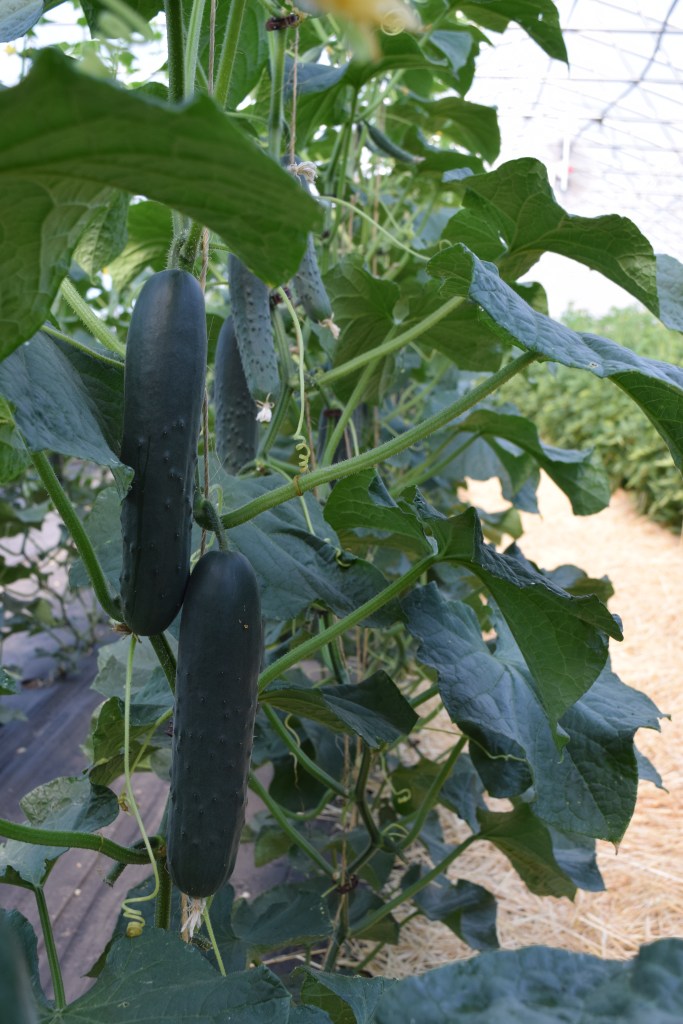
Cucumbers ripening in the greenhouse

It’s hot and the CSA boxes are bursting! New in the box this week is Swiss chard and napa cabbage. We hope you’re staying hydrated and wearing plenty of sunblock and enjoying the heat!


In your share this week:

Swiss Chard – Napa Cabbage – Lettuce – Cucumbers – Green Onions – Broccoli – Carrots with Tops – Beets – Parsley – Garlic Scapes


Vegan Borscht

Serves 4

Ingredients

2 medium beets

3 small carrots (~1 1/4 medium carrots)

2 medium red-skinned potatoes

2/3 medium onion diced (approximately 2/3 cups, try substitution with the green onions in your box!)

2 stalks celery, diced

1 tablespoon and 1 teaspoon extra virgin olive oil

5 cups vegetable stock

1 1/4 cups shredded red cabbage

1 1/4 cups chopped beet greens or chard

1 tablespoon and 1 teaspoon chopped fresh dill

1 tablespoon and 1 teaspoon white vinegar

1 tablespoon and 1 teaspoon fine sea salt or to taste

freshly ground black pepper or to taste

1/4 cup sour cream vegan or regular (optional)

Instructions

  1. Begin by prepping your vegetables. Peel the beets. Scrub the carrots and potatoes. Dice everything up. It’s best if the beets are a slightly smaller dice than the rest as they take a little longer to cook (you could also shred them in a food processor).
  2. Heat the olive oil in a large pot over medium heat. Add the diced onion and celery and sauté for 5 minutes or until slightly softened. Add the diced carrots and cook for an additional minute or two.
  3. Tumble in the beets and the potatoes. Pour in the vegetable stock and bring to a boil. Reduce heat and simmer until root vegetables are al dente.
  4. Tip in the cabbage and beet greens. Bring soup back up to a boil, then reduce heat and simmer for 10-12 minutes. Vegetables should be tender.
  5. Sprinkle in the dill and the vinegar. Season the borscht to taste with salt and pepper.
  6. Ladle borscht into bowls and serve with a dollop of vegan or regular sour cream.

Notes

Cool completely before refrigerating the leftovers in airtight containers. Borscht will keep for up to five days in the fridge and up to six months in the freezer.

Based off a recipe from Simple Bites.

Beets and Chard

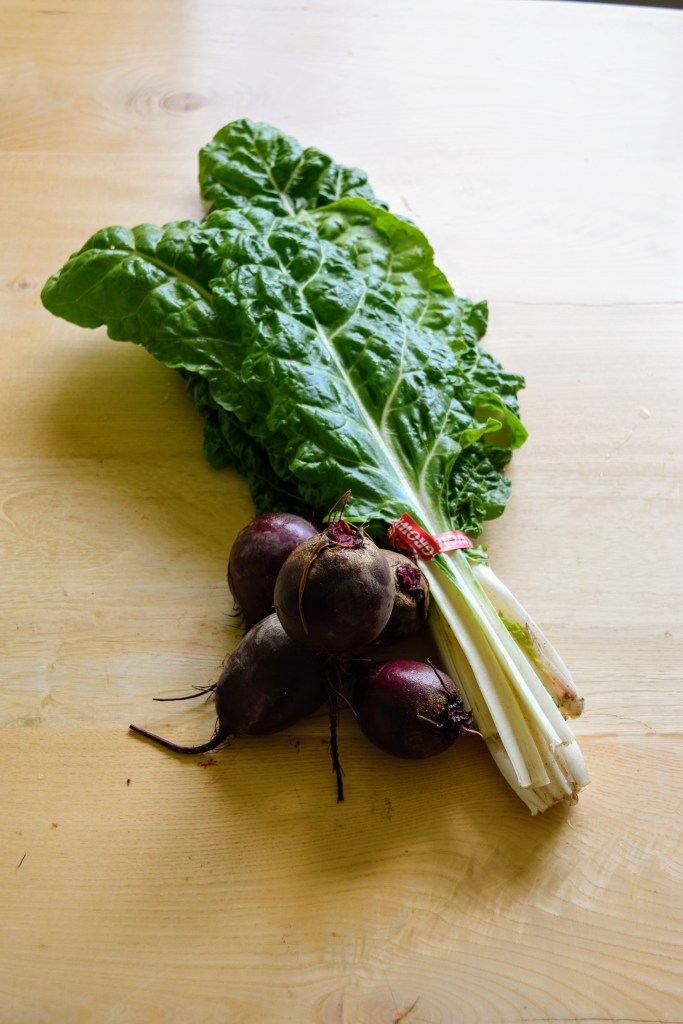
Did you know beets and chard are actually the same plant, Beta vulgaris? If you’ve grown both in your home garden, you may have noticed the similarities between the seeds and the leaves. The difference is that Swiss chard has been bred to favor leaf production, while beets have been bred to favor sweet fleshy roots.

The vegetables we eat didn’t just appear in the wild one day. Desirable traits have been “selected” for thousands of years to develop the tasty crops we enjoy today. Seeds are saved from plants that show the genetic variations we enjoy (more leaves versus fleshier roots) and then crossed through pollination with other plants with desirable traits so the offspring are better and better for human production and consumption. Please note, this is different from genetically modified which is done in a laboratory versus going through the generations of plants crossing for desirable traits already present in the species.

Rows of chard in the field

Resources for Veg Care and Use!

Remember to use the Vegetable Guide! Click the link below to see a pdf that describes most of the Food Farms crops and how to best care for the produce:

For the farm crew,

Starr
Summer CSA Week 5, 2022

We love fresh produce any time of the year, but early summer is particularly special. There’s something magical about the first time in a season we’re able to share a vegetable. We have several firsts this week: cauliflower, kale, cucumber, AND garlic scapes. We’re watching our harvests diversify and we love it!

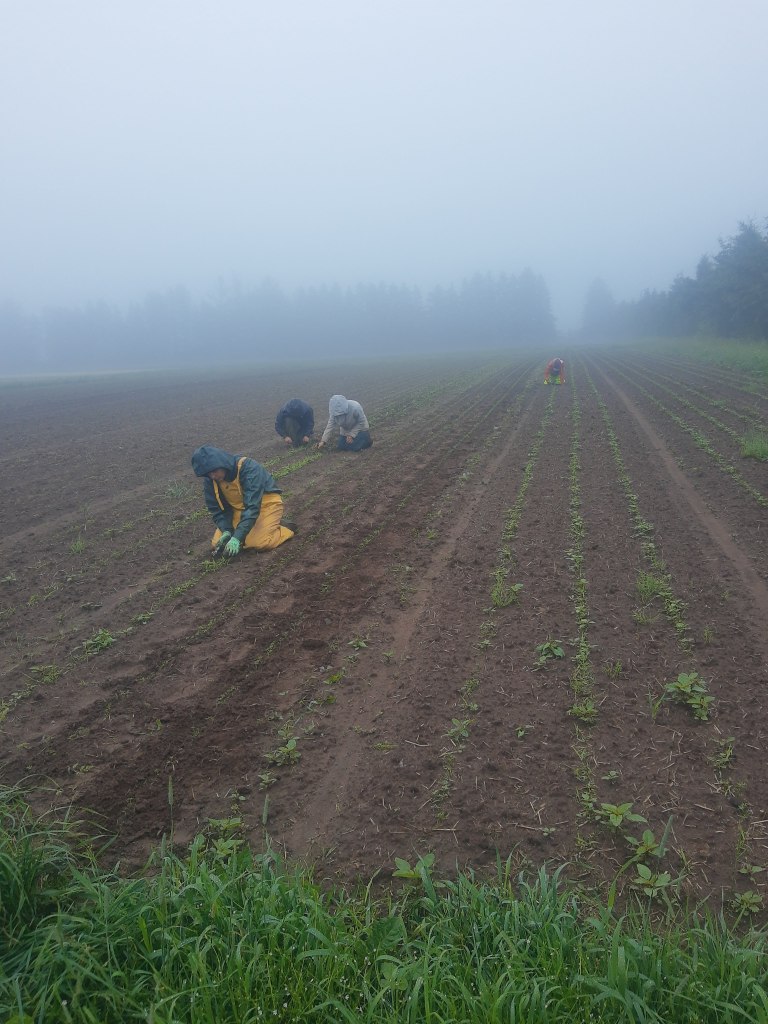
Pictured to the right: the crew weeding carrots in a wet fog on the 4th of July.

We’ve had some more storms and wet weather this past week, but fortunately nothing severe, and the moisture levels aren’t excessive. A word of advice to home gardeners: stay out of your gardens as much as possible in wet weather. Stepping in wet mud will cause compaction and be detrimental to your soil’s health. Plant diseases spread more readily in wet weather and your hands and tools could make that worse. On the Farm, have to keep working, even when it’s rainy, but we’re very selective about the tasks we do and how we harvest. Keep dry!


In your share this week:

Broccoli – Cauliflower – Lettuce – Green Onions – Carrots with Tops – Kale – Garlic Scapes – Cucumber


Forager’s Soup

Serves 6-8

Ingredients

4 tablespoons butter (use olive oil for a vegan alternative)

1 cup diced onion

1 medium potato, peeled and diced

salt and freshly ground black pepper

2 cups chicken or vegetable stock or hot water

1 1/2 cups whole milk (optional)

1/4 cup heavy cream (optional)

~4 cups (8 oz) mixed chopped spring greens, include scapes, kale, green onions, carrot tops, and/or broccoli (use whatever is on hand!)

3 tablespoons olive oil (to cook meat)

3 oz chorizo or bacon, finely diced (optional)

Preparation

  1. Melt butter in a large pot over medium-high heat. Once the butter foams add onion and potato and stir to coat butter. Add salt and pepper. Turn down heat and sweat the onions and potato on with a tight fitting lid for 10 minutes. Vegetables should not brown.
  2. Heat the stock (or water) in a saucepan until simmering. Add hot liquid to potatoes and onions and simmer 5-10 minutes more until vegetables are completely cooked. Add greens and simmer uncovered for 2-3 minutes more. (Don’t over cook the greens!)
  3. Blend with a blender or hand blender. Puree until smooth. Salt and pepper to taste. Stir or blend in milk and cream.
  4. If adding meat, heat olive oil in a small skillet. Add chorizo or bacon and cook until fat is rendered and meat is crisp, 5-10 minutes. Remove and drain on paper towels. Reserve the oil for a garnish or other cooking projects.
  5. Serve soup hot with the above meat and a few drops of the cooking oil to garnish.

This soup can be made a day in advance and kept in the refrigerator! Just gently reheat on the stove top, uncovered. To make this recipe vegetarian, use vegetable broth and skip step 4. To make vegan, also exclude the milk and cream, or substitute with vegan milk option.

*The above recipe is adapted from “Forgotten Skills of Cooking” by Darina Allen and has revisions from volunteer Deb Rausch to better suit our boxes this week. *(Source of recipe previously listed incorrectly.)


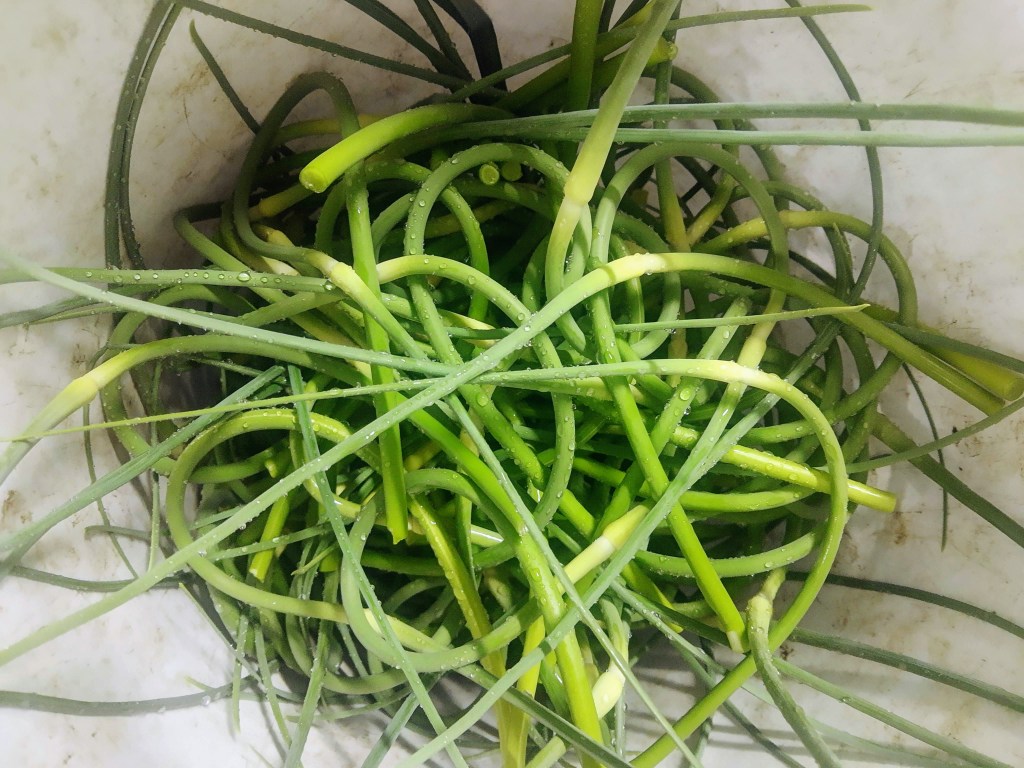
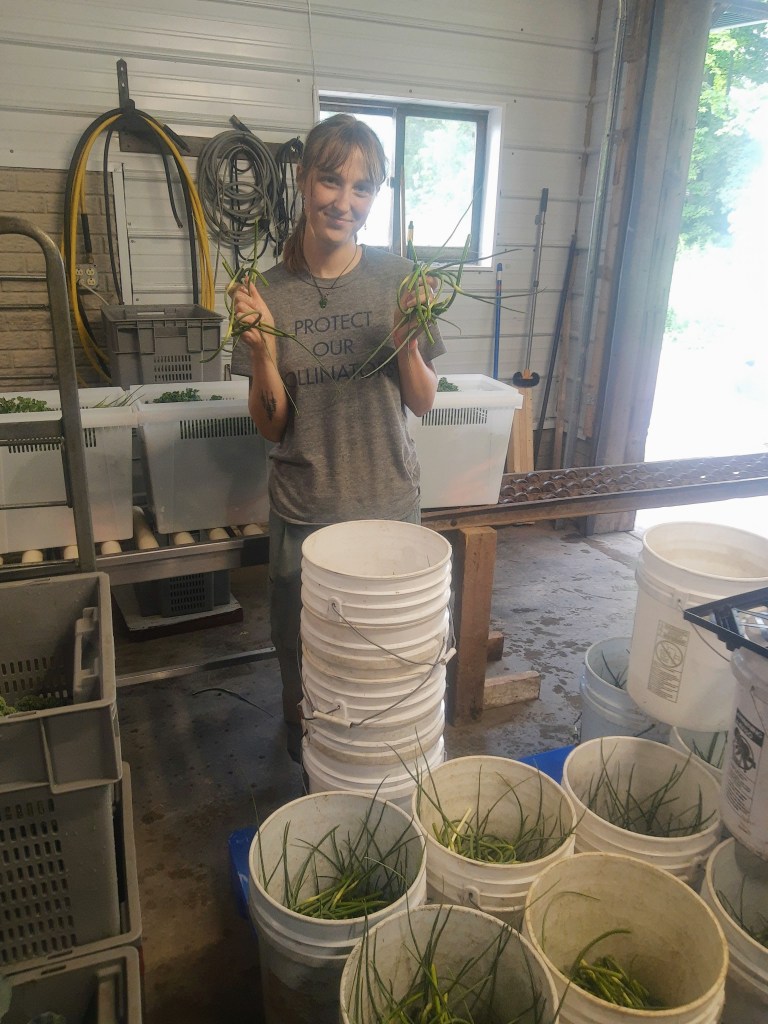
garlic scapes ready to go into share boxes

What are garlic scapes?

Scapes are the curly stems produced by hardneck varieties of garlic. We prune off these scapes so the garlic plant puts more energy into producing the garlic heads we all enjoy. If left on the plant these scapes would produce bulbils, which are like seeds that produce a clone of the parent plant.

Lucky for us, scapes are super tasty and get us through the early summer before the garlic crop is ready! Scapes are have a hot garlic flavor when eaten fresh and are a great garlic replacement in pesto. When cooked, the flavor mellows out. Try grilling garlic scapes or adding them to soups.


Still looking for recipes?

Use the Tag Cloud below to find archived recipes from past years. Just click an ingredient below and you’ll be taken to a list of all posted newsletters with a recipe that includes that vegetable. The larger the text below, the more posts there are including that vegetable.

Arugula Basil Beet Bell Pepper Broccoli Brussels Sprout Brussels Sprouts Cabbage Carrot Cauliflower Celery Cilantro Cucumber Delicata Squash Dill Dressing/Sauce Egg Garlic Garlic Scape Green Bean Green Onion Jalapeno Kale Leek Lettuce Mint Napa Cabbage Onion Parsley Parsnip Pepper Potato Radish Red Onion Rutabaga Scallion Shallot Spinach Squash Thyme Tomato Turnip Winter Squash Yellow Onion Zucchini

The farm crew admiring dramatic cloud formations on 7/11 just before being pelted with rain.

For the farm crew,

Starr

Summer CSA Week 3, 2022

Ellis with turnips

Welcome to summer! June 21st was the Summer Solstice, the longest day and shortest night of the year. We received 15 hours 52 minutes on the farm!


In your share this week:

Green Top Beets – Lettuce – Green Onions – Pac Choi – Radishes – Spinach – Salad Turnips


A note on this week’s spinach: our previous batches of spinach have come from our greenhouses which means they have been protected from the elements. This week’s spinach is from the field, so you may find it a little dusty from splash back from the rain and wind. We don’t wash the spinach on farm, because we find it lasts longer if we don’t get it wet before we get it to you. When you’re ready to use your spinach give it a wash, and either wash and dry the bag or transfer it to a clean bag. See how to wash greens in the video we posted last week!


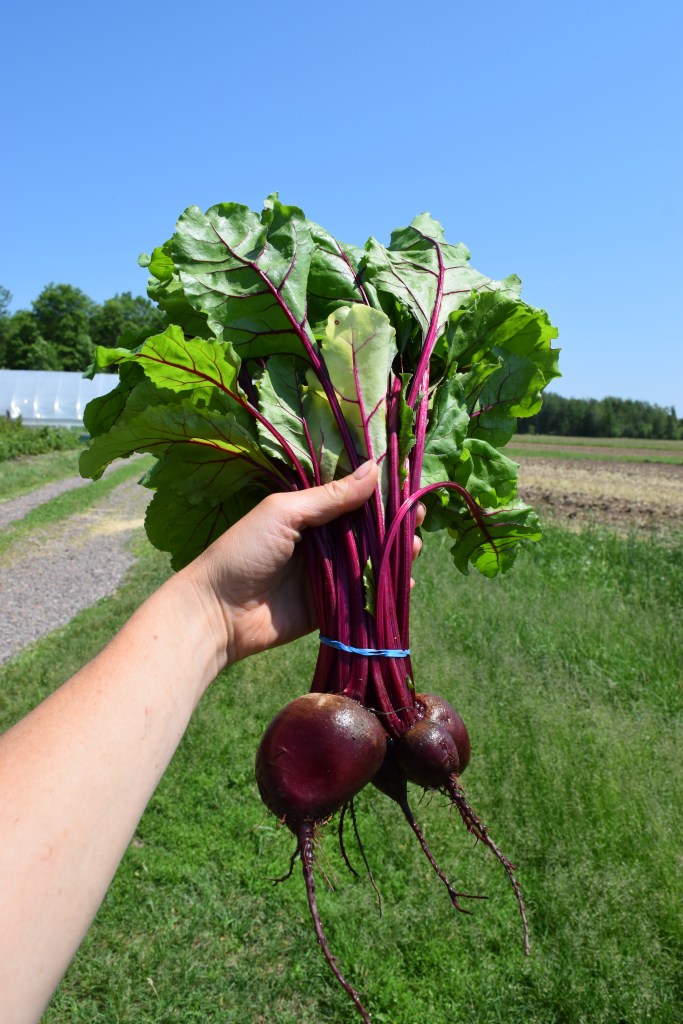
Beets with greens ready to go out in a CSA share!

The beet beat: did you now every part of the beet is edible? Beets tend to mature at varying rates, so you’ll probably find a range of sizes in your bunch this week. One thing they all have in common is delicious greens! Beet greens can be prepared any way you’d prepare kale. The most common way to prepare beet greens is in a sauté. Coat a pan with olive oil and cook your greens until they are wilted and tender (5 to 8 minutes). Add minced garlic, salt and pepper, or try experiencing with any of your favorite seasonings and aromatics.


You will find lots of salad turnips in your share this week! These turnips are best eaten fresh, but can be cooked (see a recipe below). These turnips are similar to radishes, but without the spiciness. You’ll find the turnips delightfully crunchy and juicy. Throw them in a big salad or eat them straight as a snack.

Here is a turnip poem written by a nine-year-old Henry Wadsworth Longfellow. It sounds like Longfellow only had access to old storage turnips. This poem might be a little more joyful if it was a fresh salad turnip they were eating, but we still love any literary ode to veggies.

Mr. Finney’s Turnip

By Henry Wadsworth Longfellow

Mr. Finney had a turnip,
And it grew, and it grew,
And it grew behind the barn,
And the turnip did no harm.

And it grew, and it grew,
Till it could grow no taller;
Then Mr. Finney took it up
And put it in the cellar.

There it lay, there it lay,
Till it began to rot ;
When his daughter Susie washed it
And put it in the pot.

Then she boiled it and boiled it,
As long as she was able;
Then his daughter Susie took it
And put it on the table.

Mr. Finney and his wife
Both sat down to sup;
And they ate, and they ate,
Until they ate the turnip up.

Lebanese Pink Pickled Turnips

Ingredients

1 pound turnips, peeled, quartered, and sliced 1/4 inch thick

1 small beet, peeled and quartered

1 clove garlic thinly sliced

1/2 cup vinegar

2 tablespoons kosher salt

1 teaspoon sugar

1 1/2 cups water

Preparation

  1. Put turnips, beet and garlic into a wide mouth heatproof 1 quart jar.
  2. In a small saucepan, bring vinegar, salt, sugar and water to a boil. When salt and sugar are completely dissolved, pour brine over vegetables to fill the jar. Leave to cool.
  3. When completely cool, cover jar and chill for 1 week.

Caramelized Hakurei Turnips

“Hakurei” turnips are another name for salad turnips, originally developed in Japan.

Ingredients

4 servings

2 tablespoons olive oil, plus more for greasing the baking sheet

2 bunches hakurei turnips, greens removed, washed but not peeled

1 teaspoon kosher salt

Freshly ground black pepper

Preparation

  1. Preheat oven to 425 degrees F. Grease baking sheet lightly with olive oil.
  2. Slice the turnips about 1/4 inch thick. You can do this with the slicing disk of a food processor, an adjustable mandoline, or by hand with a knife.
  3. Combine turnips with 2 tablespoons of olive oil and salt in a large bowl. Toss and coat turnips.
  4. Pile turnips on prepared baking sheet, spreading them as close as possible to a single layer.
  5. Roast the turnips until they are crisp and golden around the edges, 15-20 minutes. Shuffle turnips and roast 5 minutes more. Remove from oven and top with freshly ground black pepper.

Basic Vinaigrette

Spring and early summer is the season of greens! It is easy to make your own salad dressing at home. I like to put all my vinaigrette ingredients in a jar, and shake to combine. That way any dressing I don’t use, I can leave in the fridge for a future salad! Add any seasonings and herbs you prefer for different flavors.

Ingredients

¼ cup extra virgin olive oil
2 tablespoon balsamic vinegar
1 tablespoon whole grain dijon mustard
1 ½ teaspoon maple syrup (or agave)
1 teaspoon fine grain kosher salt
½ teaspoon ground black pepper

Preparation

  1. Combine!

Greenhouse after harvesting beets and scallions for Monday’s shares. Lots more tasty produce to come!

For the farm crew,

Starr

Summer CSA Week 2, 2022

Super star Food Farm member, Lynne, shows us how to unbox your veggie box and keep the produce fresh for your consumption!

Week 2 of the CSA! Our crew is back in the CSA rhythm and excited to bring you more delicious produce. Thanks to some super star volunteers we have an educational video for you about how to take care of the producing coming in your shares. Experienced CSA members and newbies alike will benefit from watching the video above!

Things are moving fast here at the farm, the hustle intensifies in hot weather as both crops and weeds develop quickly and need attention. On a related note: that’s why there are three heads of lettuce in your share this week!


In your share this week:

Broccoli – Head Lettuce – Oregano – Pac Choi – Potatoes – Radishes – Spinach


This share includes the last of the 2021 potatoes. This is very late to store potatoes, so please keep them in the refrigerator and use them quickly. If your potatoes sprout you can still break off the sprouts and use the potato as usual. You’ll have potatoes in your box again in August when our first crop of “new” potatoes is ready.


Greek Potatoes

Ingredients

6 servings

6 medium potatoes, cubed (3 pounds)

1/2 cup fresh lemon juice (~2 1/2 lemons)

1/3 cup vegetable oil

1 tablespoon olive oil

2 teaspoons salt

1/2 teaspoon black pepper

11/2 tablespoon fresh oregano

2 garlic gloves, minced

3 cups hot water

chopped fresh parsley

Preparation

  1. Preheat oven to 475 degrees.
  2. Toss together potatoes, lemon juice, salt, pepper, oregano and garlic in a deep flat pan about 8 x 12 inches. Add water to the pan.
  3. Bake for 1 1/2 hours at 475. Stir every 20 minutes adding more if needed to prevent sticking. Be careful not to burn in the last 30 minutes of cooking. During the final 15 to 20 minutes, allow water to evaporate.
  4. Garnish with fresh parsley and serve.

You can also try recipes from past newsletters like:

Pac Choi and Shiitake Stir-fry

Quick, spicy pickled radishes


The Free Range Film Festival is THIS WEEK. This is your opportunity to come out to Wrenshall and watch independent films in a beautiful historic barn. Friday and Saturday at 7pm. There will also be music by Darin Bergsven and the Denfeld Honors Quartet and a food truck on site. We’d love to see you there!

909 County Road 4, Wrenshall MN

June 24 & 25, 7:00pm

While there is officially no charge for admission, the organizers do ask audience members for a $10 donation to help pay for barn maintenance.

For the farm crew,

Starr

Summer CSA Week 1, 2022

Planting broccoli

Welcome to the 2022 summer CSA season! Thank you for being part of our community. You enable us to do what we love! After a cool slow start up, it’s starting to look like summer. The dry weather of the last two weeks have been great for getting field work done and the farm is finally looking lush and green. The farm crew has been hard at work weeding and planting, and we’re excited to begin harvesting as well!


In your share this week:

Dill – Greens Mix – Head Lettuce – Potatoes – Rhubarb – Spinach


Potatoes in June? Yes! This is a first for us–we had such a good crop last fall that we were able to save some for the first two shares. This is very late in their storage life, however, so please keep them in the refrigerator or they will sprout quite quickly. Sprouts aren’t bad though, so just break them off and use the potato as usual.

A note on the greens mix: our greens mix includes a special blend of kale, mustard and other members of the brassica plant family. This year we have seen an increase in flea beetle activity, which leaves little holes in the leaves of these plants. This is totally harmless; in fact, in French markets people seek out greens with these holes because it demonstrates the produce was grown organically without harmful pesticides! This can however increase the product’s spiciness. The greens mix makes excellent fresh eating in salads, but if you find this batch too spicy for you, a quick cook will mellow out the flavor. Try adding the greens mix to soup or lightly sautéing the greens with olive oil, a dash of salt and any other preferred spices.

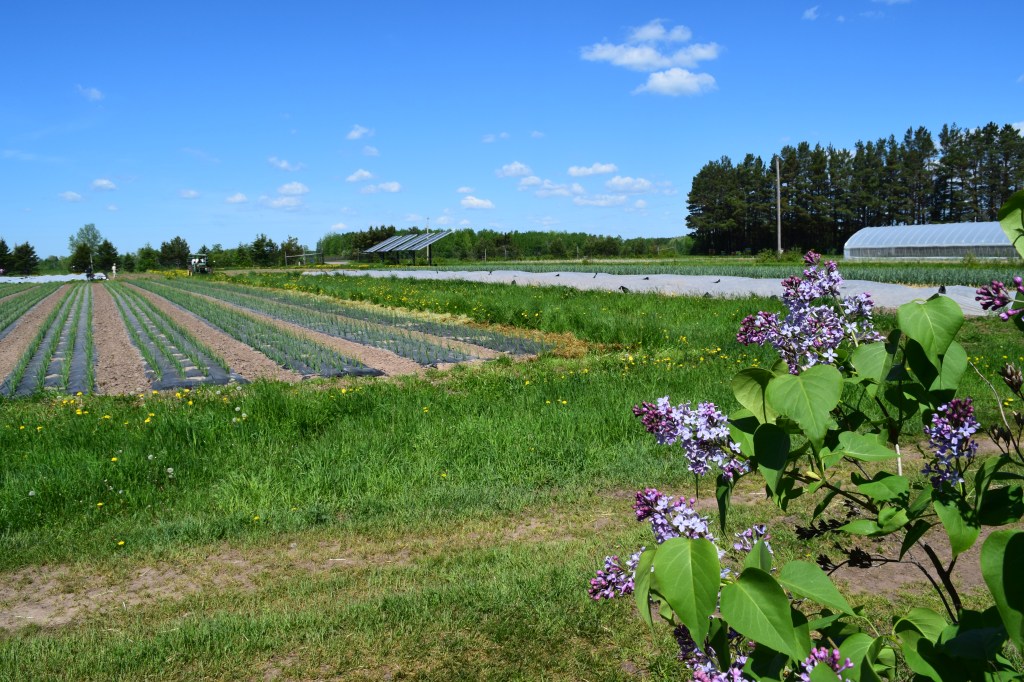
Lilacs overlooking the fields

I love the German variation on potato salad. With its olive oil and vinegar base, it is much lighter and brighter than the Midwestern mayonnaise based recipes. This brightness allows the herbs to really shine in this dish. When parsley comes into season, you can also try substituting the dill for bacon and parsley. Enjoy!

German Potato Salad with Dill (From Bon Appétit)

Ingredients

6 Servings

2 pounds small potatoes, halved and scrubbed

¼ cup olive oil

½ onion, chopped

Kosher salt and freshly ground black pepper

¼ cup apple cider vinegar

4 scallions, sliced

2 tablespoons fresh dill, chopped

1teaspoon caraway seeds, toasted

Preparation

Step 1: Cover potatoes with cold salted water, bring to a boil, and cook until tender; drain and transfer to a large bowl.

Step 2: Meanwhile, heat oil in a medium skillet over medium-high heat. Add onion; season with salt and pepper. Cook, stirring often, until soft, about 5 minutes.

Step 3: Remove from heat and mix in vinegar. Add to potatoes along with scallions, dill, and caraway seeds and toss, crushing potatoes slightly; season with salt and pepper.

You can also try recipes from past newsletters like:

Dilly Veggie Dip

Spinach and Quinoa Patties

Rhubarb Vanilla Compote


Finding Archived Recipes

You can now search previously posted Food Farm recipes using the “Tag Cloud” below. If you click an ingredient below it will take you to a list of the newsletters that include a recipe using that ingredient. Larger text means there are many recipes using that ingredient while smaller text means fewer recipes have been tagged so far.

Arugula Basil Beet Bell Pepper Broccoli Brussels Sprout Brussels Sprouts Cabbage Carrot Cauliflower Celery Cilantro Cucumber Delicata Squash Dill Dressing/Sauce Egg Garlic Garlic Scape Green Bean Green Onion Jalapeno Kale Leek Lettuce Mint Napa Cabbage Onion Parsley Parsnip Pepper Potato Radish Red Onion Rutabaga Scallion Shallot Spinach Squash Thyme Tomato Turnip Winter Squash Yellow Onion Zucchini

We hope this will help you explore new and old recipes and take advantage of the produce in your share!

Chester, the Great Pyrenees and Food Farm guardian

For the farm crew,

Starr

April Winter CSA

Happy Spring, food lovers!
The time has come for our final Winter Share of the season. Whether you’re new to us or a day-one member, we thank you for letting Food Farm feed your family this winter. Our root cellar is almost empty but our hearts are full. It is so rewarding to see the fruits of last year’s labor still providing nourishment at the dawn of a new season. I would also like to give a special shoutout to our wonderful soil and local honey bees for helping us make it all possible.

As I mentioned last month, this growing season is already in the works. Our onions and leeks are doing well. We have also started the first batches of tomatoes, peppers, and brassicas. As usual, there are some slight changes we’ve made to each of these crop plantings this year. We often experiment with new varieties in addition to other improvisations and adaptations and it is exciting to watch these changes unfold. The crew is eagerly waiting for the last of the snow to melt so we can get to work full time by the end of the month.

See you in the summertime!

Emily

In your shares this month:
Beets, Carrots, Garlic, Onions, Yellow and Red Potatoes, Shallots, Rutabagas

Your recipes this month would make great sides for Easter dinner!

Carrot Puree
1 lb carrots peeled and cut into coins
Add water to cover generously and bring to a boil. Cook until the carrots are completely tender
(25 or so minutes). Drain and mash carrots with following:
1/2 cup milk or cream
1-1/2 tablespoon butter
1/2 tsp salt
1/2 tsp ground cumin

Rutabaga and Potato Gratin
1-1/2 lbs rutabaga and potatoes (total), peeled and sliced thinly
1/2 clove of grated garlic
1/4 cup finely chopped onion
salt and pepper
1/2 tsp thyme
3/4 cup grated sharp cheddar or Gruyere cheese
1-1/2 cup milk
Heat oven to 400 degrees. Season sliced veggies with salt, pepper, and thyme. Arrange the
veggies in a gratin dish (or 9″x13” pan). Add milk. Bake for 45 minutes, pressing veggies down
into the milk one or two times during baking. After 45 minutes, add the cheese. Stir it into the
veggie mix and return to oven for 20-30 minutes (until veggies are completely soft and easily
pierced with a fork).

Cajun Rutabaga Chips
CHIPS
Rutabaga (peeled)
1.5 lbs
Extra Virgin Olive Oil
0.7 fl oz.
CAJUN SEASONING
Oregano 1 tsp
Thyme 1 tsp
Paprika 0.5 tsp
Cayenne Pepper 0.5 tsp
Garlic Powder 0.5 tsp
Black Pepper 1 pinch
Salt
STEP 1
Peel the rutabaga and then use a mandolin slicer or sharp knife to slice the swede into very thin
chips.
Ensure the chips are 1 to 2 mm thick, or they won’t crisp up as nicely.
STEP 2
Combine the Cajun seasoning ingredients in a small bowl. In another bowl, toss the rutabaga
chips with the olive oil.
Then, tip in the cajun spice mix and rub the chips thoroughly until they’re well coated
STEP 3
Now, arrange the seasoned chips flat on a baking tray lined with parchment paper.
You can keep them close to one another as they will shrink a lot while cooking. As they might
not fit all into one tray, we recommend baking them on multiple trays.
Bake the chips for 25 minutes at 250 °F in fan mode or at 285 °F in static mode.
Once they look smaller and curled up, flip them upside down and swap the trays top to bottom
and front to back.

These chips are best when consumed on the same day as they will lose some of their crispiness when stored longer.

February Winter CSA

Greetings fellow food lovers,

It has been awfully chilly the last few weeks around the farm. Normally, we run around in circles and light veggie scraps on fire to stay warm every morning. We’ve also been curating a new dance routine to really turn up the heat in the packing shed. This helps us pack your veggies faster and also keeps our toes from freezing. Although I am just kidding, I often wonder during these cold midwinter stretches, “Why do I live somewhere that if I stayed outside too long, I would die?” On the other hand, the long winter can be a nice break from all of the summer work we do at the farm, and I love that we have real seasons in the Northland.

Speaking of the Northland, we had a great time seeing our community at Wild State Cider last week for our annual rutabaga giveaway. In case you missed it, this event had a unique twist this year: rutabaga curling! I can’t think of a better way to take advantage of this unique vegetable (aside from, you know, eating it). Plus, curlers can really sweep you off your feet. Our friends helped make a wonderful video with some highlights from the event which you can find on our Facebook page or by clicking this link: https://fb.watch/b8eTjlvrps/.

Make sure you sign up for your summer shares if you haven’t already! These spots tend to fill quickly. More of this information can be found right on our website. Let us know if you have any questions. Throughout these recent times of uncertainty in our food systems, the importance of local farms has really been brought to light. Community Supported Agriculture has given all of us stability and the ability to contribute to something bigger than ourselves. Our crew at the Food Farm continues to take this responsibility seriously and we appreciate our members and your support!

By the time I write the next newsletter, I expect we will have seen warmer days (by warmer days I mean anything above 20 degrees), and we’ll be starting up greenhouse work and seeding onions! Oh, and remember: organic vegetables make the perfect Valentine’s Day gifts.

Stay warm,

Emily

Your CSA farmers love you!

In your shares this month:

Beets – Carrots – Green Cabbage – Parsnips – Baby Red and Russett Potatoes – Onions – Garlic – Delicata Squash

Mulligan Stew (The Soup and Bread Cookbook, B. Ojakangas)

  • 2 lbs beef stew meat cut into 1″ cubes (or substitute beans for a vegetarian version)
  • 4 medium thin skinned potatoes, yellow or red, washed, unpeeled and quartered
  • 4 medium carrots, cut into 2″ pieces
  • 4 small onions, quartered
  • 1 (1/2 lb) rutabaga, peeled and cut into 1″ cubes
  • 3 sprigs parsley
  • 1 tbsp sugar
  • 2 tsp salt
  • 1/4 tsp black pepper
  • 2 tbsp flour
  • 1/2 cup red wine or water

In a 4-qt soup pot, combine the meat and cold water to cover and bring to a boil.  Add the potatoes, carrots, onions, rutabaga, parsley, sugar, salt, and pepper.  Simmer, tightly covered, over low heat until the meat is tender, about 2 hours and 30 minutes.

In a cup, mix the flour and wine/water until smooth.  Stir into the stew and cook for 15 minutes, stirring frequently to thicken the stew. 

Kalldolmer (Danish cabbage rolls)(Danish Food Cookbook)

  • 3/4 lb ground beef
  • 1/4 lb ground pork
  • 1 egg
  • 1/2 cup cooked rice or 1/4 cup breadcrumbs
  • 1/2 cup milk
  • 1 small onion, grated
  • 1 tsp salt 
  • 1/2 tsp pepper
  • 2 cans stewed tomatoes
  • 12 cabbage leaves (large)

Mix meats, rice/bread crumbs, onion, milk, egg, salt and pepper in a bowl.  Rinse a large cabbage head and remove about 12 large leaves.  Drop the leaves into boiling water for a few minutes to soften them.  Drain the leaves.  Place about 1/4 cup of meatball mix into the center of the leaf and wrap it like a package.  Brown in a frying pan and then place seam side down in a 9″x13″ baking pan.  Pour the tomatoes over them.  Bake 350F for about an hour.

November Winter CSA

Welcome to the first winter share of the season! There is no better time to receive your first dose of winter veggies than right after daylight savings time. Personally, after a long season here at the farm an extra hour of sleep is more than needed, even though we have to put up with Janaki complaining that his kids now wake up at 4:30 in the morning. This is also the final week of the season for many of our farm hands, some of whom have their own winter adventures ahead of them. Lucky for me, I get to stick around the farm this winter to help pack your winter shares and local wholesale orders.

If this is your first share with us, thank you for choosing local and organic. If you have been a member here for years, thank you for continuing to support our mission. Although we farm hands don’t interact with members very much, we definitely keep all of you in mind when doing various tasks on the farm. As we ventured through the great carrot and potato harvests of 2021, I considered how many mouths these crops will feed through the winter and it made the work more fulfilling.

The last few weeks have been really busy here at the farm to get us set up for the winter. We have cleared many fields of the crops they have been growing all season long. We harvested so many tons of carrots, potatoes, parsnips, cabbage, and Dave’s favorite crop: rutabagas. Among these harvests, Janaki has a plan for exactly which crop is going where this winter. Many carrots will end up in your winter shares. Others will be on the shelves at local grocery stores. The odd shaped and broken carrots even get sold to local businesses to make things such as kimchi. If it’s in the root cellar, it has a plan.

Also, be sure not to forget that it’s officially SOUP SEASON! I know I said that right at the turn of the first leaf this fall, but now it’s more relevant as we have finally experienced cooler temperatures. As a disclaimer, you’ll probably see many soup recipes in these newsletters this winter. A staple in the diets of many Minnesotans, soup may be the defining soup of the winter season. Luckily for you all, many (if not all) of our winter crops are perfect for soup makin’.

Your local soup enthusiast,

Emily

In your shares this month:

Beets, Brussel Sprouts, Carrots, Celery, Onions, Russet and Red Potatoes, Rosemary, Spinach, and Delicata and Kabocha Winter Squash

Indonesian Carrot Soup (from New England Soup Factory Cookbook, Druker and Silverstein)

  • 2 tbsp olive oil
  • 2 whole cloves garlic, peeled
  • 1 tbsp minced fresh ginger
  • 1 large onion, peeled and diced
  • 2 ribs celery, sliced
  • 1.5 lbs carrots (we also use winter squash), peeled and sliced
  • 1 tsp curry powder
  • 1 tsp ground coriander
  • 1/2 tsp ground cumin
  • 1/4 tsp red pepper flakes (optional)
  • 4 cups vegetable stock
  • 1/4 cup sherry
  • 1/4 cup honey
  • 16 oz coconut milk (one can)
  • 2 tbsp cilantro 
  • salt and pepper to taste

Heat stockpot over medium high heat.  Add olive oil, garlic, ginger, onion, celery and carrots/squash.  Sauté for 10 minutes.  Add curry, coriander, cumin, pepper flakes, stock and sherry.  Bring to a boil.  Reduce heat to med and simmer 30-40 minutes (until carrots and/or squash are tender).  Remove from heat and add honey, coconut milk, cilantro, salt, and pepper.  Puree the soup using immersion or conventional blender.  Makes 5-6 servings.

Spanish Tortilla (New York Times, Mark Bittman)

  • 1.25 lbs potatoes (3-4 medium)
  • 1 medium onion
  • 1 cup olive oil
  • salt and pepper
  • 6 extra large eggs

Peel and thinly slice potatoes and onions.  Heat oil in nonstick skillet over medium heat.  After 3-4 minutes, drop in a potato slice.  When tiny bubbles appear around its edges, add potatoes, onions, salt and pepper.  Gently turn mixture in oil with a wooden spoon and adjust heat so oil bubbles lazily. Cook, turning potatoes every few minutes, until they are tender when pierced with a knife.  Adjust the heat.  If potatoes begin to break, they are overdone.  As potatoes cook, beat eggs with salt and pepper in a large bowl.  Turn oven on to 350 degrees F.  Drain the potatoes in a colander.  Wipe out skillet and heat over medium heat for one minute.  Add 2 tbsp. of oil.  Gently mix warm potatoes with eggs and add to skillet.  As soon as edges firm up, reduce heat to medium low and cook for 5 minutes.  Finish cooking in the oven.  Bake until firm (appx 10-15 minutes).  Serve warm (not hot) or at room temperature.

Summer CSA Week 18

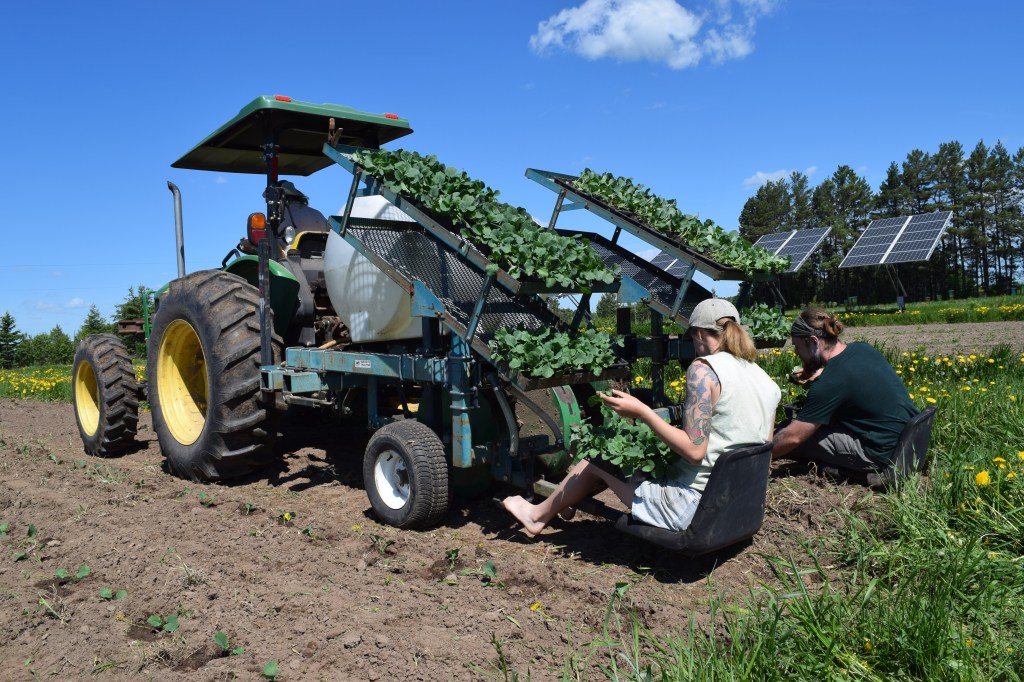
That’s right farm sharers… It’s the final countdown (insert Europe guitarist). I think every one of us on the farm is shocked that the final CSA delivery is upon us. Not only because it’s still in the 70s during the day, but it also seems like only yesterday we were on the back of the transplanter planting the first of thousands of veggie starts. I don’t think we could have done it without that life-saving, and back-saving implement. Moreover, we could not have done it all without the support of our community and share members. It is all of you that keep the farm afloat and drive us to be the best farmers we can be. 18 weeks of shares have gone by in the blink of an eye yet we have so much to show for it. We have fed hundreds of people fresh, local, and organic veggies all while sustainably stewarding our farm.

This is not to say that with the end of the Summer CSA that comes the end of our work on the farm. In fact, we are just starting most of the large scale projects that will prepare us for our ’21-’22 Winter CSA, winter wholesale orders, and winter itself. On the farm hand side of things, this means clearing out the greenhouses, harvesting insane amounts of carrots, potatoes, beets, rutabagas, parsnips and cabbage, taking down trellises, and stowing the irrigation pipe that got our plants through this brutal summer. On the Janaki side of things, this means ensuring that fields are seeded with cover crops, compost is produced to feed our soil microbes, and operating the tractors so that us farm hands do not suffer at the expense of the insane amount of carrots I mentioned. Of course these aren’t the only things we will be doing over the next month, but you get the idea.

Just as we’re putting the farm to bed, we’re including a few sprigs of lavender in your share, long used as an aromatherapy sleep aide.

Here’s a list of things I have learned this season, even though nobody asked for it:

  • Do not waste time picking burs off of Chester. He will only come back around covered in more. He is also a professional skunk hunter and deer carcass finder.
  • Driving a very old tractor (we call it Stubby) is very fun and also terrifying at the same time.
  • Pigweed is a noxious plant that really makes you question whether or not being an organic farm is really worth it… (It is).
  • When a bee colony swarms they are actually super calm because they are not protecting their queen or hive anymore. I once walked through a swarm of thousands of bees to feed the chickens.
  • Raccoons sneak onto the farm for our tiny corn patch and nothing else.
  • Aside from the skunks that Chester brings around, the worst smell on the farm is hands down the smell of rotting daikon radish.
  • Do NOT harvest beets without gloves on unless you want to look like a murder suspect.
  • There is no such thing as a free meal.

Once again, we could not have done it without all of your support this season. We look forward to feeding you again in 2022. Until then, we will be here waiting and working the land to ensure you all receive high quality veggies next time around.

Take care,

Emily

“Agriculture is the noblest of all alchemy; for it turns earth, and even manure, into gold, conferring upon its cultivator the additional reward of health.” – Paul Chatfield

In your shares this week:

Beets – Carrots – Cilantro – Collar Greens – Lavender – Lettuce – Yellow Onions – Sweet Red Peppers – Hot Peppers – Potatoes – Rutabagas – Red Shallots – Delicata and Kabocha Winter Squash

A wonderful rainbow that made an appearance after we were rained on all day.
An absurdly large daikon radish that is destined for Spirit Creek Farm kimchi.

Red Flannel Hash (modified from NYT Cooking)

This recipe also works wonderfully with left-over roasted vegetables!

1.5 cups diced potatoes

1 cup diced squash

1/2 cup diced beets

1/2 cup diced carrots

1/2 cup diced peppers

1/4 cup diced onion

1/2 tsp each thyme and parsley

salt and pepper to taste


*Note:  Dice all the veggies into the similarly sized cubes (~1/2 inch) Heat oven to 425.  Place potatoes, squash, and beets on a rimmed baking sheet with 1 tablespoon of oil and bake for 20 minutes.  Add remaining veggies and herbs to the pan with the remaining olive oil and bake another 25 minutes.   
Fry the baked veggies in a frying pan with butter in a single layer to achieve crispness.  Top with a fried egg and serve with a side salad.


Strata (savory bread pudding)

1/2 lb french bread (stale or leftover works best), enough to make 4 cups of bread cubes

1 cup sliced mushrooms

1/2 cup diced peppers

1 cup diced or grated squash (~1/4″ cubes)

2 cups kale

1 clove garlic, minced

1.5 cups milk

1/2 cup grated hard cheese (swiss, gruyere, or cheddar)

1/4 cup grated Parmesan cheese

2 tbsp olive oil

1 tsp fresh rosemary (or 1/2tsp dried) 

1 tsp salt

4 large eggs


Preheat oven to 350 degrees. Soak the bread cubes in 3/4 c. of the milk. Oil or butter a 2 qt baking dish.  Heat a frying pan and add the kale.  Fry over medium heat until the leaves begin to soften and wilt.  Cover the pan and let the kale steam until cooked (3 minutes).  Remove from pan, press or squeeze out the excess liquid.  Chop coarsely and set aside.  Add 1 tbsp oil to the same frying pan and add the mushrooms and peppers.  Fry on medium heat until the mushrooms are cooked and the peppers have lost some of their moisture.  Add the minced garlic and the squash, and continue to fry for another minute.  Stir in the rosemary and kale.  Remove from heat, pour into a bowl with the cubed bread, the two cheeses, and toss together.  Arrange in a baking dish.
Beat eggs in a medium bowl and add the remaining milk and salt (and a few shakes of black pepper if you like it).  Pour over the bread and press the bread down into the custard mix.  Bake for 40-50 minutes until puffed up and brown and a knife poked into the strata comes out clean.
Note:  this can be assembled and left (covered) in the fridge for the night for a quick and easy morning bake, too!

Summer CSA Week 16

Howdy food sharers,

This past week was the week of squash. To be honest, I’ll probably never see that much squash again in one place. On Wednesday we harvested around 8,000 pounds of Delicata alone. As much as it feels like it will never end when we are in the middle of harvesting, the end results are very satisfying to look at. 4 tons of Delicata sitting on drying racks is a sight for sore eyes (and arms). It is also very funny to be using old bakery racks as storage racks. They sure do get the job done though.

Delicata are not the only variety of squash we are growing this year. The others include: Winter Sweet, Acorn, Kabocha and Sunshine. To be honest I think I would name my pet after these squashes. Maybe not Delicata though… I sometimes think that squash is such an interesting crop so I decided to do a little research to spice up this newsletter. Here are some fun facts about squash:

  • The name “squash” comes from a Native American word “askutasquash” which means “eaten raw or uncooked” which is….ironic. Or at least I have always cooked my squash.
  • Squashes are some of the oldest crops. Some estimates are at 10,000 years old. 
  • The regions of Mexico and surrounding Central American countries are where squash is originally thought to come from. 
  • We grow both summer and winter squash here at Food Farm. Summer squashes are harvested when they’re immature and their skins are still soft. For example, zucchini is a well-known summer squash. Winter squashes are harvested when their skin is hard, making them suitable for long term storage.

Pretty soon your summer CSA will be over and your household may start to accumulate more and more squash. Pumpkins will be on their way to you soon. Jack-o-lanterns will be carved. Pies will be baked. Although this is the beginning of the end of our time being your summer farmers, we still have a LOT to get done on the farm before freeze-up. Best of all, the autumn equinox is on Wednesday. According to the MN DNR Fall Color Finder, between 10-25% of our trees in the area are turning color. Fall has quickly become my favorite time of the year since I started farming.

I’m keeping this newsletter short and sweet, just like our acorn squash.

Thanks for tuning in,

Emily 

In your shares this week: Arugula – Beans – Carrots – Cucumbers – Red Russian Kale – Leeks – Onions – Parsley – Peppers – Potatoes – Acorn and Sunshine Squash – Tomatoes – Zucchini

Chinese Chard with Almonds by TasteofHome

Ingredients

1 bunch chard (about 1 pound), chopped (the Red Russian Kale this week is tender enough to use in place of Chard)

1 tablespoon olive oil

1 large sweet red pepper, cut into strips

1 large tomato, diced

1 small red onion, diced

3 garlic cloves, minced

1 tablespoon minced fresh gingerroot

1 tablespoon hoisin sauce

3/4 teaspoon Chinese five-spice powder

3/4 teaspoon kosher salt

Dash crushed red pepper flakes

2 tablespoons lemon juice

1/2 cup sliced almonds, toasted

Directions

In a large saucepan over medium-high heat, bring 2 in. of water to a boil. Add chard; cook, covered, until crisp-tender, about 5 minutes. Drain; set aside.

In same saucepan, heat oil over medium-high heat. Add pepper, tomato and onion; saute until pepper is crisp-tender, 3-4 minutes. Add garlic; cook 1 minute more. Stir in next five ingredients; add cooked chard. Cook and stir until pepper is tender, 3-4 minutes ; add lemon juice. Top with almonds.

Kale and Leek Gratin by Food & Wine

3 pounds kale, de-stemmed

3 tablespoons extra-virgin olive oil 

5 medium leeks, white and tender green parts only, sliced 1/4 inch thick

Salt

3 garlic cloves, minced

6 tablespoons unsalted butter

2/3 cup all-purpose flour 

1 quart whole milk

1/2 cup shredded Gruyère cheese

1/2 cup freshly grated Parmigiano-Reggiano cheese 

1/4 teaspoon freshly grated nutmeg

Freshly ground pepper

Directions

In a large pot of boiling water, blanch the kale in batches until wilted, about 1 minute. Drain, squeeze dry and chop it.

Heat the oil in the pot. Add the leeks and a pinch of salt. Cover and cook over moderately low heat, stirring, until tender, 7 minutes. Uncover, add the garlic and cook, stirring, until fragrant, 2 minutes. Add the kale, season with salt and remove from the heat.

Preheat the oven to 425°. Butter a 10-by-15-inch baking dish. In a large saucepan, melt the butter. Stir in the flour over moderate heat to form a paste. Gradually whisk in one-third of the milk and cook, whisking, until the mixture starts to thicken. Repeat two more times with the remaining milk. Bring the sauce to a boil, whisking constantly. Reduce the heat to low and cook, whisking often, until thickened and no floury taste remains, 15 minutes. Whisk in the cheeses and the nutmeg; season with salt and pepper. Mix the sauce into the leeks and kale. Season with salt and pepper.

Transfer the mixture to the prepared baking dish. Bake in the upper third of the oven for about 25 minutes, until bubbling and golden brown on top. Let rest for at least 10 minutes before serving.