Summer CSA Week 18

Today marks the final Summer CSA delivery.  We are sad to see this part of our season come to a close, but what a wonderful season it has been. This year has been filled with seeding, planting, harvesting, learning, laughing, and gratitude. 

Our Farm crew shows up and works incredibly hard every day, but as the saying goes, many hands make light work. On Mondays and Thursdays we are grateful for our wonderful volunteers that help to lighten the load. This year we had quite the list of volunteers come out to help–if you braved the weather to come bag vegetables, harvest, weigh items, fill boxes, wash veggies, or cheer us on while we did those things, we appreciate you and your time more than words could express! Our CSA deliveries also wouldn’t be possible without our wonderful site hosts. Thank you to all of you who allowed us to use space at your home or business. This allows us to get local veggies onto the plates of more families by making pick up locations closer to their homes. 

Today may end the CSA season, but it doesn’t end the farming season. These next 3 weeks are crunch time for us. We still have lots of veggies in the field that can handle a light frost ( and remember from last week, some of them even taste better), but too much frost can damage the crops. We also had a hard start to the growing season with how wet this spring was, so the longer we can let the plants grow, the better.

We will start the harvesting with things that shouldn’t get too cold such as potatoes and brussels sprouts. We will finish the harvest with our most cold hardy vegetables such as carrots and parsnips. By the end of October, all of the fields will be empty and everything that shows up on grocery store shelves, or in the Winter CSA boxes has been carefully stored over many months. Vegetables can last for a very long time if they are properly stored. We are grateful for our root cellar that will soon get packed from floor to ceiling with vegetables. This year was finally time to admit that we might be growing more vegetables than we have storage for. Janaki applied for, and got approved for a grant that will allow us to expand our cold storage area. By the end of the project, we will have increased our cold storage by over 50%, and give us a bit more space to wash and pack those veggies as well. If the mild weather continues, the plan is to get the footings in place before snow flies. The rest of the project will have to wait until Spring, so check back for more updates. 

Another fun project we have in the works is adding another well. Up to this point, we’ve been using our household well to irrigate all of our greenhouses and tunnels, as well as a few of the smaller fields that don’t fit our larger irrigation equipment. This has required a careful dance to make sure everything gets watered and we still have pressure to wash and pack everything we need to. We hired a crew to come out a few weeks ago and dig the new well, and they’ll be coming back soon to install the pump and run new pipe to connect the buildings. We’re looking forward to having easy access and enough water pressure to provide water to the greenhouses, pack shed, and maybe even run a load of laundry at the same time.

Once November hits, we say goodbye to most of our summer crew. A couple people will stay on to fill retail orders, box Winter shares, wash vegetables (there isn’t always enough time to harvest and wash before the season ends) and do various tasks over the winter. The Summer crew will rejoin in late April or early May to start the cleaning process and take everything out of storage so we can do this all over again next year. 

Before we end this last newsletter, we need to say a big thank you to all of you. Thank you for supporting us. Thank you for believing in us. Thank you for being here with us through the twists and turns. Farming isn’t easy. We give up a lot of control to mother nature, and hope things work out how we want them to…and sometimes they do! Having your support makes the challenges a little easier. Thank you for putting your trust in us, for supporting your local farmers, and for allowing us to wake up each day and do what we love. We hope to see you all again next year!

In your share this week:

Arugula – Northeaster Beans – Beets – Brussels Sprouts – Cabbage – Carrots – Cucumbers – Lettuce – Onions – Peppers – Potatoes – Winter Squash – Tomatoes

Egyptian red lentil soup

One large onion, chopped

One carrot finely chopped

4 to 5 garlic cloves, finely chopped

3 tablespoons olive oil

1 1/2 cups split red lentils

8 1/2 cups chicken or vegetable stock

2 teaspoons ground cumin

1 1/2 teaspoons ground coriander

One good pinch, hot pepper flakes

Juice of one lemon

Salt and pepper to taste

Soften the onion, carrot and garlic in the olive oil in a large pan over low heat for about 10 minutes. Add the lentils in stock to the pan bring to boil and skim off the foam that forms on the top simmer for 20 to 40 minutes until the lentils have disintegrated.  Stir in the spices and lemon juice and season with salt and pepper. Simmer for five minutes more – if the soup needs thinning, add water and bring to boil again.

Winter Salad

For the Salad:

  • 6 oz. shredded kale
  • 1/2 small lemon, juiced
  • 1 Tbsp. extra-virgin olive oil
  • 6 oz. shredded vegetables, such as Brussels sprouts, cabbage, carrots
  • 2 medium apples, cored and diced
  • 1 1/2 c. candied pecans
  • 4 oz. crumbled goat cheese
  • 1 1/2 c. roasted winter squash
  • 1/2 c. pomegranate arils

For the Dressing:

  • 1/2 c. red wine vinegar
  • 4 tsp. whole grain or dijon mustard
  • 4 tsp. pure maple syrup
  • 1 tsp. kosher salt
  • 1/2 tsp. ground black pepper
  • 1/2 c. extra-virgin olive oil

Directions

  • Place the shredded kale in a very large salad bowl. Add the lemon juice and oil. Use your hands to massage the lemon juice and oil into the greens, about a minute or so. The greens should wilt slightly and take on a deep green color.
  • Add the other shredded vegetables to the bowl as well as the chopped apple.
  • Make the dressing by combining all of the dressing ingredients in a mason jar. Shake vigorously for 30 seconds and then pour it over the salad. Toss well to combine.
  • Add the pecans, goat cheese, squash, and pomegranate arils on top. Serve.

For the farm crew,

Jennifer

Summer CSA Week 12

Thanks to everyone who spent their Saturday with us. We loved getting to meet so many of you, and having the opportunity to show all of you this beautiful space we love!

Last week was BUSY here on the farm! We spent the beginning of the week getting the rest of the first two plantings of carrots out of the field and washed. We now have about 7,200 pounds of carrots in our root cellar waiting to be put in your weekly share boxes, and eventually hitting grocery store shelves and restaurant plates.

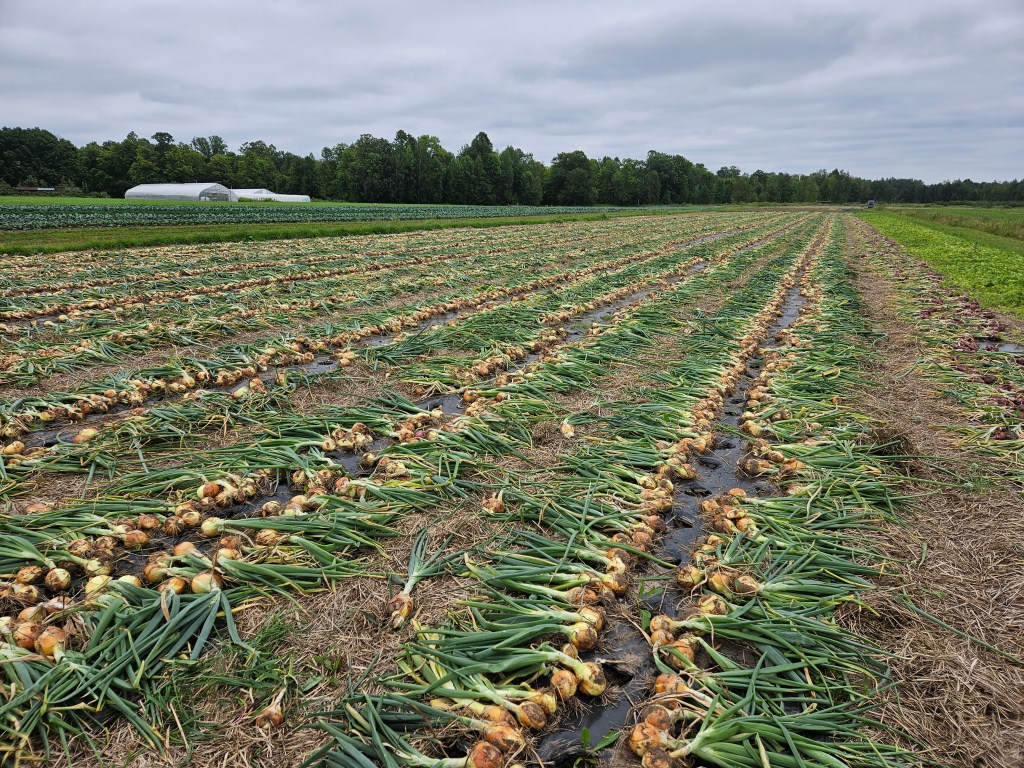
Now that the first two plantings of carrots are out of the field and washed, we were able to turn our attention to other crops. We spent time pulling all of the onions, and laying them on the plastic mulch to begun the drying process. We leave the onions here for a week or two to let the sun and wind naturally start drying them out. After the onions have begun to dry and form their protective outer shells, we cut off the stem, move them to drying racks in the greenhouse and place them in front of fans to fully dry for winter storage. We usually dry the garlic and have plenty of time to put all the garlic away and clean up the greenhouse before it’s time for the onions to dry. However, if you haven’t caught it yet, this year has been a wild and unpredictable year on the farm. We had to pull the onions a little early this year because some of them had started to bolt. Bolting is when a plant prematurely puts on flowers.

Onions are considered a biennial plant. This means in the first year, we plant the onions from seed and they will create the onion bulbs we all know and love. If we left them in the ground over winter, the next summer the onions would put on a flower and eventually that flower would create seeds (the same ones we plant to create this cycle). Every once in a while, the changes in the environment can confuse the onion into thinking it’s in its second year of growing and needs to put on a flower. Some of these environmental factors are too hot, too cold, too much water, or too little water. My research led me to learn that specifically when temps dip below 45°, the plant thinks it has entered “winter”, then when it warms back up, the plant thinks it has entered summer in year two leading it to put on flowers. Our best guess is that those few overnights in the end of June/early July that got down to low 40s, tricked the onions into believing they were in winter.

When the onions start to bolt, it’s important to get them out of the ground sooner rather than later because the big, thick stems, has the possibility to prevent the onions from properly drying. We rely on the dried onions in the winter for our Winter CSA boxes, and for selling to local restaurants. This means this year we will be drying garlic and onions at the same time. The greenhouse space isn’t big enough to handle both at once (hence why we usually dry one then the other), so we’ve had to get creative clearing out some other spaces to house the onions for a while.

We also picked the first tomatoes from our caterpillar tunnel. We’ve learned a lot from having this new tunnel, but the taste of the tomatoes is the most important part. Beautiful looking plants don’t mean as much to us if the fruit it produces doesn’t taste good. We are doing a taste test of the tomatoes this week. We plan to compare the regular greenhouse tomatoes to the caterpillar tunnel tomatoes to see if one tastes better than the other, or if they are equally delicious. We plan to give you all a thorough update next week on both the tunnel itself and the taste of the tomatoes, so stay tuned!

In your share this week:

Thyme – Onions – Kale – Basil – Green Beans – Carrots – Tomatoes

Zucchini – Cucumber – Cilantro – Green Peppers – Hot Peppers – New Potatoes

Lemon Thyme Shortbread cookies

Ingredients

  • 3/4 cup unsalted butter, softened 
  • 1 1/2 cups powdered sugar, divided
  • 2 Tbsp. lemon zest, plus more for garnish
  • 1 1/2 tsp. chopped fresh thyme, plus more for garnish
  • 1/2 tsp. vanilla bean paste or extract
  • 1 1/2 cups all-purpose flour, plus more for work surface and cutters
  • 1/2 tsp. kosher salt
  • 2 Tbsp. fresh lemon juice (from 1 lemon)

Directions

  1. Beat butter and 1/2 cup of the powdered sugar in a stand mixer fitted with a paddle attachment on medium speed until smooth, about 1 minute. Beat in lemon zest, thyme, and vanilla until combined, about 30 seconds.
  2. Whisk together flour and salt in a medium bowl until combined. With mixer on low speed, gradually add flour mixture to butter mixture, beating just until dough comes together, about 1 minute, stopping to scrape down sides of bowl as needed. Shape dough into a 6-inch disk, and wrap in plastic wrap. Let chill until firm, at least 1 hour or up to 24 hours.
  3. Preheat oven to 350°F. Line a large rimmed baking sheet with parchment paper. Roll out dough on a lightly floured work surface to 1/4-inch thickness. Cut desired shapes using lightly floured 2-inch cookie cutters. Chill, reroll, and cut dough scraps as needed. Transfer shapes to prepared baking sheet, spacing 1 inch apart. Freeze until firm, about 10 minutes.
  4. Bake in preheated oven until the edges are set, 14 to 16 minutes. Let cool on baking sheet for 5 minutes. Transfer cookies to a wire rack; let cool completely, about 30 minutes.
  5. In a medium bowl, whisk together lemon juice and remaining 1 cup powdered sugar until smooth. Dip, drizzle, or spread glaze over cooled cookies as desired. Sprinkle additional lemon zest and thyme over cookies. Let stand until glaze is set, about 30 minutes.

African Peanut Soup

  • 2 tbsp olive oil
  • 1 medium onion, chopped (1 cup)
  • 1 tbsp ginger, minced
  • 1 jalapeño, seeds and ribs removed, diced
  • 4 garlic cloves, minced (1 tbsp)
  • 1/2 tsp pepper
  • 2 tsp cumin
  • 2 tbsp tomato paste
  • 14 oz crushed tomatoes
  • 4 cups chicken stock
  • 1 sweet potato, peeled and diced
  • 1 (14 oz) can chickpeas, drained
  • 1 cup creamy natural peanut butter
  • 4 cups kale, roughly chopped
  • 1.5 lbs skinless, boneless chicken breast, cooked, shredded
  • 1 tsp salt (to taste)
  • peanuts, crushed
  • cilantro, chopped (optional) for garnish
  1. In a large pot heat olive oil over medium heat. Add onions and sauté until softened, about 3-4 minutes.
  2. Add in ginger, jalapeno and garlic and stir until fragrant about 1 min. Add the pepper, cumin and tomato paste and cook for another 2 minutes, stirring, until paste darkens.
  3. Add the crushed tomatoes, stock, sweet potatoes, chickpeas and peanut butter. Bring to a boil and stir until fully combined. Turn the heat down to low and simmer for 15 minutes, until sweet potatoes are tender.
  4. Add in kale and shredded chicken and cook for another 5 minutes. Taste the soup before adding salt. Depending on how salty your stock and/or peanut butter was, it may not need anymore salt. If you use low sodium stock and salt-free peanut butter, it will need a full teaspoon salt, maybe more. Adjust to your own liking.
  5. Serve warm topped with cilantro and crushed peanuts. Enjoy!

For the farm crew,

Jennifer
Summer CSA Week 10, 2023

Let’s take a moment to say thank you for the bit of rain that came last week. The farm was lucky enough to get three quarters of an inch, which isn’t that much in the grand scheme of things, but as my mother likes to say “beggars can’t be choosers.” The problem is that we need rain consistently to make much of an impact. Every hotter-than-normal, rainless day with ample sunshine dries the soil out. We do have a pond toward the back of the farm property, which we are able to pump water from to aid in our irrigation efforts, but it certainly wouldn’t hurt if we all put some collective energy into wishing for more rain to fall 🙂

We are getting to that time of year where every day is a harvest day. Whether it’s digging beets, carrots & potatoes, picking canning tomatoes, or slicing bunches of kale, there just doesn’t seem to be enough time in the day. One fun item that got added to the list this week is cantaloupe. This is a crop that can be difficult to grow in our area, but through a lot of trial an error, we have managed to grow consistently for the last five or so years. It has become somewhat of a crowd favorite and for good reason! Nothing quite cuts the summer heat like a freshly sliced melon!


Carrots – Cilantro – Cukes – Kale – Lettuce – Green Onions – Green Peppers

Green BeansHot Peppers – Parsley – Potatoes – Tomatoes – Zucchini – Melons


Feel free to get creative with the salad recipe below… As is, it uses up a good chunk of the ingredients in your share this week, but it could feature even more farm goodness if you happen to have some leftover cabbage or snap peas hiding in your fridge from weeks prior. The dressing itself is also pretty versatile and would make a wonderful marinade or stir fry sauce.

Salad w/ Peanut Butter Dressing

2 medium cucumbers
1/2 cup shredded carrots
1 green onion, thinly sliced
1/4 cup salted & roasted peanuts, chopped
2 tablespoons cilantro, chopped
1-2 hot pepper, finely diced (optional)

PB Dressing, from theendlessmeal.com:
1/2 cup peanut butter
1/4 cup lime juice
1 tablespoon soy sauce
1 tablespoon ginger, finely minced
2 teaspoons toasted sesame oil
2 cloves garlic, finely minced
1/4 – 1/2 cup water
sea salt, to taste

  1. In a medium-sized bowl, whisk the peanut butter, lime juice, soy sauce, ginger, sesame oil, and garlic. Thin with the water, starting with ¼ cup. (The amount of water you’ll need to add will depend on how thick your peanut butter is and how thick or thin you’d like the dressing to be).
  2. Taste and add salt as needed.
  3. Dress the salad as you see fit!

Potato Salad w/ Grilled Kale, from Bon Appétit

5 tablespoons olive oil, divided, plus more
2 pounds potatoes
1 pound shallots, unpeeled
3 tablespoons lemon juice
1 tablespoon apple cider vinegar
freshly ground black pepper
1/4 cup chopped pickles
2 tablespoons drained capers (optional)
1 bunch kale, ribs and stems removed
3 green onions, sliced
1 cup parsley leaves w/ tender stems

  1. Prepare a grill for medium-high heat; lightly oil grate. Place potatoes in a large saucepan and pour in cold water to cover by 1″. Season with salt and bring to a boil. Reduce heat; simmer until tender, 15–18 minutes. Drain and return to saucepan.
  2. Meanwhile, grill shallots, turning occasionally, until skins are blackened and flesh is tender, 15–20 minutes. Let cool. Halve lengthwise and scoop out insides (discard skins).
  3. Whisk lemon juice, vinegar, and 3 Tbsp. oil in a large bowl; season with salt and pepper. Add cornichons, capers, and potatoes and toss to coat.
  4. Toss kale and remaining 2 Tbsp. oil in a medium bowl; season with salt. Grill, turning often, until charred and crisp-tender, about 1 minute. Fold into salad along with scallions, parsley, and shallots.
  5. Do Ahead: Potato salad can be made 1 hour ahead. Store tightly covered at room temperature.

For the farm crew,


Charlie

Summer CSA Week 5, 2023

Dear Food Farm Community,

As we delve into the heart of the growing season, we find ourselves knee-deep in the world of weeding. Weeding, although often deemed an arduous task, is an essential part of maintaining the health and vitality of our crops. The crew has been diligently working through the fields, carefully tending to each bed, ensuring that our plants have the space, nutrients, and sunlight they need to thrive.

Soon we’ll begin to notice that the daylight hours are gradually decreasing, but the harvest time seamlessly extends, stretching out longer and longer. More variety means more running around for the crew and volunteers. This morning we were doing just that; shuttling harvest totes to and fro to deliver a well rounded box of vegetables.


In your share this week:

Green-top Beets – Broccoli – Green-top Carrots

Cucumber – Garlic Scapes – Kale – Green Onions – Zucchini


Beet Greens & Kale Sautéed with Garlic Scapes

~ 2 servings

  • 1 tablespoon olive oil
  • 1 slice bacon, cut into small pieces (optional, use a little more oil if omitting)
  • 2 garlic scapes, finely chopped
  • 2 green onions, white and pale green portion, finely chopped
  • 6 leaves beet greens, stems cut into 2-inch pieces
  • 2 leaves kale, ribs and stems removed, chopped
  • salt and pepper to taste
  1. Heat olive oil in a large skillet over low heat. Cook bacon until it begins to brown and crisp, about 2 minutes. Add garlic scapes and green onion, cook and stir until golden brown, 3-5 minutes.
  2. Stir beet stems and kale into skillet. Cover and cook until kale wilts, about 3 minutes. Add beet greens. Cover and cook until bright green and wilted, 1 to 2 minutes.
  3. Season with salt and pepper.

Sautéed Zucchini & Carrots

  • 1 medium zucchini, thinly sliced
  • 2 medium carrots, thinly sliced
  • 1 tablespoon olive oil
  • 1 tablespoon ghee (optional)
  • 1 teaspoon dried thyme
  • salt and pepper to taste
  1. Heat a large skillet over medium-high heat. Add the oil and butter.
  2. Once the better is melted, add the zucchini and carrots. Sprinkle with thyme, salt and pepper, toss to coat.
  3. Sauté vegetables until lightly browned and tender, stirring occasionally so they do not burn.

I know I already included a pickled turnip recipe in the week 2 newsletter, but if you are like me, you may have a few extra rolling around in your fridge still. Here is a recipe that includes beets along with our old friend. If you happen to be out of turnips, just use more beets!

Pink Pickles, from Cotter Crunch

8 servings

  • 12–14 ounces purified water
  • Optional: 1 teaspoon sugar
  • 2 ½ Tablespoon Kosher salt
  • 1 bay leaf
  • ½ cup white vinegar (for quick pickling)
  • 1 small red beet, peeled and sliced
  • 2 turnips (about 1 pound), peeled and sliced
  • 1 clove garlic, chopped
  1. Add beet, turnips and garlic to a heatproof jar or container. Set aside.
  2. In a medium saucepan, bring salt, sugar, bay leaf, and 12 ounces of purified water to a boil, stirring occasionally to dissolve salt and sugar. Turn off heat and let mixture cool down for 5 minutes, then stir in vinegar.
  3. Pour pickling liquid over the contents in the jar, and ensure that the turnip and beet slices are submerged completely in the brining liquid. Let it cool, then close the jar and place it in a dark area for 5 to 7 days.
  4. For best flavor, refrigerate before serving.
  5. Store in a covered jar or container in the refrigerator for up to one month.

For the farm crew,

Charlie

February Winter Share

What a difference a month makes! We know that there’s a lot more of winter left, but it feels like spring is just around the corner. Annie and the kids and I are getting away for a family trip to Washington, DC this week to visit friends and family. We’re really looking forward to having a little time away before we open up the greenhouse for onion planting in just two weeks!

Share signups are going well, we’re about 90% full for the summer season, but there’s still a chance to get a spot if you haven’t done it yet.

We are looking for a couple of seasonal farm crew members for the upcoming season, if you know of someone who is interested in good, meaningful work with a team of great people, have them reach out, I’d love to talk with them! https://foodfarmcsa.com/employment/

Unfortunately, it looks like the weather won’t be cooperating for curling on Wednesday, but we’re still planning to bring in a bunch of rutabagas to give away at Wild State Cider on Wednesday evening, and we’d love to see you! If you have friends or family who are interested in the farm, send them down to meet us and answer any questions they might have about being a member.

Enjoy the sunshine! For the farm crew,

Janaki

218-384-4421

In your share today:  

Beets — Green Cabbage — Orange and Purple Carrots — Garlic — Onions — Parsnips Red and Russet Potatoes –Delicata Squash

Valentine’s Casserole (or Hotdish for you true Minnesotans)

  • 5 cups cream or 1/2-n-1/2 (see Tips)
  • 5 cloves garlic, minced
  • 2 cups Parmesan cheese (see tips)
  • 1 tsp cornstarch
  • 1 lb dark leafy greens (kale, collards, or finely chopped green cabbage)
  • 3 cups chopped potatoes and squash (total)
  • 2 cups chopped yellow onion
  • 8 slices bacon, diced (omit if vegetarian)
  • 1/2 cup breadcrumbs
  • 1 Tbsp olive oil

1.  Preheat oven to 350°.  Bring first two ingredients to a boil over medium high heat. Reduce heat to low, and simmer 30 minutes or until reduced by half. Stir in 1 cup of cheese.

2.  Stirred together corn starch and 1 tablespoon of water. Whisk into cream mixture until thickened.

3.  Wash and dry greens.  If using collards, cook in boiling water until tender (5minutes).

4.  Cook bacon in large skillet over medium high heat, stirring often When crisp, add onion, cook five minutes or until tender. Add the diced vegetables and saute for another 5 minutes.  Stir in the greens and cook for three more minutes.  

5.  Mix the cream mixture with the vegetables and pour into a lightly greased 11 x 7 baking dish. Stir the breadcrumbs, remaining cheese, and olive oil together and sprinkle over the casserole.

6.  Bake for 35 to 40 minutes until the diced vegetables are cooked thoroughly and the breadcrumbs on top are golden brown. Let stand for five minutes before serving.

Tips:

Try fat free 1/2-n-1/2 rather than milk or the sauce can curdle.

Sharp cheddar also works well but use some Parmesan for the topping.

Summer CSA Week 8, 2022

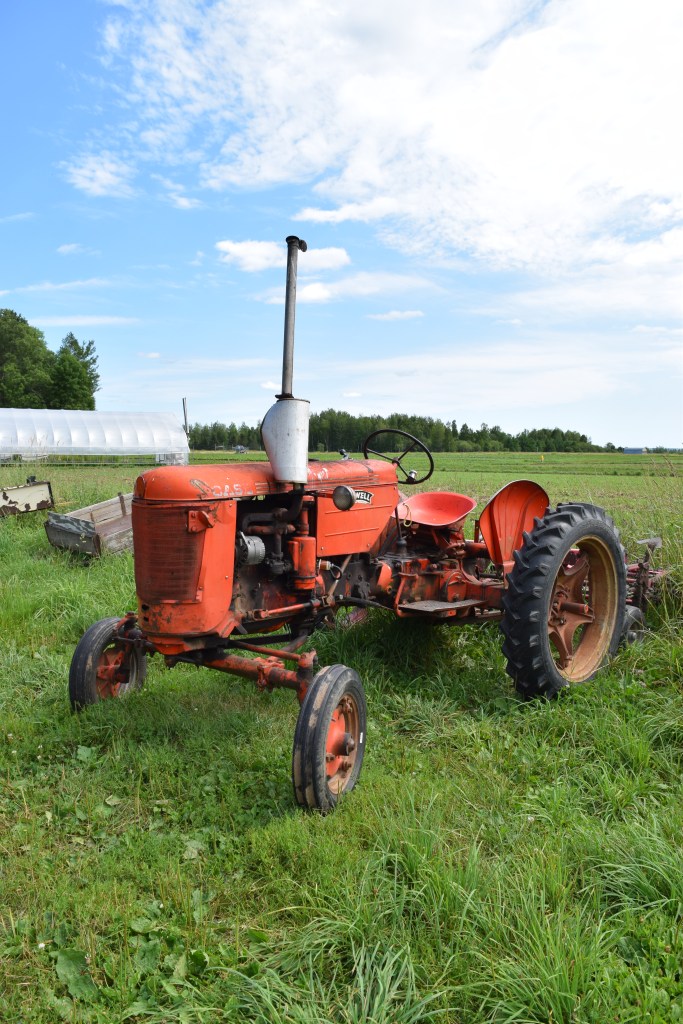
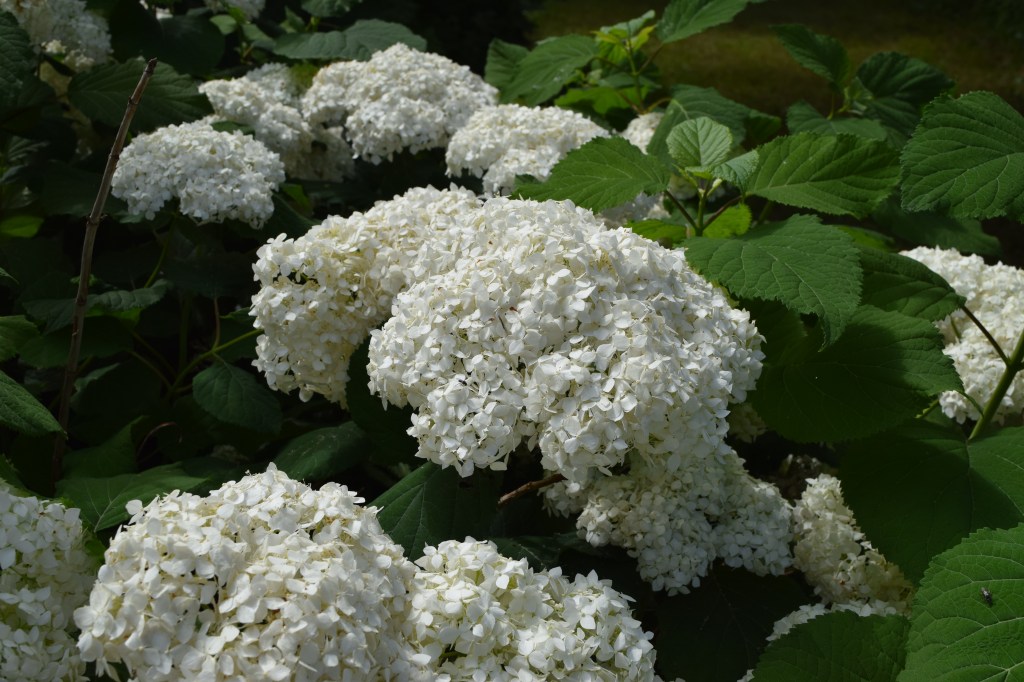
– Sights around the farm: tractors, sprawling fields, and farm house hydrangeas.

New in the box this week we have tomatoes and basil; the perfect pair. Now we really know it’s summer! Janaki has taken a well earned vacation with his family this week. The farm crew is happy to hold down the fort here in Wrenshall. We’re still planting fall brassicas, weeding young plants, and looking forward to the coming preserving shares.


In your share this week:

Basil – Broccoli – Carrots with Tops – Cucumber – Kale – Lettuce – Green Onion – Snap Peas – Tomato – Zucchini


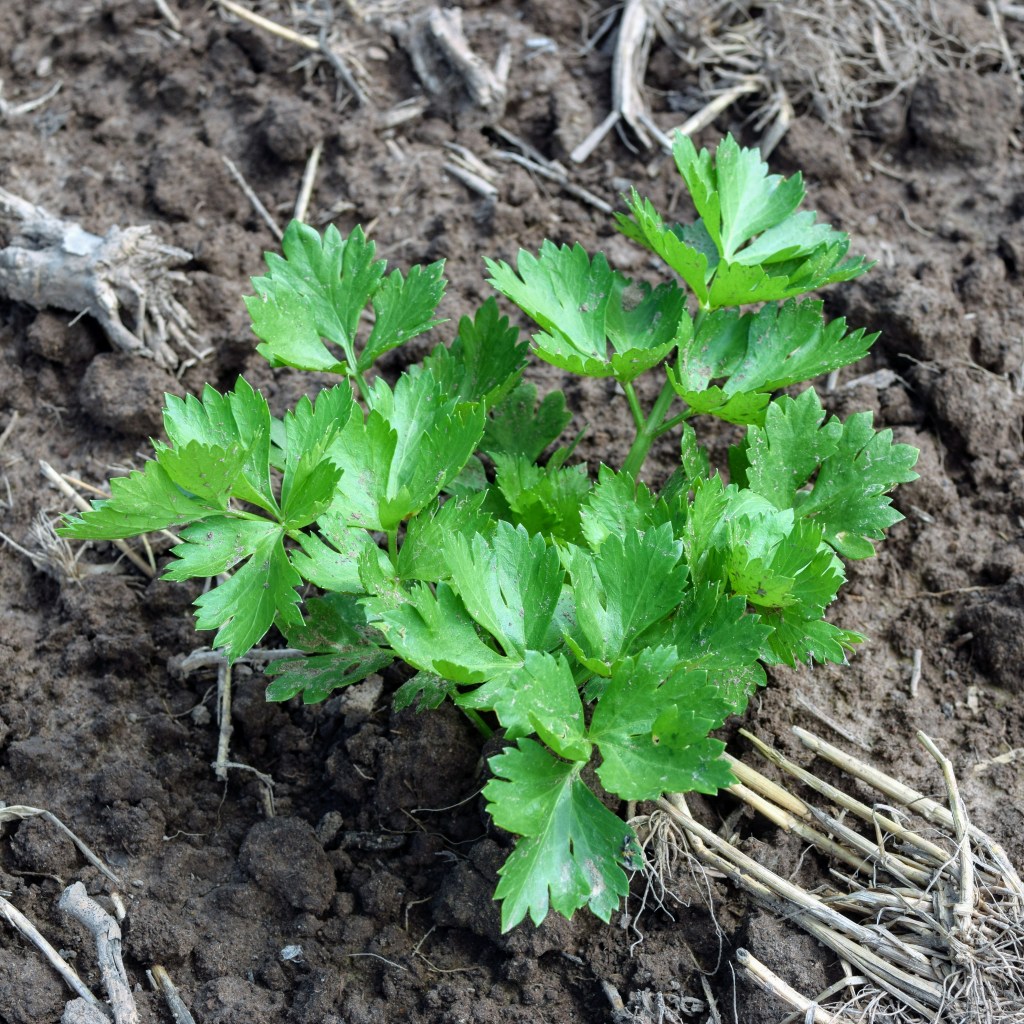
Guess what vegetable these baby plants will grow up into!

Scroll to the bottom for the answer.


Quinoa Vegetable Salad with Tahini Dressing

Ingredients

  • 4 cups chopped kale
  • 1 ½ cup chopped cucumber
  • 1 ½ cup snap peas trimmed
  • 1 cup chopped tomatoes
  • 1/3 cup quinoa (or 1 cup cooked quinoa. Raw quinoa will give you 3x as much cooked quinoa)

Tahini Dressing

  • 3 tablespoons fresh lemon juice
  • 2 tablespoons tahini (sesame paste)
  • 1 tablespoon warm water
  • 1 teaspoon agave nectar (can substitute with honey)
  • Salt and pepper to taste

Instructions

  1. Cook Quinoa – If you are starting with cooked quinoa, skip to step 3! Rinse raw quinoa for 30 seconds in a fine mesh colander. Drain well.
  2. Combine the rinsed quinoa and 2/3 cups water in a saucepan. Bring the mixture to a boil over medium-high heat, then decrease the heat a bit to maintain a gentle simmer. Cook until the quinoa has absorbed all of the water, about 10 minutes.
  3. Remove the pot from heat, cover, and let the quinoa steam for 5 minutes. Remove the lid and fluff the quinoa with a fork. Season with a pinch of salt. Allow to cool completely.
  4. Make the Dressing – In a small glass bowl, whisk together the lemon juice, tahini, water and agave nectar. If the tahini is difficult to whisk, microwave the mixture on HIGH for about 10 seconds. Salt and pepper to taste.
  5. Assemble the Salad – Place the kale in a colander and run warm water over it while massaging the leaves until the kale softens.
  6. In a large bowl, combine the kale, cucumber, snap peas, tomatoes and quinoa. Toss with the dressing. Serve.

Based of a recipes from Cookin’ Canuck and Cookie + Kate


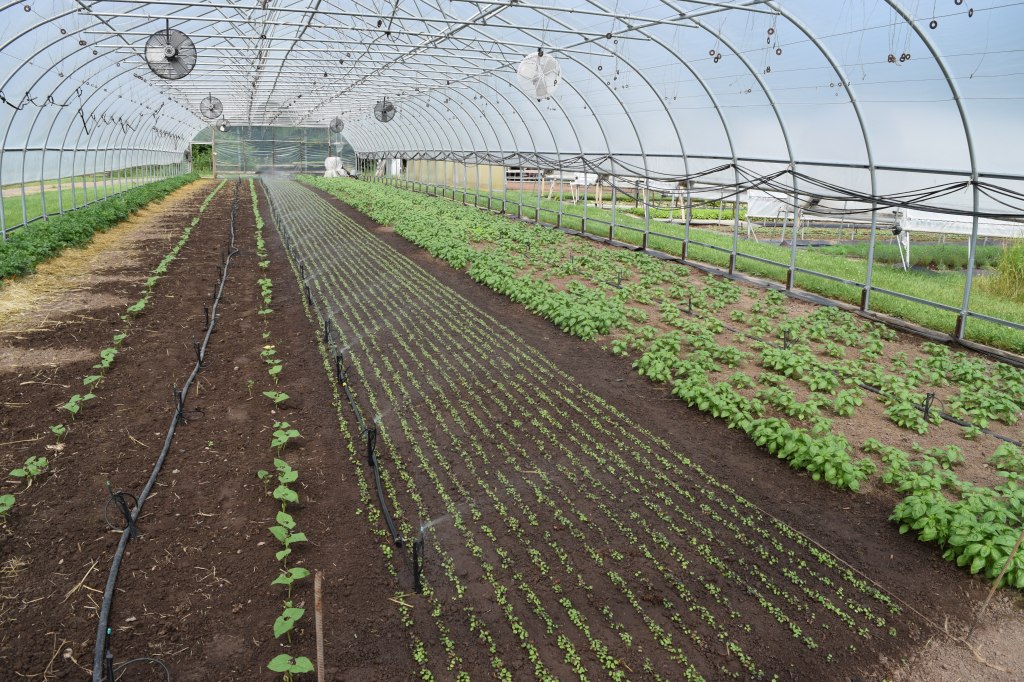
Views of a greenhouse:

Outside
Inside

Celery!

This is a young celery plant. Celery is related to parsnips, carrot and parsley. Celery is grown for the stalks and leaves, and ground celery seed is used as a spice.  

For the farm crew,

Starr

Summer CSA Week 5, 2022

We love fresh produce any time of the year, but early summer is particularly special. There’s something magical about the first time in a season we’re able to share a vegetable. We have several firsts this week: cauliflower, kale, cucumber, AND garlic scapes. We’re watching our harvests diversify and we love it!

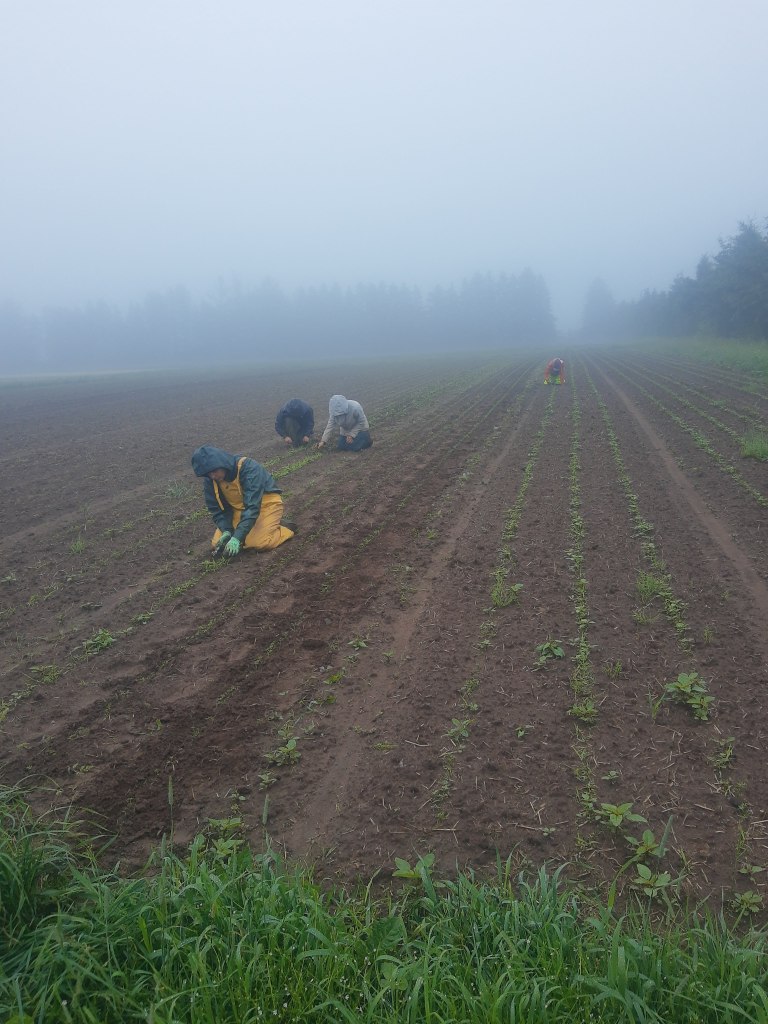
Pictured to the right: the crew weeding carrots in a wet fog on the 4th of July.

We’ve had some more storms and wet weather this past week, but fortunately nothing severe, and the moisture levels aren’t excessive. A word of advice to home gardeners: stay out of your gardens as much as possible in wet weather. Stepping in wet mud will cause compaction and be detrimental to your soil’s health. Plant diseases spread more readily in wet weather and your hands and tools could make that worse. On the Farm, have to keep working, even when it’s rainy, but we’re very selective about the tasks we do and how we harvest. Keep dry!


In your share this week:

Broccoli – Cauliflower – Lettuce – Green Onions – Carrots with Tops – Kale – Garlic Scapes – Cucumber


Forager’s Soup

Serves 6-8

Ingredients

4 tablespoons butter (use olive oil for a vegan alternative)

1 cup diced onion

1 medium potato, peeled and diced

salt and freshly ground black pepper

2 cups chicken or vegetable stock or hot water

1 1/2 cups whole milk (optional)

1/4 cup heavy cream (optional)

~4 cups (8 oz) mixed chopped spring greens, include scapes, kale, green onions, carrot tops, and/or broccoli (use whatever is on hand!)

3 tablespoons olive oil (to cook meat)

3 oz chorizo or bacon, finely diced (optional)

Preparation

  1. Melt butter in a large pot over medium-high heat. Once the butter foams add onion and potato and stir to coat butter. Add salt and pepper. Turn down heat and sweat the onions and potato on with a tight fitting lid for 10 minutes. Vegetables should not brown.
  2. Heat the stock (or water) in a saucepan until simmering. Add hot liquid to potatoes and onions and simmer 5-10 minutes more until vegetables are completely cooked. Add greens and simmer uncovered for 2-3 minutes more. (Don’t over cook the greens!)
  3. Blend with a blender or hand blender. Puree until smooth. Salt and pepper to taste. Stir or blend in milk and cream.
  4. If adding meat, heat olive oil in a small skillet. Add chorizo or bacon and cook until fat is rendered and meat is crisp, 5-10 minutes. Remove and drain on paper towels. Reserve the oil for a garnish or other cooking projects.
  5. Serve soup hot with the above meat and a few drops of the cooking oil to garnish.

This soup can be made a day in advance and kept in the refrigerator! Just gently reheat on the stove top, uncovered. To make this recipe vegetarian, use vegetable broth and skip step 4. To make vegan, also exclude the milk and cream, or substitute with vegan milk option.

*The above recipe is adapted from “Forgotten Skills of Cooking” by Darina Allen and has revisions from volunteer Deb Rausch to better suit our boxes this week. *(Source of recipe previously listed incorrectly.)


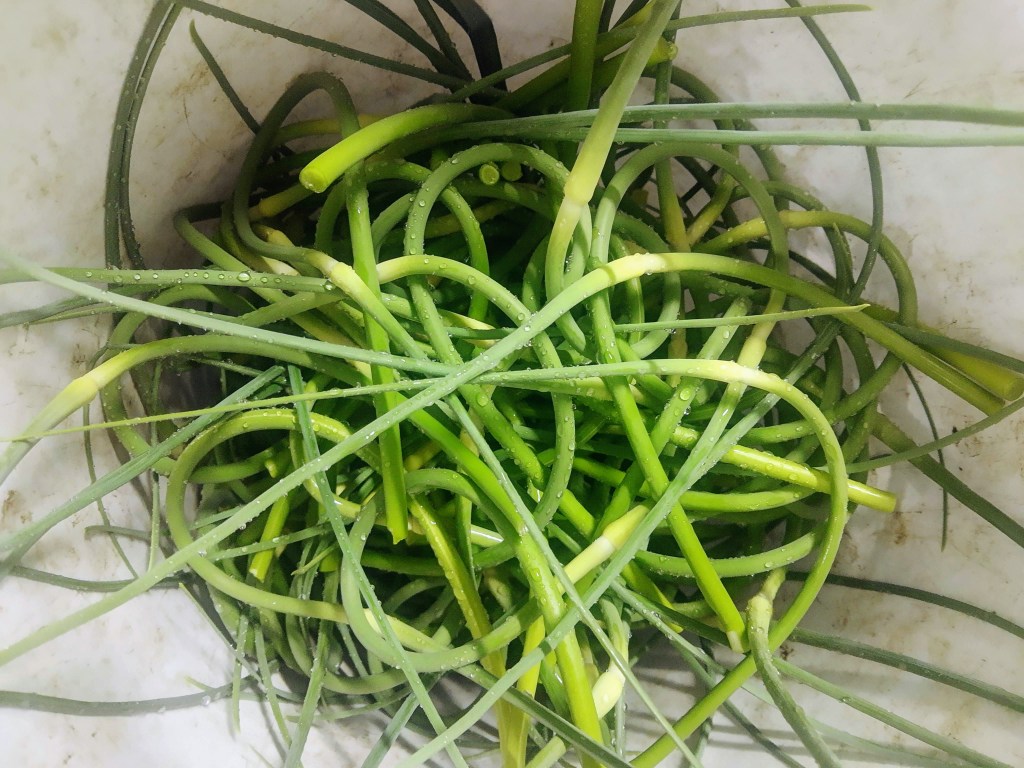
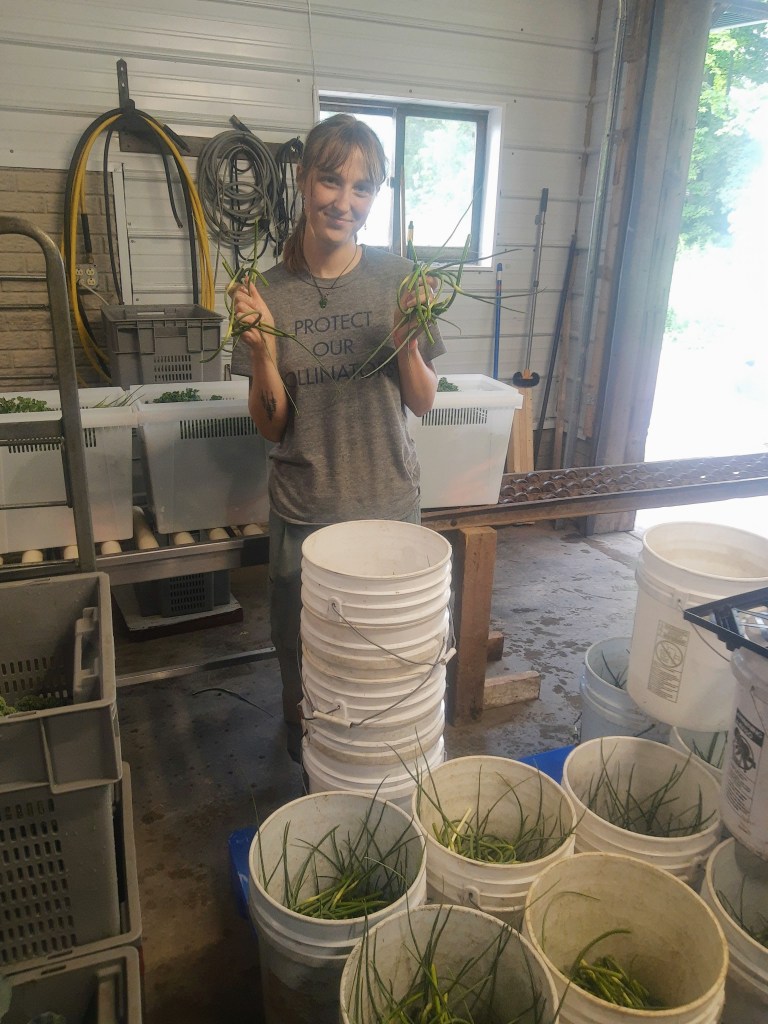
garlic scapes ready to go into share boxes

What are garlic scapes?

Scapes are the curly stems produced by hardneck varieties of garlic. We prune off these scapes so the garlic plant puts more energy into producing the garlic heads we all enjoy. If left on the plant these scapes would produce bulbils, which are like seeds that produce a clone of the parent plant.

Lucky for us, scapes are super tasty and get us through the early summer before the garlic crop is ready! Scapes are have a hot garlic flavor when eaten fresh and are a great garlic replacement in pesto. When cooked, the flavor mellows out. Try grilling garlic scapes or adding them to soups.


Still looking for recipes?

Use the Tag Cloud below to find archived recipes from past years. Just click an ingredient below and you’ll be taken to a list of all posted newsletters with a recipe that includes that vegetable. The larger the text below, the more posts there are including that vegetable.

Arugula Basil Beet Bell Pepper Broccoli Brussels Sprout Brussels Sprouts Cabbage Carrot Cauliflower Celery Cilantro Cucumber Delicata Squash Dill Dressing/Sauce Egg Garlic Garlic Scape Green Bean Green Onion Jalapeno Kale Leek Lettuce Mint Napa Cabbage Onion Parsley Parsnip Pepper Potato Radish Red Onion Rutabaga Scallion Shallot Spinach Squash Thyme Tomato Turnip Winter Squash Yellow Onion Zucchini

The farm crew admiring dramatic cloud formations on 7/11 just before being pelted with rain.

For the farm crew,

Starr

Summer CSA Week 18

That’s right farm sharers… It’s the final countdown (insert Europe guitarist). I think every one of us on the farm is shocked that the final CSA delivery is upon us. Not only because it’s still in the 70s during the day, but it also seems like only yesterday we were on the back of the transplanter planting the first of thousands of veggie starts. I don’t think we could have done it without that life-saving, and back-saving implement. Moreover, we could not have done it all without the support of our community and share members. It is all of you that keep the farm afloat and drive us to be the best farmers we can be. 18 weeks of shares have gone by in the blink of an eye yet we have so much to show for it. We have fed hundreds of people fresh, local, and organic veggies all while sustainably stewarding our farm.

This is not to say that with the end of the Summer CSA that comes the end of our work on the farm. In fact, we are just starting most of the large scale projects that will prepare us for our ’21-’22 Winter CSA, winter wholesale orders, and winter itself. On the farm hand side of things, this means clearing out the greenhouses, harvesting insane amounts of carrots, potatoes, beets, rutabagas, parsnips and cabbage, taking down trellises, and stowing the irrigation pipe that got our plants through this brutal summer. On the Janaki side of things, this means ensuring that fields are seeded with cover crops, compost is produced to feed our soil microbes, and operating the tractors so that us farm hands do not suffer at the expense of the insane amount of carrots I mentioned. Of course these aren’t the only things we will be doing over the next month, but you get the idea.

Just as we’re putting the farm to bed, we’re including a few sprigs of lavender in your share, long used as an aromatherapy sleep aide.

Here’s a list of things I have learned this season, even though nobody asked for it:

  • Do not waste time picking burs off of Chester. He will only come back around covered in more. He is also a professional skunk hunter and deer carcass finder.
  • Driving a very old tractor (we call it Stubby) is very fun and also terrifying at the same time.
  • Pigweed is a noxious plant that really makes you question whether or not being an organic farm is really worth it… (It is).
  • When a bee colony swarms they are actually super calm because they are not protecting their queen or hive anymore. I once walked through a swarm of thousands of bees to feed the chickens.
  • Raccoons sneak onto the farm for our tiny corn patch and nothing else.
  • Aside from the skunks that Chester brings around, the worst smell on the farm is hands down the smell of rotting daikon radish.
  • Do NOT harvest beets without gloves on unless you want to look like a murder suspect.
  • There is no such thing as a free meal.

Once again, we could not have done it without all of your support this season. We look forward to feeding you again in 2022. Until then, we will be here waiting and working the land to ensure you all receive high quality veggies next time around.

Take care,

Emily

“Agriculture is the noblest of all alchemy; for it turns earth, and even manure, into gold, conferring upon its cultivator the additional reward of health.” – Paul Chatfield

In your shares this week:

Beets – Carrots – Cilantro – Collar Greens – Lavender – Lettuce – Yellow Onions – Sweet Red Peppers – Hot Peppers – Potatoes – Rutabagas – Red Shallots – Delicata and Kabocha Winter Squash

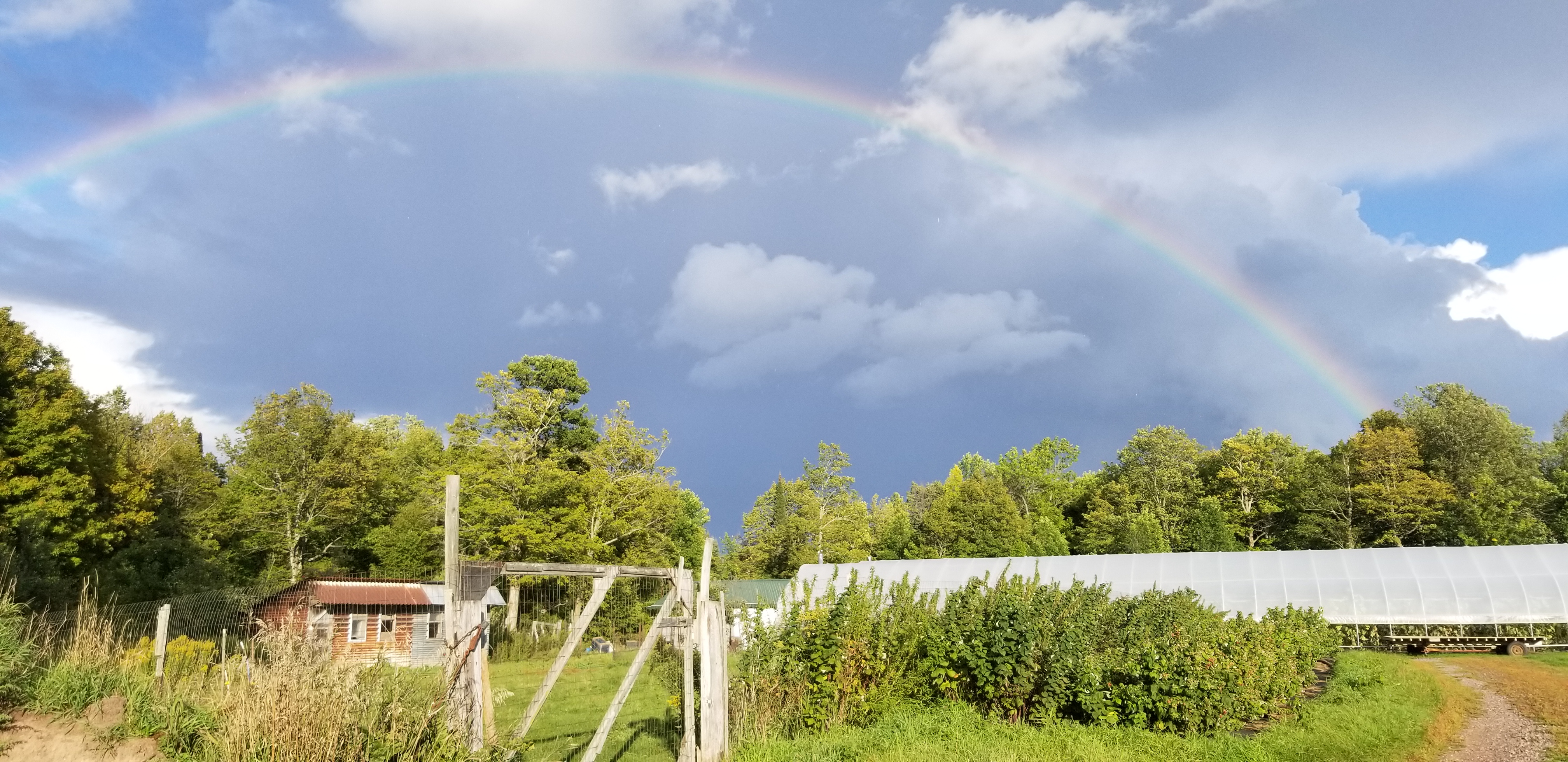
A wonderful rainbow that made an appearance after we were rained on all day.
An absurdly large daikon radish that is destined for Spirit Creek Farm kimchi.

Red Flannel Hash (modified from NYT Cooking)

This recipe also works wonderfully with left-over roasted vegetables!

1.5 cups diced potatoes

1 cup diced squash

1/2 cup diced beets

1/2 cup diced carrots

1/2 cup diced peppers

1/4 cup diced onion

1/2 tsp each thyme and parsley

salt and pepper to taste


*Note:  Dice all the veggies into the similarly sized cubes (~1/2 inch) Heat oven to 425.  Place potatoes, squash, and beets on a rimmed baking sheet with 1 tablespoon of oil and bake for 20 minutes.  Add remaining veggies and herbs to the pan with the remaining olive oil and bake another 25 minutes.   
Fry the baked veggies in a frying pan with butter in a single layer to achieve crispness.  Top with a fried egg and serve with a side salad.


Strata (savory bread pudding)

1/2 lb french bread (stale or leftover works best), enough to make 4 cups of bread cubes

1 cup sliced mushrooms

1/2 cup diced peppers

1 cup diced or grated squash (~1/4″ cubes)

2 cups kale

1 clove garlic, minced

1.5 cups milk

1/2 cup grated hard cheese (swiss, gruyere, or cheddar)

1/4 cup grated Parmesan cheese

2 tbsp olive oil

1 tsp fresh rosemary (or 1/2tsp dried) 

1 tsp salt

4 large eggs


Preheat oven to 350 degrees. Soak the bread cubes in 3/4 c. of the milk. Oil or butter a 2 qt baking dish.  Heat a frying pan and add the kale.  Fry over medium heat until the leaves begin to soften and wilt.  Cover the pan and let the kale steam until cooked (3 minutes).  Remove from pan, press or squeeze out the excess liquid.  Chop coarsely and set aside.  Add 1 tbsp oil to the same frying pan and add the mushrooms and peppers.  Fry on medium heat until the mushrooms are cooked and the peppers have lost some of their moisture.  Add the minced garlic and the squash, and continue to fry for another minute.  Stir in the rosemary and kale.  Remove from heat, pour into a bowl with the cubed bread, the two cheeses, and toss together.  Arrange in a baking dish.
Beat eggs in a medium bowl and add the remaining milk and salt (and a few shakes of black pepper if you like it).  Pour over the bread and press the bread down into the custard mix.  Bake for 40-50 minutes until puffed up and brown and a knife poked into the strata comes out clean.
Note:  this can be assembled and left (covered) in the fridge for the night for a quick and easy morning bake, too!

Summer CSA Week 16

Howdy food sharers,

This past week was the week of squash. To be honest, I’ll probably never see that much squash again in one place. On Wednesday we harvested around 8,000 pounds of Delicata alone. As much as it feels like it will never end when we are in the middle of harvesting, the end results are very satisfying to look at. 4 tons of Delicata sitting on drying racks is a sight for sore eyes (and arms). It is also very funny to be using old bakery racks as storage racks. They sure do get the job done though.

Delicata are not the only variety of squash we are growing this year. The others include: Winter Sweet, Acorn, Kabocha and Sunshine. To be honest I think I would name my pet after these squashes. Maybe not Delicata though… I sometimes think that squash is such an interesting crop so I decided to do a little research to spice up this newsletter. Here are some fun facts about squash:

  • The name “squash” comes from a Native American word “askutasquash” which means “eaten raw or uncooked” which is….ironic. Or at least I have always cooked my squash.
  • Squashes are some of the oldest crops. Some estimates are at 10,000 years old. 
  • The regions of Mexico and surrounding Central American countries are where squash is originally thought to come from. 
  • We grow both summer and winter squash here at Food Farm. Summer squashes are harvested when they’re immature and their skins are still soft. For example, zucchini is a well-known summer squash. Winter squashes are harvested when their skin is hard, making them suitable for long term storage.

Pretty soon your summer CSA will be over and your household may start to accumulate more and more squash. Pumpkins will be on their way to you soon. Jack-o-lanterns will be carved. Pies will be baked. Although this is the beginning of the end of our time being your summer farmers, we still have a LOT to get done on the farm before freeze-up. Best of all, the autumn equinox is on Wednesday. According to the MN DNR Fall Color Finder, between 10-25% of our trees in the area are turning color. Fall has quickly become my favorite time of the year since I started farming.

I’m keeping this newsletter short and sweet, just like our acorn squash.

Thanks for tuning in,

Emily 

In your shares this week: Arugula – Beans – Carrots – Cucumbers – Red Russian Kale – Leeks – Onions – Parsley – Peppers – Potatoes – Acorn and Sunshine Squash – Tomatoes – Zucchini

Chinese Chard with Almonds by TasteofHome

Ingredients

1 bunch chard (about 1 pound), chopped (the Red Russian Kale this week is tender enough to use in place of Chard)

1 tablespoon olive oil

1 large sweet red pepper, cut into strips

1 large tomato, diced

1 small red onion, diced

3 garlic cloves, minced

1 tablespoon minced fresh gingerroot

1 tablespoon hoisin sauce

3/4 teaspoon Chinese five-spice powder

3/4 teaspoon kosher salt

Dash crushed red pepper flakes

2 tablespoons lemon juice

1/2 cup sliced almonds, toasted

Directions

In a large saucepan over medium-high heat, bring 2 in. of water to a boil. Add chard; cook, covered, until crisp-tender, about 5 minutes. Drain; set aside.

In same saucepan, heat oil over medium-high heat. Add pepper, tomato and onion; saute until pepper is crisp-tender, 3-4 minutes. Add garlic; cook 1 minute more. Stir in next five ingredients; add cooked chard. Cook and stir until pepper is tender, 3-4 minutes ; add lemon juice. Top with almonds.

Kale and Leek Gratin by Food & Wine

3 pounds kale, de-stemmed

3 tablespoons extra-virgin olive oil 

5 medium leeks, white and tender green parts only, sliced 1/4 inch thick

Salt

3 garlic cloves, minced

6 tablespoons unsalted butter

2/3 cup all-purpose flour 

1 quart whole milk

1/2 cup shredded Gruyère cheese

1/2 cup freshly grated Parmigiano-Reggiano cheese 

1/4 teaspoon freshly grated nutmeg

Freshly ground pepper

Directions

In a large pot of boiling water, blanch the kale in batches until wilted, about 1 minute. Drain, squeeze dry and chop it.

Heat the oil in the pot. Add the leeks and a pinch of salt. Cover and cook over moderately low heat, stirring, until tender, 7 minutes. Uncover, add the garlic and cook, stirring, until fragrant, 2 minutes. Add the kale, season with salt and remove from the heat.

Preheat the oven to 425°. Butter a 10-by-15-inch baking dish. In a large saucepan, melt the butter. Stir in the flour over moderate heat to form a paste. Gradually whisk in one-third of the milk and cook, whisking, until the mixture starts to thicken. Repeat two more times with the remaining milk. Bring the sauce to a boil, whisking constantly. Reduce the heat to low and cook, whisking often, until thickened and no floury taste remains, 15 minutes. Whisk in the cheeses and the nutmeg; season with salt and pepper. Mix the sauce into the leeks and kale. Season with salt and pepper.

Transfer the mixture to the prepared baking dish. Bake in the upper third of the oven for about 25 minutes, until bubbling and golden brown on top. Let rest for at least 10 minutes before serving.

Summer CSA Week 2

I don’t think of myself as a superstitious person typically, but in the past couple weeks I have: left car windows open, left laundry on the line over night, left an open bag of potting soil on my deck (for days), not washed the car, left the garbage lid open, and left the deck chairs out instead of tipped up. This list isn’t just to show how lazy I am, it’s to show that I am TRYING to send a message (to whom it may concern) that we need rain! If I leave these things this way maybe they can be a sacrifice of sorts for rain. None of the passing showers that went through the area have hit the farm and we’ve had less than 1/4″ of rain in the last three scorching weeks, so I invite you all to participate in my efforts such as they are. Maybe the message will get through (and we’ll all have to take in that sopping laundry with joy).

These hot windy days are not only very drying, but also prevent us from irrigating during the day, so Janaki has been moving the irrigation around a lot at night (you know, in his spare time) to make sure all the plants get what they need, especially when so many are tiny seedlings without deep roots yet.

What can we say but say the so-annoying phrase “new normal”? Late spring used to bring rain fairly consistently, and in a soaking, spread out kind of way. And they sometimes still do. Sometimes there are still 45 and foggy days in the end of May- we had a few of those this year. Predictability and farming have never danced well together, but this new climate has scratched up the record we were trying to dance to. In the back of my head now I have a fear about dry-dry-dry and then a deluge of 5 inches of rain over night. It seems to be what happens.

On a sort of lame flip side – I think we’re staying on top of the weeds pretty well so far. Turns out they need water too (though somehow less…. how is that fair?) This past week saw the second and largest planting of potatoes in the ground, as well as the 5th and BY FAR largest planting of cabbage and some broccoli. Good luck out there little babies. We’re on your side!

We are happy to send a box that’s a little fluffier and fuller this week. It would have been a hot week to try to save the rhubarb and early spinach through -hopefully you found that harvest to be worth it! Each week -bit by bit there will be more variety in the boxes headed your way. As you get home with your share, especially on these warm days, a quick soak in a sink full of cold water can help prolong the life of many greens like pac choi and lettuce. They get cooled after we harvest them, but may warm up again at your pick up site. Cut-greens like this week’s greens mix could be put in the fridge with the bag open, but make sure to close the bag up again before night so they don’t dry out. If you use radish and turnip greens, good for you! They could also benefit from a cold soak, though I would really try to dry them well and then use them sooner than later.

Like greens, humans keep better with a good dunking now and then. If not that, maybe you can at least make time to dump some water on your head, or run your wrists under some cool water (trust me, it helps). And, if you do those things, maybe stand by a plant to share some of that water!

Enjoy the veggies!

For the farm crew,

Karin

Flying row cover!

Floating row cover!


In your share this week:
Greens Mix – Romaine Lettuce – Pac Choi – Radishes – Spinach – Turnips


Turnip and Kale Gratin
-From Bon Appetit

In the body of text about this recipe, it says that turnip greens can be used in place of the kale! Voila!

5 garlic cloves, thinly sliced
2 cups heavy cream
½ teaspoon dried thyme
2 tablespoons unsalted butter, divided
3 medium onions, thinly sliced
Kosher salt
3 bunches Tuscan kale, ribs and stems removed, leaves torn
4 medium turnips (about 1¾ pounds total), trimmed, peeled, cut into ½-inch pieces
3 large eggs, beaten to blend
4 ounces Fontina cheese, grated (about 1 cup)
1 ounce Parmesan, finely grated (about 1 cup)
8 ounces day-old white country-style bread, cut into ½-inch pieces
Freshly ground black pepper

Preparation

Step 1

Bring garlic, cream, and thyme to a bare simmer over medium heat. Reduce heat to low and let cream simmer 30 minutes. Let cool.

Step 2

Meanwhile, heat 1 Tbsp. butter in a large skillet over medium-low. Add onions, season with salt, and cook, stirring occasionally and adding a splash or two of water if onions begin to stick to pan, until caramelized and amber colored, 45–60 minutes. Transfer to a large bowl and let cool. Wipe out skillet.

Step 3

Heat remaining 1 Tbsp. butter in same skillet. Working in batches, add kale, tossing and letting it wilt slightly before adding more; season with salt. Cook until kale is wilted and tender, 5–8 minutes; transfer to bowl with onions.

Step 4

While kale is cooking, cook turnips in a large pot of boiling well-salted water until crisp-tender, about 2 minutes; drain. Transfer to a bowl of ice water and let cool. Drain; pat dry. Transfer to bowl with onions.

Step 5

Preheat oven to 375°. Whisk eggs, Fontina cheese, Parmesan, and cooled cream mixture in a large bowl to combine. Add onion mixture and bread; season with salt and pepper. Transfer to a 13×9″ baking dish and press down on mixture with your hands to form a tight, even layer. Bake gratin, uncovered, until well browned, 40–50 minutes. Let rest 10 minutes before serving.

Gratin can be assembled 12 hours ahead. Cover and chill.


Pac Choi and Shiitake Stir-fry
From The Spruce Eats

3 to 4 cloves garlic (minced)
1 cup shiitake mushrooms (sliced OR 1/2 cup sliced shiitake mushrooms and 1/2 cup sliced button mushrooms)
2 teaspoons canola oil or other high-heat oil
1 tablespoon soy sauce (or, use tamari)
1 pac choi
5 to 6 green onions (sliced)
1/4 cup vegetable broth
2 teaspoons fresh ginger (minced or grated)
2 teaspoons sesame oil
2 tablespoons sesame seeds (optional)

Saute the garlic and mushrooms in oil for 3 to 5 minutes then add in the soy sauce, the bok choy and scallions, and cook for a few more minutes. Reduce heat to medium-low and add vegetable broth and ginger. Simmer for another 3 to 5 minutes. Finally, stir in the sesame oil and the optional sesame seeds and remove from heat.

Eat as is or enjoy over rice or another grain!